What are Burial Mounds?
Who used Burial Mounds?
When were they first used?
Burial Mounds are artificial hills of earth and stones built over the remains of the dead. They are also known as barrows, kurgans, and tumuli. They are characteristic earthwork monuments of the prehistoric periods approximately between around 5,800 and 3,400 years ago (3800-1400 BC). [Earthworks are described as any activity which disturbs soil, earth, or land surfaces.]
Burial Mounds were used by Anglo-Saxons in England during the late sixth (6th) and seventh (7th) centuries AD. Approximately one hour north of Dublin in Ireland burial mounds can be seen sprouted from the lush countryside. The archaeological site in Ireland features two ancient burial mounds. These mounds are thought to be older than the oldest pyramids.
In North America Indian Burial Mounds have been located in Wisconsin, Arkansas, Illinois, and elsewhere in eastern North America. The Native Americans built earthen mounds for ritual or burial purposes or as the location for important structures. The Mississippian people in eastern Arkansas were using mounds when the Spanish explorers arrived in 1541. Sadly, a vast majority of the mounds that were built in Arkansas have been destroyed by modern development and vandalism. Luckily several hundred still remain and are recognized as important religious and cultural monuments.
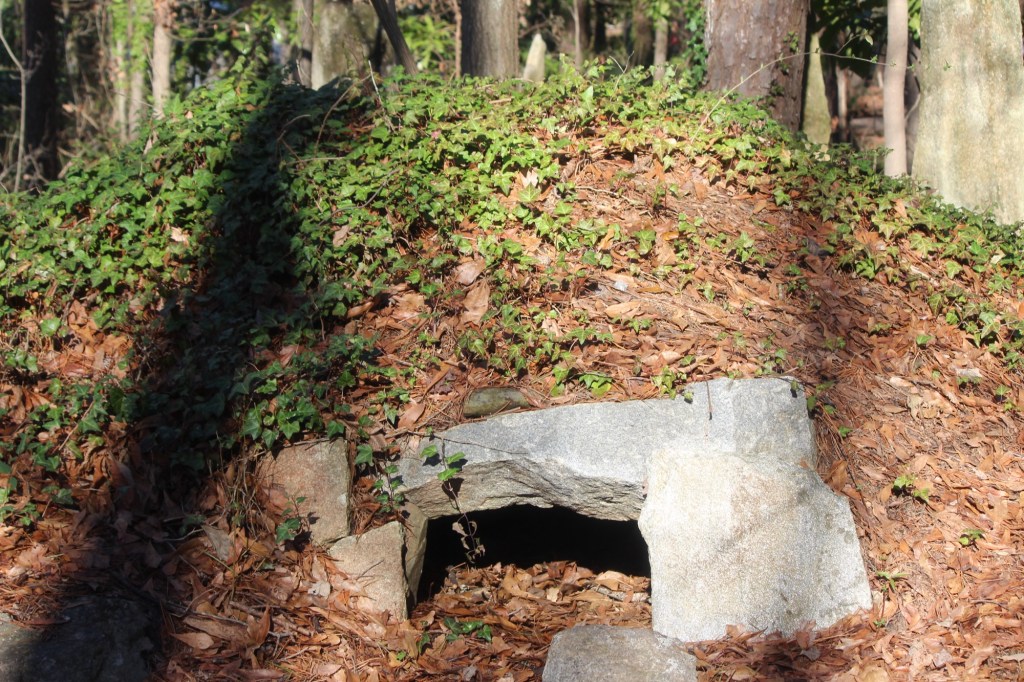
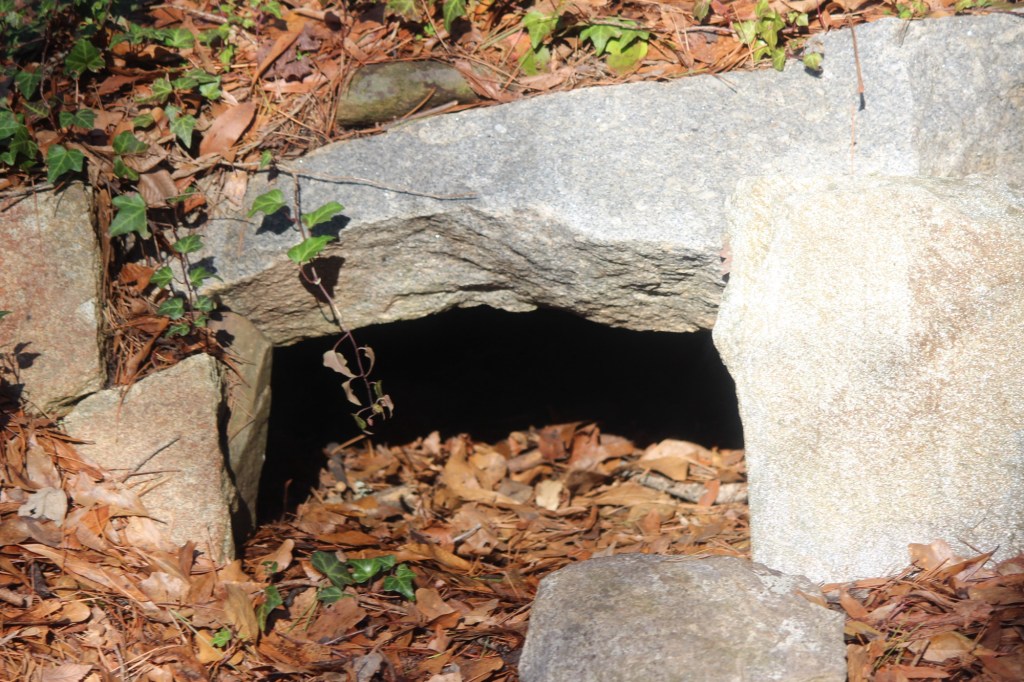
The photos posted here are representative of the types of Burial Mounds which were used by many of the Stone Age period. This mound is located in the Stone Age Circle which can be seen when taking a walk/hike along the Nature Trail of The Schiele Museum of Natural History.
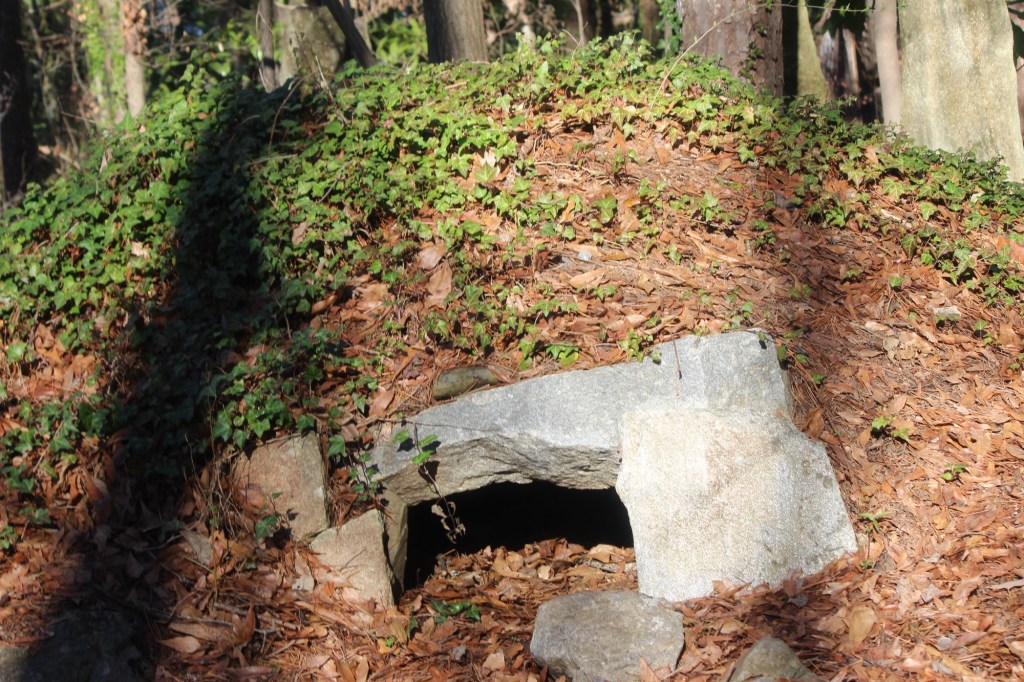
In these two Coleman and I are taking a closer look at the Burial Mounds.
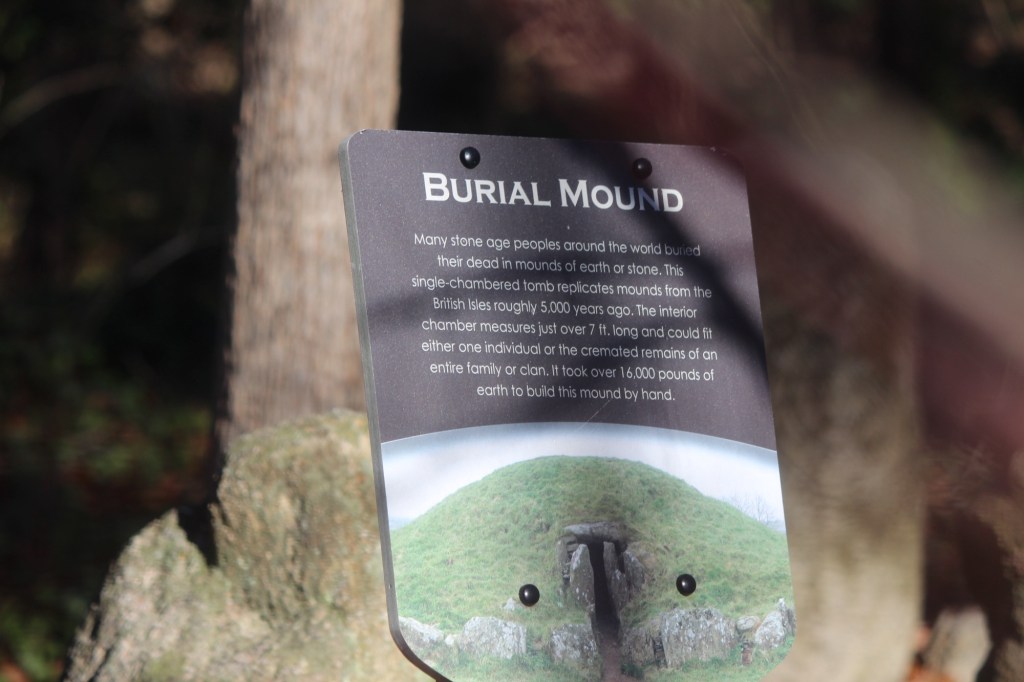
Many stone age peoples around the world buried
their dead in mounds of earth or stone.
This single-chambered tomb replicates mounds
from the British Isles roughly 5,000 years ago.
The interior chamber measures just over 7 ft long
and could fit either one individual or
the cremated remains of an entire family or clan.
It took over 16,000 pounds of earth
to build this mound by hand.
[Informational Sign
in the Stone Age Circle
at The Schiele Museum
of Natural History.]
Photo Credit: (c) 2024 Deb L. Waters … All Rights Reserved.
Camera: Canon EOS Rebel T3i with Canon EF-S55-250mm lens.
Location: Stone Age Circle; The Schiele Museum of Natural History; Gastonia, North Carolina, USA
God Bless. Thank you for visiting and sharing your time and thoughts with us. I appreciate y’all very much.

 Gfpacificbee’s Insights & photography