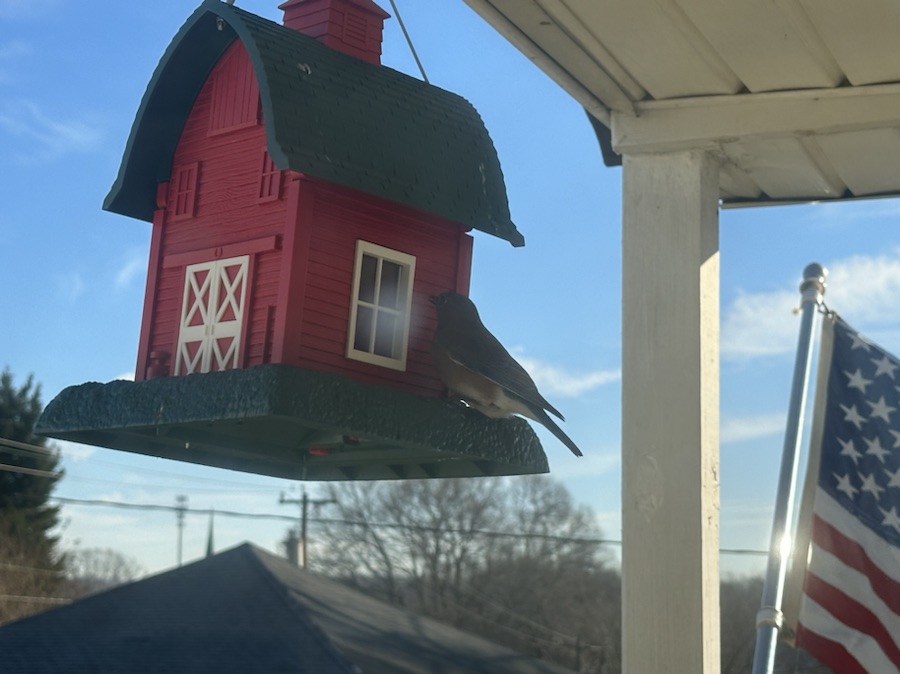
Today’s sightings at our bird feeder reminded me of a previous post. Today’s visitors were several Female Eastern Bluebirds. Therefore, I thought it’d be fitting to reblog my previous post Birds of the Carolinas #18.
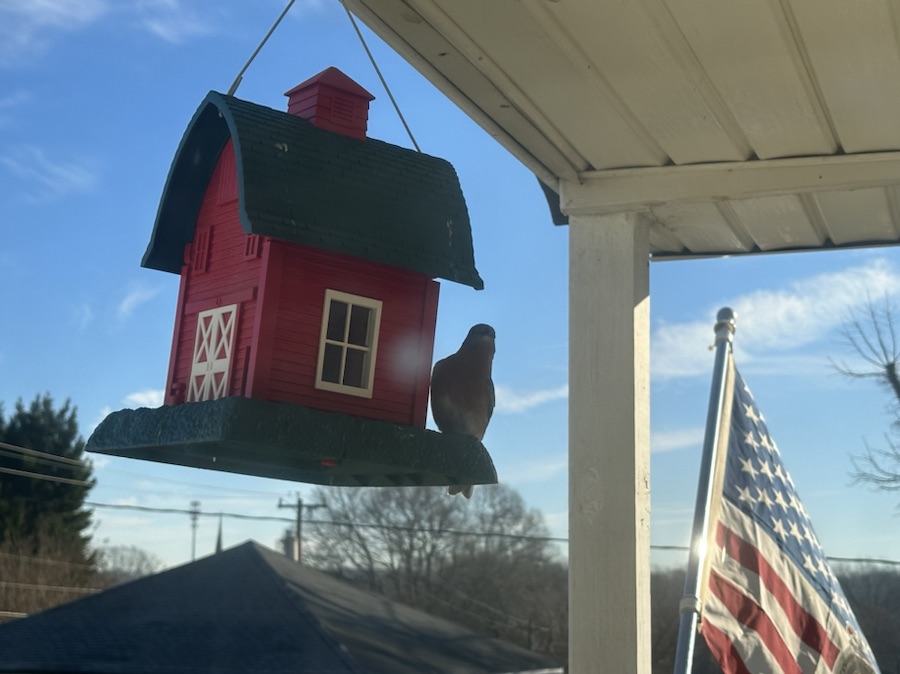
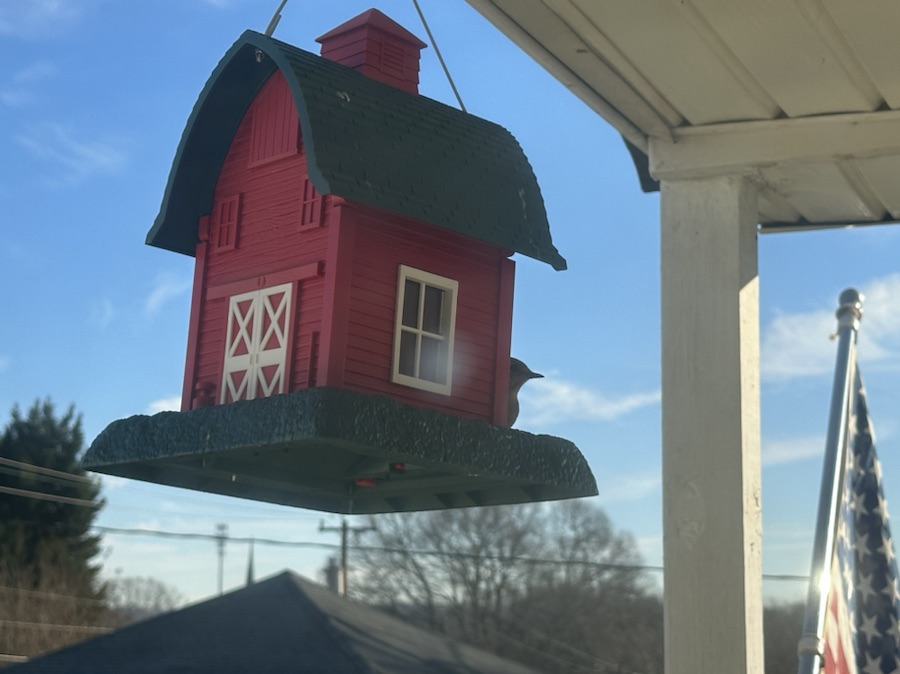
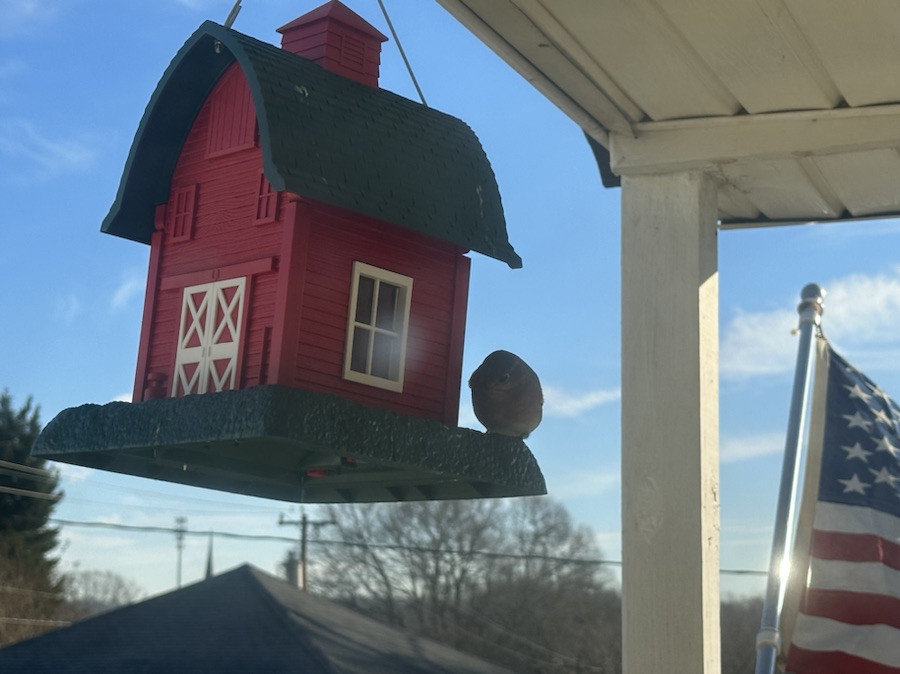
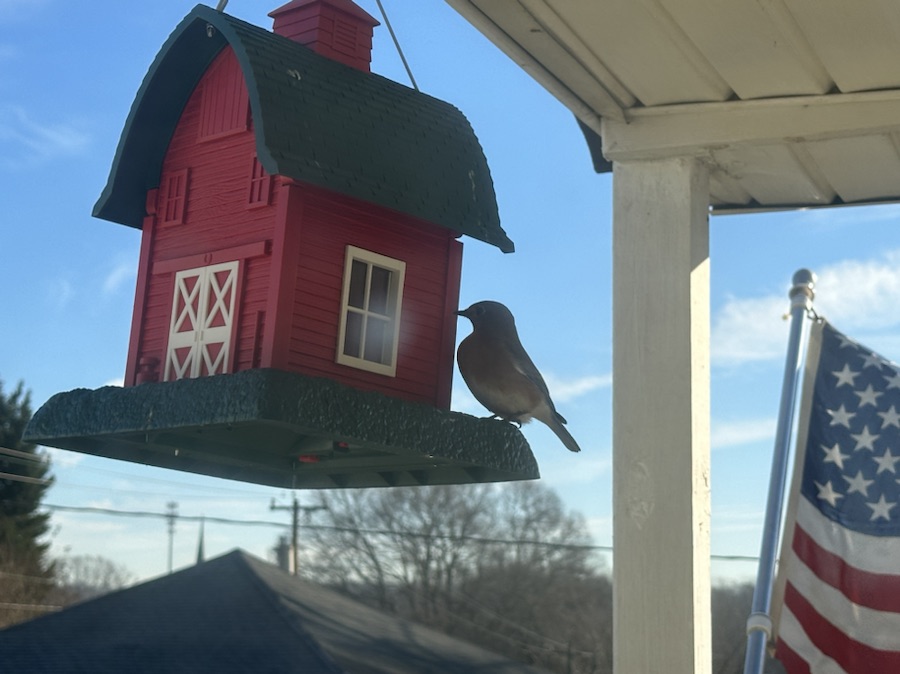
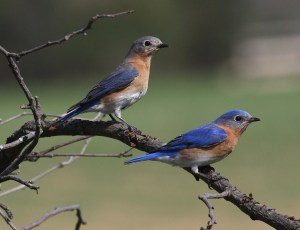
Eastern Bluebird
The Eastern Bluebird (Sialia sialis) is one of many common species of birds in North and South Carolina. It is a small North American migratory thrush which is found in woodlands, farmlands, and orchards.
The Male Bluebirds have a bright head, back, and wings. Their breast is a reddish-brown colour. The females are lighter with gray on the head and back and some blue on their wings and tail. The females breast is lighter in colour than the males, and is more orangish.

The Eastern Bluebird is observed east of the Rockies, from southern Canada down to the Gulf States, and southeastern Arizona to Nicaragua. Bluebirds tend to live in open country surrounded by trees, but with little understory and sparse ground cover.

The Eastern Bluebirds pictured above were observed sitting on a wire outside my front porch in our area of Western North Carolina. They are social, and sometimes gather in flocks of over a hundred. Even so, they are territorial during the breeding season and may possibly continue to defend a feeding area throughout winter.
Eastern Bluebirds eat mostly insects, wild fruit and berries. Occasionally, Eastern Bluebirds have also been observed capturing and eating larger prey items such as shrews, salamanders, snakes, lizards and tree frogs.
Eastern Bluebirds can live for around six (6) to ten (10) years. The oldest recorded Eastern Bluebird was at least 10 years, 6 months old. It had been banded in New York in May 1989, and was found dead in South Carolina November 1999.
In spite of this, most bluebirds die within their first year of life. Even though Starvation and freezing are a danger to the young, that is not their largest threat. The largest threat to the Eastern Bluebirds comes from other animals including humans. Some of the animals which are dangerous and threatening to the bluebirds are rat snakes, racers, American kestrels, and domestic cats.
Take time to enjoy nature. Observe your surroundings, you might see interesting birds or other interesting finds. The birds in the above two photos were first spotted by my grandson and he insisted I snap a picture of them. One is never too young to observe nature and enjoy birdwatching.
Birds of the Week Invitation LXXXVII
Photo Credit:©️2024 Deb L. Waters … All Rights Reserved.
Camera: Apple iPhone 14 Pro Max
Location: Cramerton, North Carolina, USA
God Bless. Thank you for sharing your time and thoughts with us. I appreciate y’all very much.

 Gfpacificbee’s Insights & photography
Bluebirds are interesting
LikeLiked by 1 person
Thank you! We’ve had several of their visits this winter as well as a variety of other birds 🦅. Have a blessed Holiday.
LikeLiked by 1 person