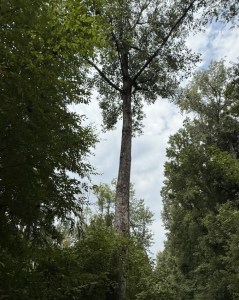
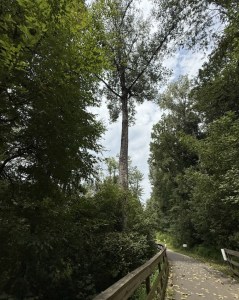
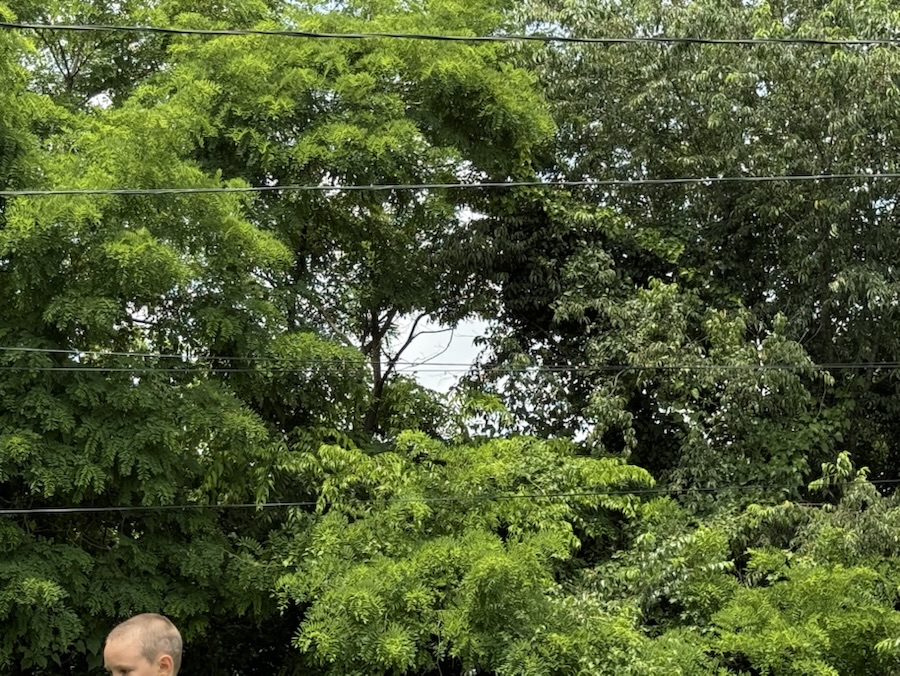
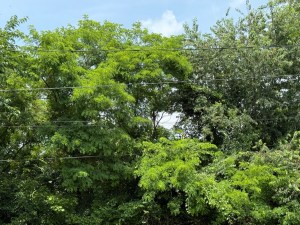
As scene on our hike at Goat Island Park and Greenway. The Eastern Cottonwood stood out tall and strong amongst the surrounding trees along the trail.
Aka Necklace Poplar
The Eastern Cottonwood is native throughout the Eastern, Central, and South Western United States of America. It also can be found in the Southern Canadian prairies, the southernmost part of eastern Canada, and northeastern Mexico.
The Populus deltoides (Eastern Cottonwood) is a large tree which grows to 20-30 metres (65-100 feet) in height with a trunk up to 2.8 metres (9 ft 2 in) in diameter. It is one of the largest North American Hardwood trees. Its bark is silvery-white, smooth or lightly fissured when young, becoming dark gray and deeply fissured on old trees.
What stands out when you are out walking about in your area?
Location: Catawba River Link Greenway Trail; Goat Island Park and Greenway; Cramerton, North Carolina, USA
God Bless. Enjoy the Outdoors. Have a rest under a shade tree. Thank you for visiting and sharing your time and thoughts with us. I appreciate y’all very much.
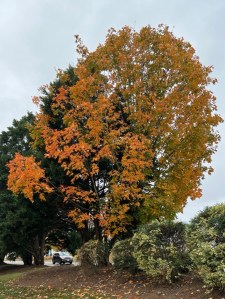
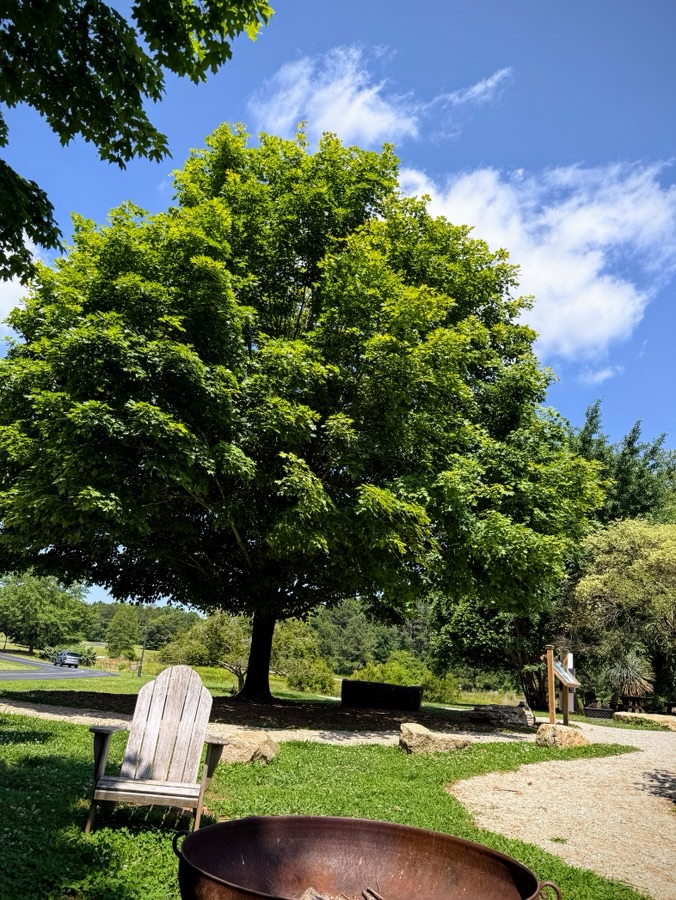
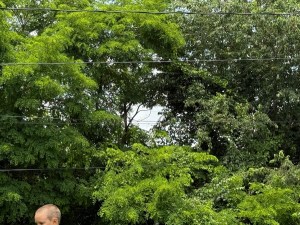
The Northern Sugar Maple is a deciduous tree in the soapberry family (Sapindaceae) native to Eastern and central North America from Canada south through the Appalachian Mountains to Georgia and west to Minnesota to northeast Texas.
Aka Hard Maple
Here in North Carolina, it is found in the mountains and sporadically in the Piedmont region. Northern Sugar Maple trees may reach around fifty (50) to one hundred twenty (120) feet tall with a dense, spreading crown that provides heavy shade and grows slowly to medium, although it may grow faster in open areas. It tends to grow best in moist, well-drained, slightly acidic, fertile soil in full sun, but it tolerates average well-drained soils in sun to part shade.
Aka Northern Sugar Maple
This particular tree is located on the grounds of The Trailhead Store, a property of Daniel Stowe Conservancy. It provides shade for visitors to enjoy a respite from the hot sun and humid heat of a sunny summer day.
Location: The Trailhead Store; Daniel Stowe Conservancy; Belmont, North Carolina, USA
God Bless. Enjoy the Outdoors. Have a rest under a shade tree. Thank you for visiting and sharing your time and thoughts with us. I appreciate y’all very much.
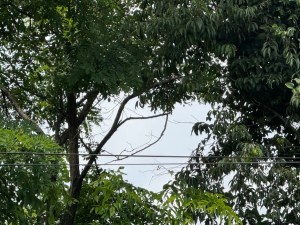
Location: Backyard; Old Town; Riverside Community; Cramerton, North Carolina, USA
God Bless. Enjoy Nature. Feel the Love. Nature demonstrates Love in abundance. Thank you for visiting and sharing your time and thoughts with us. I appreciate y’all very much.
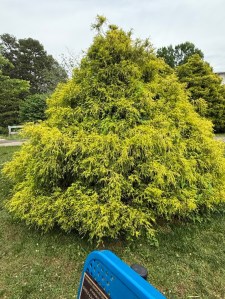
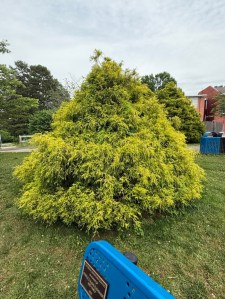
This is a Golden Threadleaf Sawara Cypress, Chamaecyparis pisifera ‘Filifera Aurea’ tree. It is sumptuous, perhaps overly so although lovely to look upon. It has a bold, seamless yellow coat of drooping, thread-like foliage that sits like a huge canary-gold Easter Egg. The brilliant color of the Golden Threadleaf Sawara Cypress appeals to everyone mostly, however, its bold yellowish colour may not be pleasing to some folks.
Chamaecyparis pisifera is one of those species that horticultural humanity has fooled with for a very long time, and it is an easily propagated plant. ‘Filifera Aurea’ is an old cultivar of C. pisifera with tightly compressed needles wrapped around pendulous branchlets hence the name, ‘Threadleaf’, to describe the appearance of the foliage. There is also a cultivar, ‘Filifera’, with the same type of foliage that is a nice quiet green. But ‘Filifera Aurea’ stores some of its excess sugars and starches that form in its needles as a bright gold pigment, a glorious gold pigment, a wild, extravagant, take-your-shoes-off-and-dance gold pigment that has to make any gardener smile, even in the midst of the late winter doldrums.
‘Filifera Aurea’ is a good sized plant, eventually reaching 18-20 feet with age, but retaining a relatively formal, broadly conical shape that adds to its bold statement in the landscape. Chamaecyparis pisifera cultivars perform surprisingly well in the hot, wet southeast and ‘Filifera Aurea’ is no exception. It will happily grow a foot a year, if not overly stressed, in a broad range of soil conditions as long as it has full sun and reasonably regular moisture.
 Gfpacificbee’s Insights & photography