Beth from Wandering Dawgsis this week’s host for the Lens-Artist Photo Challenge . She is challenging us to show off Wings of any kind. I am displaying Non-Feathered Wings as well as Wings on a variety of Feathered Friends with Wings.
Let us first take a look at some of my Feathered Friends that grace my pathways.
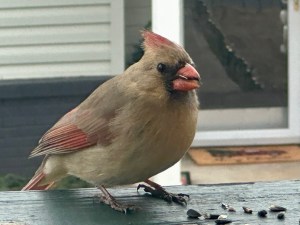
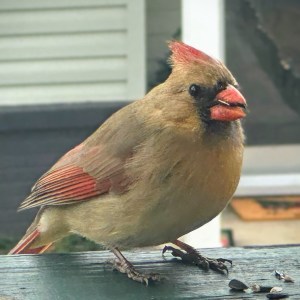
Female Northern Cardinal grace my porch railing enjoying a nice snack.
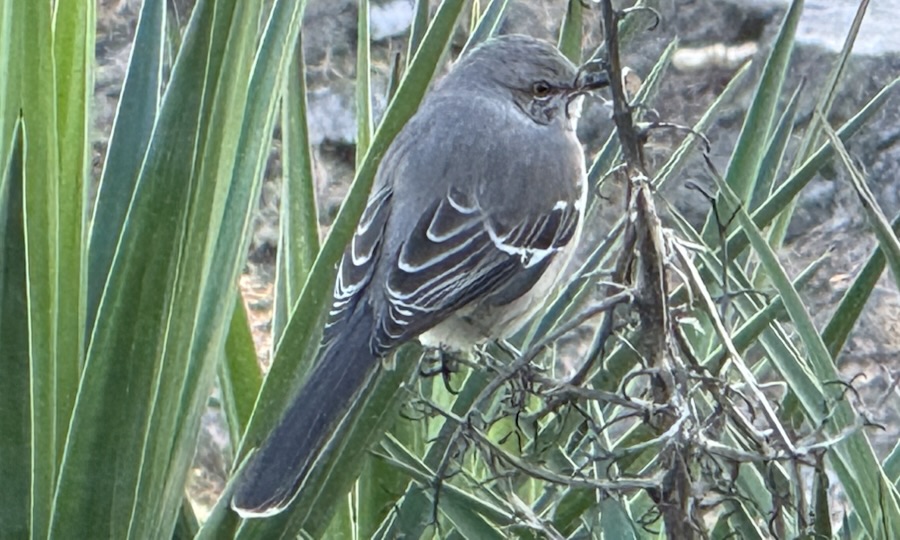
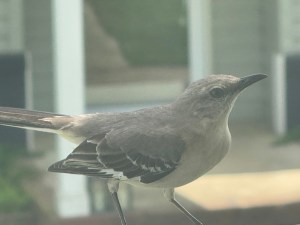
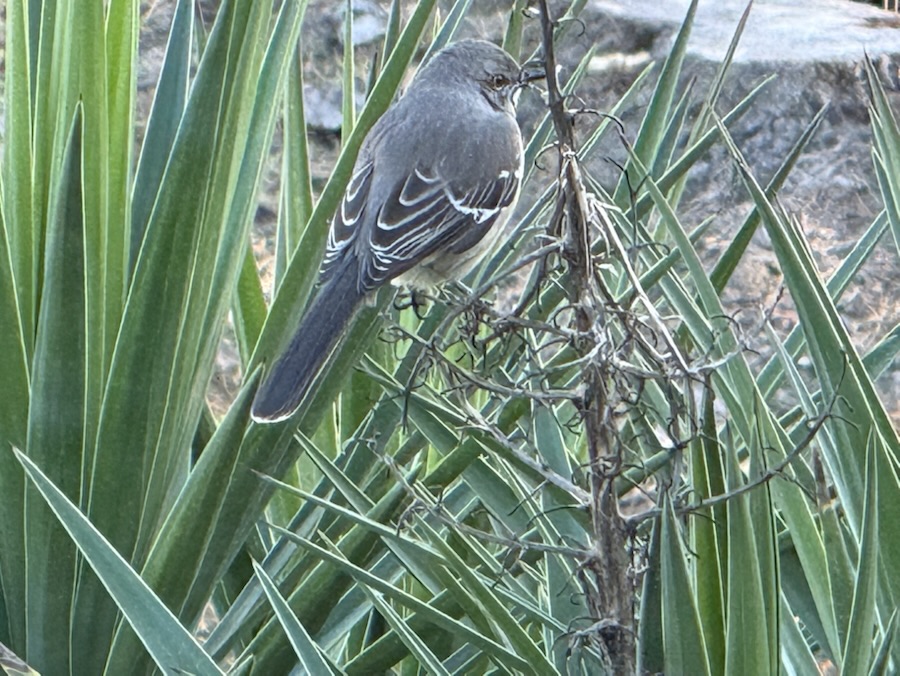
A Northern Mockingbird stopped by for a visit.
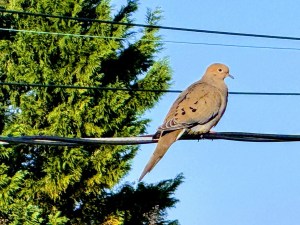
A Lovely Mourning Dove graces us with a beautiful song.
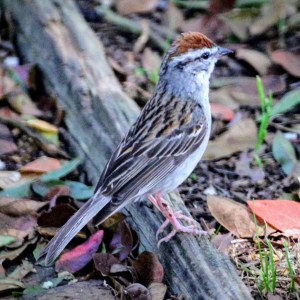
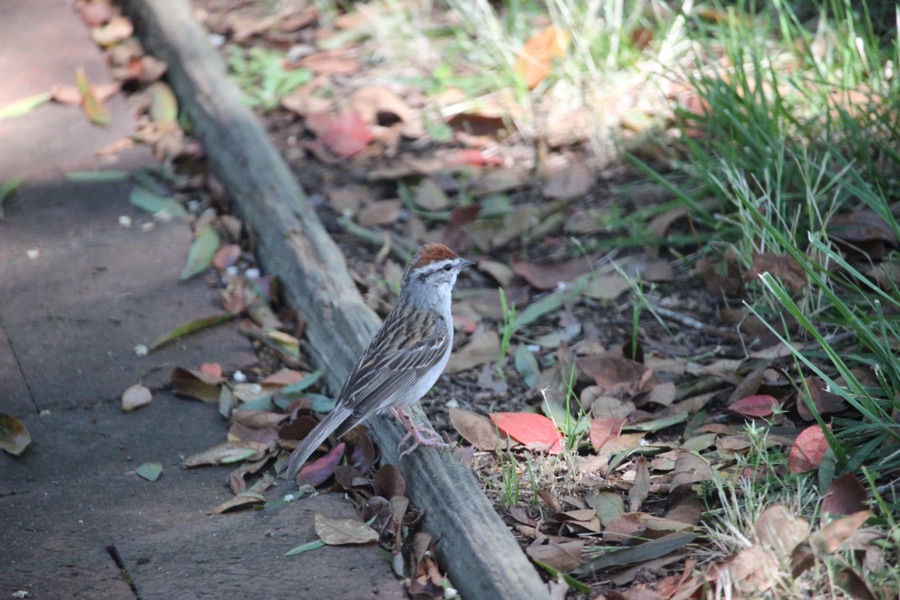
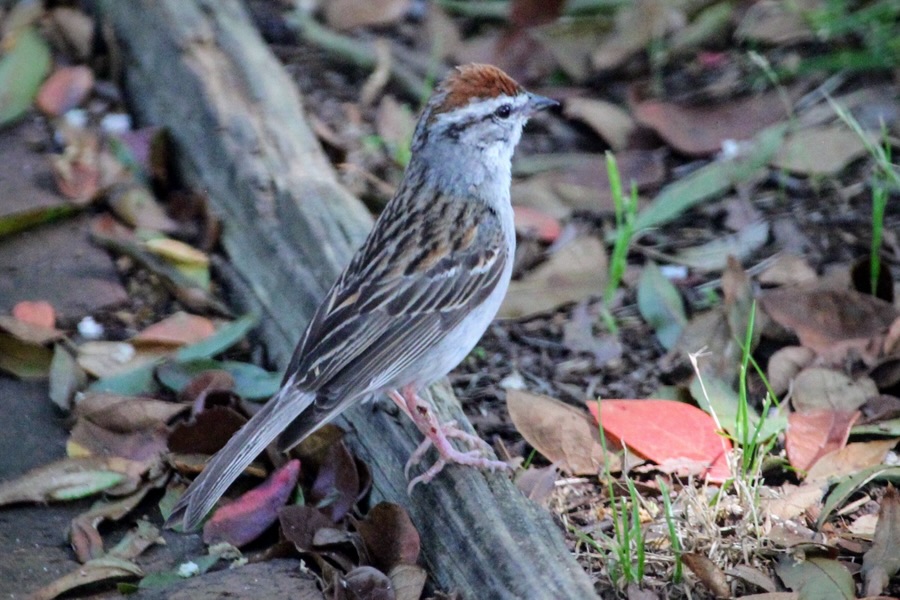
A Chipping Sparrow (Spizella passerina) graces our pathway while on a hike.
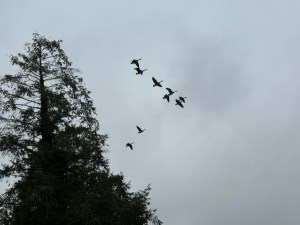
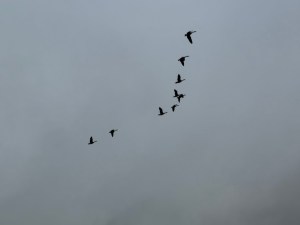
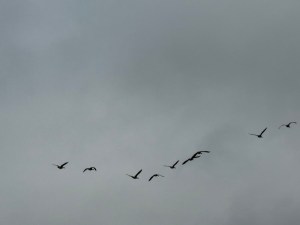
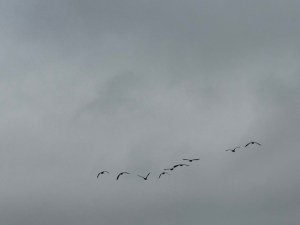
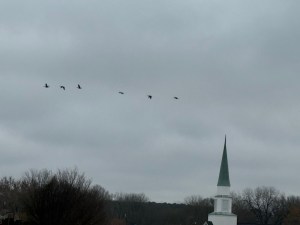
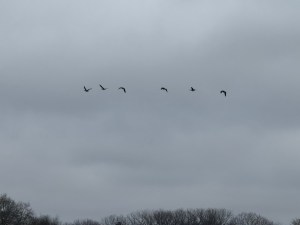
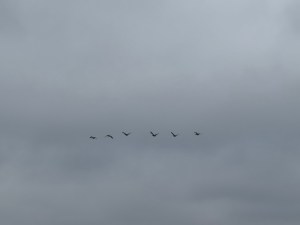
A Gallery of Geese Flying Overhead
Now to display a few Non-Feathered Wings Landing and Taking off from Charlotte-Douglas International Airport.
Frontier Airlines Frontier AirlinesAmerican Airlines American AirlinesAmerican AirlinesComing In & Flying Up, Up, & Away
Locations: Feathered Friends) Cramerton, North Carolina, USA; Non-Feathered Wings) Charlotte-Douglas International Airport, Charlotte, North Carolina, USA
God Bless. Have a wonderful week. Thank you for visiting and sharing your time and thoughts with us. I appreciate y’all very much.
Location: Old Town; Riverside Community; Cramerton, North Carolina, USA
God Bless. May the Sun Shine upon you. May your week be filled with love, laughter, and happiness. Thank you for visiting and sharing your time and thoughts with us. I appreciate y’all very much.
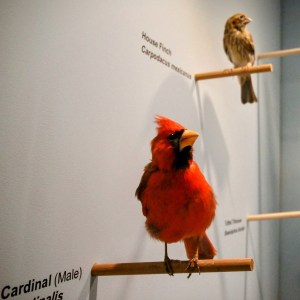
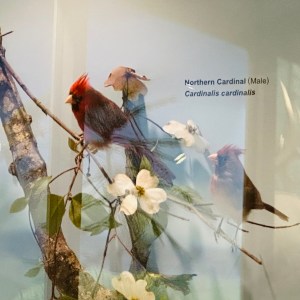
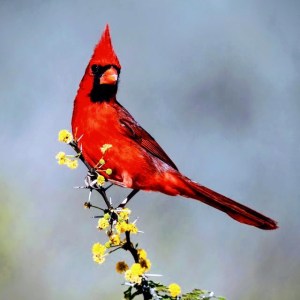
The Northern Cardinal is the official state bird of North Carolina. It was designated as such in 1943 by the North Carolina General Assembly. The bright red colour of the males feathers, black face mask and their distinctive crests make them easy to spot. The females are a duller reddish-brown with similar facial markings.
Cardinals display at The Schiele Museum of Natural History
The Northern Cardinals (also referred to as Cardinals or Redbirds) do not migrate and have adapted effortlessly to both suburban and city environments. They are the most abundant and cherished songbirds in North America.
Male Northern Cardinal
Cardinals are believed to be beneficial by providing services for the environment, such as keeping farms and gardens free of harmful plants and insects.
Cardinals are seedeaters that also eat insects, larvae, sap, and many types of fruit. They enjoy feasting on berries (even dried berries, cranberries, and raisins) sunflower seeds, safflower seeds, peanuts and cracked corn.
They have strong beaks adapted for cracking seeds. They eat seeds from a variety of sources, including weeds, grasses, and trees. Sunflower seeds, in particular, are a favorite.
Cardinals also consume a variety of wild fruits and berries, such as dogwood, wild grape, blackberry, raspberry, sumac, and cherries. They get important nutrients and sugars from these. Interestingly, the red pigments in the male cardinal’s plumage come from carotenoids found in the fruits they eat.
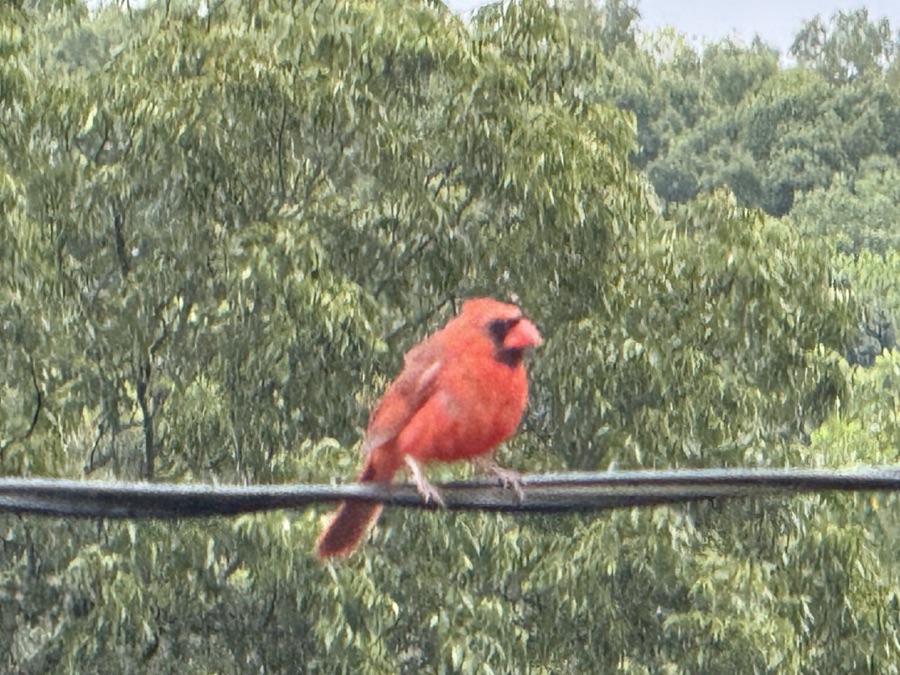
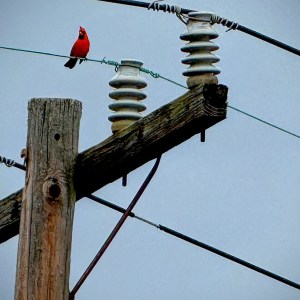
Northern Cardinal on our Wire
Cardinals thrive in a variety of habitats, including forests, woodlands, residential areas, and even parks. They are known for their loud, clear whistles and are territorial, often seen defending their space, even against their own reflection.
Hey you, I see you checking out my Feathers.
We often see Cardinals in our neighbourhood perching on wires, in trees, and checking out our bird feeder. Sometimes the wind will sway the feeder to and fro and seed will fall onto the porch railing or undeveloped planter box. This particular female Cardinal is enjoying a snack of sunflower seeds spilled onto the porch railing. Isn’t she just sitting prettily posing for me to capture her portrait?
What ya doing to me? This is not enough for my lunch. Ya gotta do better than this.
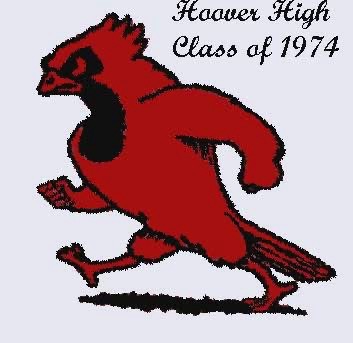
My high school mascot was Cardinals … these are recent renderings of the Cardinal for the Hoover High (San Diego) Class of 1974.
God Bless. Enjoy your week. Take time to commune with nature. Thank you for visiting and sharing your time and thoughts with us. I appreciate y’all very much.
The Chipping Sparrow (Spizella passerina) is a species of New World sparrow, a passerine bird in the family Passerellidae. It is widespread, fairly tame, and common across most of its North American range.
Aka The Chipping Sparrow
This bird is a partial migrant with northerly populations flying southwards in the fall to overwinter in Mexico and the southern United States, and flying northward again in spring.
It molts twice a year. In its breeding plumage it has orangish-rust upper parts, gray head and underparts and a distinctive reddish cap. In non-breeding plumage, the cap is brown and the facial markings are less distinct. The song is a trill and the bird has a piercing flight call that can be heard while it is migrating at night.
They mostly forage on the ground for seeds and other food items, as well as clambering on plants and trees, feeding on buds and small arthropods. Here in the East, they breed mainly in woodland, farmland, parks, and gardens. [We saw this Chipping sparrow as we left The Farmhouse on the way to The Trailhead Store.] Breeding starts in late April and May and the nest is often built in a tree.
The chipping sparrow feeds on seeds year-round, although insects form most of the diet in the breeding season. Spiders are sometimes taken. Throughout the year, chipping sparrows forage on the ground in covered areas,often near the edges of fields.
The Chipping Sparrow although common in the area is not normally observed by the Stowe Birding Club which track and monitor the birds using their bird houses strategically placed around the Stowe property. [This one Coleman spotted first a short distance from where we were walking. He loves to watch the birds and tries to keep a squirrel out of our bird feeder at home.]
Camera: Canon EOS Rebel T3i with Canon EF-S55-250mm lens and Altura UV & CPL filter attachments.
Location: The Village at Stowe; Daniel Stowe Conservancy; Belmont, North Carolina, USA
God Bless. Looking up or looking down you might spot a bird fascinating enough to watch. Maybe even capture their likeness with your camera. Thank you for visiting and sharing your time and thoughts with us. I appreciate y’all very much.
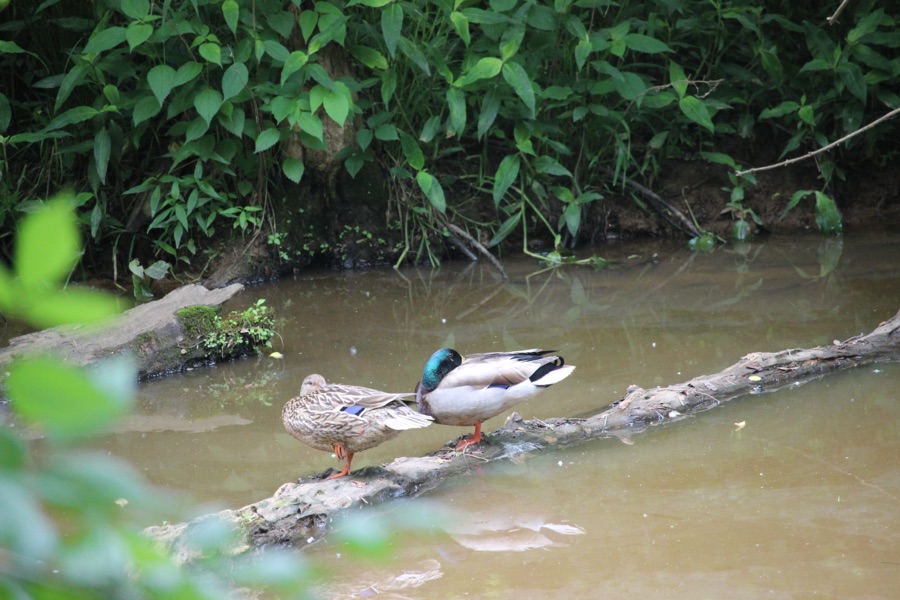
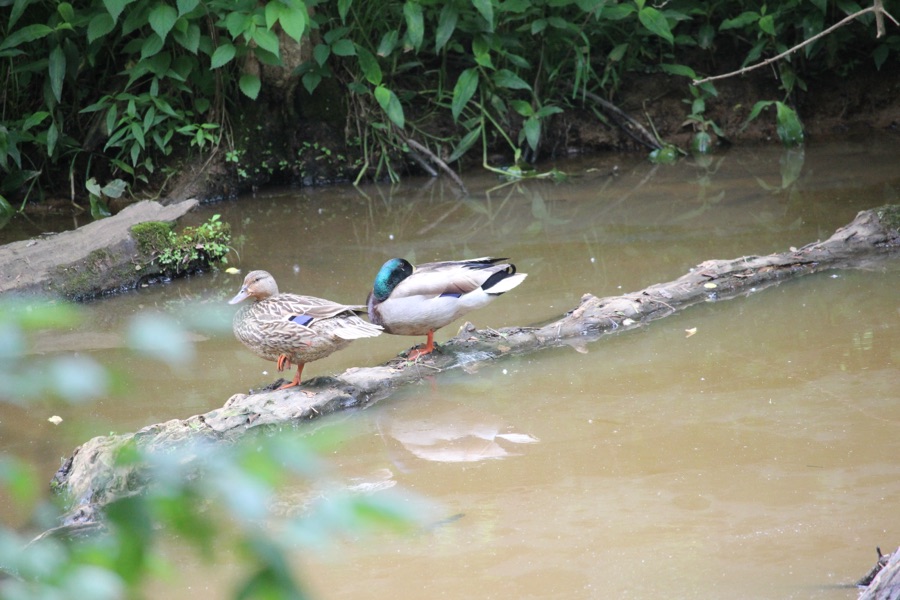
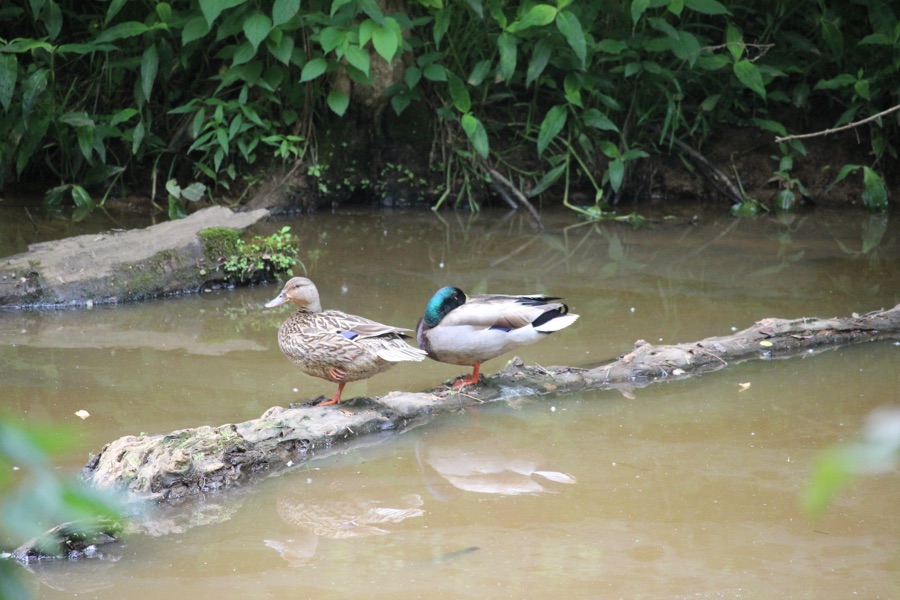
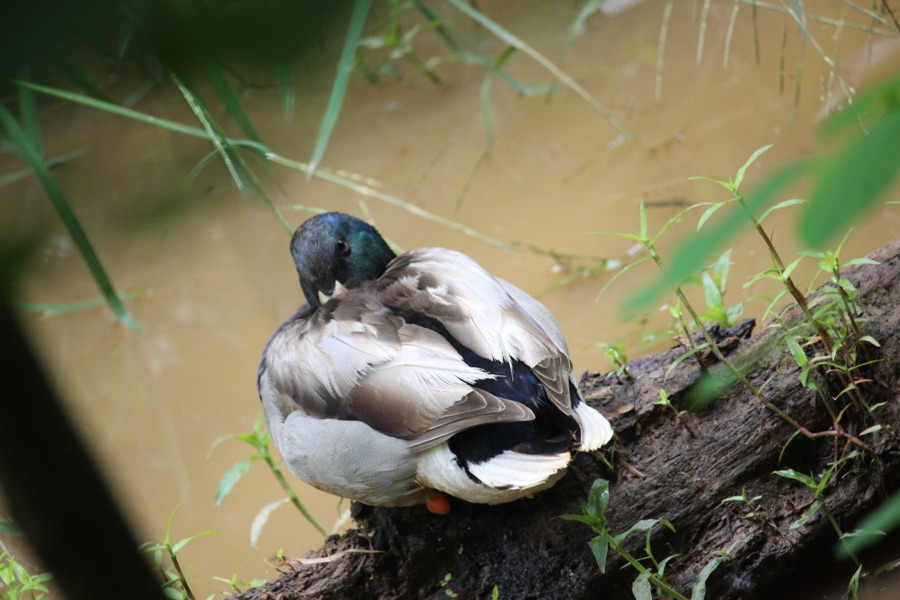
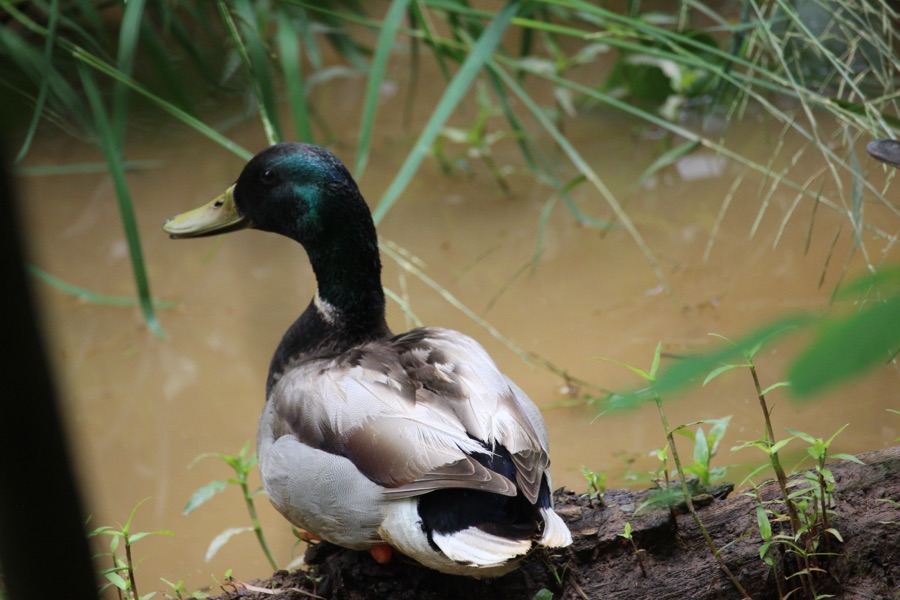
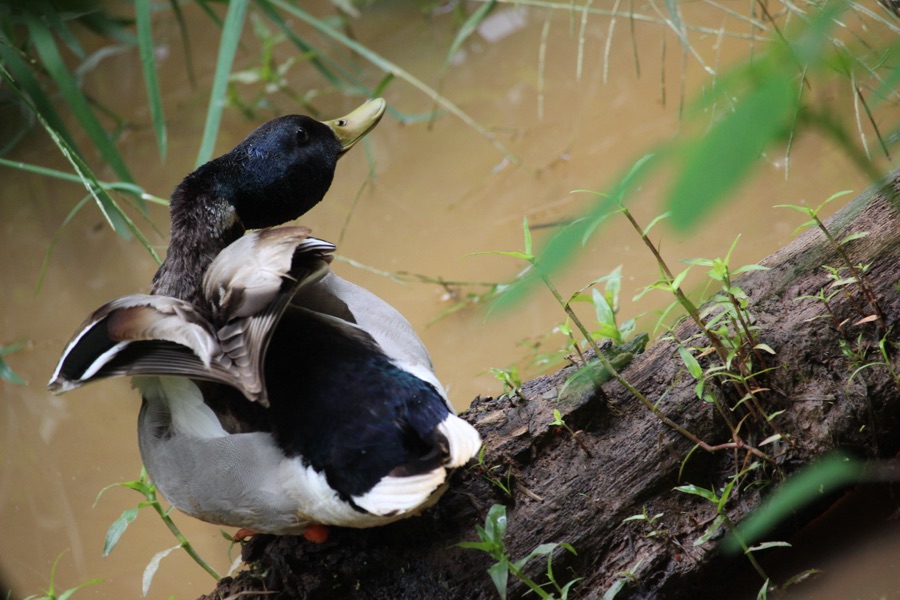
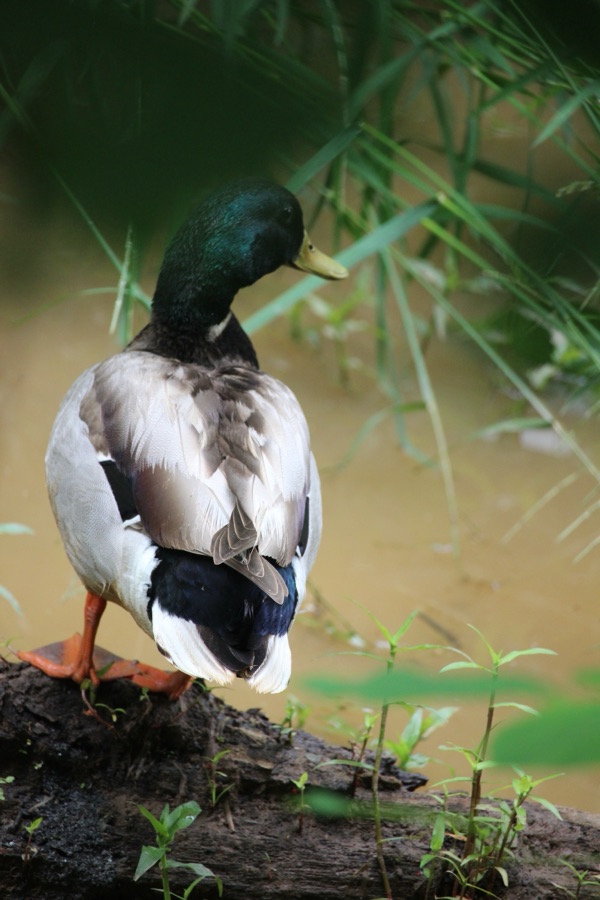
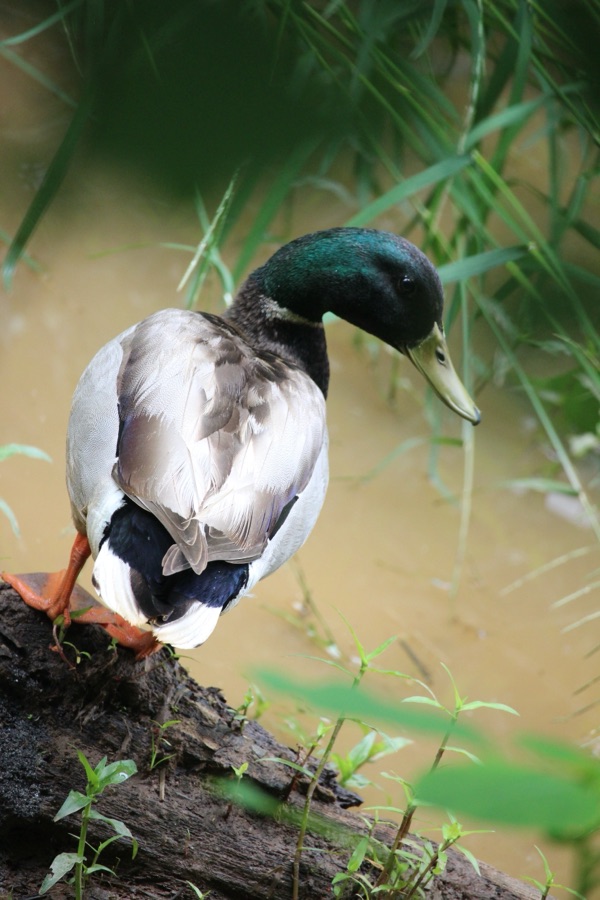
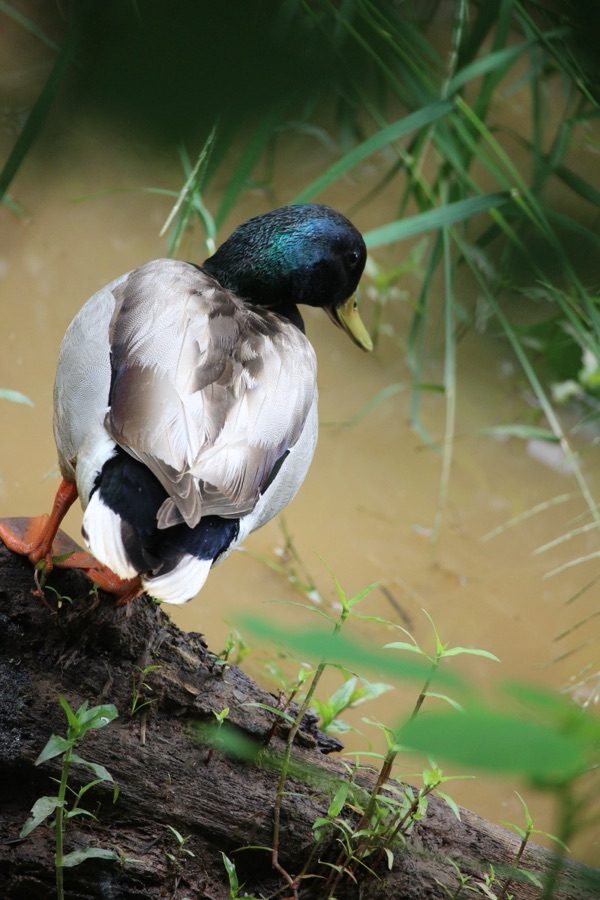
The Anas Platyrhynchos also known as Mallards are one of several varieties of duck species, which include both resident and migratory birds. The Mallard is the most abundant duck in North America, often found in a variety of habitats. Even though apparently abundant, we have not seen many of the Mallards in or around the Catawba River.
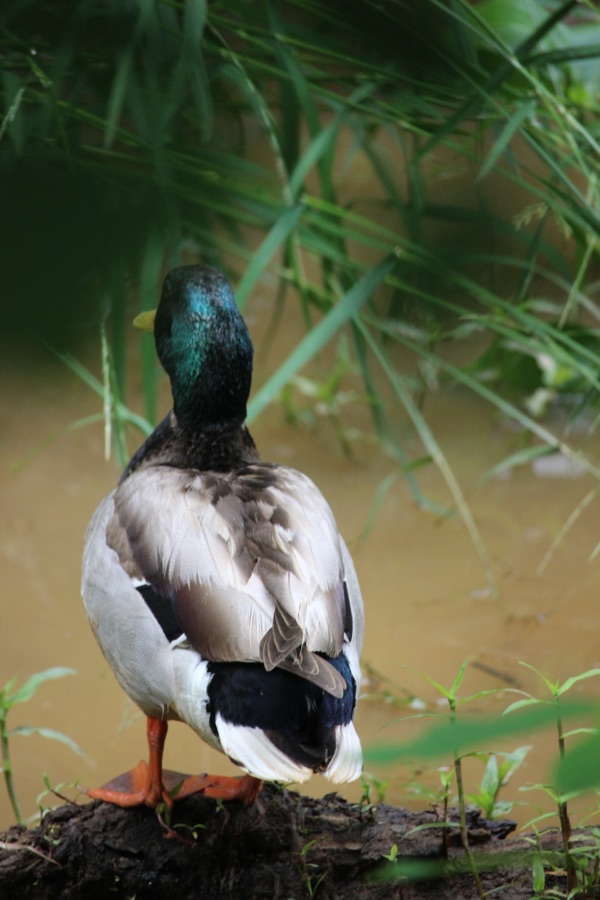
The Mallard (Anas platyrhynchos) is a widespread dabbling duck with a long body and high tail. The Mallard is easily identified by the male’s iridescent green head, white neck collar, and black tail curl. Females and juveniles have mottled brown bodies and dull orange bills. Both sexes have iridescent blue wing speculums. Mallards breed in fresh marshes surrounding lakes, ponds, beaver ponds, impoundments, open swamps, and such like areas, however, they do have a propensity to avoid nesting in brackish marshes.
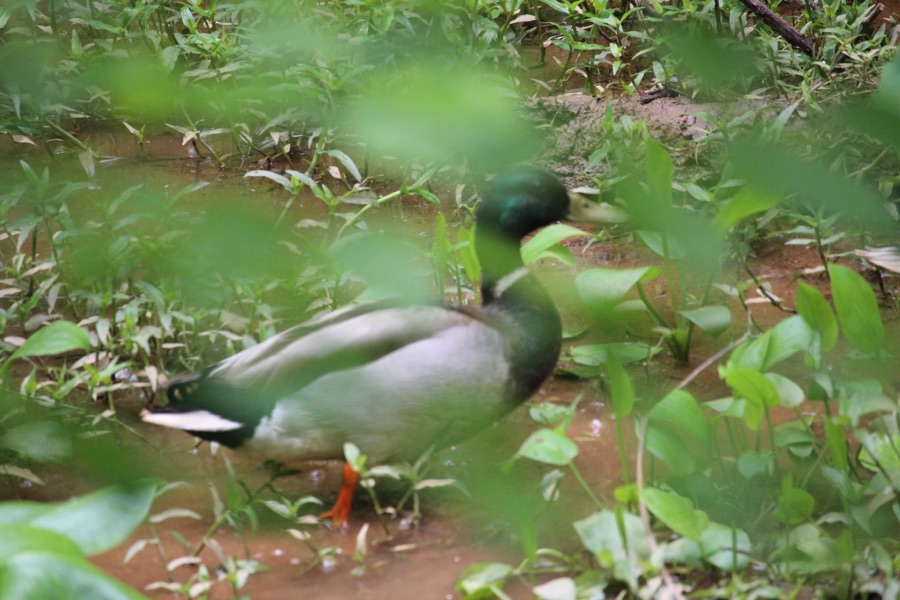
Mallard ducks in the South Fork Catawba River
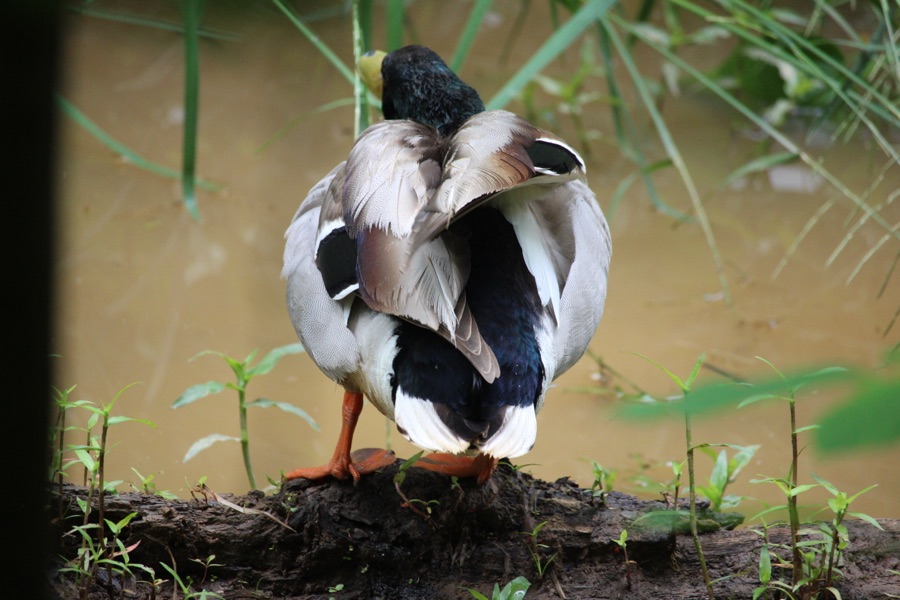
Coleman and I went hiking on the South Fork River Trail, a part of the Carolina Thread Trail, in Goat Island Park and Greenway on Saturday watching a partial day without rainfall (it rained again after we were safely home). While hiking the trail, Coleman and I were looking for the Turtles that often sun themselves on logs in the South Fork Catawba River. What were spotted prior to the Turtles were a pair of Mallards standing on a log checking out the River area. [This was the first time we’ve seen the Mallards in this region of the South Fork Catawba River.]
As we continued our hike we did encounter a lone Turtle sunning on a log which dove quickly into the river. But alas, we ventured on down the trail to find more Mallards on logs and in the river. It was fascinating to see and watch them especially since we had not previously seen the Mallards in this section of the Catawba River before.
Mallards feed in the water by tipping forward and grazing on underwater plants. They almost never dive. They can be very tame ducks especially in city ponds, and often group together with other Mallards and other species of dabbling ducks.
Mallards are able to live in almost any wetland habitat, natural or artificial. Look for them on lakes, ponds, marshes, rivers, and coastal habitats, as well as nearby city and suburban parks and residential backyards.
Camera: Canon EOS Rebel T3i with Canon EF-S55-250mm lens and Altura UV filter attachment.
Settings: f/6.3 • 1/320 • 250mm • ISO800-2000
Location: South Fork Catawba River; South Fork River Trail; River Link Greenway; Goat Island Park and Greenway; Cramerton, North Carolina, USA
God Bless. Get outdoors and enjoy nature’s beauty and natural wildlife. Have a funtastic week. Thank you for visiting and sharing your time and thoughts with us. I appreciate y’all very much.
The scientific name for Mourning Dove is Zenaida macroura. Accordingto the North Carolina Wildlife Resources CommissionMourning Doves are common throughout North Carolina. However, this is the first time Coleman and I have seen them in our neighbourhood. They are members of the dove family, Columbidae. The Mourning Dove is also known by the American mourning dove, the Rain dove, the chueybird. At one point in time they were once referred to as the Carolina pigeon and Carolina turtledove.
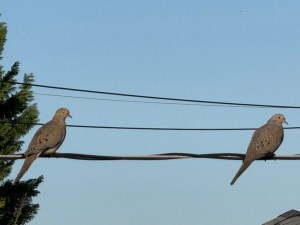
A Pair of Mourning Doves
Mourning Doves are one of the most abundant and widespread North American birds and a popular gamebird. Approximately twenty (20) million birds are shot annually in the United States, both for sport and meat. It is said that one pair may raise up to six (6) broods of two (2) squabs (young) each in a single year in warm climate areas.
Mourning Doves on a Wire
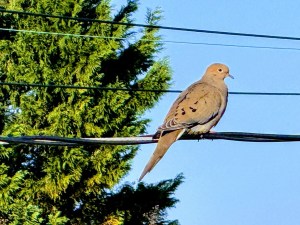
These birds (the mourning doves) are often found near humans, whether gobbling up seeds under a feeder, perching on a telephone wire, or building a nest in a questionable location. The macroura in its scientific name comes from the Greek words for “long tail.” The Mourning Doves tail is slender, tapered, and has white-tipped outer feathers which is a clue to distinguish it apart from other Doves like the Eurasian Collared-Dove and the White-winged Dove Those doves tails end in square tips.
Mourning Dove aka Zenaida macroura
Mourning Doves are known to be skittish. They make a sharp whistling sound when they take flight. The noise doesn’t come from their beaks, however, it is actually made by their wings as air rushes through their feathers and causes them to vibrate.
Mourning Dove
It is interesting to note that when Mourning Doves locate a food source, such as seeds on the ground (and possibly in a bird feeder); they prefer to grab as much as they can manage, storing their haul in a throat pouch called the crop. Then, they’ll fly off to a safe spot to work on digesting.
Good Evening, Mourning Dove
In some spiritual or symbolic interpretations, a mourning dove’s appearance can be seen as a message of peace, hope, or a gentle reminder of loved ones, or even a visit from a deceased person. Some people believe that the sight of a Mourning Dove is a message from God, angels, or other spiritual guides. To hear the cooing of a mourning dove can be understood as a call to seek and find inner peace. Another thought is that Doves may remind us to hold on to hope and not fear death, but instead to think of it as a new beginning.
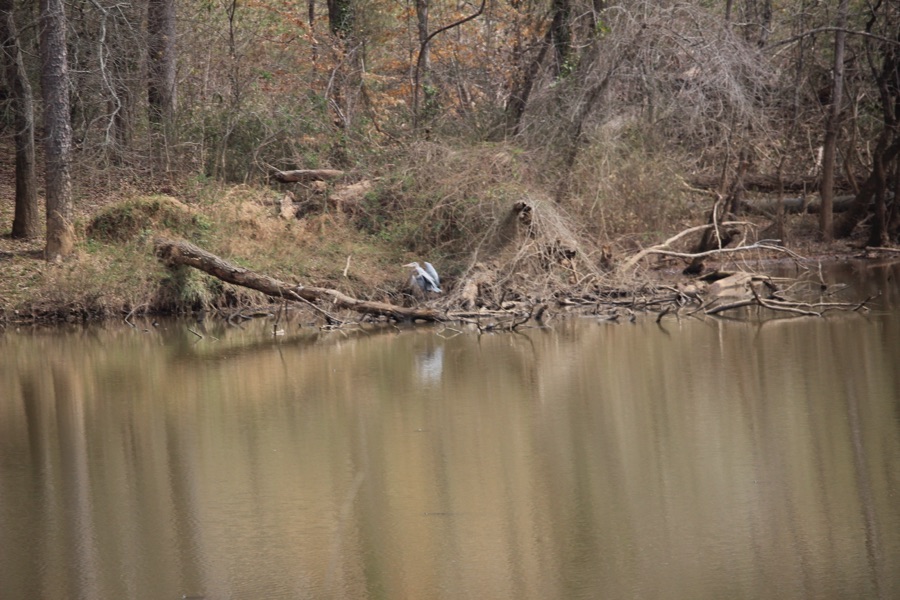
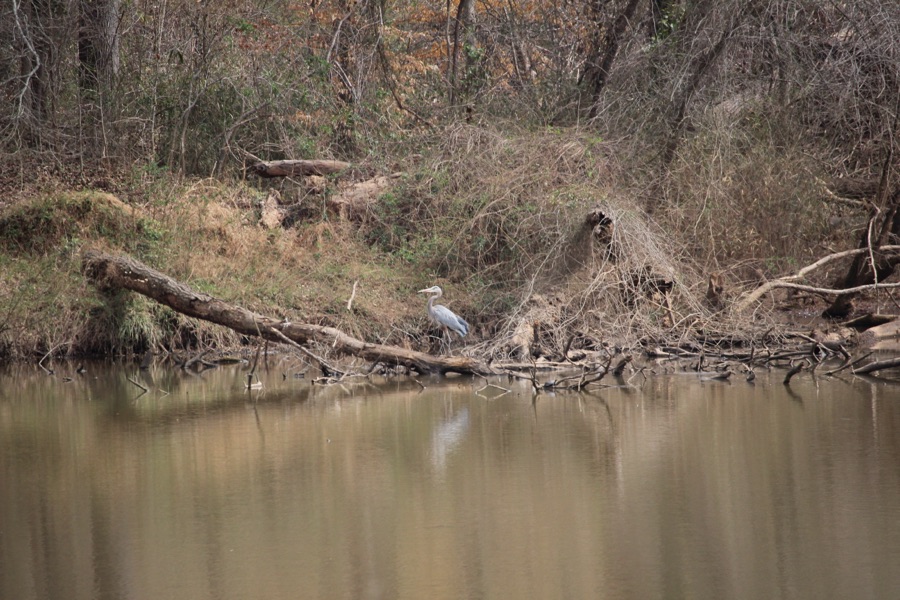
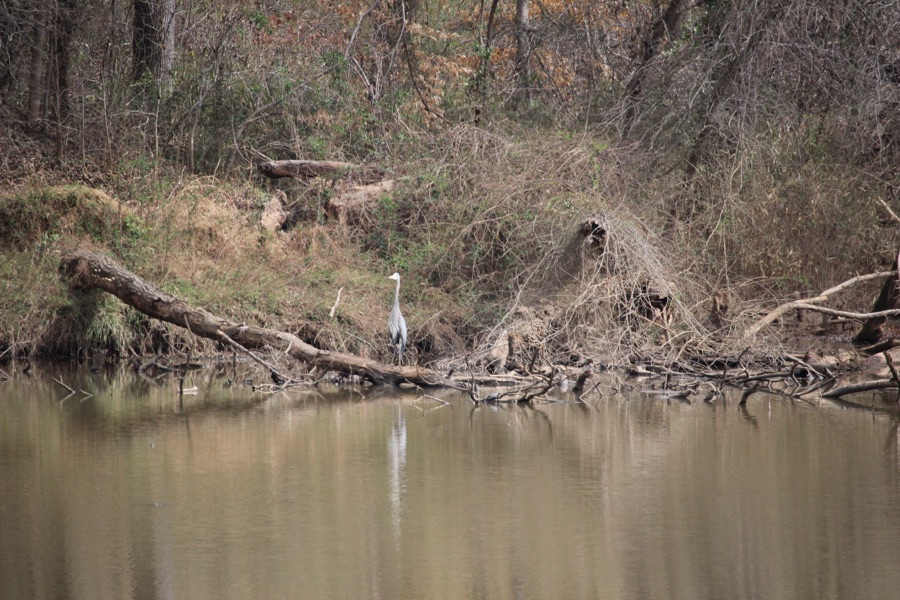
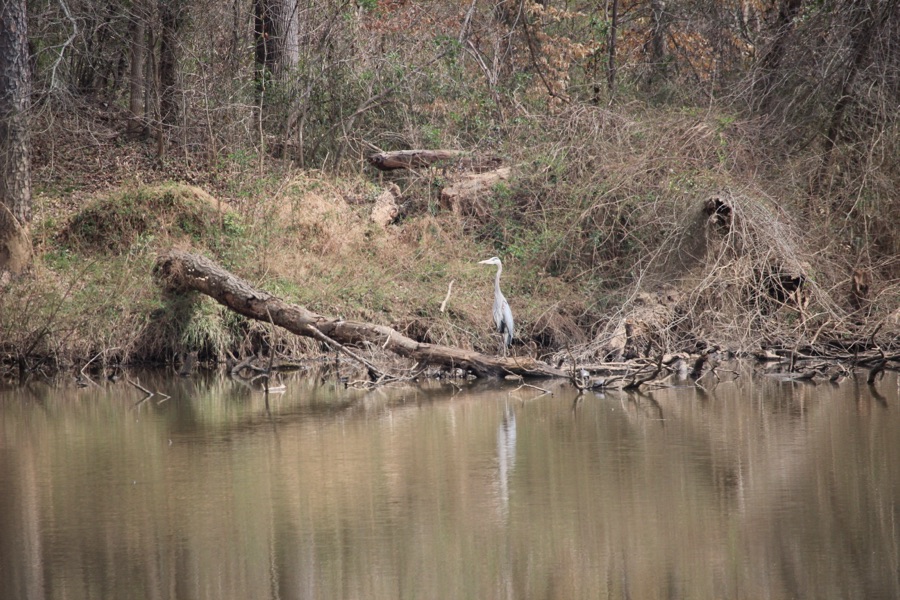
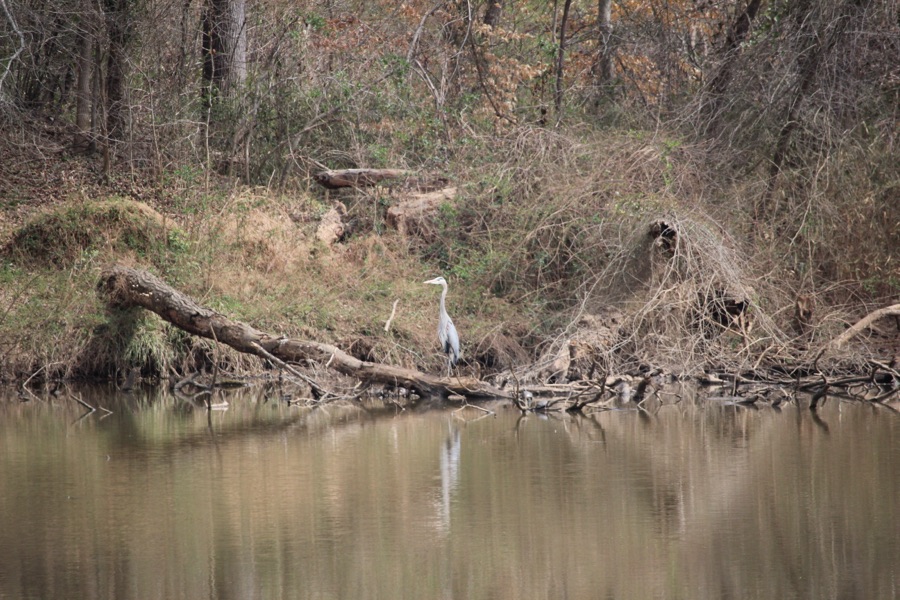
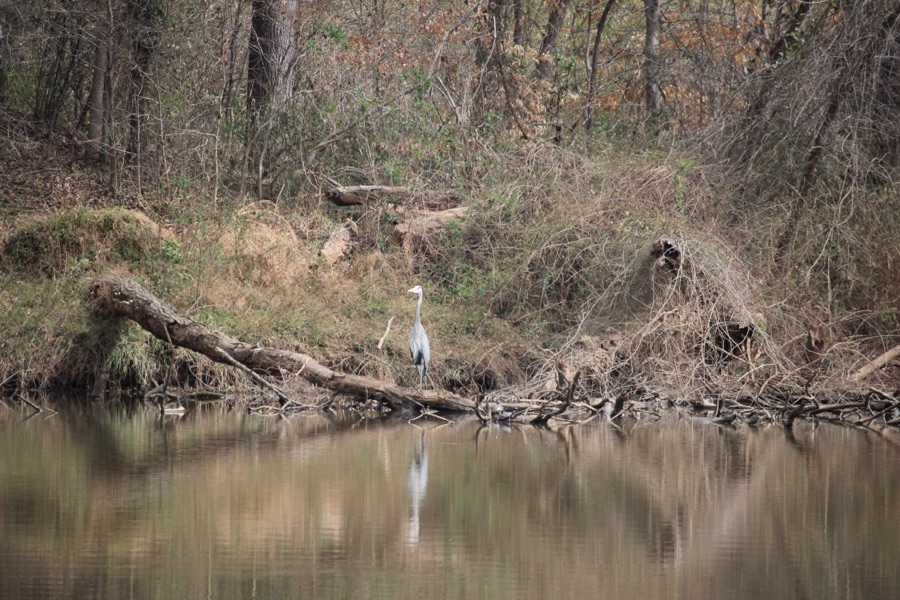
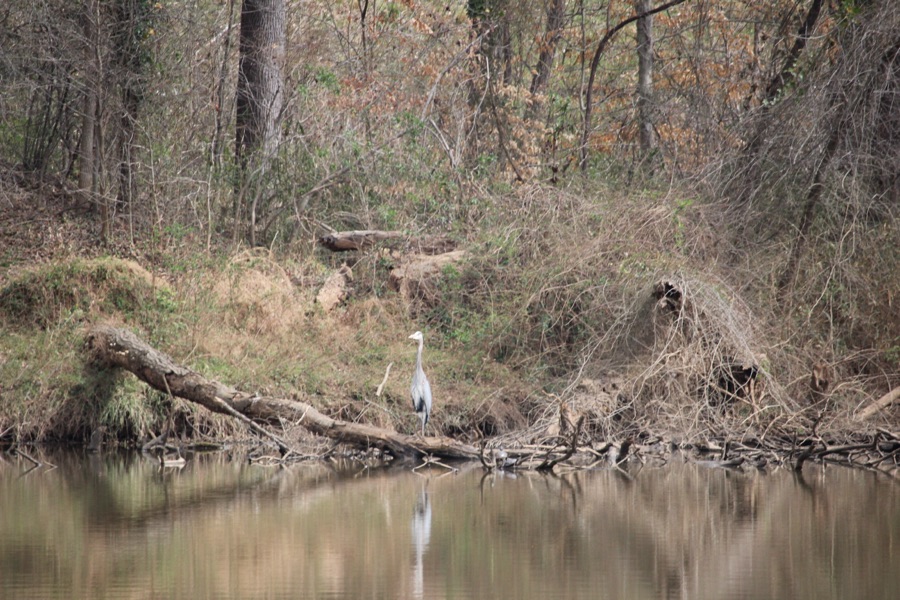
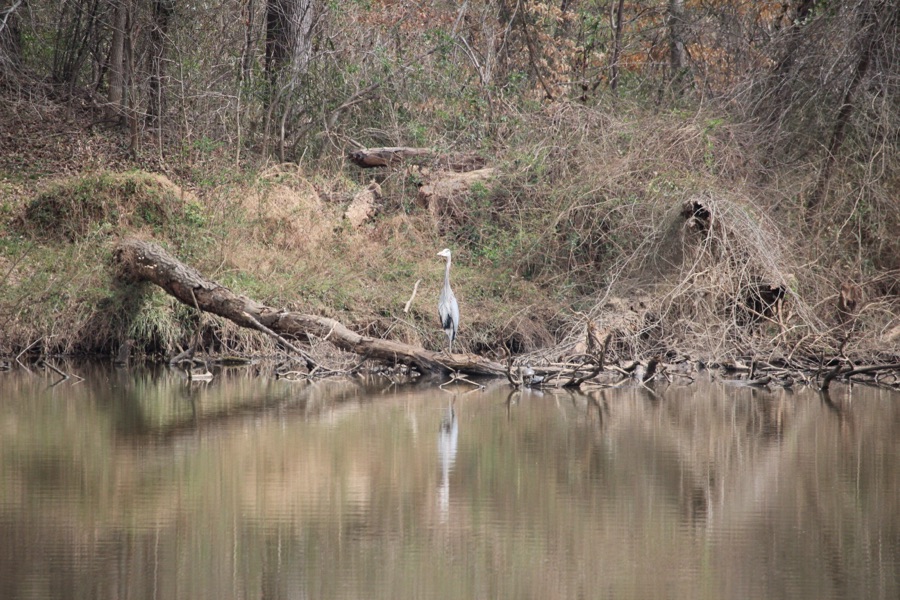
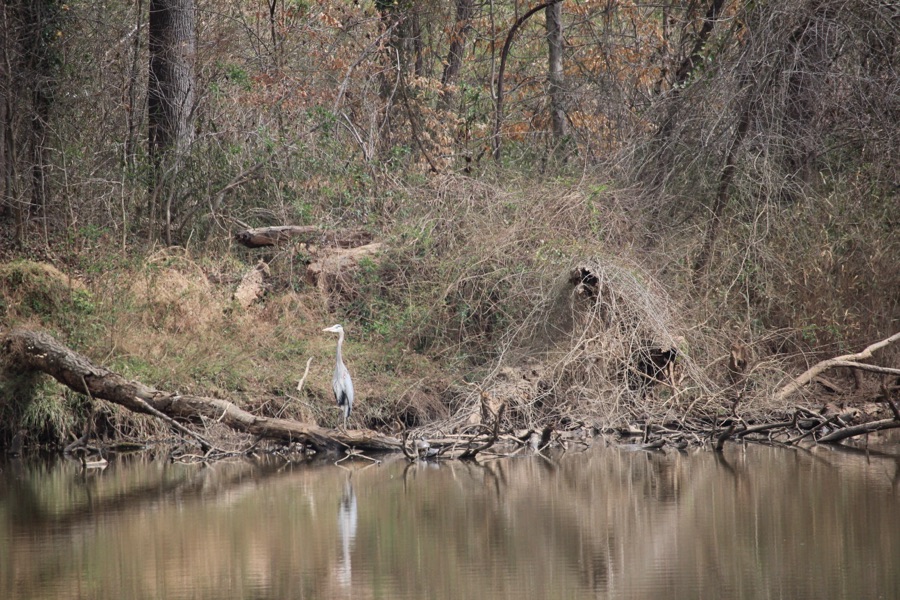
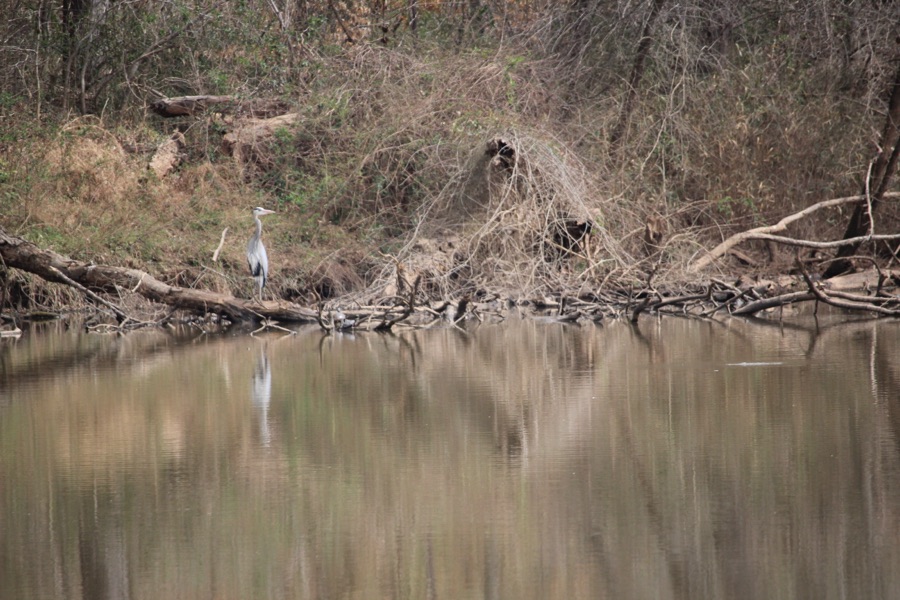
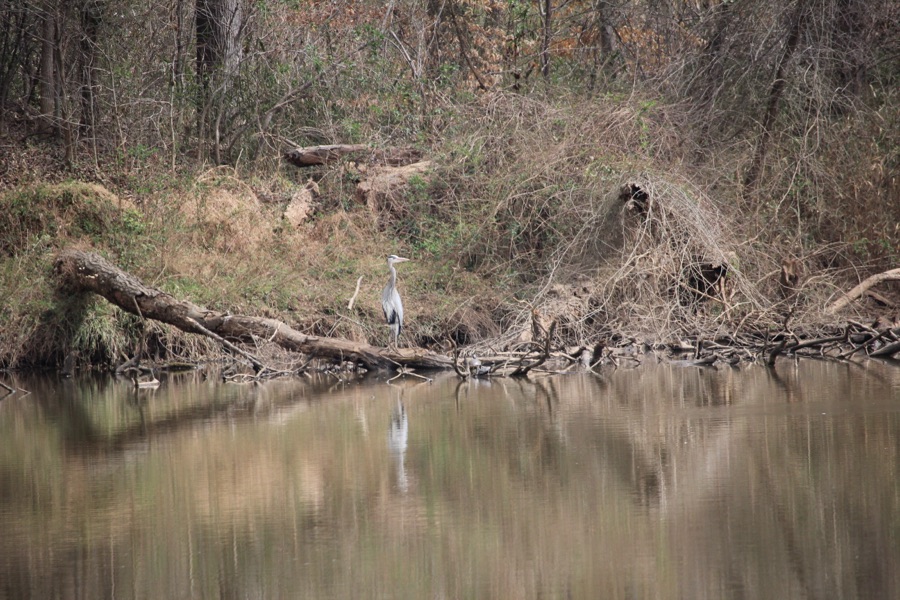
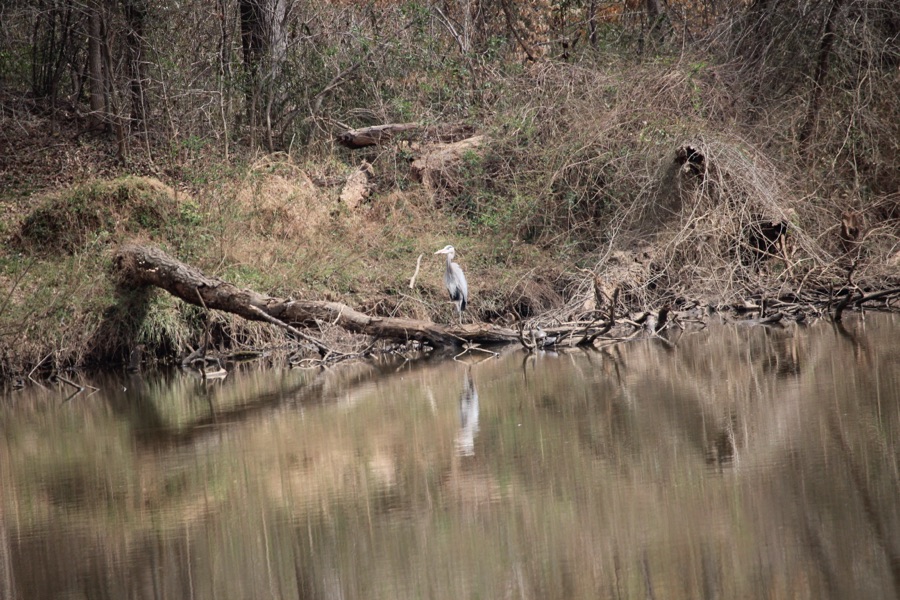
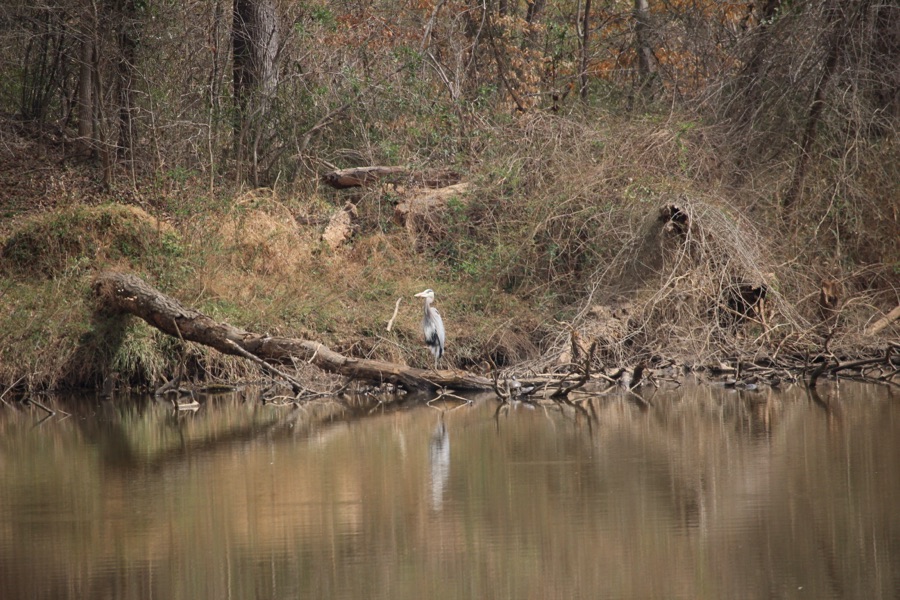
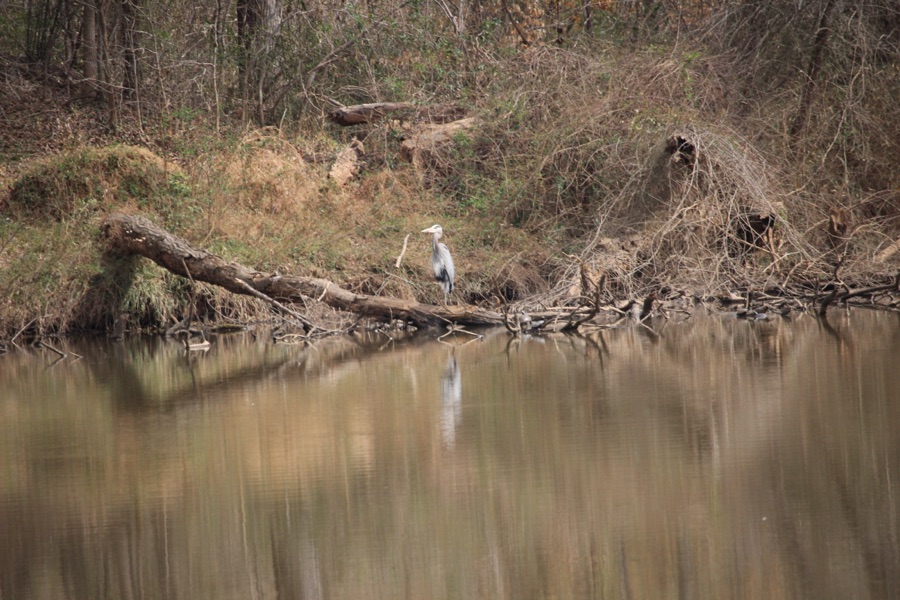
… Watching the Great Blue Heron Looking around admiring his views and insights on the South Fork Catawba River.
The Great Blue Heron is stated to be seen year-round in the Carolinas, however, in our area of Southwestern North Carolina the Herons and other Cormorants tend to be seasonal in the inland regions. On this day, it was the first time the Cormorants and Great Blue Herons had been spotted since the end of summer.
The Great Blue Heron (Egretta thula) is the largest heron in North America and one of North Carolina’s most familiar and frequently seen wading birds. It is commonly observed around shores of open water and in wetlands where it stands silently or walks very slowly waiting for prey to get close enough so it can spear it with a rapid thrust of its bill.
The Great Blue Heron stands more than three (3) feet tall as an adult and weighs approximately 5.5 pounds (lbs). Its wingspan extends nearly 6.5 feet.
The Great Blue Herons live in both freshwater and saltwater habitats, including marshes, swamps, shores, rivers and tidal flats. These sightings were located near the shoreline of the South Fork Catawba River around Goat Island in Cramerton, North Carolina.
For the most part the South Fork Catawba River is a slow-moving river with calm waters. The Great Blue Heron prefers the calm waters to forage and the ability to feed on almost anything that comes within striking distance of its long, pointed bill. They typically feed in shallow waters.
Coleman and I were delighted to watch the Great Blue Heron soar over the river and land on the opposite bank from where we were hiking. Naturally, I aimed my camera towards the Great Blue Heron and proceeded to snap several shots. The Great Blue Heron stood tall and upright looking all around the waters of the South Fork Catawba River being observant of his entire environment.
Camera: Canon EOS Rebel T3i with Canon EF-S55-250mm lens and Altura UV Filter attachment. [This was a time I wished I had a longer lens or at least a 2X converter to capture a closer view.]
Location: South Fork Catawba River; Goat Island Park and Greenway; Cramerton, North Carolina, USA
God Bless. Be Observant. Be Kind. Have a wonderful day. Thank you for visiting and sharing your time and thoughts with us. I appreciate y’all very much.











 Gfpacificbee’s Insights & photography