Location: Old Town; Riverside Community; Cramerton, North Carolina, USA
God Bless. May the Sun Shine upon you. May your week be filled with love, laughter, and happiness. Thank you for visiting and sharing your time and thoughts with us. I appreciate y’all very much.
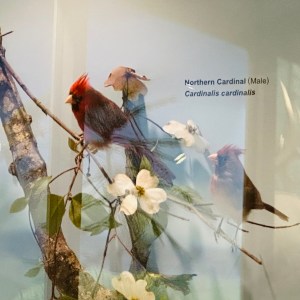
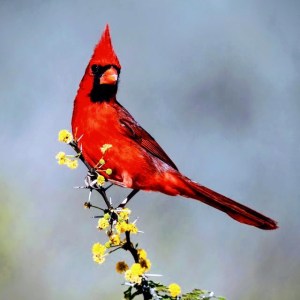
The Northern Cardinal is the official state bird of North Carolina. It was designated as such in 1943 by the North Carolina General Assembly. The bright red colour of the males feathers, black face mask and their distinctive crests make them easy to spot. The females are a duller reddish-brown with similar facial markings.
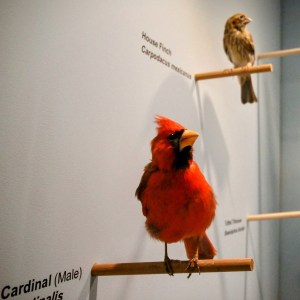
Cardinals display at The Schiele Museum of Natural History
The Northern Cardinals (also referred to as Cardinals or Redbirds) do not migrate and have adapted effortlessly to both suburban and city environments. They are the most abundant and cherished songbirds in North America.
Male Northern Cardinal
Cardinals are believed to be beneficial by providing services for the environment, such as keeping farms and gardens free of harmful plants and insects.
Cardinals are seedeaters that also eat insects, larvae, sap, and many types of fruit. They enjoy feasting on berries (even dried berries, cranberries, and raisins) sunflower seeds, safflower seeds, peanuts and cracked corn.
They have strong beaks adapted for cracking seeds. They eat seeds from a variety of sources, including weeds, grasses, and trees. Sunflower seeds, in particular, are a favorite.
Cardinals also consume a variety of wild fruits and berries, such as dogwood, wild grape, blackberry, raspberry, sumac, and cherries. They get important nutrients and sugars from these. Interestingly, the red pigments in the male cardinal’s plumage come from carotenoids found in the fruits they eat.
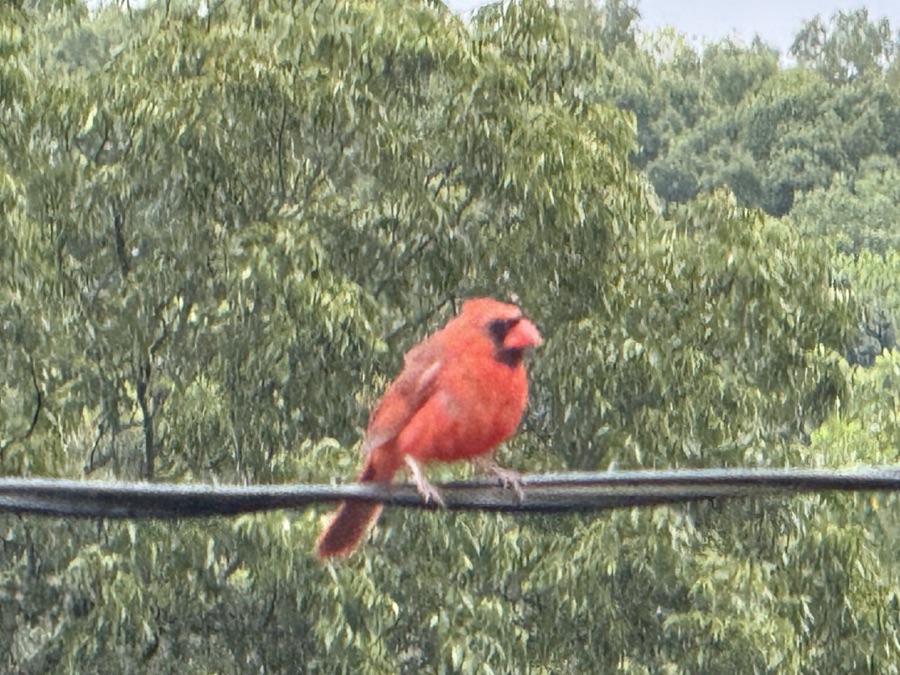
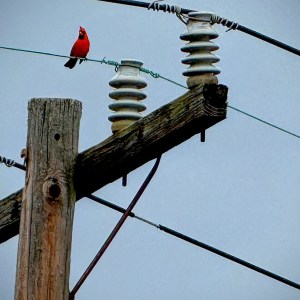
Northern Cardinal on our Wire
Cardinals thrive in a variety of habitats, including forests, woodlands, residential areas, and even parks. They are known for their loud, clear whistles and are territorial, often seen defending their space, even against their own reflection.
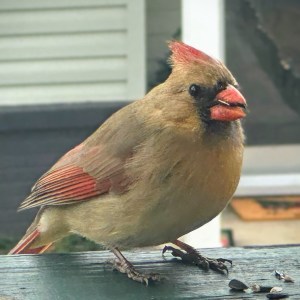
Hey you, I see you checking out my Feathers.
We often see Cardinals in our neighbourhood perching on wires, in trees, and checking out our bird feeder. Sometimes the wind will sway the feeder to and fro and seed will fall onto the porch railing or undeveloped planter box. This particular female Cardinal is enjoying a snack of sunflower seeds spilled onto the porch railing. Isn’t she just sitting prettily posing for me to capture her portrait?
What ya doing to me? This is not enough for my lunch. Ya gotta do better than this.
My high school mascot was Cardinals … these are recent renderings of the Cardinal for the Hoover High (San Diego) Class of 1974.
God Bless. Enjoy your week. Take time to commune with nature. Thank you for visiting and sharing your time and thoughts with us. I appreciate y’all very much.
The scientific name for Mourning Dove is Zenaida macroura. Accordingto the North Carolina Wildlife Resources CommissionMourning Doves are common throughout North Carolina. However, this is the first time Coleman and I have seen them in our neighbourhood. They are members of the dove family, Columbidae. The Mourning Dove is also known by the American mourning dove, the Rain dove, the chueybird. At one point in time they were once referred to as the Carolina pigeon and Carolina turtledove.
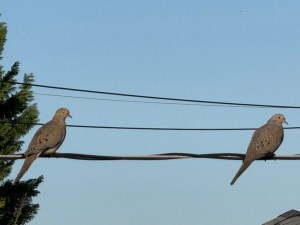
A Pair of Mourning Doves
Mourning Doves are one of the most abundant and widespread North American birds and a popular gamebird. Approximately twenty (20) million birds are shot annually in the United States, both for sport and meat. It is said that one pair may raise up to six (6) broods of two (2) squabs (young) each in a single year in warm climate areas.
Mourning Doves on a Wire
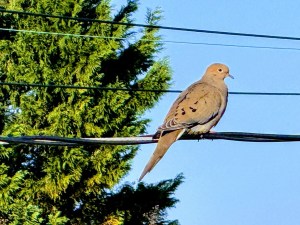
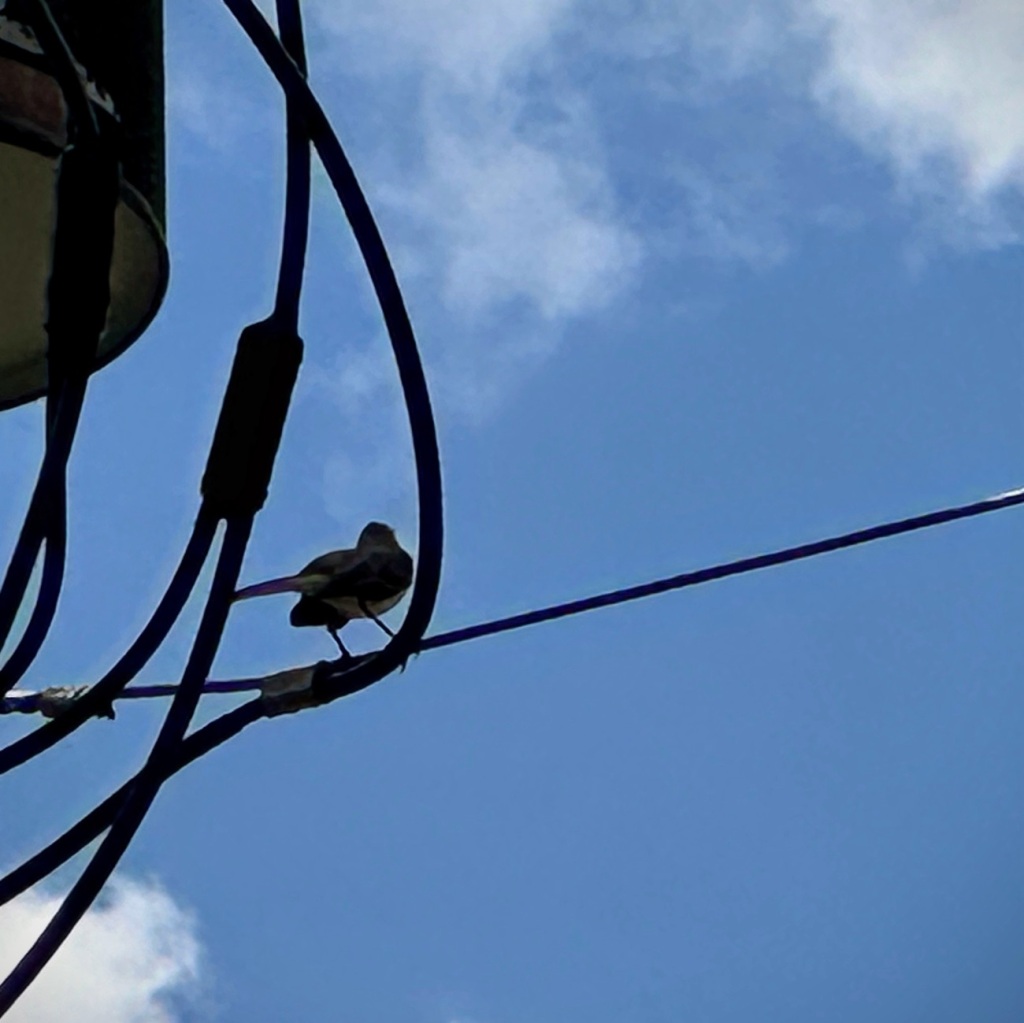
These birds (the mourning doves) are often found near humans, whether gobbling up seeds under a feeder, perching on a telephone wire, or building a nest in a questionable location. The macroura in its scientific name comes from the Greek words for “long tail.” The Mourning Doves tail is slender, tapered, and has white-tipped outer feathers which is a clue to distinguish it apart from other Doves like the Eurasian Collared-Dove and the White-winged Dove Those doves tails end in square tips.
Mourning Dove aka Zenaida macroura
Mourning Doves are known to be skittish. They make a sharp whistling sound when they take flight. The noise doesn’t come from their beaks, however, it is actually made by their wings as air rushes through their feathers and causes them to vibrate.
Mourning Dove
It is interesting to note that when Mourning Doves locate a food source, such as seeds on the ground (and possibly in a bird feeder); they prefer to grab as much as they can manage, storing their haul in a throat pouch called the crop. Then, they’ll fly off to a safe spot to work on digesting.
Good Evening, Mourning Dove
In some spiritual or symbolic interpretations, a mourning dove’s appearance can be seen as a message of peace, hope, or a gentle reminder of loved ones, or even a visit from a deceased person. Some people believe that the sight of a Mourning Dove is a message from God, angels, or other spiritual guides. To hear the cooing of a mourning dove can be understood as a call to seek and find inner peace. Another thought is that Doves may remind us to hold on to hope and not fear death, but instead to think of it as a new beginning.






 Gfpacificbee’s Insights & photography