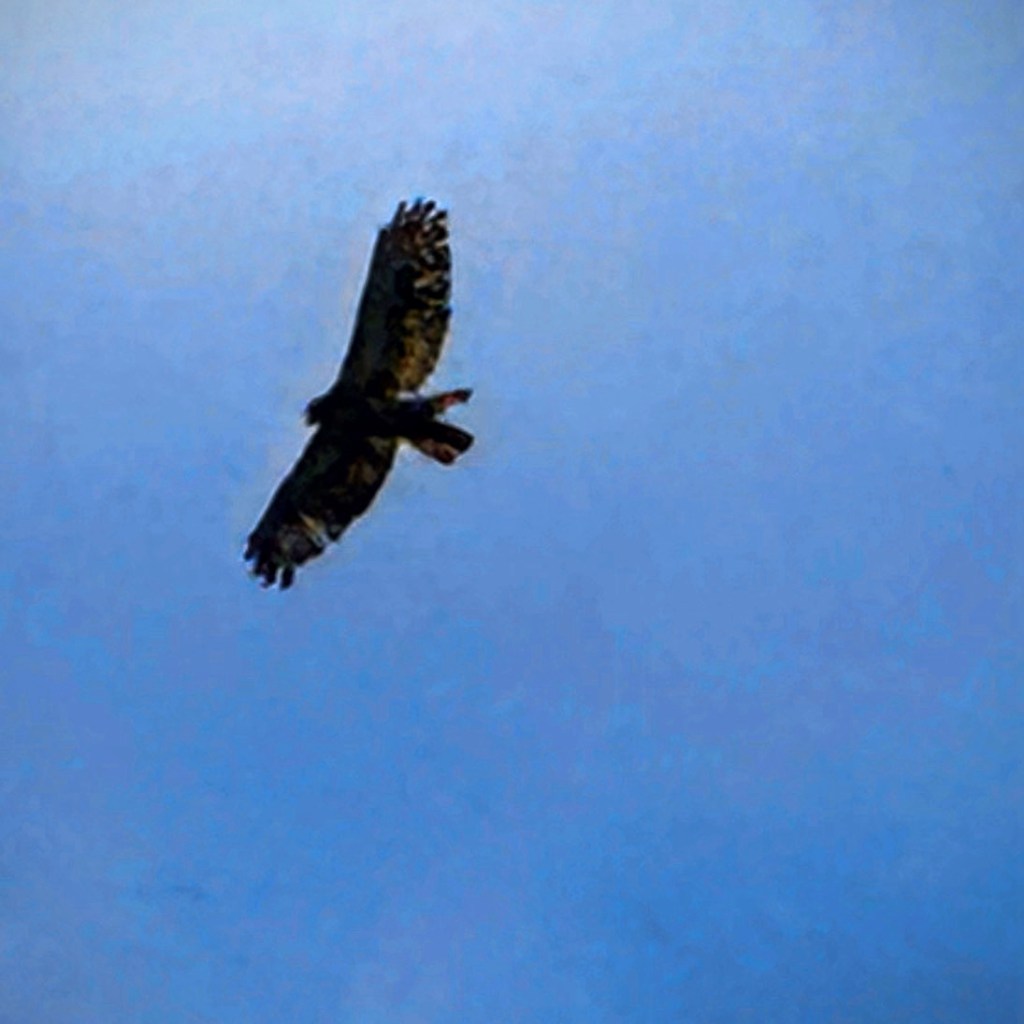
Birds of the Carolinas #6

The Carib Grackle

(Quiscalus lugubris)

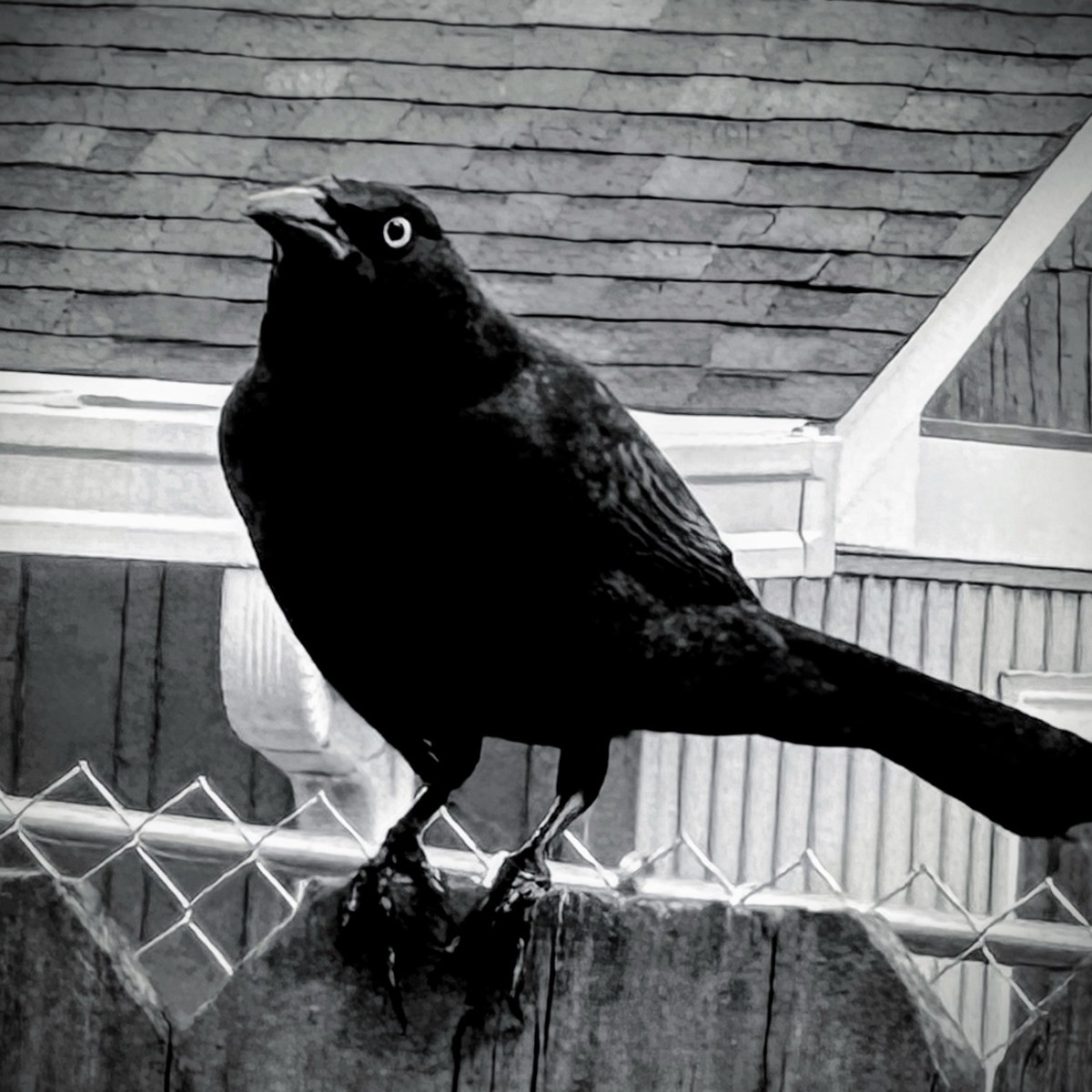
The Carib Grackle also referred to as the Common Grackle is a tropical blackbird which is taller and longer than the typical blackbird. The plumage of Grackles are entirely black, however it has a beautiful glossy iridescent body that may display violets, purples, blues, and greens when the sun is shining on them in just the right manner.
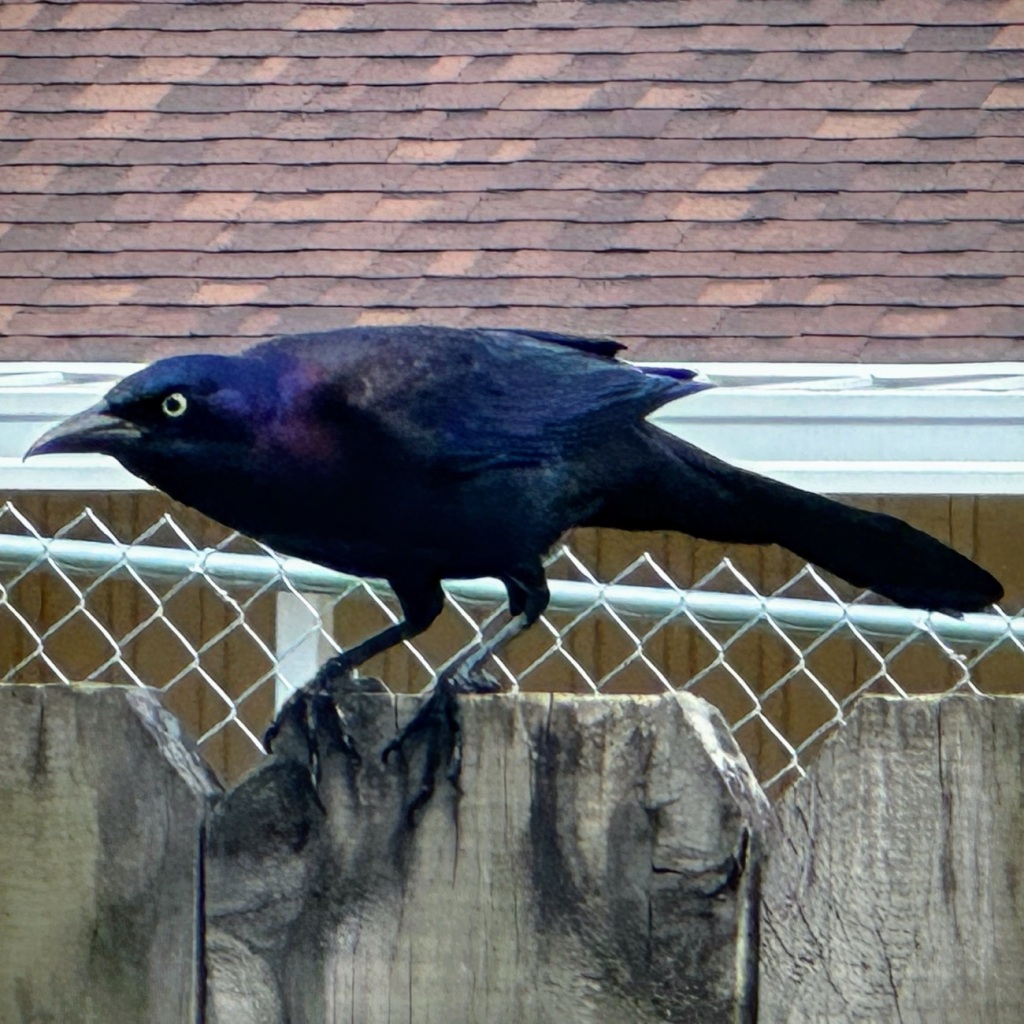
Quiscalus lugubris

Grackles eat almost anything and everything they can find. They commonly eat insects, minnows, frogs, lizards, berries, grains, and even small birds and mice. They will confiscate food from other birds. And sometimes as these Grackles pictured here are exemplifying HOPE for a few morsels of bread crust or crumbs that may get dropped on the ground or scattered for other birds.
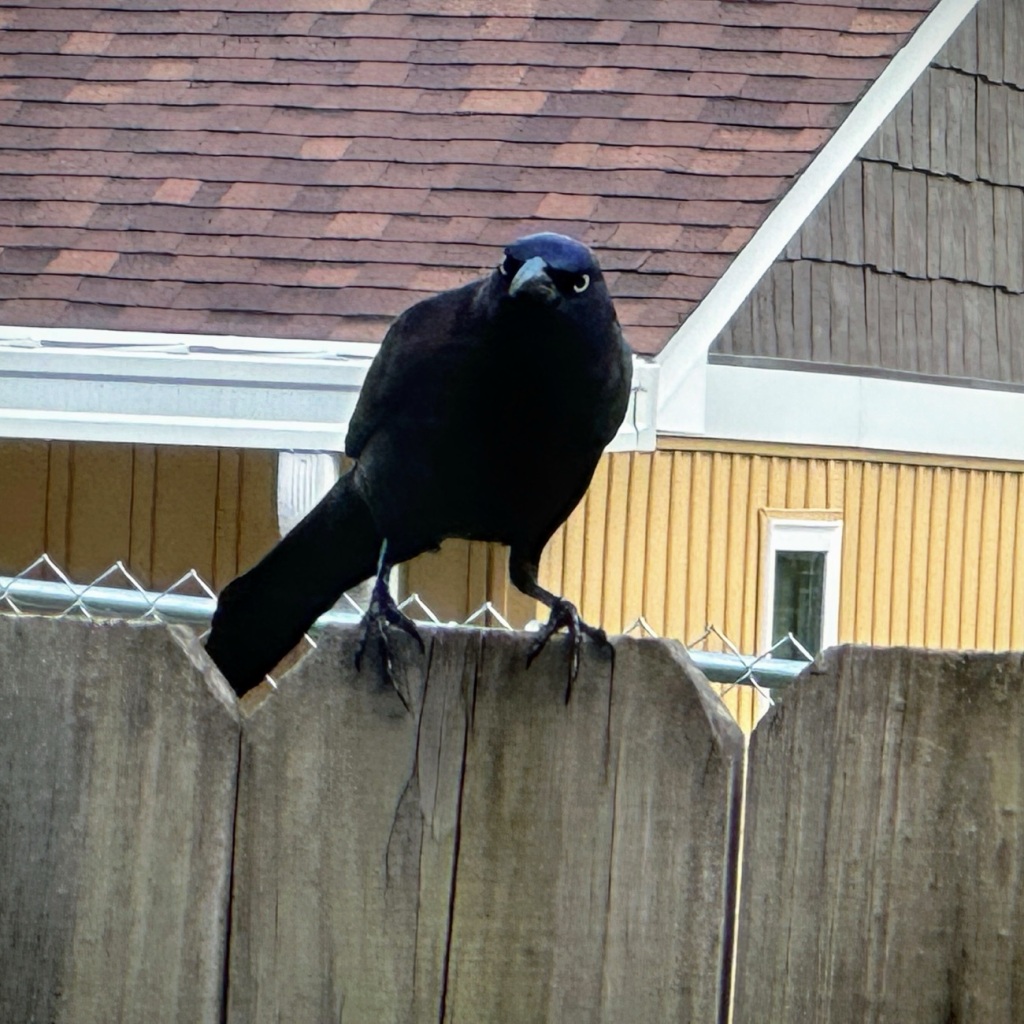
Carib Grackle

The Carib Grackle’s song is a mixture of harsh and melodic musical squeaks, croaks, and whistles which seem to sound anywhere from guttural to high-pitched clear whistles. Some people have compared their singing as sounding like a rusty gate.

Carib Grackle
Quiscalus lugubris in Monochrome

If you see them foraging around your yard or picnic table they are scavenging and are hoping you’ll share your food (or at least some bread crumbs) with them.

Birds of the Carolinas 

Bird of the Week 2024

Becky’s #SquareRenewal

Lens-Artists Photography Challenge #299- Hopeful

Photo Credit:©️2024 Deb L. Waters … All Rights Reserved.

Camera: iPhone 14 Pro Max

Location: Huntingtowne Neighbourhood; Gastonia, North Carolina, USA

God Bless. May all your hopes, dreams, and prayers be fulfilled. Take care of yourselves and have a fantastic rest of your week. Thank you for visiting and sharing your time and thoughts with me. I appreciate y’all very much.
Birds of the Carolinas #5

Great Blue Heron 

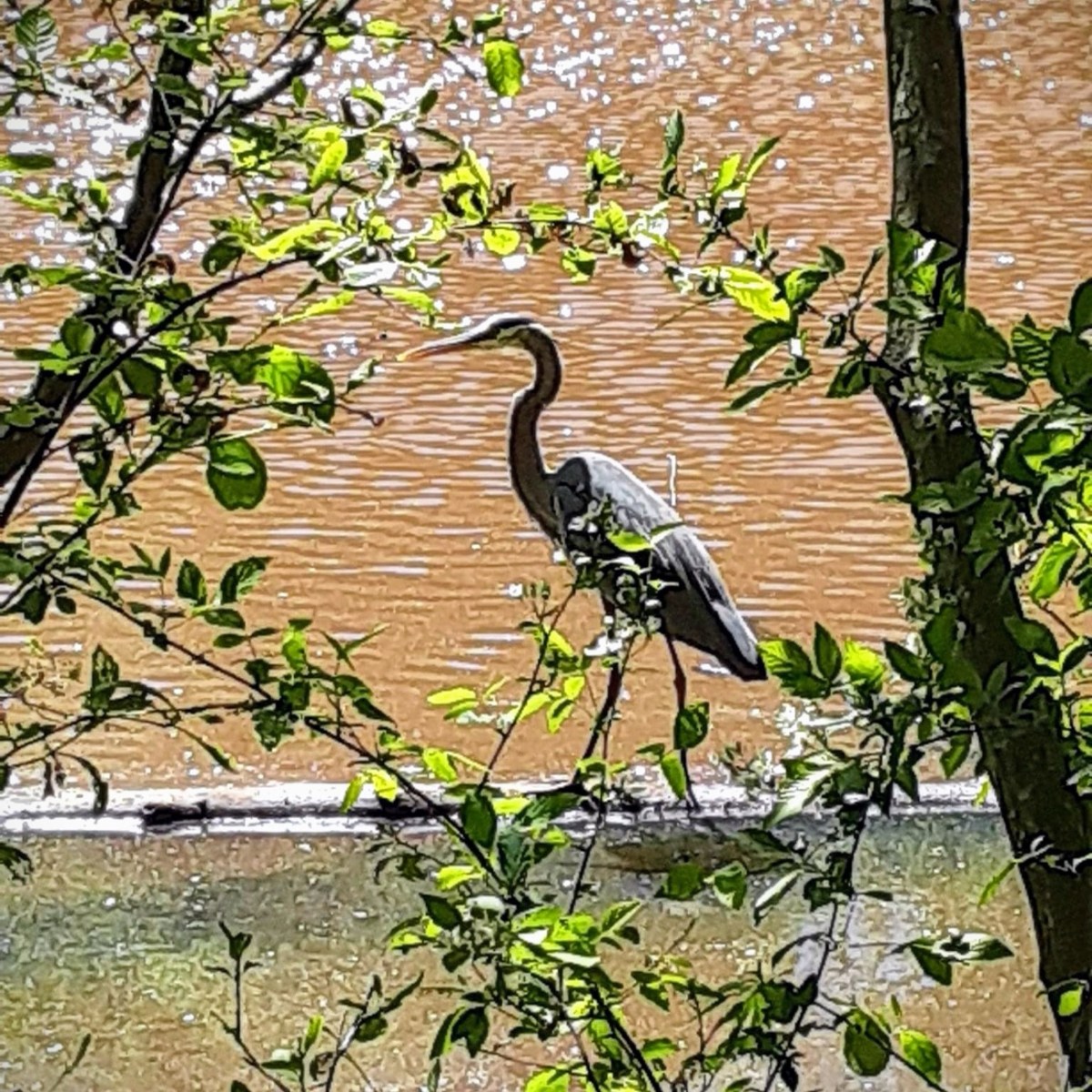
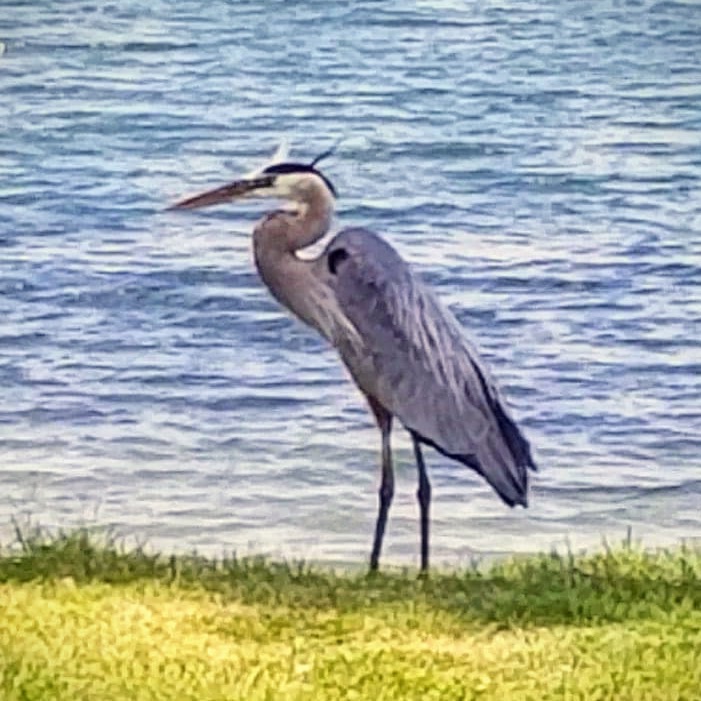
The Great Blue Heron (Ardea herodias) can be spotted around ponds and lakes. I normally see them around the smaller lakes and ponds in and around Anne Springs Close Greenway.

Great Blue Herons can hunt during the nighttime as well as during the day. Interestingly they have a high percentage of rodents-type photoreceptors in their eyes that improve their night vision. They congregate at fish hatcheries, creating potential problems for the fish farmers.

Ardea herodias
Great Blue Heron

Anne Springs Close Greenway

The Great Blue Heron is a majestic sight to behold. Its subtle blue-grey plumage frequently stands motionless as it scan for  prey or wades belly deep with long, deliberate steps. They may move slowly, but Great Blue Herons can strike like lightning to grab a fish or snap up a gopher. In flight, look for this widespread heron’s tucked-in neck and long legs trailing out behind.

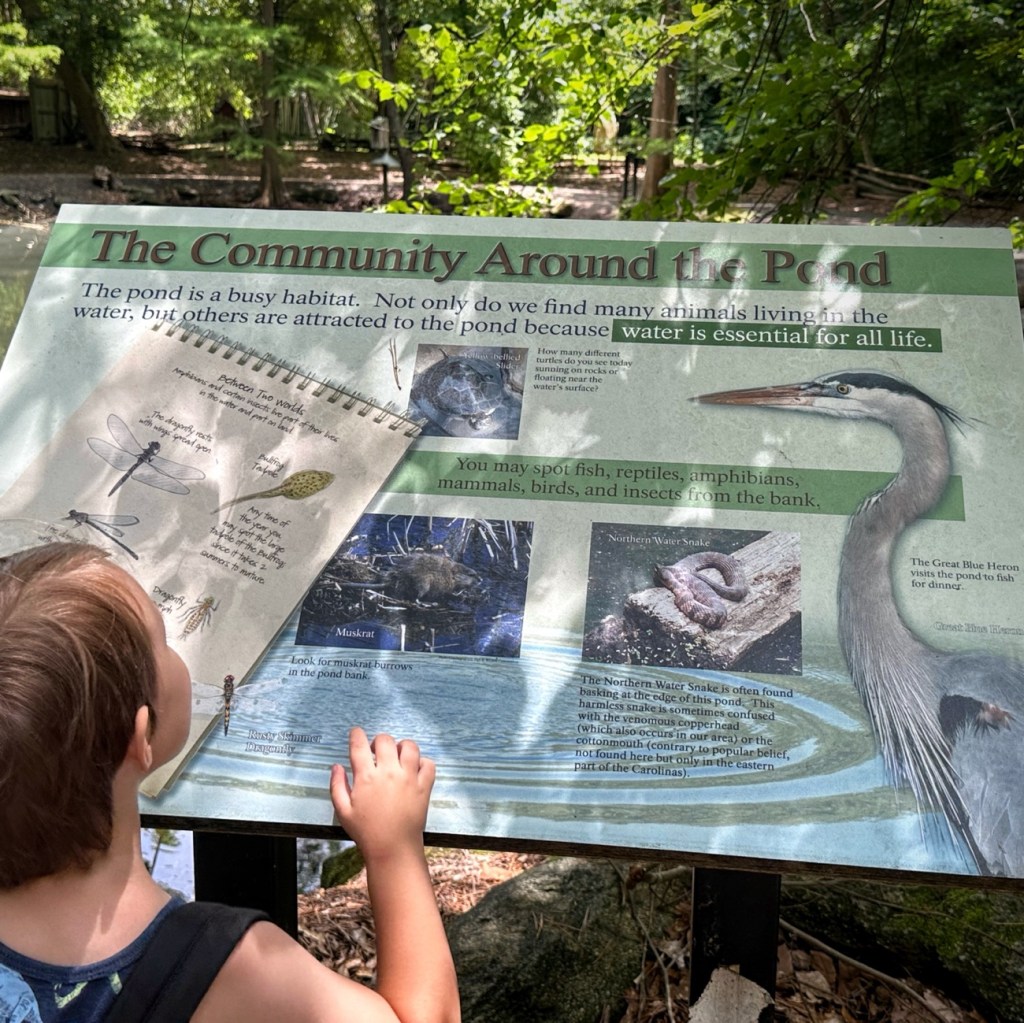
Informational Sign
includes
The Great Blue Heron
The Schiele Museum of Natural History

Did you know that the Great Blue Heron is often seen as a symbol of patience? This I had not previously heard or known. Several Native American Tribes look at the heron as a symbol of patience and good luck. On the Northwest coast, people believe that if Native American fishermen spot a heron, it means good luck is with them, and they will have a successful fishing trip.

I have always considered the Great Blue Heron to be an amazing bird to observe. I did not ever realize that they were considered symbols or omens if you saw them. Evidently they are though.

In China, the Great Blue Heron represents strength, purity and long life. According to Native American tradition the heron symbolizes wisdom and good judgment. In ancient Egypt the heron was a symbol of creation while in Africa and Greece the heron was a messenger of the gods. Watching a heron fish also instructs us in patience.

Another interesting note regarding the Blue Heron is that it is believed to symbolize being calm, presence, being at peace, uniqueness, and balance. When seeing a Blue Heron one should take a moment to look inside yourself and consider nurture all aspects of yourself. Embrace who you are; your flaws (your weaknesses), your uniqueness, and ever your feelings of shame with self-love.

Birds of the Carolinas 

Bird of the Week 2024

Becky’s #SquareRenewal

Photo Credit:©️2024 Deb L. Waters … All Rights Reserved.

God Bless. May you have strength, purity, patience and long life. Take care of yourselves and have a fantastic rest of your week. Thank you for visiting and sharing your time and thoughts with me. I appreciate y’all very much.
Birds of the Carolinas #4

Red-Tailed Hawk

Buteo jamaicensis
Red-Tailed Hawk

TheRed-tailed Hawk is the most often-seen large hawk in North Carolina. It perches on telephone poles along highways and soars over open fields in search of food. [This Red-Tailed Hawk chose to perch on our electrical wires outside our back patio. The area outside our patio is a wide open grassy landscape area which seems to attract a wide variety of birds.]

Red-tailed Hawks like a mix of open country and deciduous forests, but they adapt to urban areas ( such as our Gastonia neighbourhood.) Red-tailed Hawks frequently can be seen perching on telephone poles, tall trees or snags along roadsides. They sit high mainly to rest, but constantly keep watch for the slightest movement down below.

 Red-tailed Hawks eat mostly mammals, so they’re less likely to visit a popular feeder than a Cooper’s or Sharp-shinned hawk is. It’s very rare for a Red-tailed Hawk to go after dogs or cats.

The Red-tailed Hawk has a thrilling, raspy scream that sounds exactly like a raptor should sound. An interesting fact is that whenever a hawk or eagle appears onscreen, no matter what species, the shrill cry on the soundtrack is almost always a Red-tailed Hawk.

The Eastern subspecies (borealis) tends to have a plain red tail with neat black band near the tip. When the Red-tailed Adult Hawks are hunting, they often hang in the air scanning for prey below. This behavior is known as kiting. They also perch motionless in trees along roadsides or slowly scan for prey from its perch.

Birds of the Carolinas 

Bird of the Week 2024

Photo Credit:©️2024 Deb L. Waters … All Rights Reserved.

Camera: iPhone 14 Pro Max Telephoto Camera.

Location: Backyard; Gastonia, North Carolina, USA.

God Bless. Thank you for sharing your time and thoughts with me. I appreciate y’all very much.