Camera: Canon EOS 2000D with Canon EF-S55-250 mm lens with Altura UV Filter attachment.
Location: Patterson Pond; Crandall Bowles Children’s Farm; Greenway Stables and Farm Entrance; Anne Springs Close Greenway; Fort Mill, South Carolina, USA
God Bless. Enjoy Nature. Take a hike/walk amongst God’s beautiful creatures. Have a funtastic week. Thank you for visiting and sharing your time and thoughts with us. I appreciate y’all very much.
Muscovy Duck (Cairina moschata) is a duck native to the Americas. Small wild and feral breeding populations have also established themselves in the United States, particularly in Florida, Louisiana, Massachusetts, the Big Island of Hawaii, South Carolina, as well as in many other parts of North America, including southern Canada.
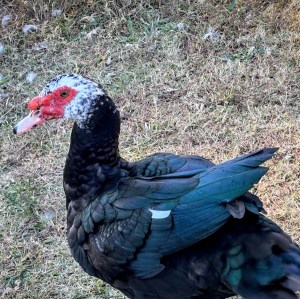
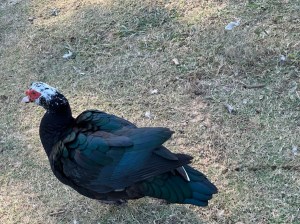
Black Muscovy Duck
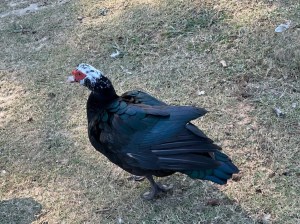
Muscovy Ducks are large with the males growing to about 76 cm (30 in) long, and weighing up to 7 kg (15 lb). The females are relatively smaller, and only grow to approximately 3 kg (6.6 lb), roughly half the males’ size. They are predominantly black and white, with the back feathers being iridescent and glossy in males, while the females are more drab. The amount of white on their neck and head vary , as well as their bill. Their bill can be yellow, pink, black, or any mixture of these colors. (The Muscovy Ducks we saw all had a pinkish bill with one having a touch of black on the end.)
Black Male Muscovy Duck
The Muscovy Ducks are a non-migratory species normally inhabits forested swamps, lakes, streams and nearby grassland and farm crops, and often roosts in trees at night. ( The Muscovy Ducks we saw are located near Patterson Pond at Anne Springs Close Greenway in Fort Mill, South Carolina.)
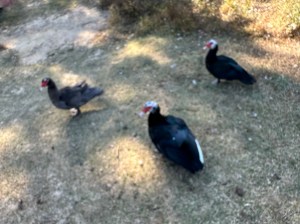
Male and Female Muscovy Ducks
Their diet consists of plant material ( such as the roots, stems, leaves, and seeds of aquatic plants and grasses, as well as terrestrial plants obtained by grazing or dabbling in shallow water for small fish, amphibians, reptiles, crustaceans, spiders, insects, millipedes, and worms.
Black Male Muscovy Duck
Muscovy Ducks, one of the oldest species of fowls domesticated in the world, have several spiritual meanings associated with them. They are associated with love and relationships in some cultures and with luck, prosperity, and even new life and fertility in others. The ducks also represent inner strength and courage. thethe Celtic culture that if you dream of a Muscovy duck or spot it while awake, it’s a sign to trust your intuition and strength and not give up in the face of challenges. According to Celtic culture if you dream of a Muscovy duck or spot it while awake, it is a sign to trust your intuition and strength and not give up in the face of challenges.
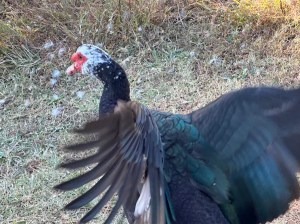
Black Muscovy Duck Flapping its wings after coming out of the water.
The Egyptians believe the Muscovy duck has healing powers and can resurrect the dead, making it a sacred animal. The Egyptian culture sees Muscovy ducks as a symbol of starting afresh. Therefore, seeing a Muscovy duck in your dream is interpreted as a sign of resurrection.
We enjoyed watching the Black Muscovy Ducks swimming in Patterson Pond, as well as them flapping their wings as they came out of the water, shaking the water off to dry themselves.
Location: Patterson Pond; Crandall Bowles Children’s Farm; Greenway Stables and Farm Entrance; Anne Springs Close Greenway; Fort Mill, South Carolina, USA
God Bless. Thank you for visiting and sharing your time and thoughts with us. I appreciate y’all very much.
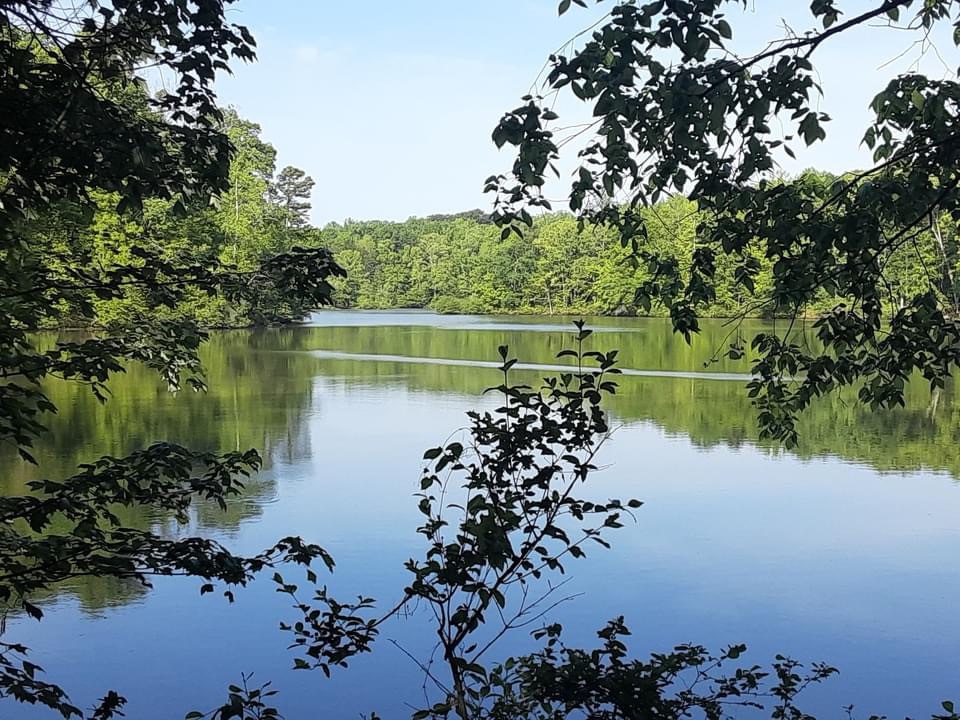
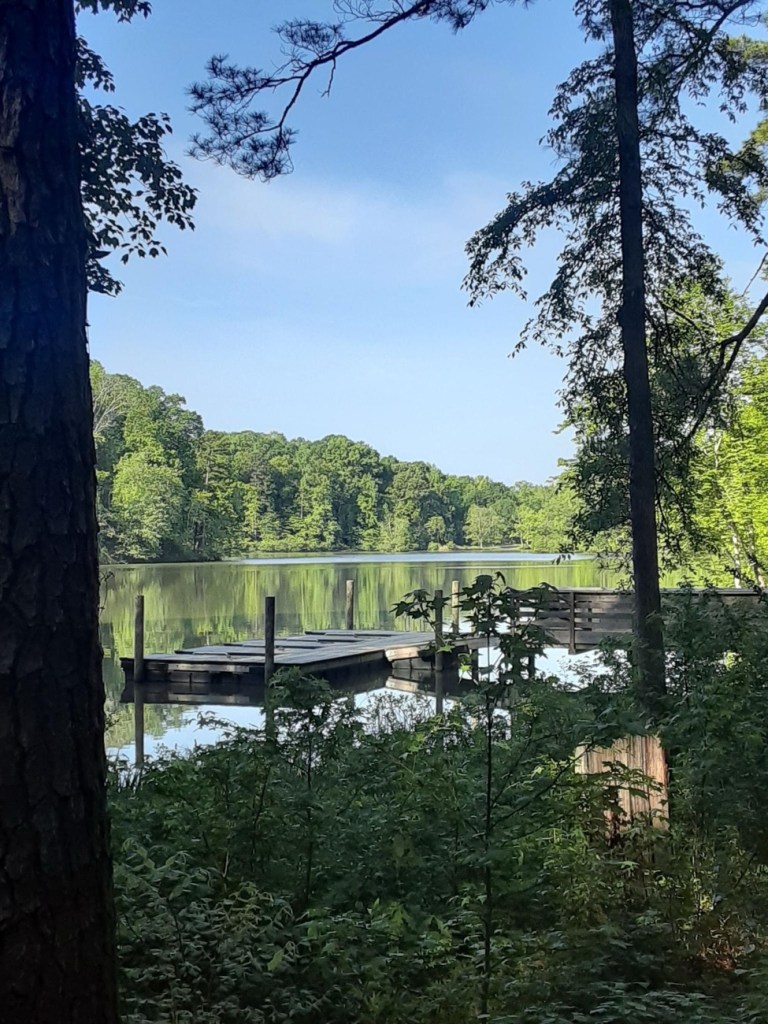
Lake Haigler is one of the most favourite areas for hiking and fishing at the Greenway. Love to see the many beautiful views and reflections around the Lake.
Patterson Pond
This previously unnamed Pond has recently been given the name of Patterson Pond. It is located at the Children’s Farm accessible from the Greenway Stables Entrance. Beautiful day for observing amazing reflections.
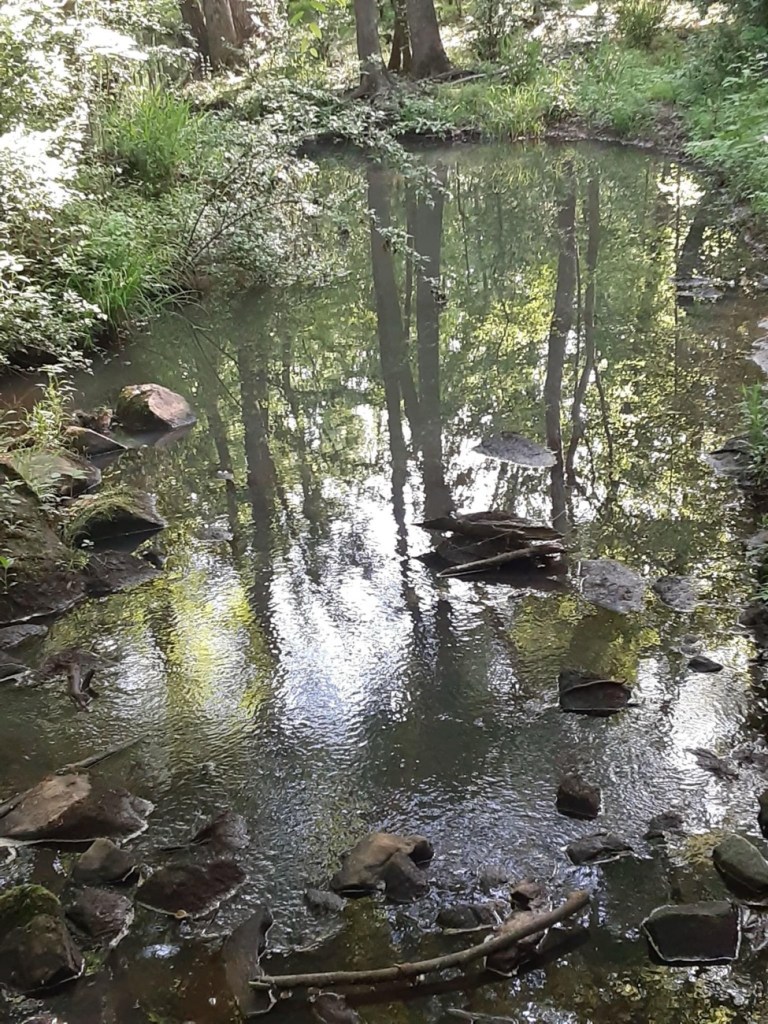
Steele Creek
Steele Creek can be seen from several of the Greenway trails while one is hiking. Here you can see the shimmering ripples and the beautiful reflections of the trees.
Lake Haigler
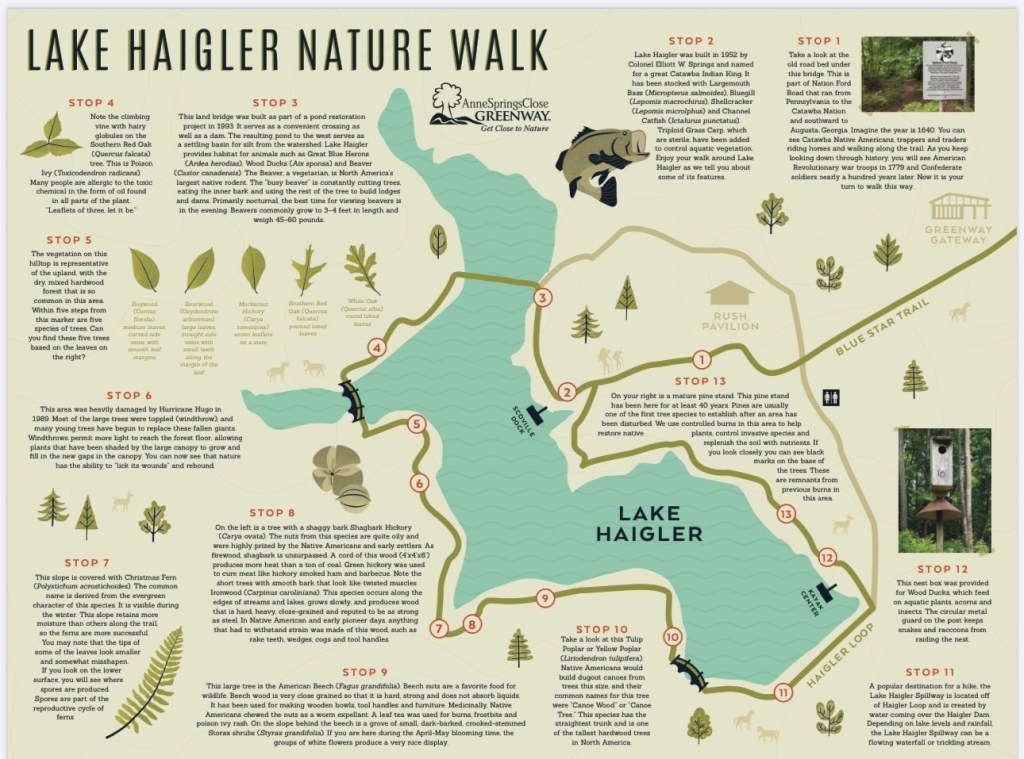
Lake Haigler is a 28-acre lake in the Anne Springs Close Greenway. It was built in 1952 by Colonel Elliott W. Springs. It was named for a great Catawba Indian King.
The Lake is periodically restocked with Largemouth Bass, Bluegill, Shellcracker, and Channel Catfish.
The Lake Haigler Loop is a 3.3 mile pedestrian-only loop which wraps around the 28-acre Lake Haigler. It is generally considered an easy hiking/walking route. It takes approximately an average of 1 hour 10 minutes to complete the entire loop. This extremely popular area is excellent for birding, fishing, and hiking. You’ll have plenty of opportunities for exploring and photography at this location if you’re ever in the area to visit.



 Gfpacificbee’s Insights & photography