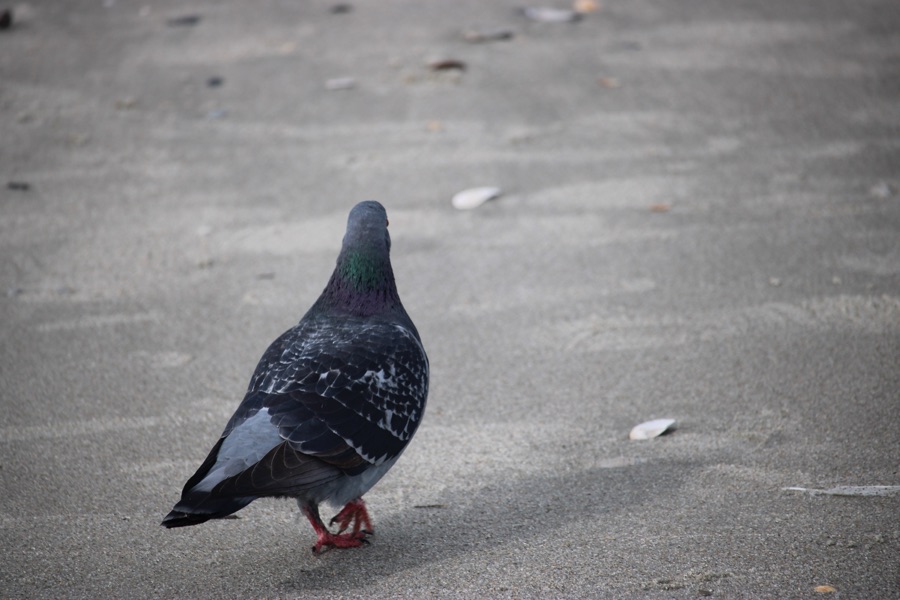
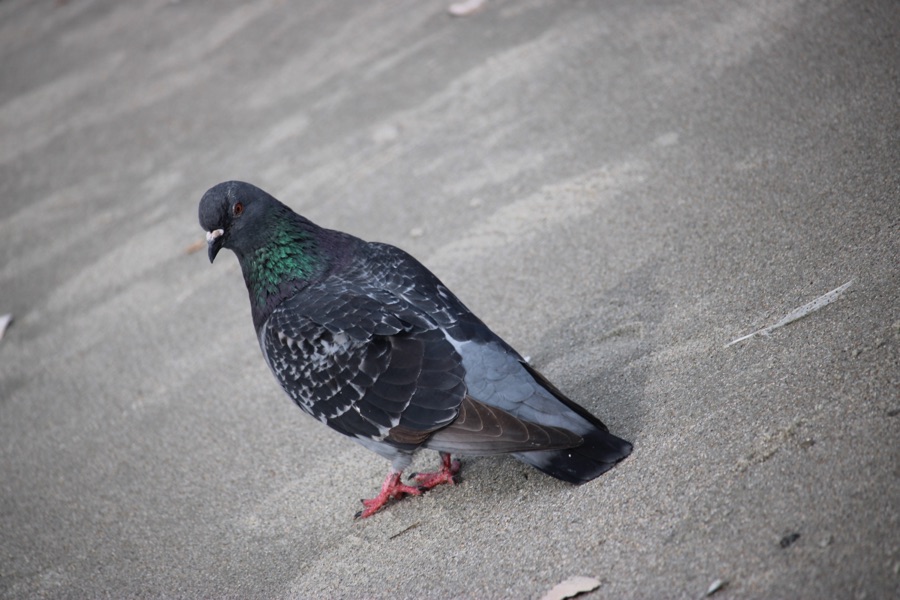
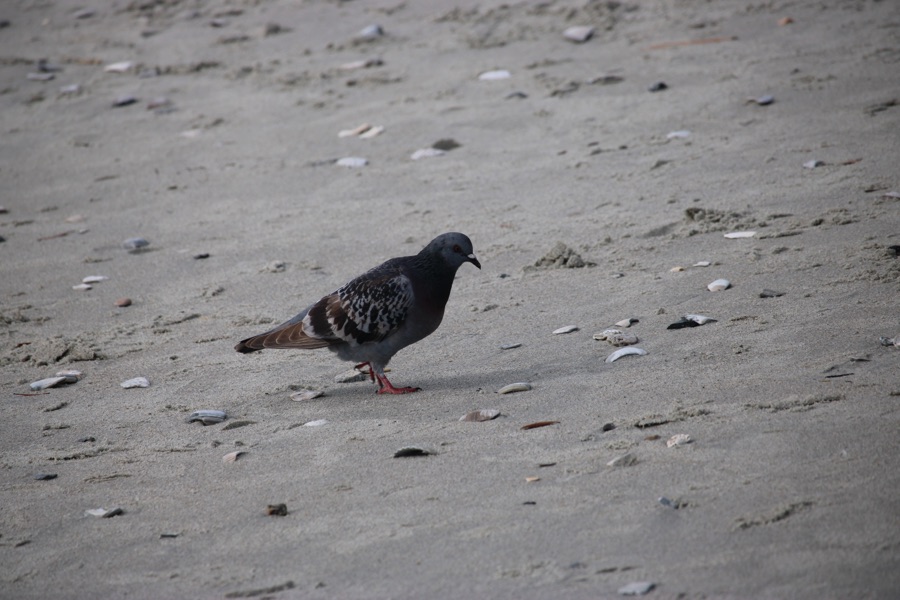
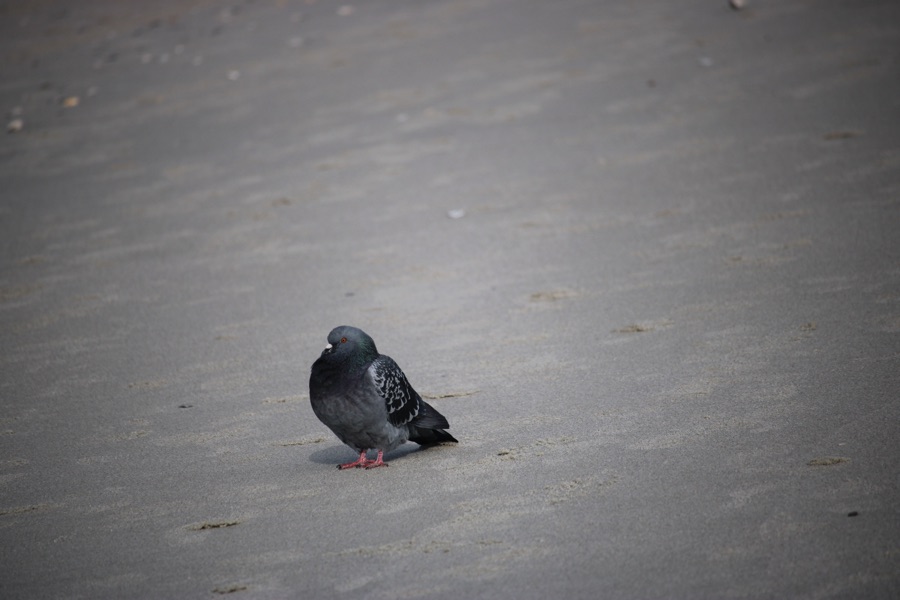
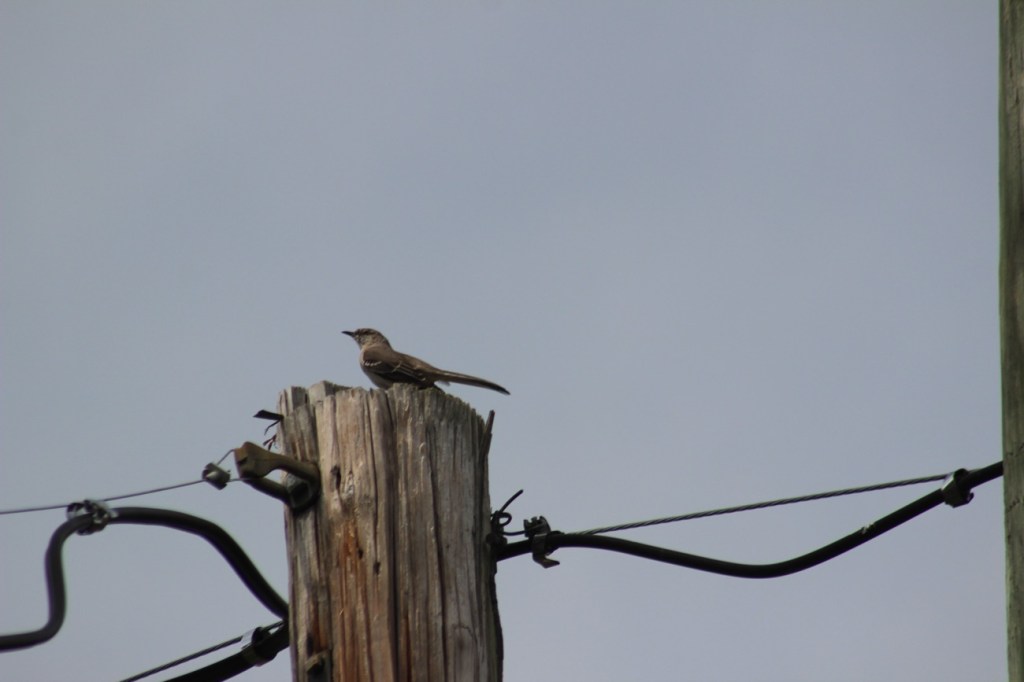
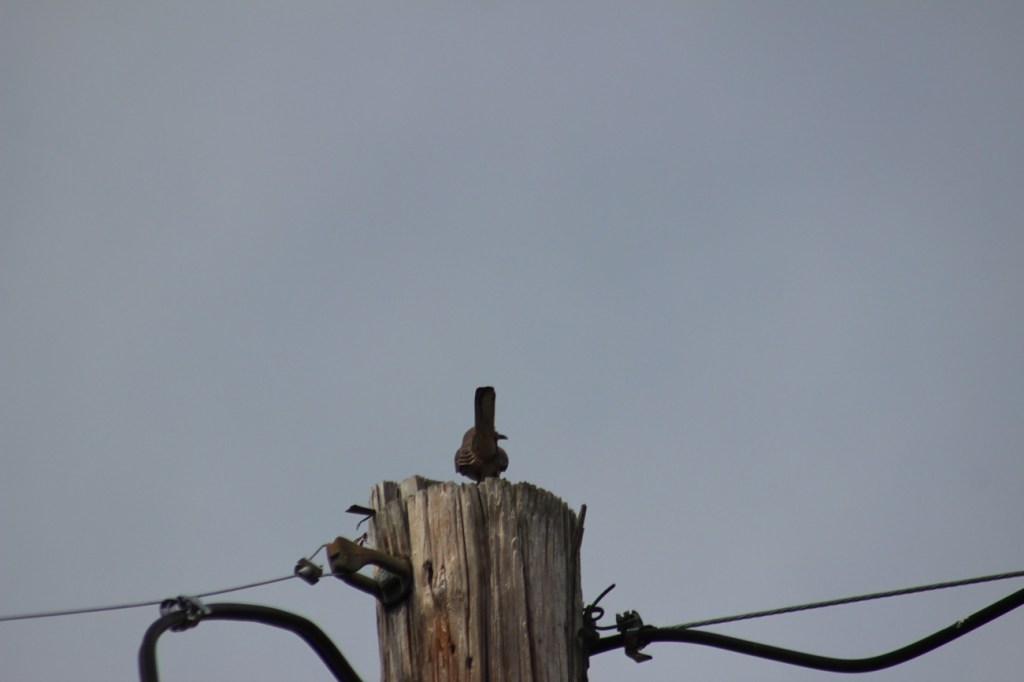
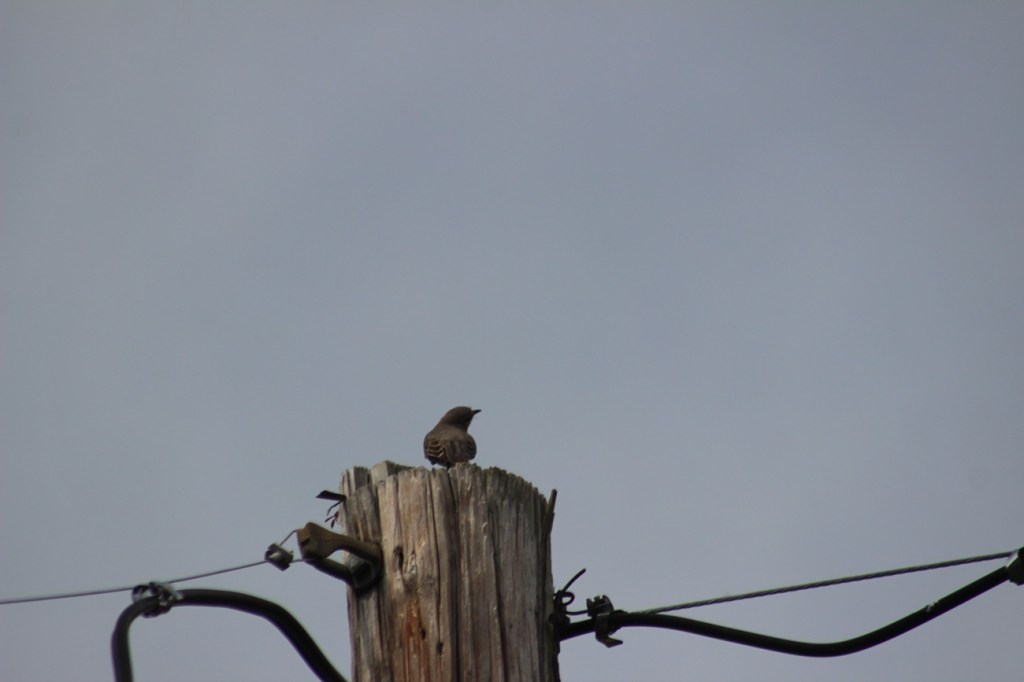
2025 Monday Portrait: 01 December

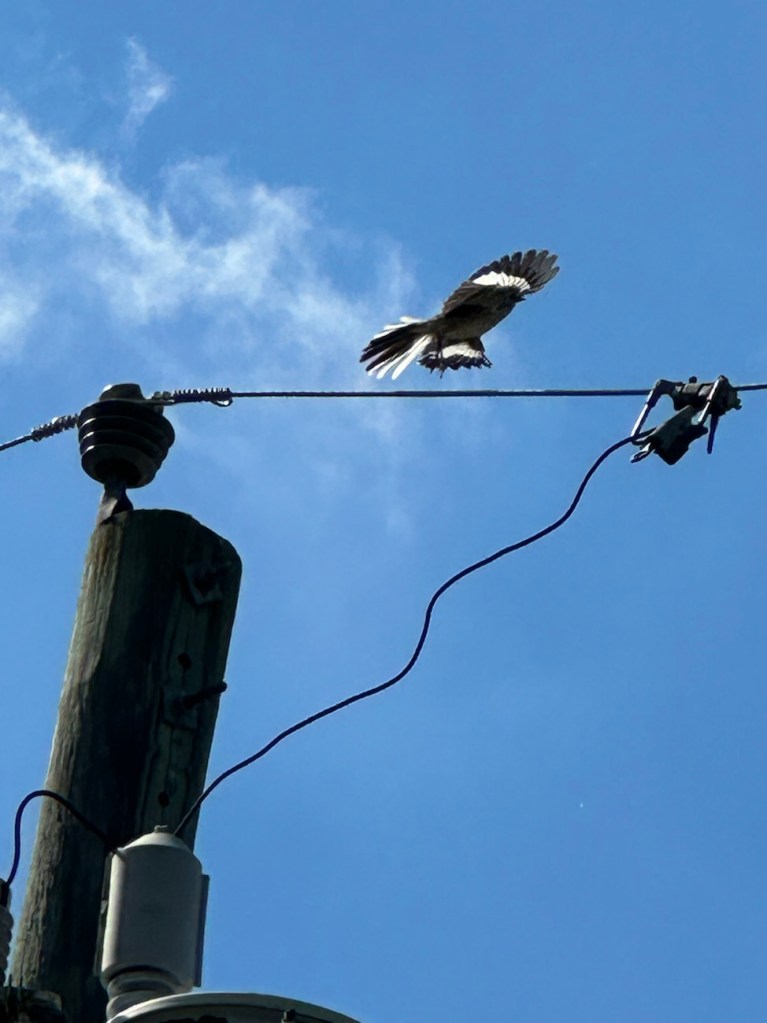
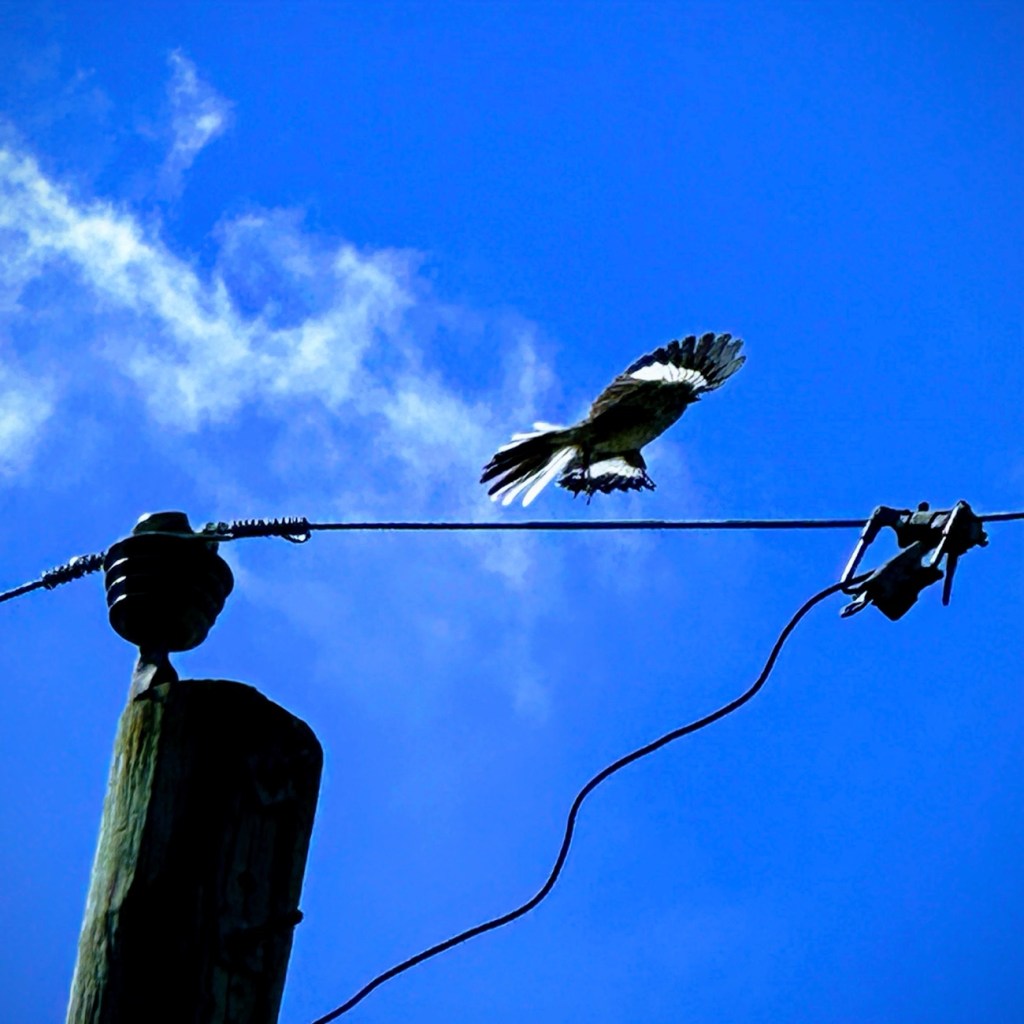
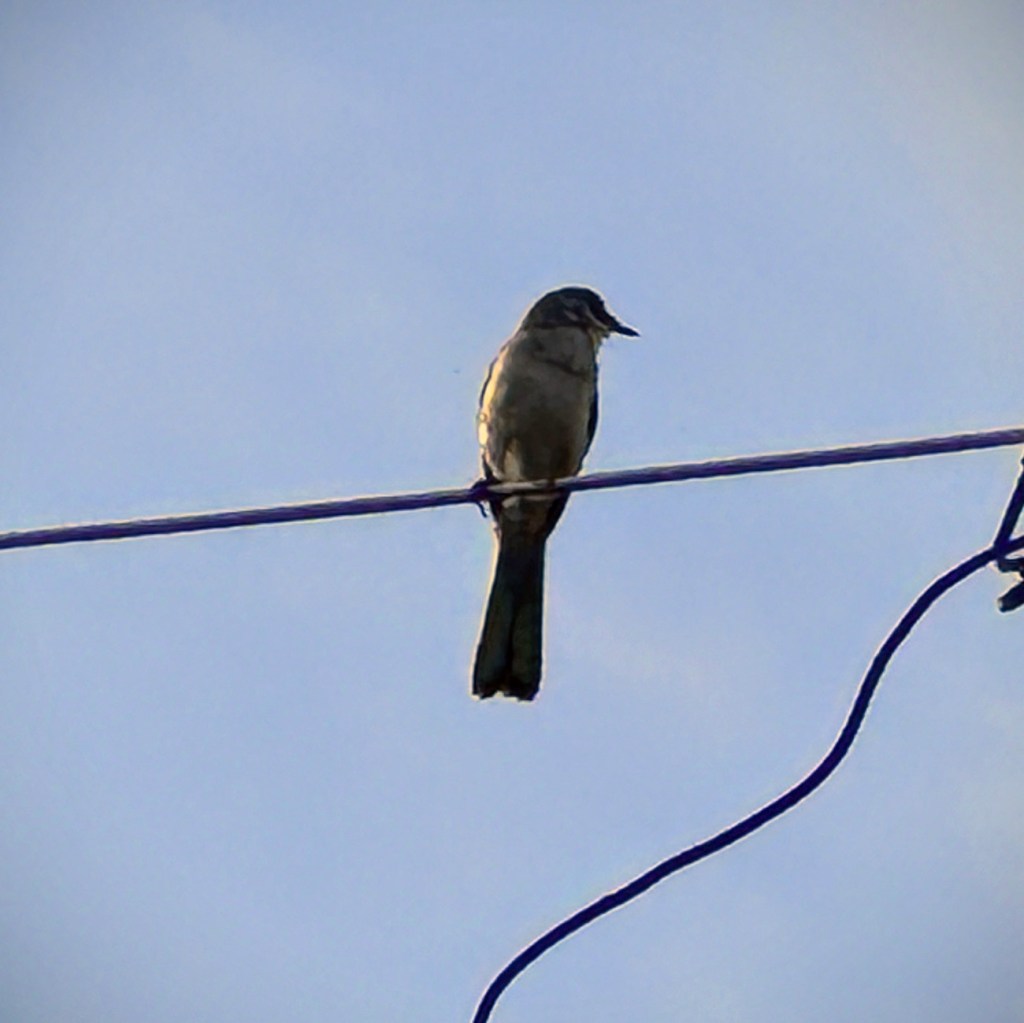
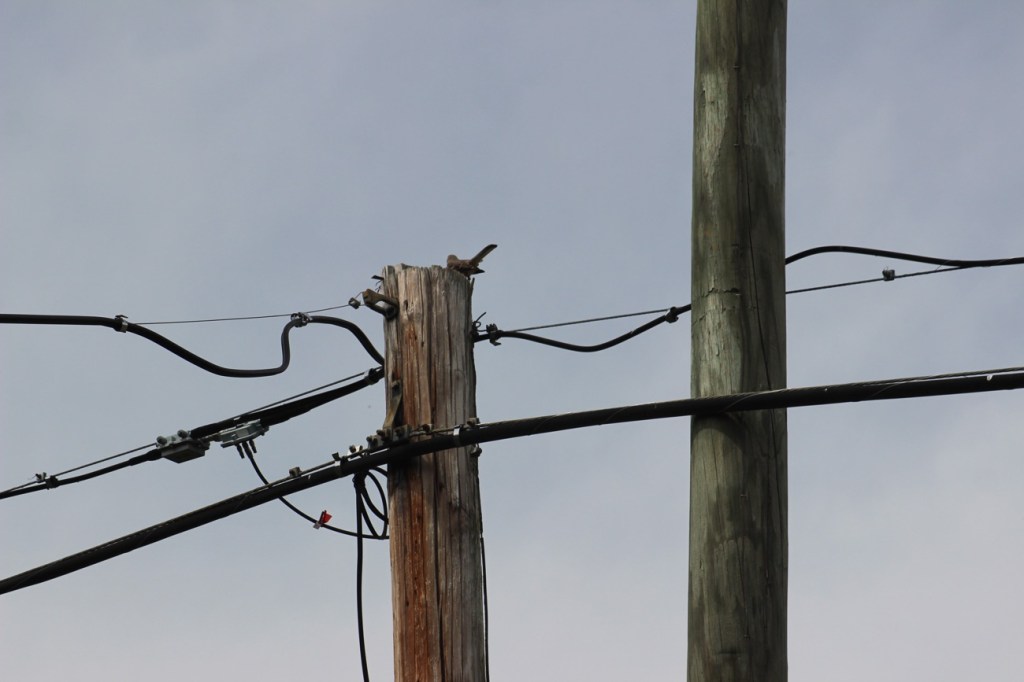
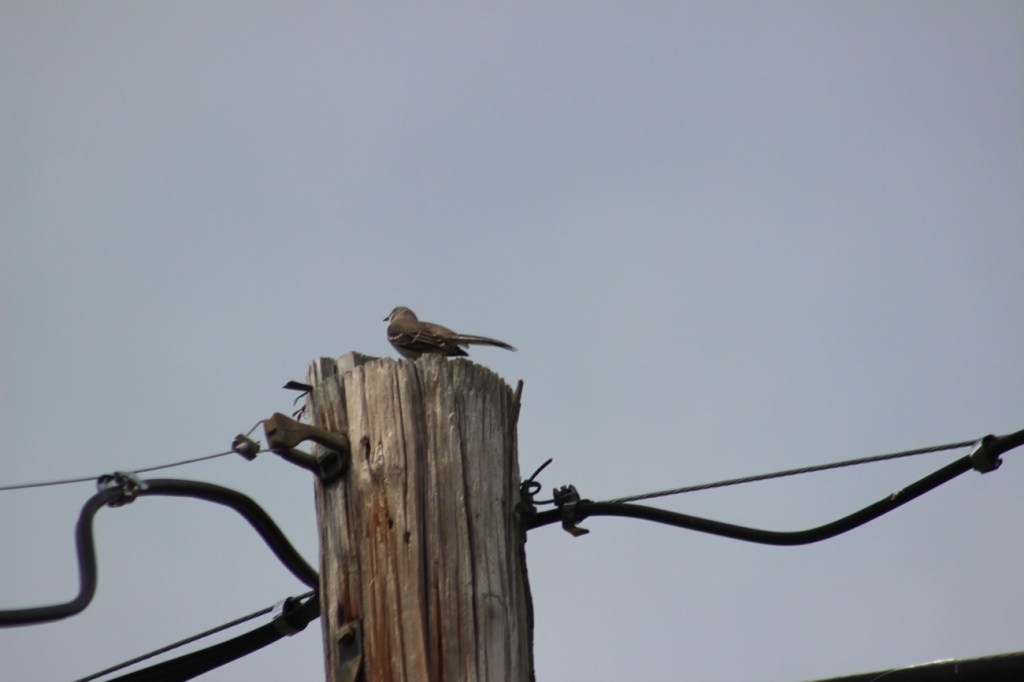
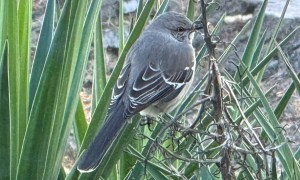
Northern Mockingbird

Northern Mockingbird

Monday Portrait

Photo Credit:©️2025 Deb L. Waters … All Rights Reserved.

Camera: Apple iPhone 16 Pro Max Telephoto

Location: Old Town; Riverside Community; Cramerton, North Carolina, USA

God Bless. Have a fantastic week. Thank you for visiting and sharing your time and thoughts with us. I appreciate y’all very much.

2025 Cell Pic Sunday: 03 August

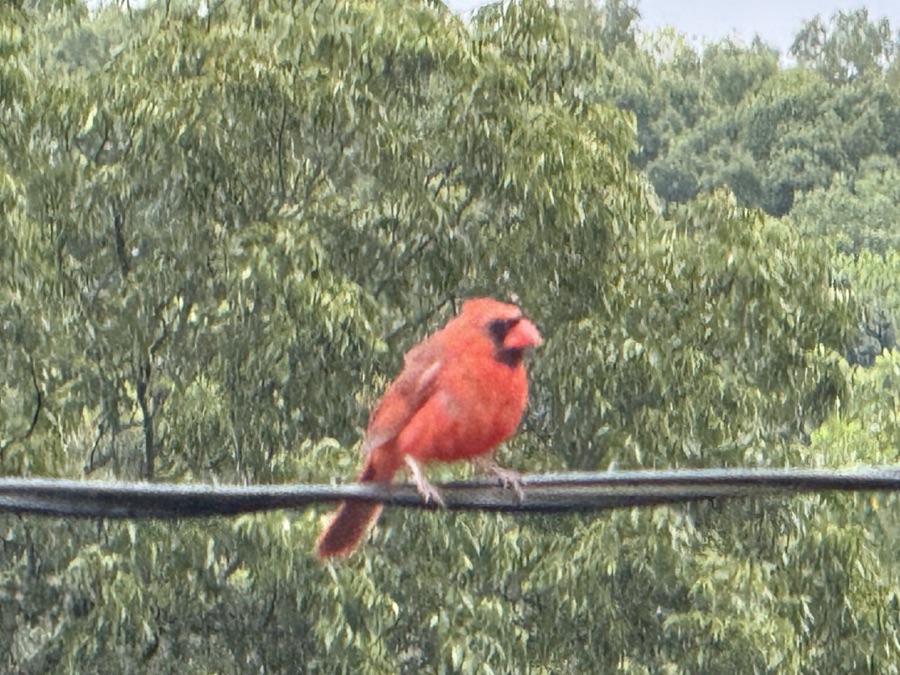
Northern Cardinal

Northern Cardinal

John’s Cell Pic Sunday-2025.08.03

Photo Credit:©️2025 Deb L. Waters … All Rights Reserved.

Camera: Apple iPhone 16 Pro Max Telephoto Camera

Settings: f2.8 • 1/99s • 666mm • ISO 80

Location: Old Town; Riverside Community; Cramerton, North Carolina, USA

God Bless. May the Sun Shine upon you. May your week be filled with love, laughter, and happiness. Thank you for visiting and sharing your time and thoughts with us. I appreciate y’all very much.

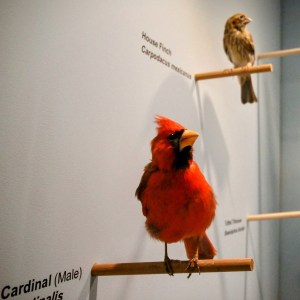
2025 Sunday Stills: 20 (on 22) July — Cardinal Feathers

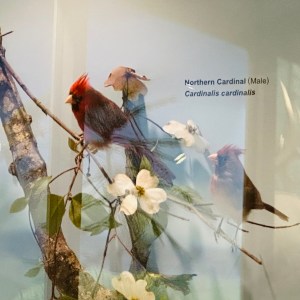
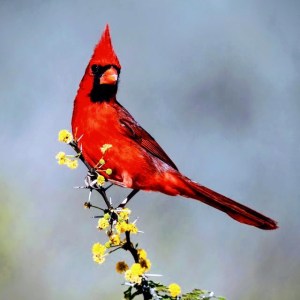
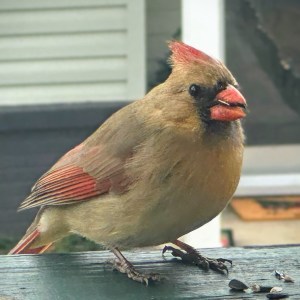
The Northern Cardinal is the official state bird of North Carolina. It was designated as such in 1943 by the North Carolina General Assembly. The bright red colour of the males feathers, black face mask and their distinctive crests make them easy to spot. The females are a duller reddish-brown with similar facial markings.

Cardinals display at
The Schiele Museum
of Natural History

The Northern Cardinals (also referred to as Cardinals or Redbirds) do not migrate and have adapted effortlessly to both suburban and city environments. They are the most abundant and cherished songbirds in North America.

Male Northern Cardinal

Cardinals are believed to be beneficial by providing services for the environment, such as keeping farms and gardens free of harmful plants and insects.

Cardinals are seedeaters that also eat insects, larvae, sap, and many types of fruit. They enjoy feasting on berries (even dried berries, cranberries, and raisins) sunflower seeds, safflower seeds, peanuts and cracked corn.

They have strong beaks adapted for cracking seeds. They eat seeds from a variety of sources, including weeds, grasses, and trees. Sunflower seeds, in particular, are a favorite.   

Cardinals also consume a variety of wild fruits and berries, such as dogwood, wild grape, blackberry, raspberry, sumac, and cherries. They get important nutrients and sugars from these. Interestingly, the red pigments in the male cardinal’s plumage come from carotenoids found in the fruits they eat.   

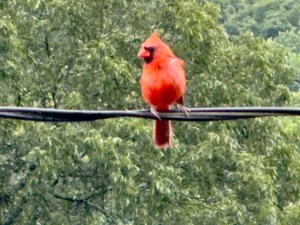
Northern Cardinal
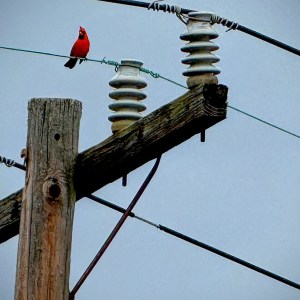
on our Wire

Cardinals thrive in a variety of habitats, including forests, woodlands, residential areas, and even parks. They are known for their loud, clear whistles and are territorial, often seen defending their space, even against their own reflection.

Hey you,
I see you checking
out my Feathers.

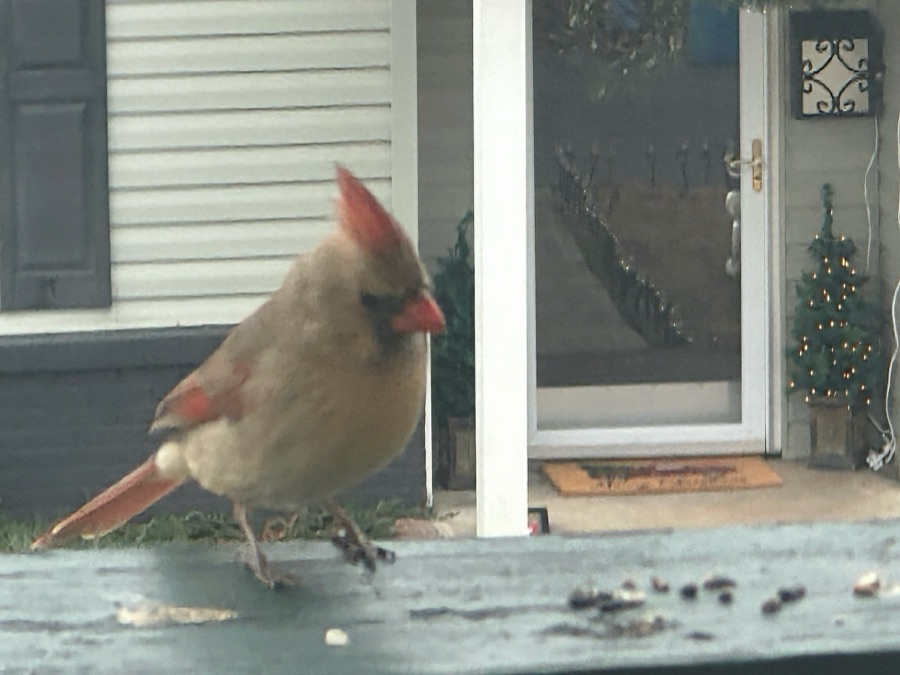
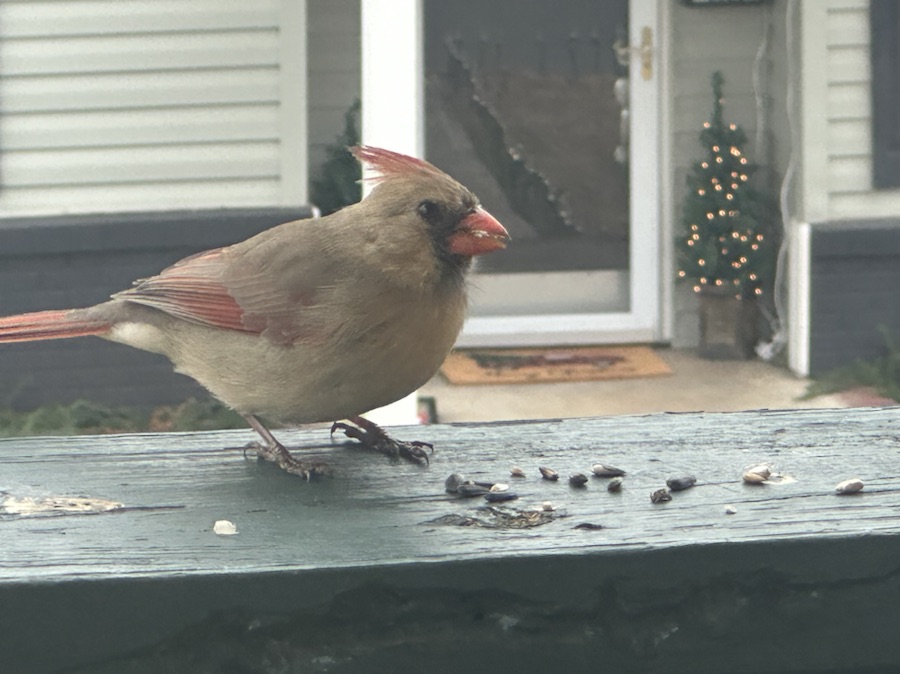
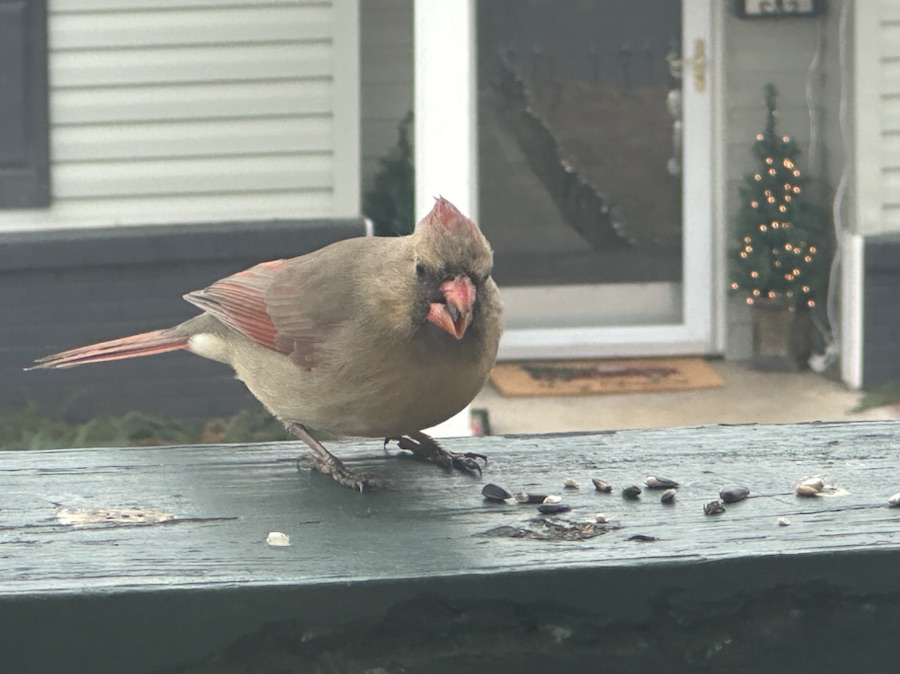
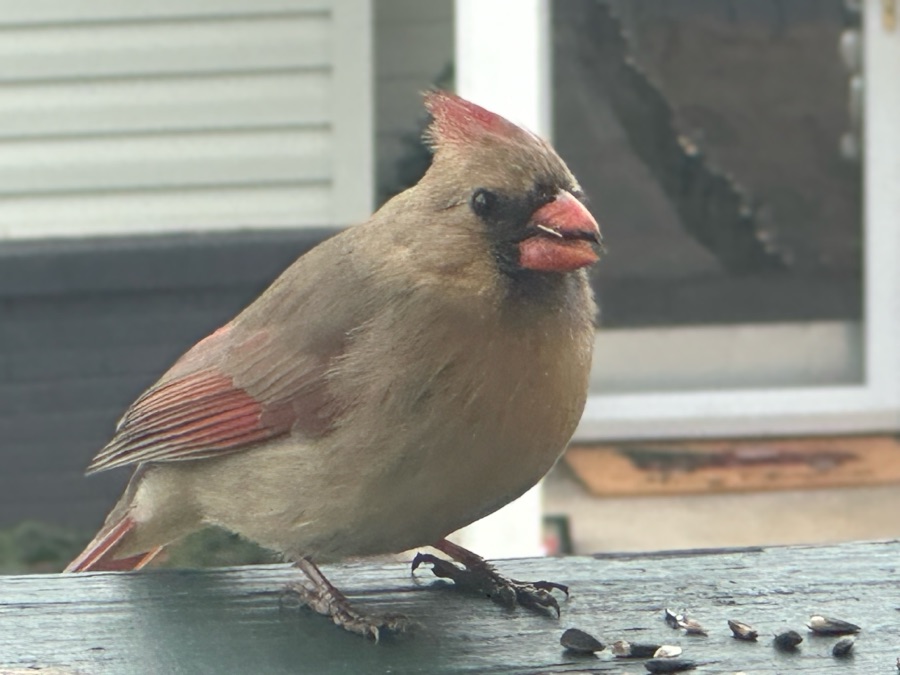
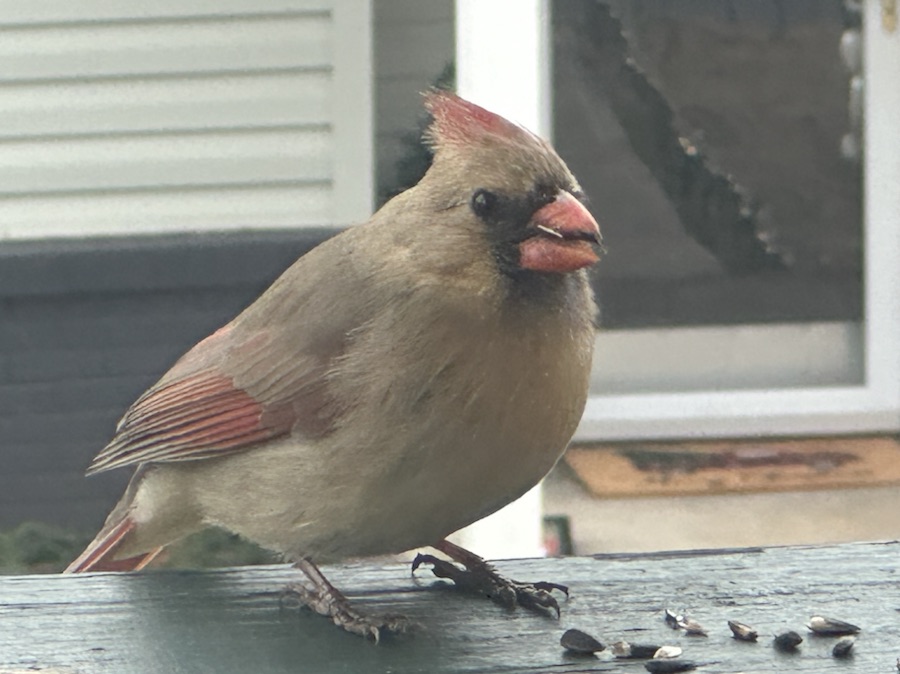
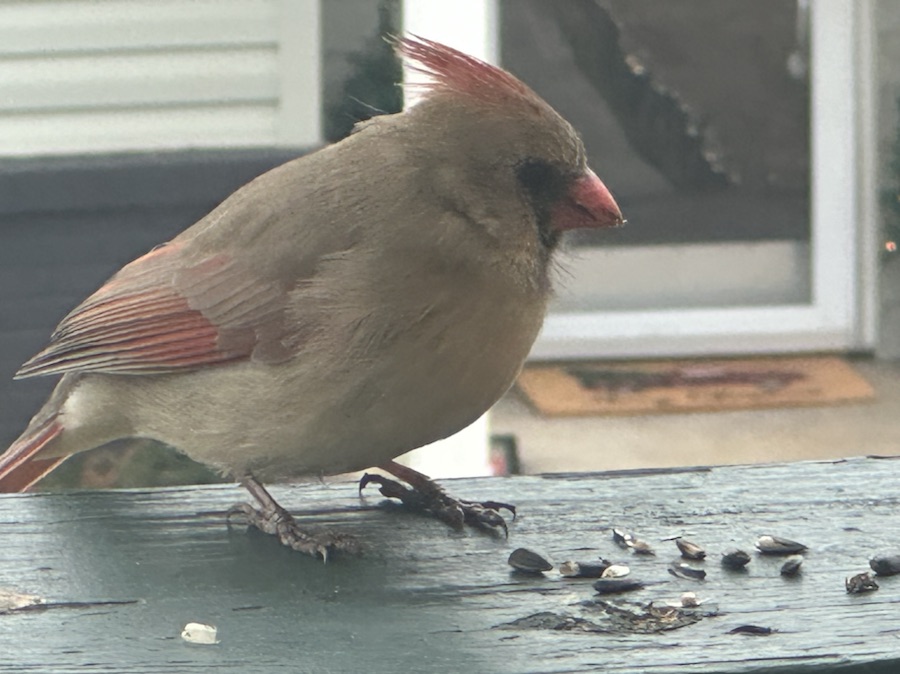
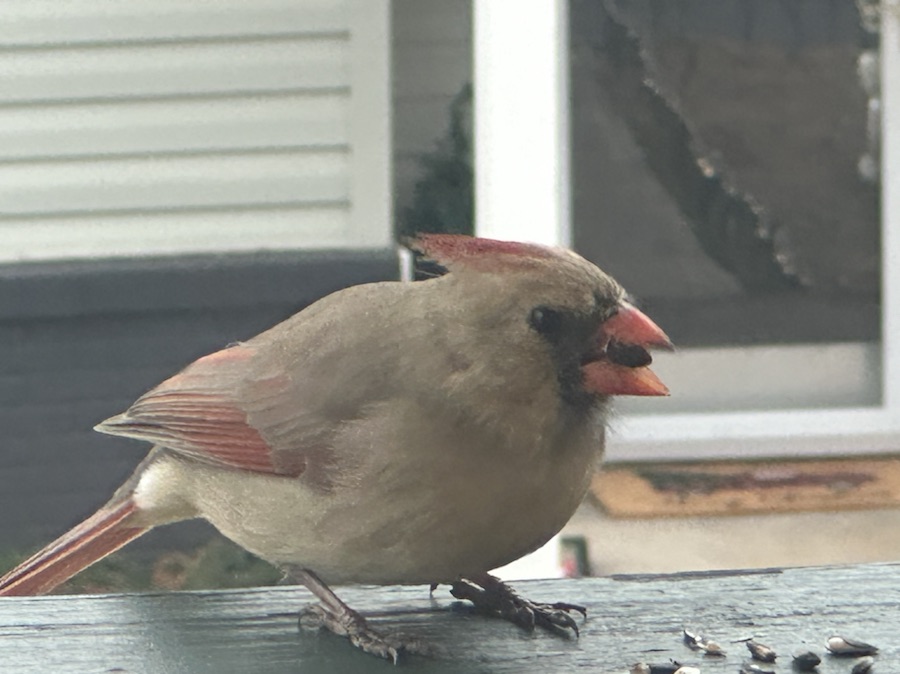
We often see Cardinals in our neighbourhood perching on wires, in trees, and checking out our bird feeder. Sometimes the wind will sway the feeder to and fro and seed will fall onto the porch railing or undeveloped planter box. This particular female Cardinal is enjoying a snack of sunflower seeds spilled onto the porch railing. Isn’t she just sitting prettily posing for me to capture her portrait?

What ya doing to me?
This is not enough for my lunch.
Ya gotta do better than this.

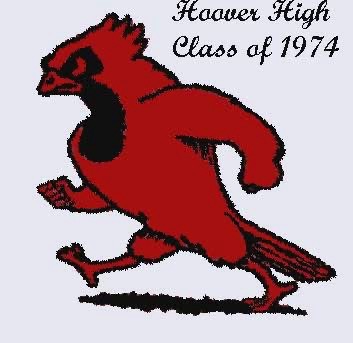
My high school mascot was Cardinals … these are recent renderings of the Cardinal for the Hoover High (San Diego) Class of 1974.

Terri’s Sunday Stills-July 20_Feather

#SimplyRED ( Becky’s Squares)

Birds of the Week CXXVI

Birds of the Carolinas

Photo Credit:©️2023-2025 Deb L. Waters … All Rights Reserved.

God Bless. Enjoy your week. Take time to commune with nature. Thank you for visiting and sharing your time and thoughts with us. I appreciate y’all very much.

2025 Birds of the Carolinas/Birds of the Week CXXI

Spizella passerina

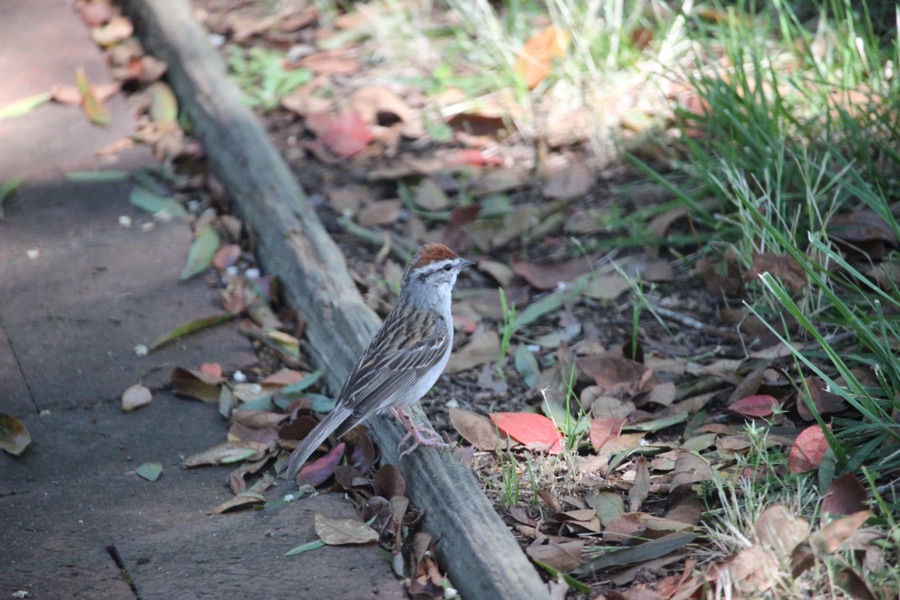
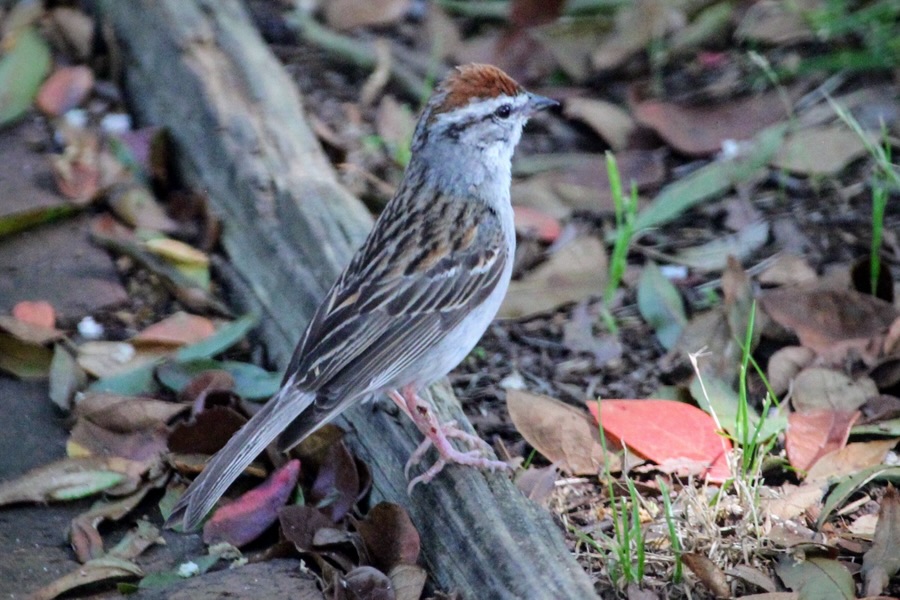
The Chipping Sparrow (Spizella passerina) is a species of New World sparrow, a passerine bird in the family Passerellidae. It is widespread, fairly tame, and common across most of its North American range.

Aka The Chipping Sparrow

This bird is a partial migrant with northerly populations flying southwards in the fall to overwinter in Mexico and the southern United States, and flying northward again in spring.

It molts twice a year. In its breeding plumage it has orangish-rust upper parts, gray head and underparts and a distinctive reddish cap. In non-breeding plumage, the cap is brown and the facial markings are less distinct. The song is a trill and the bird has a piercing flight call that can be heard while it is migrating at night.

 They mostly forage on the ground for seeds and other food items, as well as clambering on plants and trees, feeding on buds and small arthropods. Here in the East, they breed mainly in woodland, farmland, parks, and gardens. [We saw this Chipping sparrow as we left The Farmhouse on the way to The Trailhead Store.] Breeding starts in late April and May and the nest is often built in a tree.

The chipping sparrow feeds on seeds year-round, although insects form most of the diet in the breeding season. Spiders are sometimes taken. Throughout the year, chipping sparrows forage on the ground in covered areas, often near the edges of fields.

The Chipping Sparrow although common in the area is not normally observed by the Stowe Birding Club which track and monitor the birds using their bird houses strategically placed around the Stowe property. [This one Coleman spotted first a short distance from where we were walking. He loves to watch the birds and tries to keep a squirrel out of our bird feeder at home.]

Birds of the Carolinas

Birds of the Week CXXI

Photo Credit:©️2025 Deb L. Waters … All Rights Reserved. 

Camera: Canon EOS Rebel T3i with Canon EF-S55-250mm lens and Altura UV & CPL filter attachments.

Location: The Village at Stowe; Daniel Stowe Conservancy; Belmont, North Carolina, USA

God Bless. Looking up or looking down you might spot a bird fascinating enough to watch. Maybe even capture their likeness with your camera. Thank you for visiting and sharing your time and thoughts with us. I appreciate y’all very much.

2025 Monday Portrait: 12 May

Plus Birds of the Carolinas

/Bird of the Week CXVI

Anas Platyrhynchos

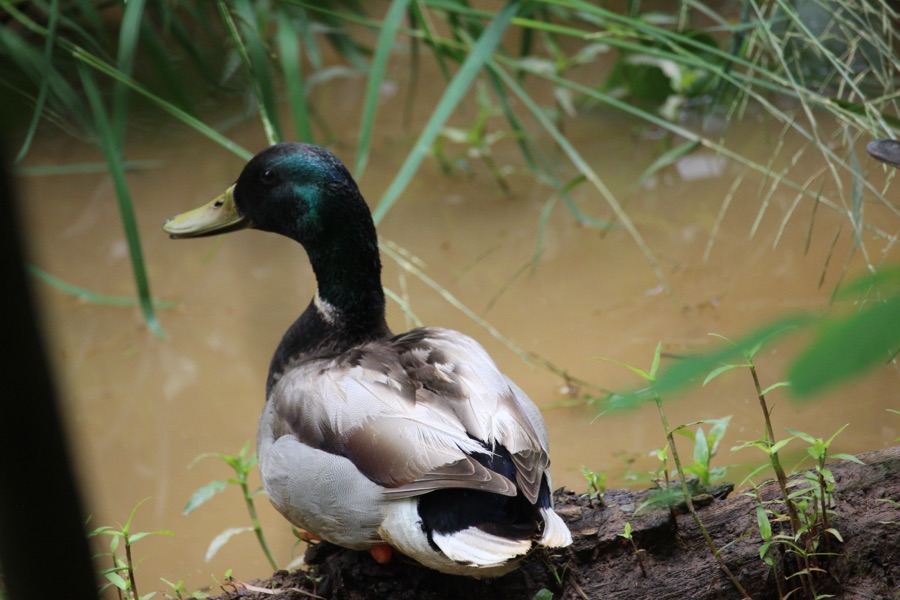
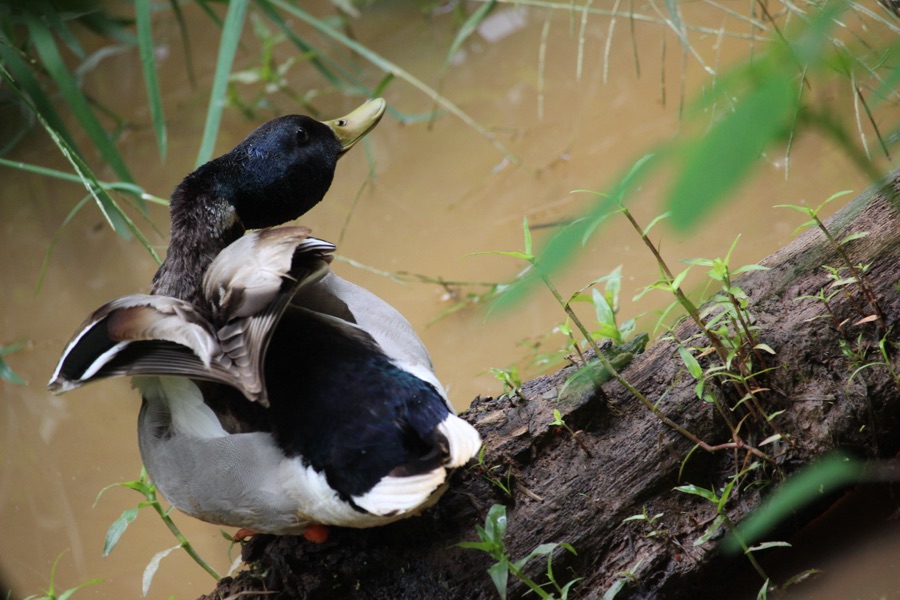
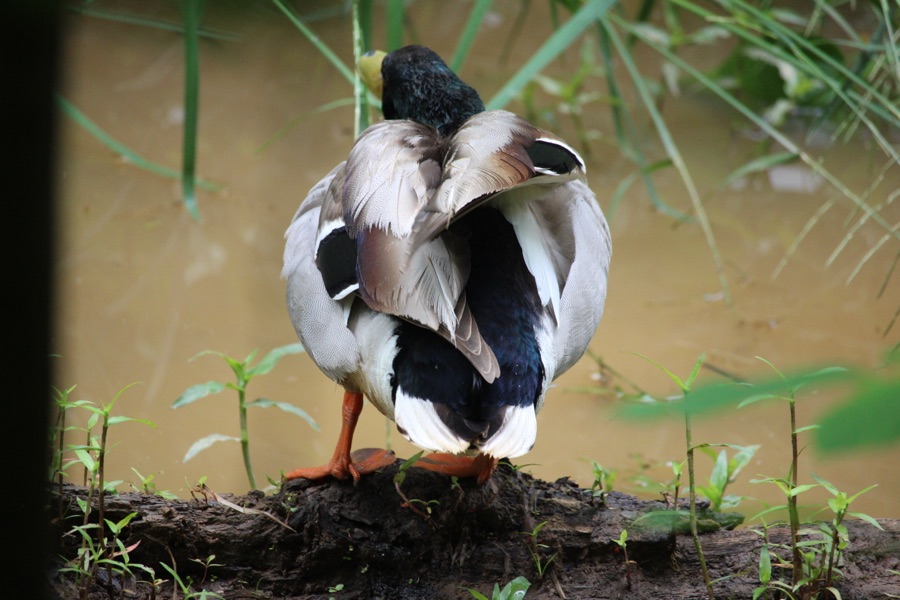
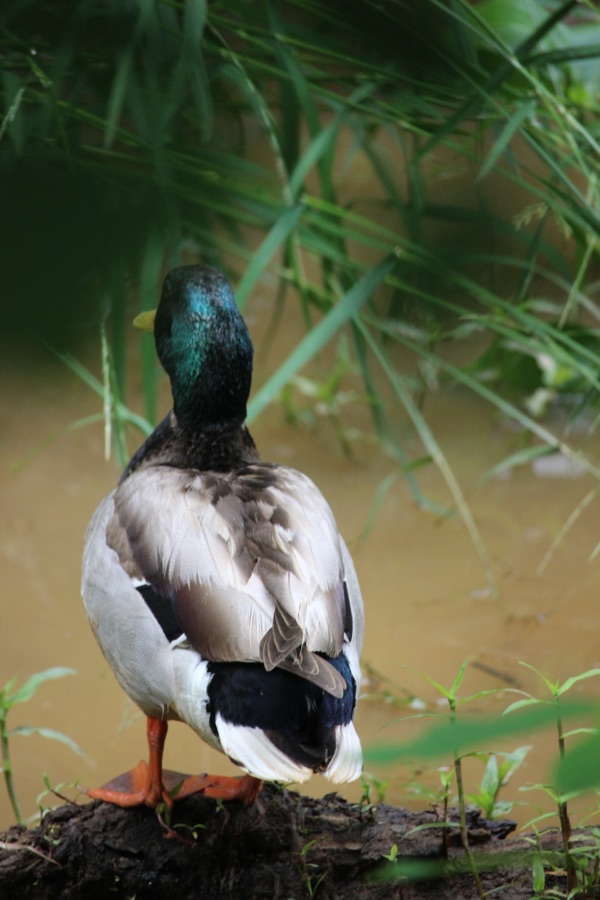
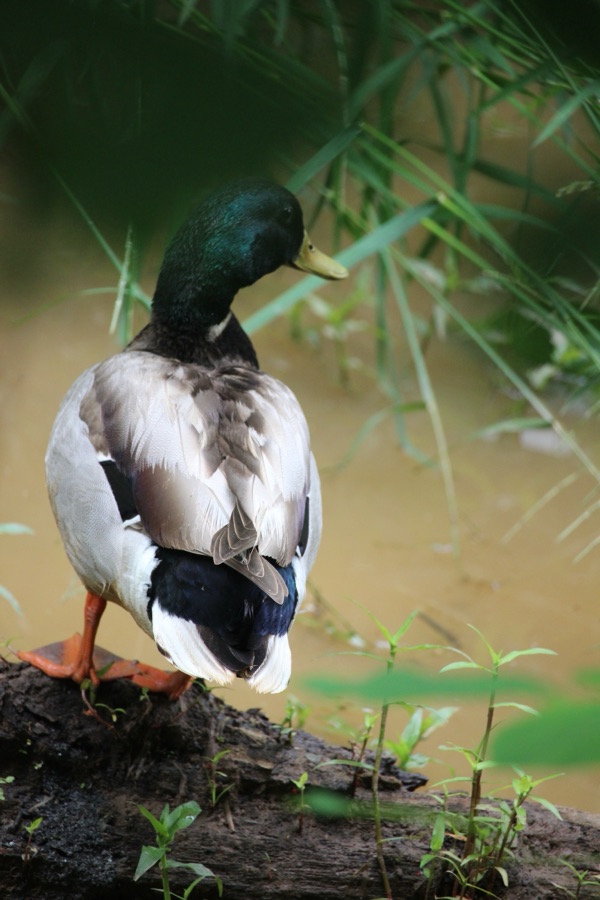
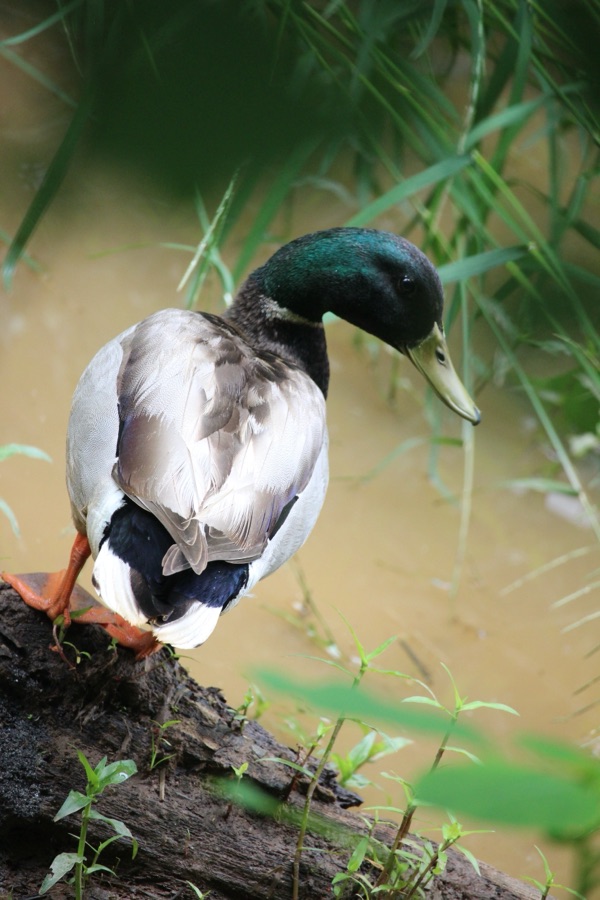
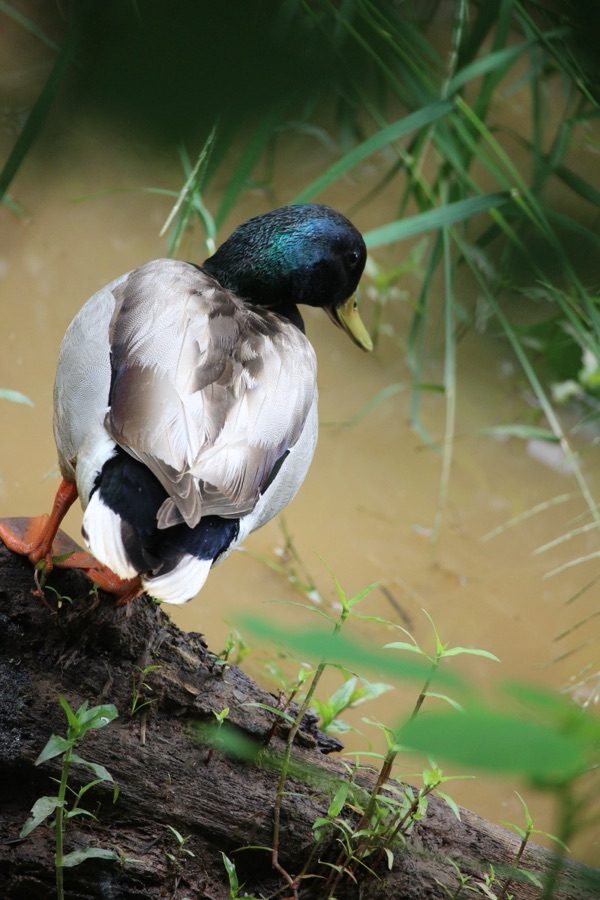
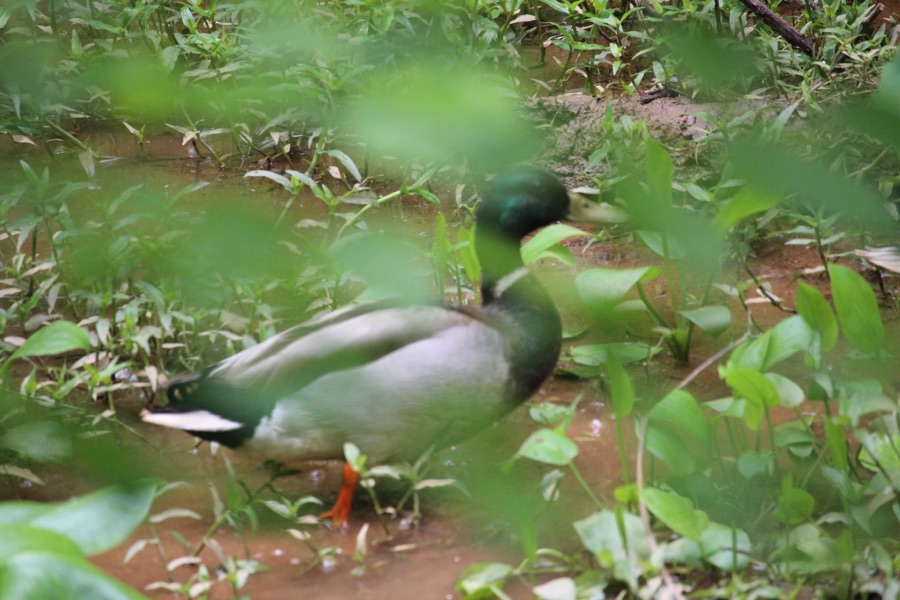
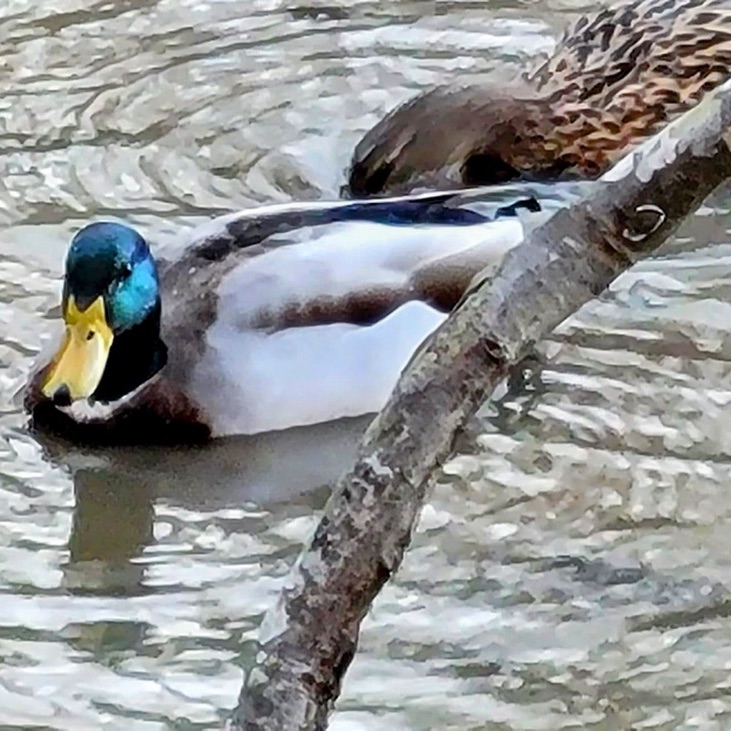
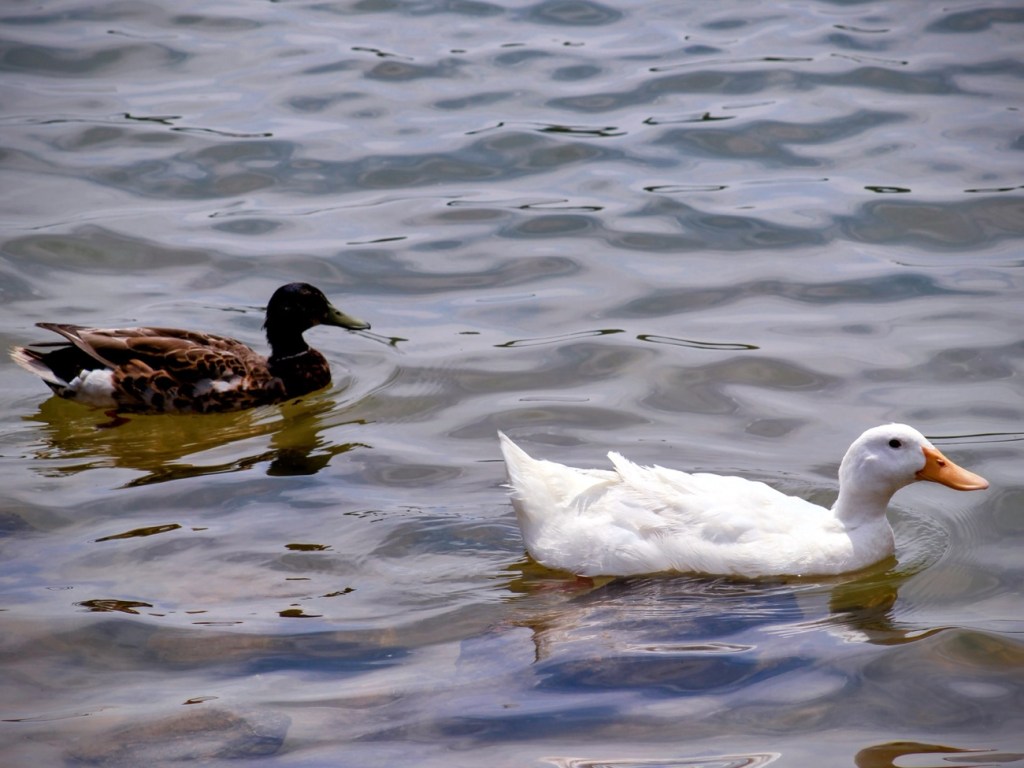
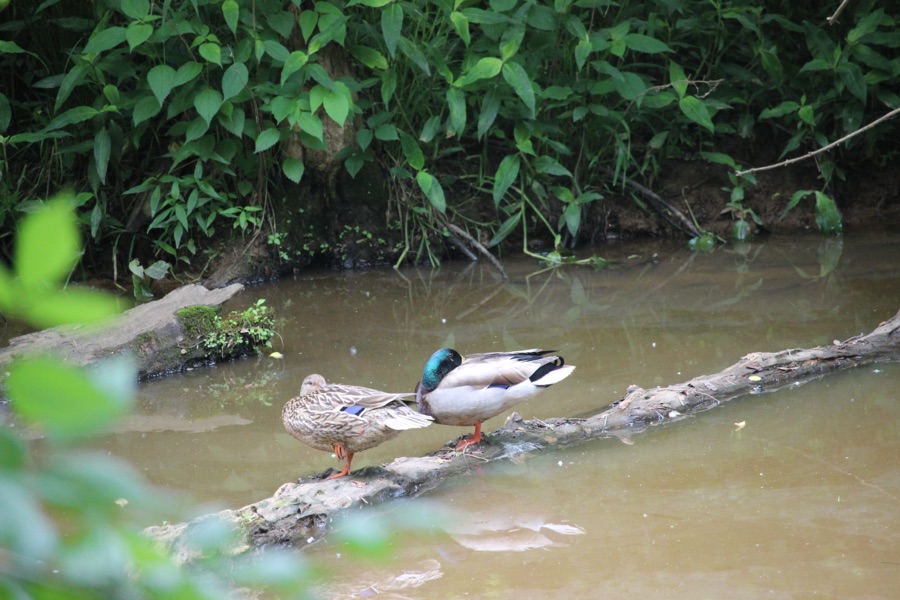
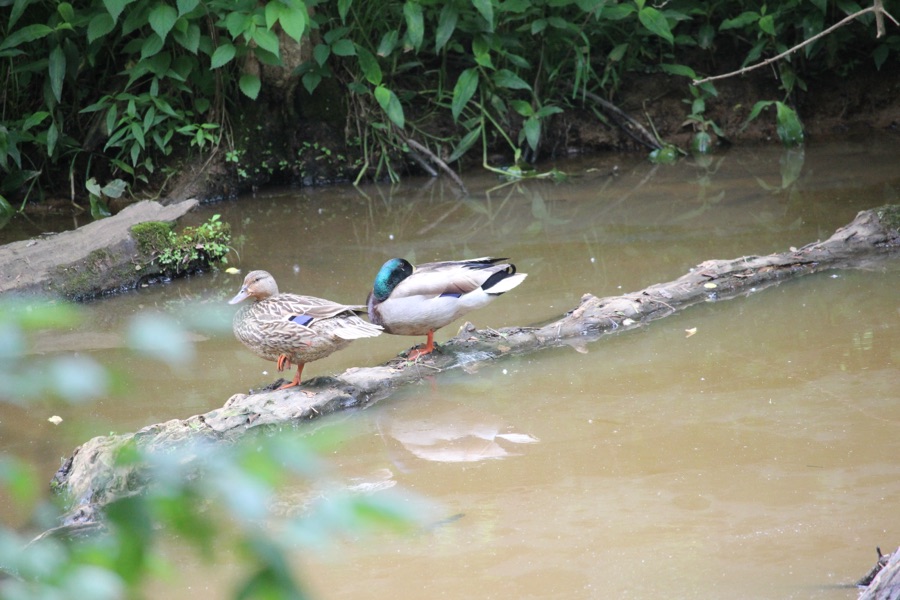
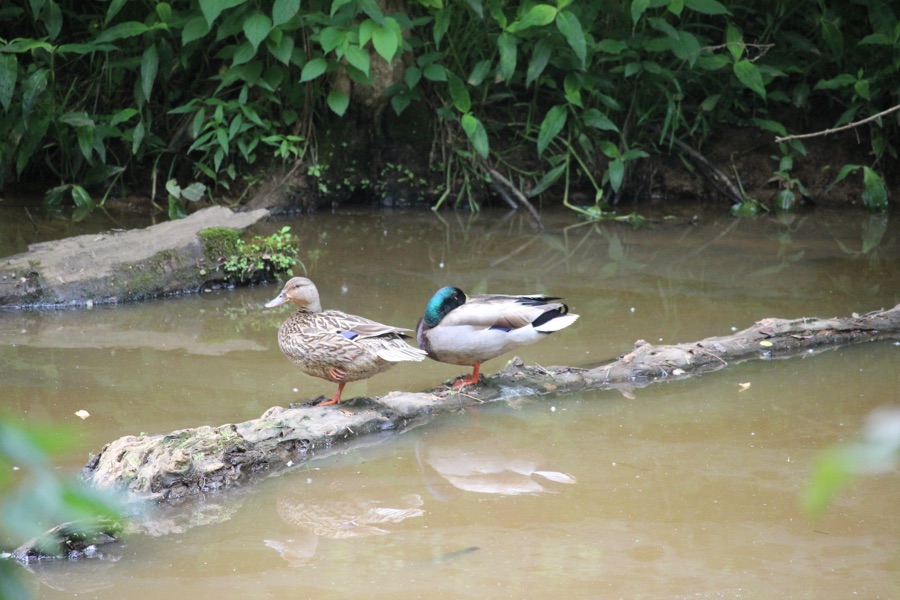
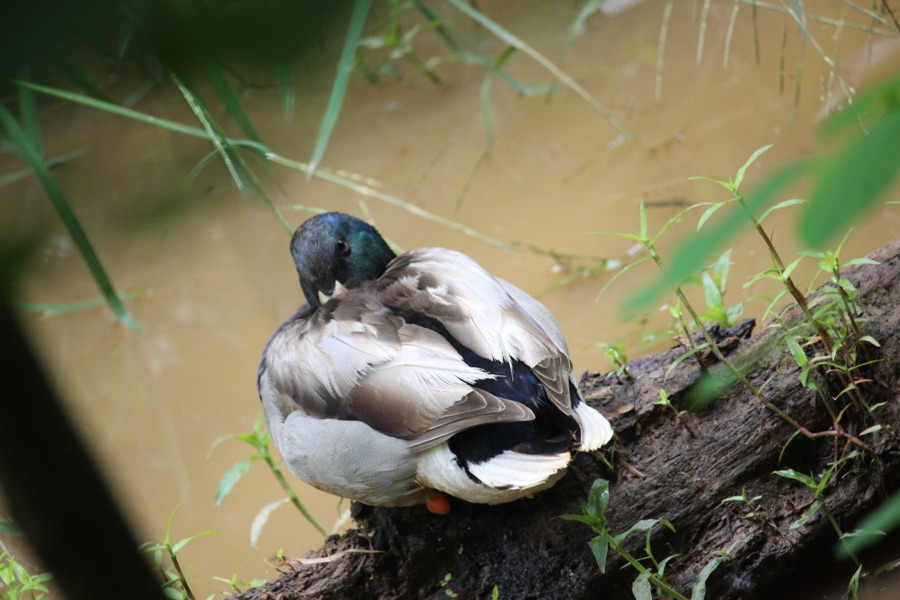
The Anas Platyrhynchos also known as Mallards are one of several varieties of duck species, which include both resident and migratory birds. The Mallard is the most abundant duck in North America, often found in a variety of habitats. Even though apparently abundant, we have not seen many of the Mallards in or around the Catawba River.

The Mallard (Anas platyrhynchos) is a widespread dabbling duck with a long body and high tail. The Mallard is easily identified by the male’s iridescent green head, white neck collar, and black tail curl. Females and juveniles have mottled brown bodies and dull orange bills. Both sexes have iridescent blue wing speculums. Mallards breed in fresh marshes surrounding lakes, ponds, beaver ponds, impoundments, open swamps, and such like areas, however, they do have a propensity to avoid nesting in brackish marshes. 

Coleman and I went hiking on the South Fork River Trail, a part of the Carolina Thread Trail, in Goat Island Park and Greenway on Saturday watching a partial day without rainfall (it rained again after we were safely home). While hiking the trail, Coleman and I were looking for the Turtles that often sun themselves on logs in the South Fork Catawba River. What were spotted prior to the Turtles were a pair of Mallards standing on a log checking out the River area. [This was the first time we’ve seen the Mallards in this region of the South Fork Catawba River.]

As we continued our hike we did encounter a lone Turtle sunning on a log which dove quickly into the river. But alas, we ventured on down the trail to find more Mallards on logs and in the river. It was fascinating to see and watch them especially since we had not previously seen the Mallards in this section of the Catawba River before.

Mallards feed in the water by tipping forward and grazing on underwater plants. They almost never dive. They can be very tame ducks especially in city ponds, and often group together with other Mallards and other species of dabbling ducks.

Mallards are able to live in almost any wetland habitat, natural or artificial. Look for them on lakes, ponds, marshes, rivers, and coastal habitats, as well as nearby city and suburban parks and residential backyards.

Monday Portrait

Birds of the Carolinas

Bird of the Week CXVI

Jez’s Water Water Everywhere #268

Photo Credit:©️2025 Deb L. Waters … All Rights Reserved.

Camera: Canon EOS Rebel T3i with Canon EF-S55-250mm lens and Altura UV filter attachment.

Settings: f/6.3 • 1/320 • 250mm • ISO800-2000

Location: South Fork Catawba River; South Fork River Trail; River Link Greenway; Goat Island Park and Greenway; Cramerton, North Carolina, USA

God Bless. Get outdoors and enjoy nature’s beauty and natural wildlife. Have a funtastic week. Thank you for visiting and sharing your time and thoughts with us. I appreciate y’all very much.

Birds of the Carolinas/Birds of the Week CXI

Mourning Doves

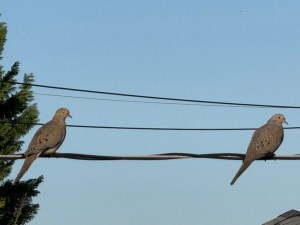
The scientific name for Mourning Dove is Zenaida macroura. According to the North Carolina Wildlife Resources Commission Mourning Doves are common throughout North Carolina. However, this is the first time Coleman and I have seen them in our neighbourhood. They are members of the dove family, Columbidae. The Mourning Dove is also known by the American mourning dove, the Rain dove, the chueybird. At one point in time they were once referred to as the Carolina pigeon and Carolina turtledove.

A Pair of Mourning Doves

Mourning Doves are one of the most abundant and widespread North American birds and a popular gamebird. Approximately twenty (20) million birds are shot annually in the United States, both for sport and meat. It is said that one pair may raise up to six (6) broods of two (2) squabs (young) each in a single year in warm climate areas.

Mourning Doves on a Wire

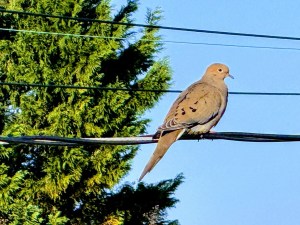
 These birds (the mourning doves) are often found near humans, whether gobbling up seeds under a feeder, perching on a telephone wire, or building a nest in a questionable location. The macroura in its scientific name comes from the Greek words for “long tail.” The Mourning Doves tail is slender, tapered, and has white-tipped outer feathers which is a clue to distinguish it apart from other Doves like the Eurasian Collared-Dove and the White-winged Dove Those doves tails end in square tips.

Mourning Dove
aka Zenaida macroura

Mourning Doves are known to be skittish. They make a sharp whistling sound when they take flight. The noise doesn’t come from their beaks, however, it is actually made by their wings as air rushes through their feathers and causes them to vibrate. 

Mourning Dove

It is interesting to note that when Mourning Doves locate a food source, such as seeds on the ground (and possibly in a bird feeder); they prefer to grab as much as they can manage, storing their haul in a throat pouch called the crop. Then, they’ll fly off to a safe spot to work on digesting.

Good Evening, Mourning Dove

In some spiritual or symbolic interpretations, a mourning dove’s appearance can be seen as a message of peace, hope, or a gentle reminder of loved ones, or even a visit from a deceased person. Some people believe that the sight of a Mourning Dove is a message from God, angels, or other spiritual guides. To hear the cooing of a mourning dove can be understood as a call to seek and find inner peace. Another thought is that Doves may remind us to hold on to hope and not fear death, but instead to think of it as a new beginning.

Birds of the Carolinas

Birds of the Week CXI

Photo Credit:©️2025 Deb L. Waters … All Rights Reserved. 

Camera: Apple iPhone 16 Pro Max

Location: Old Town; Riverside Community; Cramerton, North Carolina, USA

God Bless. Thank you for visiting and sharing your time and thoughts with us. I appreciate y’all very much.

2025 Numbers Game #64 — 185

Birds of the Carolinas

Bird of the Week

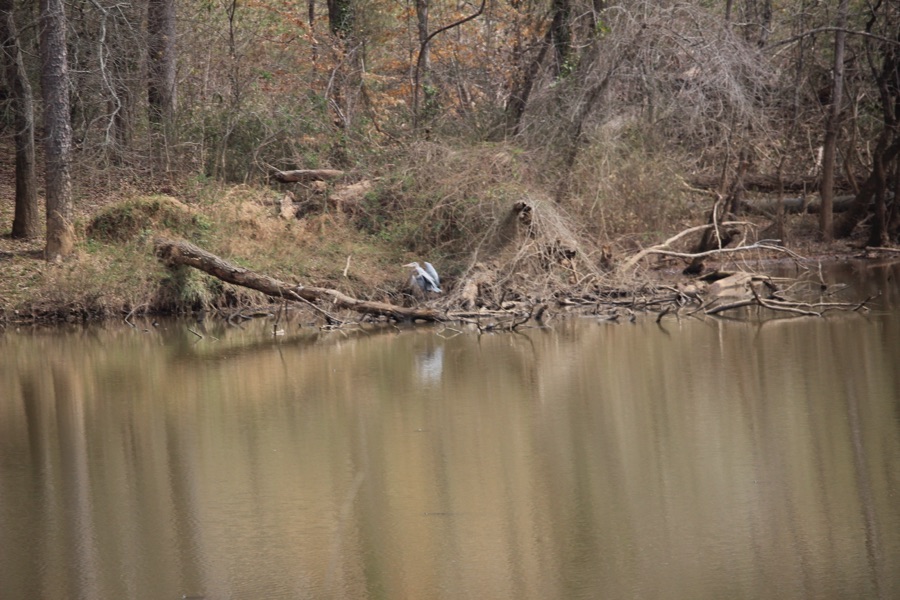
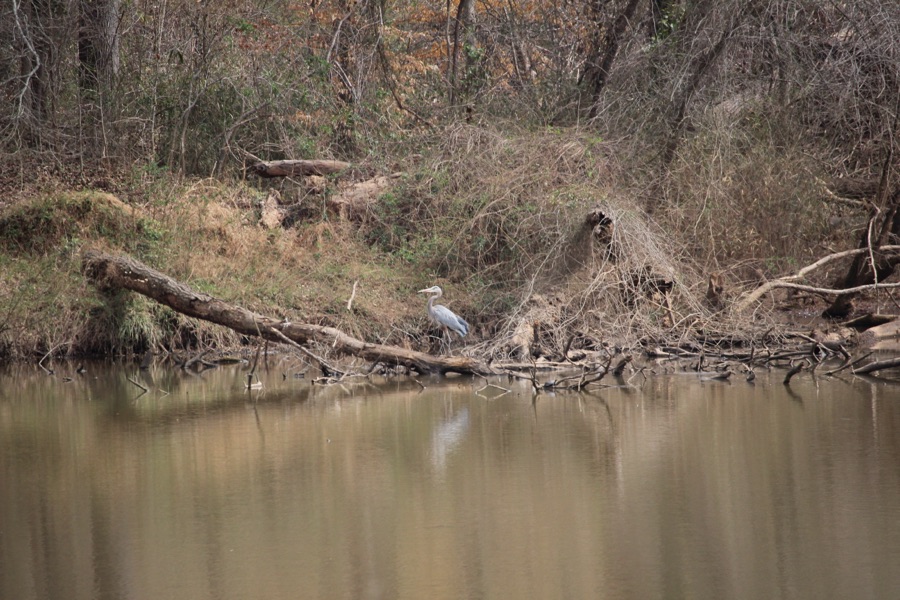
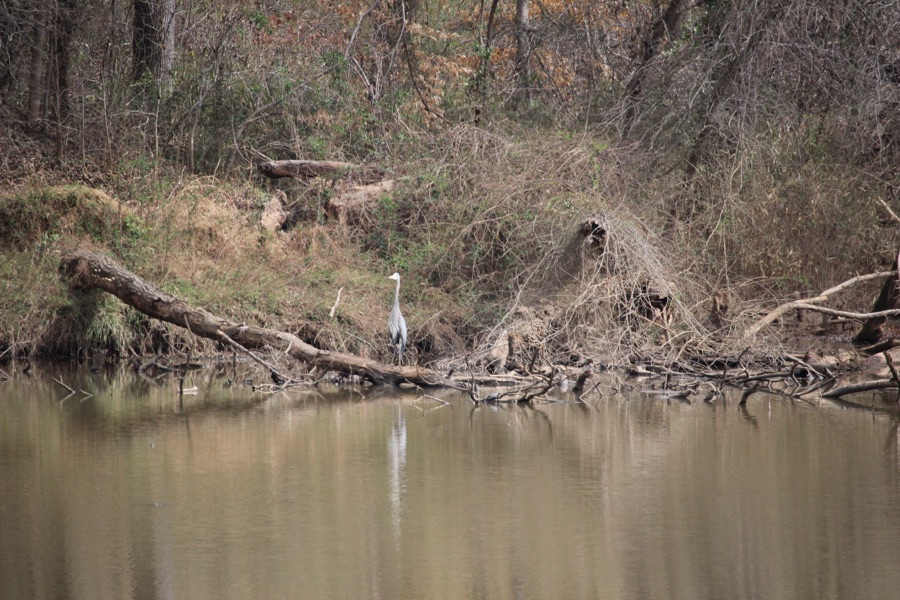
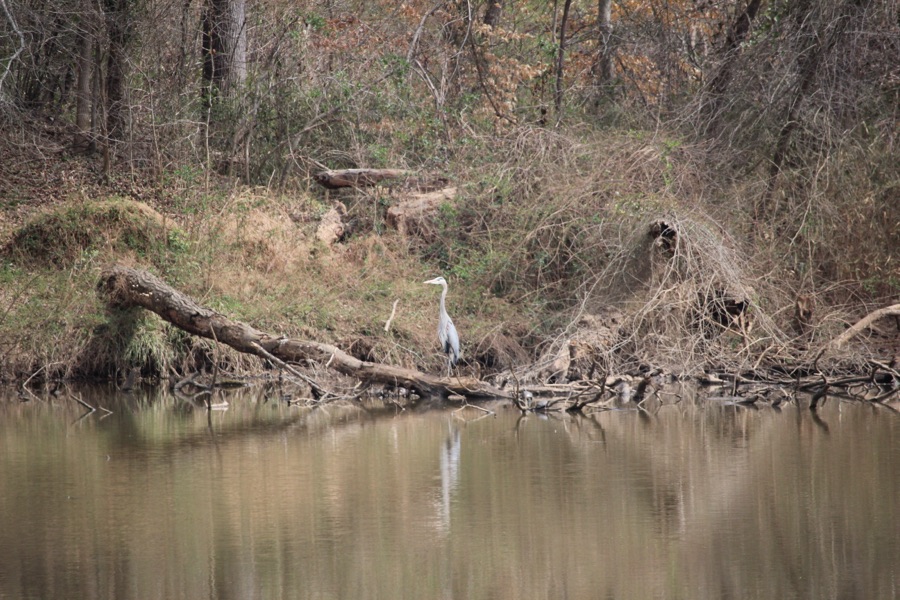
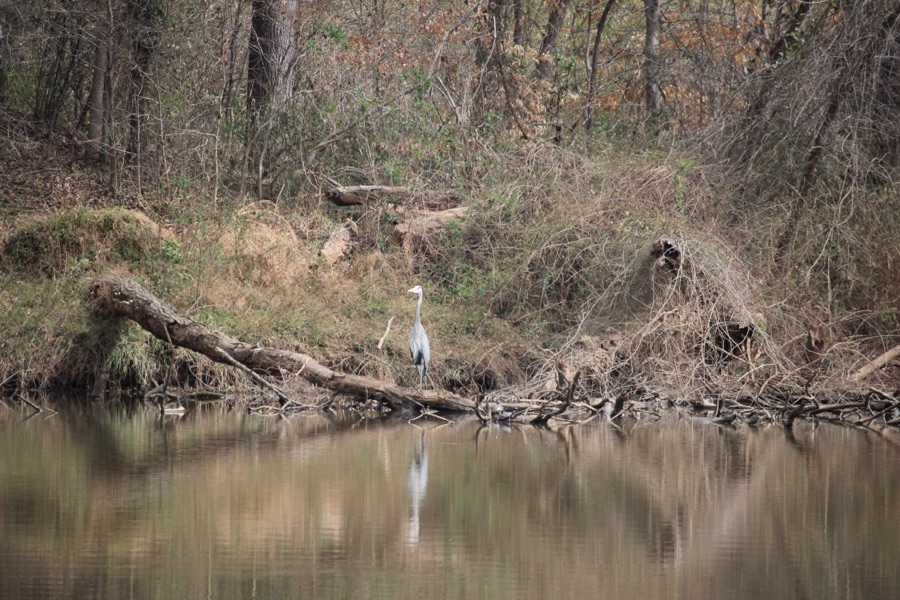
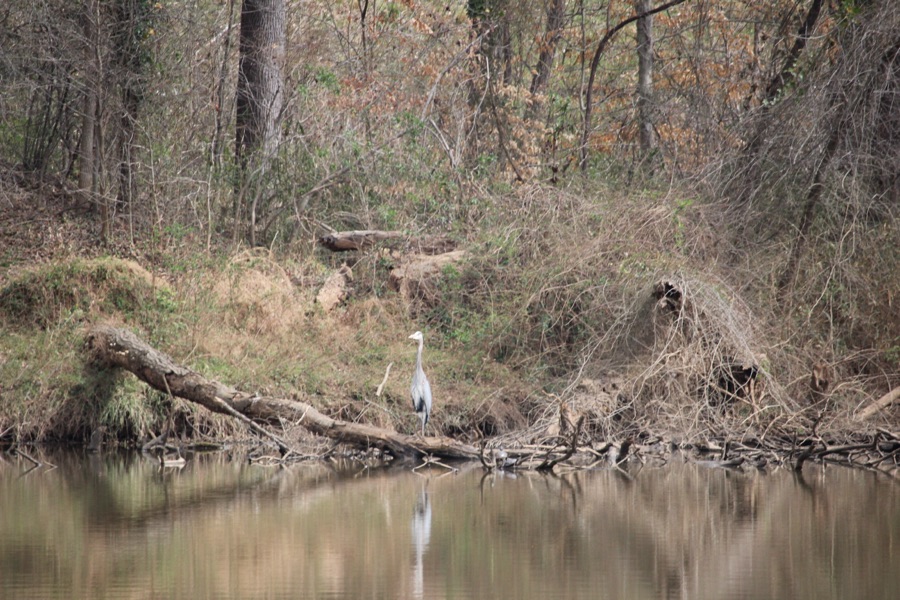
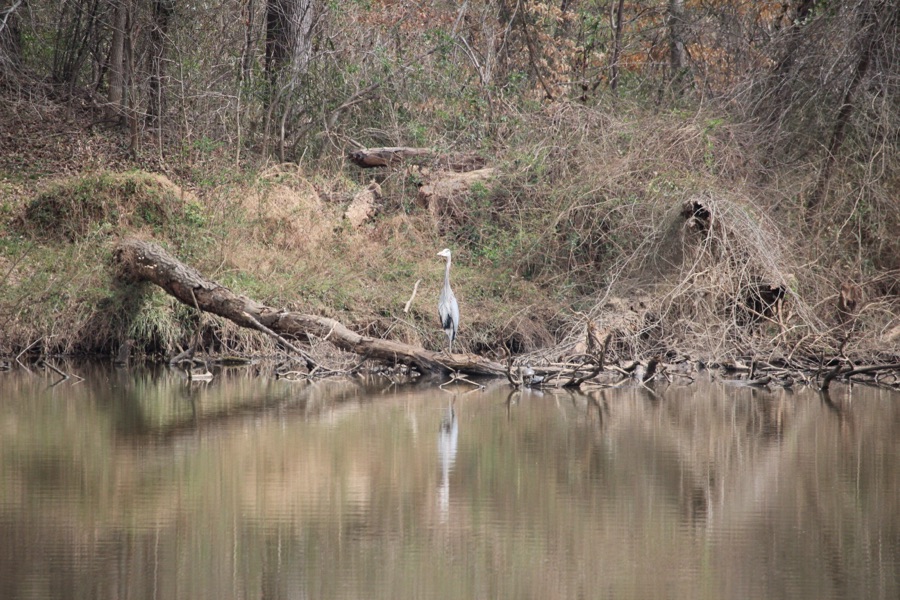
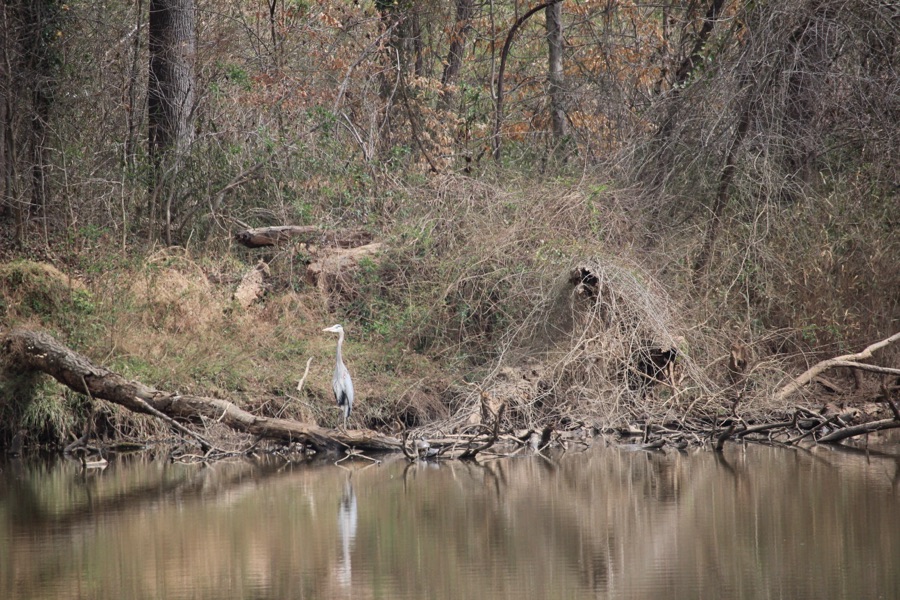
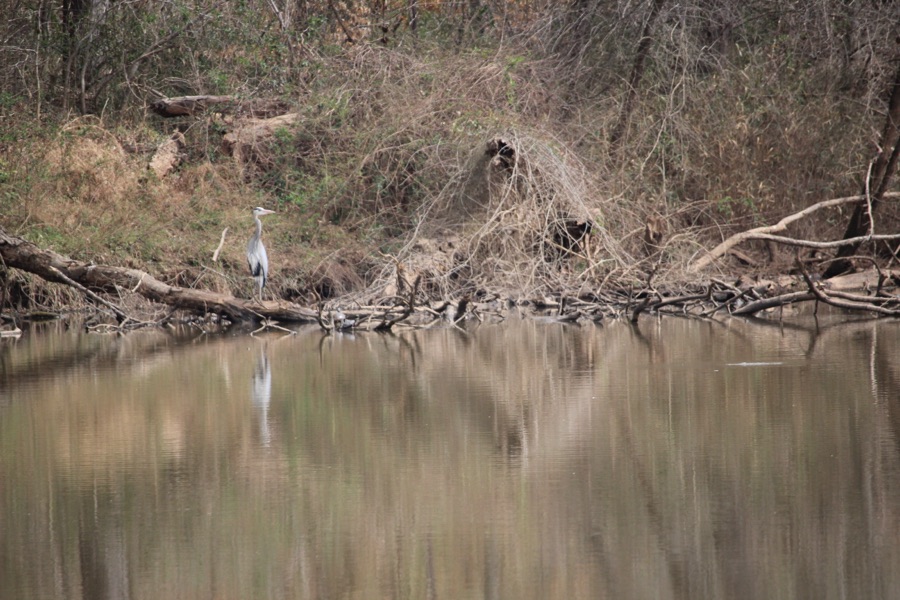
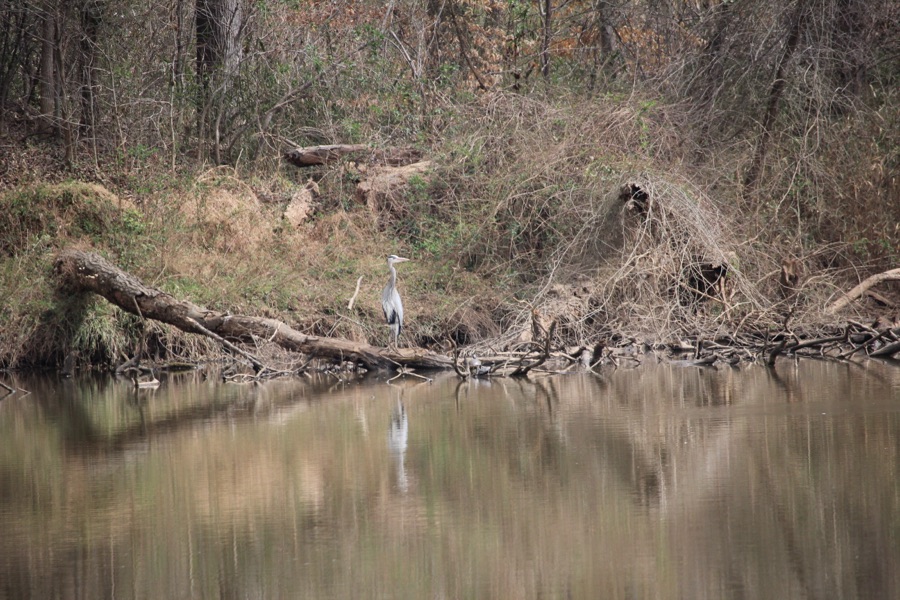
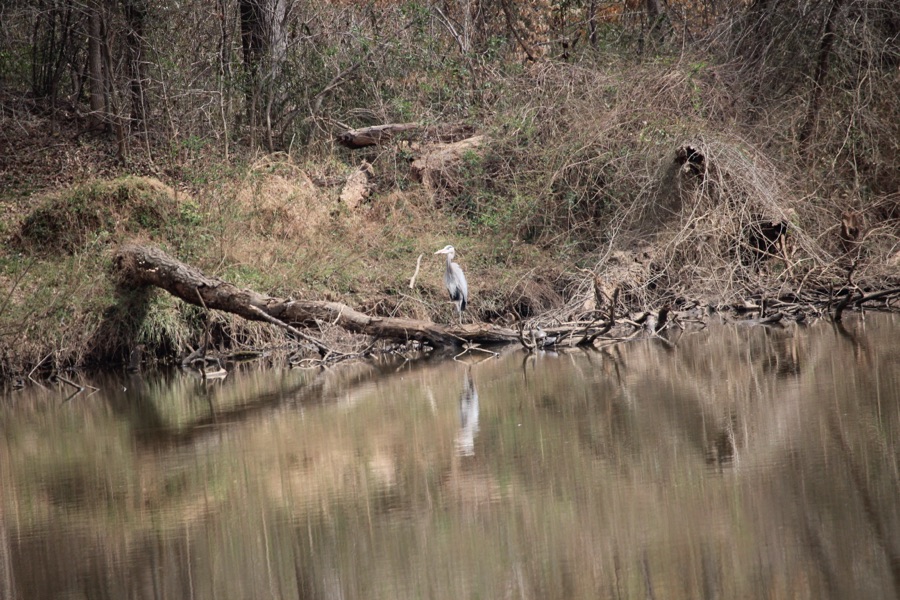
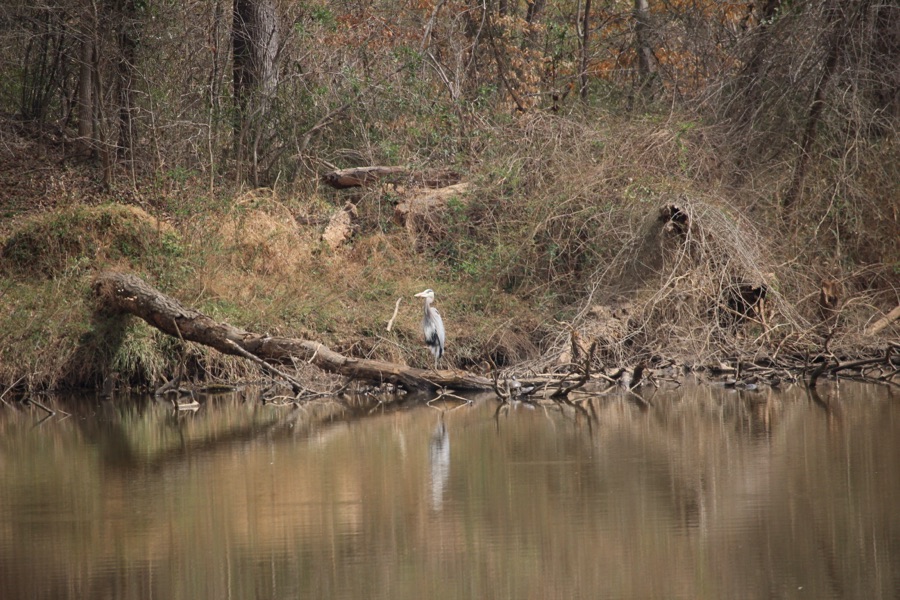
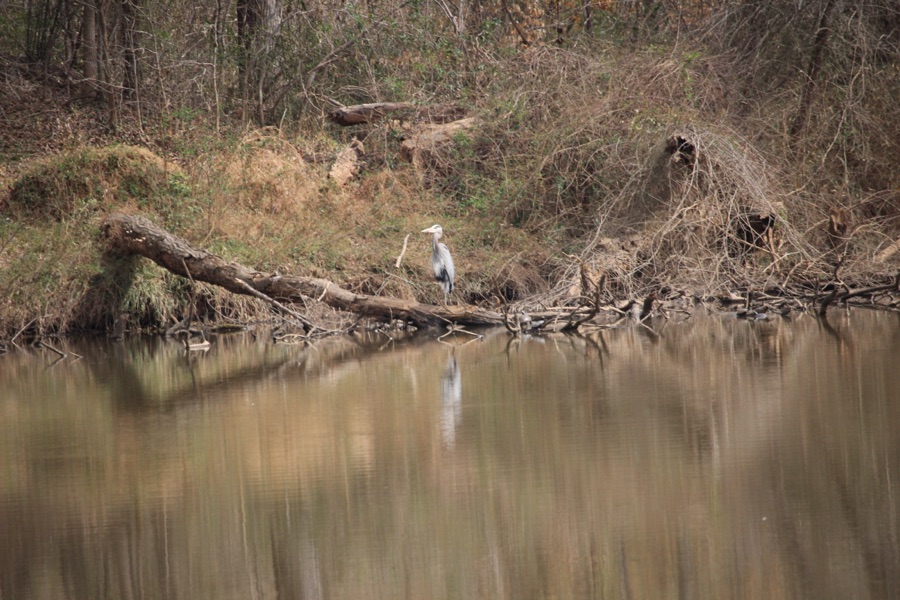
Great Blue Heron

Admiring the Views

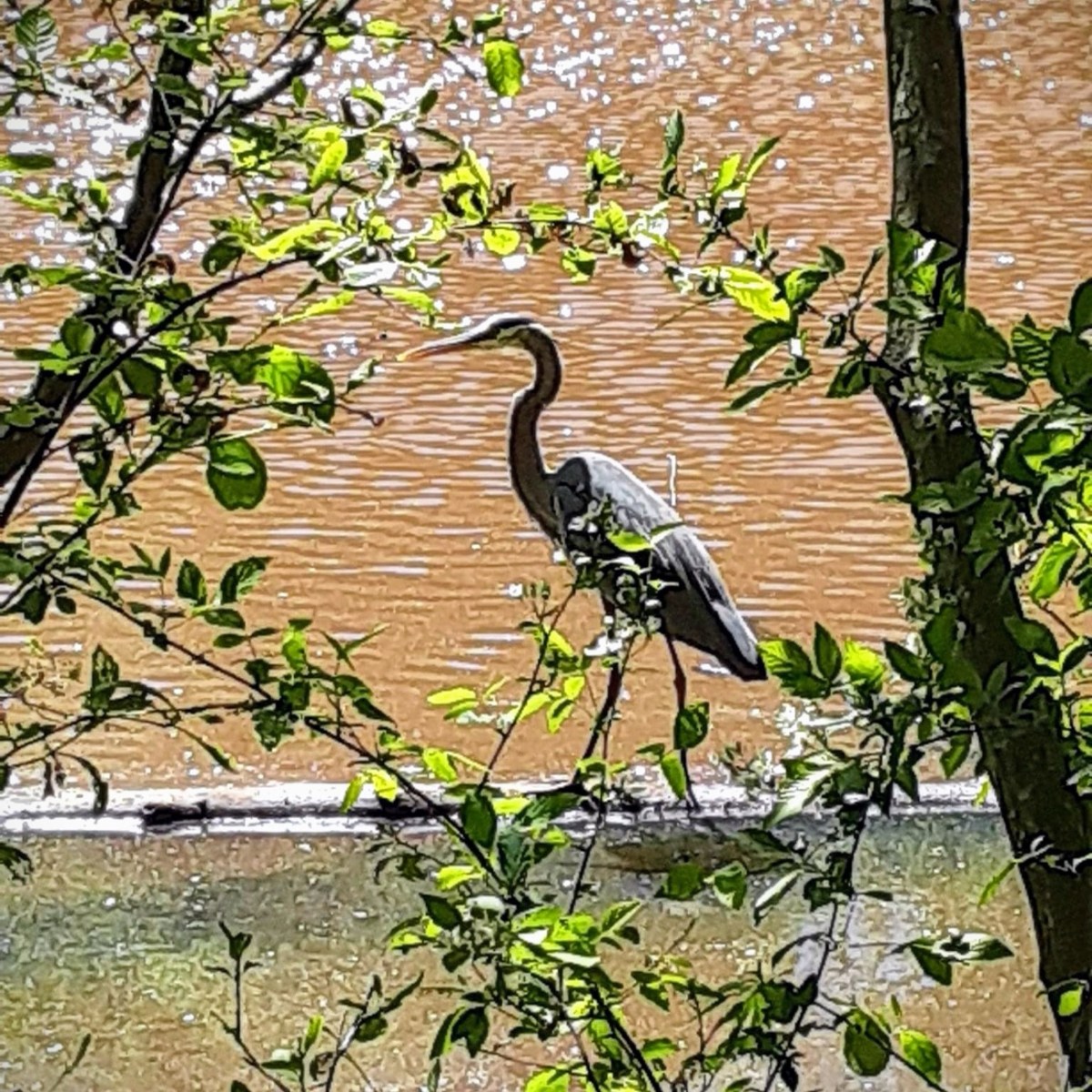
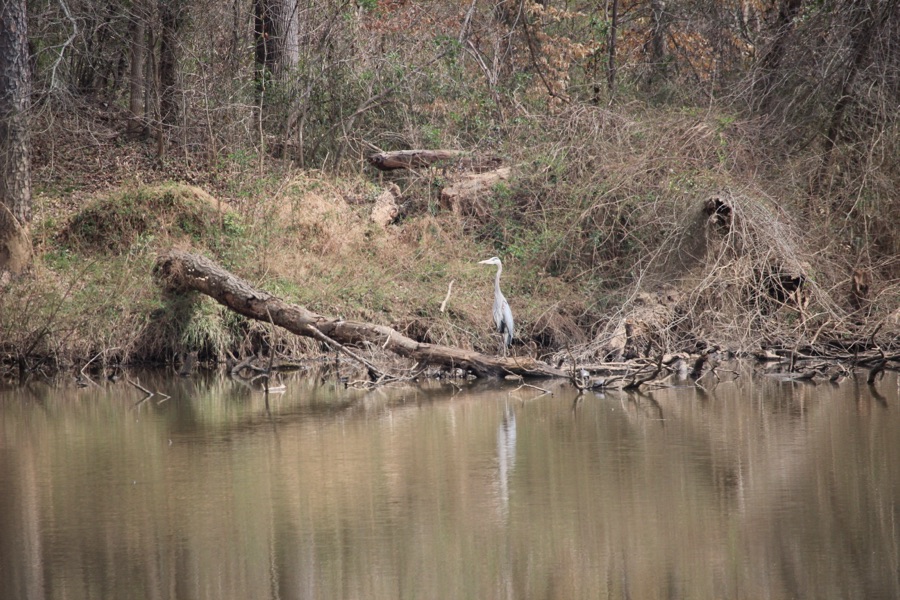
… Watching the Great Blue Heron Looking around admiring his views and insights on the South Fork Catawba River.

The Great Blue Heron is stated to be seen year-round in the Carolinas, however, in our area of Southwestern North Carolina the Herons and other Cormorants tend to be seasonal in the inland regions. On this day, it was the first time the Cormorants and Great Blue Herons had been spotted since the end of summer.

The Great Blue Heron (Egretta thula) is the largest heron in North America and one of North Carolina’s most familiar and frequently seen wading birds. It is commonly observed around shores of open water and in wetlands where it stands  silently or walks very slowly waiting for prey to get close enough so it can spear it with a rapid thrust of its bill.

The Great Blue Heron stands more than three (3) feet tall as an adult and weighs approximately 5.5 pounds (lbs). Its wingspan extends nearly 6.5 feet.

The Great Blue Herons live in both freshwater and saltwater habitats, including marshes, swamps, shores, rivers and tidal flats. These sightings were located near the shoreline of the South Fork Catawba River around Goat Island in Cramerton, North Carolina.

For the most part the South Fork Catawba River is a slow-moving river with calm waters. The Great Blue Heron prefers the calm waters to forage and the ability to feed on almost anything that comes within striking distance of its long, pointed bill. They typically feed in shallow waters. 

Coleman and I were delighted to watch the Great Blue Heron soar over the river and land on the opposite bank from where we were hiking. Naturally, I aimed my camera towards the Great Blue Heron and proceeded to snap several shots. The Great Blue Heron stood tall and upright looking all around the waters of the South Fork Catawba River being observant of his entire environment.

Judy’s Numbers Game #64-185

Bird of the Week CVIII

Birds of the Carolinas

Ragtag Daily Prompt Sunday-Watch

Jez’s Water Water Everywhere #261

Photo Credit:©️2025 Deb L. Waters … All Rights Reserved.

Camera: Canon EOS Rebel T3i with Canon EF-S55-250mm lens and Altura UV Filter attachment. [This was a time I wished I had a longer lens or at least a 2X converter to capture a closer view.]

Location: South Fork Catawba River; Goat Island Park and Greenway; Cramerton, North Carolina, USA

God Bless. Be Observant. Be Kind. Have a wonderful day. Thank you for visiting and sharing your time and thoughts with us. I appreciate y’all very much.

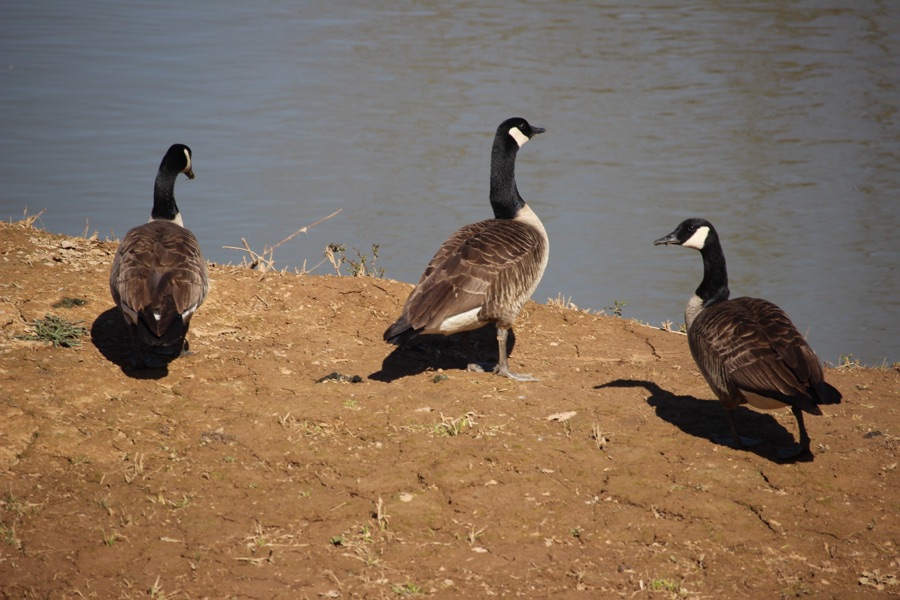
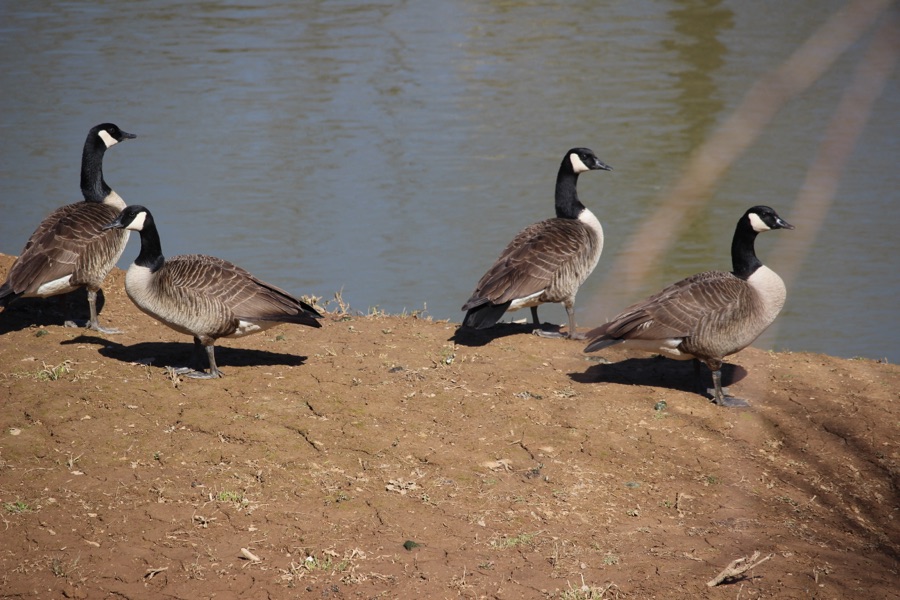
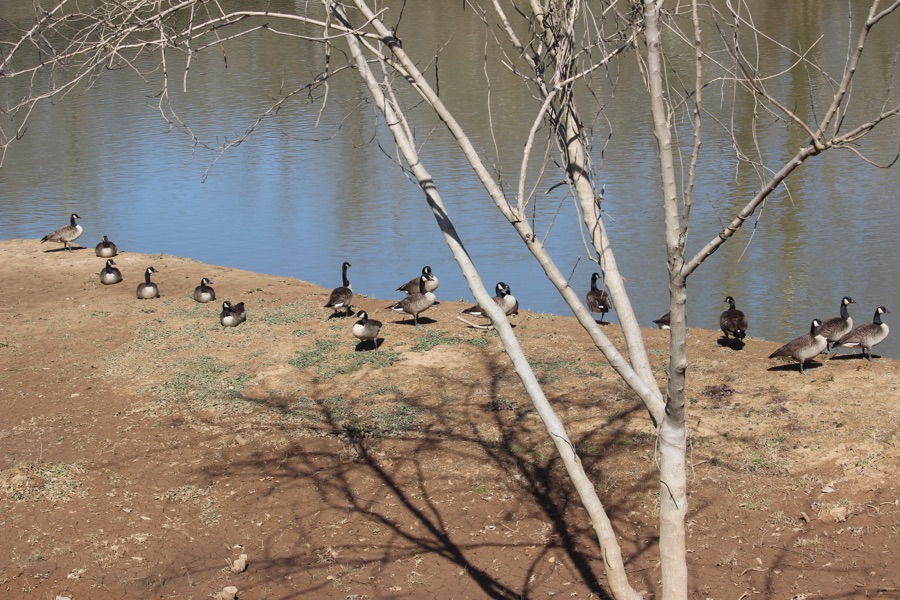
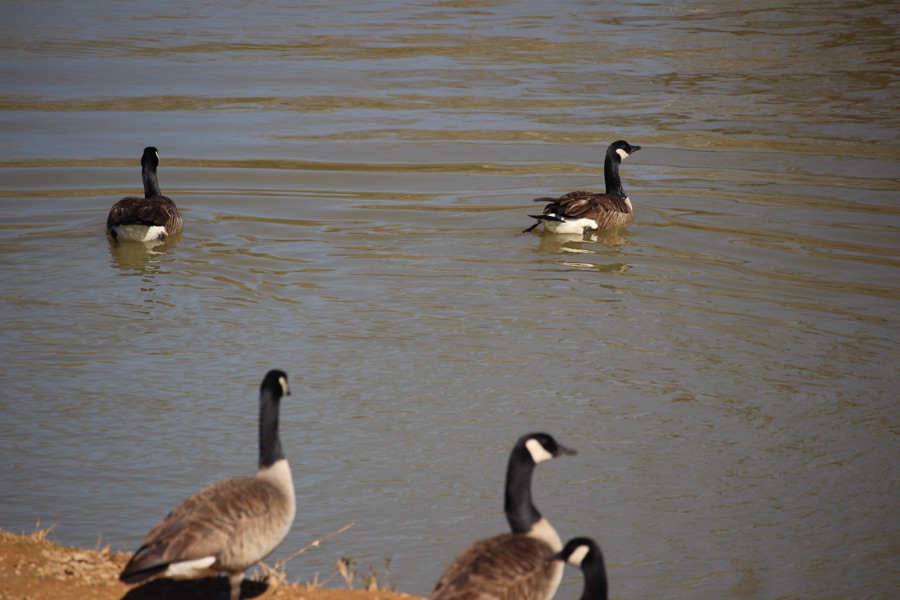
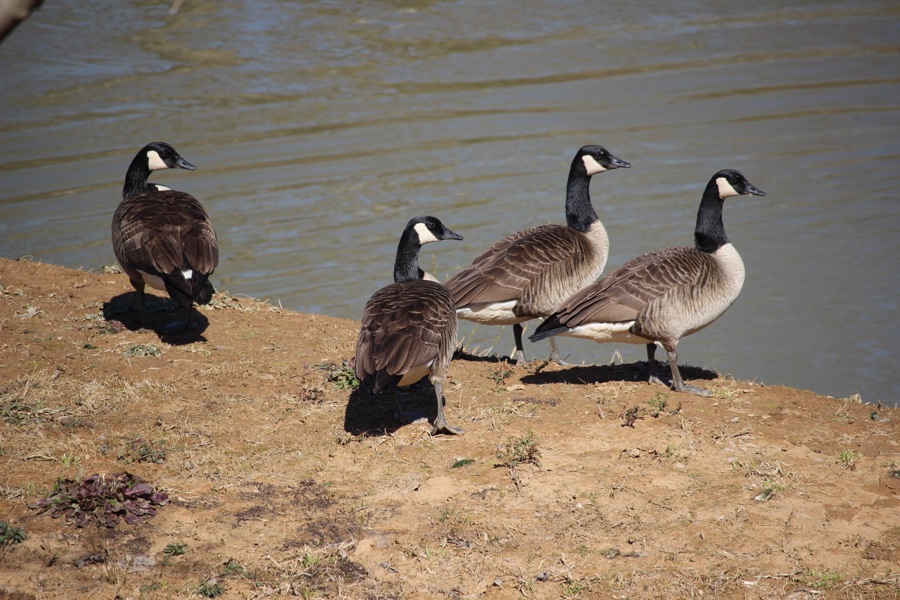
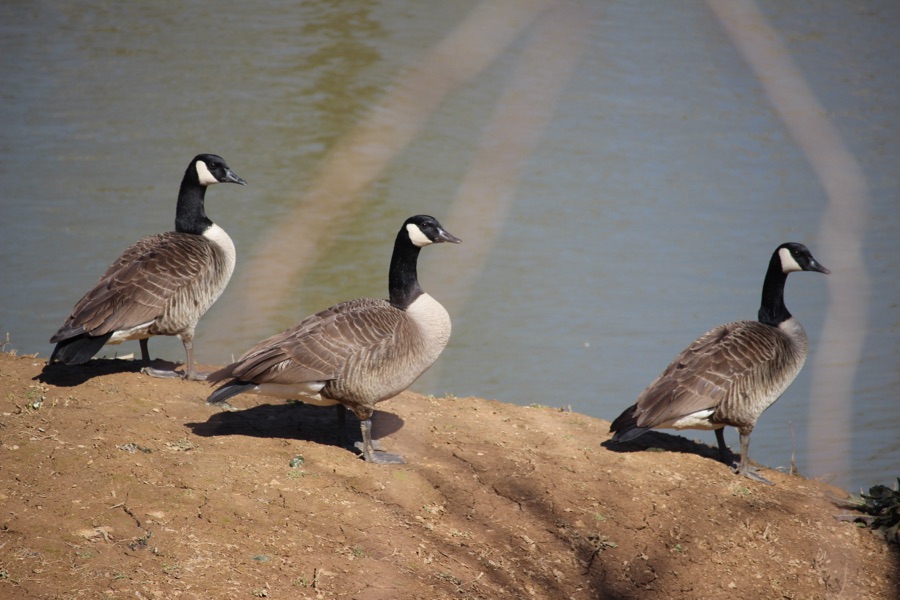
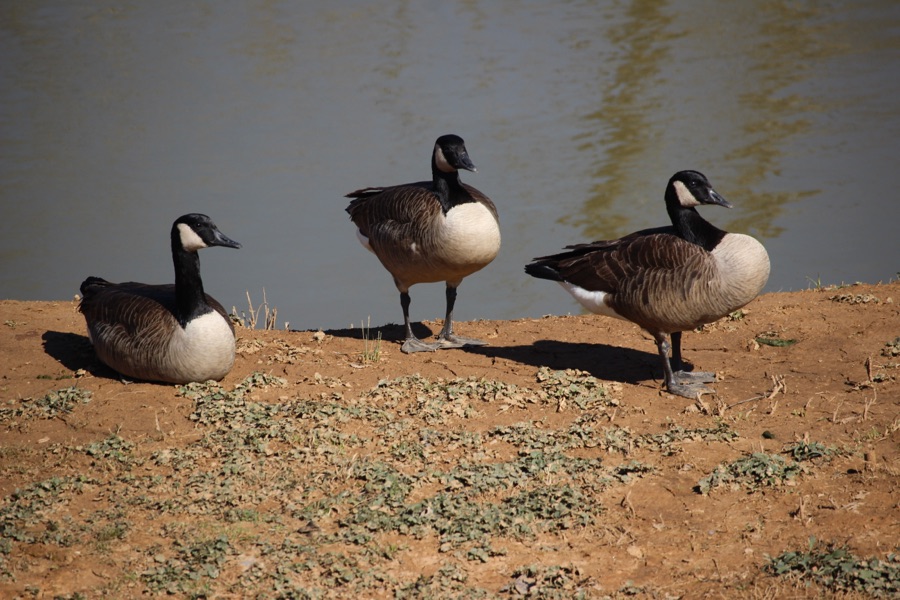
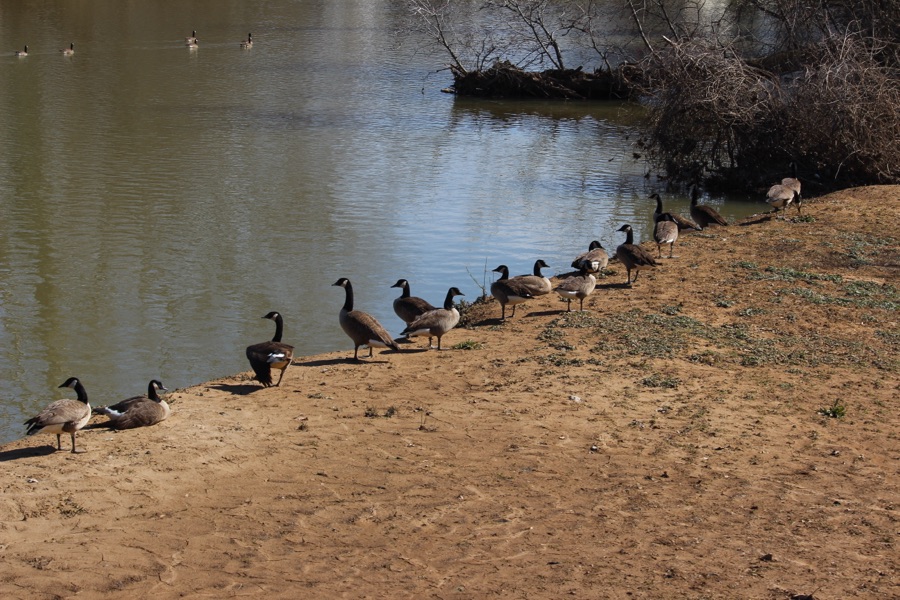
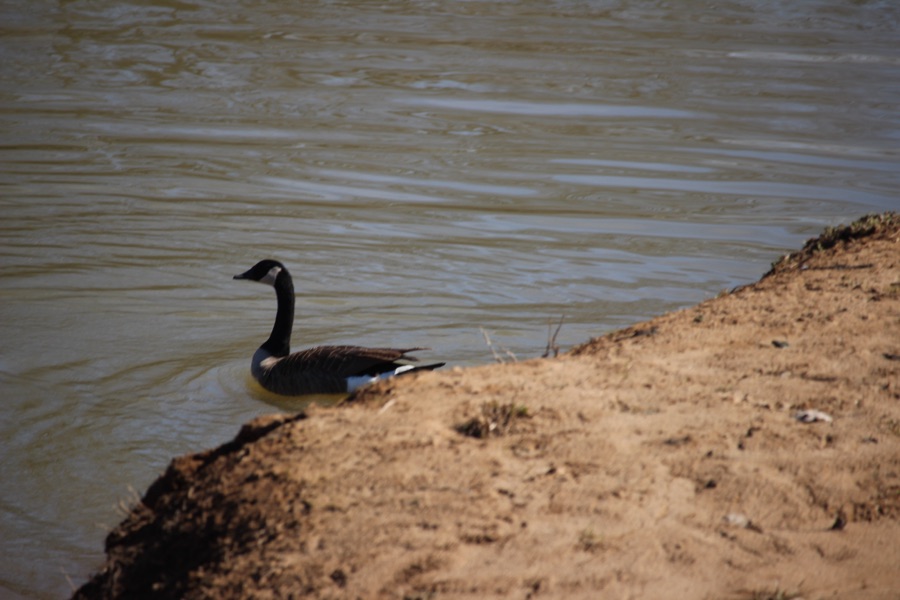
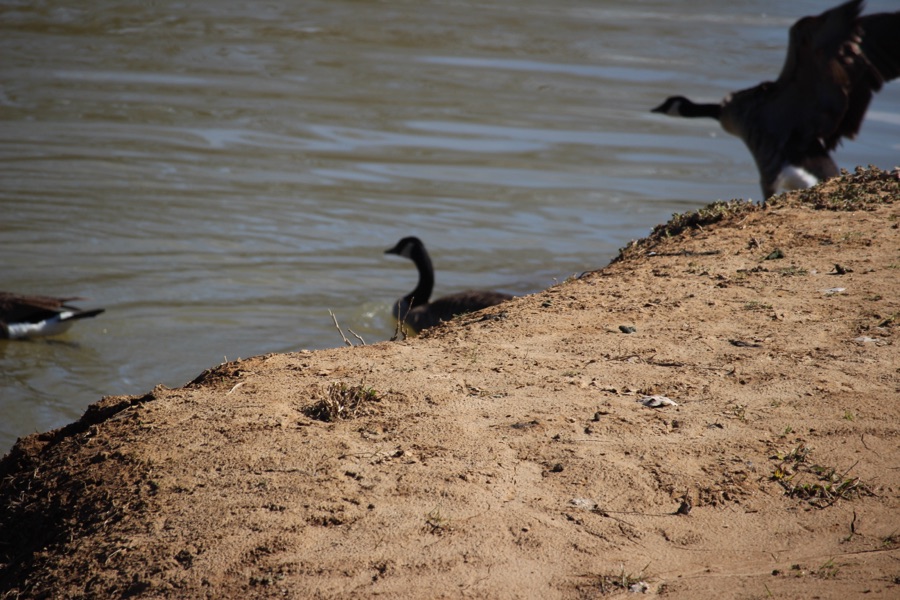
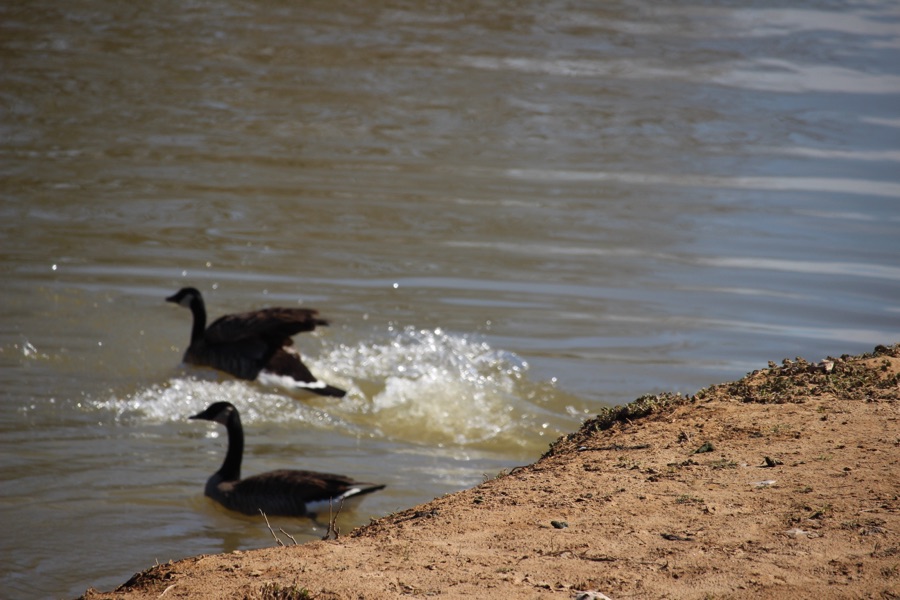
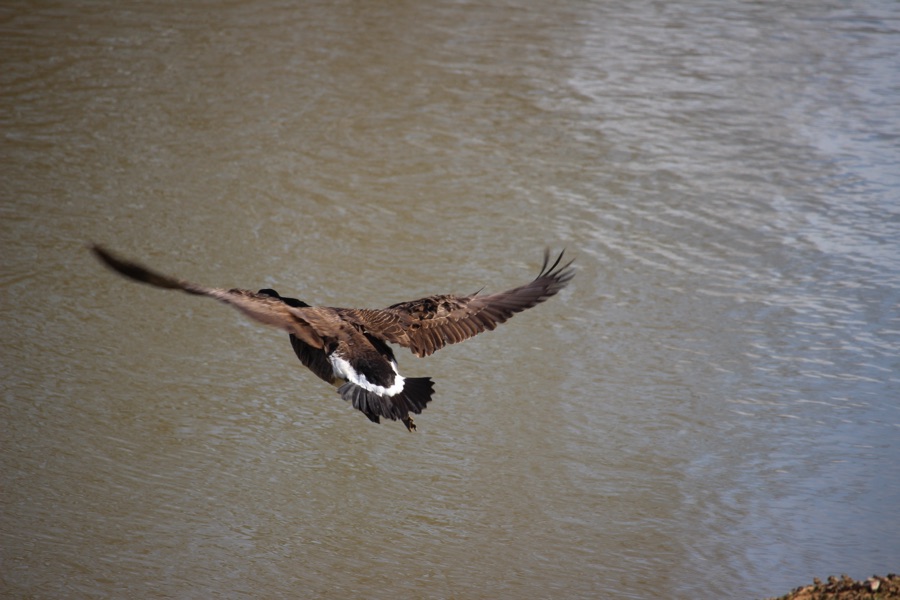
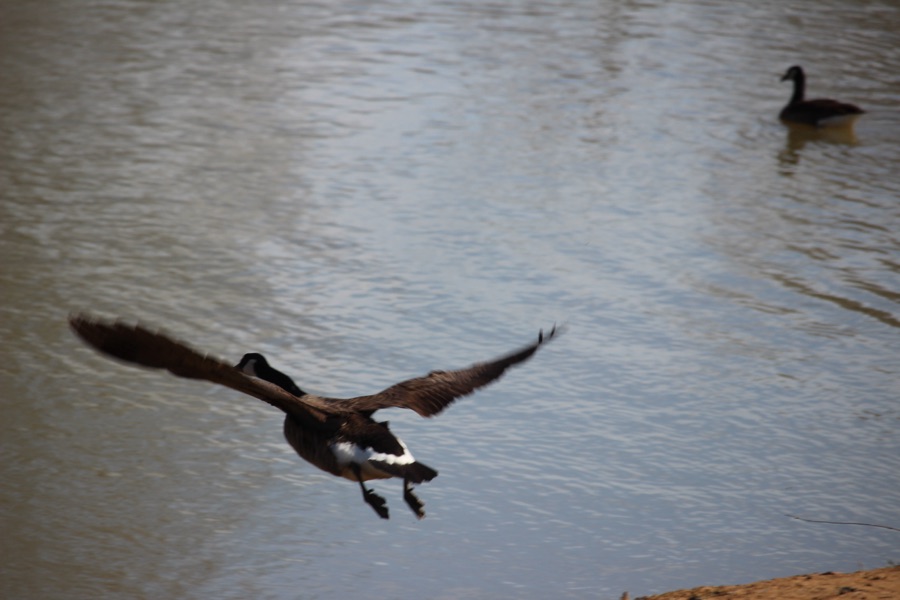
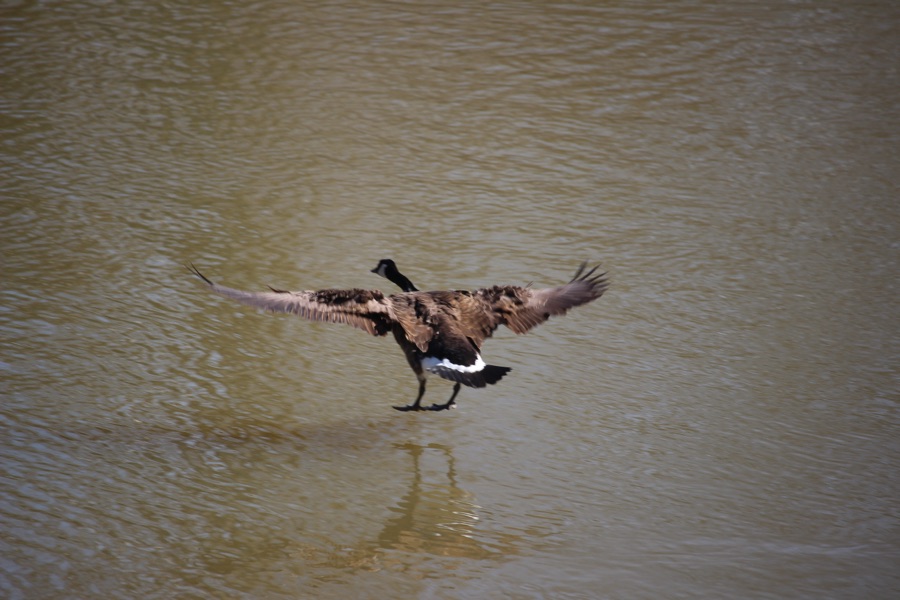
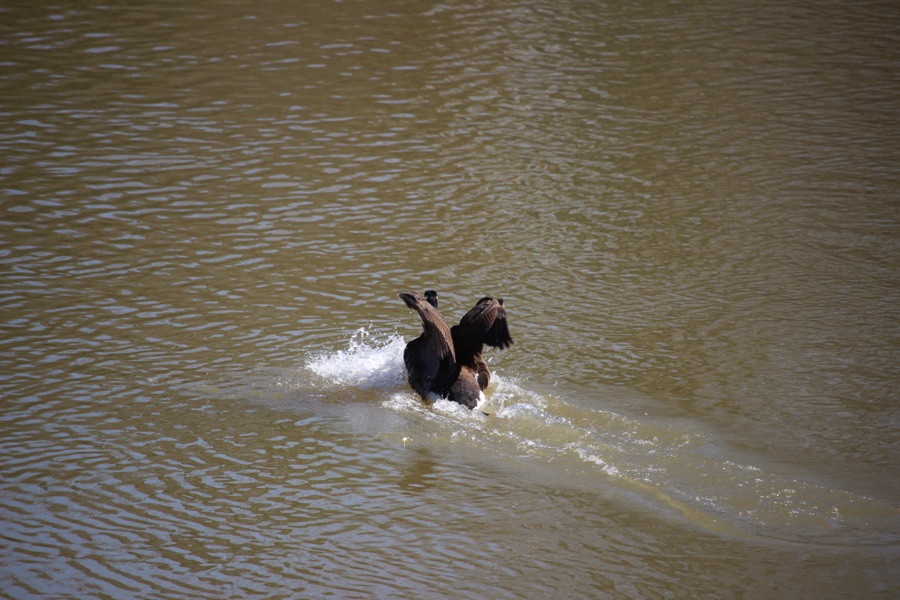
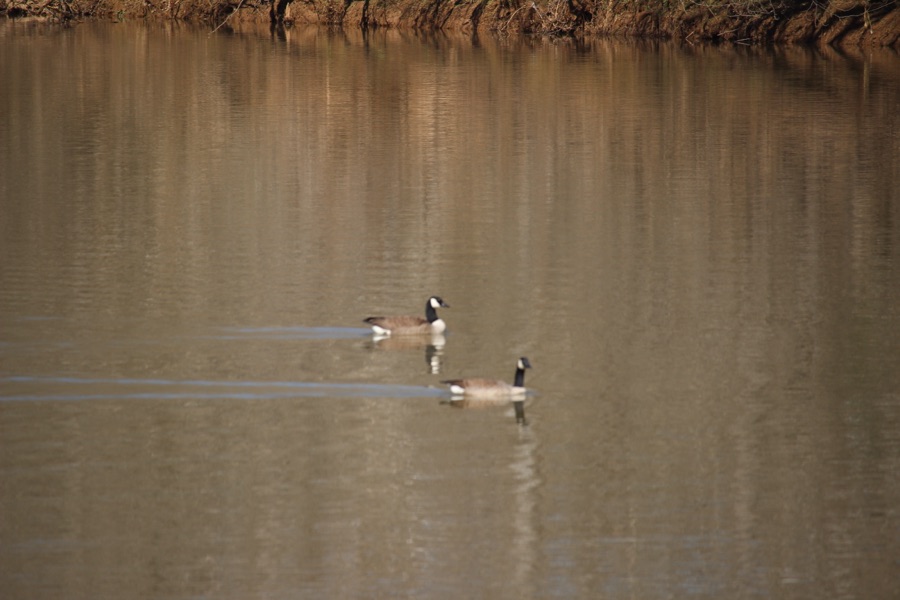
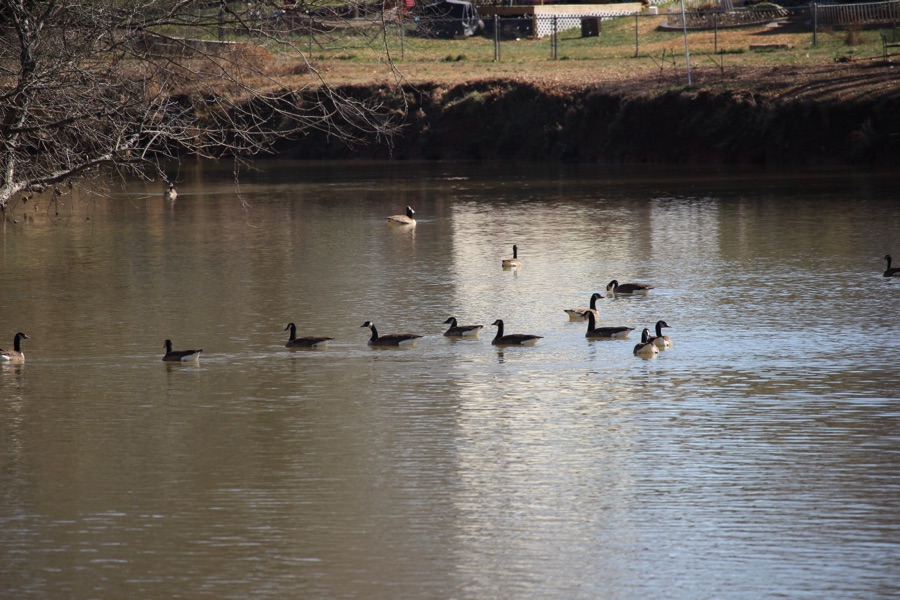
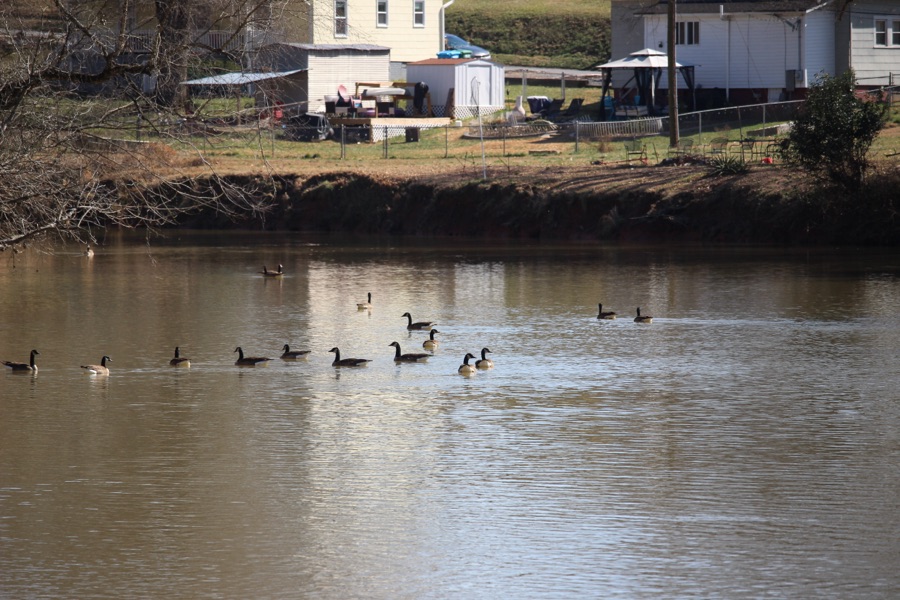
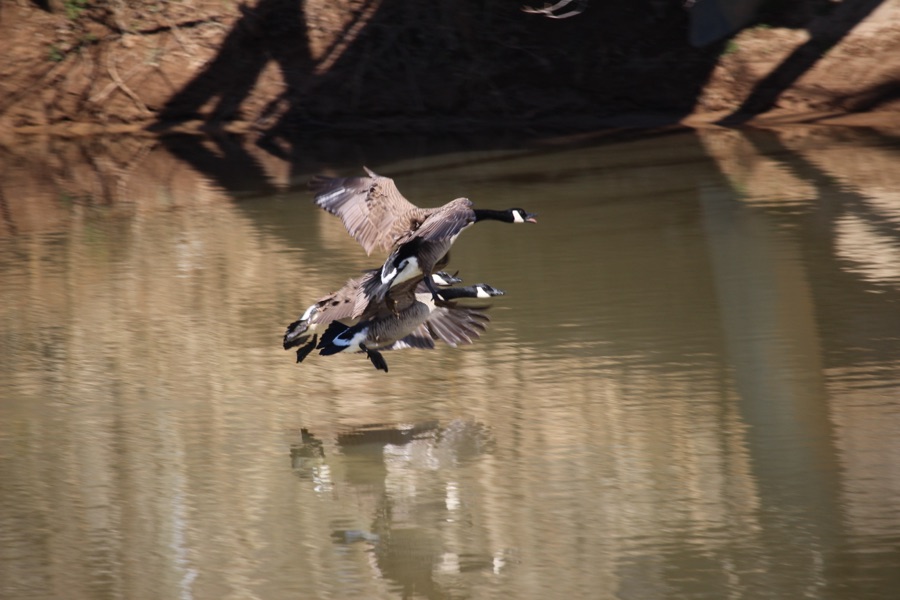
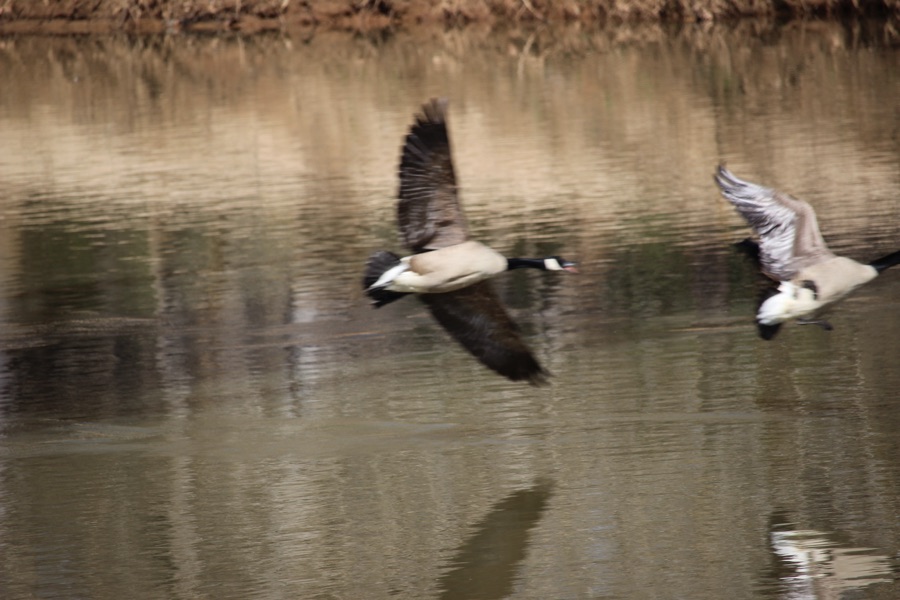
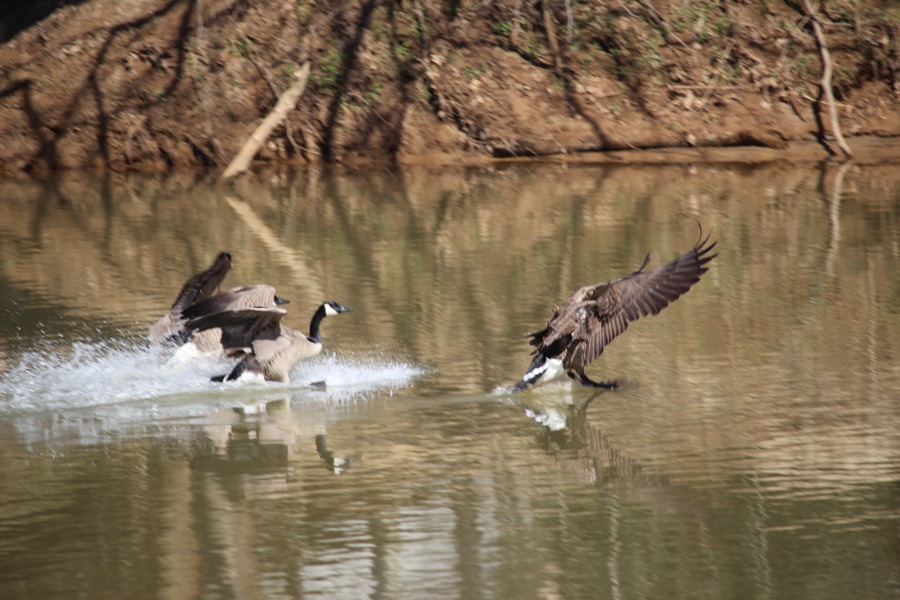
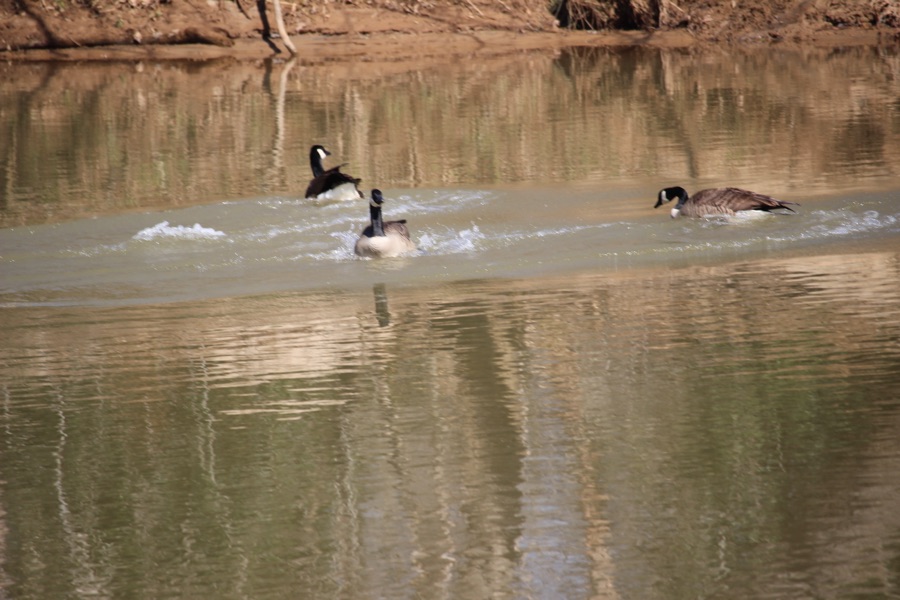
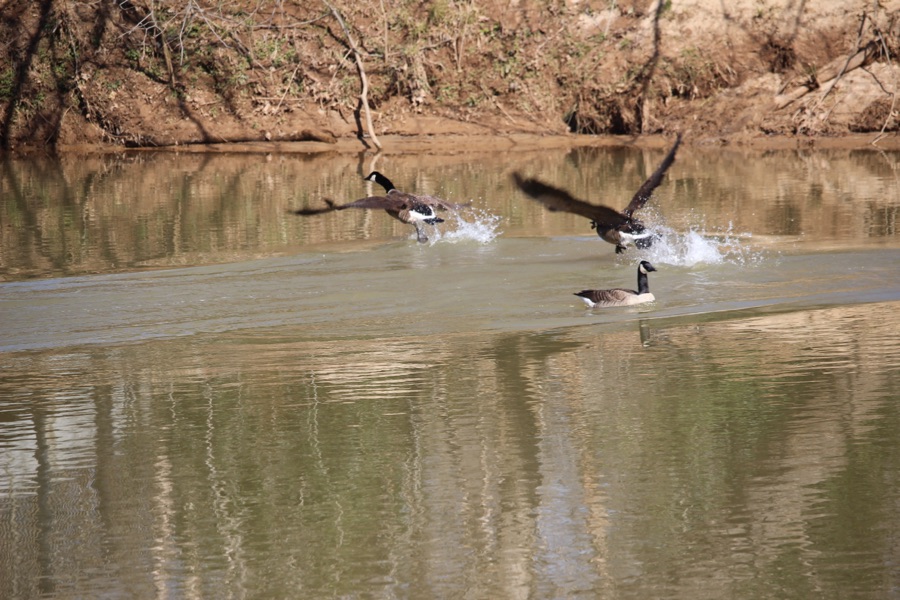
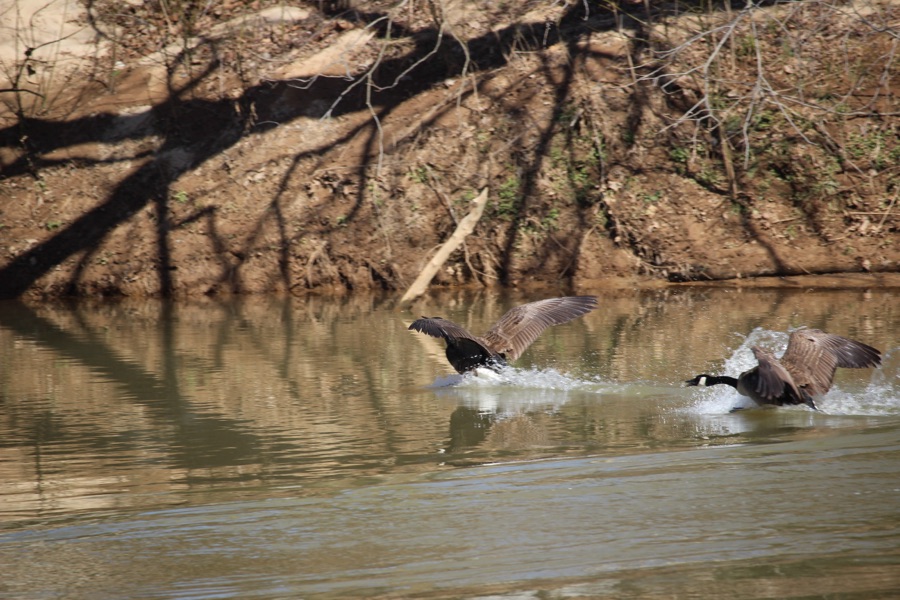
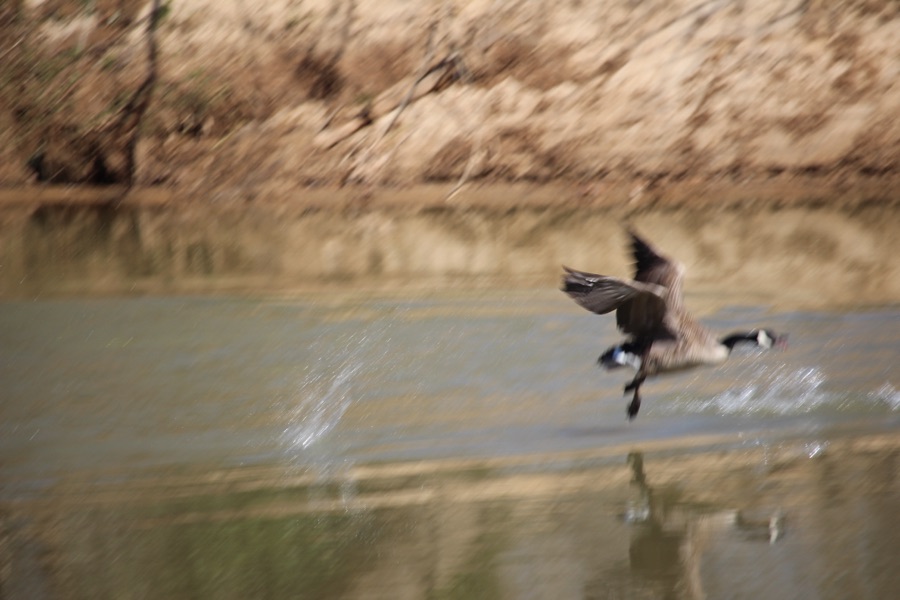
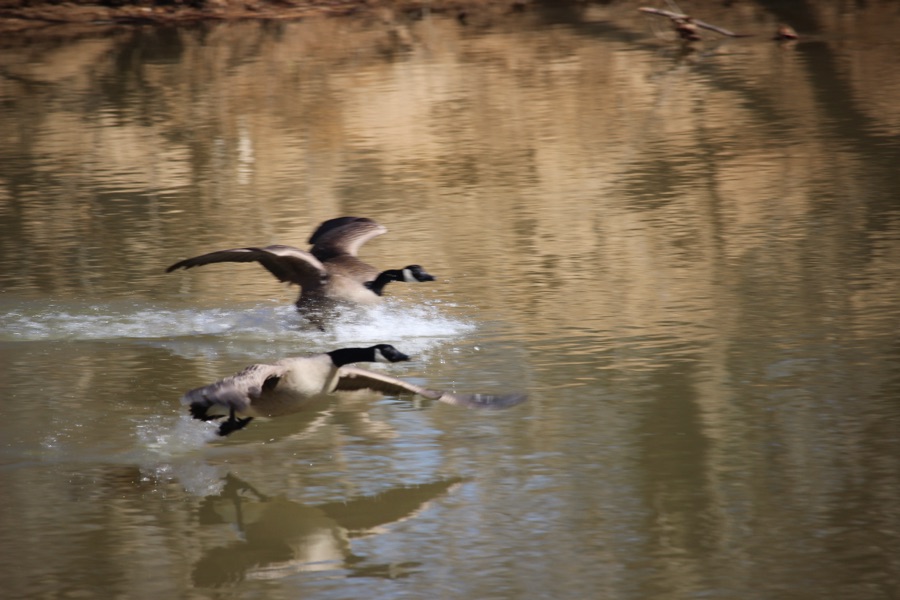
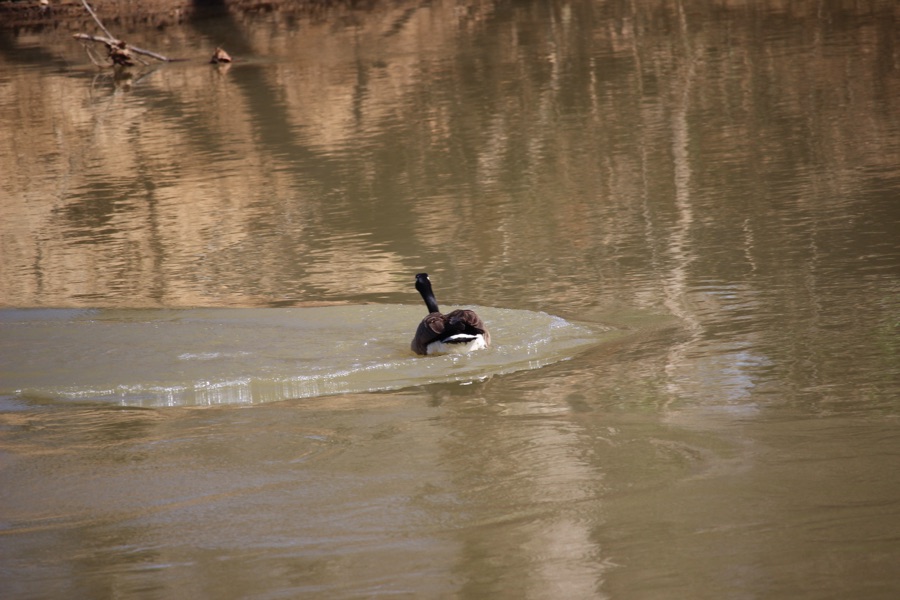
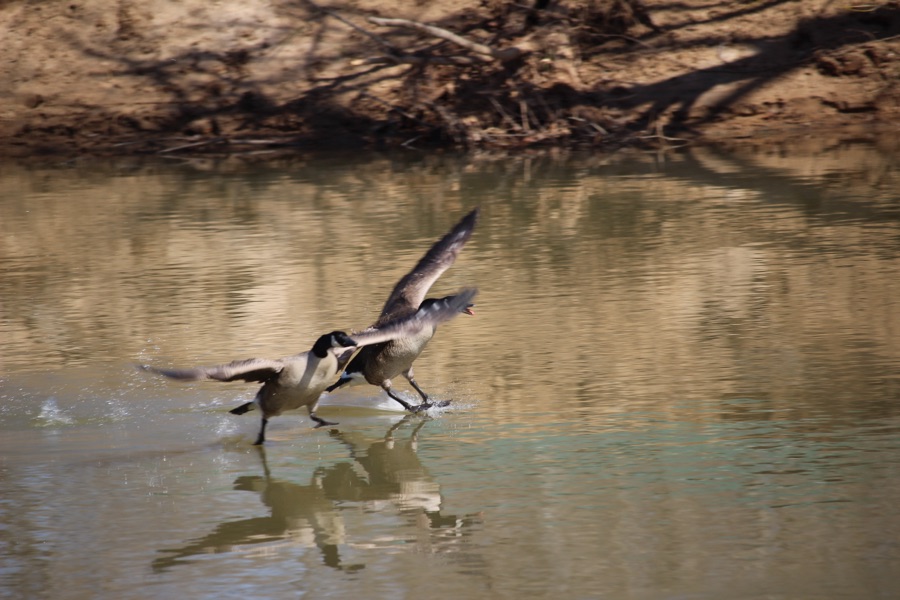
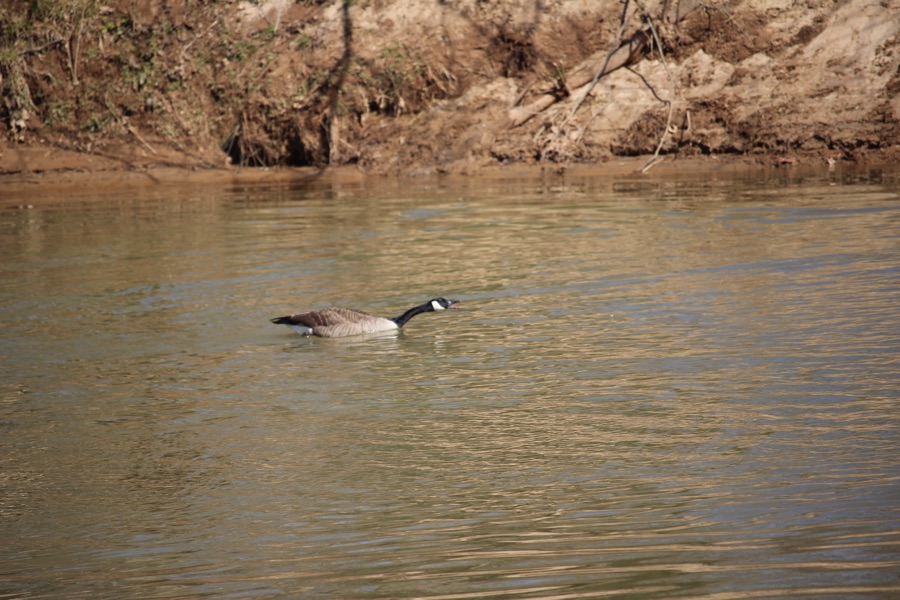
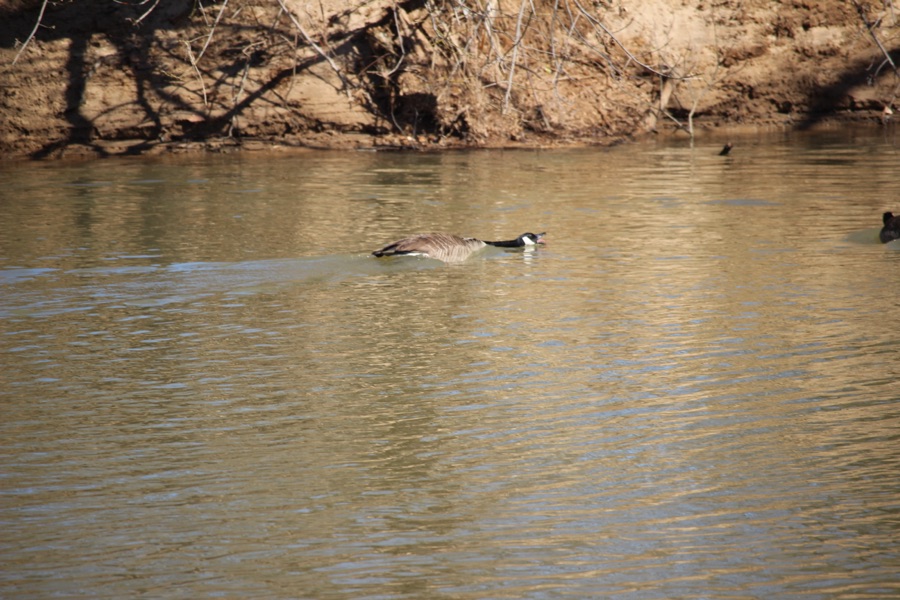
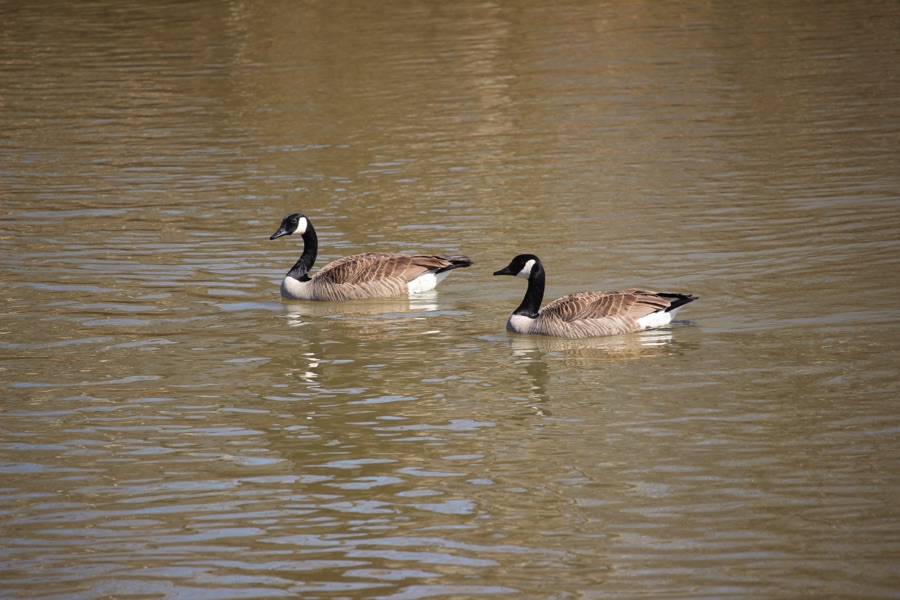
Canada Geese in Flight, On Land, & in Water

Canada Goose (Branta canadensis) are very common sight here in the Carolinas. With the warmer temperatures and spring weather approaching, the Canada Geese are flocking to the lakes and rivers.

The Canada Goose is a large species of goose with a black head and neck, white cheeks, white under its chin, and a brown body. They are herbivorous and normally migratory in nature. They are often found on or close proximity to fresh water. They are also common in brackish marshes, estuaries, and lagoons. In our area they are oftentimes on and near the Catawba River or its tributaries, such as the South Fork (Catawba) River.

This week I am linking to Bird of the Week; Judy’s Numbers Game #61-182 and Carol’s Thursday Trios and XingfuMama’s Whatsoever Is Lovely.

It was a tremendous pleasure to watch the Canada Geese sunning on the river’s shoreline, diving into the water, taking flight and landing in the water.

Judy’s Numbers Game #61-182 (#2)

Birds of the Week CV

Birds of the Carolinas

Carol’s Thursday Trios 

Whatsoever is Lovely Challenge-2025 Week 08

Jez’s Water Water Everywhere #259

Photo Credit:©️2025 Deb L. Waters … All Rights Reserved.

Camera: Canon EOS Rebel T3i with Canon EF-S55-250mm lens and Altura UV Filter attachment.

Location: South Fork Catawba River; Goat Island Park and Greenway; Cramerton, North Carolina, USA

God Bless. Time to Get Outdoors. Relax and enjoy Nature. Thank you for visiting and sharing your time and thoughts with us. I appreciate y’all very much.
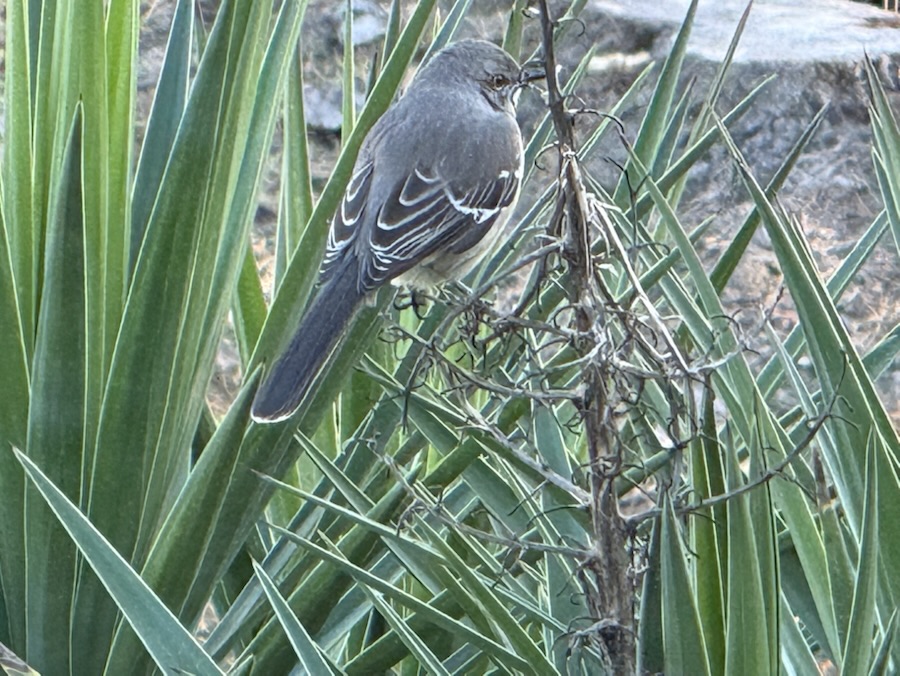
2024 RDP: Contentment

Cardinals Contentment

Coleman and I refilled our bird feeder today to the delight and contentment of Northern Cardinals as well as a variety of other bird species.

The birds have a tendency to jostle some of the bird seeds around while they are grabbing a bite and flying off. Some will stay awhile for a bit of contented munching while others snatch and flee to and fro. They do fly here and there spreading the word and then flying back for more.

After filling the feeder, we had some loose seeds, so instead of putting them back in the back we spread them out on the railing. Coleman loves to watch the birds eating the bird feed we put out. Today, the Female Northern Cardinals were displaying contentment, enjoying the feed we spread out for their content.

RDP Wednesday: TODAY

Ragtag Daily Prompt-Friday! Contentment

Birds of the Week XCVI

Birds of the Carolinas

Photo Credit:©️2024 Deb L. Waters … All Rights Reserved.

Camera: Apple iPhone 14 Pro Max

Location: As seen through our Front Window; Our Front Porch Railings; Old Town; Riverside Community; Cramerton, North Carolina, USA

God Bless. Be Content with who you are. You are loved. Dwell in the Contentment of our Lord God. Thank you for visiting and sharing your time and thoughts with us. I appreciate y’all very much.
Birds of the Carolinas/Birds of the Week LXXXVIII

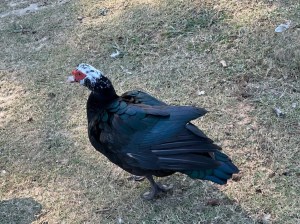
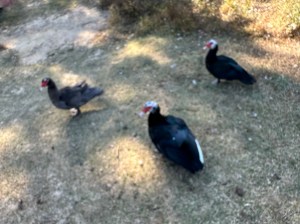
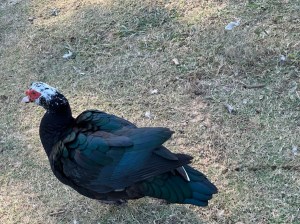
Black Muscovy Duck

Muscovy Duck (Cairina moschata) is a duck native to the Americas. Small wild and feral breeding populations have also established themselves in the United States, particularly in Florida, Louisiana, Massachusetts, the Big Island of Hawaii, South Carolina, as well as in many other parts of North America, including southern Canada.

Black Muscovy Duck

Muscovy Ducks are large with the males growing to about 76 cm (30 in) long, and weighing up to 7 kg (15 lb). The females are relatively smaller, and only grow to approximately 3 kg (6.6 lb), roughly half the males’ size. They are predominantly black and white, with the back feathers being iridescent and glossy in males, while the females are more drab. The amount of white on their neck and head vary , as well as their bill. Their bill can be yellow, pink, black, or any mixture of these colors. (The Muscovy Ducks we saw all had a pinkish bill with one having a touch of black on the end.)

Black Male Muscovy Duck

The Muscovy Ducks are a non-migratory species normally inhabits forested swamps, lakes, streams and nearby grassland and farm crops, and often roosts in trees at night. ( The Muscovy Ducks we saw are located near Patterson Pond at Anne Springs Close Greenway in Fort Mill, South Carolina.)

Male and Female Muscovy Ducks

Their diet consists of plant material ( such as the roots, stems, leaves, and seeds of aquatic plants and grasses, as well as terrestrial plants obtained by grazing or dabbling in shallow water for small fish, amphibians, reptiles, crustaceans, spiders, insects, millipedes, and worms.

Black Male Muscovy Duck

Muscovy Ducks, one of the oldest species of fowls domesticated in the world, have several spiritual meanings associated with them. They are associated with love and relationships in some cultures and with luck, prosperity, and even new life and fertility in others. The ducks also represent inner strength and courage. thethe Celtic culture that if you dream of a Muscovy duck or spot it while awake, it’s a sign to trust your intuition and strength and not give up in the face of challenges. According to Celtic culture if you dream of a Muscovy duck or spot it while awake, it is a sign to trust your intuition and strength and not give up in the face of challenges.

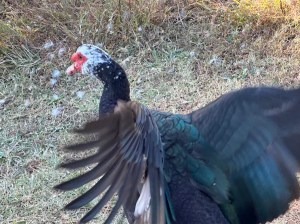
Black Muscovy Duck
Flapping its wings
after coming out of the water.

The Egyptians believe the Muscovy duck has healing powers and can resurrect the dead, making it a sacred animal. The Egyptian culture sees Muscovy ducks as a symbol of starting afresh. Therefore, seeing a Muscovy duck in your dream is interpreted as a sign of resurrection.

We enjoyed watching the Black Muscovy Ducks swimming in Patterson Pond, as well as them flapping their wings as they came out of the water, shaking the water off to dry themselves.

Birds of the Carolinas

Birds of the Week LXXXVIII

Photo Credit:©️2024 Deb L. Waters … All Rights Reserved.

Camera: Apple iPhone 14 Pro Max

Location: Patterson Pond; Crandall Bowles Children’s Farm; Greenway Stables and Farm Entrance; Anne Springs Close Greenway; Fort Mill, South Carolina, USA

God Bless. Thank you for visiting and sharing your time and thoughts with us. I appreciate y’all very much.
Birds of the Carolinas #18/Bird of the Week #LXXXVII

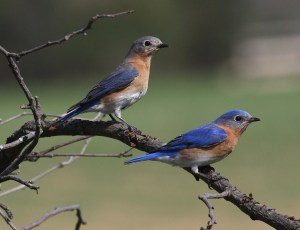
Eastern Bluebird

The Eastern Bluebird (Sialia sialis) is one of many common species of birds in North and South Carolina. It is a small North American migratory thrush which is found in woodlands, farmlands, and orchards.

The Male Bluebirds have a bright head, back, and wings. Their breast is a reddish-brown colour. The females are lighter with gray on the head and back and some blue on their wings and tail. The females breast is lighter in colour than the males, and is more orangish.

Eastern Bluebird

The Eastern Bluebird is observed east of the Rockies, from southern Canada down to the Gulf States, and southeastern Arizona to Nicaragua. Bluebirds tend to live in open country surrounded by trees, but with little understory and sparse ground cover. 

Eastern Bluebird

The Eastern Bluebirds pictured above were observed sitting on a wire outside my front porch in our area of Western North Carolina. They are social, and sometimes gather in flocks of over a hundred. Even so, they are territorial during the breeding season and may possibly continue to defend a feeding area throughout winter.

©️Sandysphotos2009 @Wikipedia.com

Eastern Bluebirds eat mostly insects, wild fruit and berries. Occasionally, Eastern Bluebirds have also been observed capturing and eating larger prey items such as shrews, salamanders, snakes, lizards and tree frogs.

Eastern Bluebirds can live for around six (6) to ten (10) years. The oldest recorded Eastern Bluebird was at least 10 years, 6 months old. It had been banded in New York in May 1989, and was found dead in South Carolina November 1999.

In spite of this, most bluebirds die within their first year of life. Even though Starvation and freezing are a danger to the young, that is not their largest threat. The largest threat to the Eastern Bluebirds comes from other animals including humans. Some of the animals which are dangerous and threatening to the bluebirds are rat snakes, racers, American kestrels, and domestic cats. 

Take time to enjoy nature. Observe your surroundings, you might see interesting birds or other interesting finds. The birds in the above two photos were first spotted by my grandson and he insisted I snap a picture of them. One is never too young to observe nature and enjoy birdwatching.

Birds of the Carolinas

Birds of the Week Invitation LXXXVII

Photo Credit:©️2024 Deb L. Waters … All Rights Reserved.

Camera: Apple iPhone 14 Pro Max

Location: Cramerton, North Carolina, USA

God Bless. Thank you for sharing your time and thoughts with us. I appreciate y’all very much.
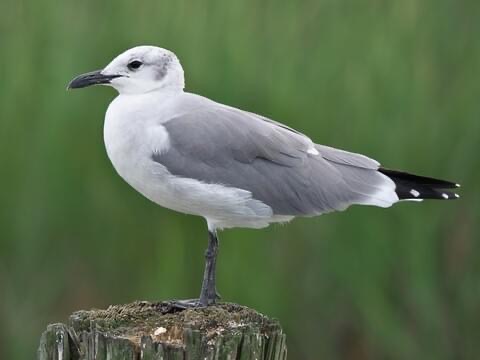
Bird of the Week LXXXIV — Carolina Gull

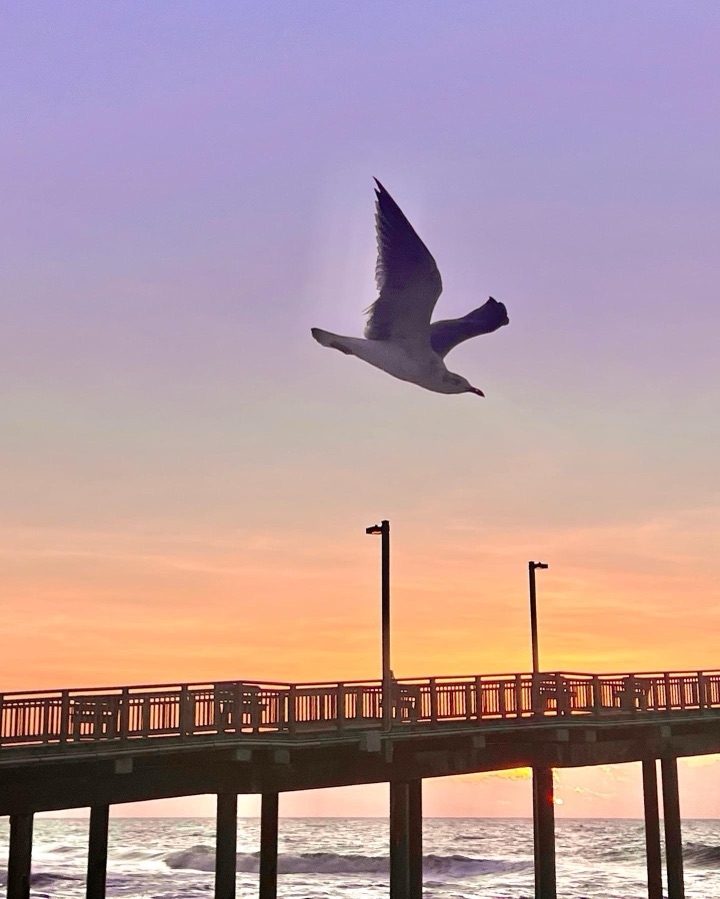
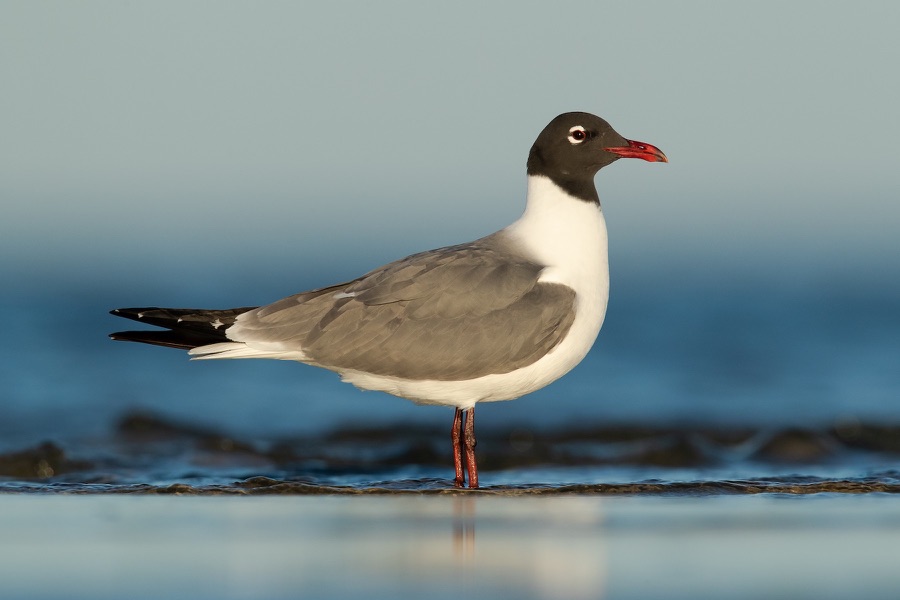
What is most commonly referred to as the Carolina Gull is the Laughing Gull (Leucophaeus atricilla). Laughing Gulls can be typically observed swirling over beaches like Springmaid and Myrtle Beach in South Carolina. Laughing Gulls provide sights and sounds evocative of summer on the East Coast. Large numbers of these Gulls at beaches, docks, and parking lots, where they wait for handouts or fill the air with their raucous calls. 

In the Northeast, Laughing Gulls are summer visitors. However, in the Southeast and along the Gulf of Mexico they can be spotted year round along the coasts.

Some interesting cool facts about Laughing Gulls are:

  • The male and female Laughing Gull usually build their nest together.
  • The Laughing Gull is normally diurnal, or active during the day. During the breeding season it forages at night as well.
  • The adult Laughing Gull removes the eggshells from the nest after the eggs hatch.
  • The oldest known Laughing Gull was at least 22 years old when it was killed in Maine in 2009, the same state where it had been banded in 1987.

Bird of the Week LXXXIV

God Bless. Thank you for sharing your time and thoughts with me. I appreciate y’all very much.
Birds of the Carolinas #17/Bird of the Week #LXXIX

Anas platyrhynchos

The Anas platyrhynchos is commonly known as Mallard or wild duck. The males (also called drakes) have green heads, while the females (called hens) have mainly brown speckled plumage.

The Mallard is approximately 50-65 centimeters (20-26 inches) long, the body making up the majority (about two-thirds) of their length. They are oftentimes slightly more heavier than the most othe dabbling ducks, weighing 0.7-1.6 kilograms (1.5-3.5 pounds).

Mallards live in wetlands, eat water plants and small animals, and are social animals preferring to congregate in groups or flocks of varying sizes. The Mallards shown here are quite commonly seen at Rankin Lake and other local lakes and parks in the vicinity.

They are a very adaptable species in that they are able to live and thrive in urban areas which may have supported more localised, sensitive species of waterfowl before development.

The name Mallard originally referred to any wild drake, and sometimes it is still associated in this way.

Mallards tend to frequently interbreed with their closest relatives in the genus Anas, which for example might be the American black duck. They might possibly interbreed with other species, such as the northern pintail or various hybrids that could be fertile.

In North America, Mallards winter in the south to southern United States and Northern Mexico. [The Mallards here were shot on camera in January, mid-winter for the southern United States.]

In summer, a combination of hot temperatures and reduced water levels place mallards at an increased risk of contracting botulism. Outbreaks of botulism among mallard populations can lead to mass die-offs.

Birds of the Carolinas

Birds of the Week LXXIX

Photo Credit ©️2023 Deb L. Waters … All Rights Reserved. 

Location: Rankin Lake Park; Gastonia, North Carolina, USA 

God Bless. Thank you for visiting and sharing your time and thoughts with me. I appreciate y’all very much.
Birds of the Carolinas #16

Brown Thrasher

The Brown Thrasher’s name stems from its unique feeding behavior of foraging on the ground for its food. It usually forages amongst leaf litter and other thick ground cover. It quickly sweeps or thrashes its long bill in a side-to-side motion thrashing through leaf litter and other ground cover to uncover food. Its distinctive feeding strategy of thrashing for its food is shared with western relatives like the Bendire’s Thrasher.

The Brown Thrasher can be seen in abundance throughout the Eastern and Central United States. Interesting enough, the Brown Thrasher is the only thrasher which lives primarily east of the Rockies and central Texas. It is the state bird of Georgia. The photos of these Brown Thrashers were taken in Lancaster County, in the Piedmont region of South Carolina.

Brown Thrasher
“Mimic Thrush”

It is known as the “Mimic Thrush”, however, it is out mimicked by the Northern Mockingbird. It only repeats one or two phrases unlike the mockingbird which repeats three or more. Its sound is more mellow and musical in quality.

Brown Thrasher range map by ABC

Springtime is the best time of the year if you desire to spot a Brown Thrasher. After they pair off, they tend to become more elusive, staying hidden underneath thick cover. They are monogamous during breeding season and both males and females incubate the eggs ( around 3-5) and feed the nestlings. Even so, the females still do the majority of the incubation.

The Brown Thrasher typically feeds heavily on insects during the breeding season and on fruits, berries, and seeds during other times of the year.

Bird of the Week #LXXV

Birds of the Carolinas

Photo Credit ©️2013 Deb L. Waters … All Rights Reserved.

Location: Lancaster, Lancaster County, South Carolina, USA

God Bless. Thank you for visiting and sharing your time and thoughts with me. I appreciate y’all very much.
Birds of the Carolinas #14

American Crows

Crows are arguably the most familiar birds in America. Interestingly, what you might it realize is that in much of the eastern part of the U.S., including the South Carolina Lowcountry, there are actually two different species of crows, and they look alike.

One of these is the ubiquitous American Crow (Corvus brachyrhynchos), found across most of North America. The American Crow is the crow most often seen and recognized. It is a large, clever, black bird with a harsh voice and a big personality.

Photo Credit: © 2017 Henry Burton

The second type of Crow the Fish Crow (Corvus ossifragus), which occurs along the Atlantic coast from southern Maine to Florida, and along the Gulf. The American Crow and the Fish Crow are members of the family Corvidae, which includes many familiar and intelligent birds, including rooks, jays, and ravens.

Here we are concentrating on the American Crow. The American Crow (formerly named the Common Crow) is an iridescent black crow is common throughout the Carolinas and is known for its “caw-caw” call. The are permanent residents with migratory movements. They are especially abundant throughout the winter season.

Photo Credit: © 2021 Melissa Hafting
Macaulay Library

American Crows are known for being smart, adaptable, and resourceful, and can use tools to find food. They preferably nest in mixed pine and hardwood forests. They forage in open areas such as croplands, pastures and landfills. In urban areas, it is possible for them to use parks and tree-lined streets as roosting and nesting locations.

Crows represent change and transformation which in some cultures are seen as a “bad” omen if you see their appearance. The appearance of one or a flock of crows may indicate temporary and unexpected changes are coming. In Native American culture, crows are signs of knowledge and law. Seeing one of these black creatures is often a mark of good luck, justice, or wisdom.

Birds of the Carolinas

Bird of the Week LXXII

God Bless. Thank you for visiting and sharing your time and thoughts with me. I appreciate y’all very much.

Birds of the Carolinas #13

Passerina cyanea

This week we are discussing a different yet unique bird in the Cardinal family. Last week I talked about the Northern Cardinals; this week we’re going to discover the distinct qualities of the Indigo Bunting.

Indigo Bunting

Passerina cyanea, also known as Indigo Bunting is a small seed-eating bird in the Cardinal family. It is a migratory bird, ranging from southern Canada to northern Florida during the breeding season, and from southern Florida to northern South America during the winter.

It often migrates by night, using the stars to navigate. Its habitat is farmland, brush areas, and open woodland. The indigo bunting is closely related to the lazuli bunting and interbreeds with the species where their ranges overlap.

The indigo bunting is a small bird, with a length of 11.5–13 cm (4.5–5.1 in). The male is vibrant blue in the summer, with brightly colored  plumage during the breeding season to attract a mate. Unlike summer, the male is brown during the winter months. Contrastingly enough the female is brown year-round. The females are solely responsible for the nest-building and incubation of their offspring.

The diet of the indigo bunting consists primarily of insects during the summer months and seeds during the winter months.

The Habitats for the Indigo Bunting are brushy pastures and bushy wood edges. For nesting favors roadsides, old fields growing up to bushes, edges of woodlands, and other edge habitats such as along rights-of-way for powerlines or railroads. Also in clearings within deciduous woods, edges of swamps

Birds of the Carolinas

Bird of the Week LXXI

Lens-Artists Challenge #306 – Habitats

God Bless. Thank you for visiting and sharing your time and thoughts with me. I appreciate y’all very much.
Birds of the Carolinas #12

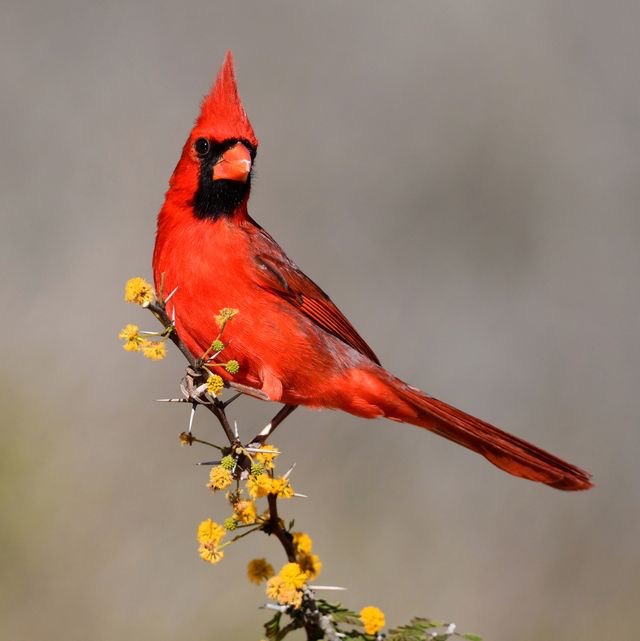
Northern Cardinal

Northern Cardinals (Cardinalis cardinalis) are just one bird species out of hundreds that you might see feasting from your bird feeder in South Carolina.

Northern Cardinals are common backyard birds in North America and can be found in many locations in South Carolina, including Seabrook Island, Lexington, and Lancaster County.

Male Northern Cardinals are known for their bright red feathers, black eye masks, and short crests. Females are brown with red accents and crests.

Northern Cardinals are seed and berry eaters, but also eat insects, spiders, centipedes, and snails. They prefer to forage on the ground rather than in feeders.

Distinguished by their “mohawks” and reddish-orange beaks, both genders remain year-round residents in South Carolina.

Northern Cardinals are non-migratory birds, meaning that once you draw them to your yard they are likely to stay there year-round.

Natural fruits that attract these birds include blueberry bushes, mulberry trees, and other dark-colored berries. Bird seeds that have been known to attract Cardinals include black oil sunflower, cracked corn, suet, mealworms, peanuts, safflower, striped sunflower, and sunflower hearts and chips.

Jeff R Clow//Getty Images

In many cultures throughout the world, the vibrant red color of the cardinal is a symbol of good luck and abundance. It is also said to represent vitality. If a cardinal crosses your path, it is meant to give you strength and hope.”

Birds of the Carolinas 

Bird of the Week: LXX

Photo Credit: ©️2013 Deb L. Waters … All Rights Reserved 

Location: Lancaster County, South Carolina, USA 

God Bless. Thank you for visiting and sharing your time and thoughts with me. I appreciate y’all very much.
Birds of the Carolinas #11

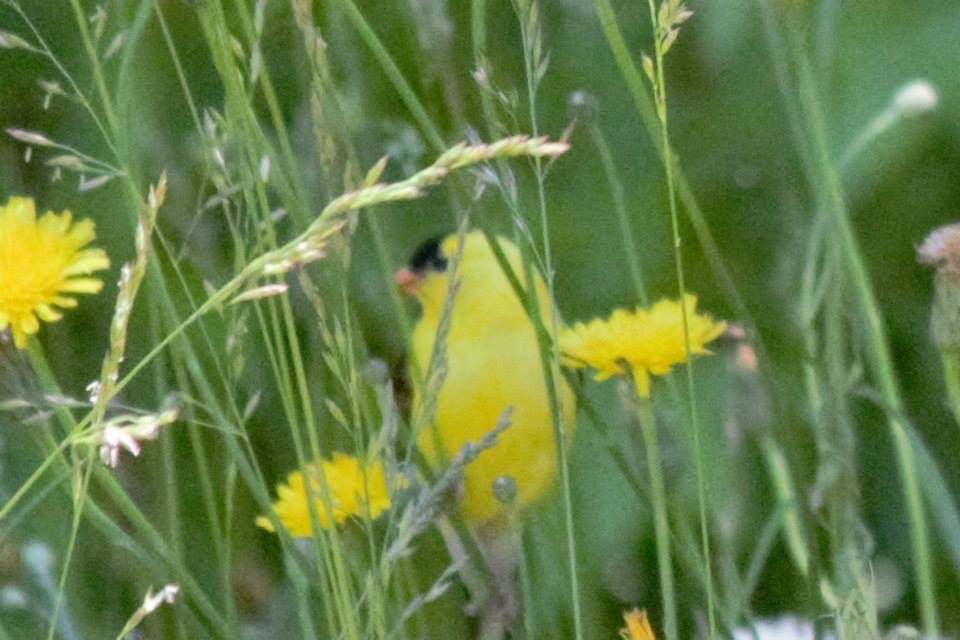
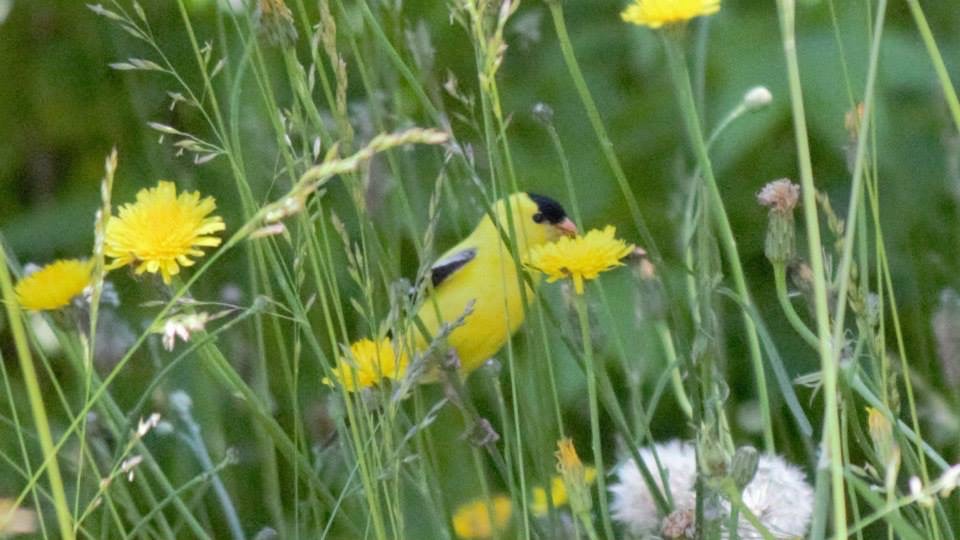
American Goldfinch

The Scientific name for the American Goldfinch is Spinus tristis. American Goldfinches are cherished for their bright yellow feathers. They appear year-round in western South Carolina and during fall and winter in the east.

The American goldfinch (Spinus tristis) is a small North American bird in the finch family. It is migratory, ranging from mid-Alberta to North Carolina during the breeding season, and from just south of the Canada–United States border to Mexico during the winter.

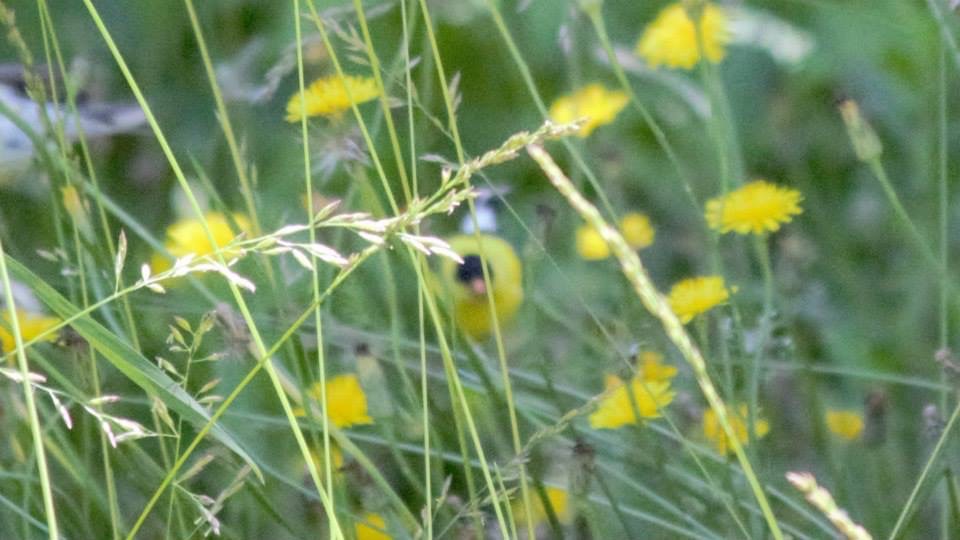
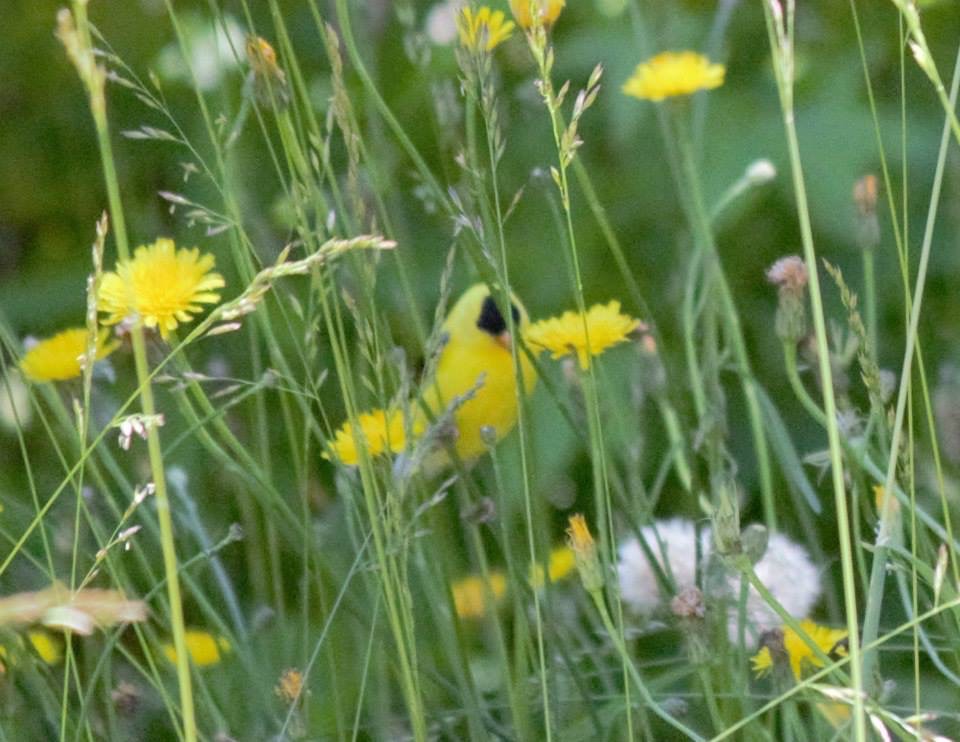
These photos of male American Goldfinch were captured in Lancaster County, South Carolina in our backyard. They blend in with the yellow wildflowers that you could almost miss seeing them if you weren’t looking carefully.

Human activity has generally benefited the American goldfinch. It is often found in residential areas because it is attracted to bird feeders, which increase its survival rate in these areas. Deforestation also creates open meadow areas, which are its preferred habitat.

Interestingly, Goldfinches connect to spirituality by their vibrant presence, reminding individuals of the necessity to live life fully and energetically.

Birds of the Carolinas 

Bird of the Week: LXVIX

Photo Credit: ©️2013 Deb L. Waters … All Rights Reserved

Location: Lancaster County, South Carolina, USA

God Bless. Thank you for visiting and sharing your time and thoughts with me. I appreciate y’all very much.

Birds of the Carolinas #10

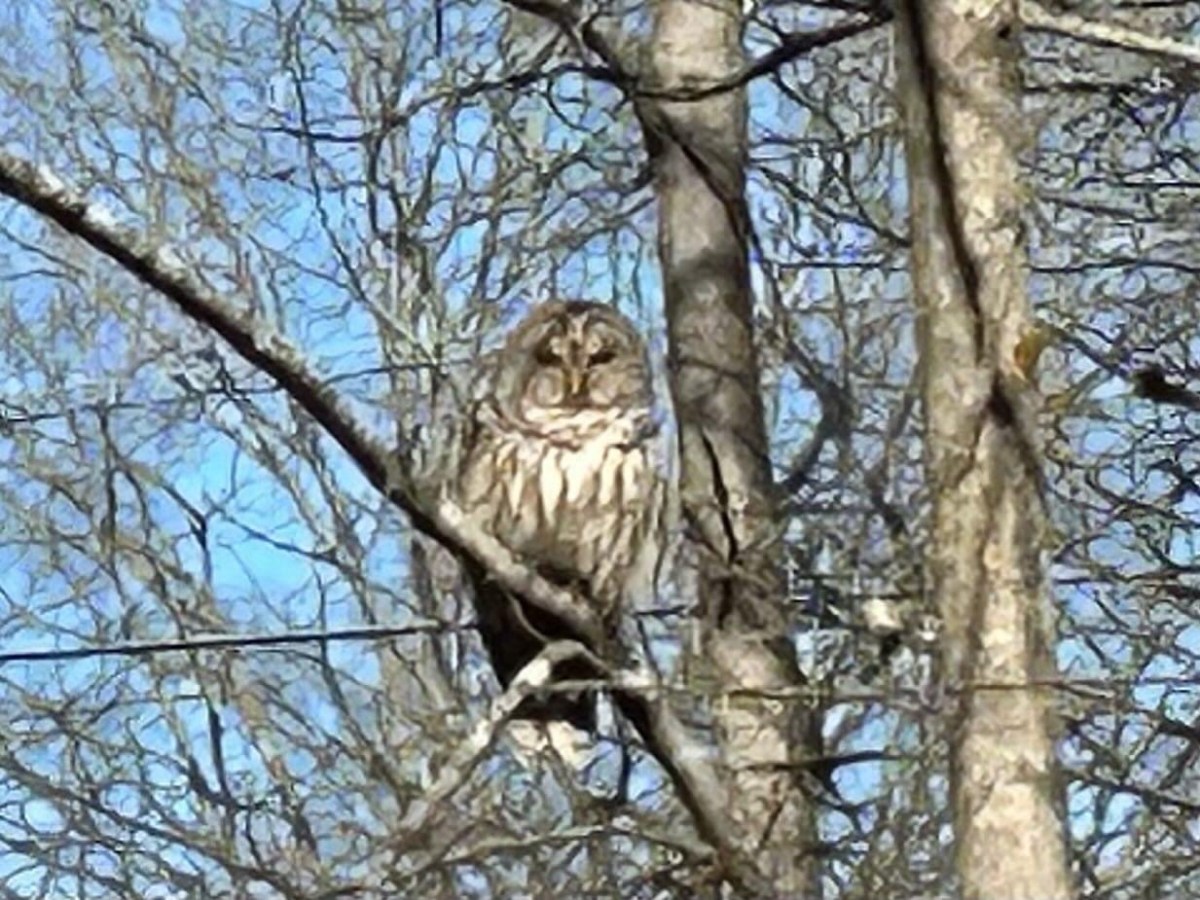
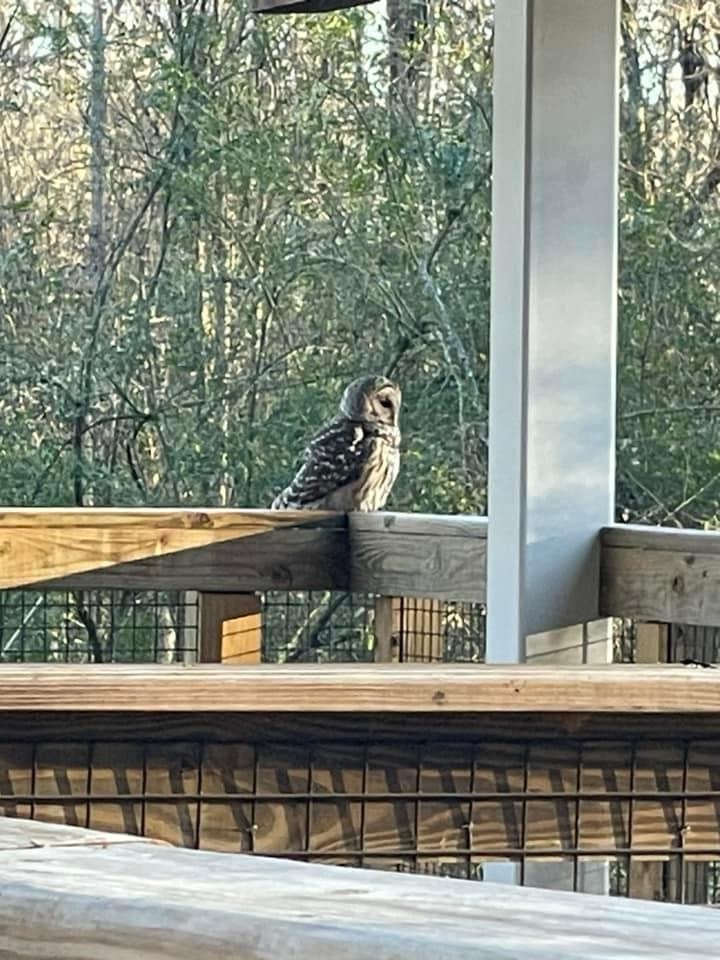
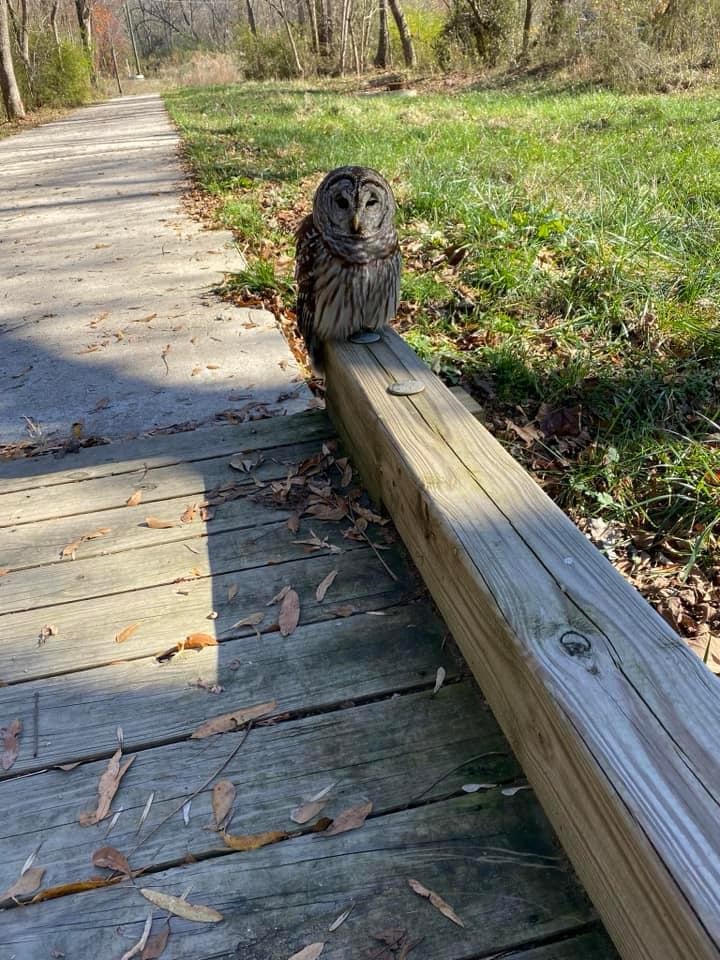
Barred Owl

Strix varia

The Barred Owl is often spotted in the various Greenways throughout South Carolina. Two of the Greenways they have been seen in are; 1) Lindsay Pettus Greenway located in Lancaster and 2) Anne Springs Close Greenway located in Fort Mill.

The Barred Owl (Strix varia) is the most commonly seen owl in South Carolina since they are often active during dawn and dusk. It is a large, round-headed owl with no ear tufts and a reasonably long, rounded tail. Its back is a mottled brown, the belly is buff coloured with vertical streaking, and the chest is horizontally barred. It has a yellow bill and dark eyes.

The barred owl is distributed throughout most of the eastern United States, as well as much of southern Canada. Barred Owls live in large, mature forests made up of both deciduous trees and evergreens, often near water. They nest in tree cavities. They usually choose cavities six to twelve metres above the ground in tall trees. 

Barred Owls can be found in many areas around the state. Still, the best places to find this owl are Sumter National Forest, Francis Marion National Forest, and Clemson Experimental Forest. In Lancaster and York Counties the Barred Owls are seen in the area Greenways near Lakes, Creeks, and Rivers. Most often spotted nestled high up in trees along the water banks.

Birds of the Carolinas 

Bird of the Week: LXVIII

God Bless. Thank you for visiting and sharing your time and thoughts with me. I appreciate y’all very much.
Birds of the Carolinas #9

Black-billed Magpie

One for sorrow

Two for joy

Three for a girl

Four for a boy

Five for silver

Six for gold

Seven for a secret never to be told.

This well-known rhyme has been around since the mid- nineteenth century when the number of magpies seen foraging together was regarded as forecaster of future events. Even though no bird is mentioned in this rhyme most people know it refers to the magpies.

Magpies are members of the Corvidse family. They are smart and clever birds which sometimes leads them into trouble, however, that doesn’t deter them since they are great problem solvers. The Pica hudsonia, the Black-billed Magpie’s scientific name, is also referred to as the American Magpie. It was once thought to be found only in the Western half of North America, However, its habitats may range into the far eastern parts of the United States including occasionally into the South despite the high temperatures and humidity.

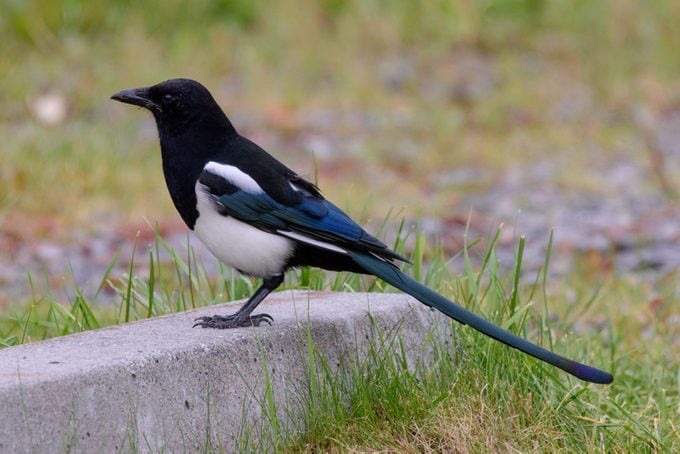
Black-billed Magpies are black and white, with the wings and tail showing black areas and iridescent hints of blue and blue-green. It is a medium-sized bird that measures 45–60 centimeters (18–24 in) from tip to tail. It is largely black, with white scapulars, belly, and primaries, and the wings and tail are an iridescent blue-green.

Eurasian magpies are visually very similar to black-billed magpies; however, Eurasian magpies are slightly larger and have shorter tails and wings. They can also be distinguished based on their different vocalizations, as well as by their non-overlapping ranges.

Black-billed Magpies are known talkers. Their vocalizations consist of a number of calls variously described as tweets, coos, purrs, shrills and squawks, but the most common is an alarm call, called a chatter, that is described as a ka-ka-ka-ka, sometimes preceded with a skah-skah. They have the unique ability to mimic sounds from other birds and even from humans they are around. [Interestingly, I have heard them mimicking me as I whistle. Their ability is amazing to hear as they mimic my exact tunes.]

Birds of the Carolinas 

Bird of the Week: LXVII

God Bless. Thank you for visiting and sharing your time and thoughts with me. I appreciate y’all very much.
Birds of the Carolinas #7

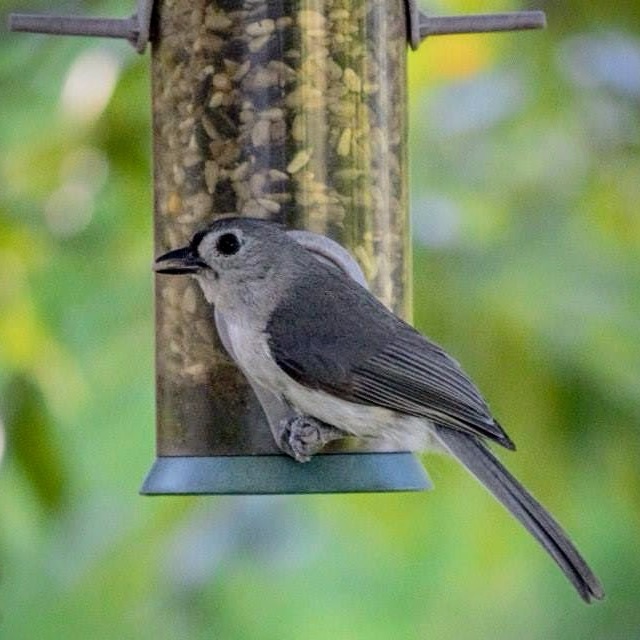
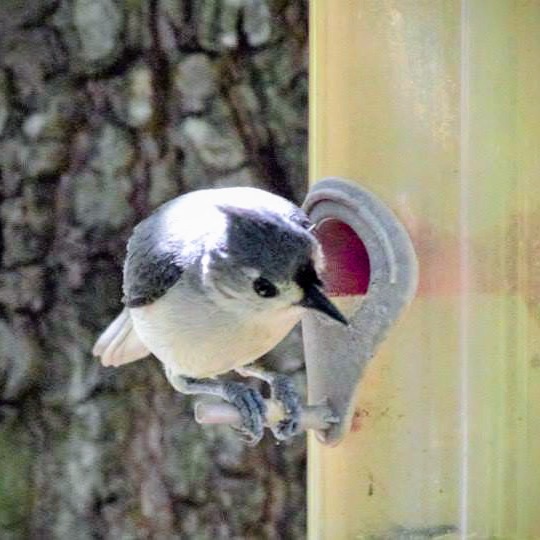
Tufted Titmouse

Baeolophus bicolor

This week we are taking a look at the Tufted Titmouse which are common birds of South Carolina. The Tufted Titmouse have a white front with small silver-grey crests on their tops.

Tufted Titmouse
Lancaster County, South Carolina

The Tufted Titmouse (Baeolophus bicolor) is a small songbird from North America which is a species in the Tit and Chickadee family. Its habitat is primarily deciduous and mixed woods. [When these shots were taken we lived in Lancaster County surrounded by Pine Trees and various other trees as well. I (at that time) maintained bird feeders hung in trees in our front yard. It was lovely to watch the variety of birds that would pay our feeders a visit.)

The Tufted Titmouse was once considered non-migratory and native to Ohio and Mississippi River Basins, however, bird feeders and other factors have caused these birds to occupy a larger territory across the United States and stretching into Ontario and Quebec in Canada.

They tend to gather food from the ground and from tree branches. They also enjoyed visiting our bird feeders to gather food. They enjoy a mixture of several varieties of berries, nuts, seeds, small fruits, insects, and other invertebrates. I often purchased bird feed/seed that was geared towards songbirds which contained berries, nuts, seeds, and dried fruit.

Birds of the Carolinas 

Bird of the Week 2024-65

Becky’s #SquareRenewal

Photo Credit:©️2022 Deb L. Waters … All Rights Reserved.

Location: Lancaster, South Carolina, USA

God Bless. May all your hopes, dreams, and prayers be fulfilled. Take care of yourselves and have a fantastic rest of your week. Thank you for visiting and sharing your time and thoughts with me. I appreciate y’all very much.
Birds of the Carolinas #6

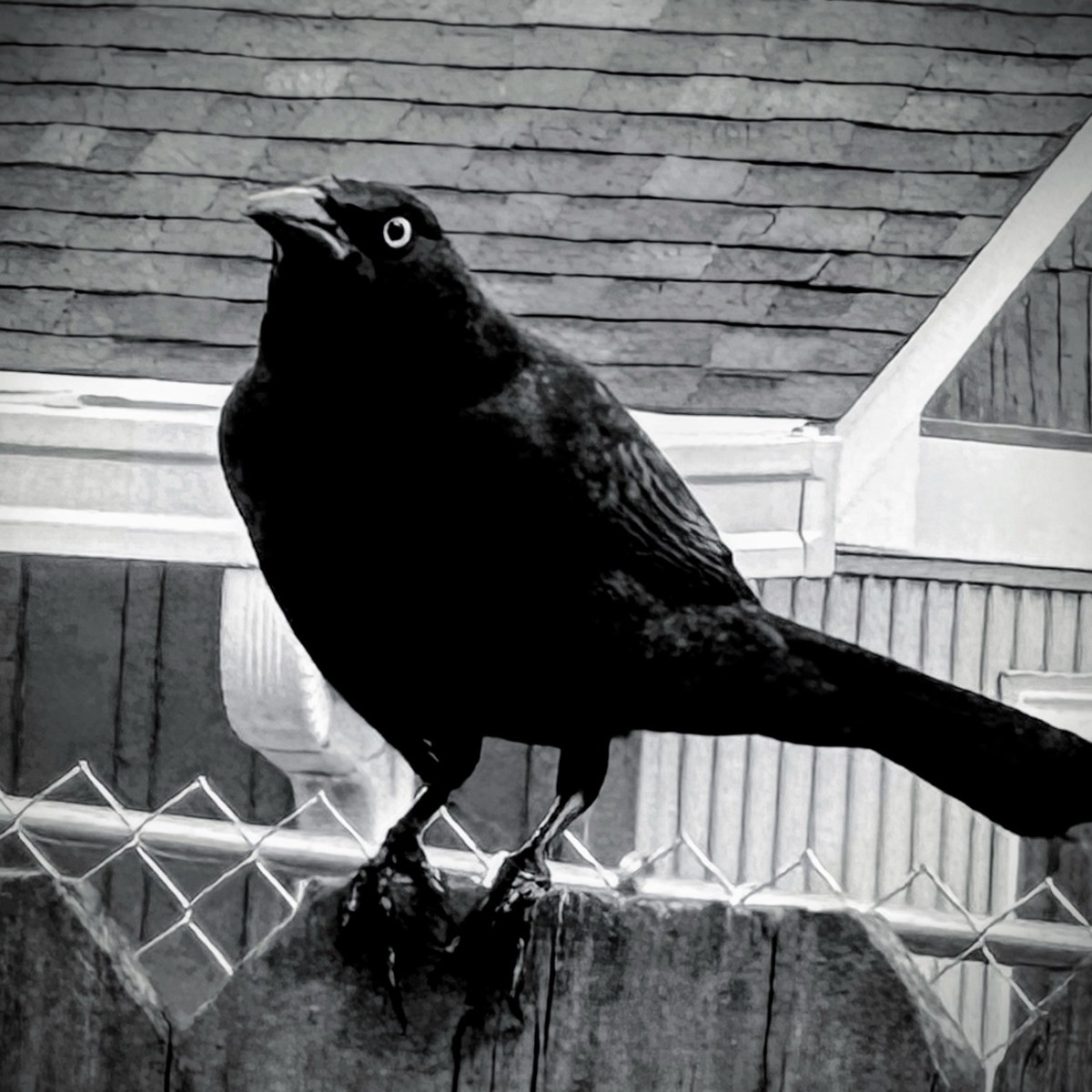
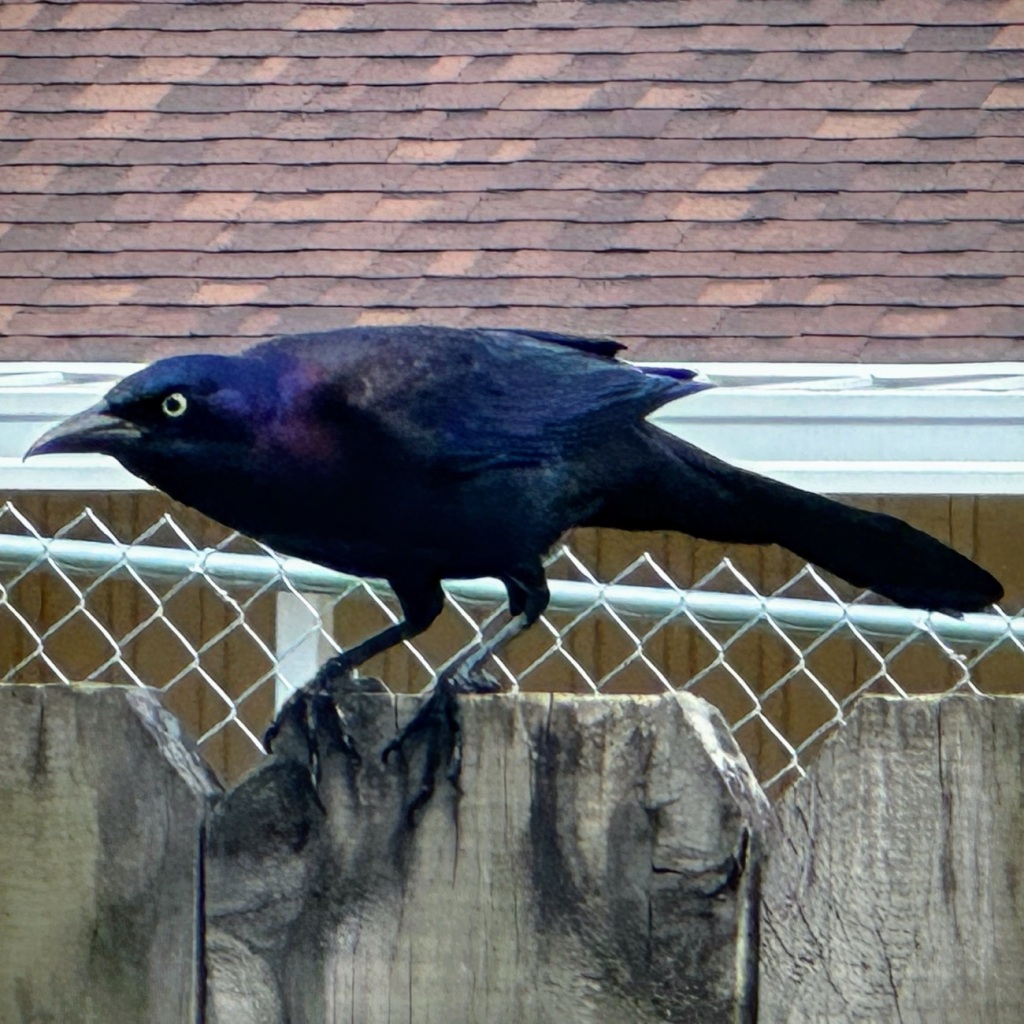
The Carib Grackle

(Quiscalus lugubris)

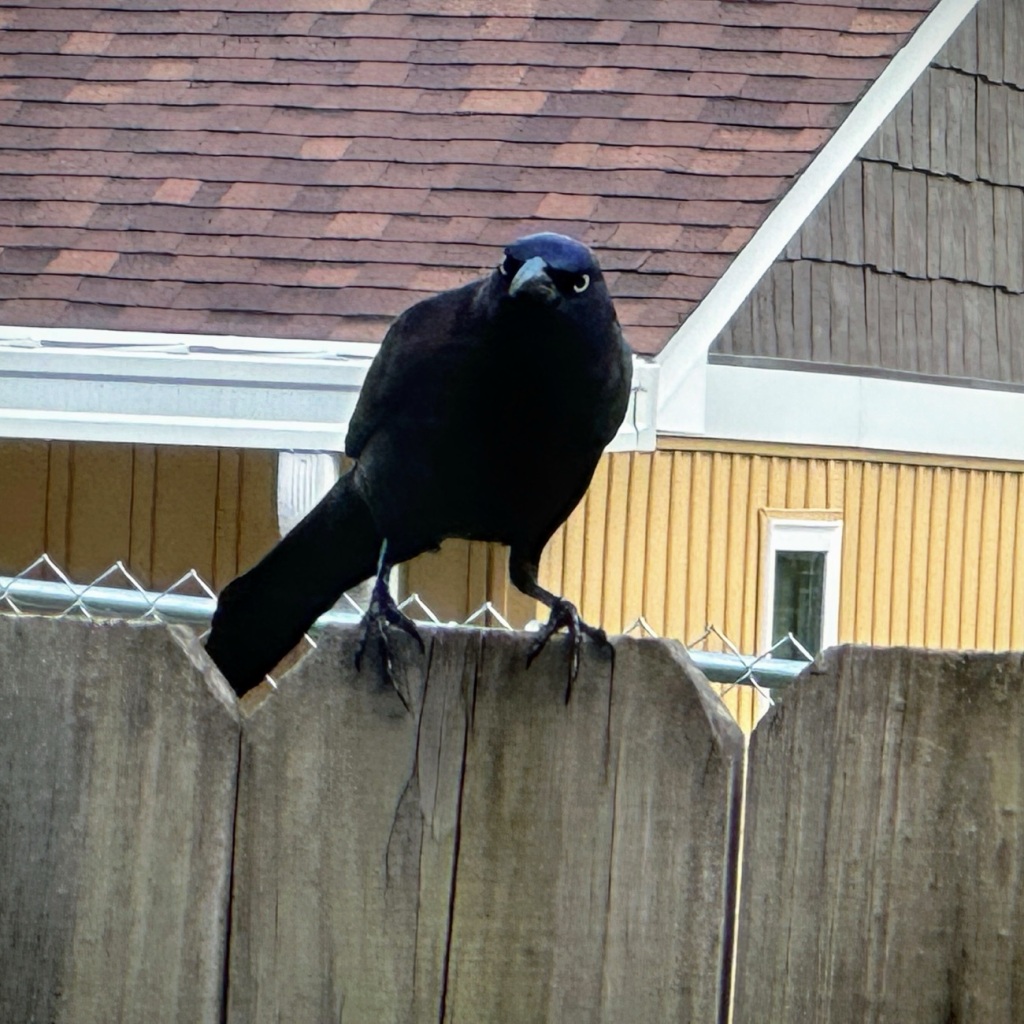
The Carib Grackle also referred to as the Common Grackle is a tropical blackbird which is taller and longer than the typical blackbird. The plumage of Grackles are entirely black, however it has a beautiful glossy iridescent body that may display violets, purples, blues, and greens when the sun is shining on them in just the right manner.

Quiscalus lugubris

Grackles eat almost anything and everything they can find. They commonly eat insects, minnows, frogs, lizards, berries, grains, and even small birds and mice. They will confiscate food from other birds. And sometimes as these Grackles pictured here are exemplifying HOPE for a few morsels of bread crust or crumbs that may get dropped on the ground or scattered for other birds.

Carib Grackle

The Carib Grackle’s song is a mixture of harsh and melodic musical squeaks, croaks, and whistles which seem to sound anywhere from guttural to high-pitched clear whistles. Some people have compared their singing as sounding like a rusty gate.

Carib Grackle
Quiscalus lugubris in Monochrome

If you see them foraging around your yard or picnic table they are scavenging and are hoping you’ll share your food (or at least some bread crumbs) with them.

Birds of the Carolinas 

Bird of the Week 2024

Becky’s #SquareRenewal

Lens-Artists Photography Challenge #299- Hopeful

Photo Credit:©️2024 Deb L. Waters … All Rights Reserved.

Camera: iPhone 14 Pro Max

Location: Huntingtowne Neighbourhood; Gastonia, North Carolina, USA

God Bless. May all your hopes, dreams, and prayers be fulfilled. Take care of yourselves and have a fantastic rest of your week. Thank you for visiting and sharing your time and thoughts with me. I appreciate y’all very much.
Birds of the Carolinas #5

Great Blue Heron 

The Great Blue Heron (Ardea herodias) can be spotted around ponds and lakes. I normally see them around the smaller lakes and ponds in and around Anne Springs Close Greenway.

Great Blue Herons can hunt during the nighttime as well as during the day. Interestingly they have a high percentage of rodents-type photoreceptors in their eyes that improve their night vision. They congregate at fish hatcheries, creating potential problems for the fish farmers.

Ardea herodias
Great Blue Heron

Anne Springs Close Greenway

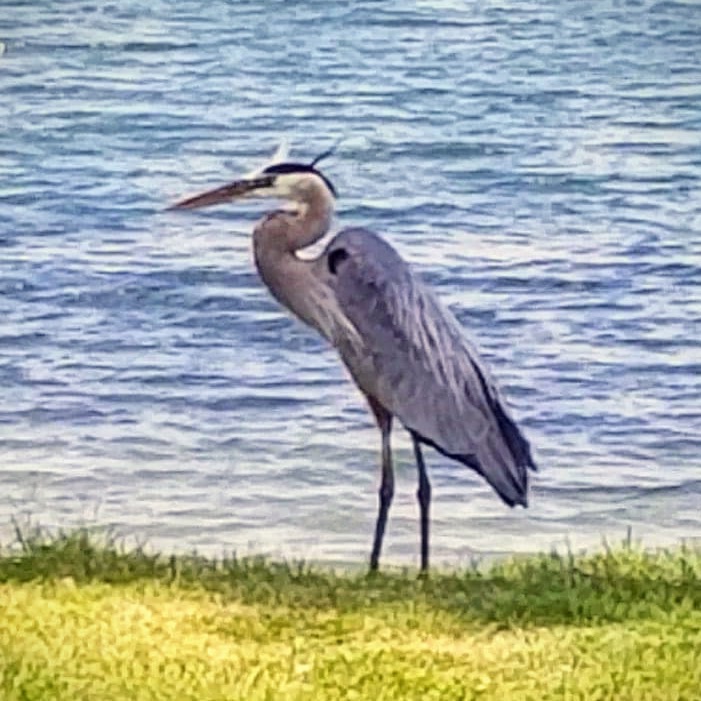
The Great Blue Heron is a majestic sight to behold. Its subtle blue-grey plumage frequently stands motionless as it scan for  prey or wades belly deep with long, deliberate steps. They may move slowly, but Great Blue Herons can strike like lightning to grab a fish or snap up a gopher. In flight, look for this widespread heron’s tucked-in neck and long legs trailing out behind.

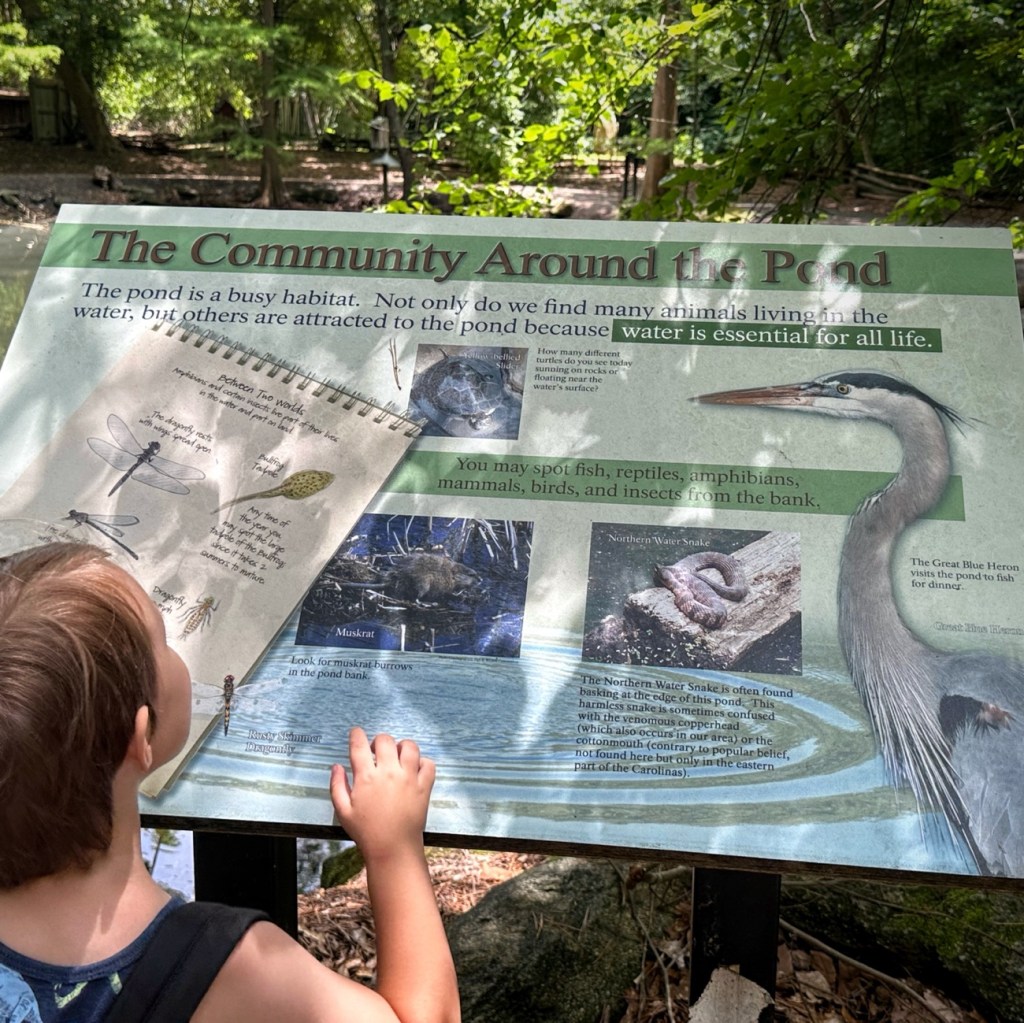
Informational Sign
includes
The Great Blue Heron
The Schiele Museum of Natural History

Did you know that the Great Blue Heron is often seen as a symbol of patience? This I had not previously heard or known. Several Native American Tribes look at the heron as a symbol of patience and good luck. On the Northwest coast, people believe that if Native American fishermen spot a heron, it means good luck is with them, and they will have a successful fishing trip.

I have always considered the Great Blue Heron to be an amazing bird to observe. I did not ever realize that they were considered symbols or omens if you saw them. Evidently they are though.

In China, the Great Blue Heron represents strength, purity and long life. According to Native American tradition the heron symbolizes wisdom and good judgment. In ancient Egypt the heron was a symbol of creation while in Africa and Greece the heron was a messenger of the gods. Watching a heron fish also instructs us in patience.

Another interesting note regarding the Blue Heron is that it is believed to symbolize being calm, presence, being at peace, uniqueness, and balance. When seeing a Blue Heron one should take a moment to look inside yourself and consider nurture all aspects of yourself. Embrace who you are; your flaws (your weaknesses), your uniqueness, and ever your feelings of shame with self-love.

Birds of the Carolinas 

Bird of the Week 2024

Becky’s #SquareRenewal

Photo Credit:©️2024 Deb L. Waters … All Rights Reserved.

God Bless. May you have strength, purity, patience and long life. Take care of yourselves and have a fantastic rest of your week. Thank you for visiting and sharing your time and thoughts with me. I appreciate y’all very much.
Birds of the Carolinas #4

Red-Tailed Hawk

Buteo jamaicensis
Red-Tailed Hawk

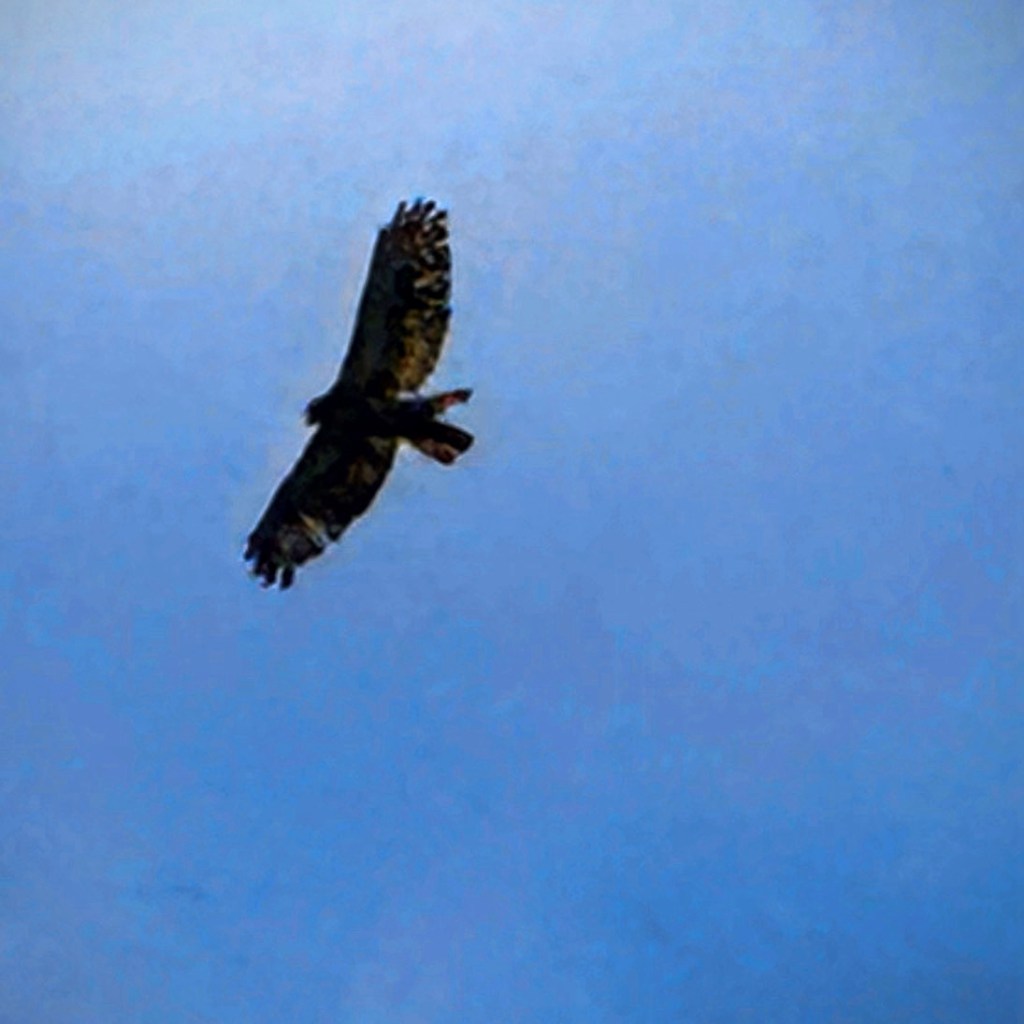
TheRed-tailed Hawk is the most often-seen large hawk in North Carolina. It perches on telephone poles along highways and soars over open fields in search of food. [This Red-Tailed Hawk chose to perch on our electrical wires outside our back patio. The area outside our patio is a wide open grassy landscape area which seems to attract a wide variety of birds.]

Red-tailed Hawks like a mix of open country and deciduous forests, but they adapt to urban areas ( such as our Gastonia neighbourhood.) Red-tailed Hawks frequently can be seen perching on telephone poles, tall trees or snags along roadsides. They sit high mainly to rest, but constantly keep watch for the slightest movement down below.

 Red-tailed Hawks eat mostly mammals, so they’re less likely to visit a popular feeder than a Cooper’s or Sharp-shinned hawk is. It’s very rare for a Red-tailed Hawk to go after dogs or cats.

The Red-tailed Hawk has a thrilling, raspy scream that sounds exactly like a raptor should sound. An interesting fact is that whenever a hawk or eagle appears onscreen, no matter what species, the shrill cry on the soundtrack is almost always a Red-tailed Hawk.

The Eastern subspecies (borealis) tends to have a plain red tail with neat black band near the tip. When the Red-tailed Adult Hawks are hunting, they often hang in the air scanning for prey below. This behavior is known as kiting. They also perch motionless in trees along roadsides or slowly scan for prey from its perch.

Birds of the Carolinas 

Bird of the Week 2024

Photo Credit:©️2024 Deb L. Waters … All Rights Reserved.

Camera: iPhone 14 Pro Max Telephoto Camera.

Location: Backyard; Gastonia, North Carolina, USA.

God Bless. Thank you for sharing your time and thoughts with me. I appreciate y’all very much.
Birds of the Carolinas #1

Bird on a Wire

Northern Mockingbird

The Northern Mockingbird is one of the most plentiful birds in North America. You can identify a Northern Mockingbird by listening to its song. You’ll hear its song which usually mimics several other birds simultaneously. Their song can be heard long before you spot their location.
The Northern Mockingbirds continue to learn new sounds throughout their lifetime. What’s interesting (which I didn’t realize) is that a male Northern Mockingbird may possibly learn around two hundred (200) songs throughout its entire life.

Northern Mockingbirds are medium-sized birds with long legs, small heads, and long, thin bills. They are slightly slimmer than a thrush and have longer tails.

Here’s an interesting fact; The Northern Mockingbird is the state bird of five states:

  • Arkansas
  • Florida
  • Mississippi
  • Tennessee
  • Texas

Northern Mockingbirds can be spotted year-round in places with shrubby vegetation like fruiting bushes, thickets, hedges, and open ground. They can be discovered in every state in the United States and parts of Mexico, Canada, and the Caribbean.

In the South with our cold and sometimes freezing weather temperatures the Northern Mockingbirds tend to “fly south” for the winter months. I have just recently been able to see them back in our neighborhood. As more often than not, I hear their songs way before I am able to spot their location. When you hear the songs of the Northern Mockingbirds you know Spring has arrived.

Birds of the Carolinas

God Bless. Thank you for sharing your time and thoughts with me. I appreciate y’all very much.