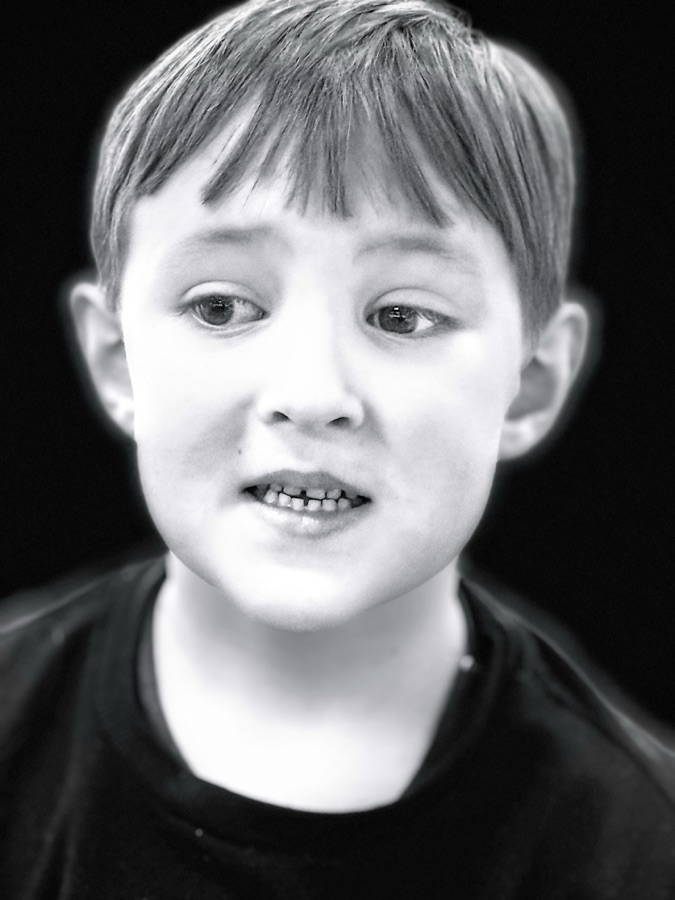
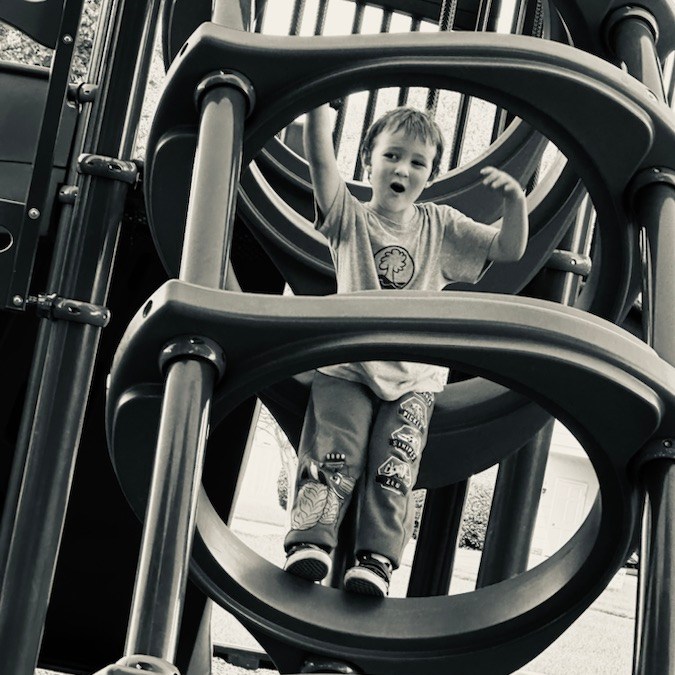
The Cosmic Photo Challenge prompt for this week is Black and White. Looking through this past week’s photos from Coleman and my visit to Goat Island Park and Greenway, I found few that I think would work for this challenge.
Here is what I have chosen for this week’s CPC prompt.
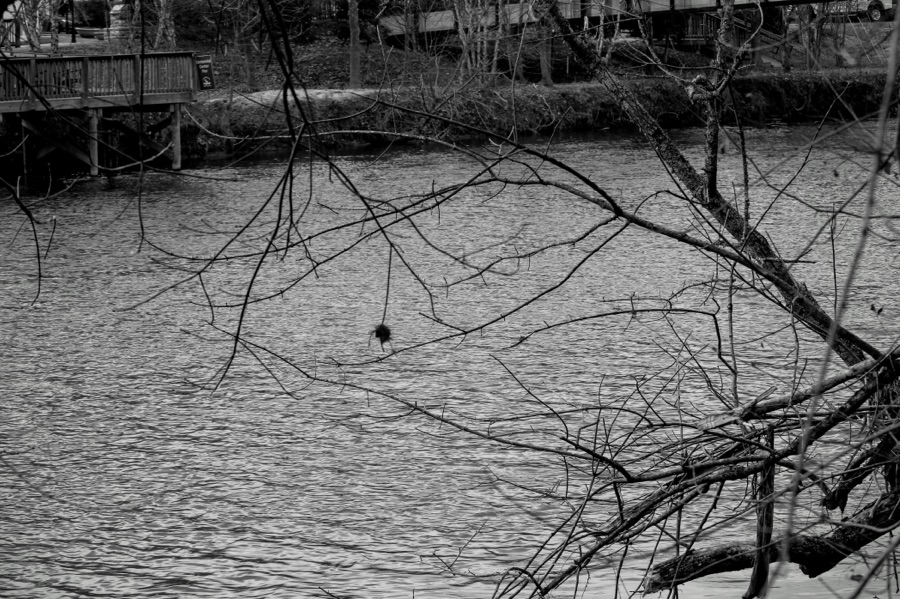
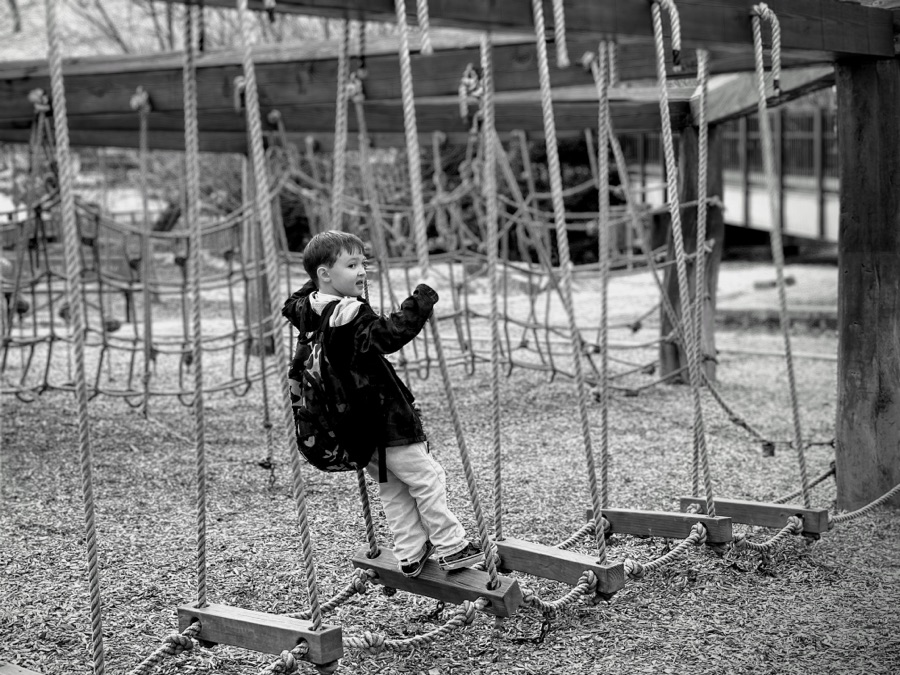
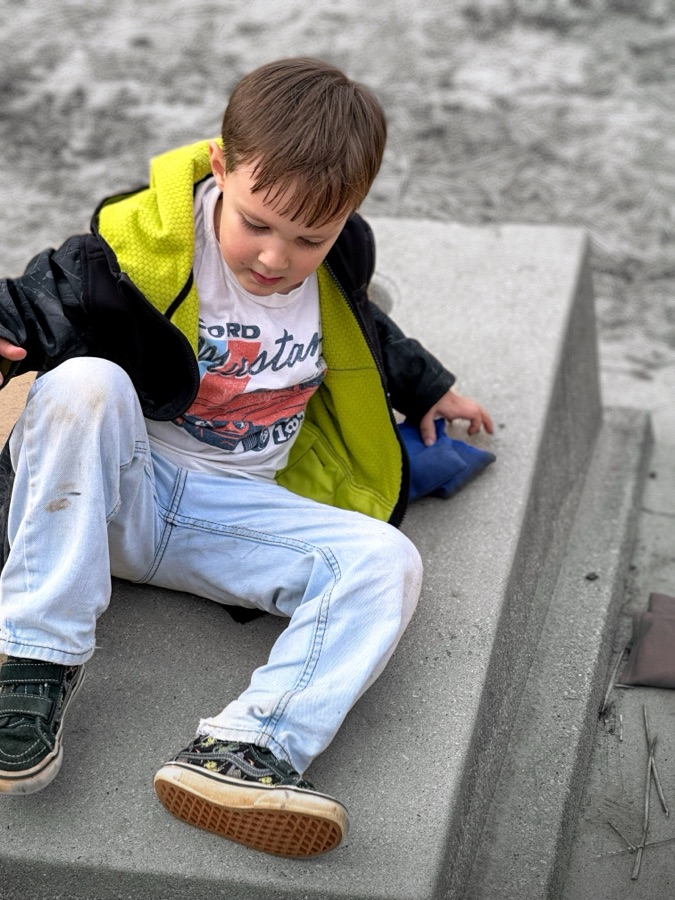
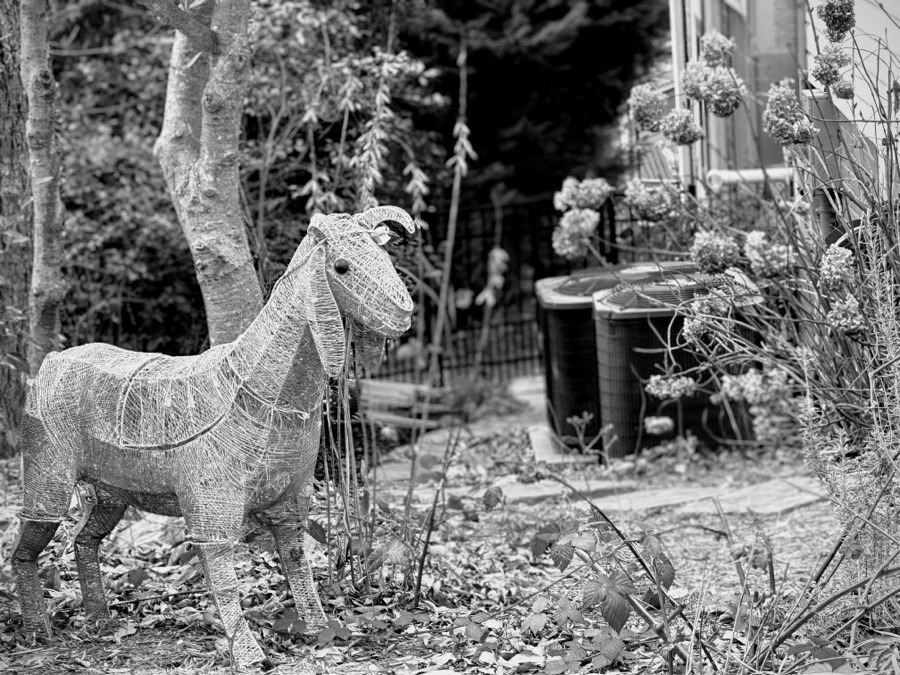
Tunnel with Car passing through under the Train. South Fork Catawba River Coleman Coleman Goat in Neighboring Yard
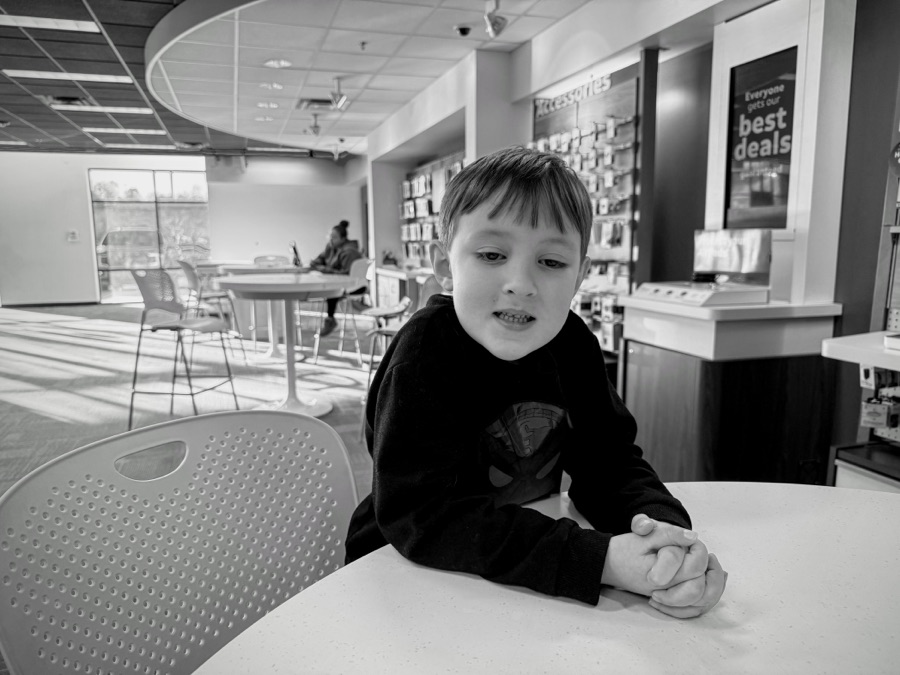
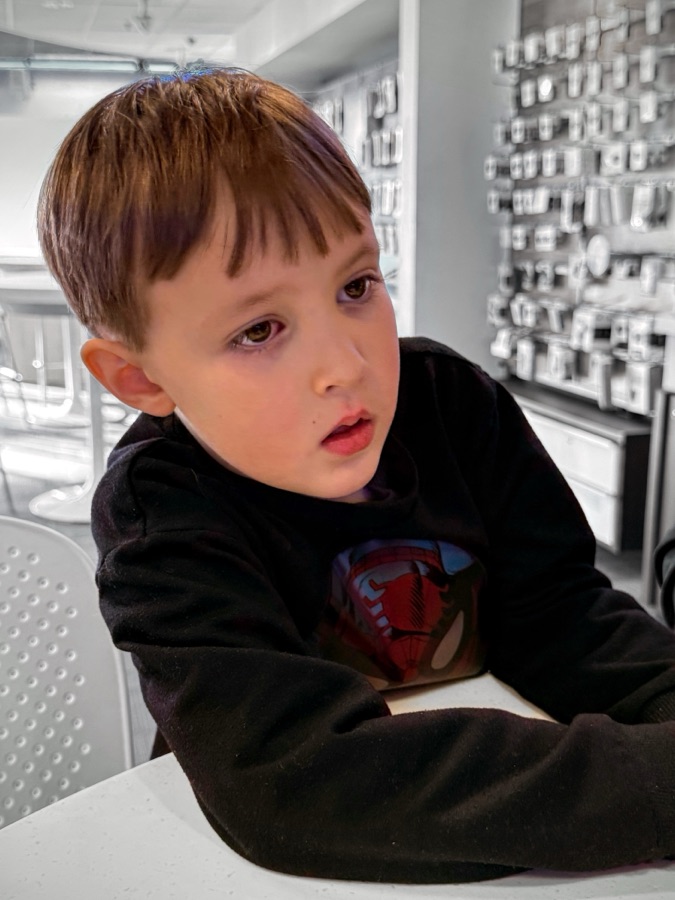
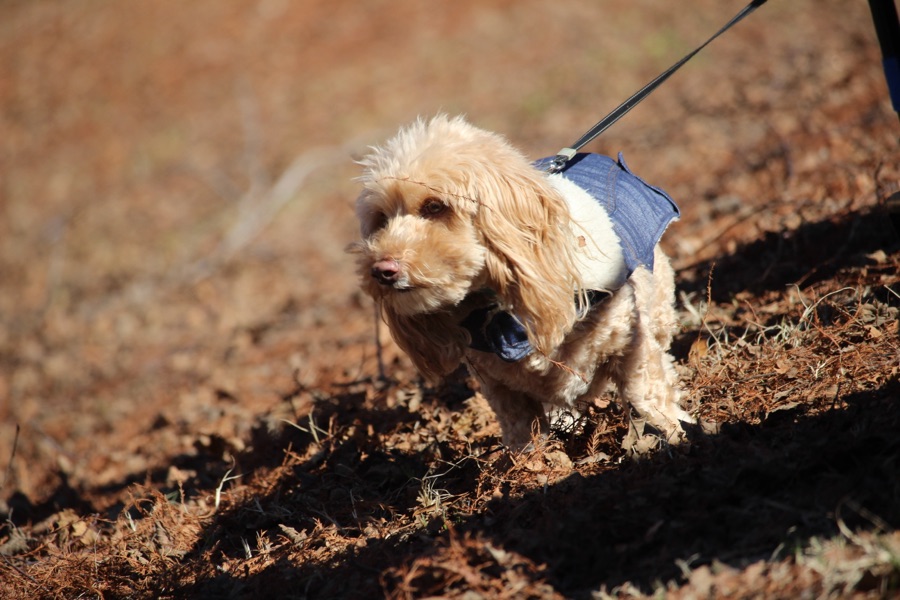
Now to show some of what I took today of Coleman using my new iPhone 16 Pro Max.
Coleman at the AT&T store patiently waiting for us to go.
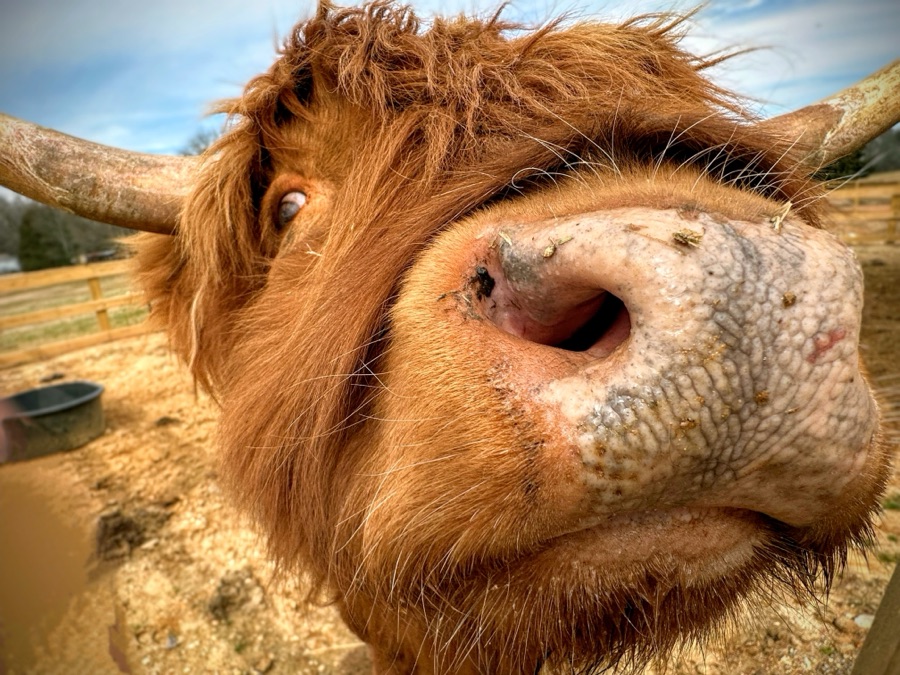
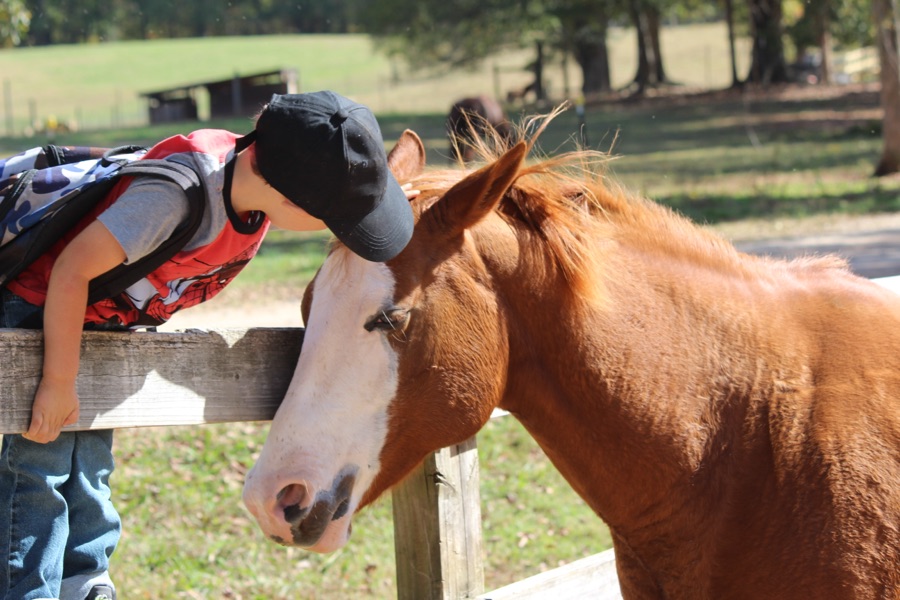
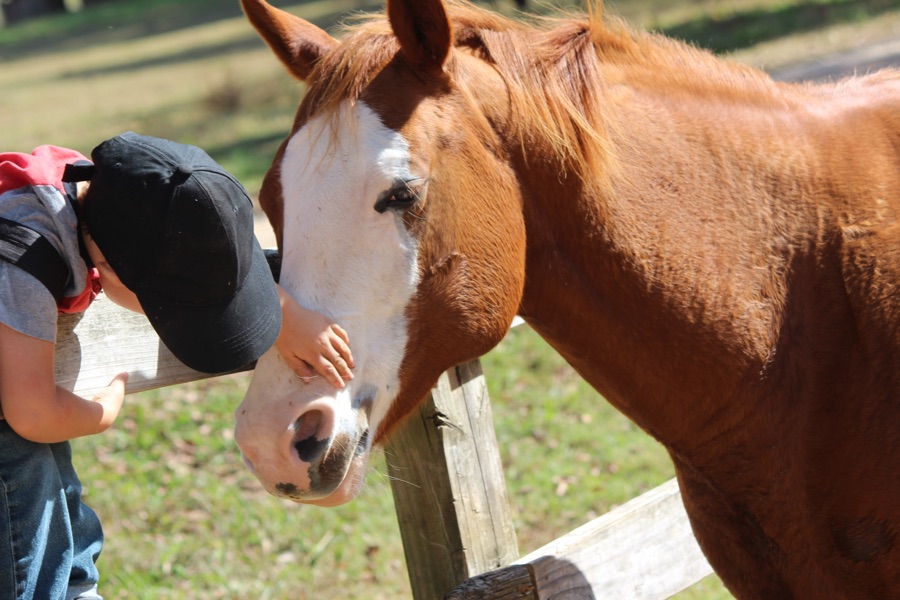
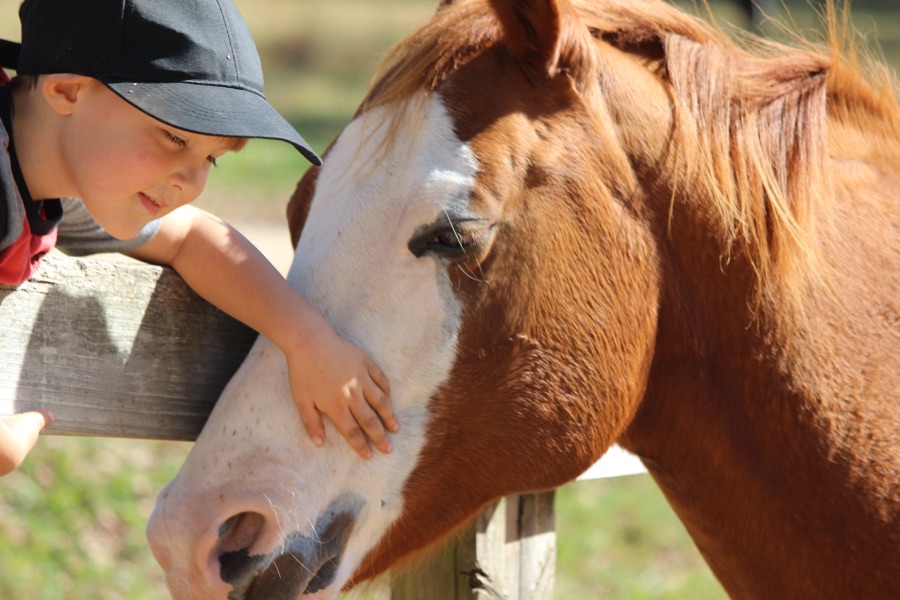
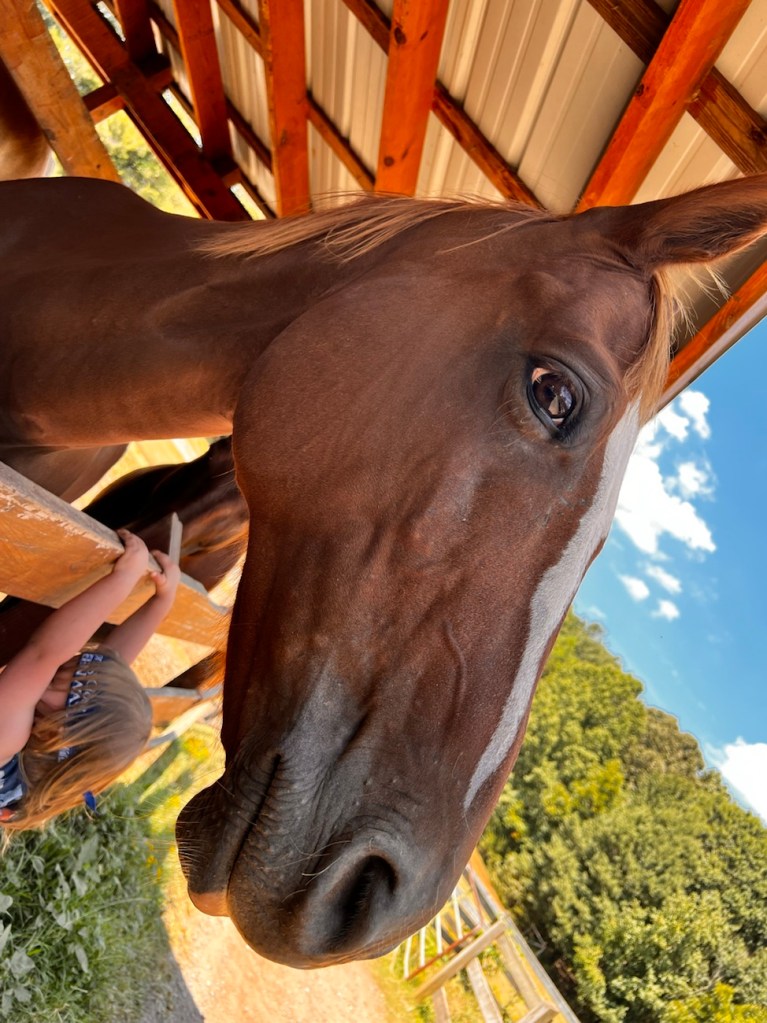
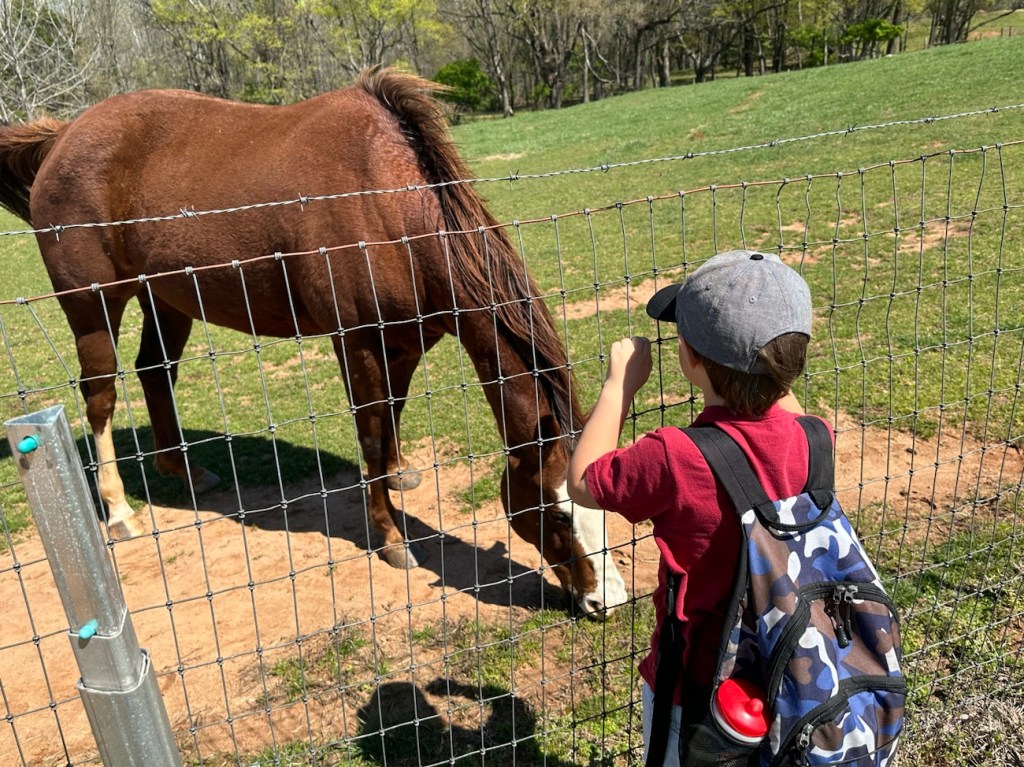
Location: Crandall Bowles Children’s Farm; Greenway Stables Entrance; Anne Springs Close Greenway; Fort Mill, South Carolina, USA
God Bless. Enjoy the Outdoors. Ready for Spring yet? I am. Thank you for visiting and sharing your time and thoughts with us. I appreciate y’all very much.
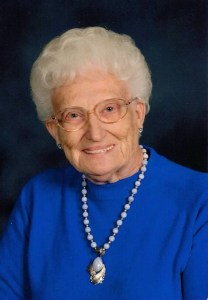
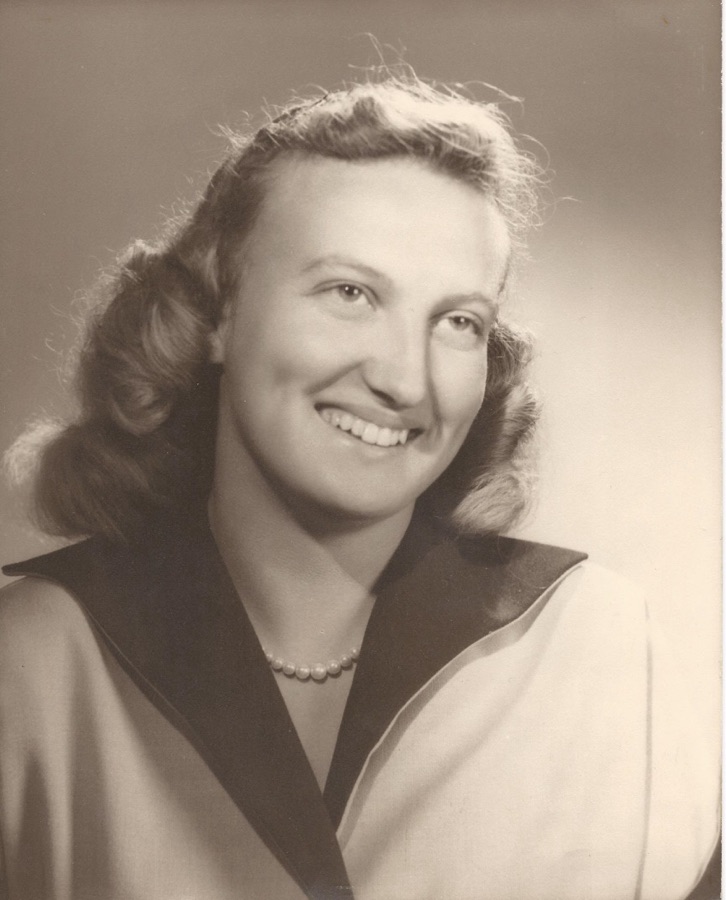
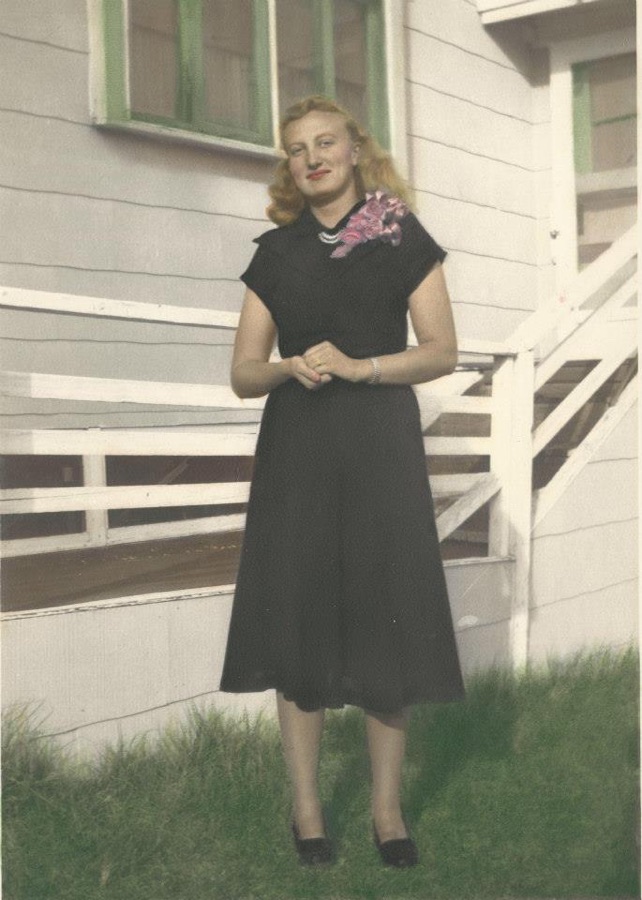
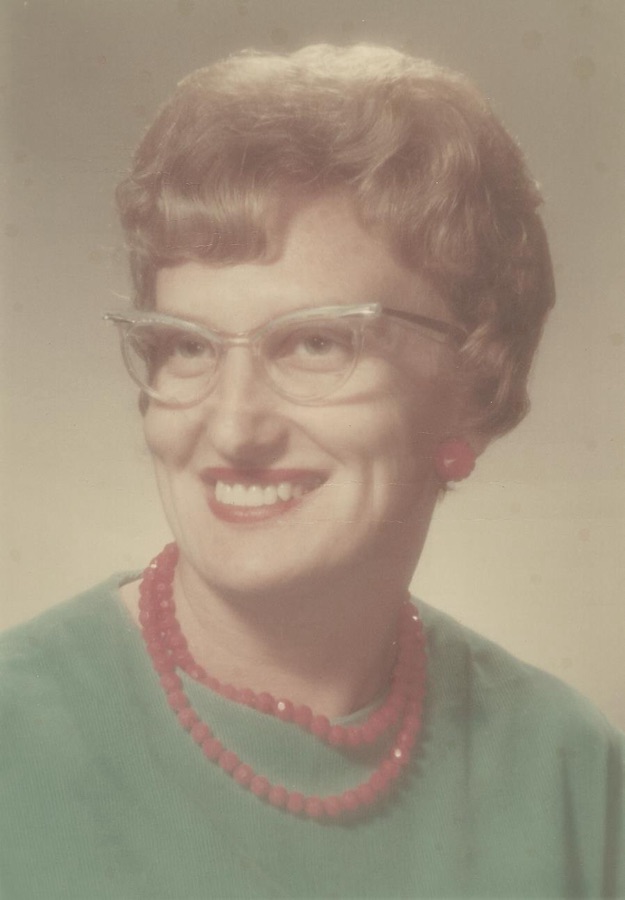
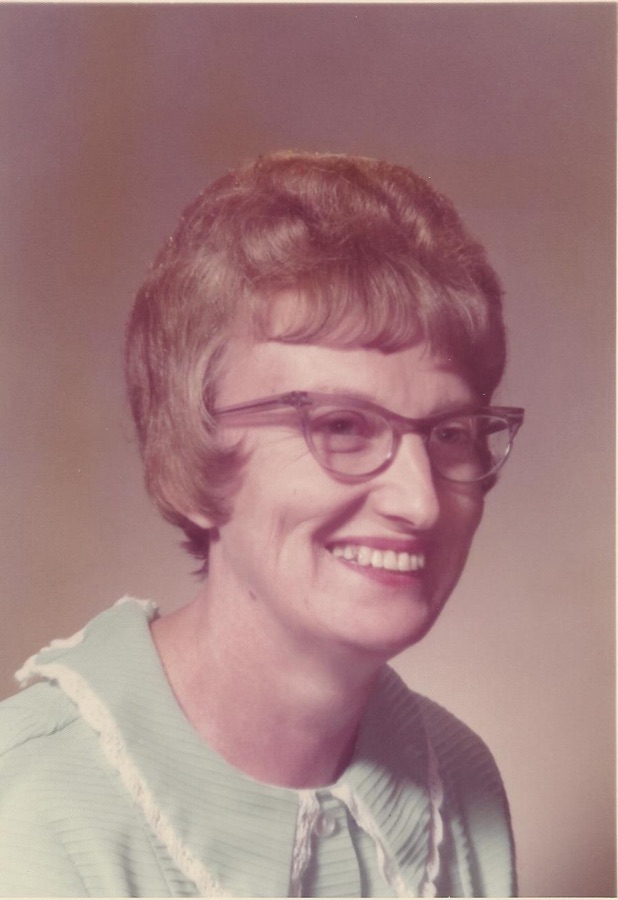
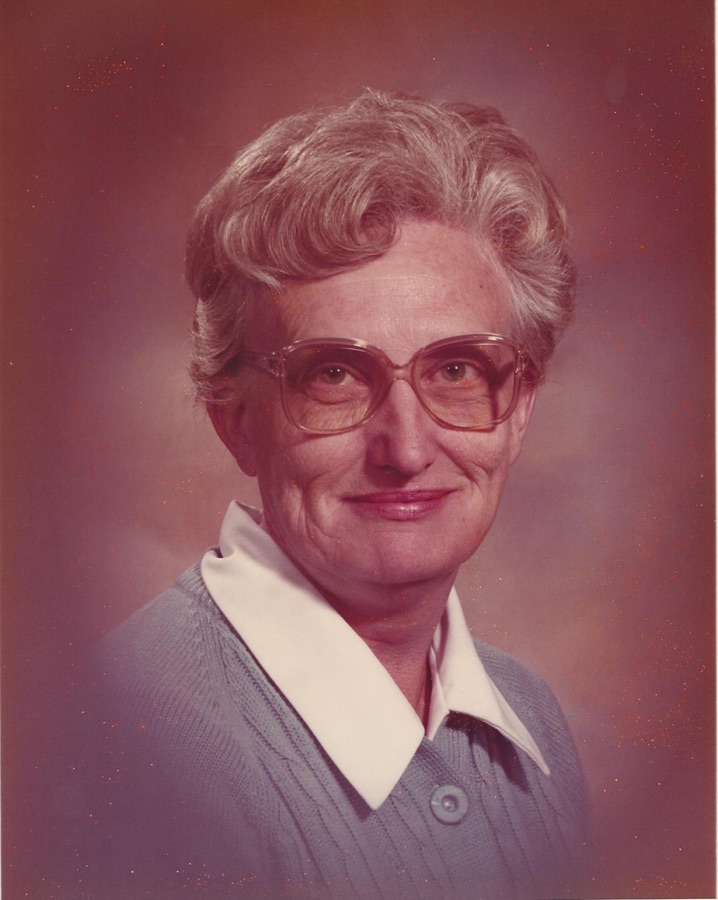
In Memory Doyce Eileen (Watson) Waters, aka my mom
Six years ago January 18, I received some devastating news, yet expected news. I was at work when my manager called me into his office saying I had a phone call. [Mind you now, I do not normally receive calls while I’m working and especially not on a work phone.]
What news did I receive, you ask? The phone call was from my brother in Texas. He called to let me know our mom had passed during the early morning hours. Yes, that is devastating news to receive and even more so while you are working. Needless to say, my work day ended after that phone call. I had arrangements I needed to make. Arrangements for my daughter and myself to travel to Texas for her memorial service and help my brother with the arrangements. Most of her arrangements were already preplanned.
Notice I said in the beginning the news was expected, just not the when. Why was it expected, you may wonder or might not? You see, my mom was dying from cancer. The type of cancer doesn’t matter. By this time in her life she had had several different types of cancers. She had received the chemotherapy, the radiation, and whatever was decided by her doctors for her previous cancers. This time around she made the decision that she wasn’t going to go through all of those treatments again. She had previously watched how the treatments affected my dad when he received the treatments when he was diagnosed and treated for cancer. (As of December 31st, it has been 28 years since my dad passed from cancer.) After receiving her diagnosis of cancer this last time, I believe she was ready to join her husband, loved ones, and friends in heaven.
Her passing affected me even though we were not close in my adult life. I loved my mom, don’t doubt that and I know she loved me. However, I truly felt that she did not like me or anything about me. To me, (my opinion only) she favored my brother and his family over me and my family. Now if you asked him, he’d probably disagree with my opinion. That doesn’t matter, that’s how I felt.
When she passed in January of 2019, I had not seen my mother since 2010 when she along with my brother came out to watch my daughter graduate from high school. Even then, she only spent a few hours with my daughter and myself the whole time she was in the Carolinas. They stayed with my dad’s sister, we saw them the for an hour the Thursday before my daughter’s graduation, at her graduation, and then for an hour at her graduation/birthday party the Sunday after her graduation. To me, it felt like very little time. Especially since afterwords, she moved from her home in San Diego to Plano, Texas to be near my brother and his family. Back then, I felt hurt and probably resented that she was closer to my brother.
Nowadays, I think I should have reached out to her more instead of just living my life struggling to provide for my family. It is sad that we didn’t have the kind of relationship that I now wish we had. The saying is true, you never know what you have or could have had until it is gone. I still think of my mom at times. Especially this time of year and in October around her birthday.
I do not mean to sound frustrating, angry, or like I’m having a “pity party.” Sometimes, you just need to let go of things, pour your heart out, and try to remember the good times.
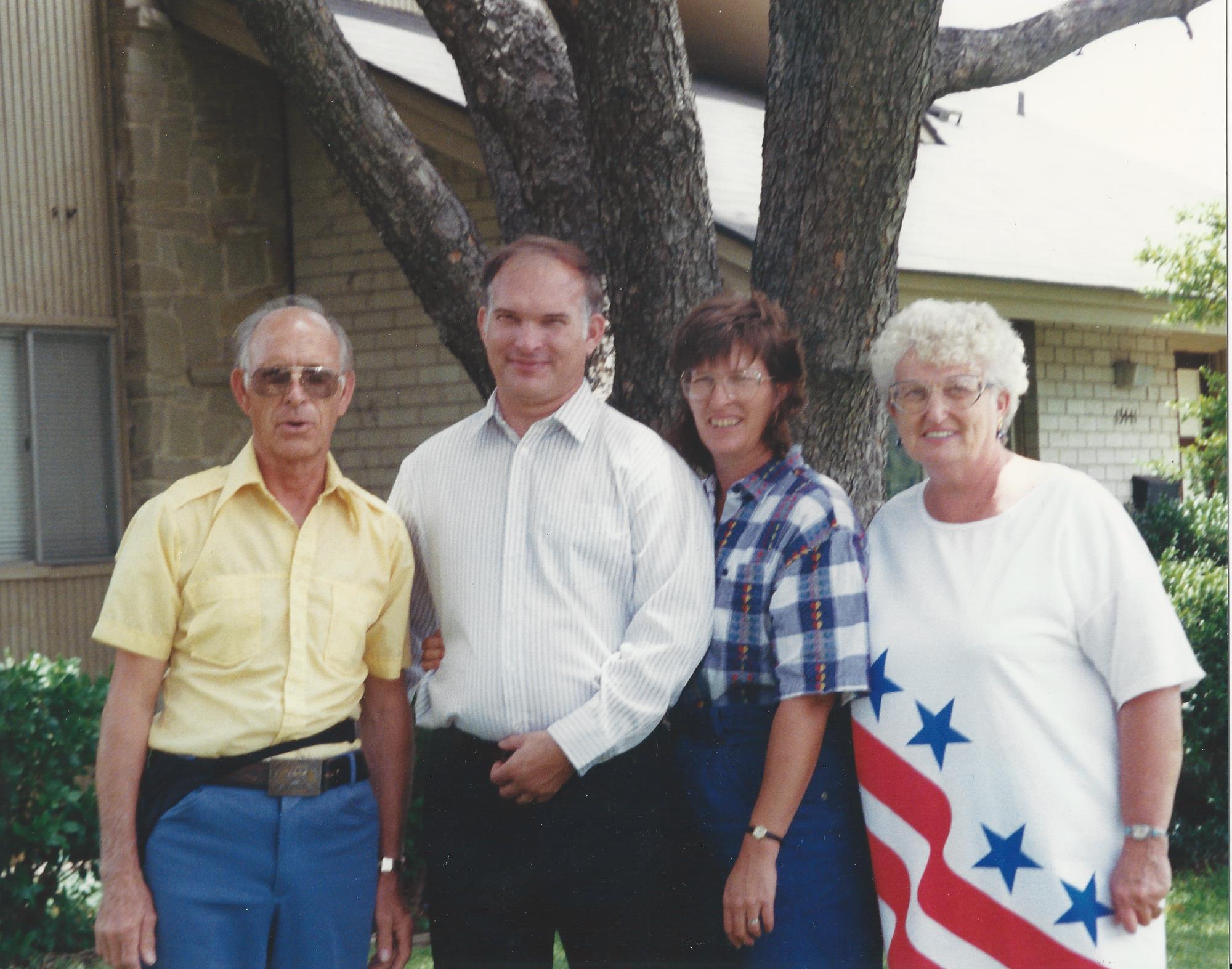
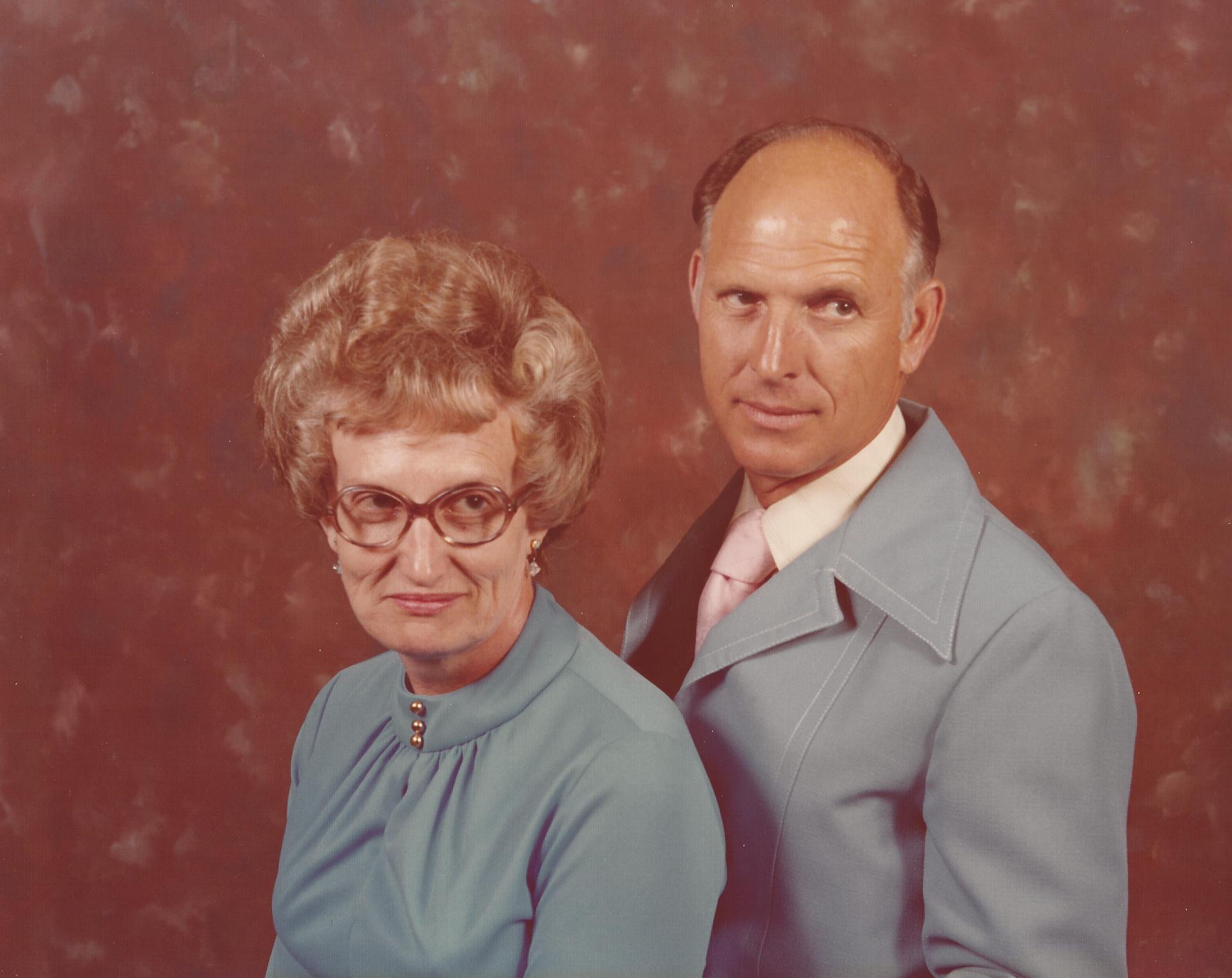
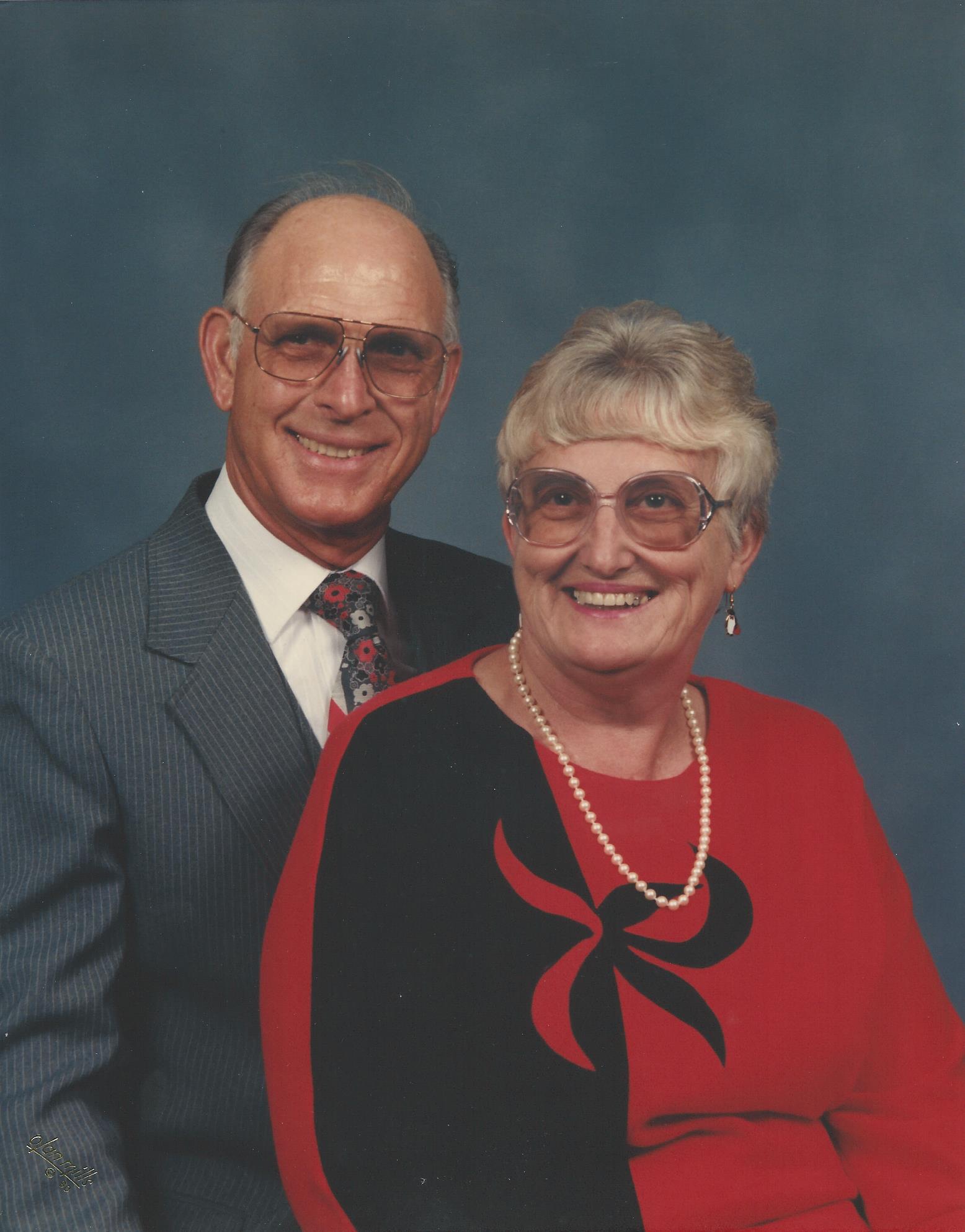
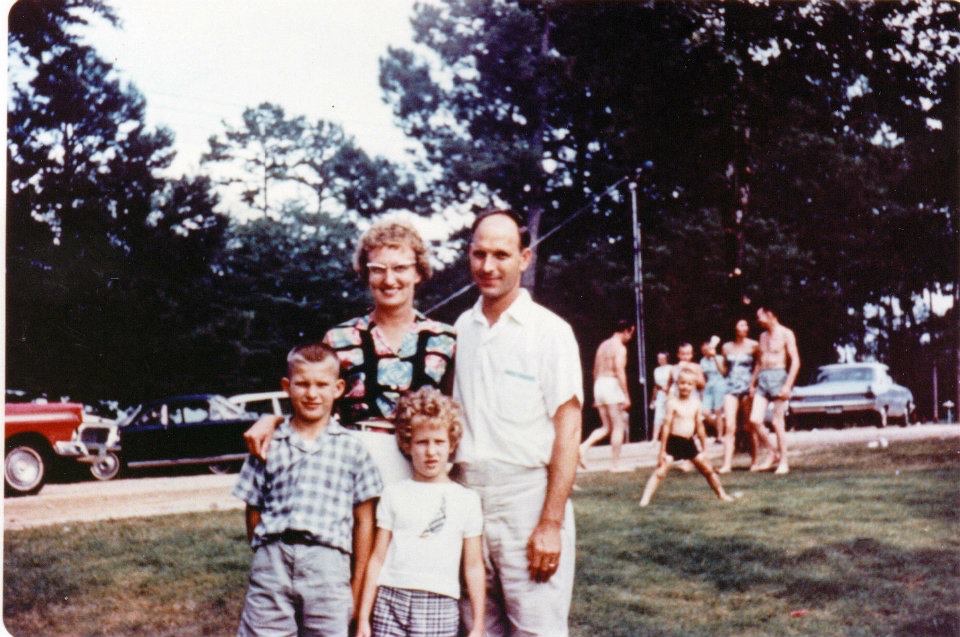
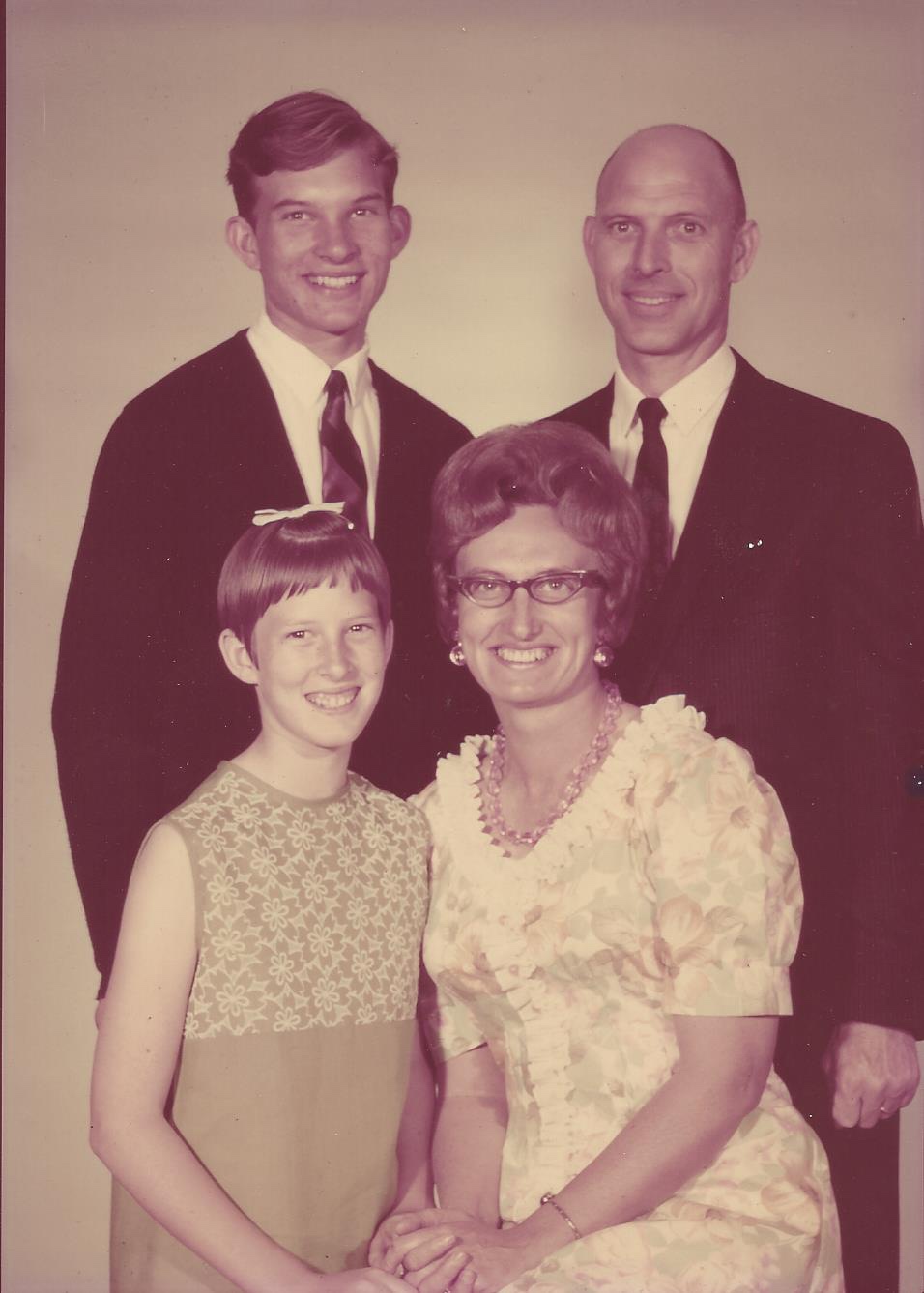
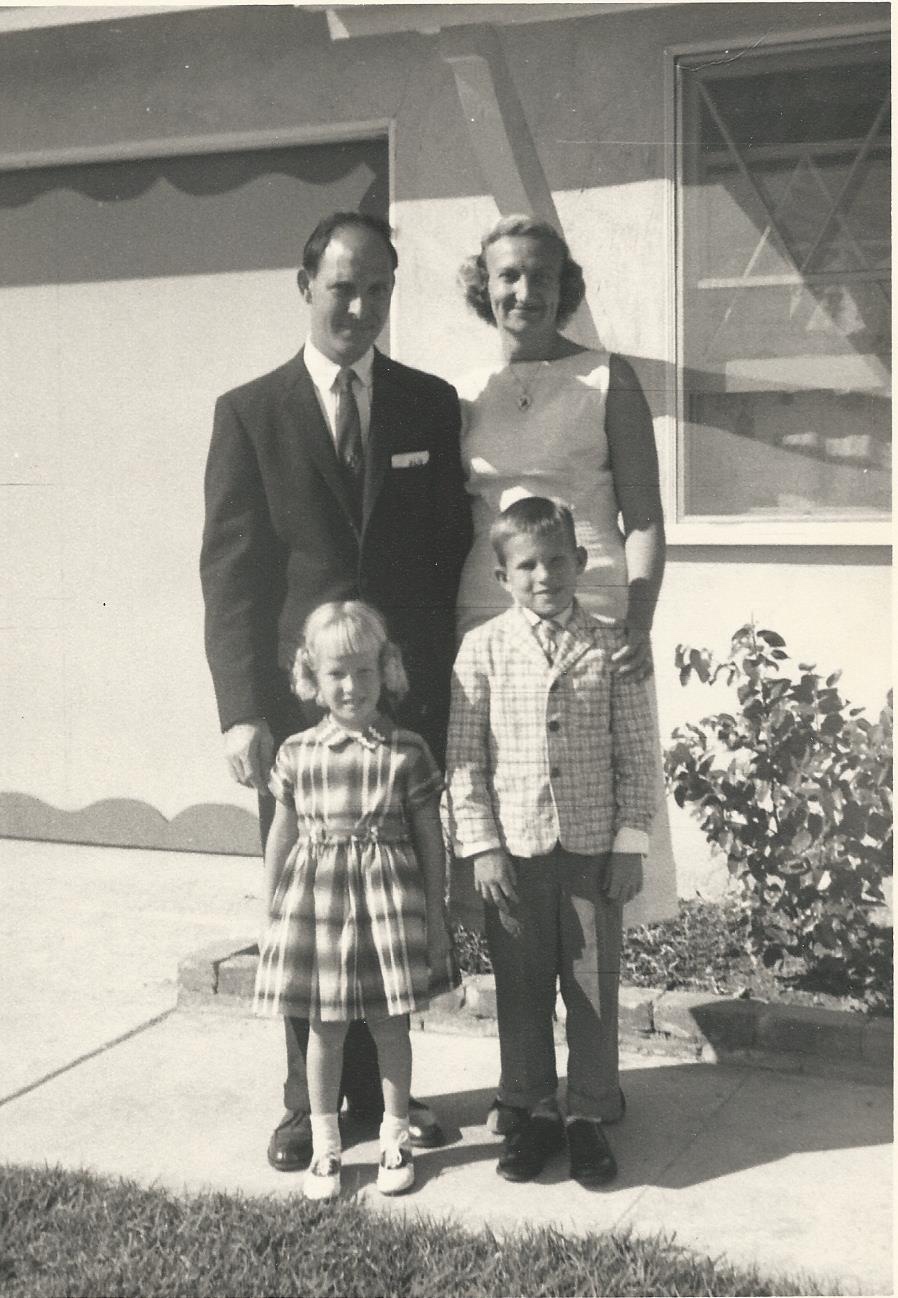
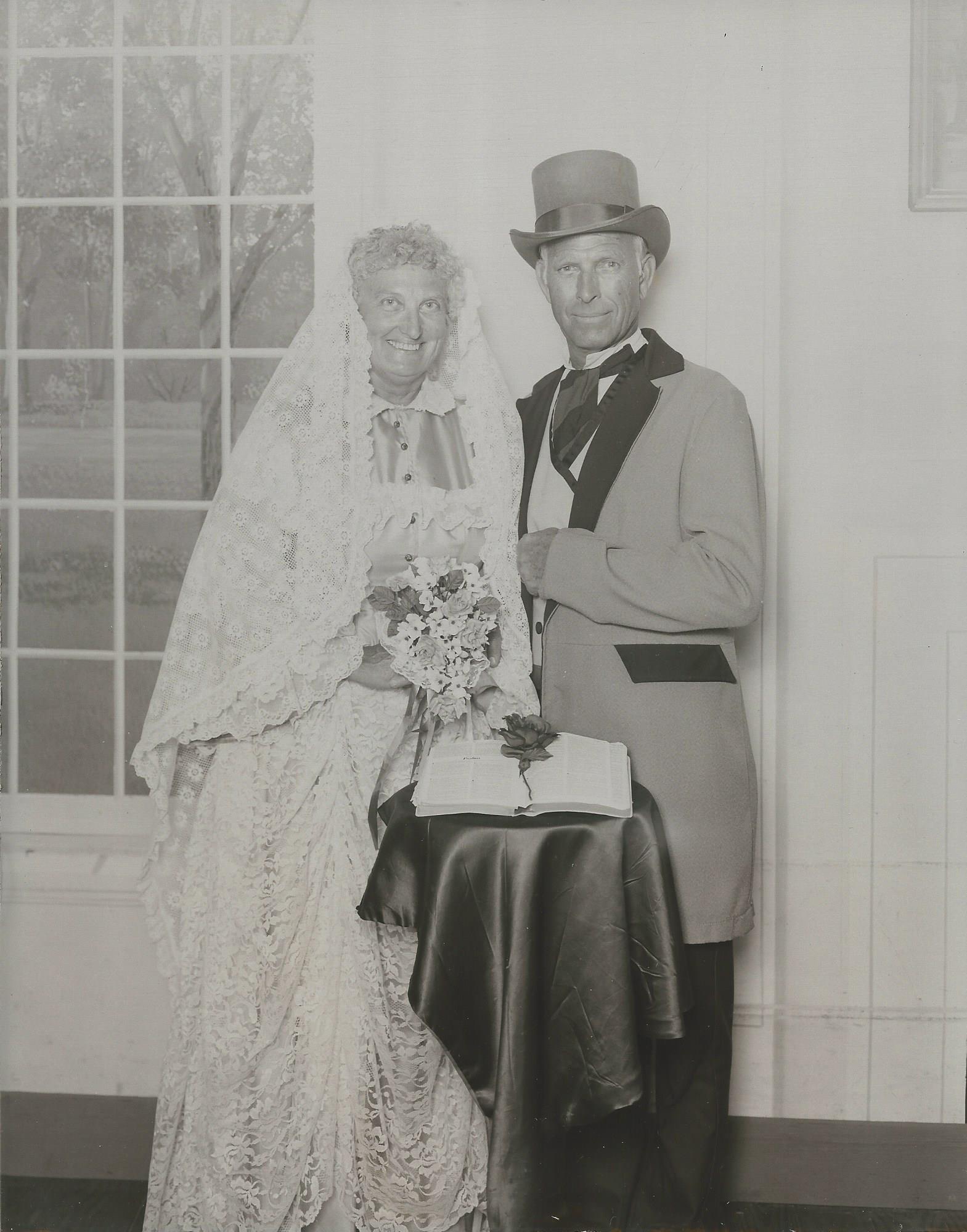
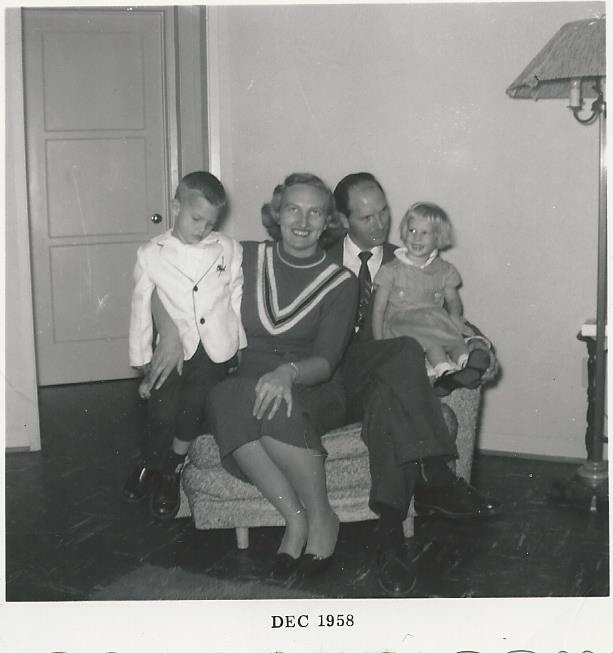
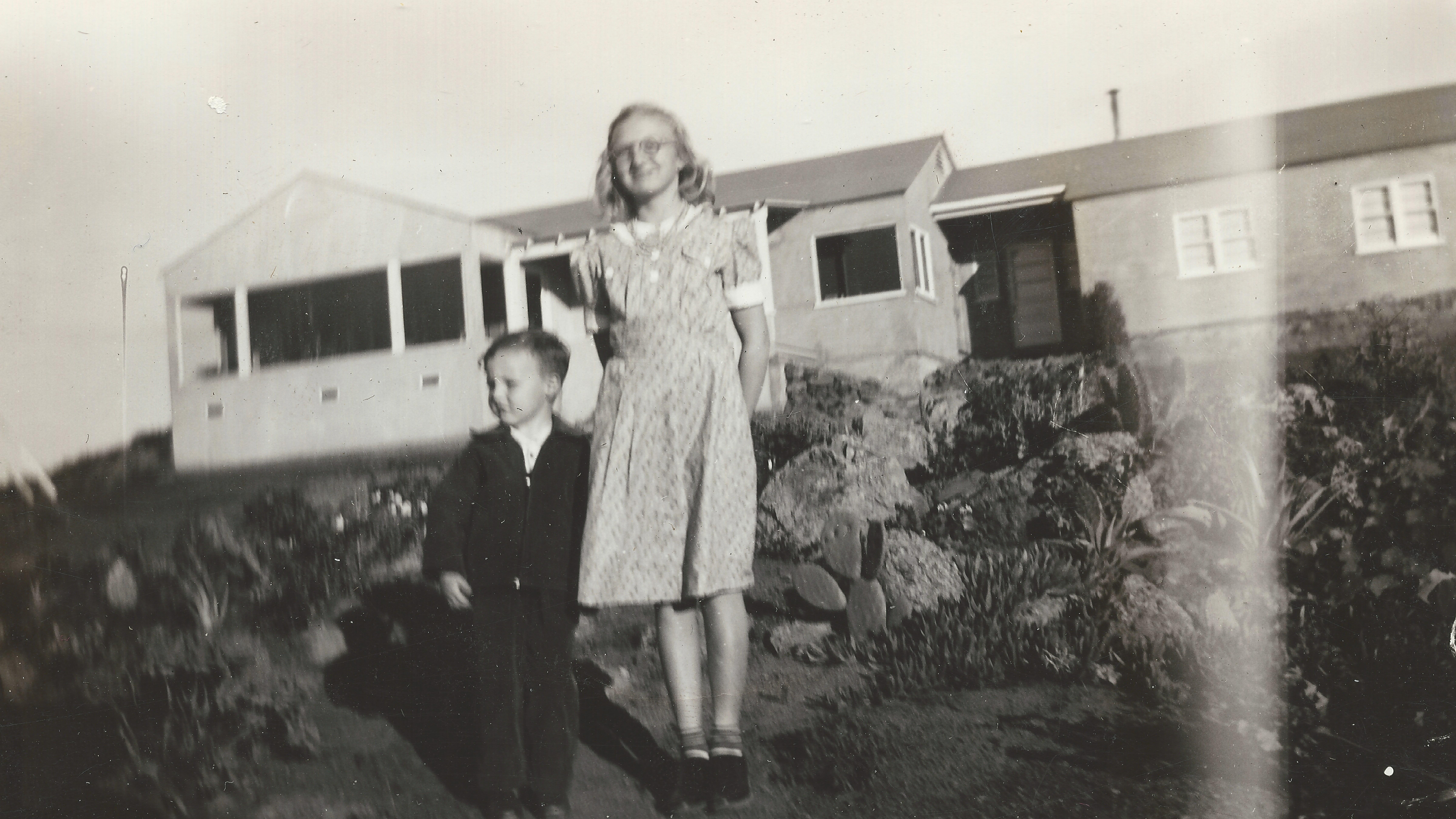
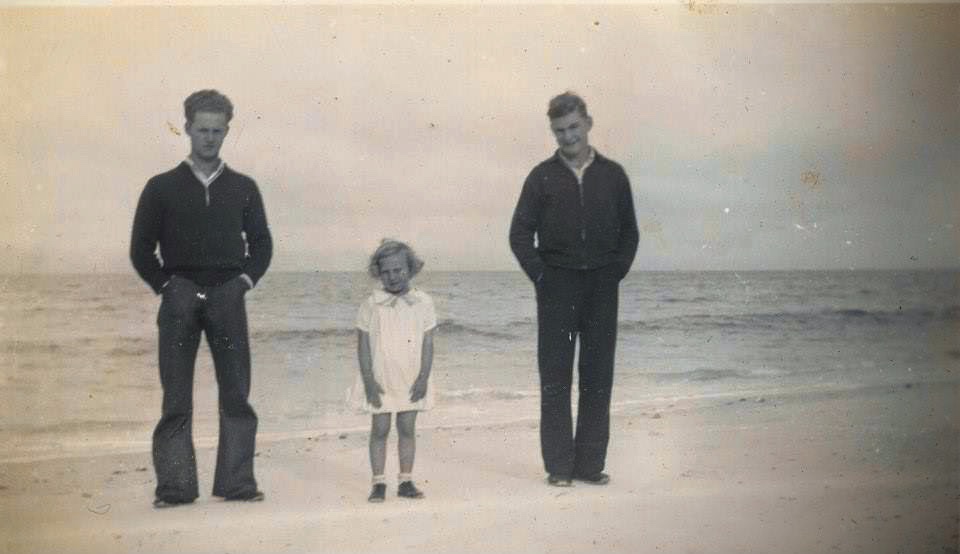
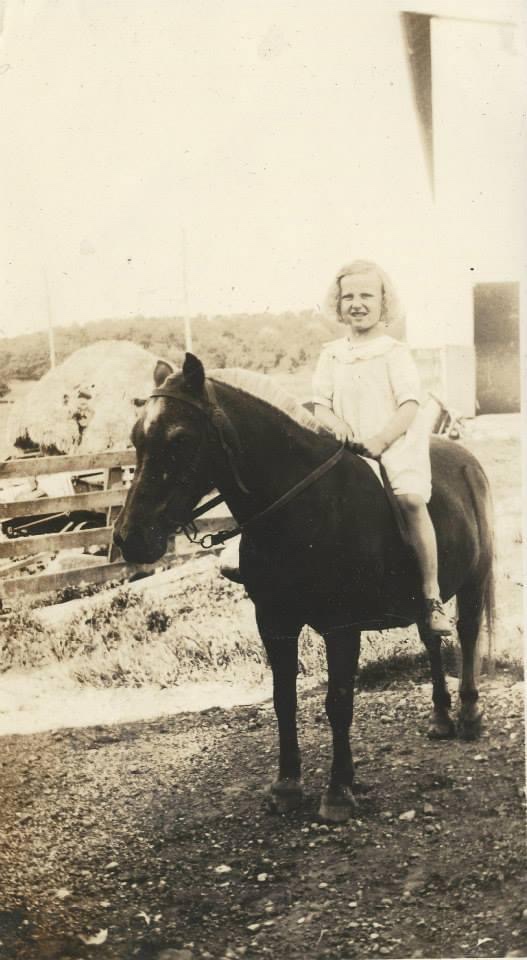
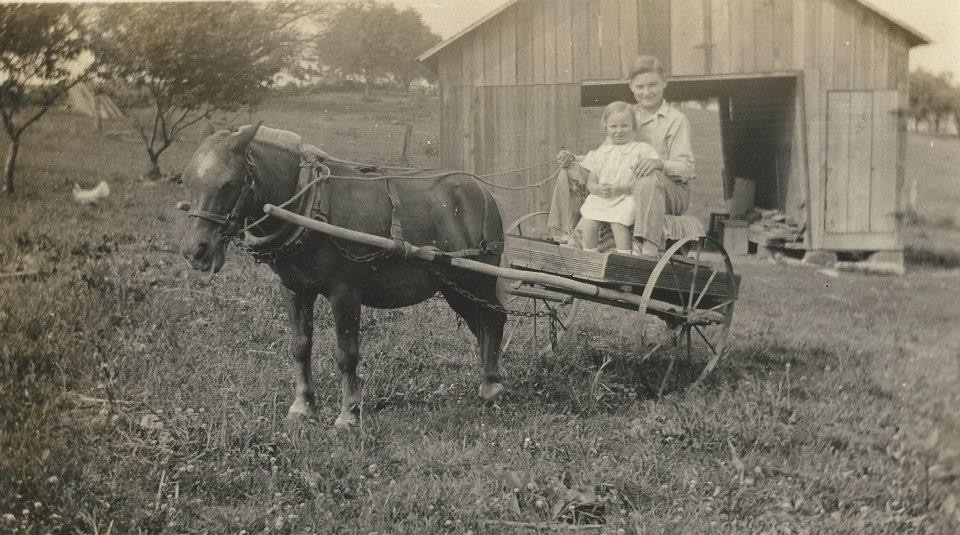
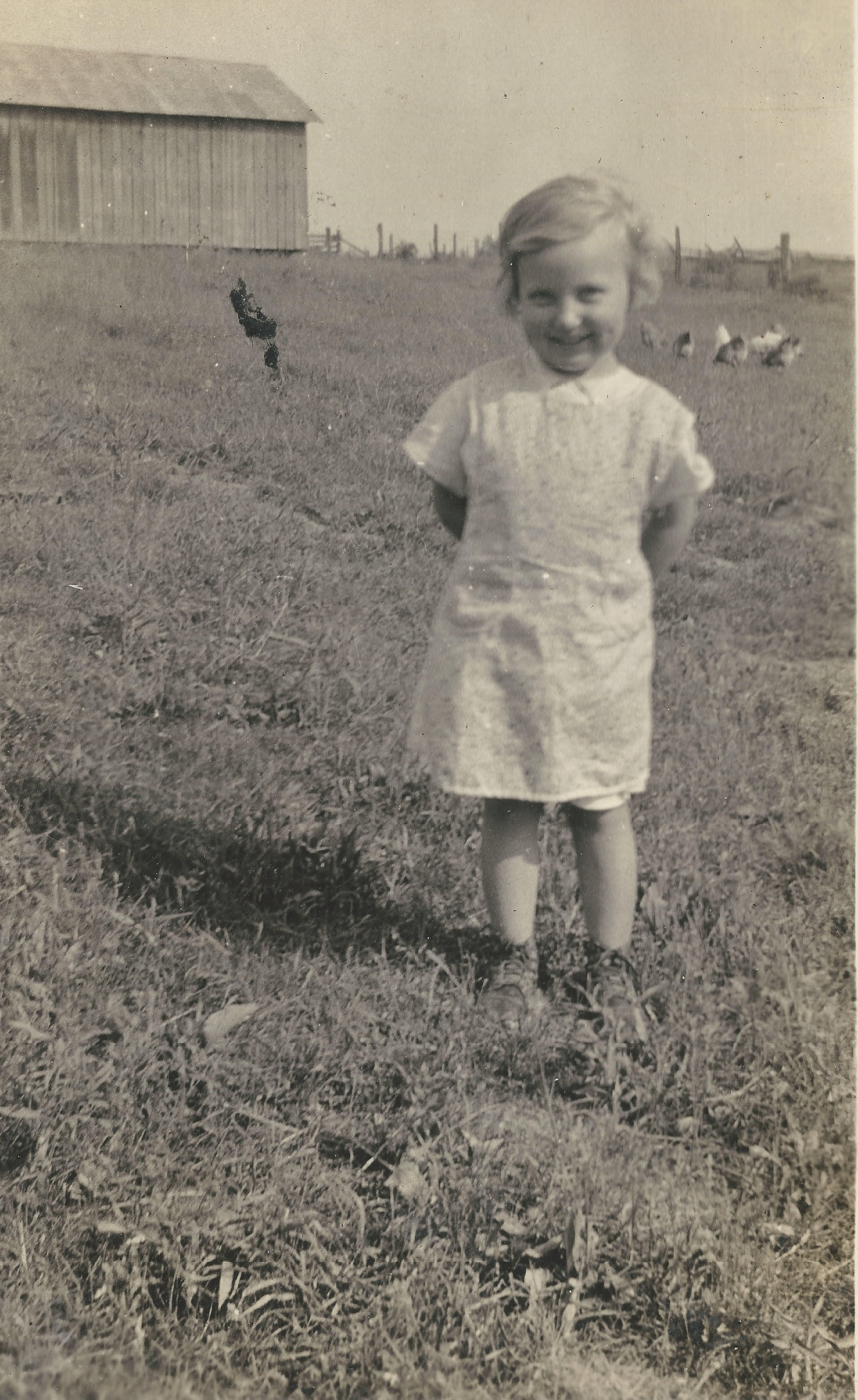
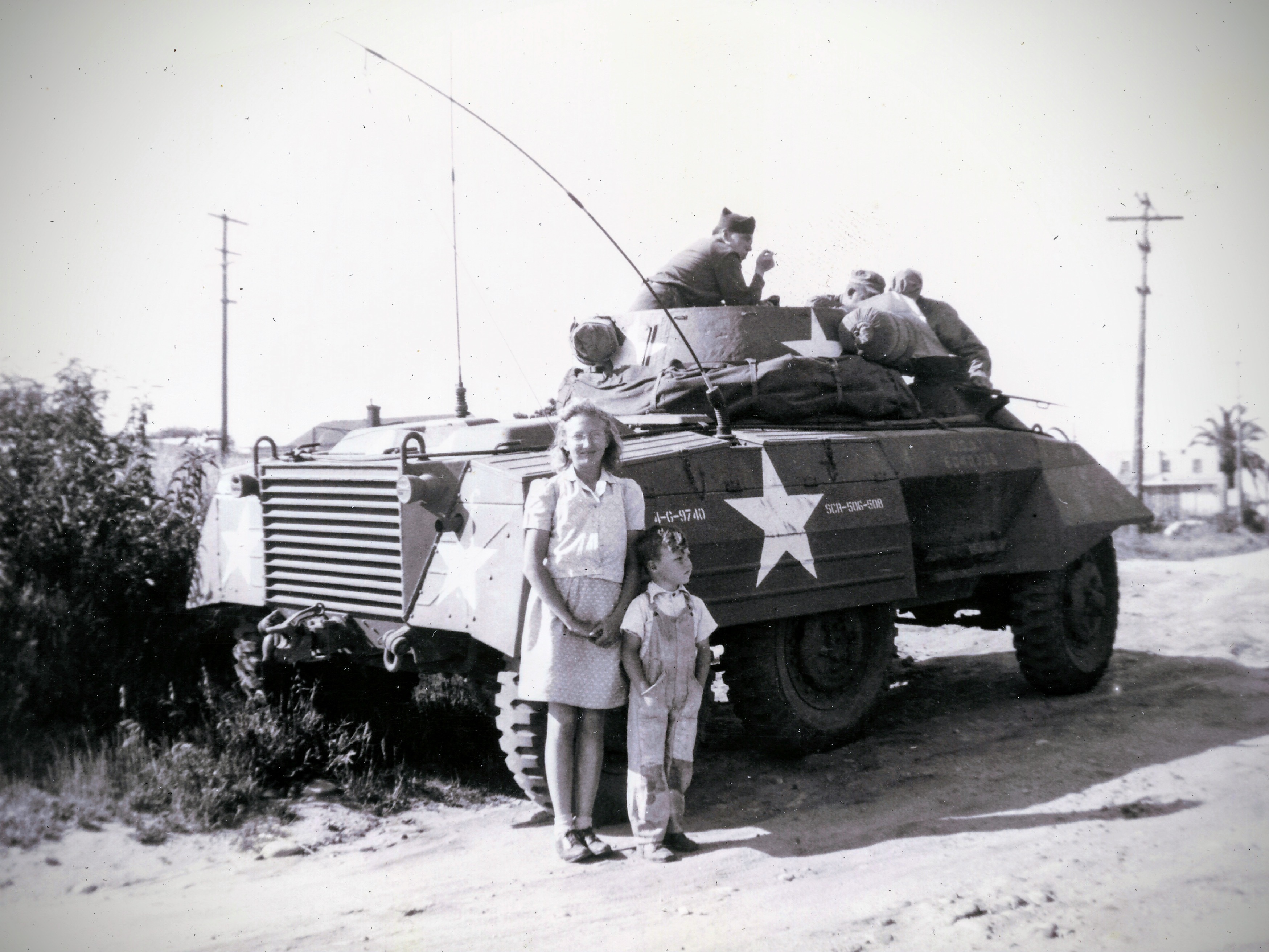
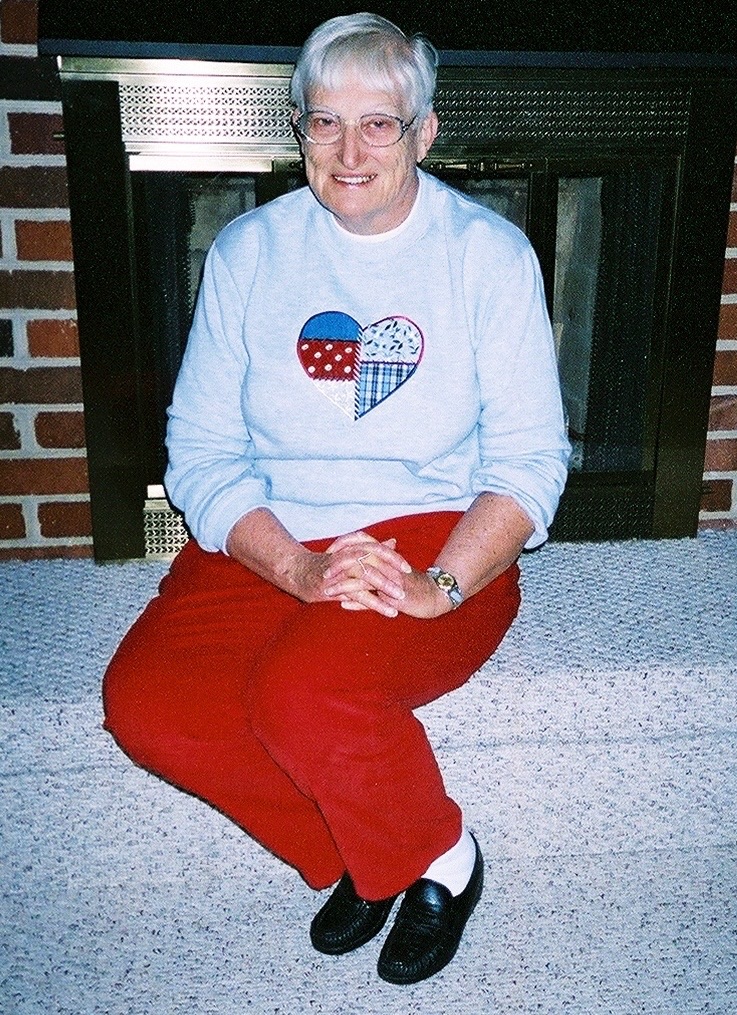
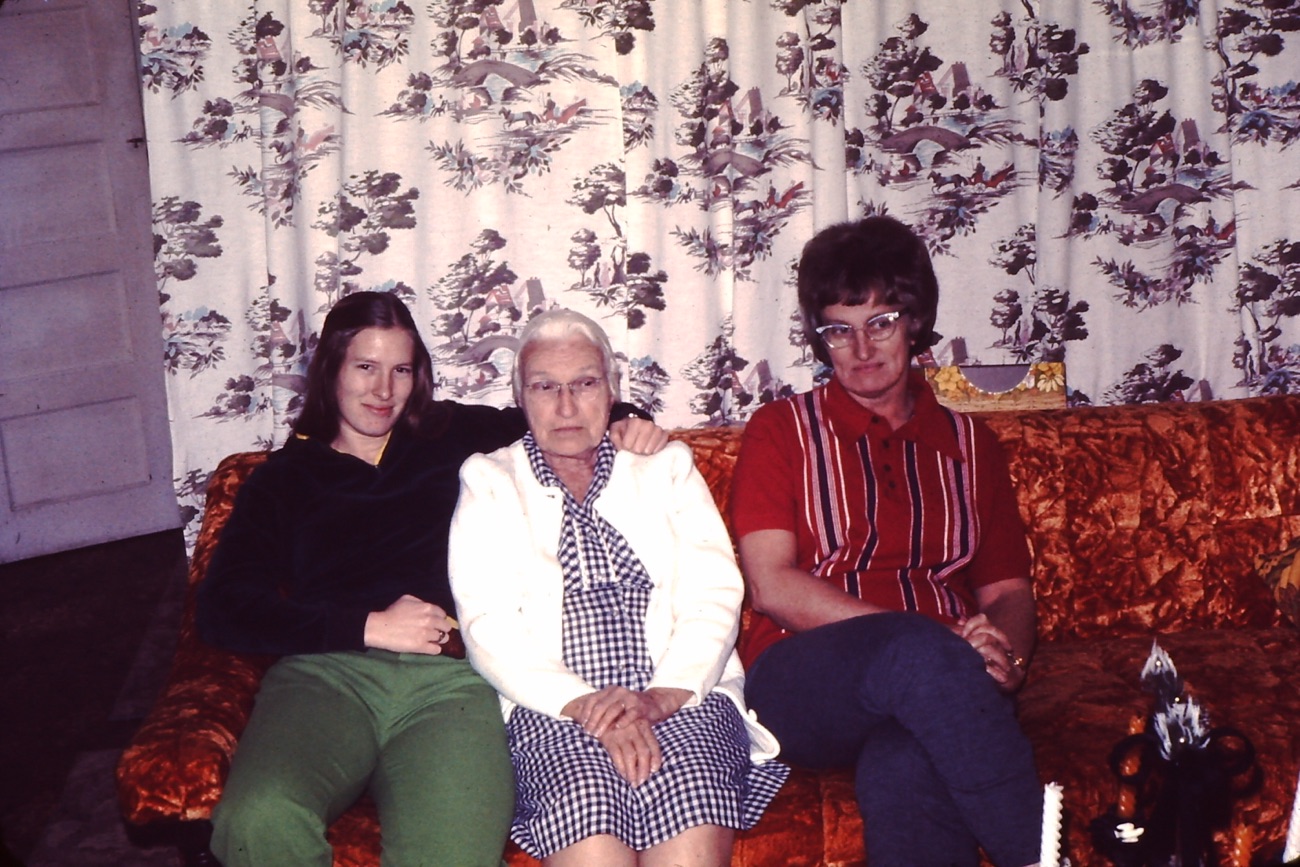
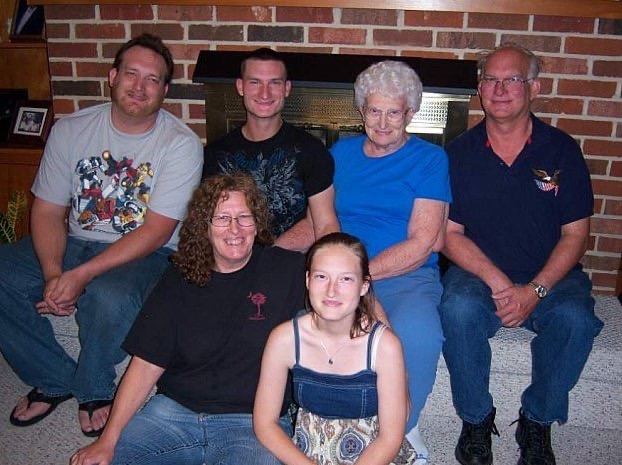
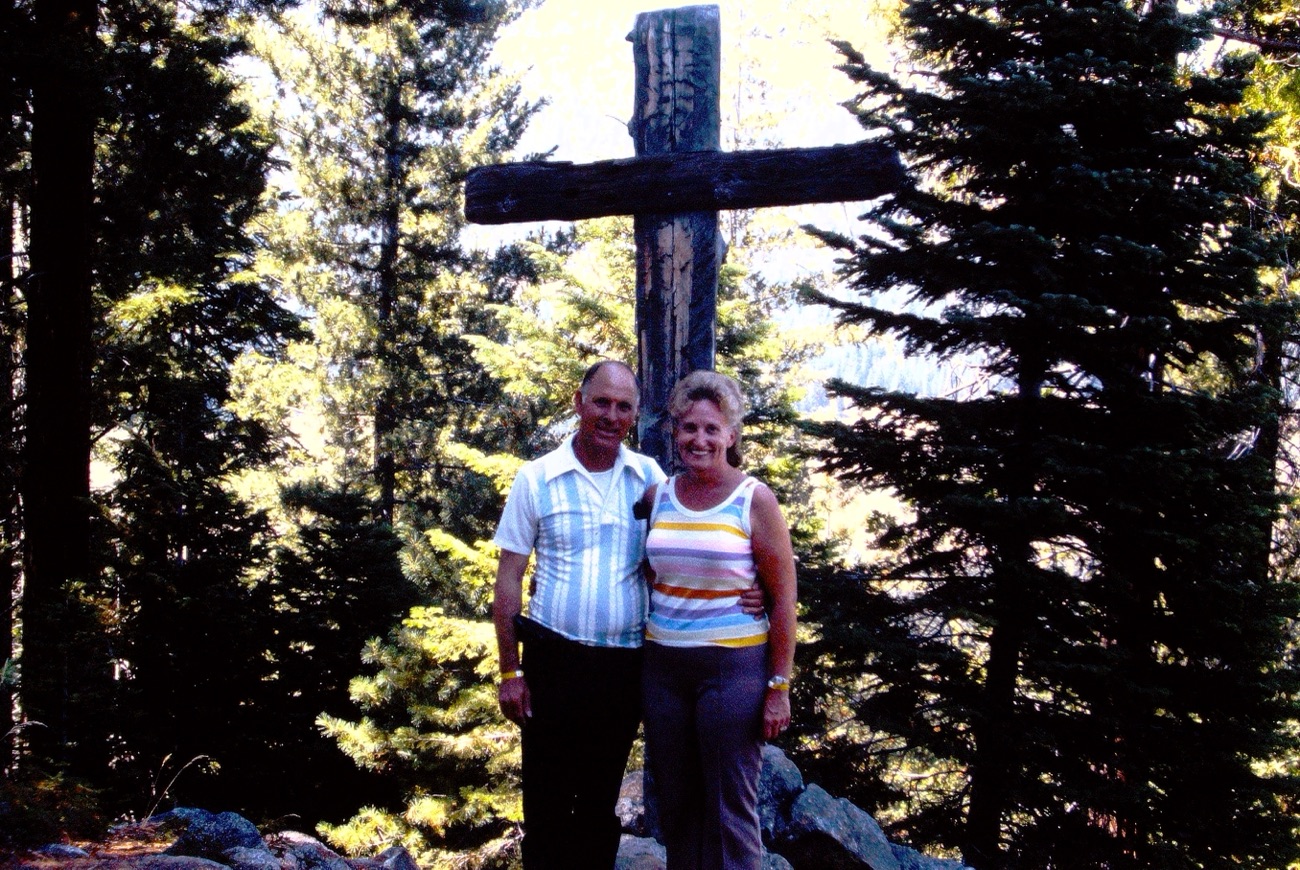
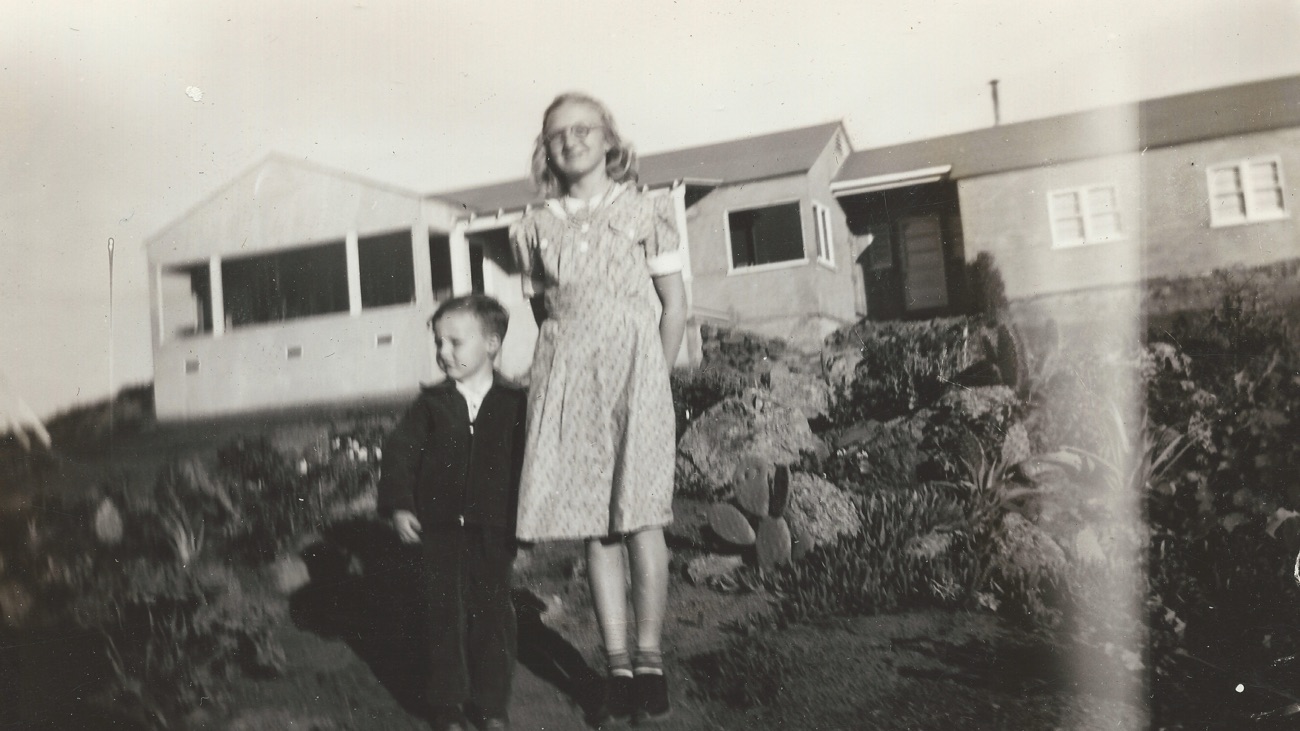
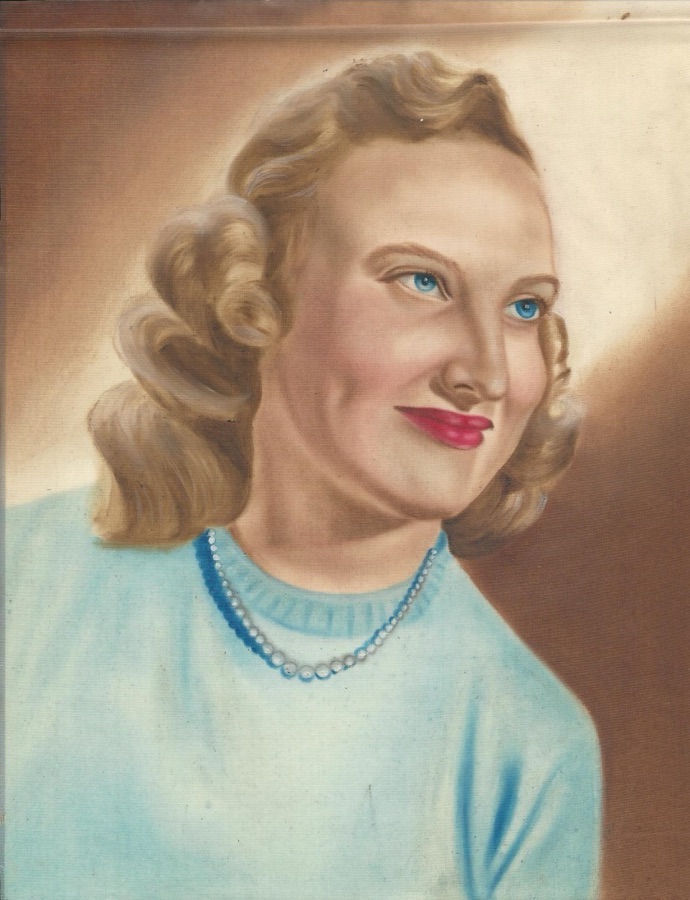
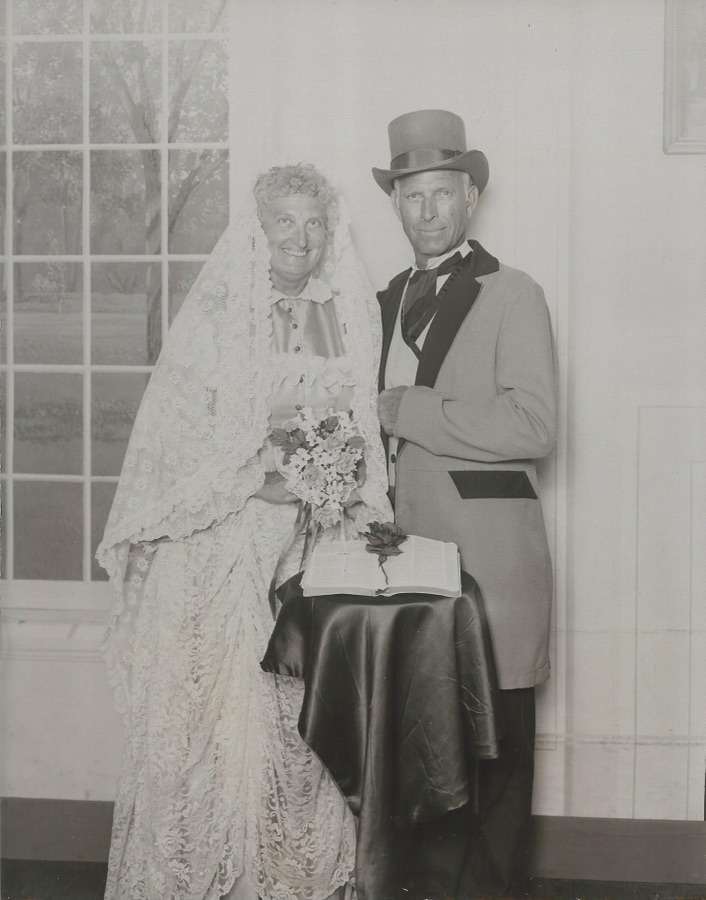
Here is a few photos of my mom …
Remember you may click on each photo for larger enhanced viewing.
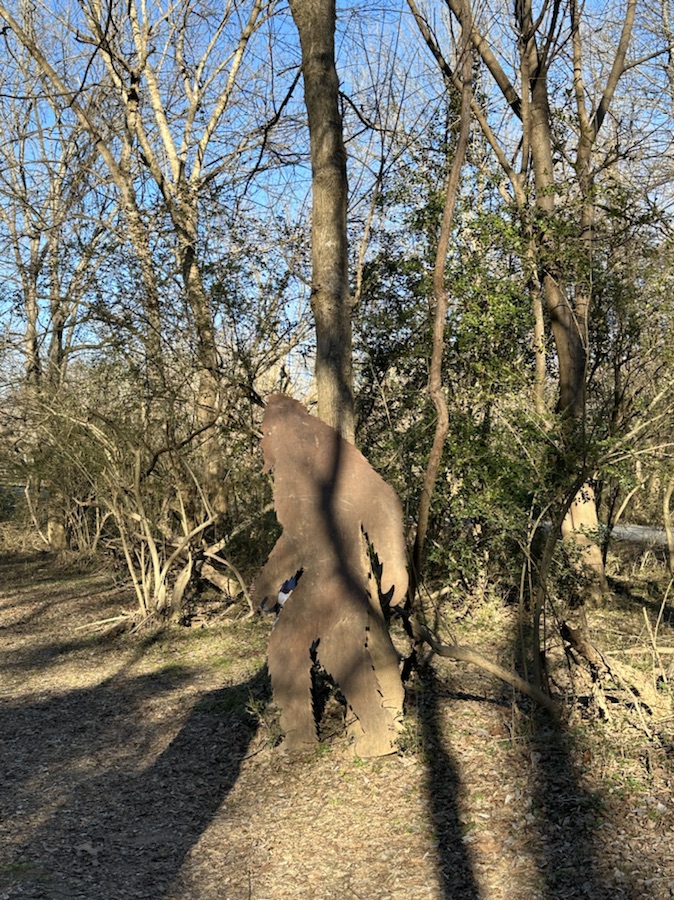
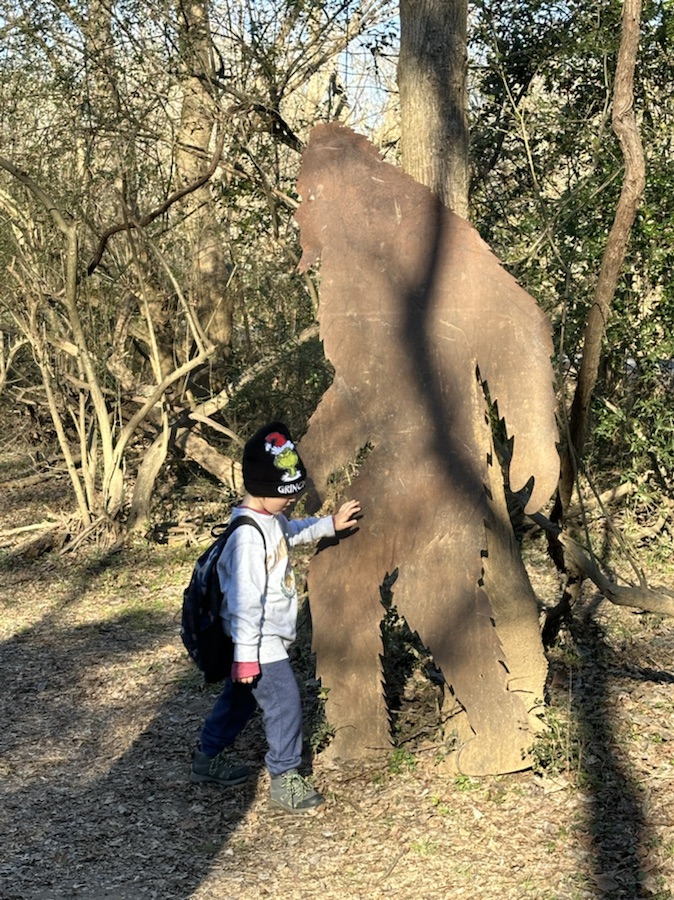
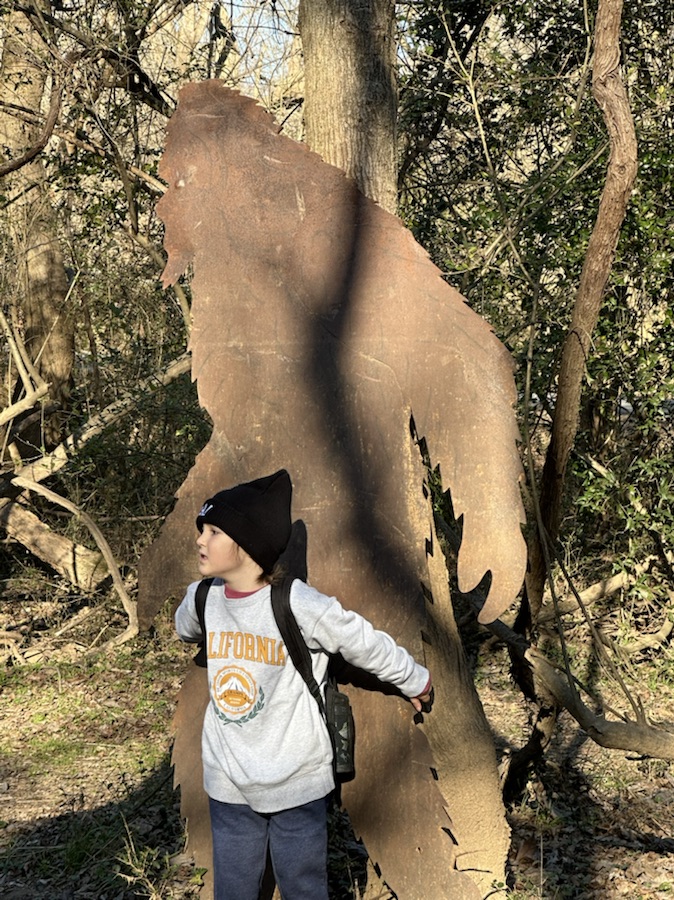
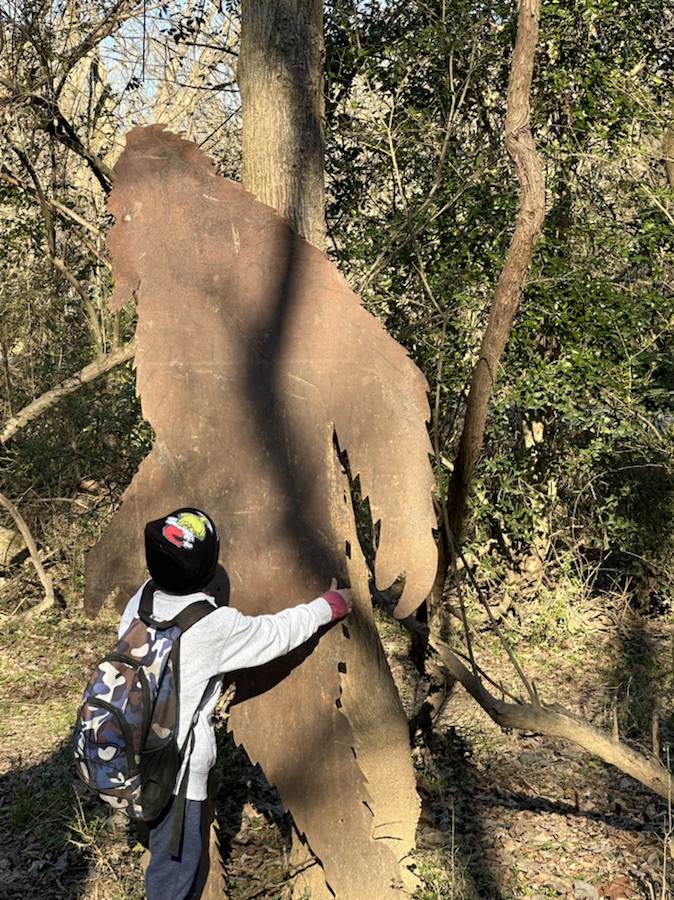
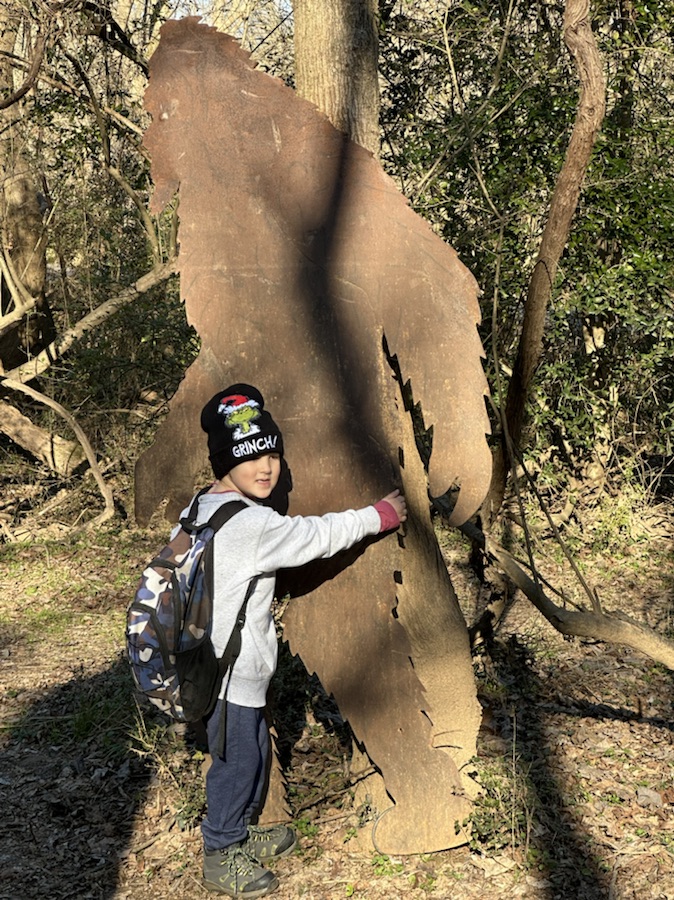
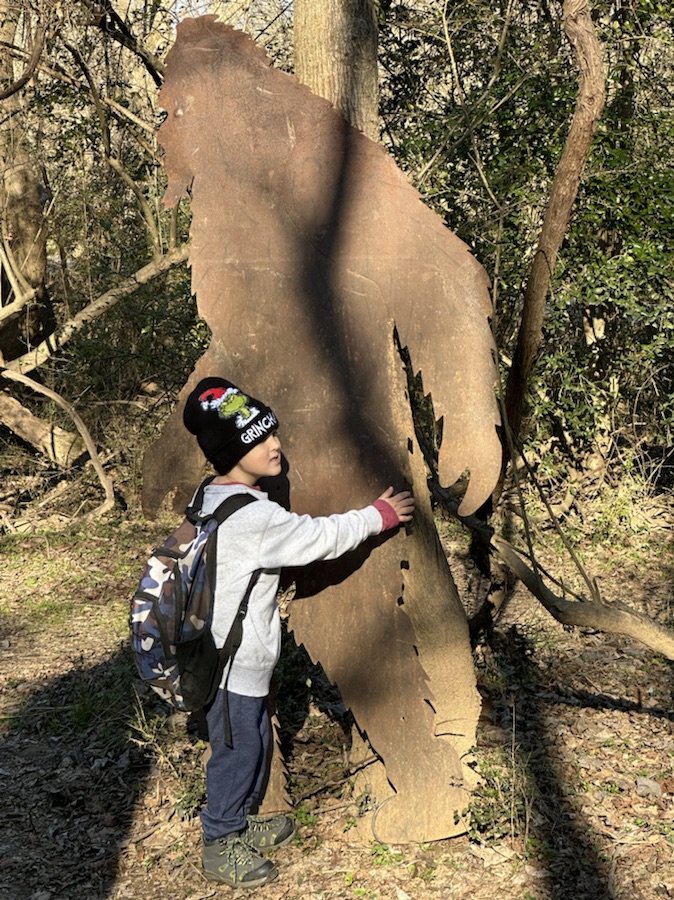
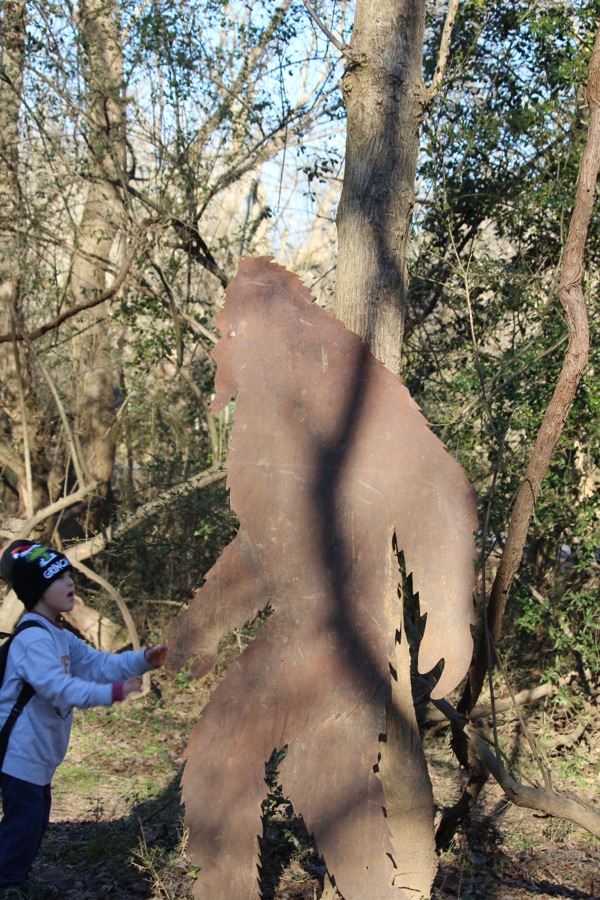
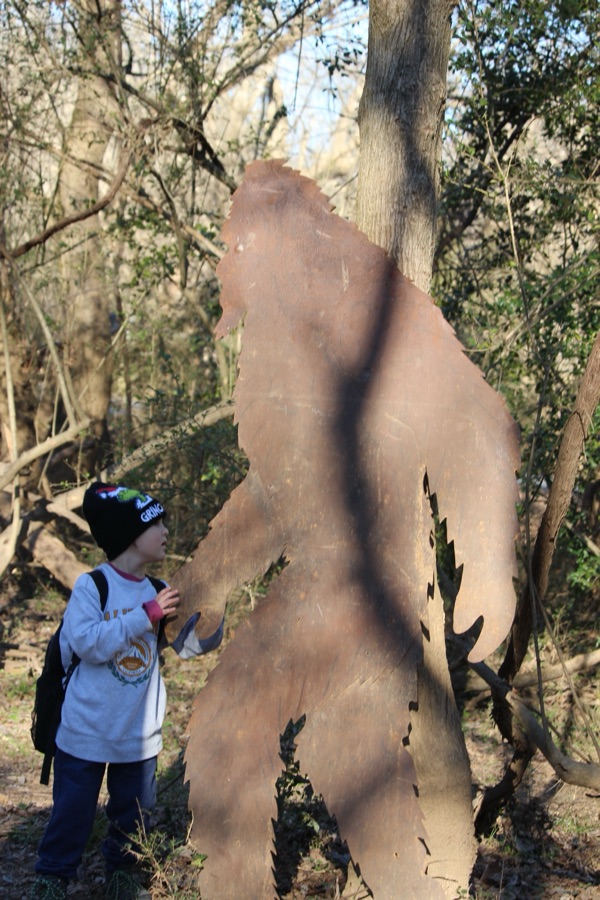
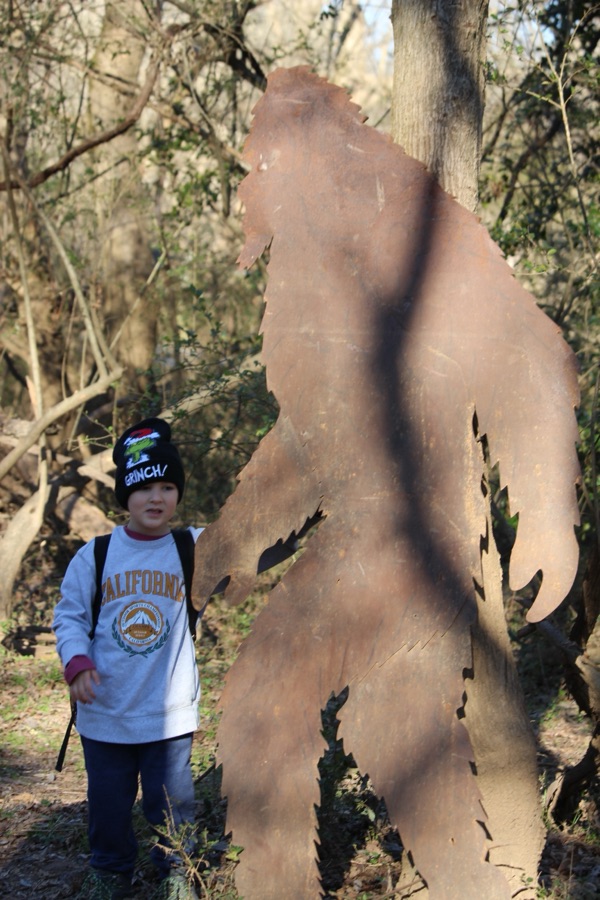
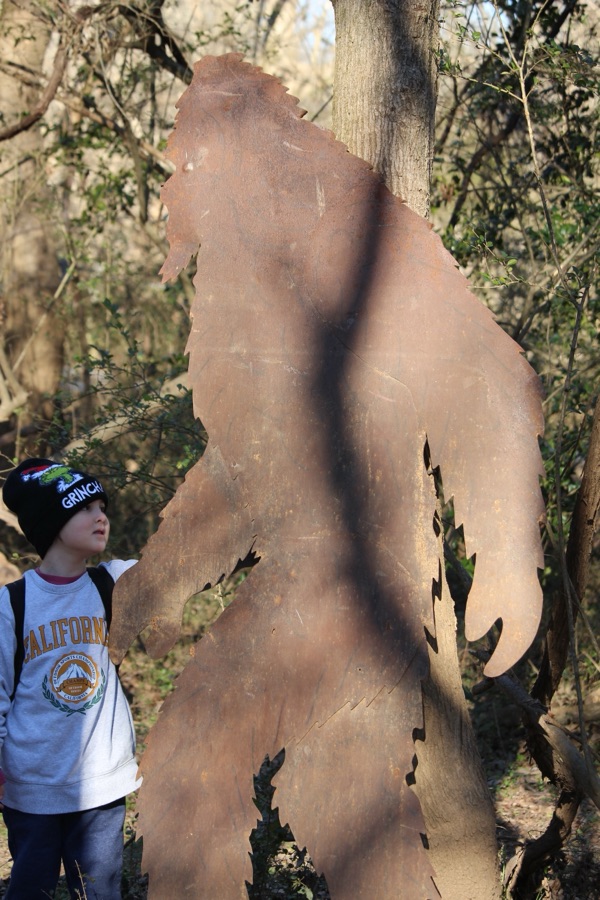
This (PPAC)of Bigfoot ( also known as Sasquatch) is located on the Disc Golf Trail at Goat Island Park and Greenway in Cramerton, North Carolina. This is the first time Coleman and I hiked this trail since Hurricane Helene. After the flood damage to the trail in the aftermath of Hurricane Helene; the trail was blocked off prohibiting access temporarily until repairs could be completed. We did not recall seeing Sasquatch previously. Coleman was fascinated by the Bigfoot and had to check it out.
America’s longest living President passed away yesterday, December 29, 2024, at the age of 100 in Plains, Georgia.
Former U.S. President Jimmy Carter Credit: 2014 LBJ Library
Former President Jimmy Carter was born James Earl Carter, Jr in Plains, Georgia on October 1, 1924. He served as our 39th President from 1977 to 1981. He was a distinguished Naval Officer, author and humanitarian. He along with his wife, Rosalyn, founded the Carter Center. He was involved in efforts to resolve conflict, promote democracy, protect human rights, and prevent disease and other afflictions. For many years the Carters volunteered one week a year for Habitat for Humanity.
President Jimmy Carter’s death comes just two years after his wife’s, former First Lady Rosalyn Carter, death. He went into Hospice care in February of 2023.
Jimmy Carter was a true humanitarian, working continuously to seek to prevent and resolve conflicts, enhancing freedom and democracy and ensuring to improve health. He was awarded the Noble Peace Prize in 2002 for his humanitarian efforts.
His son, Chip Carter made a statement “My father was a hero, not only to me but to everyone who believes in peace, human rights, and unselfish love,” which I am in total agreement. He was a selfless man who tirelessly worked to improve life around the world, always seeking peace, demonstrating his unselfish love.
God Bless. May your days be filled with joy, peace, and love throughout this week and into the coming New Year. Thank you for visiting and sharing your time and thoughts with me. I appreciate y’all very much.
Bestie is a person’s best friend. I had friends growing up, but I do not recall one being a bestie. I know, as an adult, have had friends that come and go, but none of them have ever been close enough to be called a bestie. Nowadays, I spend practically all my time with my grandson, Coleman. He is my hiking buddy. He and I are closer than he is with his own mom. The reason for that is most likely due to the fact that we spend the most time together as his mom works a lot to provide a place for us to live. So in a sense he is my bestie. He is not a confident, but he is someone I love and care very deeply about; someone I’d give my life to protect.
Coleman playing at CB Huss Recreation Complex.
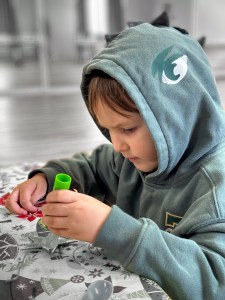
Coleman colouring an ornament at the Town of Cramerton Community Center.
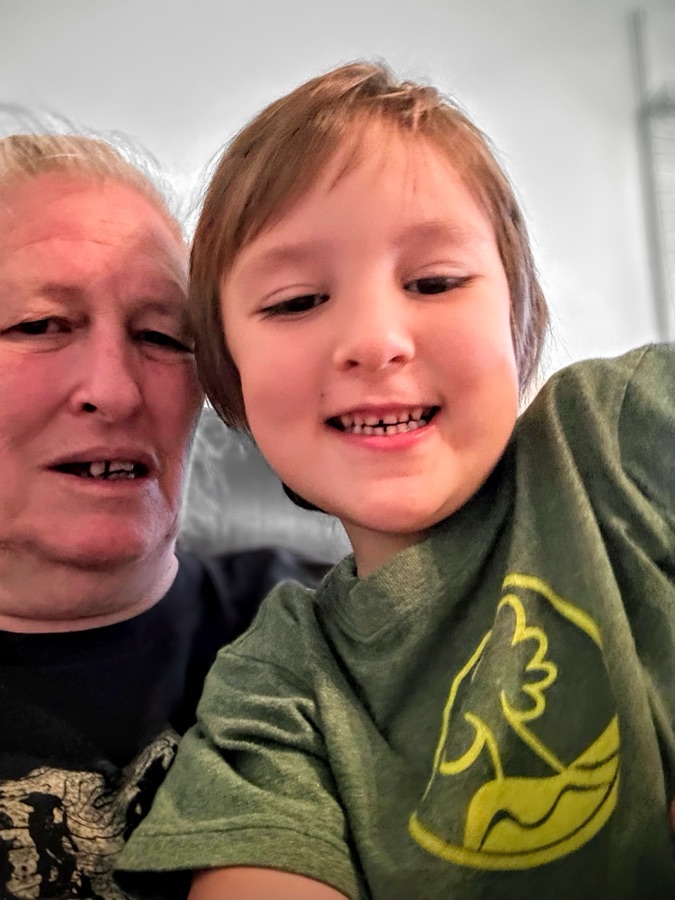
Coleman and myself affectionately loving each other.
These Goats all dressed up for Christmas are located at the entrance to Goat Island Park and Greenway in Cramerton, North Carolina. Coleman spotted the Goats when we first approached the entrance to the Greenway; one was standing and was laying down on it’s side. We stood it back upright, then Coleman wanted a picture. Thus, the photo you see here.
Riverbanks Zoo and Garden Columbia, South Carolina
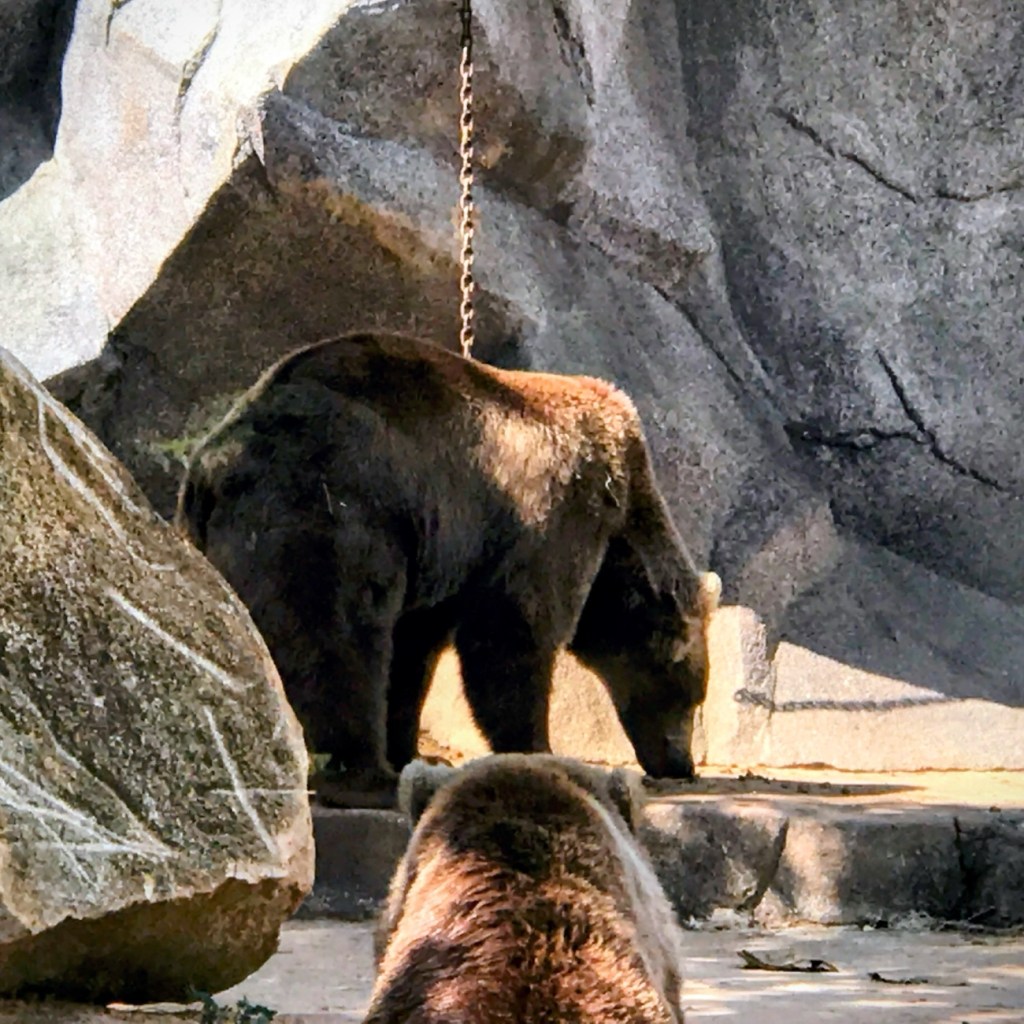
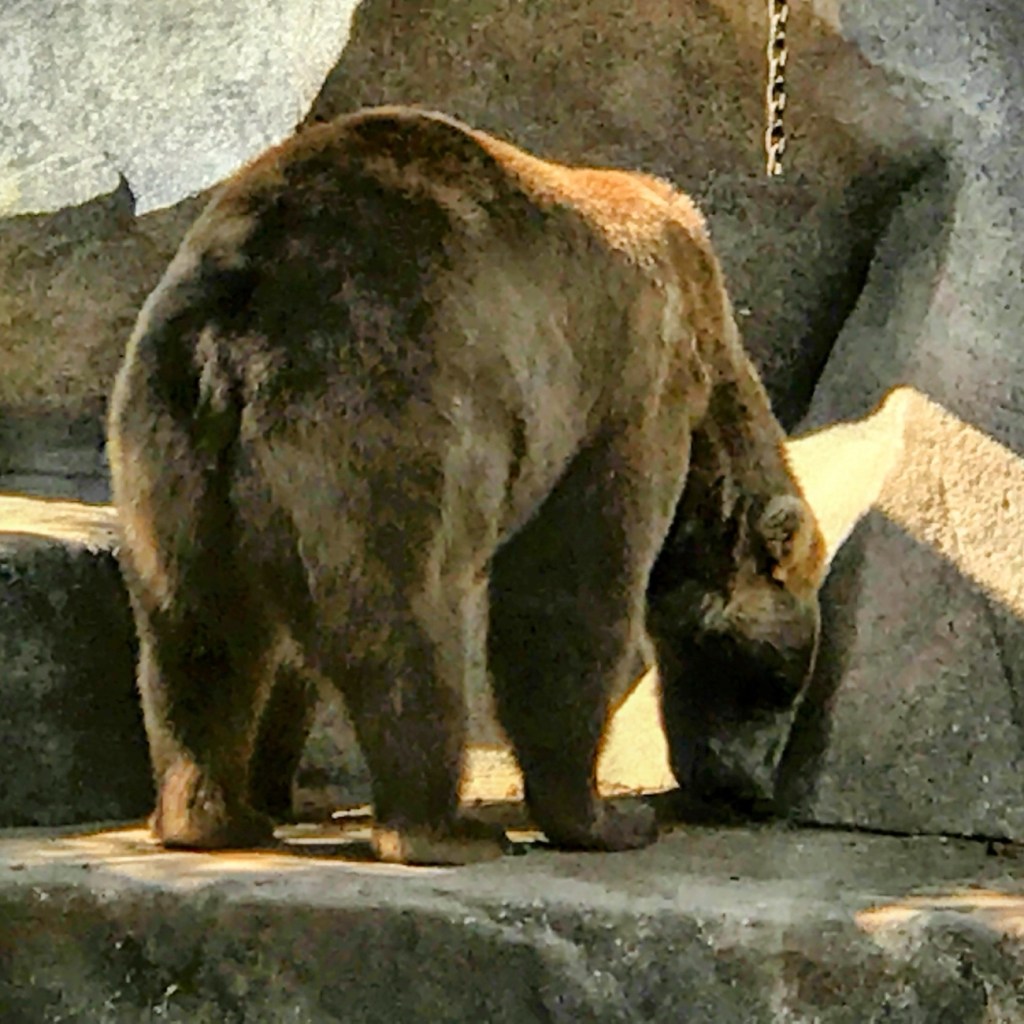
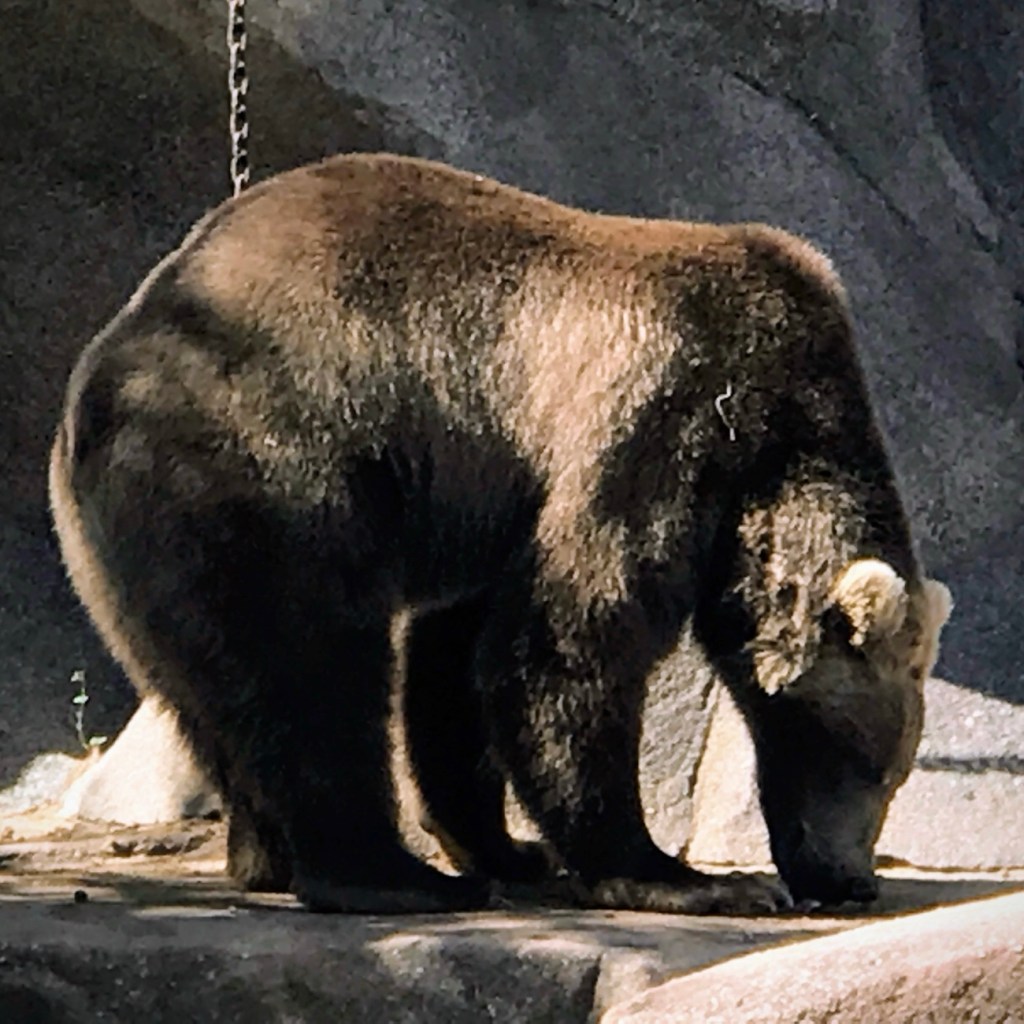
I visited the Riverbanks Zoo and Garden in Columbia, South Carolina with my daughter, Trisha and granddaughter, Alona back in August of 2017 [Seven (7) years ago]. We were able to enjoy the various zoo animals and the entertaining antics of Sundance, the Sunshine Bear.
Sadly, Sundance passed away on April 30, 2022 due to declining health. He came to the Riverbanks Zoo along with his brother, Butch, at the young age of only nine (9) months old. Sundance had a gentle disposition, kind eyes, and loved to interact with his zookeepers. He was known as the Sunshine Bear, always bringing a bit of sunshine to those who came to see him.
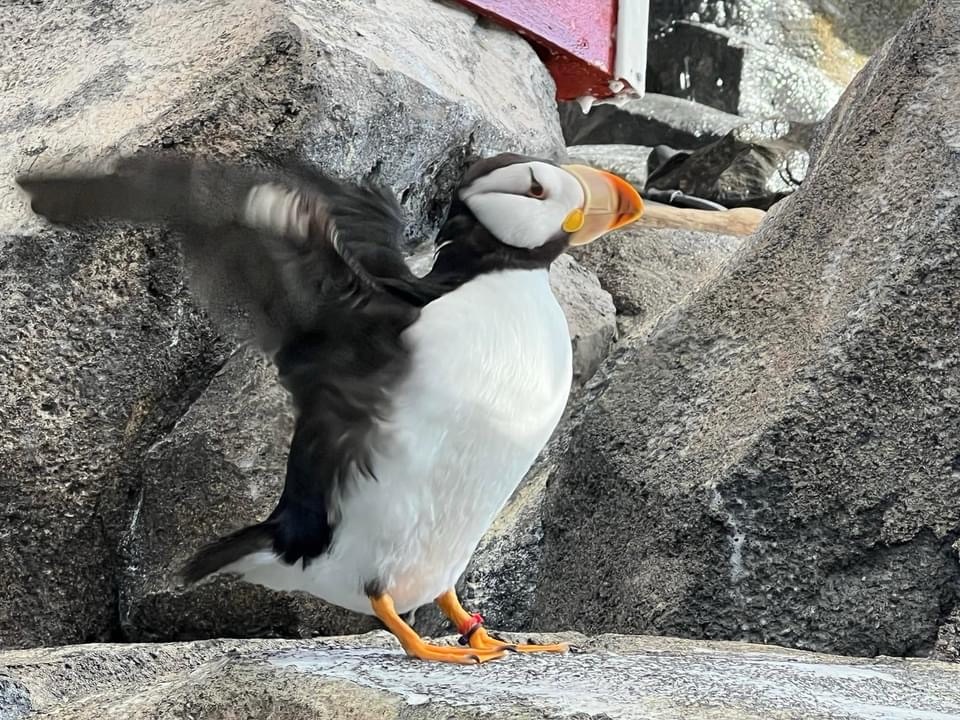
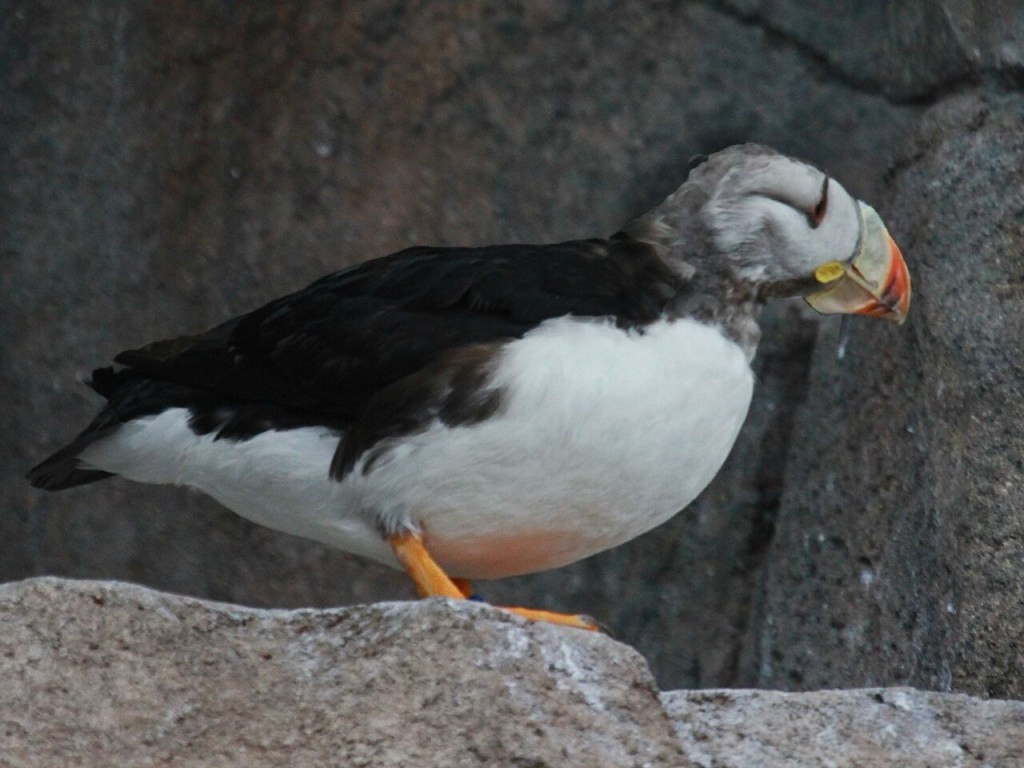
The Horned Puffins are similar in appearance to the Atlantic Puffins and its closest relative of the North Atlantic. It differs, however, by a “horn” of black skin located above the eye, present in adult birds.
The Horned Puffin is an auk found in the North Pacific Ocean, including the coasts of Alaska, Siberia, and British Columbia. [The puffin in the first picture was taken off the coast of Alaska by my cousin during their bucket list vacation.] It is a pelagic seabird that feeds primarily by diving for fish. It nests in colonies, often with other auks.
The height of the adult puffin is approximately 20 cm (8 in), the weight is approximately 500 g (18 oz), and the wingspan is approximately 58 cm (23 in). Horned Puffins are monomorphic; in other words both the male and female exhibits the same plumage coloration.
Sexually mature puffins have a small fleshy black “horn” extending upwards from the eye, from which the animal derives its common name; the horned puffin. The Horned Puffin’s bill is red at the tip and yellow at the base. It is also larger than those of other puffin species. The puffin’s bill has fluorescent properties which it uses to attract a partner. Puffins can see ultraviolet rays, allowing them to spot luminescence on the bills of other puffins during the courtship display.
Horned puffins live among steep rocky slopes and cliffs. They prefer rock crevices or shelters under piles of rock for home and shelter which differs from other puffins that dig burrows for their shelters.
To achieve flight, horned puffins either jump off a cliff to gain momentum, or races across the water to reaching the speed required for takeoff. They fly compactly and quickly, 10 to 30 meters (33 to 98 ft)above sea level. The wing beats are constant, rapid and regular.
When the puffins are on land they walk upright gripping rock surfaces with its claws, and climbs cliffs with ease. They do spend half of their time on water, paddling along the surface with their feet. They are extremely agile underwater. Their powerful wings serve as oars and their webbed feet work as a rudder. Their plumage, like most seabirds, are waterproof. This feature allows them to dive and prevents heat loss.
The Horned Puffins feed on a diet of fish, small invertebrates, crustaceans, polychaete worms and squid. They are also known to feed on small algae and marine plants.
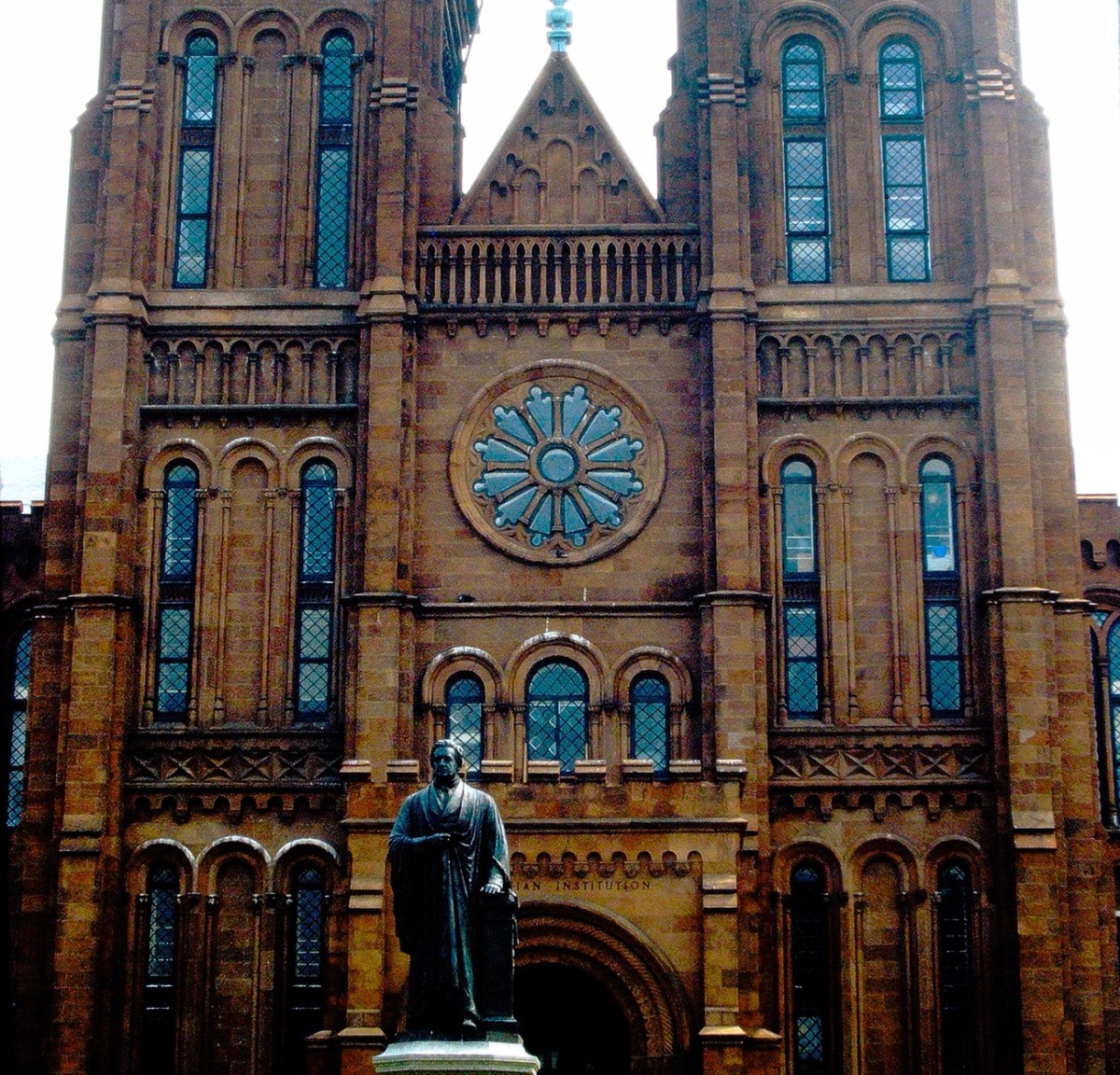
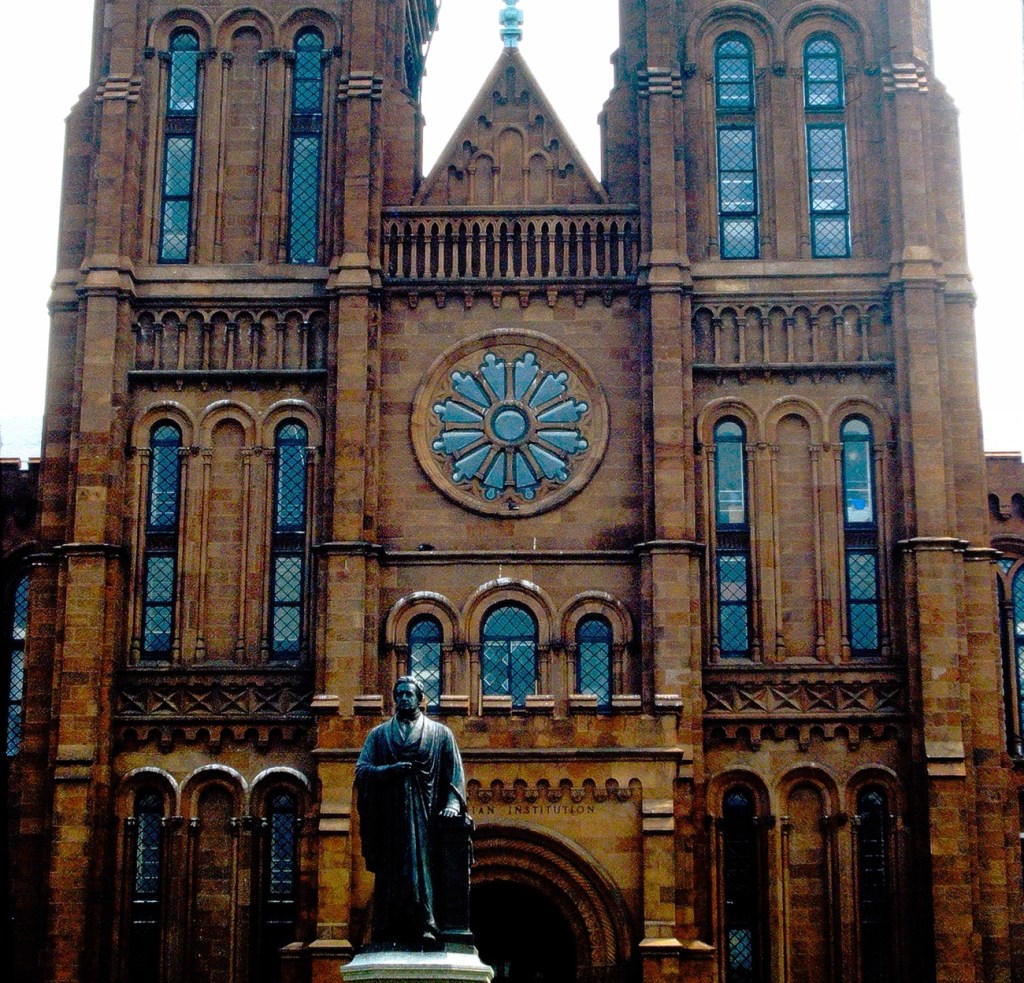
This was one of the many stops on my parents cross country vacation during the summer of 1985. They visited The Smithsonian Institution Building on their Washington D. C. Tour.
The Smithsonian Institution Building is Aka Smithsonian Castle, The Castle
The Castle was the first Smithsonian Building. It was designed by architect James Renwick Jr. and built between 1847 and 1855 to house the Smithsonian Institution, which was established by Congress in 1846. It was designed in the Norman Revival style, which combines late Romanesque and early Gothic motifs. It is made up of Seneca red sandstone from the Seneca Quarry in Montgomery County, Maryland.
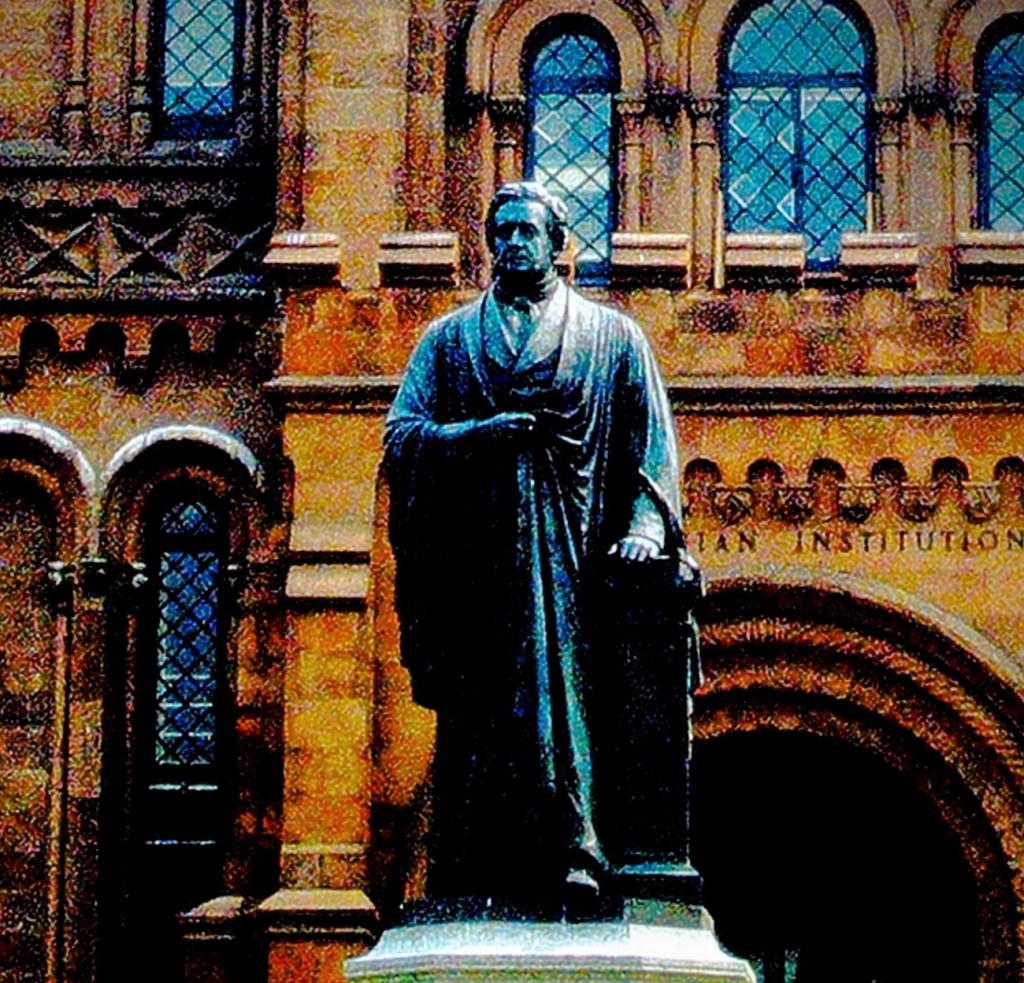
Close Up of Joseph Henry Statue
The Joseph Henry Statue is located at the entrance of the Smithsonian Institution Building, or “Castle.” Joseph Henry was the first secretary of the Smithsonian Institution from 1846 to 1878. The bronze statue of him was commissioned in 1880 and installed in 1883. At its installation it faced the Smithsonian Building (The Castle.) In 1965, the bronze statue was turned to face the National Mall.
Peafowls is the common name for two bird species of the genus Pavo and one species of the closely related genus Afropavo of the family Phasianidae (pheasants and their allies.) Phasianidae includes male peacocks, female peahens, and their young which are called peachicks.
It is the male Peafowls which are referred to as Peacocks. The males are the ones who have the vibrant blue and green coloring, long tails and dramatic displaying to attract mates. Mating season occurs between March and September.
Peacocks are polygamous birds that mate with multiple females during the mating season and have multiple partners throughout the breeding season. After mating season, the Male Peacocks shed their tail feathers and grow new ones before the next breeding season.
Location: Dairy Barn Entrance; Anne Springs Close Greenway; Fort Mill, South Carolina, USA
God Bless. Enjoy the beautiful outdoors. Hope it’s not too hot for all y’all. Thank you for sharing your time and thoughts with me. I appreciate y’all very much.
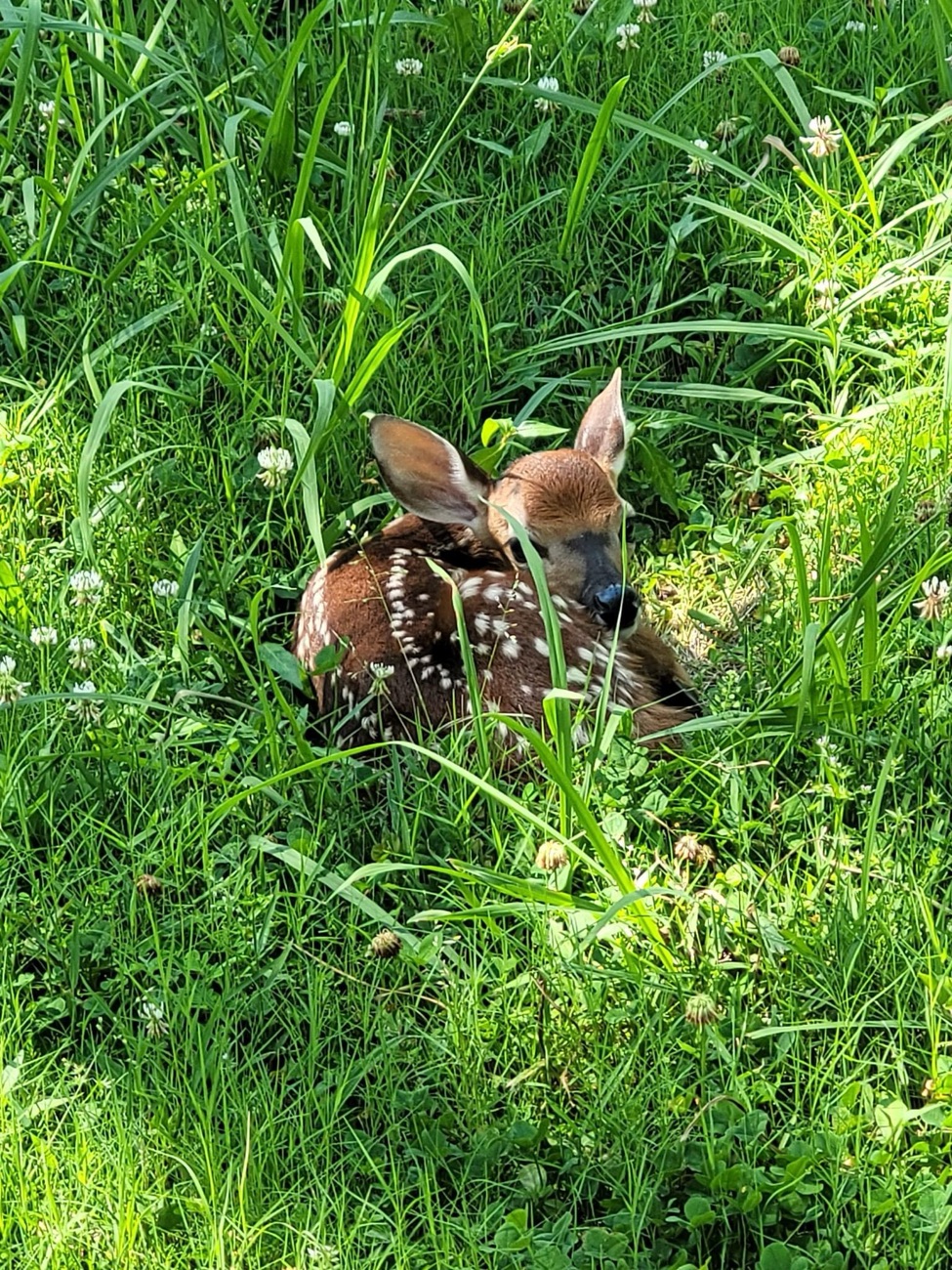
Cool cats like to keep cool by hiding in the underbrush in shady areas. Can you spot me?
Maybe if I move a little bit you’ll be able to see me. However, I would appreciate it if you keep the dog away from me. I prefer to stay where I am at and not get in an entanglement.
Enjoy your day! I’m just gonna stay here and relax for a while longer.
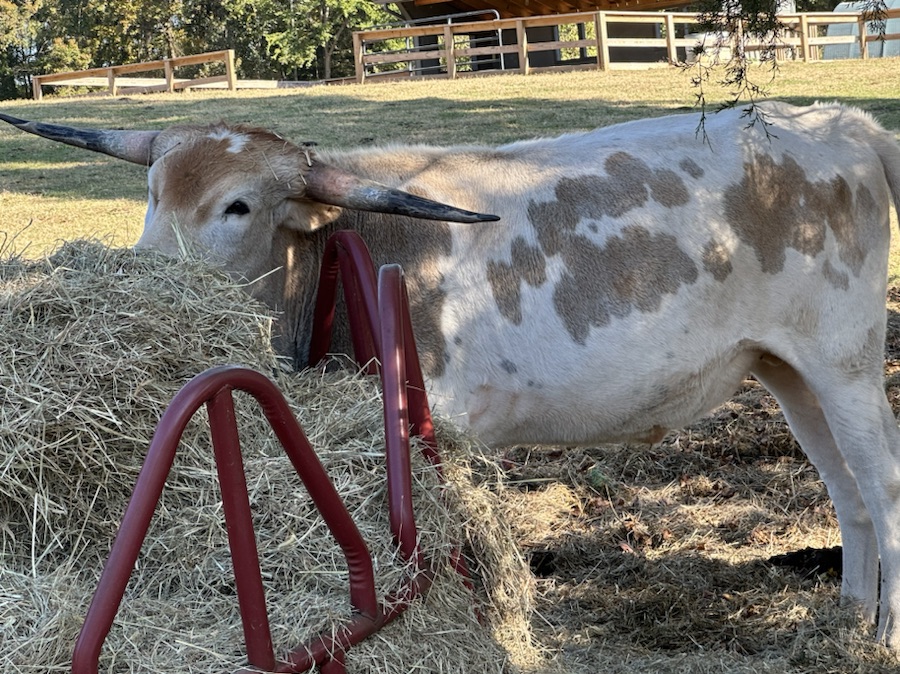
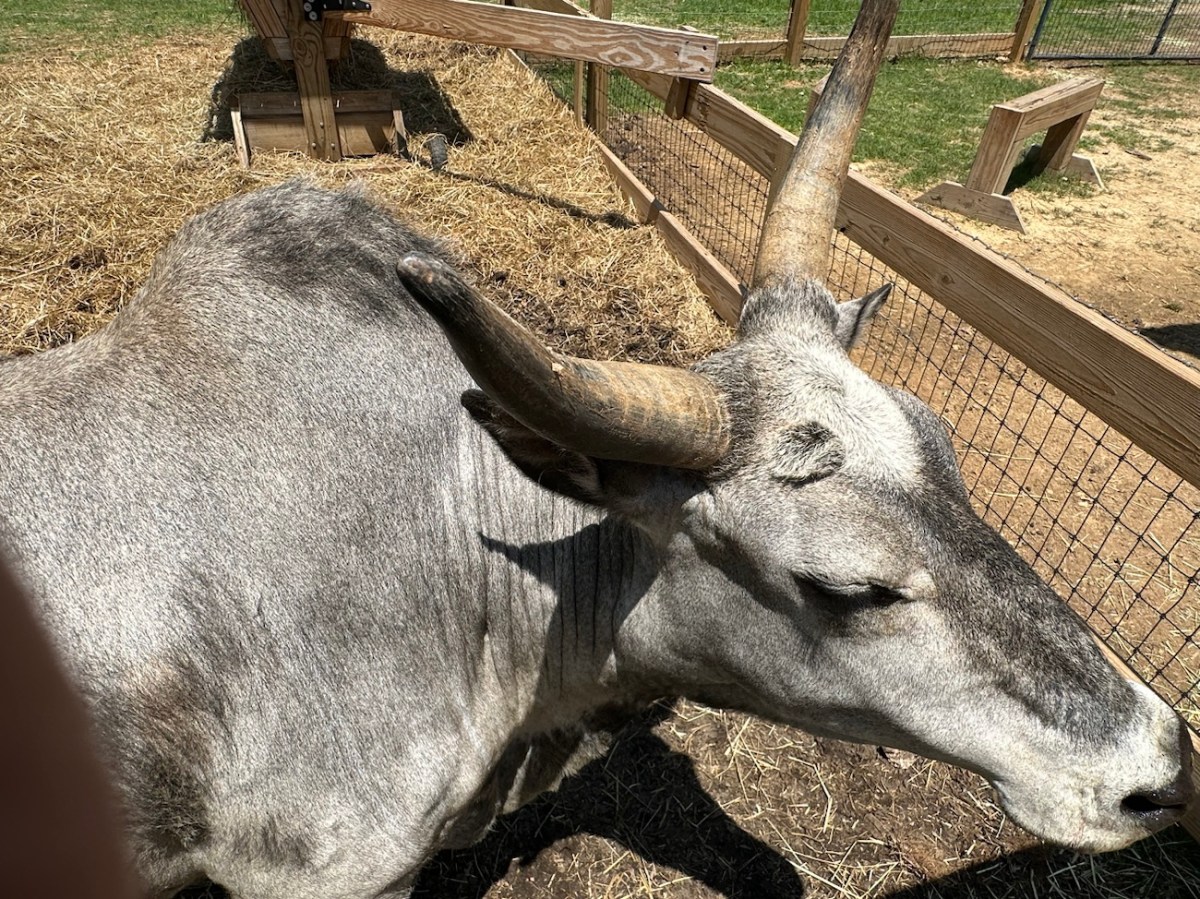
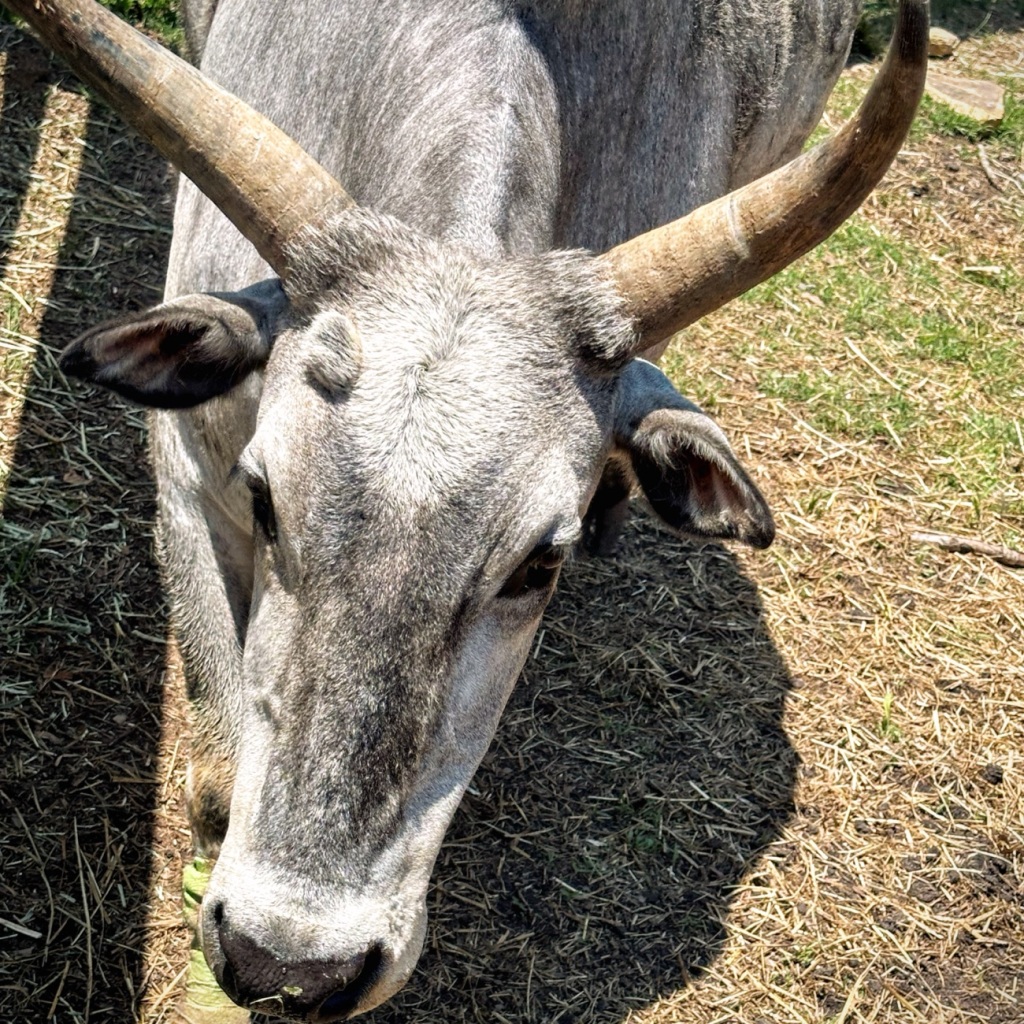
The Zebu (Bos indicus or Bos taurus indicus), sometimes known in the plural as indicine cattle, Camel cow or humped cattle, is a species or subspecies of domestic cattle originating in South Asia.
Zebu cattle are well known for being resistant to really high temperatures with high humidity concentrations (like we have here in the Carolinas.) They also have a greater resistance to parasites such as ticks, and have maternal behavior that allows them to take care of their offspring from possible predators, however, they are also docile if they are frequently handled.
Brahman are a breed of Zebu. This breed of Zebu is developed in the United States from cattle imported from India and Brazil. There are two distinct types of Brahman cattle; the Red Brahman and the Grey Brahman.
South Carolina has experience a burgeoning of Cicadas due to the simultaneous emergence of two large broods, Brood XIX and Brood XIII. Brood XIX is the brood that has infiltrated the Carolinas. The Brood XIX variety, also referred to as periodical cicadas, emerge every thirteen (13) years across the Midwest and the Southeast. This is said to be a once-in-a-decade event where you have this many hatched.
Magicicada septendecim
The emergence began in April in the south and is expected to start in June in the north. The cicadas’ emergence caused a major commotion in South Carolina, with some residents calling the police to complain about the noise.
Pharaoh cicada or the 17-year locust
The loud sounding noise that people hear is caused by male cicadas singing to attract mates after spending more than a decade underground.
Cicada exoskeleton
If you do not wish to have cicadas burgeoning in your yard or in your garden, you can spray your trees and plants with some essential oils or other sprays that won’t harm the vegetation to detour them from coming into your yard. Cicadas hate the smells of peppermint, vinegar, and eucalyptus.
Colo was born in captivity at the Columbus Zoo and Aquarium and lived at the Zoo for her entire life. At the time of her death in 2017, she was the oldest known gorilla in the world living in captivity. She lived to the age of 60 years and 26 days.
She was named Colo after the Columbus Zoo.She was rejected at birth by her mother and was hand-raised by Zookeepers.
Interesting Fact:
Colo was a mother to three, a grandmother to 16, a great-grandmother to 12, and a great-great-grandmother to three.
My daughter and I visited Colo in April of 2012 when we visited cousins and the Columbus Zoo and Aquarium in Ohio during Easter vacation.
For this week I selected photos which were handed down to me by my maternal grandmother after my maternal grandfather passed. The last selection was one of my father’s photos I received after he passed.
I am so thankful for the many photos that I have received and will treasure them always. Each one tells a little piece of my families history.
Jeramiah Watson Family My Maternal Great Grandfather & Family (My Grandfather, Harvey Martin, is second from left)Family of Jeramiah Watson My Maternal Great Grandfather ( Pictured with his Second Wife and Children)Doyce Eileen Watson First Grade– 1938 Coshocton, Ohio School Class (My Mom’s Class Picture)John Thomas Waters ( My Paternal Grandfather) & Nornal Hule Waters ( My Father)
When Coleman and I visited The Farm On at The Schiele Museum on Tuesday Mike and Lucky were busy chomping away. It was feeding time and they were hungrily munching their food to their hearts (and belly’s) contentment.
I do not believe I would partake in their diet, however, they did appear to enjoy it themselves.
Hey, You Looking at Me?Maybe You’d Like a Frontal Snapshot?Or Perhaps I Should Come a Little Closer?Is This Close Enough? Let’s Make a Deal, I’ll Give You One More Shot … This is My Final Pose!
Describe an item you were incredibly attached to as a youth. What became of it?
The item I am most attached to from my youth is a stuffed monkey. Yes, I said a stuffed monkey. It is not just any ordinary stuffed monkey. It is a vintage red and white Mr. Bim The Monkey rubber face plush toy. I’ve had him since I was about five years old, (I really do still have him.)
The Mr. Bim The Monkey was a plush toy made to resemble a real chimpanzee from the 1947 children’s show Howdy Doody. (As a sign note, I still have a 45rpm with the Howdy Doody song.) In the 1950’s the Rushton Toys Co. produced a chimpanzee plush named Zippy Zip, which became popular with children. Mr. Bim Monkey stands roughly 18 inches tall. The majority of the 1960’s Mr. Bim the Monkey plush toys were black and yellow with red suspenders with a yellow banana in its right hand. The red suspenders had bells attached on them.
Above shows Coleman holding my Red and White Mr. Bim The Monkey. He is over fifty (50) years old. His suspenders have broken due to lots of love and play. His bells have long since vanished and he is a little dirty from lack of cleaning. However, he’s been a faithful companion throughout the years.
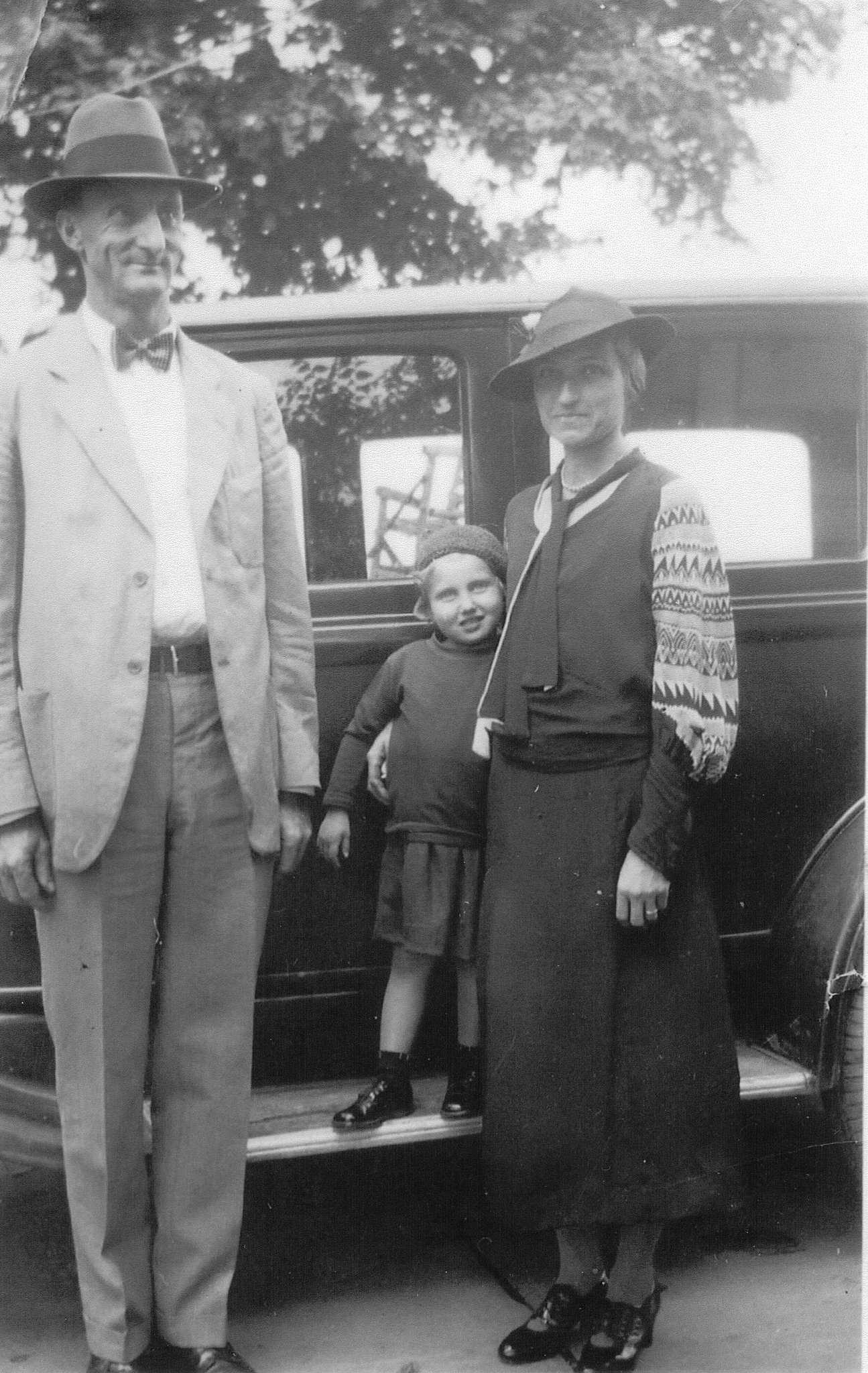
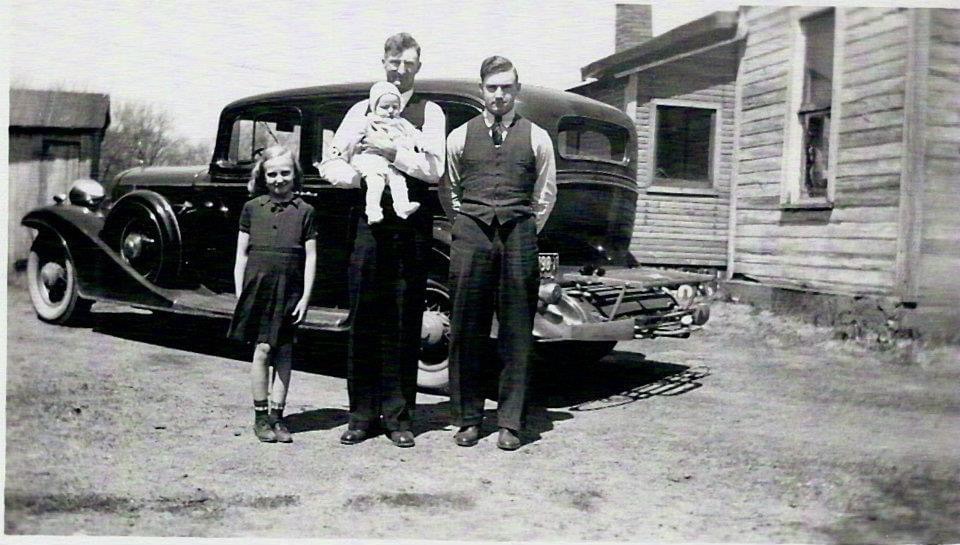
Harvey Martin, Doyce Eileen, and Myrtle Melvina Watson Coshocton, Ohio, USA
This is a portrait of my mom when she was about four (4) years old standing on the foot rail of a car between her mom and dad (my maternal grandparents) in front of their home on Water Street in Coshocton, Ohio.










































 Gfpacificbee’s Insights & photography