Growing up we made several vacation trips to the Carolinas from San Diego. On one of our trips to the Carolinas we made a stopover in Georgia to visit Franklin Delano Roosevelt’s (FDR) The Little White House in Warm Springs.
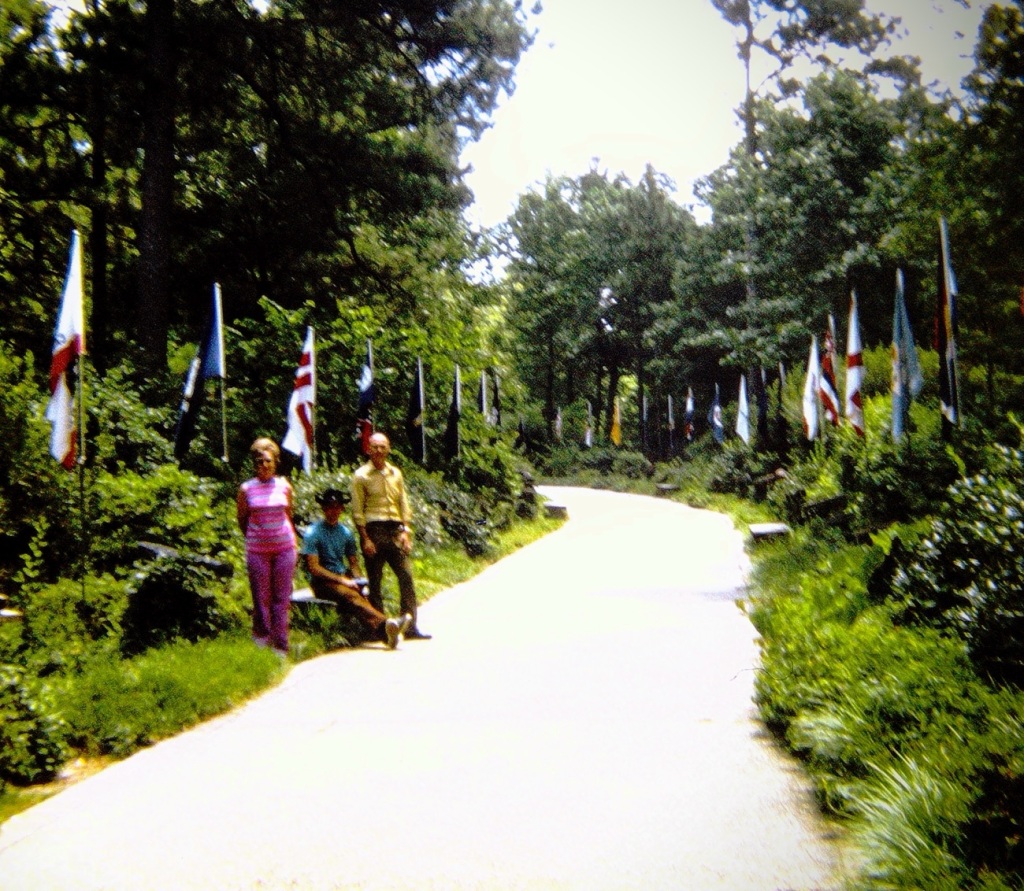
When you arrive at The Little White House Historic Site you walk along the Avenue of Flags ( also called the Walk of Flags and Stones.)
My parents and brother on the Walk of Flags and Stones
The Walk of Flags and Stones at the Little White House serves as a tribute to President Franklin Delano Roosevelt, the 32nd President of the United States. Each of the 50 states and Washington D.C. brought a native stone to be put on display at the site.
Moving Forward along through the Walk of Flags and Stones you may notice several stone benches in case you need to Pull Up a Seat and rest a spell. Another option, if you choose, would be to Sit on the bench just outside the front door of The Little White House.
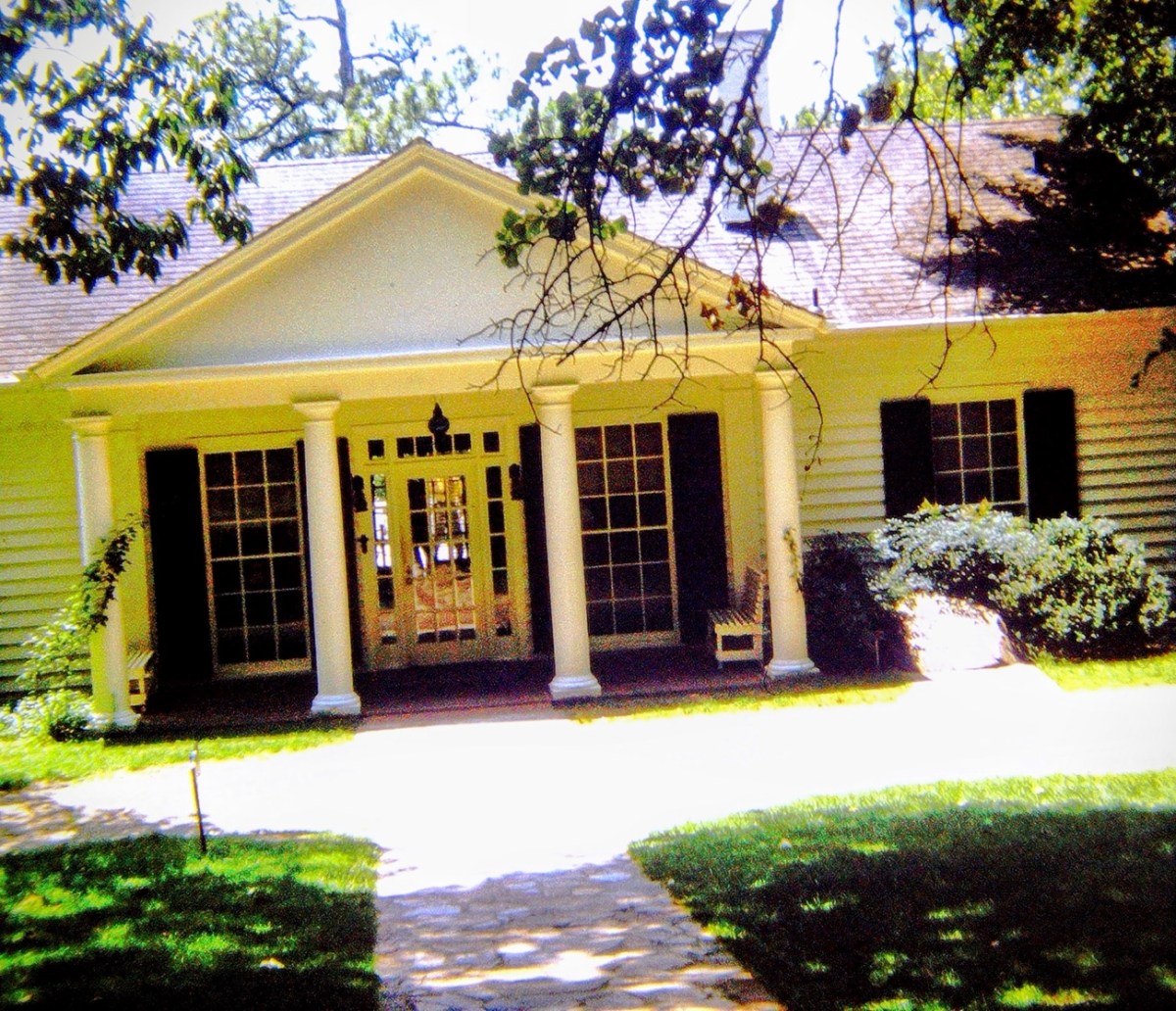
Franklin Delano Roosevelt’s (FDR’s) The Little White House
FDR’s The Little White House was his personal retreat and is located in the Historic District of Warm Springs, Georgia. It is a single-story, plain Colonial Revival constructed of Georgia pine.
Architect Toombs expanded the residence in 1932 with a detached garage/servants’ quarters, a guesthouse in 1933 and the Georgia Wilkins Cottage in 1934. The Cottage was later converted into a museum by Toombs in 1959.
The Little White House was originally approached from the cottage area of the rehabilitation center via an unpaved road; it was more secluded than it is today.
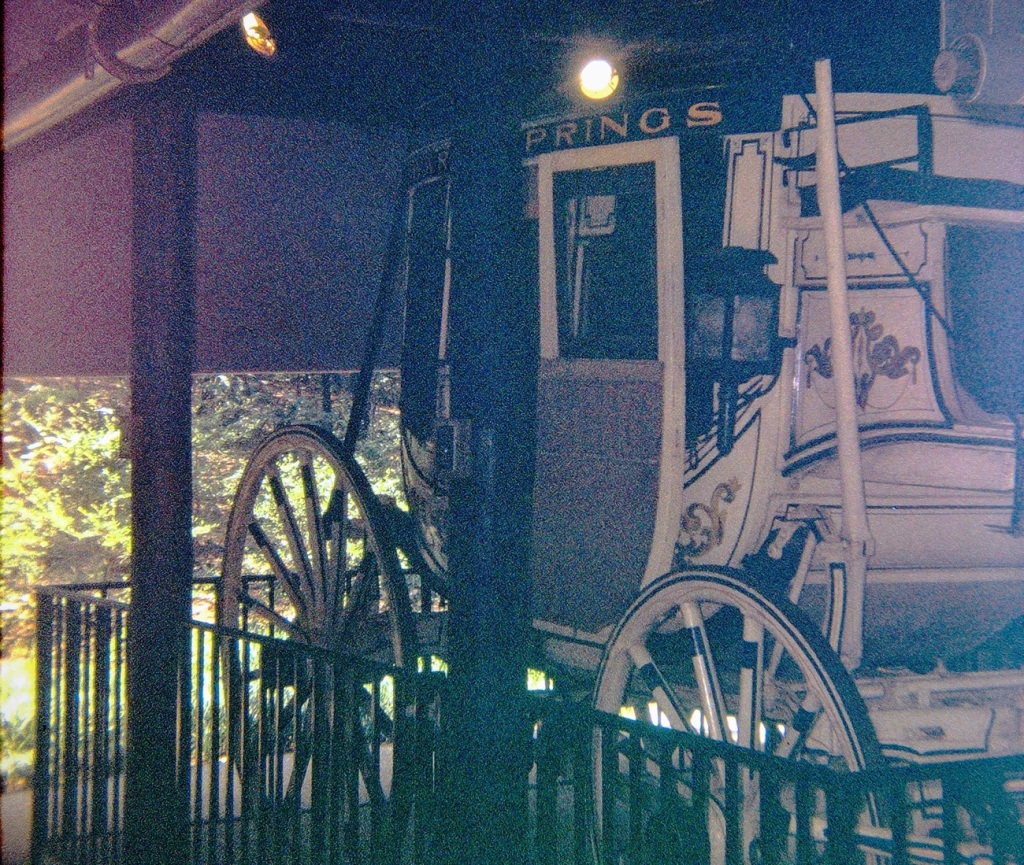
“Tally Ho” stage coach
While you’re touring The Little White House, you might as well took a look at some of FDR’s vehicles. One of those “vehicles” is the “Tally Ho” stage coach.
The “Tally Ho” stage coach came with the Warm Springs property. FDR and Eleanor dressed up as George and Martha Washington and rode in it for the parade to celebrate his election as NY Governor.
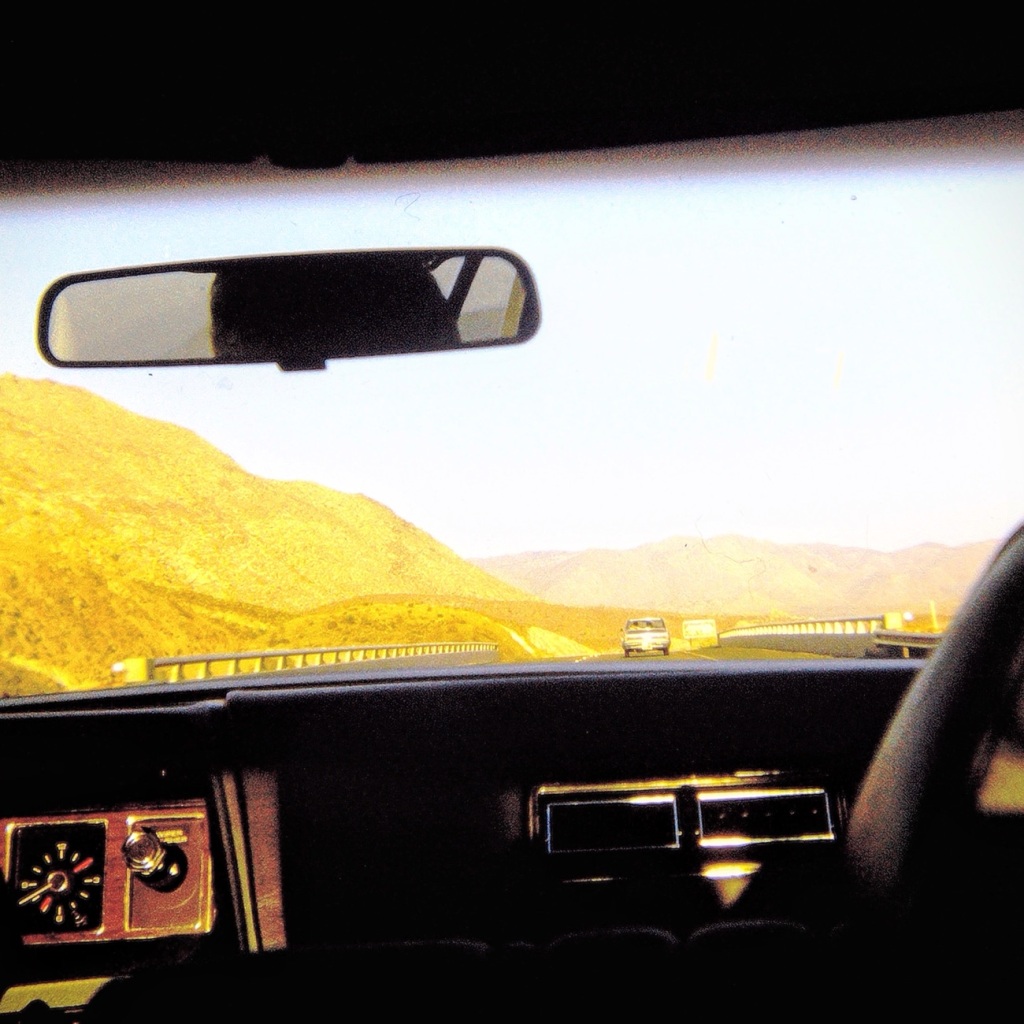
This long straight hilly 15-mile stretch of US 21 is the road that leads us to Great Falls, South Carolina coming out of Georgia. We would travel this road every three (3) to five (5) years to visit my dad’s parents and his brother and sister’s families. My dad grew up in Great Falls, but left when he joined the US Navy. It was only on these long summer trips that I was able to spend time with my dad’s family. Often when we came back to visit we would all go visit an attraction together on one of the days we were here.
Cee, I pray you’re better and home soon. In the meanwhile I’m continuing with the CWWC – Any Which Way in my Way until you are back well and able choose a theme. Anyone care to join me, let’s let Cee know we’re thinking and caring about her.
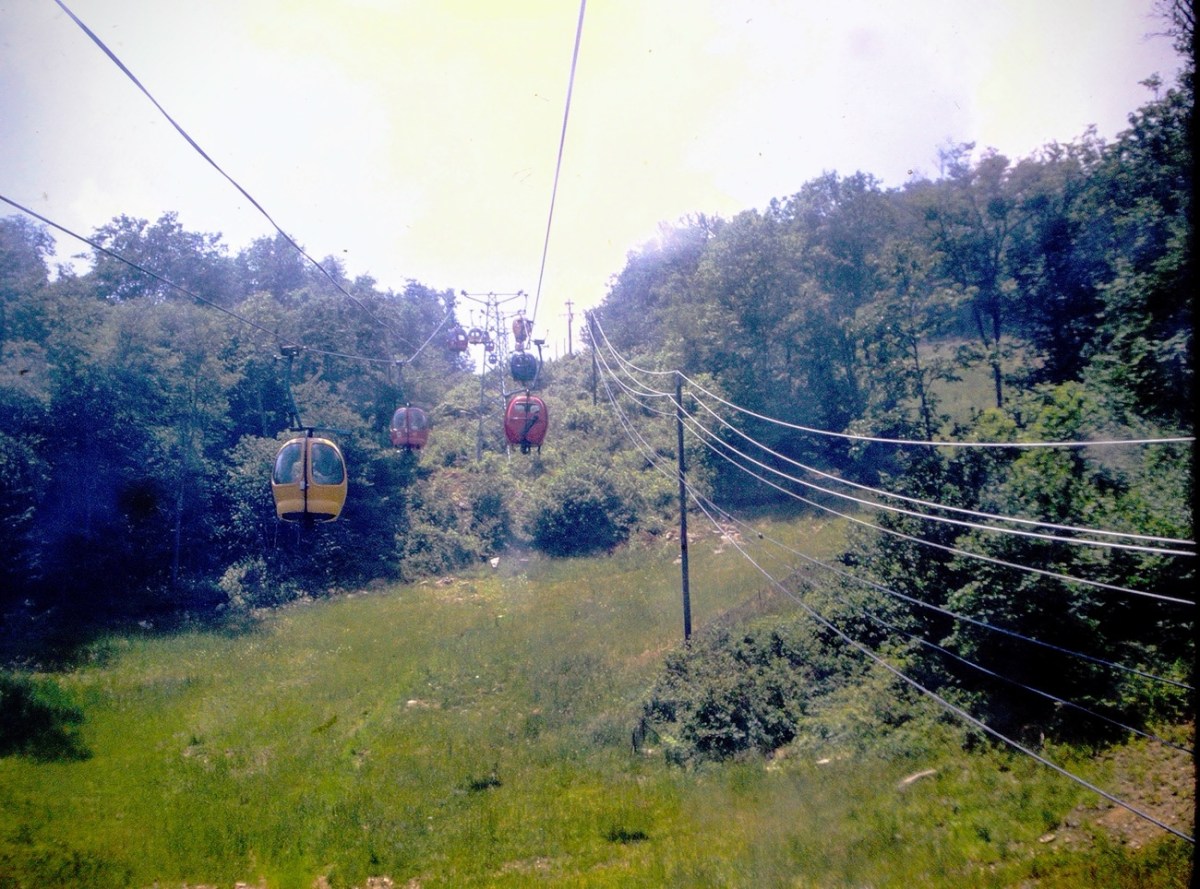
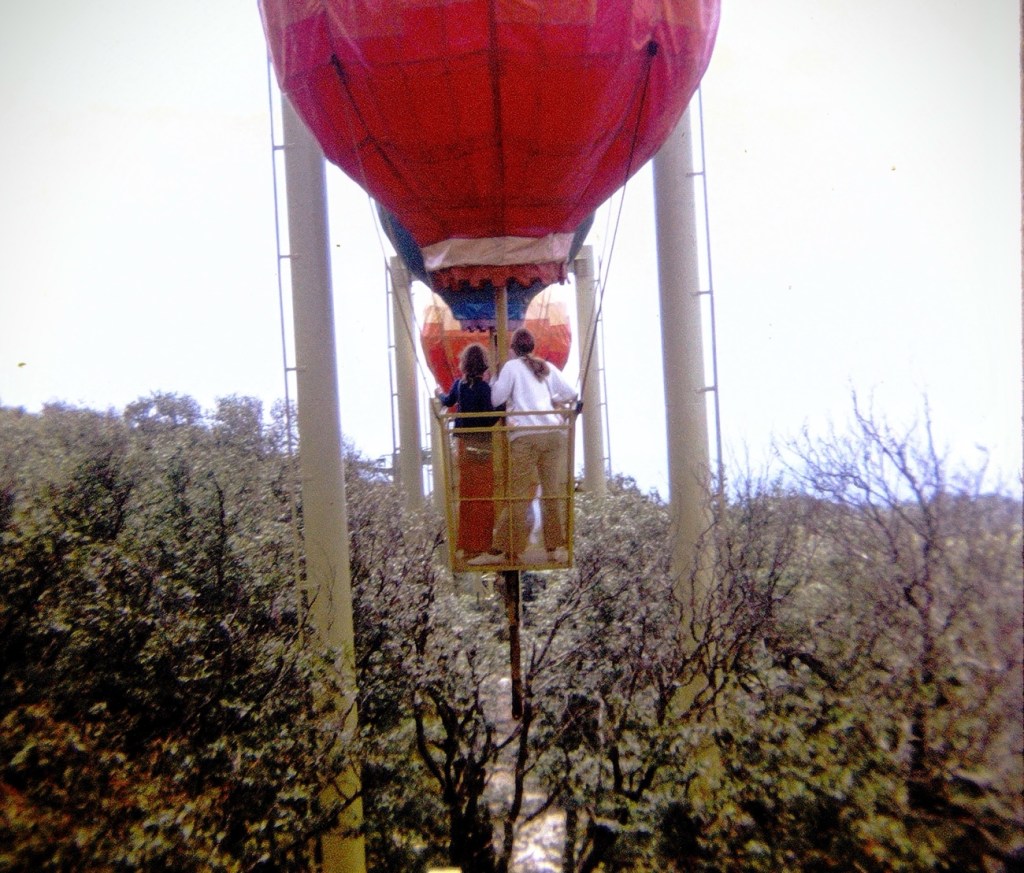
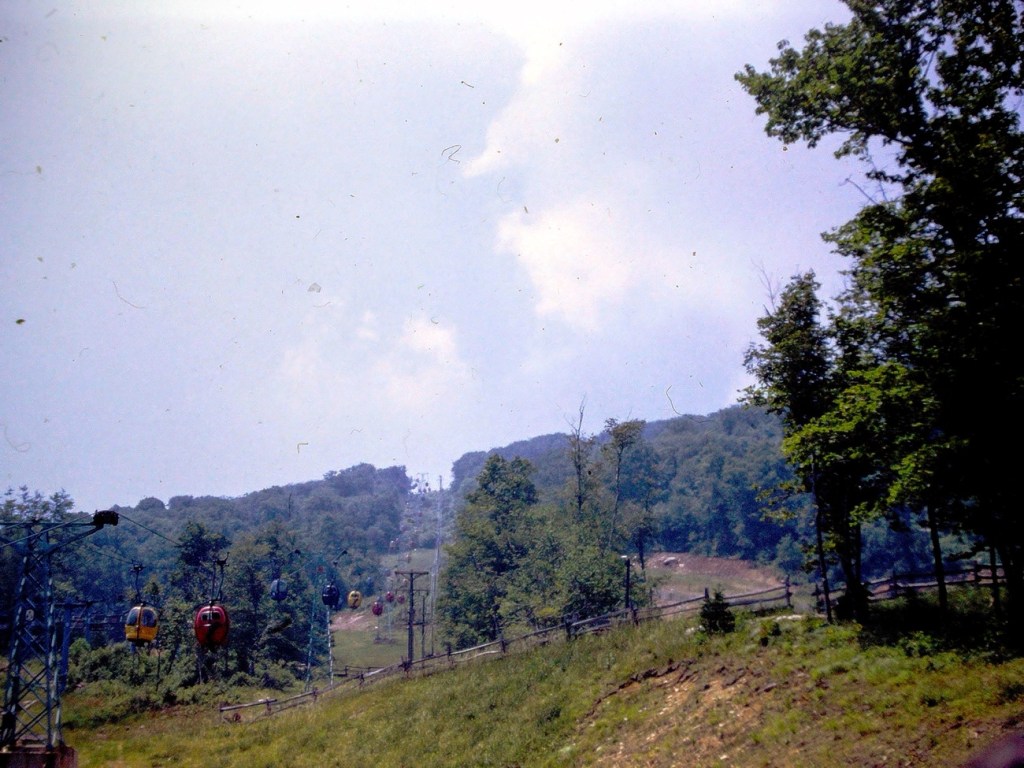
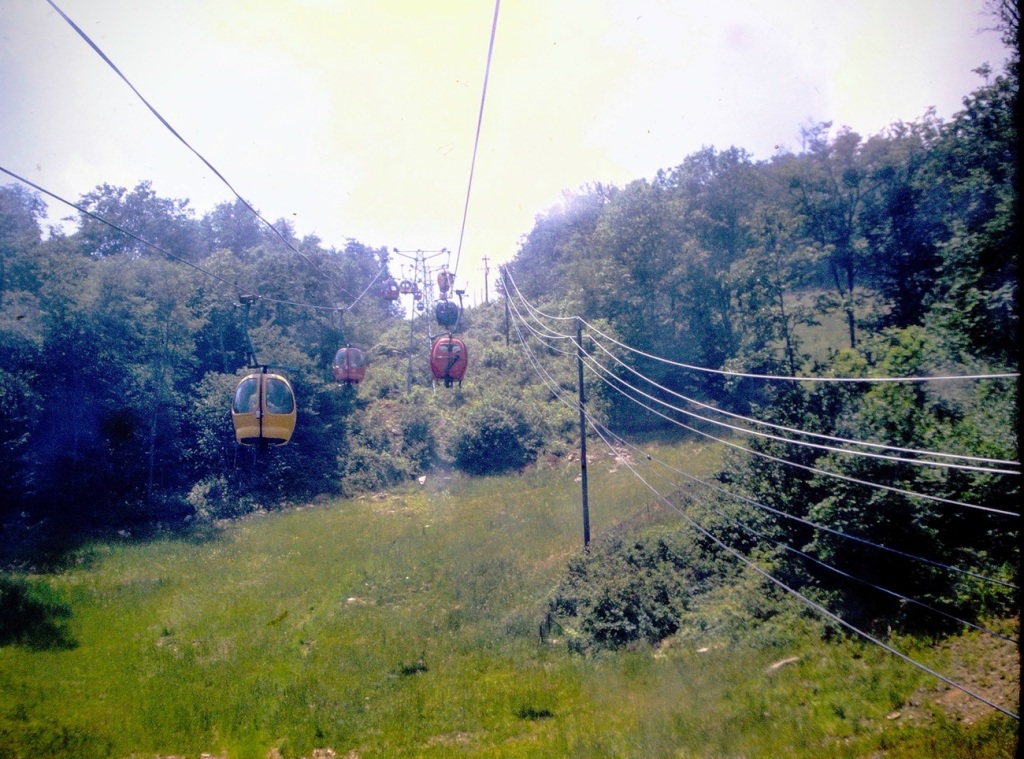
Back in the day there were three (3) ways you could choose from to get to Land of Oz. One could choose the Hot Air Balloon ride, the Gondola Lift, or a shuttle bus to reach the Land of Oz location in Beech Mountain.
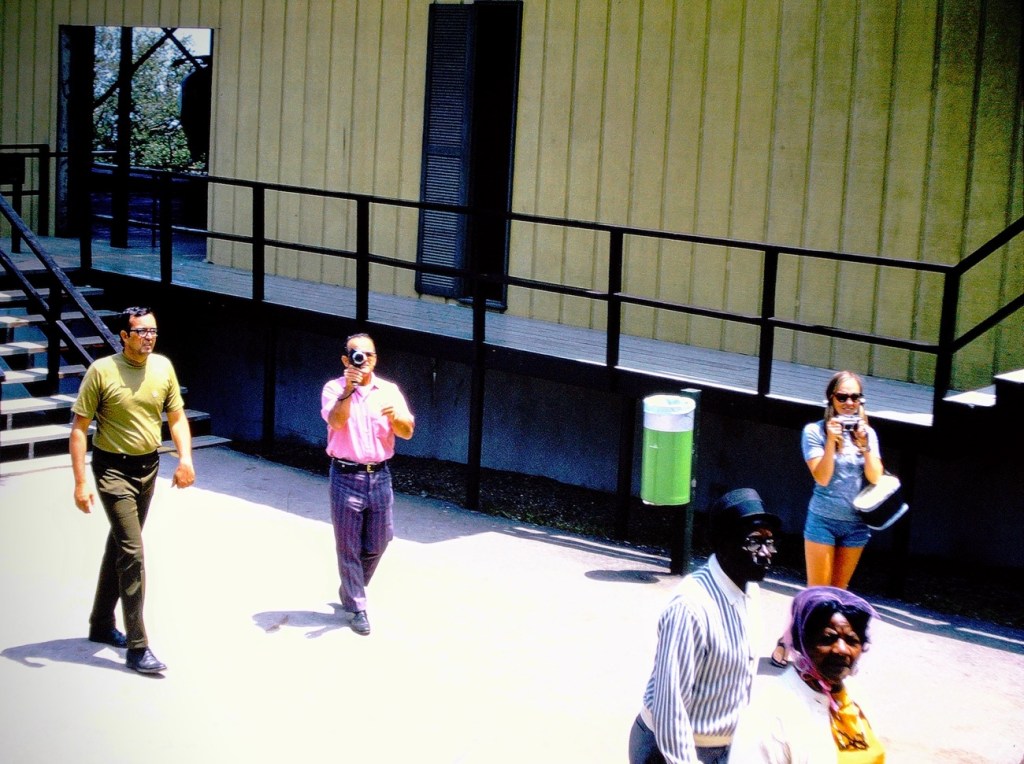
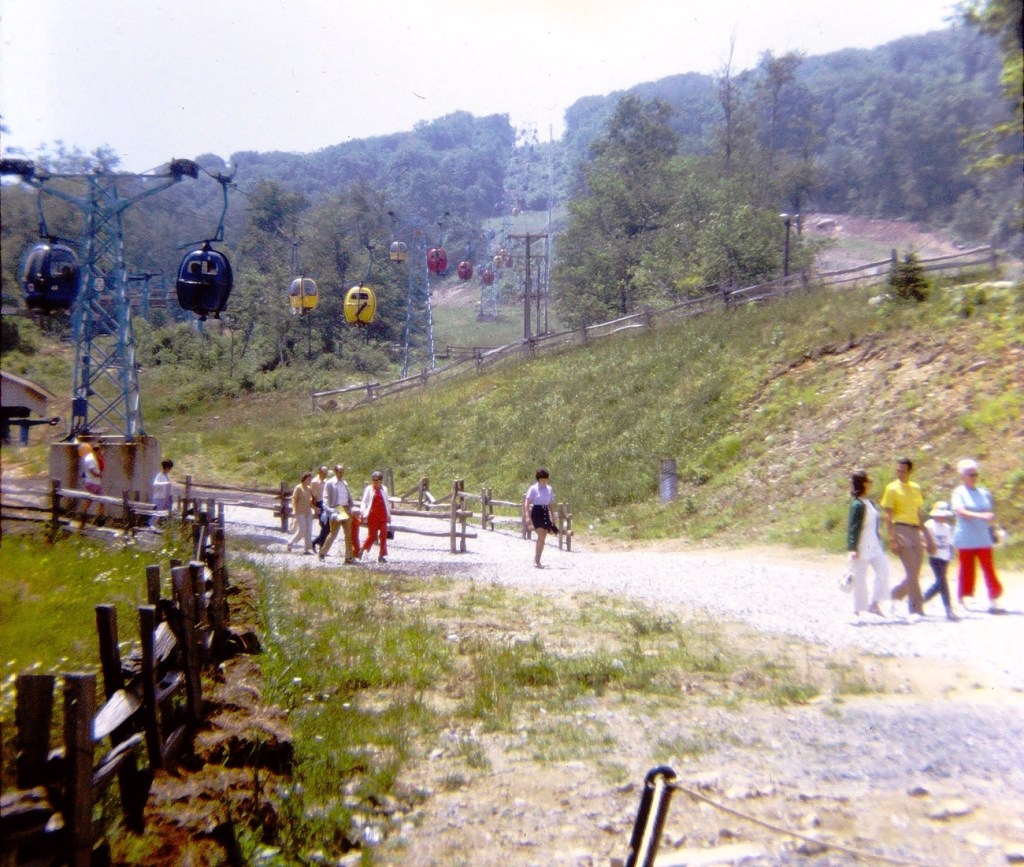
People milling about deciding which option they want to take to reach the Land of Oz.
The Hot Air Balloon ride up to the Land of Oz offers a different perspective, a different and unique experience and yet similar in approach to the Gondola Lift. Both the Hot Air Balloons and the Gondola Lift operate similar to a ski resorts ski lift would operate.
They are both aerial lifts that uses a continuous cable loop to transport passengers up a mountain. The cable is driven by a bullwheel at each end of the lift, which is usually connected to an electric motor or engine. The cable runs through sheaves at towers that support the cabins, or carriers, as they travel up the mountain. The cabins are attached to the cable by detachable grips that allow for secure boarding and exiting at slow speeds.
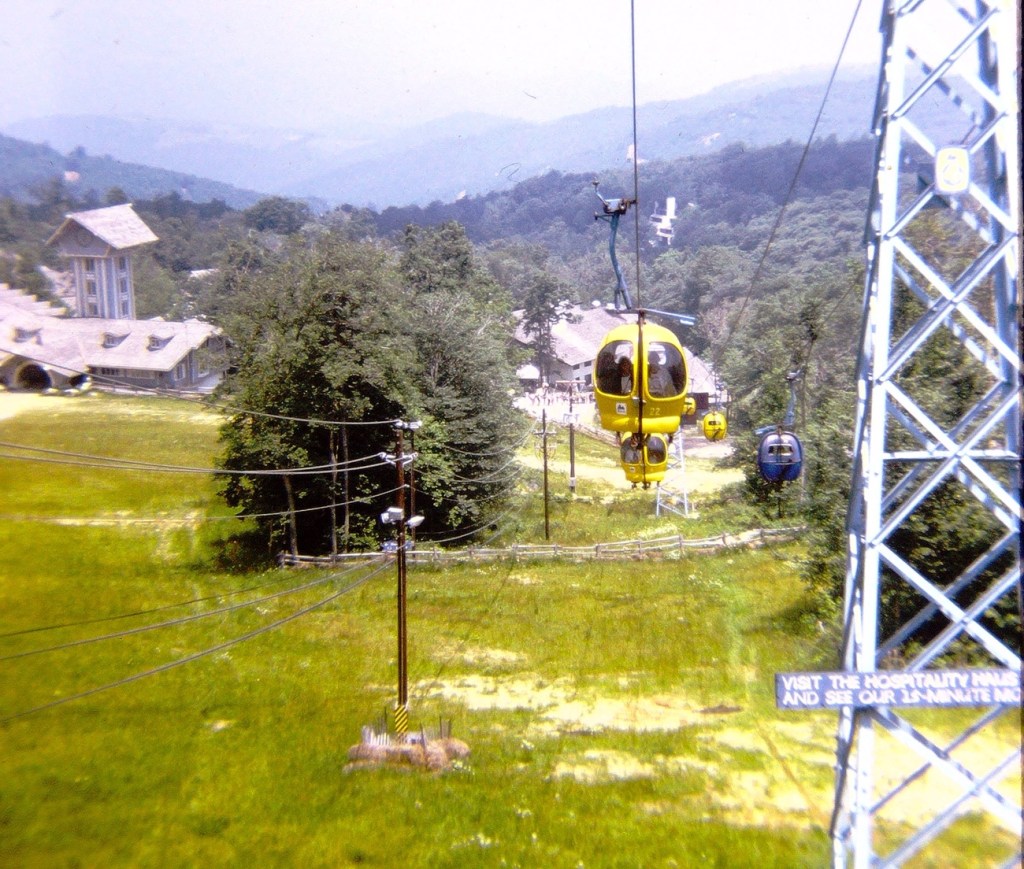
Having chosen our method of reaching the top of Beech Mountain for our Land of Oz adventure, we are delighted we are on our way up.
Up, up, up we go … look at our amazing climb through the air. It seems as if I chose to ride in a Hot Air Balloon while others in the family chose to ride in one of the Gondolas.
Visitors to the Land of Oz walking along the trail after exiting their chosen path.
The Gondolas continue throughout the day to carry visitors to the Land of Oz.
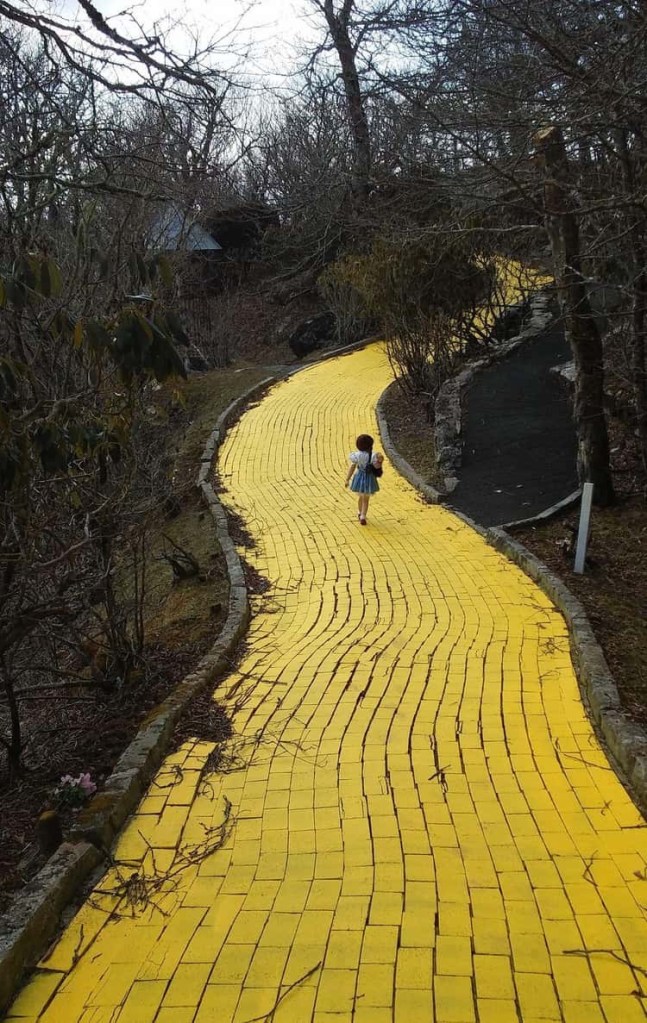
Once you’ve completed your ride, follow the Yellow Brick Road to the Emerald City and your adventure begins.
When your tiredness overwhelms you, take a breather from following the Yellow Brick Road and sit a spell and enjoy the show.
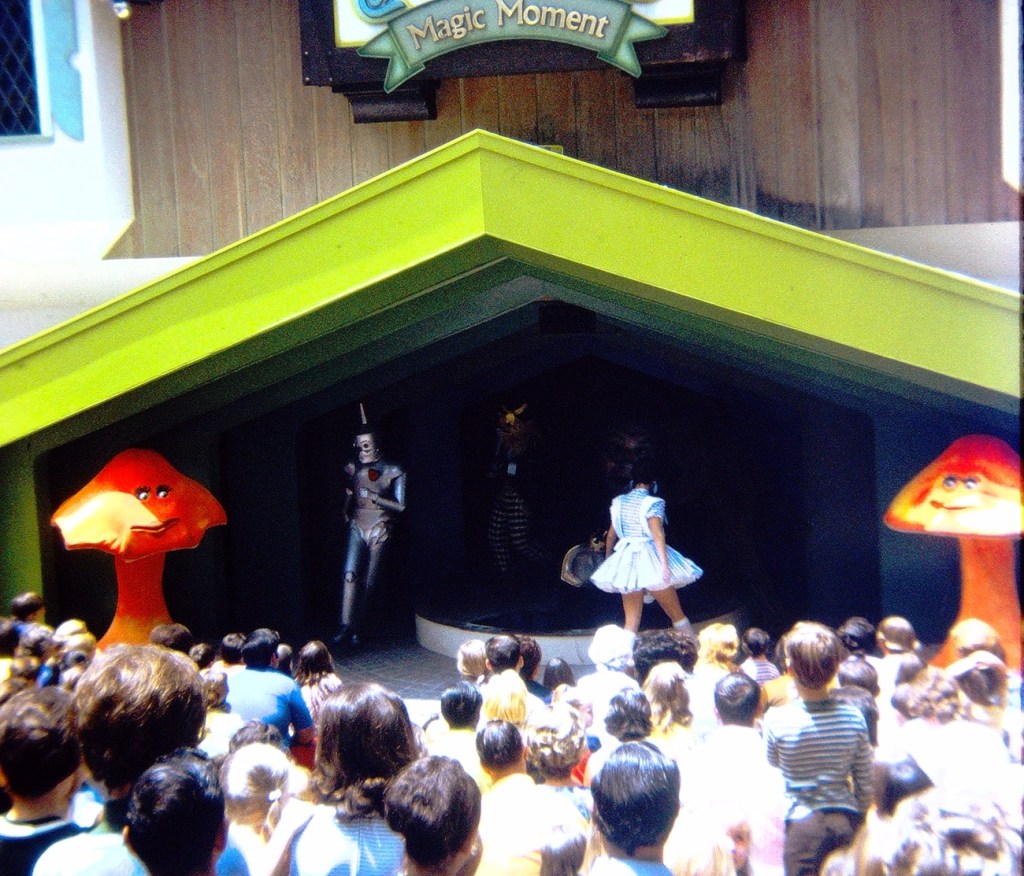
Amphitheater hosting the Magic Moment Show
The Magic Moment Show was staged every half hour. During the show Dorothy appeared with her friends to meet the Wizard and entertain the park’s guests.
Welcome Friends, Guests, and Visitors! This is June 2024, I am realizing that the Older I get the harder it is for me to Rise. It is harder for me to Rise in the mornings, and harder for me to Rise from the floor. Let’s face it the Older I get the harder it is for me to do a lot of things. But, do I let that stop me? No. The Older I get the more determined I am to Rise above any and all obstacles that may arise.
Now that all that has been said, how about we take a ride down memory lane (or in this instance – tracks.) As I have been looking back through my dad’s Old old slides, I realise how much I do not remember about the family trips we took. I remember taking them, but the details are obscure. In the process of digitizing his old slides, the memories are Rising to the forefront of my mind.
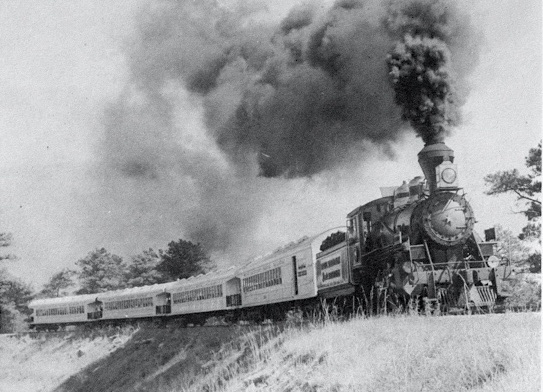
On this trip down memory lane, I can see the photos and recall our ride on a vintage Railroad at Stone Mountain Park in Georgia.
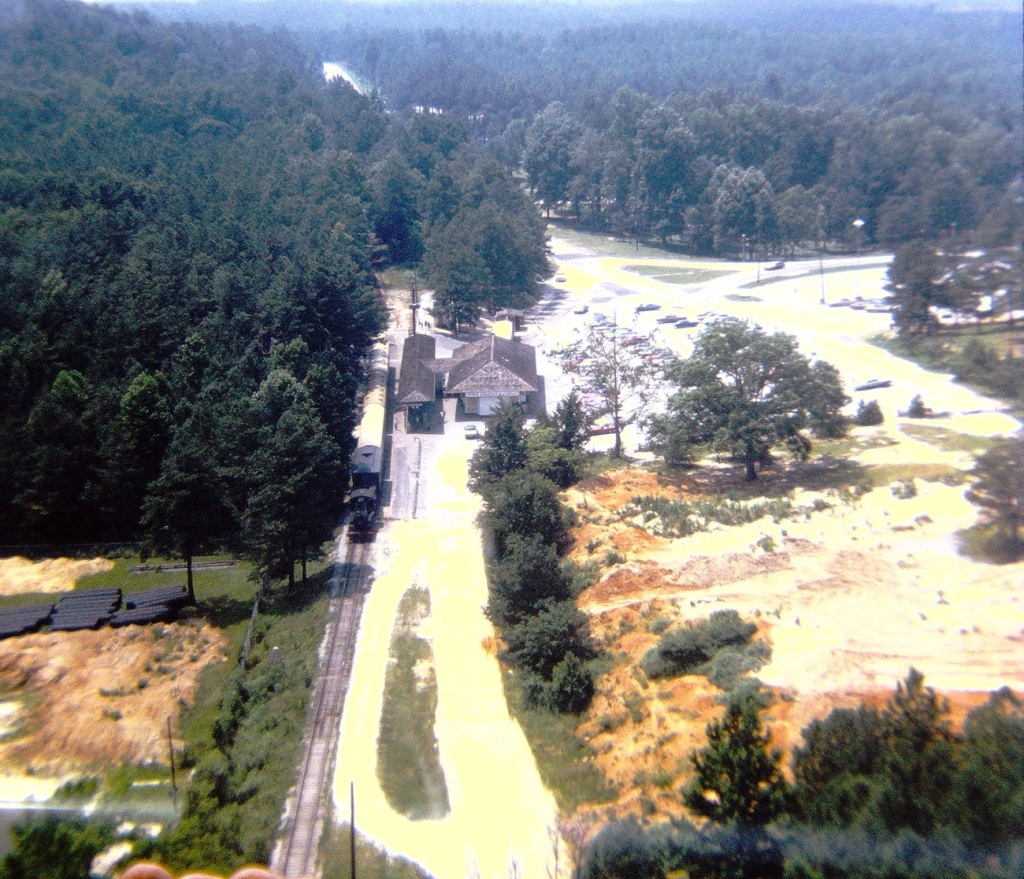
The Stone Mountain Scenic Railroad is an open-air train that chugs around the 5-mile base of Stone Mountain. The ride takes 40 minutes and includes a live “train robbery” skit. Trains depart from Railroad Depot, an old-fashioned train station, where there’s a restaurant with all the fixings for a fried-chicken picnic, just in case you forgot to bring your own.
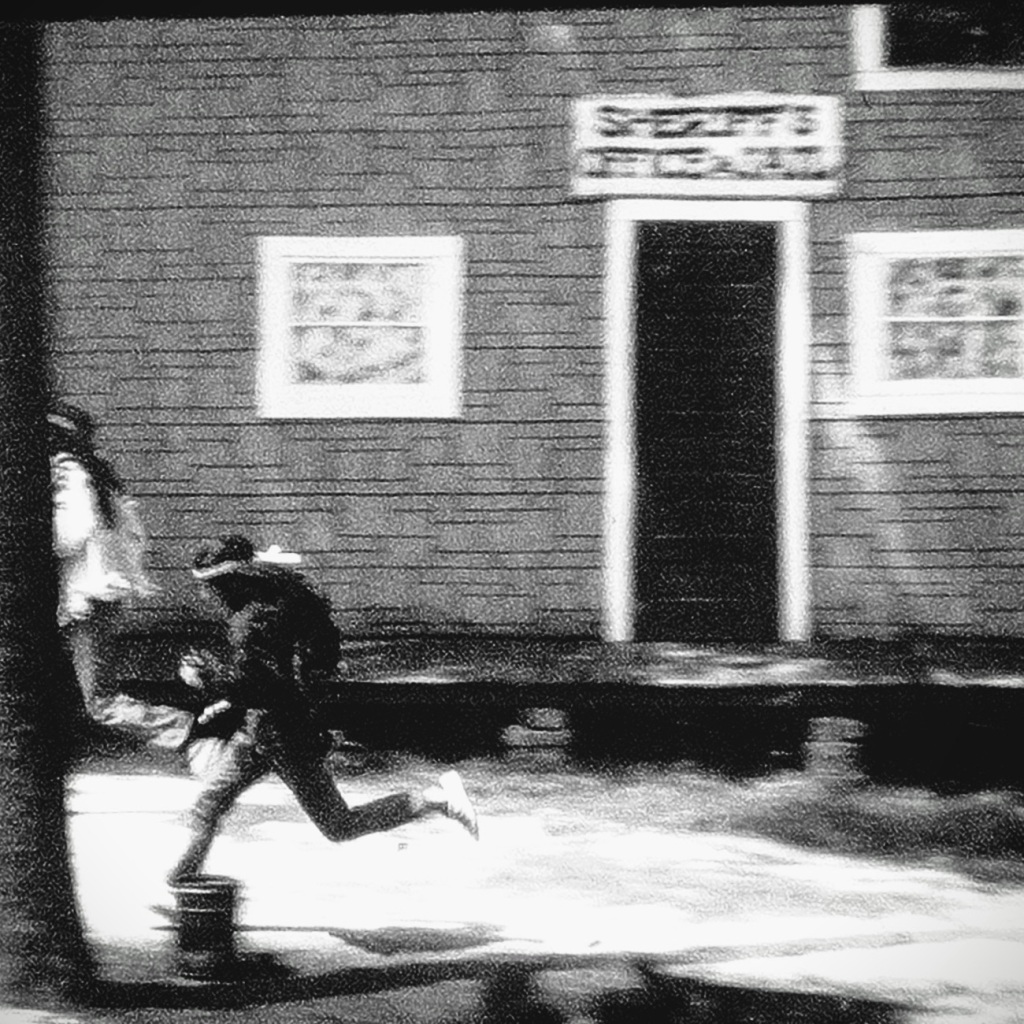
Train Robbers escaping from the Sheriff
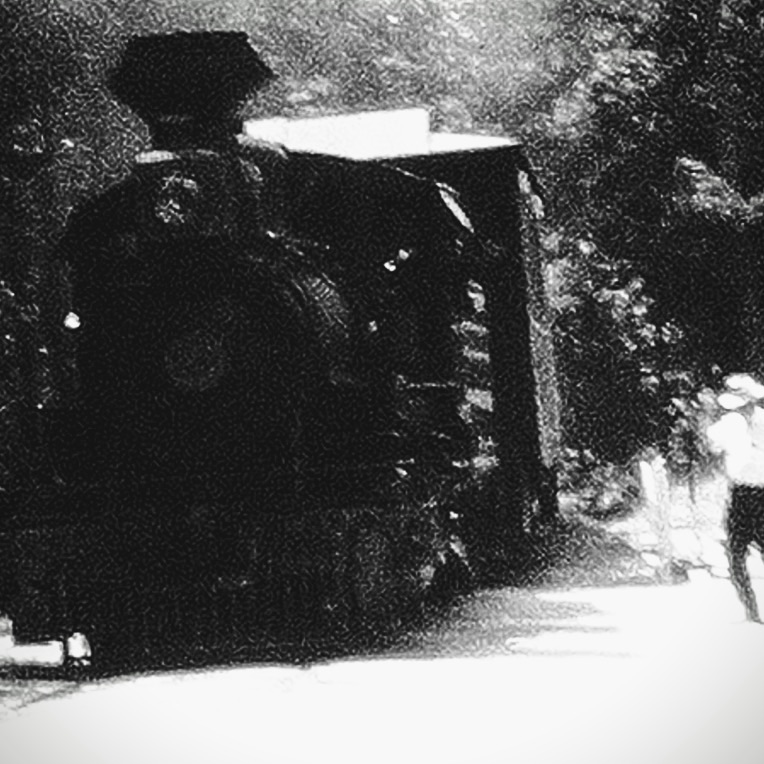
The Stone Mountain Scenic Railroad, Inc. was formed in 1960 to construct a tourist railroad encircling the mountain. Three secondhand steam locomotives and several rebuilt passenger cars were purchased for hauling mountain visitors. Attempts were made to backdate two of the steamers to appear more like Civil War era engines, as the railroad’s theme was based on the “Great Locomotive Chase” involving the General and the Texas.
A single locomotive pulls a consistent of open-air cars and often a caboose around the 3.88 mile loop track. Two or more trains are run during busy park hours. Passengers board at the Train Station near the Memorial Lawn. On the far side of the mountain, trains often stop for skit entertainment in the small yard area that includes mock up building fronts, a maintenance shed, and several spurs that store previous rolling stock.
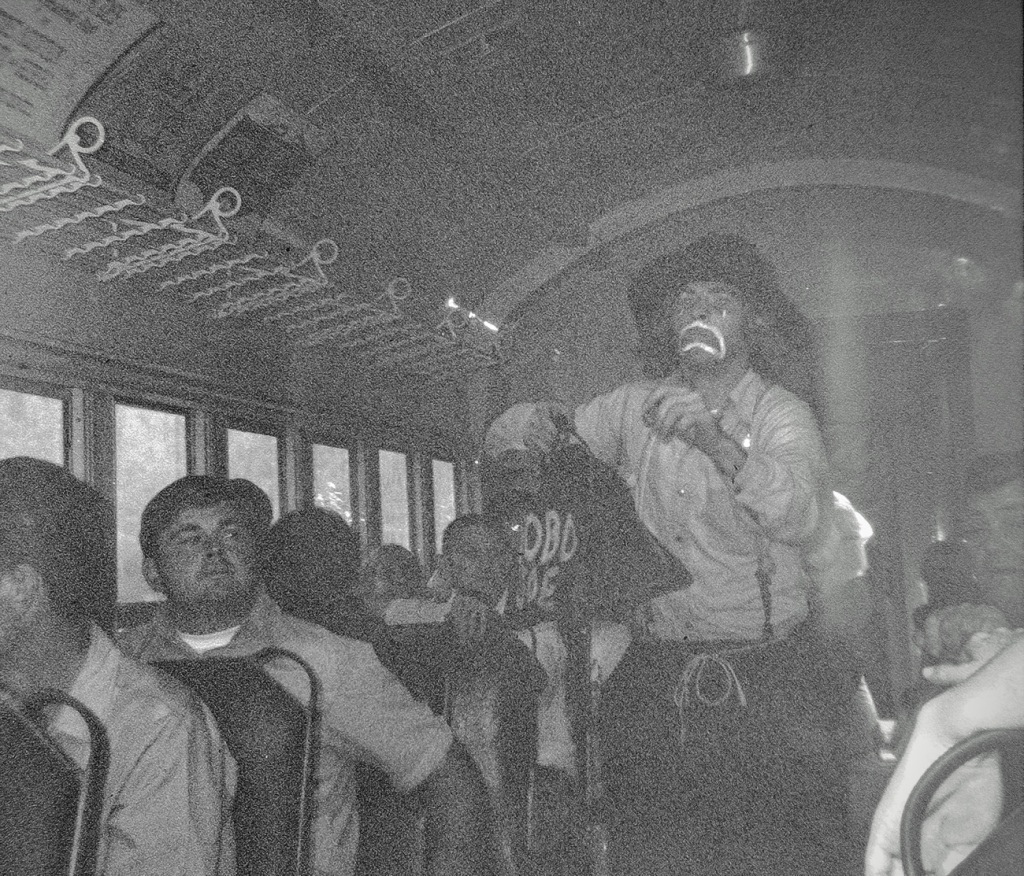
Don’t let the clown face fool you, this is no good guy. He is attempting to “rob” the train.
The Stone Mountain Scenic Railroad ride is just one of several activities one may choose to take part in while visiting the Park. Regardless of whether you’re into history, hiking, or want to enjoy some relaxing entertainment Stone Mountain Park can accommodate your interests. For more information about what to do and see at the Park click here.
This week’s number for Judy’s Number Game is 145. Come play along with us. You’ll never know what fun you’ll be missing if you don’t join in the game.
Rummaging through my photos I came up with a mixture of old and more recent photos for your viewing pleasure for this week’s challenge.
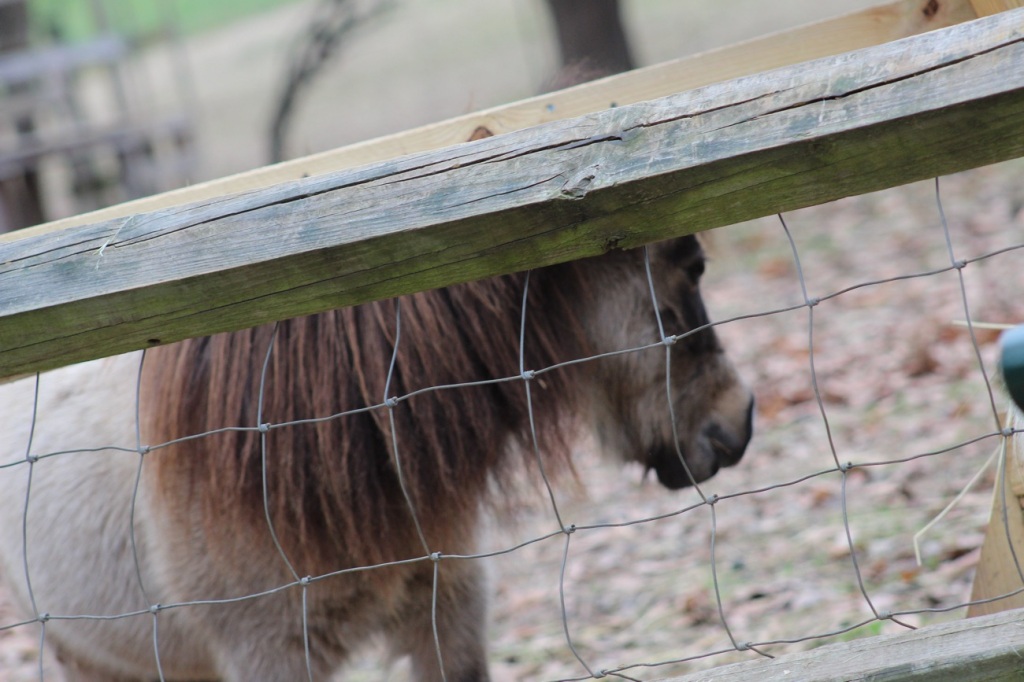
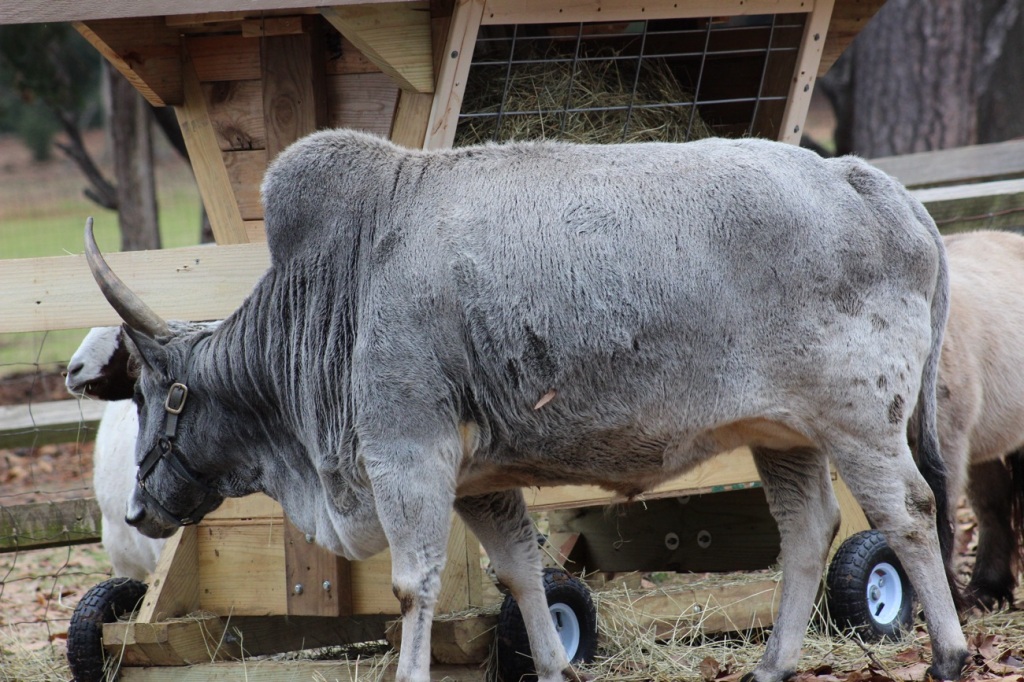
First up we have Farm Animals …
Donkey
At Anne Springs Close Greenway’s Stables Entrance in Fort Mill, South Carolina.
Zebu Cattle Bos taurus indicus
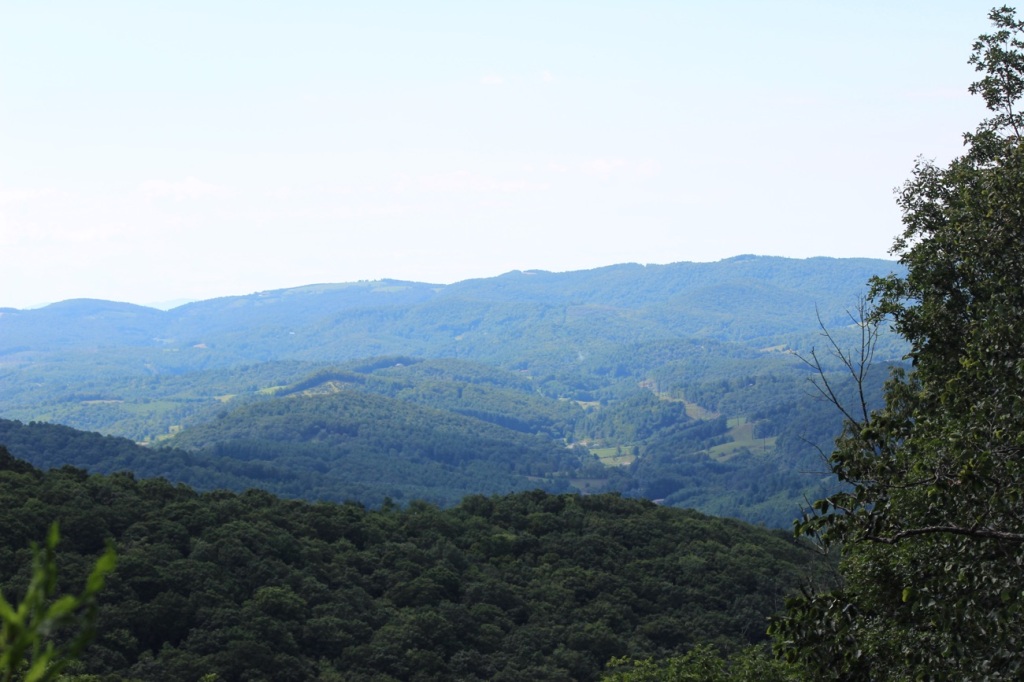
Next, We Head Up to the Mountains of North Carolina …
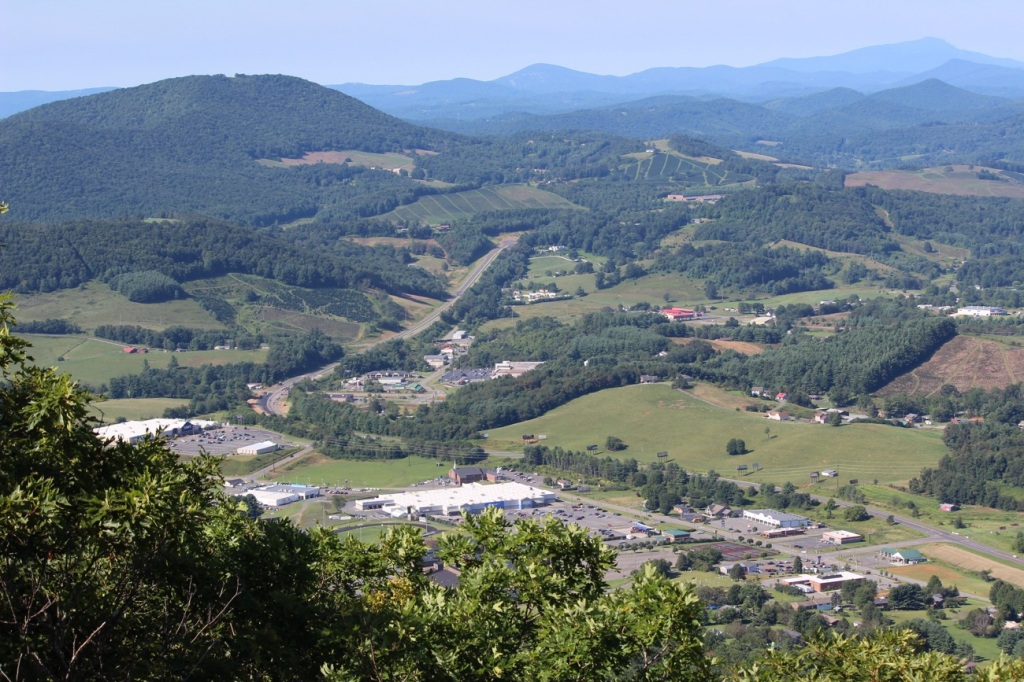
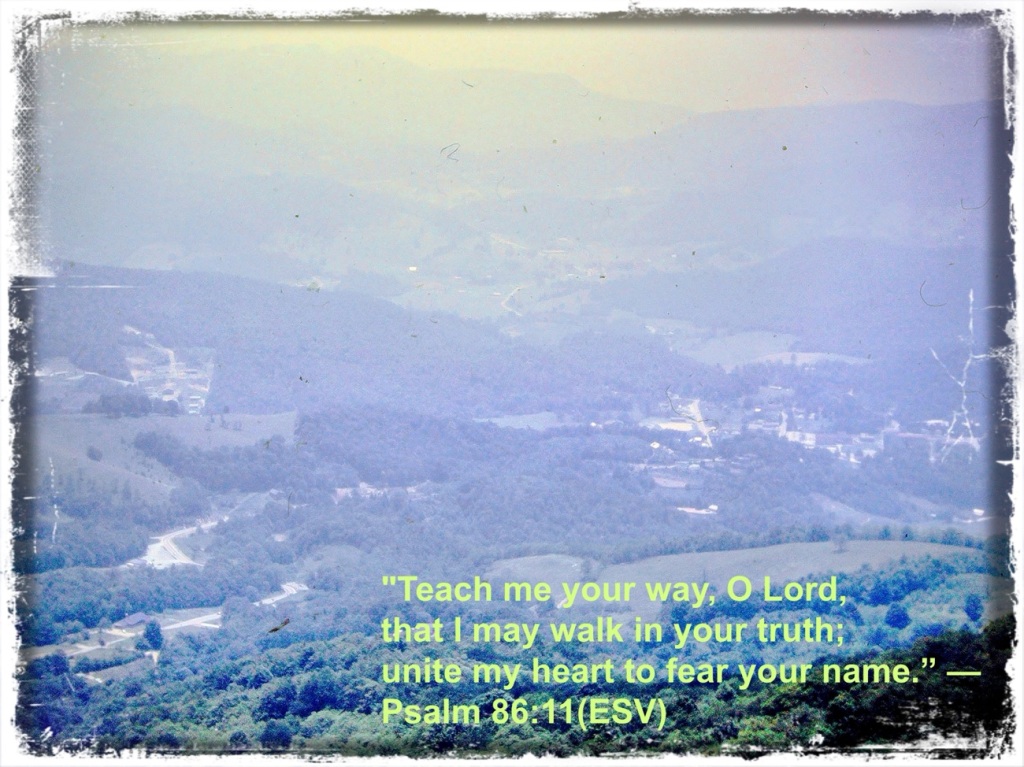
View from Sunrise Overlook Blue Ridge Parkway, North Carolina View from Mount Jefferson Mount Jefferson State Natural Area Ashe County, North Carolina
And Lastly for this Week we have a Couple of Miscellaneous Throwbacks …
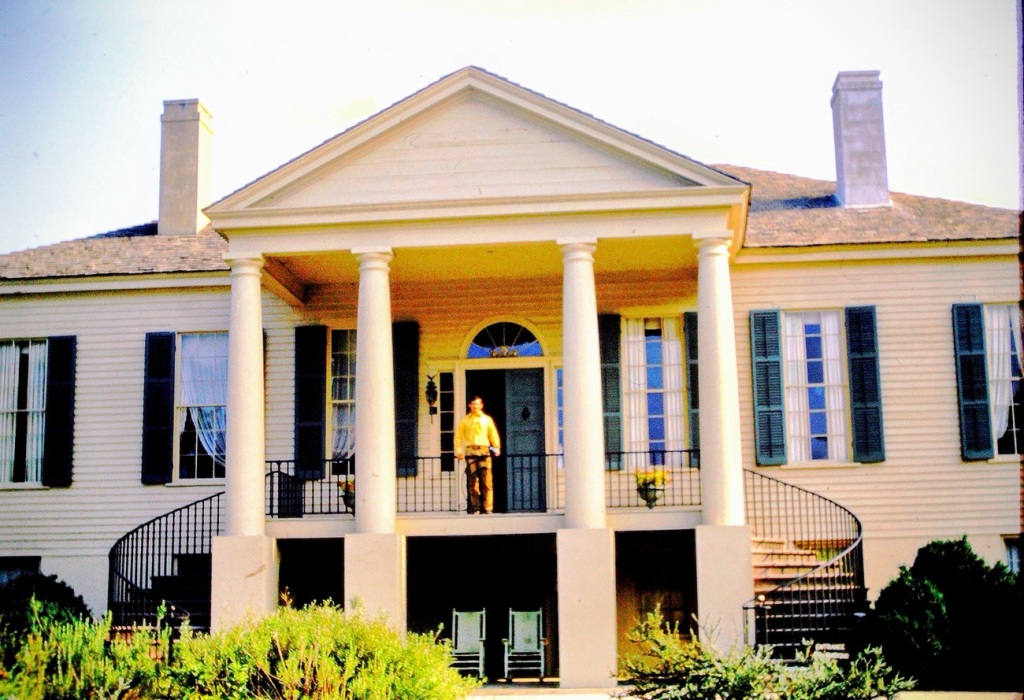
At Franklin D. Roosevelt’s Little White House Historic Site Museum Warm Springs, Meriwether County, Georgia, USAThe Sophia Loren diorama Movieland Wax Museum Buena Park, California
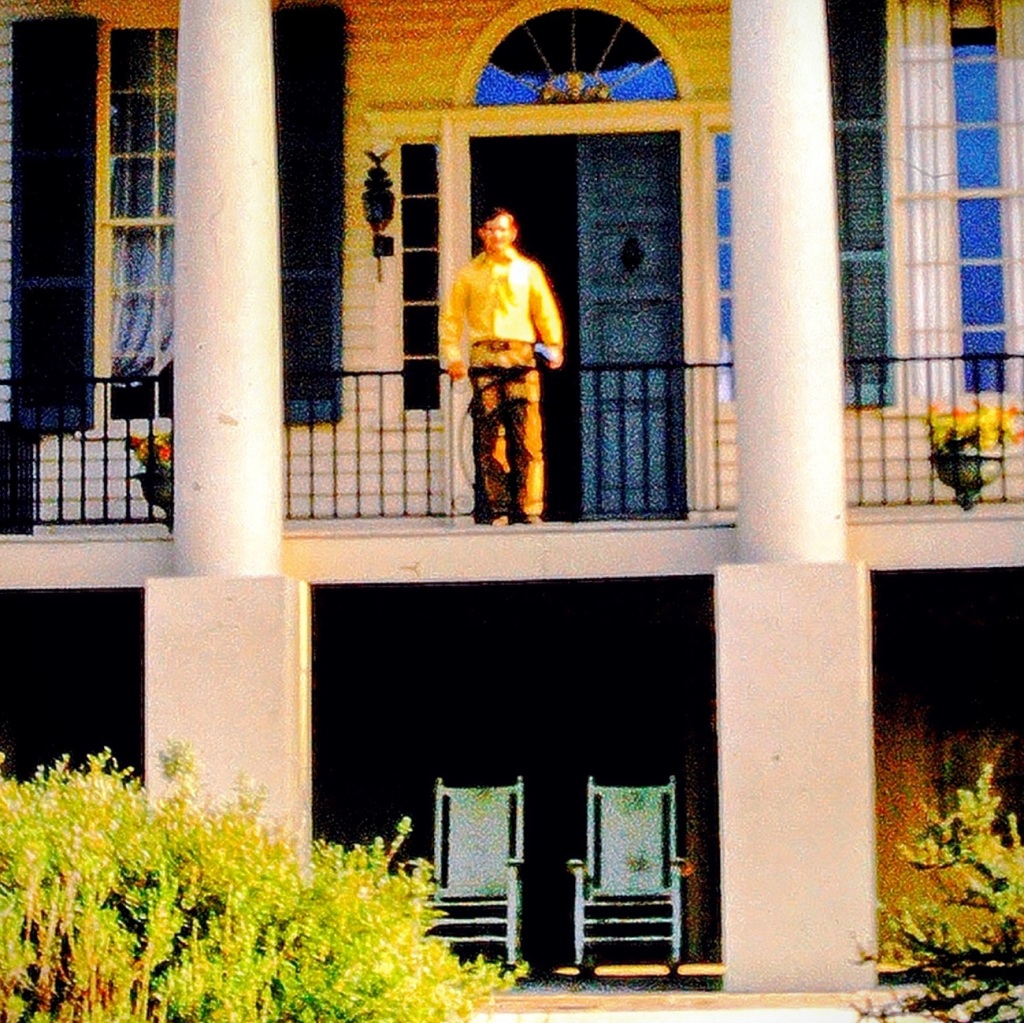
The Davis House Formerly Known as the Dickey House
The Dickey House is a historic home in Stone Mountain Park, Georgia. It was built in the 1840’s on a 1,000 acre plantation in Dickey, Georgia. The house was the manor house of the property. The descendants of the original owners lived in the home until it was moved 200 miles away to Stone Mountain’s Historic Square in 1961.
The roof, porches, and chimneys were removed and the house was quartered for transport, then reassembled by master carpenters. The house was filled with antiques from the 1800s and was considered a historic representation of the 1860s.
Pull Up a Seat was once possible beneath the second story. Sadly, that is no longer possible as the house was destroyed by fire in 2023.
The Dickey House was the focus of the Stone Mountain “antebellum plantation” and the state’s effort to develop a tourist attraction at the site of the Confederate Memorial, a high-relief sculpture of Jefferson Davis, Robert E. Lee, and Thomas J. “Stonewall” Jackson that is carved into Stone Mountain.
The Dickey House opened to the public in 1963. More sophisticated than a Georgia “plain style plantation” such as the Tullie Smith House in Atlanta, and less grand than the Gone With the Wind image of Tara as the assumed typical antebellum plantation of the South, the Dickey Plantation, with its collection of period furnishings, collected outbuildings of the era, and gardens, provides a unique illustration of pre–Civil War architecture.
In November of 2023, Nearly 200 years of history went up in flames on a Tuesday morning when a fire broke out consuming the Dickey House in Stone Mountain Park’s Historic Square that predate the Civil War. The fire completely destroyed the home making it irreparable.
As I continue to look back on time through the digitization process of my dad’s old slides I am reminded and am amazed by the wonderful world we live in and the freedom we have to create/recreate and share our experiences, our memories with others.
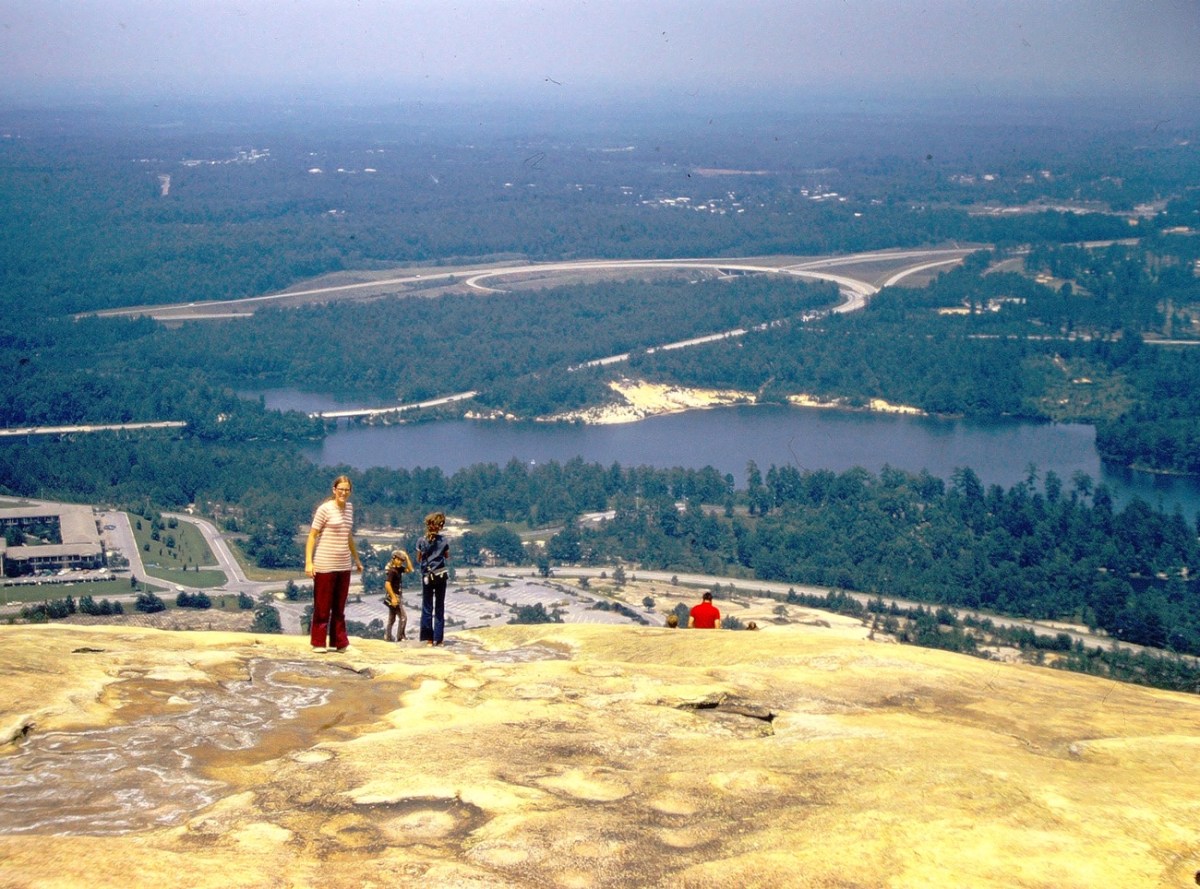
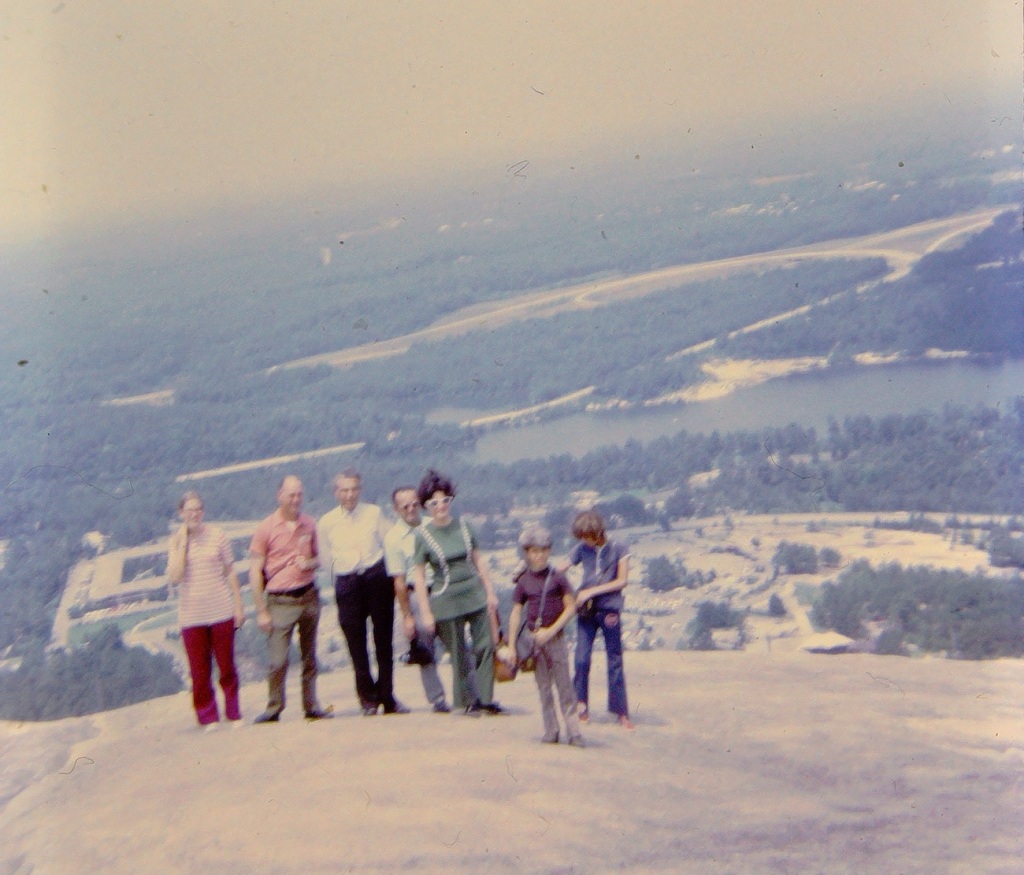
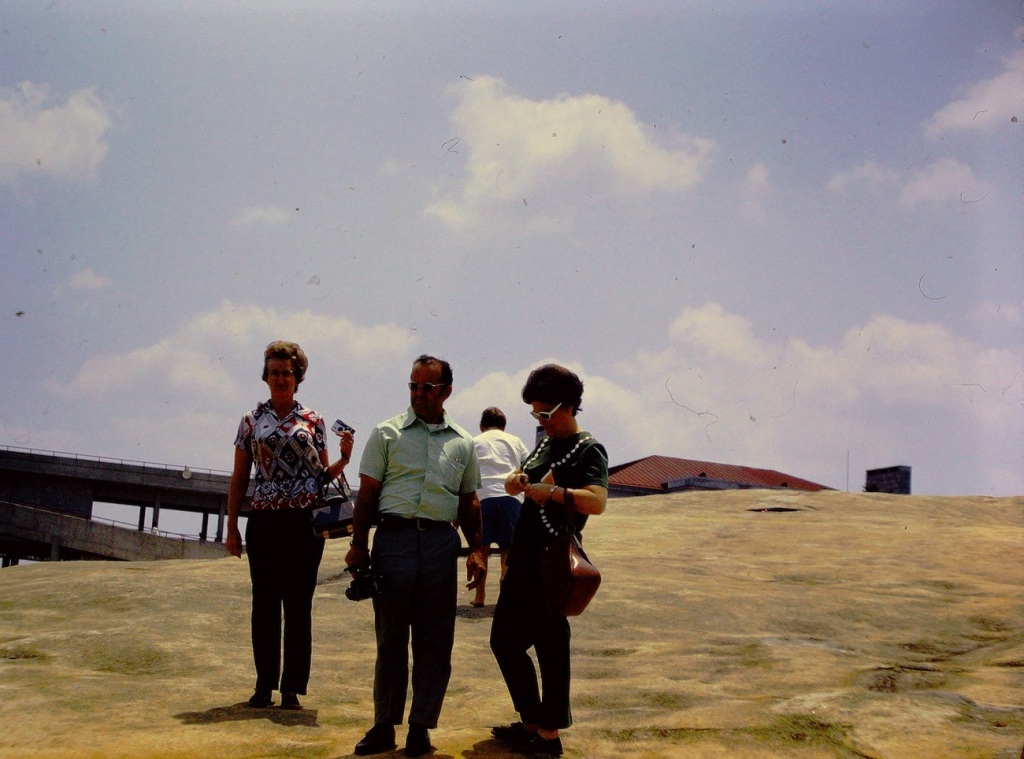
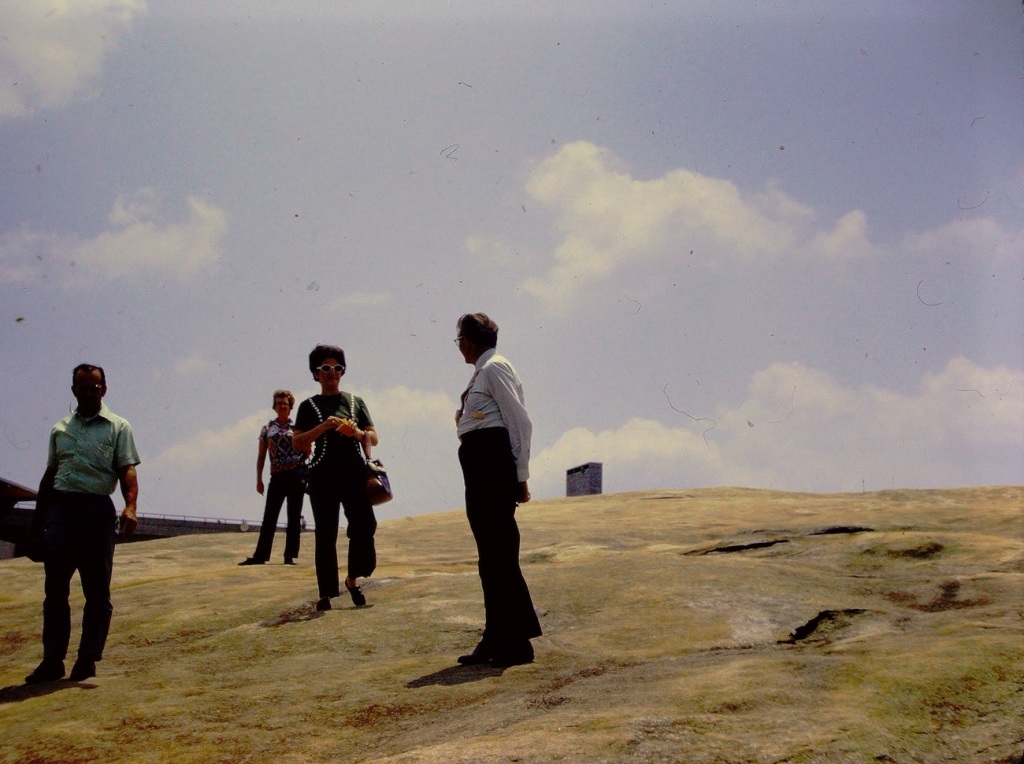
The slideshow is a digital representation of our adventures visiting Stone Mountain Park in Georgia. We, my family and extended family all came together to share togetherness while enjoying ourselves at Stone Mountain. My immediate family drove out from California, my paternal grandfather, from South Carolina, joined my dad’s sister and her family from North Carolina to visit the most popular attraction in Georgia, Stone Mountain Park.
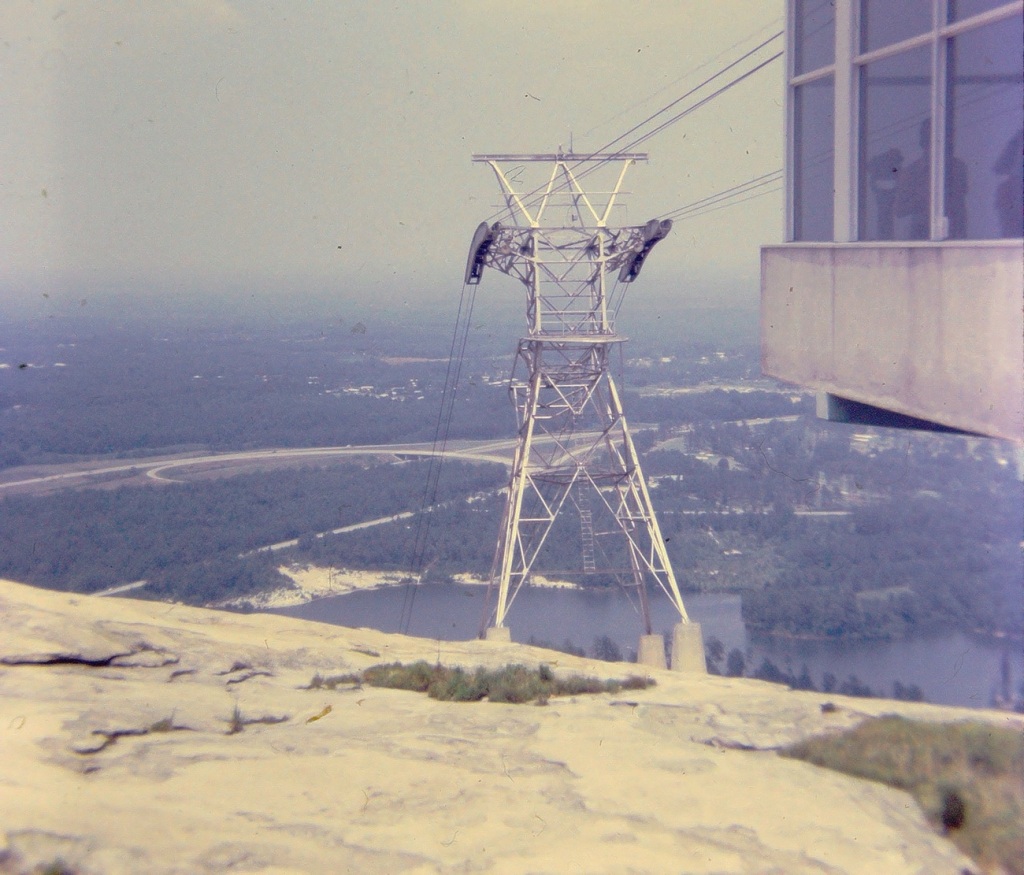
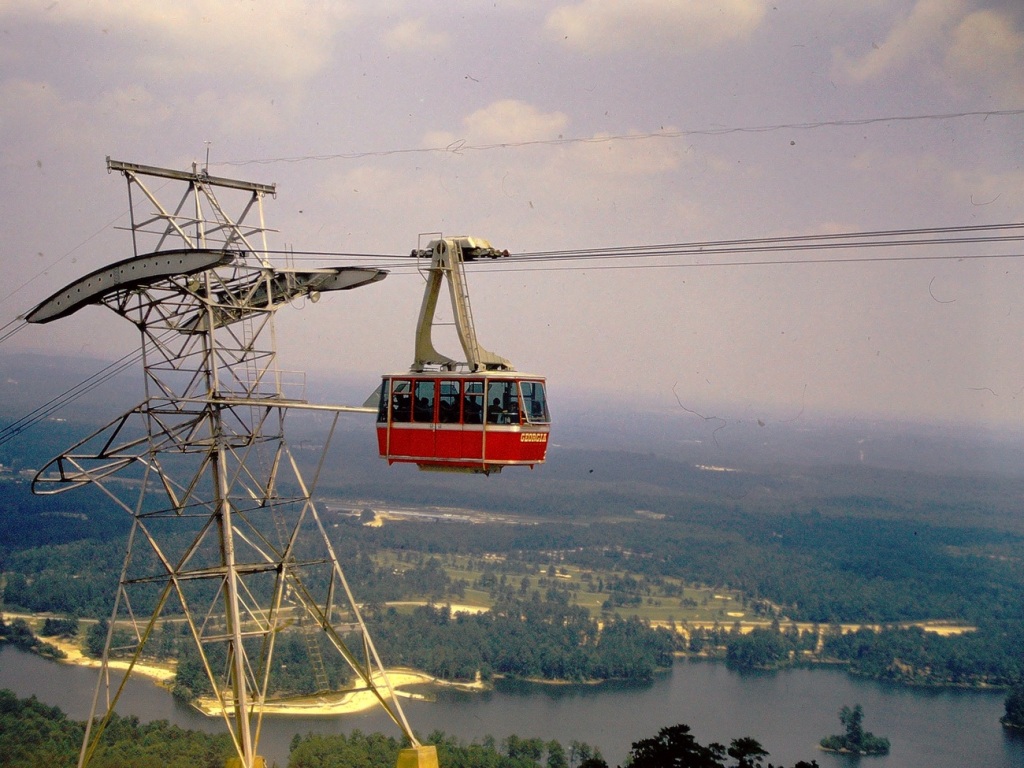
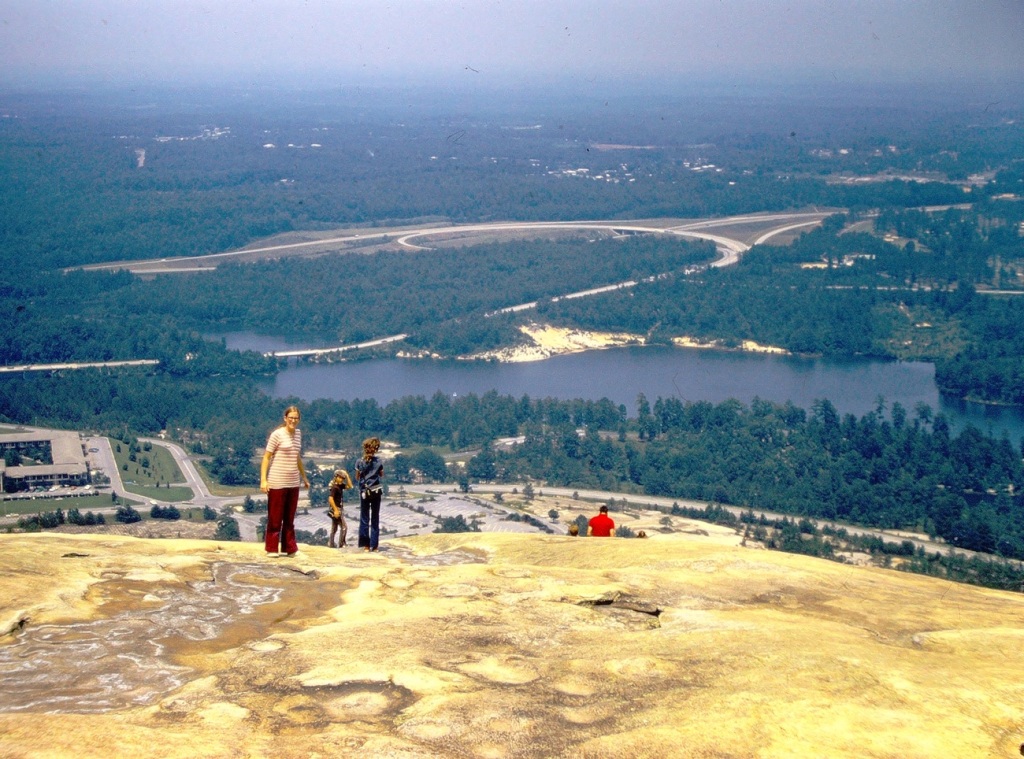
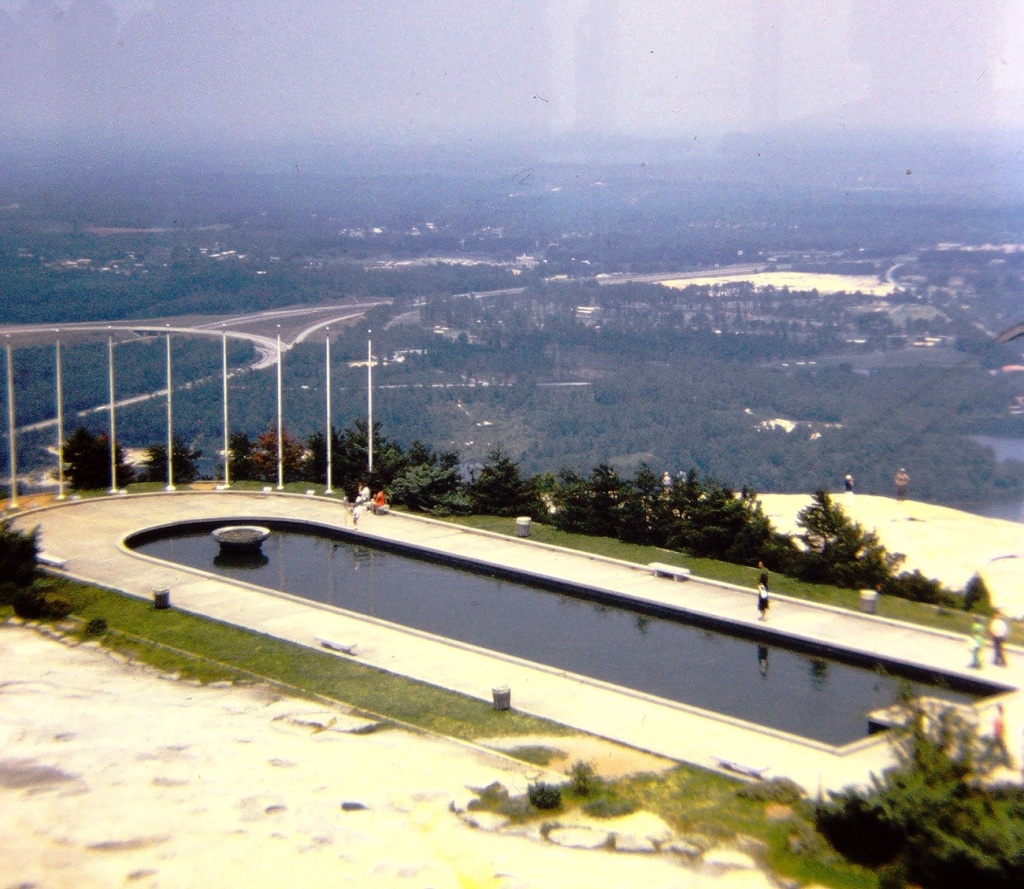
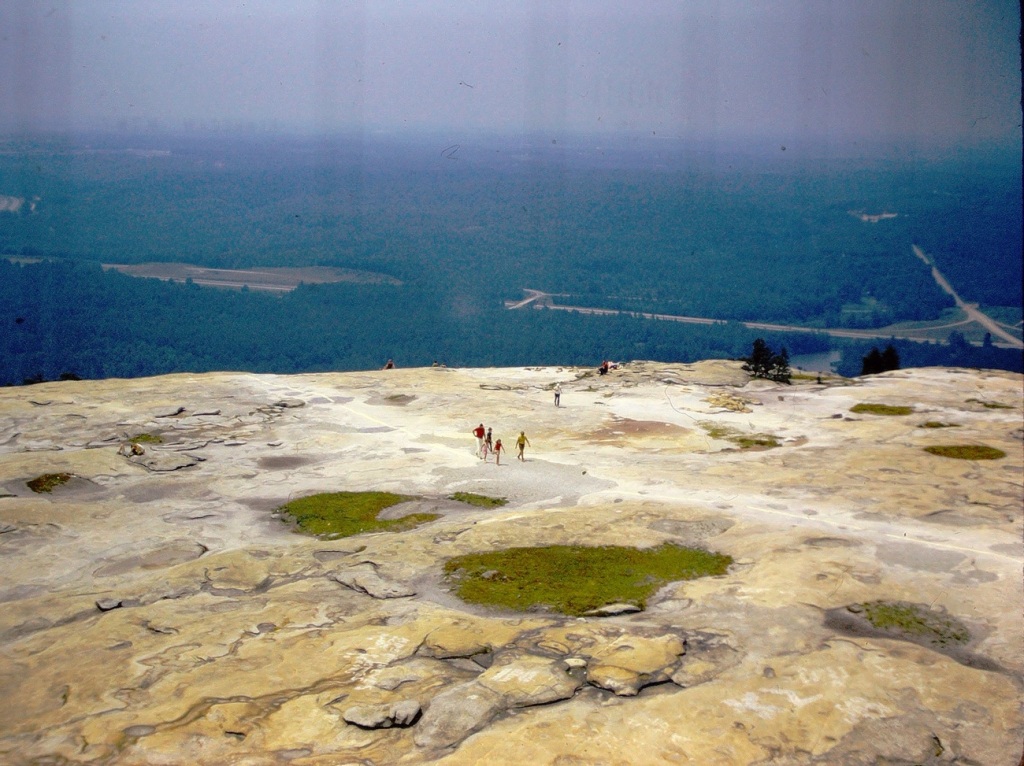
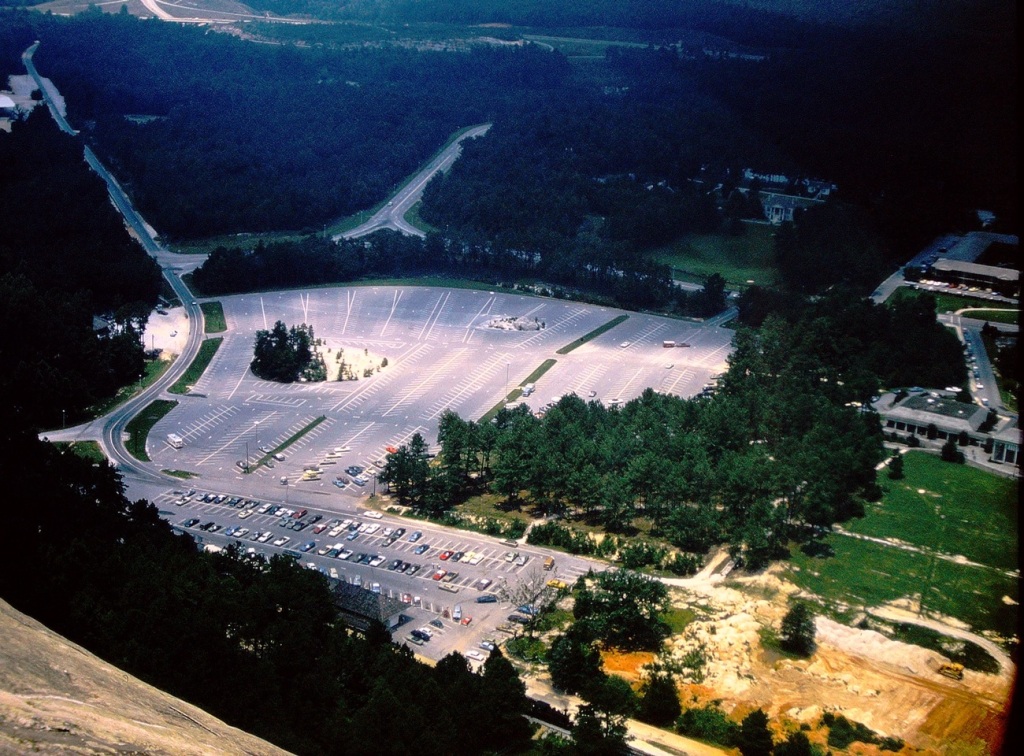
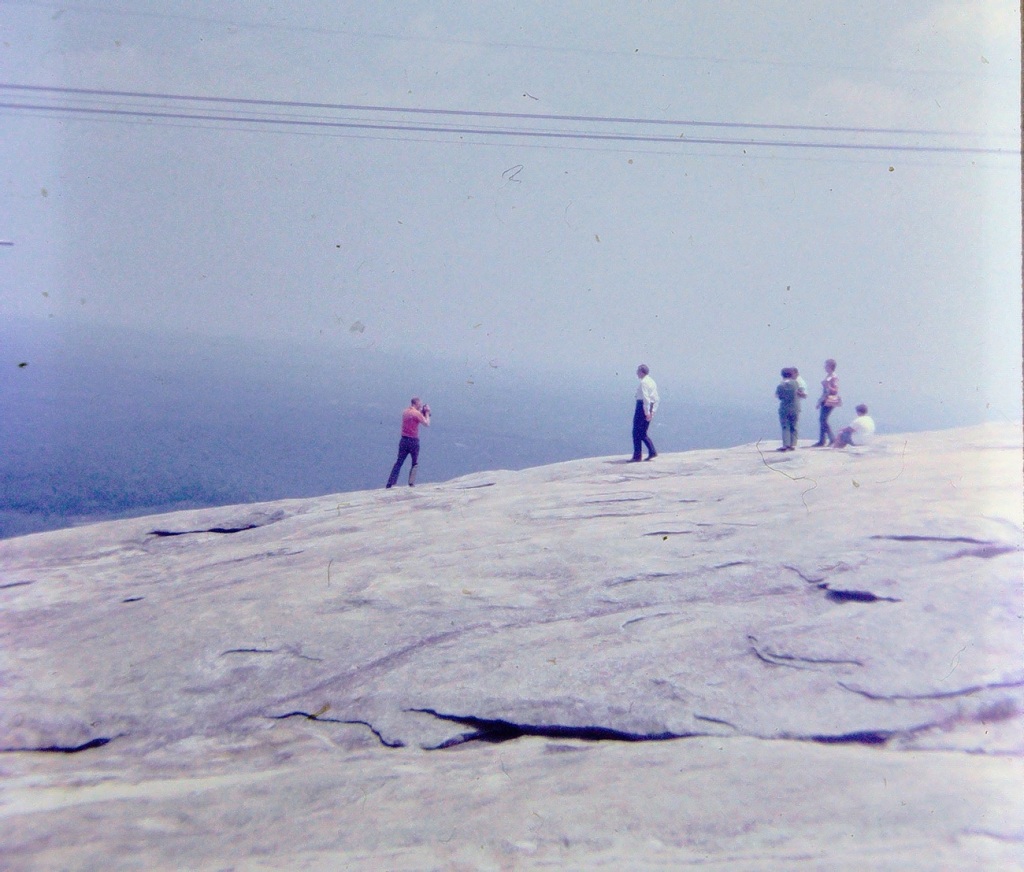
We rode the Skyride to the top of Stone Mountain and the views were amazing. We could see the surrounding landscape, the parking lot, the other attractions in the park, blue waters of the lake & the pond, and the blue skies above. The most amazing part is that we were able to see the wondrous views together as a family.
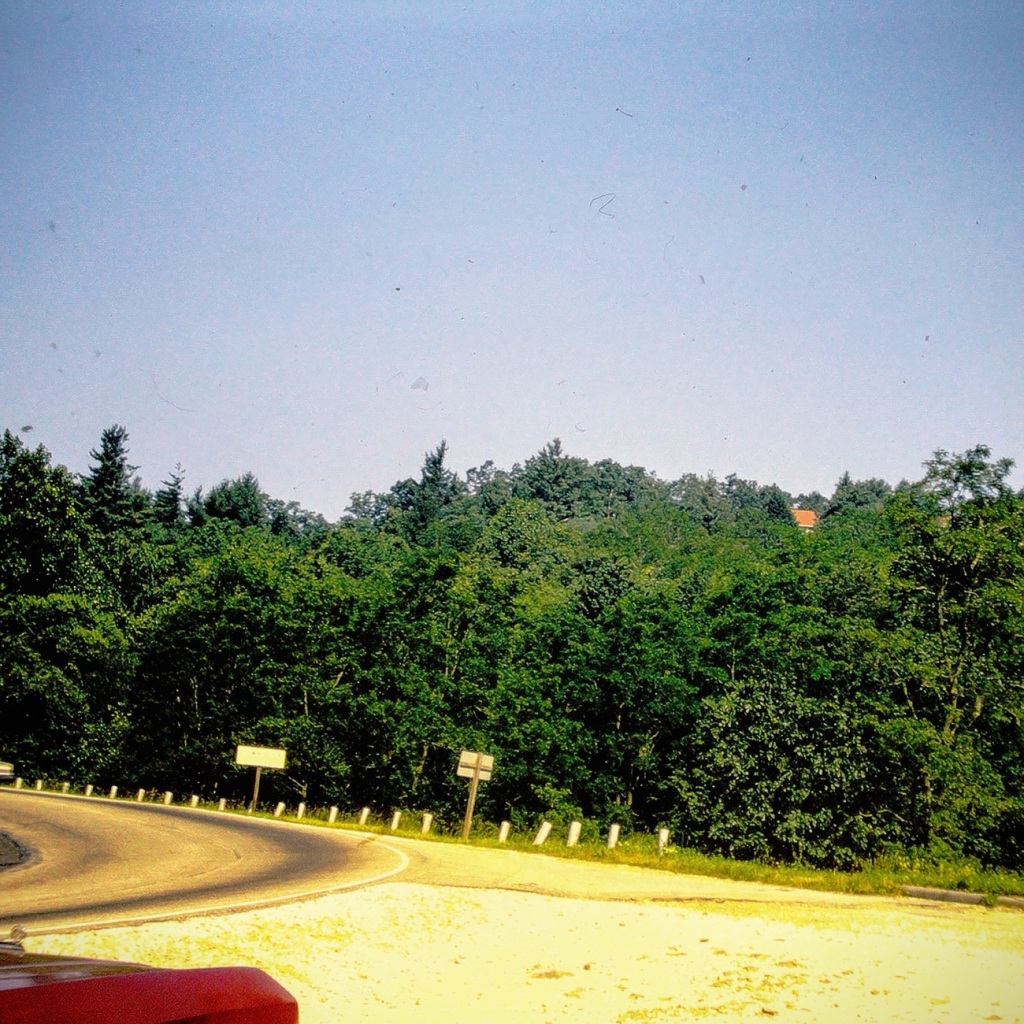
We begin our journey in n July of 1972, having made it from California to Georgia we stop for a bit of fun. We were glad to pull into the park and finally be able to get out of the car and stretch our legs. After traveling cross country for days we were more than ready to enjoy some fun and excitement.
Driving into Stone Mountain Park in Stone Mountain, Georgia
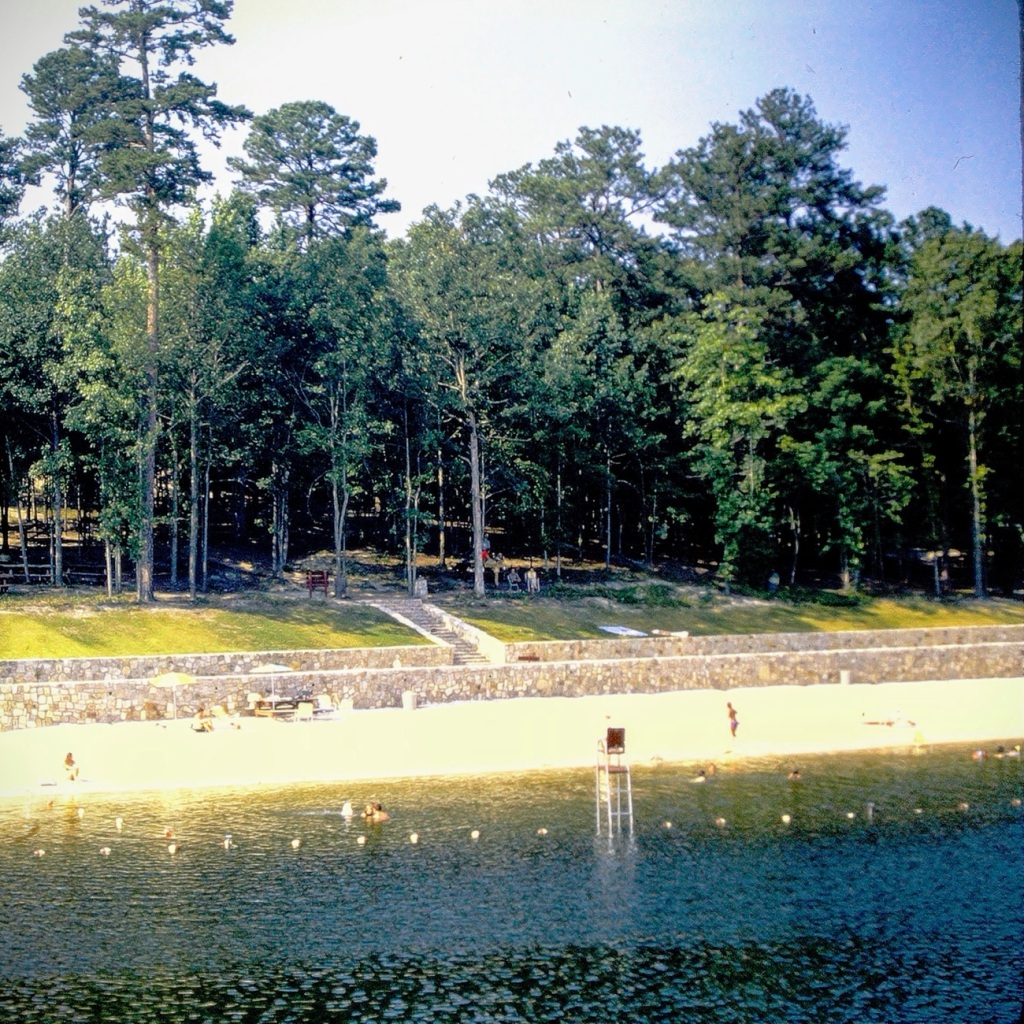
We enjoyed a time of Sun, Sand. and Water Fun relaxing on the beach.
Sun, Sand. and Water Fun
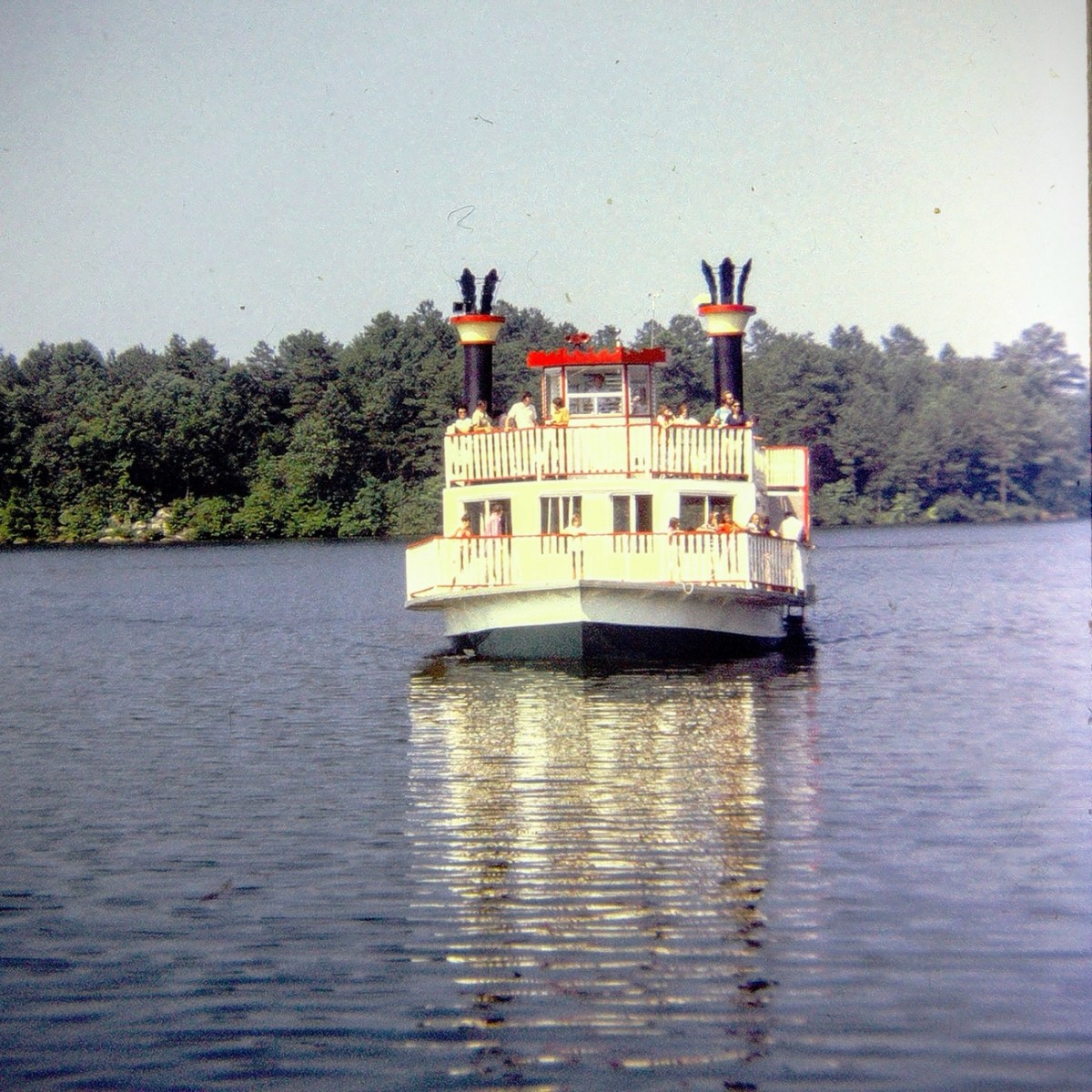
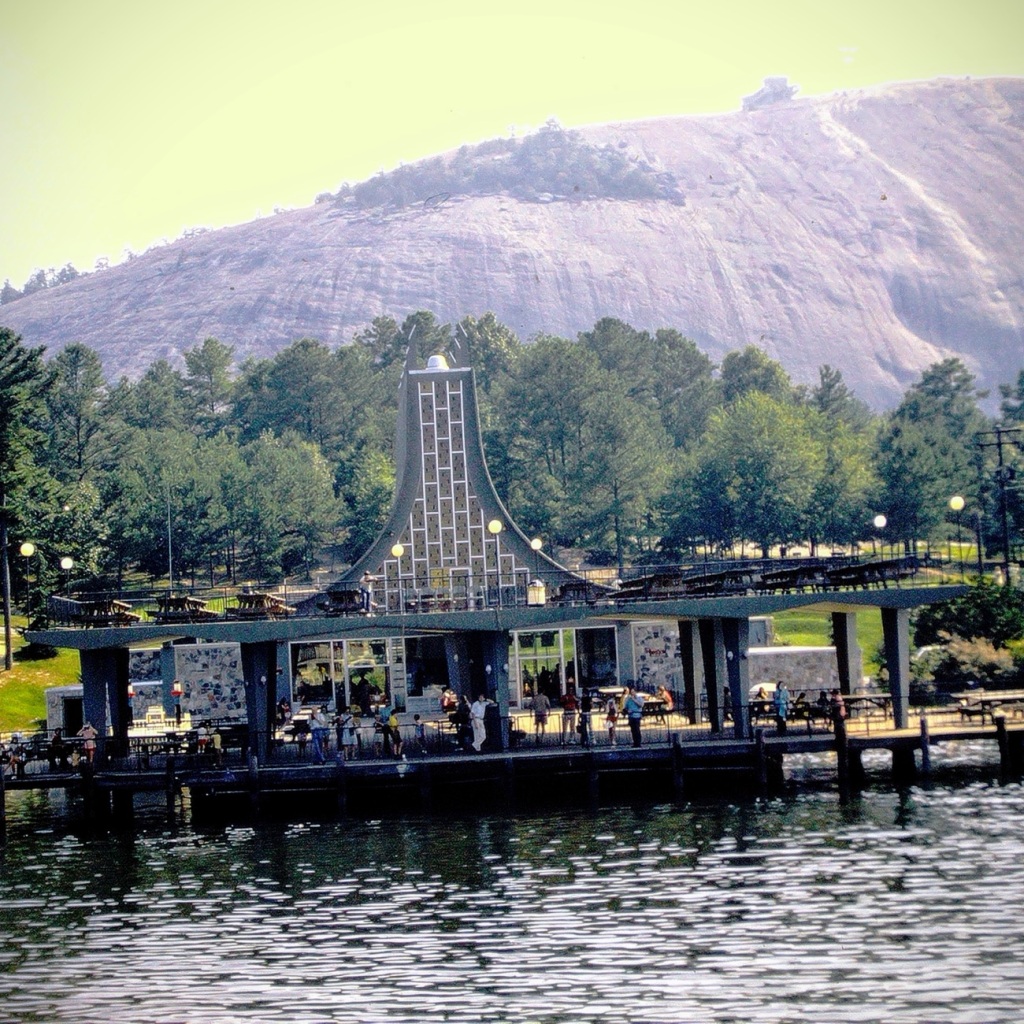
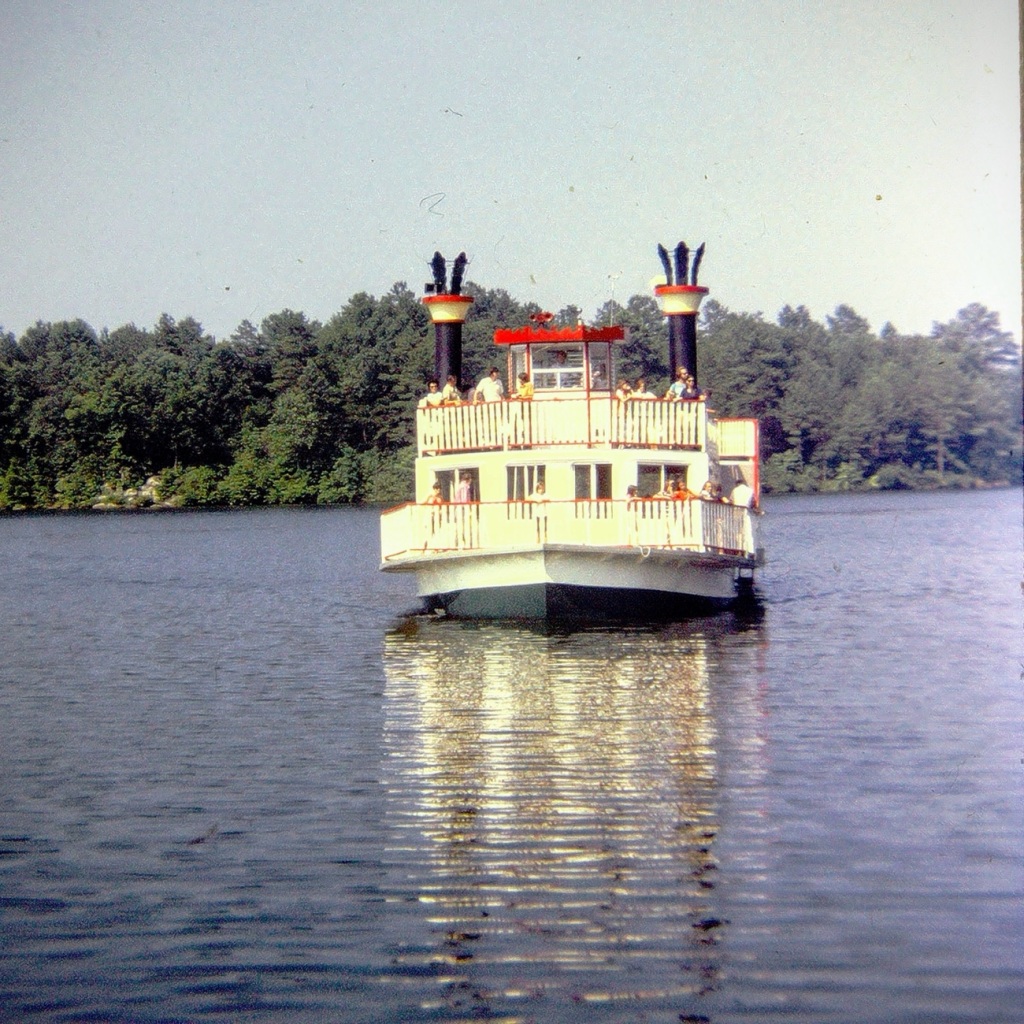
Next, we moved forward to wait our turn for a ride on one of the Paddle-boats. The paddle-boats are large Riverboats which give tourists and guests a thirty minute ride out on Stone Mountain Park Lake. [From what I have discovered, the Riverboats no longer operate on Stone Mountain Park Lake.]
Riverboat Marina Complex Area to wait for a Riverboat Cruise 🚢 ride.
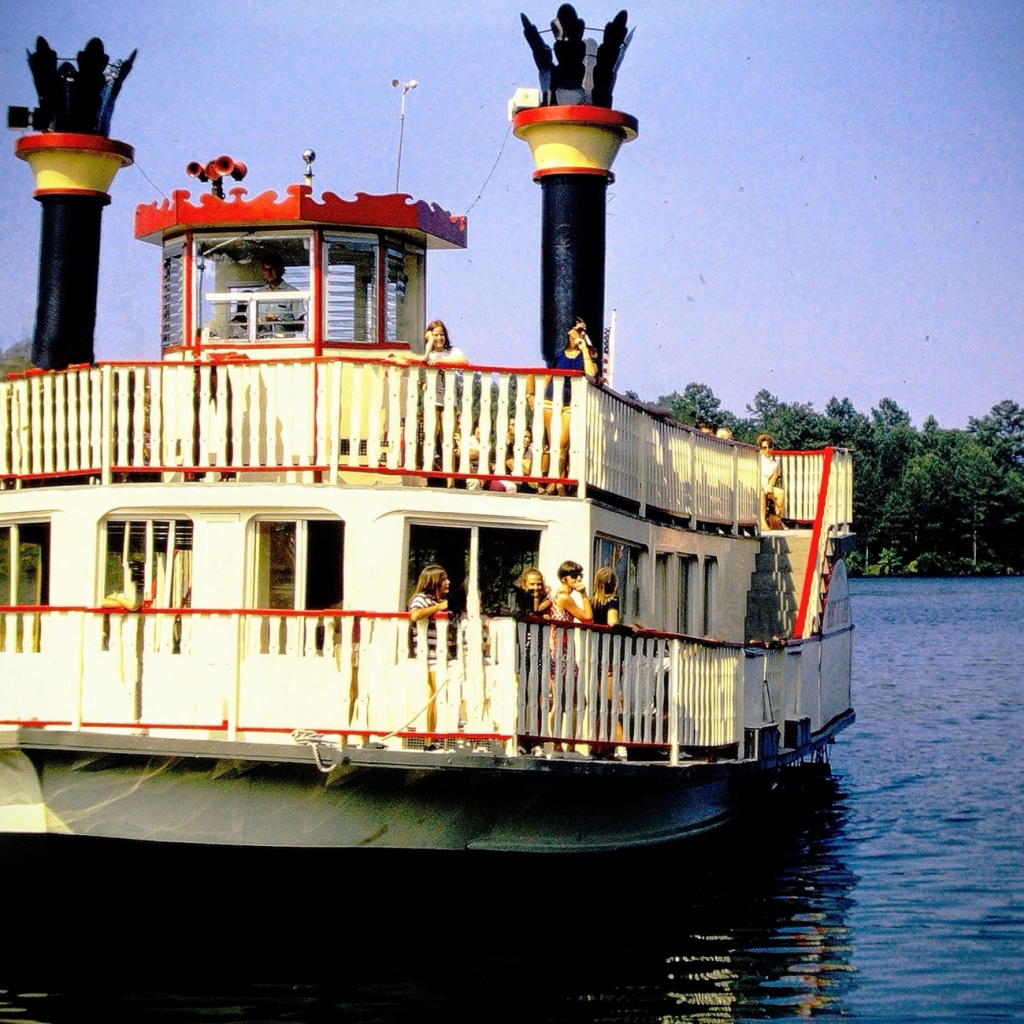
Moving forward out into the lake aboard the Scarlet O’Hara, we had an opportunity to see a uniquely captivating side of the park. The Scarlet O’Hara was one of two (2) paddle boats in the Stone Mountain Fleet that once cruised the lake delighting guests with the beautiful scenic views. It was a side wheeler which could carry up to One Hundred Fifty (150) passengers on board.
Scarlet O’Hara
The Henry W. Grady was the name of the other Stone Mountain paddle boat. It was designed to carry approximately three hundred (300) passengers. Its sole purpose was to be used for private party charters.
The Riverboats departed the Riverboat Marina Complex approximately every half hour moving forward into the lake giving guests a chance to enjoy the waterways, and the beauty surrounding Stone Mountain. The short cruise lasted about twenty (20) to thirty (30) minutes. While out on the lake on one of the paddle-boats you might have noticed the sunken remains of the very first riverboat, the Robert E. Lee, seen at the bottom of the lake.
Location: Stone Mountain Park Lake; Stone Mountain Park, Stone Mountain, Georgia, USA
God Bless. Thank you for visiting and sharing in our memories of cruising on a Riverboat. Thank you for sharing your time and thoughts with me. I appreciate y’all very much.
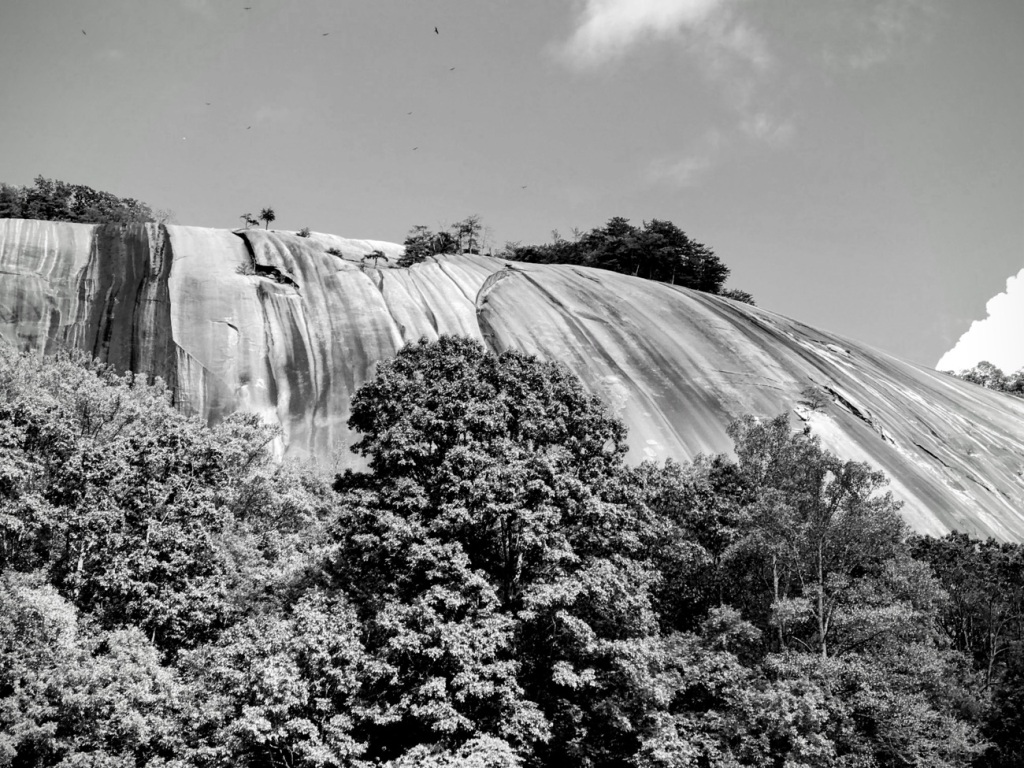
Stone Mountain Stone Mountain State Park Roaring Gap, North Carolina
Stone Mountain State Park is located in Alleghany and Wilkes counties 60 miles northwest of Winston-Salem. Within the Park lies a 600-foot granite dome which has been designated as a National Natural Landmark, and the historic Hutchinson Homestead, a restored mid-19th-century farm situated at the mountain base.
Lower Falls Stone Mountain State Park Roaring Gap, North Carolina
Stone Mountain State Park offers nearly all types of outdoor activity to experience a high country landscape adorned with beautiful waterfalls, winding creeks, and bountiful trout streams. A portion of the Mountains-to-Sea State Trail runs through the park near the backcountry campsites.
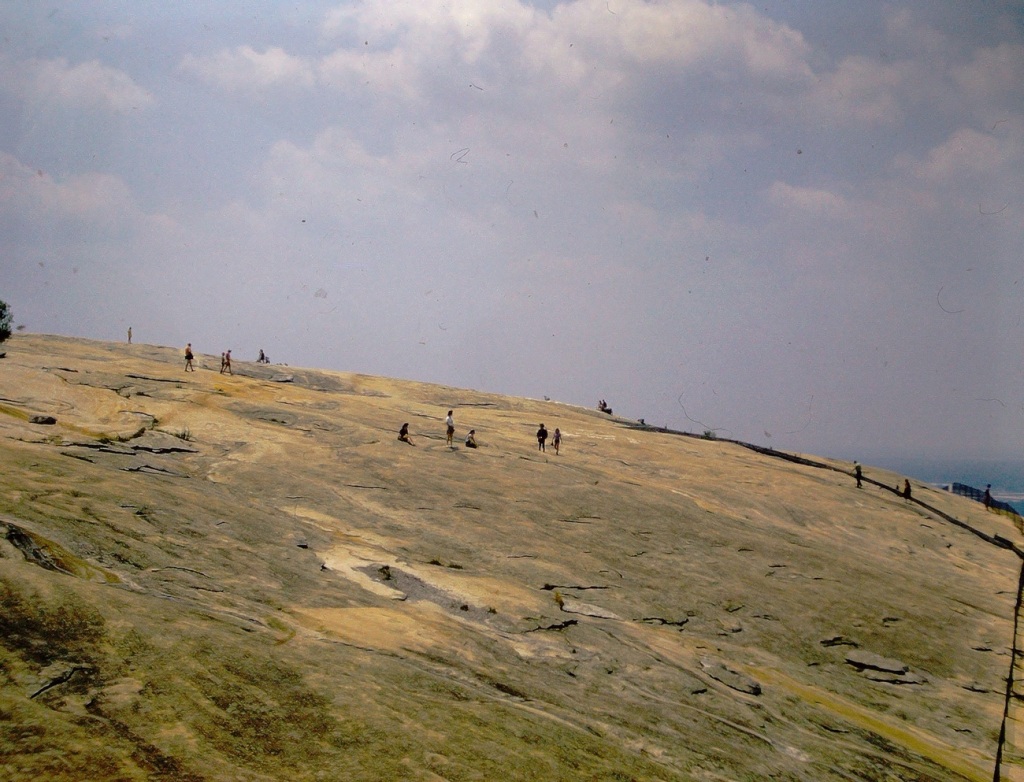
Stone Mountain Park (GA)
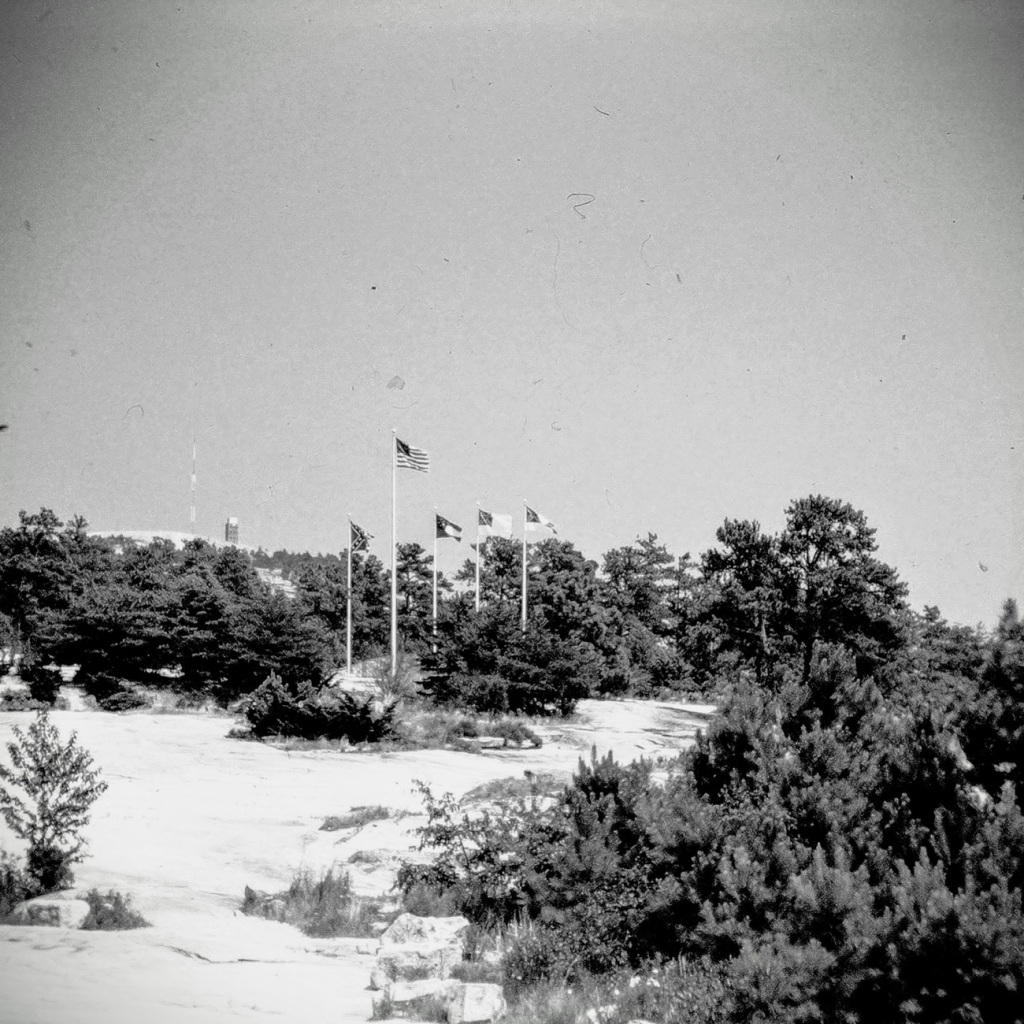
At the bottom of the trail leading up to the mountain is an American flag and four Confederate flags for all to see.
Stone Mountain Park is Georgia’s most visited attraction. Its more than three thousand two hundred (3,200) makes the park a unique destination for guests and families to experience and enjoy an exciting variety of attractions, entertainment, and recreational activities.
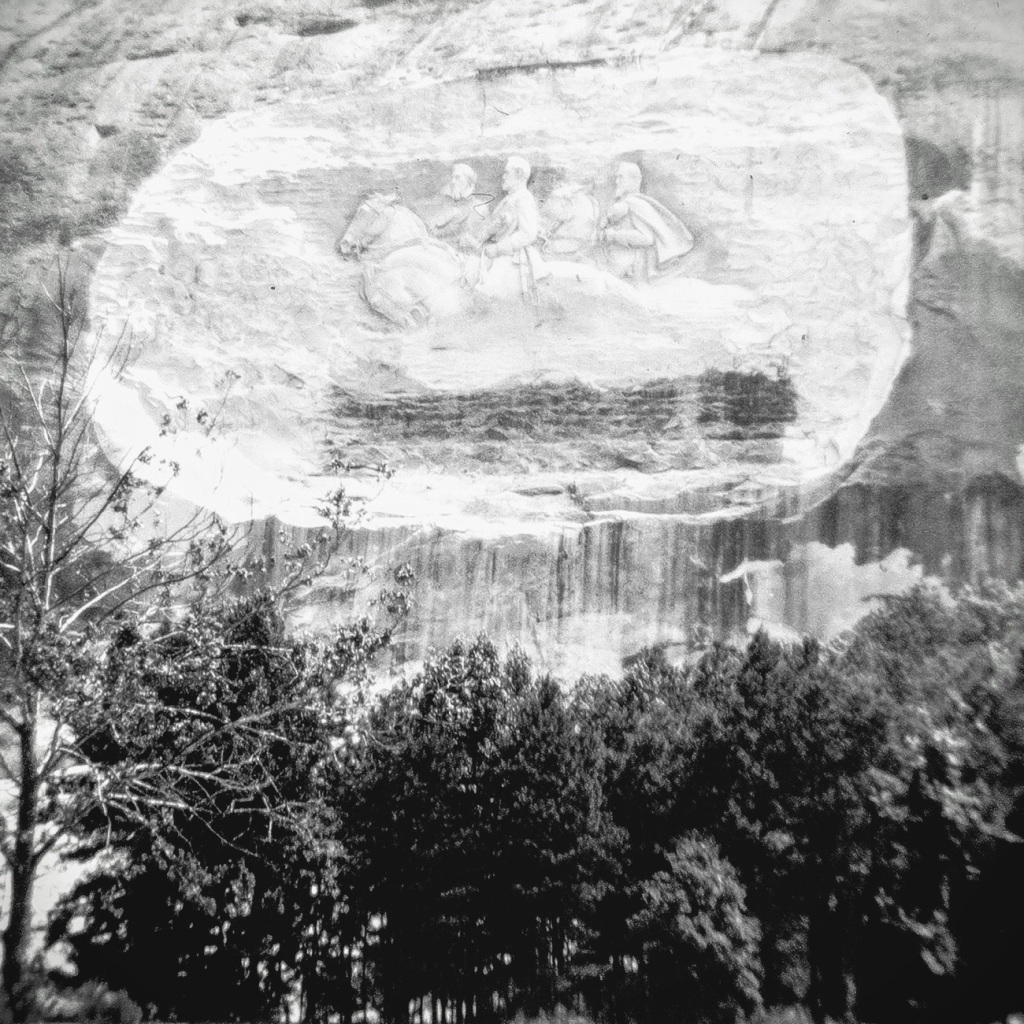
At the center of the park is the largest confederate symbol in the country: a nine story etched carving of Jefferson Davis, Stonewall Jackson, and Robert E. Lee.
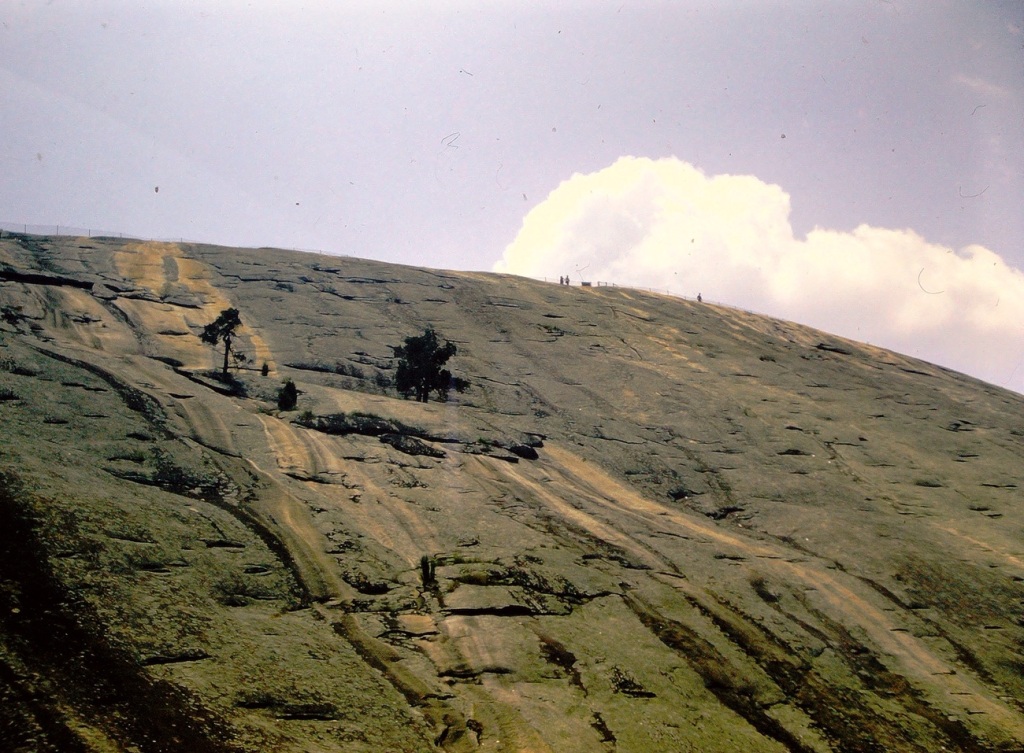
Stone Mountain in Georgia is a quartz monzonite dome monadnock ( an isolated rock hill, knob, ridge, or small mountain) and is the location of Stone Mountain Park. It is located approximately sixteen (16) miles east of Atlanta, Georgia. The Park is owned by the state of Georgia. It is most famous for its artwork on the north face. An enormous relief sculpture carved on the stone itself depicting Jefferson Davis, Robert E. Lee, and Stonewall Jackson, three (3) of the Confederate Leaders.
In comparing the two Stone Mountains one can realize that Stone Mountain, Georgia is larger and is not engaged in a series of ridges like its cousin in North Carolina. The one in Georgia is bordered by an actual city named Stone Mountain. It is also a fully developed park with a wide range of attractions to enjoy. The North Carolina Stone Mountain is a more traditional state park, with limited hours and access. Both Stone Mountains have a variety of hiking trails. The Georgia one has a Summit Skyride for easier access to the top. In North Carolina one would hike the Stone Mountain Loop Trail to access an area with breathtaking views of the Blue Ridge Mountains.
I visited Stone Mountain Park in Georgia with my family and extended family during the summer of 1972. I do not recall everything we did at the park, however, viewing & reconstructing my dad’s old slides does help to enable some of those memories. In October of 2017, my eldest son & I visited Stone Mountain State Park in Roaring Gap, North Carolina. One of his wishes that year was to drive the majority of the Blue Ridge Parkway. Stone Mountain State Park was just one of many places we visited on that trip.
Please I encourage everyone to be polite and I desire no controversy over this post or regarding Stone Mountain Park itself.
God Bless. Thank you for visiting the two (2) Stone Mountains with me. Thank you for joining me in viewing my memories of my dad’s reconstructed slides of our visit to Georgia. Thank you for sharing your time and thoughts with me. I appreciate y’all very much.
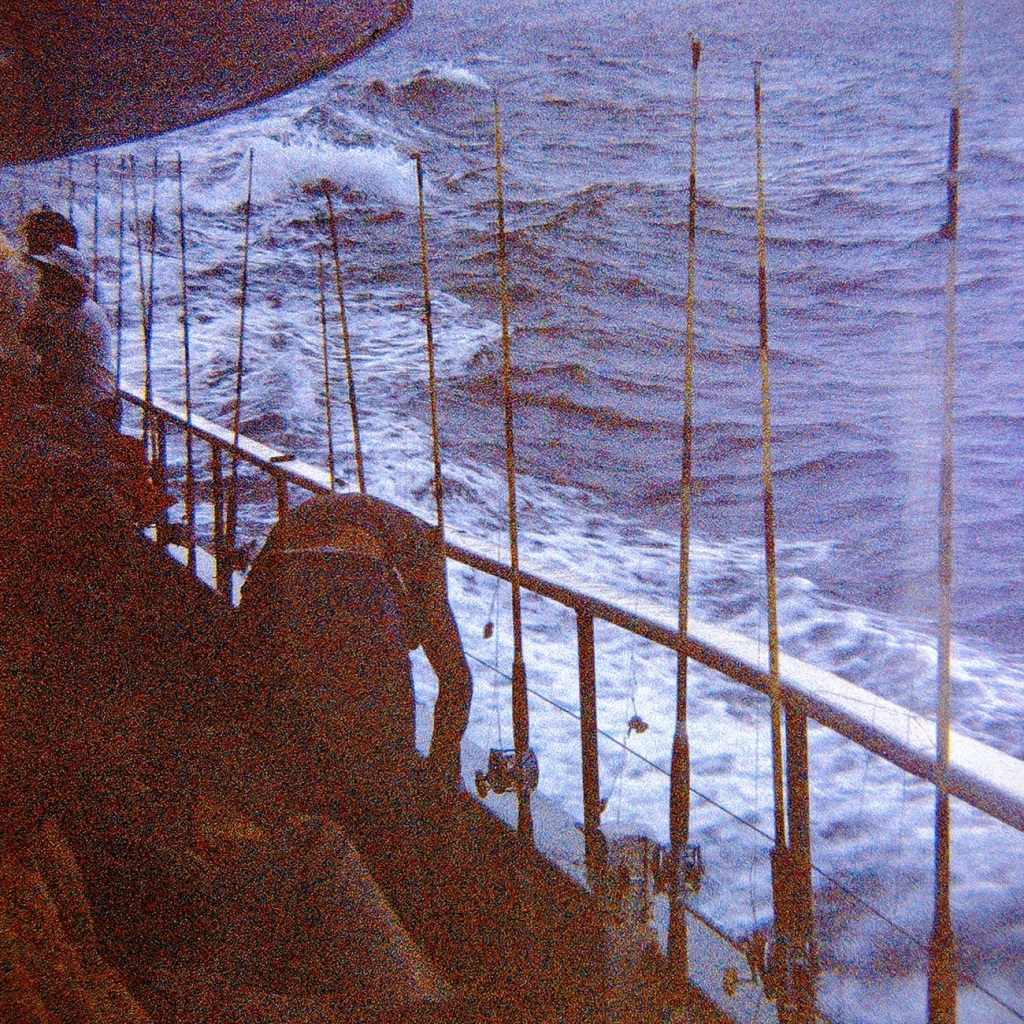
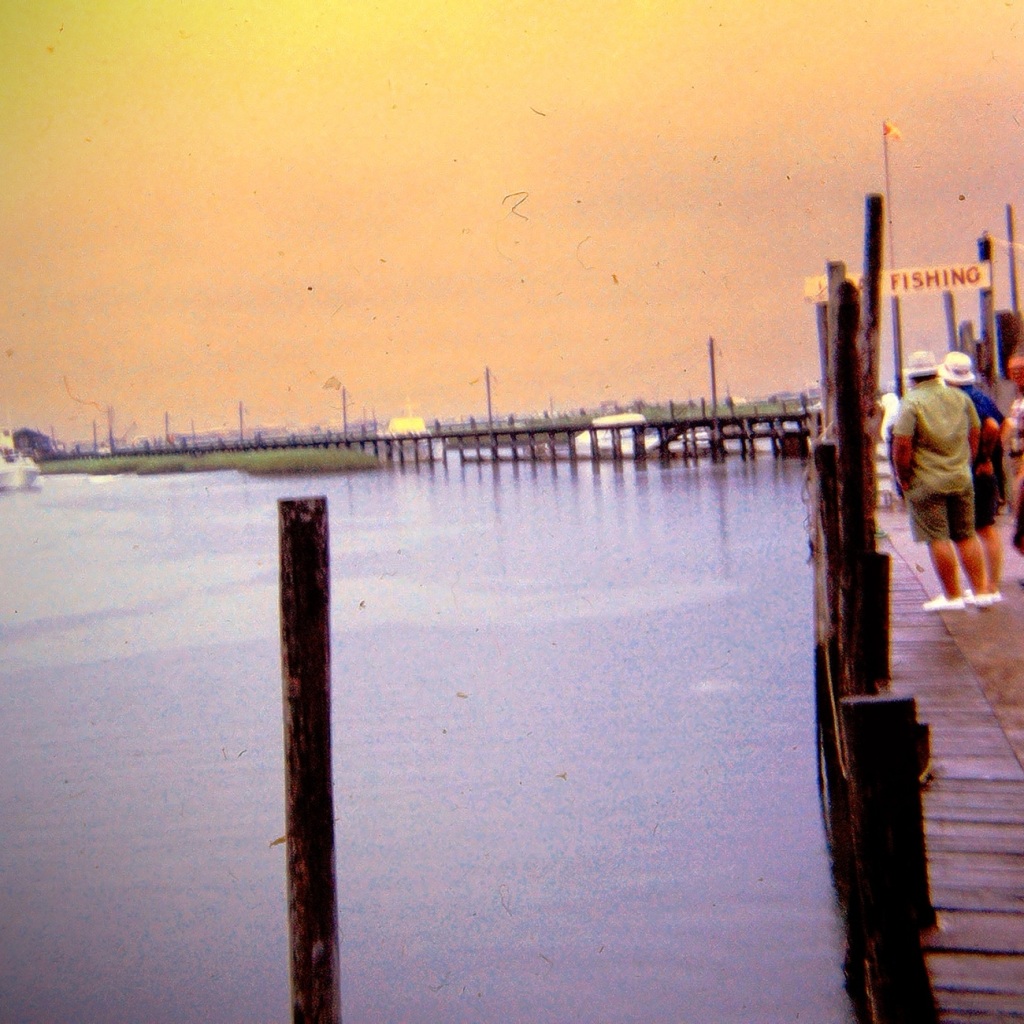
Moving Forward into the Gulf Stream for some Deep Sea Fishing…
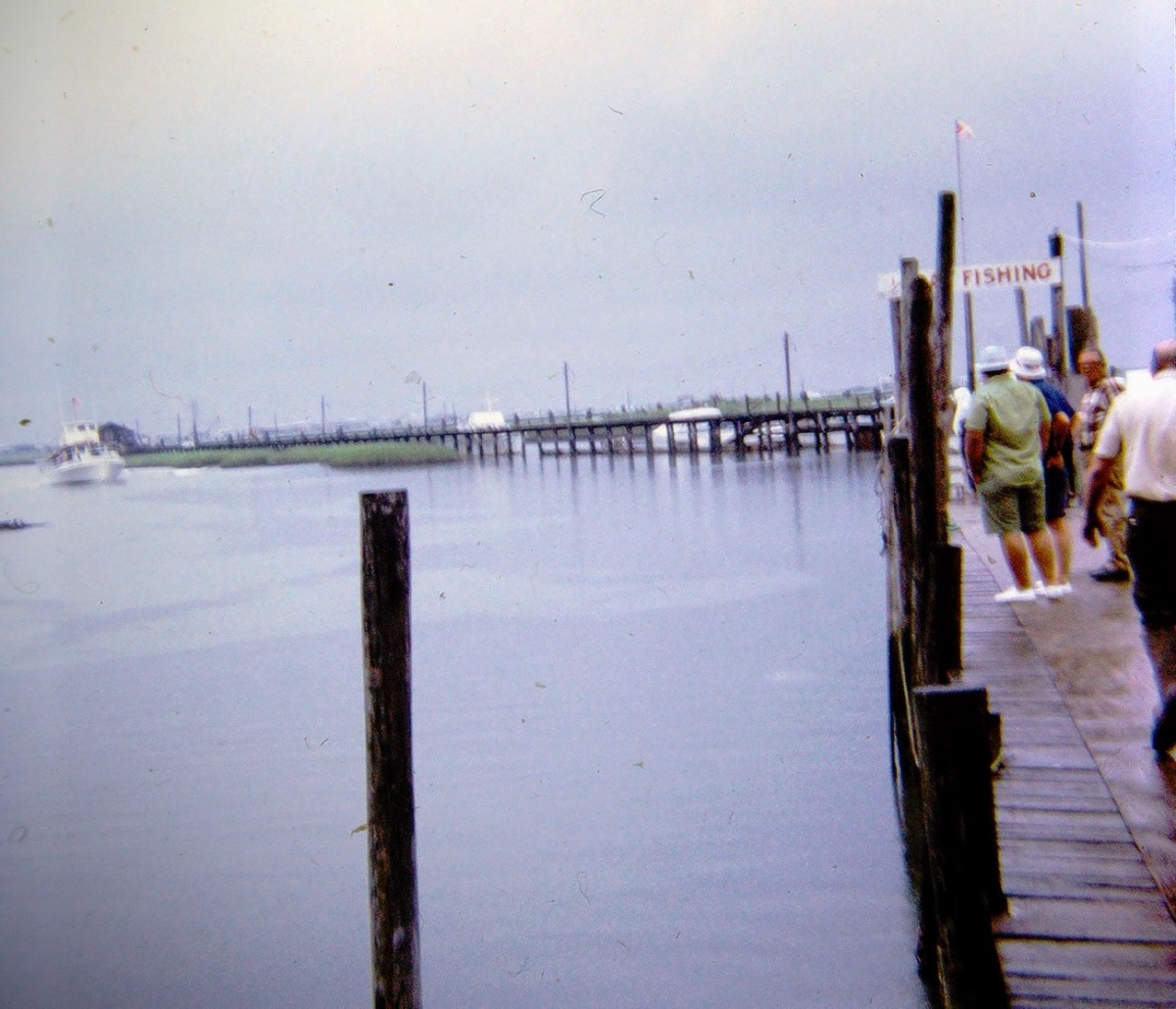
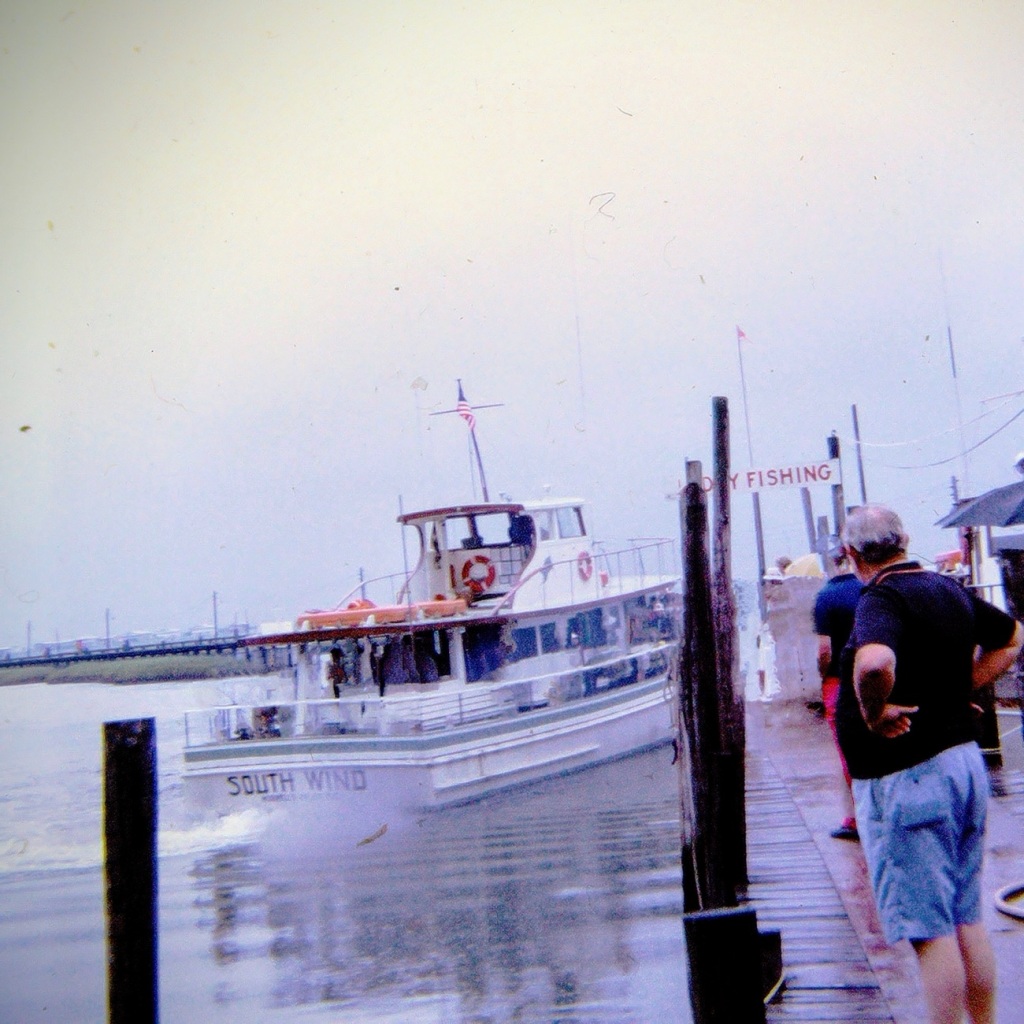
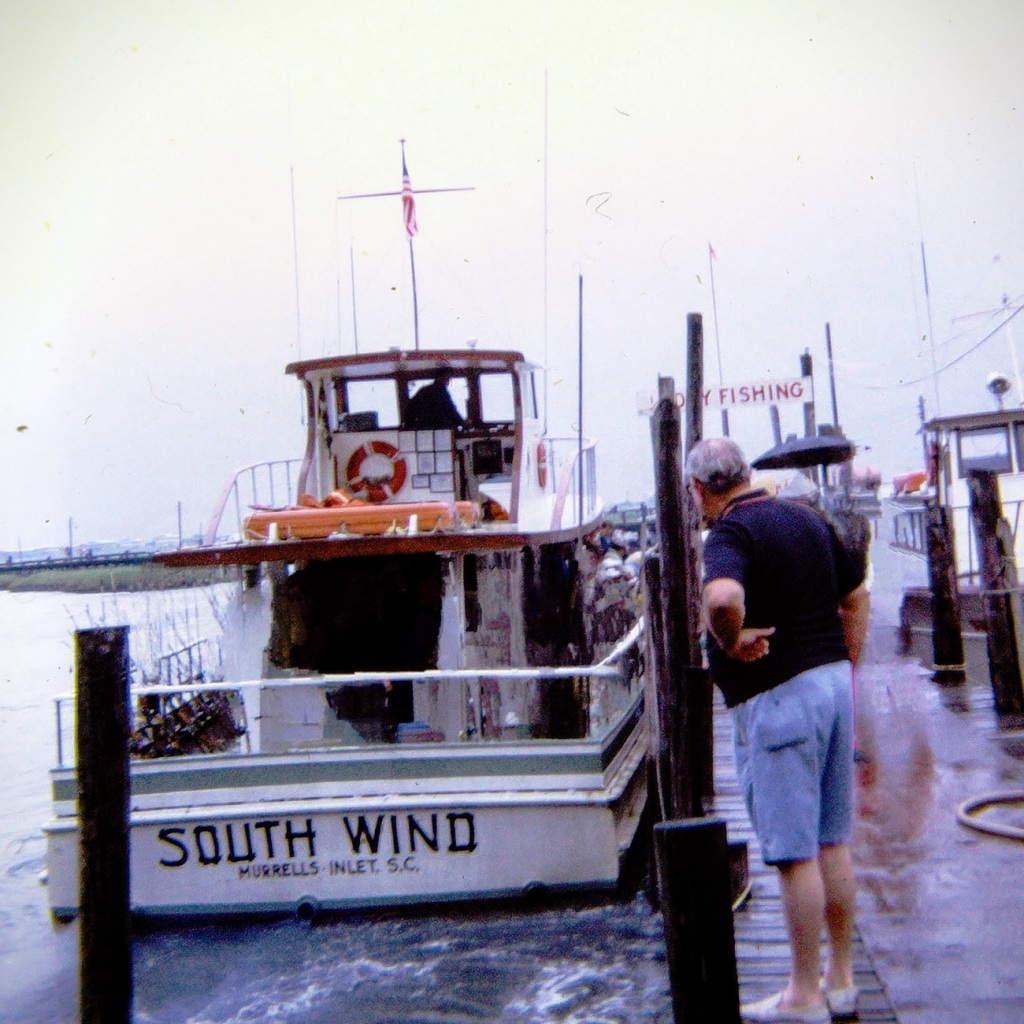
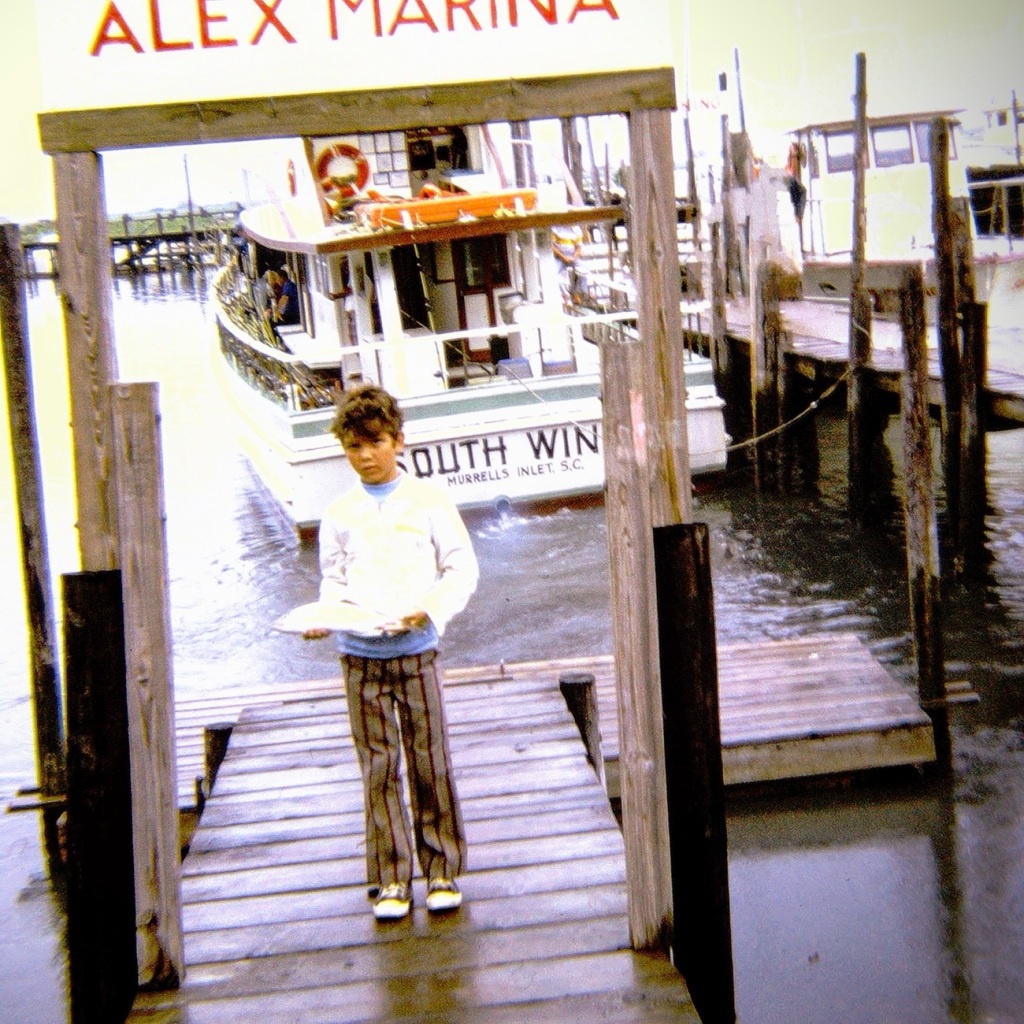
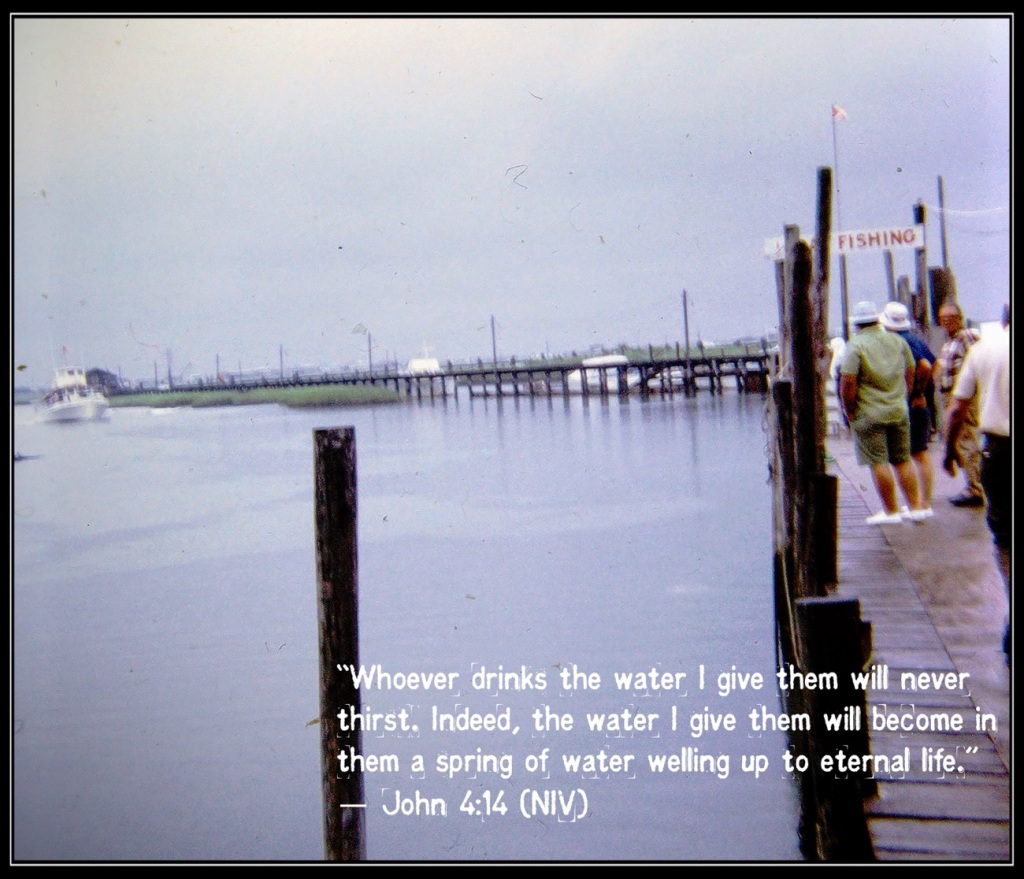
The South Wind pulls alongside the pier … excited fishermen watching “patiently” for their turn to go out on the boat.
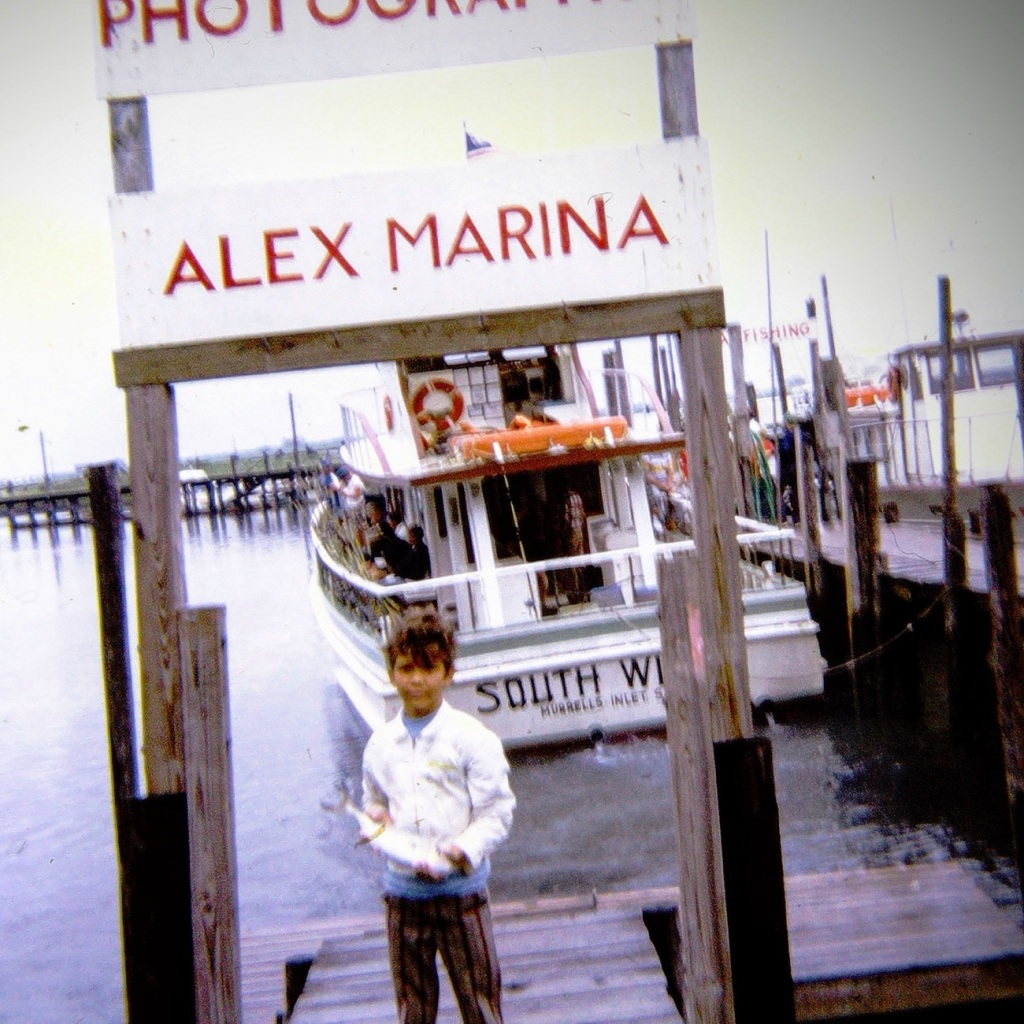
Young Fisherman with his catch
This was a trip my dad made with my paternal uncle (my dad’s sister’s husband.) Not sure if anyone else went along or not, I do not recall. My dad & Shorty ( my uncle) decided to go deep sea fishing 🎣 and drove the three (3) hours to Murrells Inlet to go out on a charter fishing boat for the day.
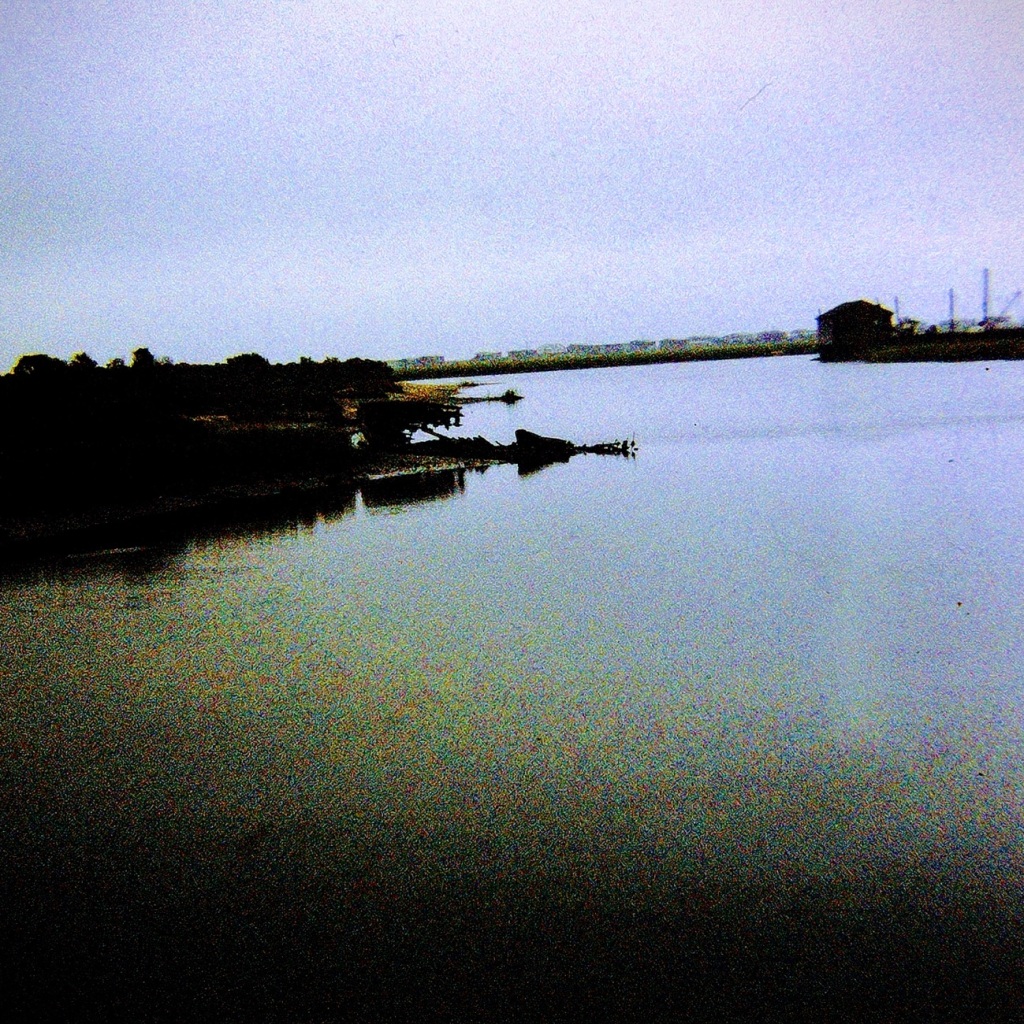
Captain Alex’s Marina once stood along the creek front of Murrells Inlet and was first established in the early 1950’s. Murrells Inlet is a fantastic destination just thirty (30) short miles south of Myrtle Beach, South Carolina. It is considered to be the “seafood capital of South Carolina.”
The land around Murrells Inlet has an historical record of human settlement that goes back thousands of years, before written history. The history includes English colonial settlements and plantations which raised various crops from indigo to rice. An interesting note is that the fishing village of Murrells Inlet was once the lair of the infamous pirate Blackbeard. Today, it’s an outdoorsman’s dream.
A tribute to Captain Alex who ran The Alex Marina and took many on tours or fishing excursions in Murrells Inlet and other areas can be read by clicking here.
Location: Alex Marina; Murrells Inlet, South Carolina, USA
God Bless. Thank you for Moving Forward with us as I continue to Reconstruct my dad’s slides and the memories of his adventures. Thank you for sharing your time and thoughts with me. I appreciate y’all very much.
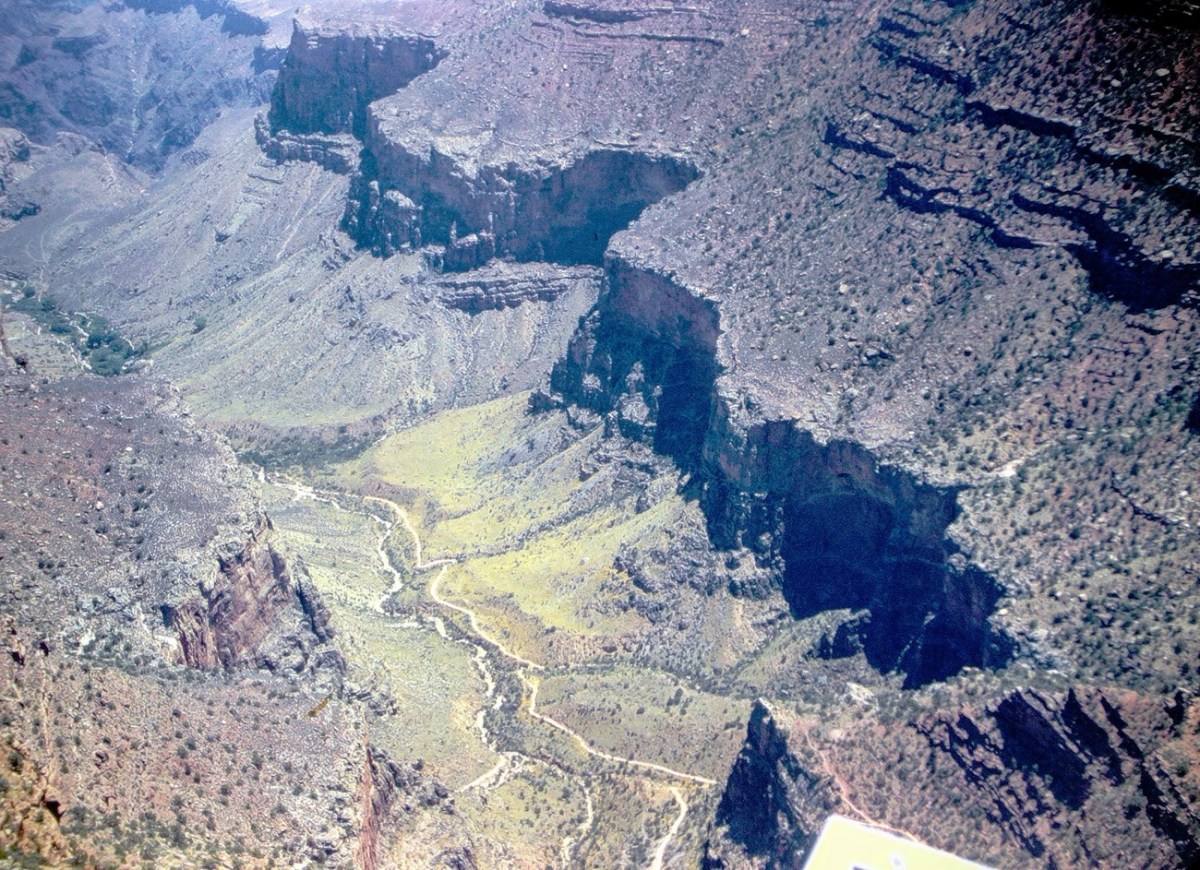
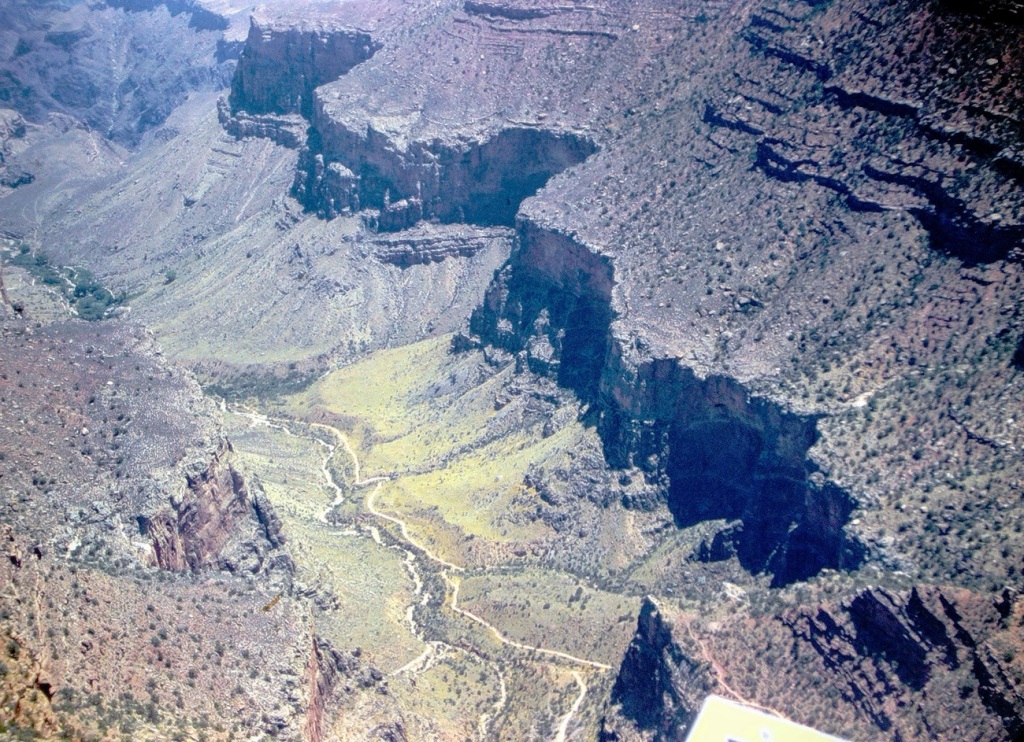
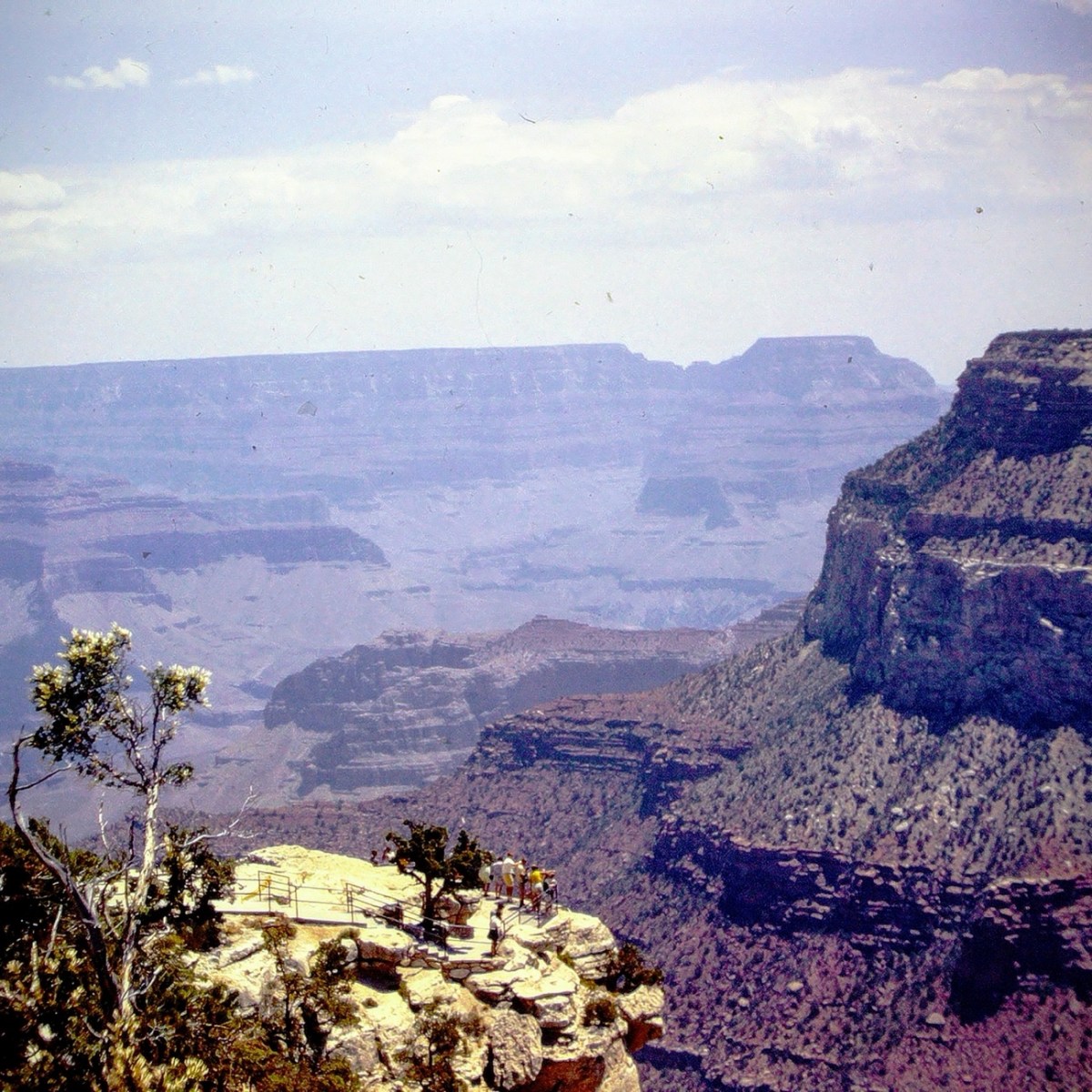
For Cee’s Which Way Challenge this week I’m taking y’all on a hiking adventure back in time to Nineteen Seventy-One (1971). This adventure was a part of a church youth group outing to the Grand Canyon in Arizona. It started off as approximately an 8 hour and 35-minute drive traveling by bus for five hundred sixty-nine miles (569) east northeast loaded with enthusiastic teenagers. [Bus ride not pictured.]
Our first stop at the Grand Canyon was the South Rim where we happened upon the Trans-Canyon Waterline. The South Rim water is pumped up 3200 feet from springs at Indian Gardens, but flow is inadequate for today’s needs (the thoughts in 1971.) Thus the Trans-Canyon Waterline was constructed beginning in 1965 and took until 1970 to complete.
This waterline stretches from the current water intake at Roaring Springs on the north side of the canyon, down to Phantom Ranch, and back up to Indian Garden through extremely rugged terrain accessible only by trail or helicopter. It carries about 190 million gallons of drinking water to over 5,000,000 visitors and 2,500 residents at the Inner Canyon Corridor and South Rim developed area.
Besides the view of the signage, we could see the pipeline which transports the water up to the South Rim and have a terrific view of the Bright Angel Trail. The Bright Angel Trail is the trail which led us to the bottom of the Canyon and the Silver Bridge.
Before we started hiking on the trail we stopped at Hermits Rest to enjoy some spectacular views. Hermits Rest is an iconic and historic stop, at the conclusion of Hermit Road, and the Canyon Rim Trail. It also serves as the gateway to magnificent backcountry hiking trails that originate from the Hermit Trail, a steeply winding path into the canyon that begins 0.25 miles (0.4 km) west of this distinctive building.
Now that we’ve had an overlook of where we are going to be hiking, let’s Move Onward and Forward along the trail. We have a long way to go ahead of us before we’ll reach the bottom of the Grand Canyon and Phantom Ranch.
Once we reach the bottom we had to cross the Silver Bridge to reach our destination. The Silver Bridge is a 500 feet long steel suspension bridge spanning a green river with canyon slopes and cliffs on the opposite side. The Silver Bridge, is located a short distance downstream from the Black Bridge. Both the Silver Bridge and the Black Bridge serve as critical transportation links between the South and North rims at Grand Canyon National Park.
When you visit the South Rim of the Grand Canyon don’t forget to stop at Yavapai Point to see some fabulous views. Make sure you have your camera (or at least your smartphone) with you to capture the beautiful scenic views.
Location: South Rim; Hermits Rest; Silver Bridge; Grand Canyon, Arizona, USA
God Bless. Thank you for visiting and sharing in our memories of hiking the Grand Canyon. Thank you for sharing your time and thoughts with me. I appreciate y’all very much.
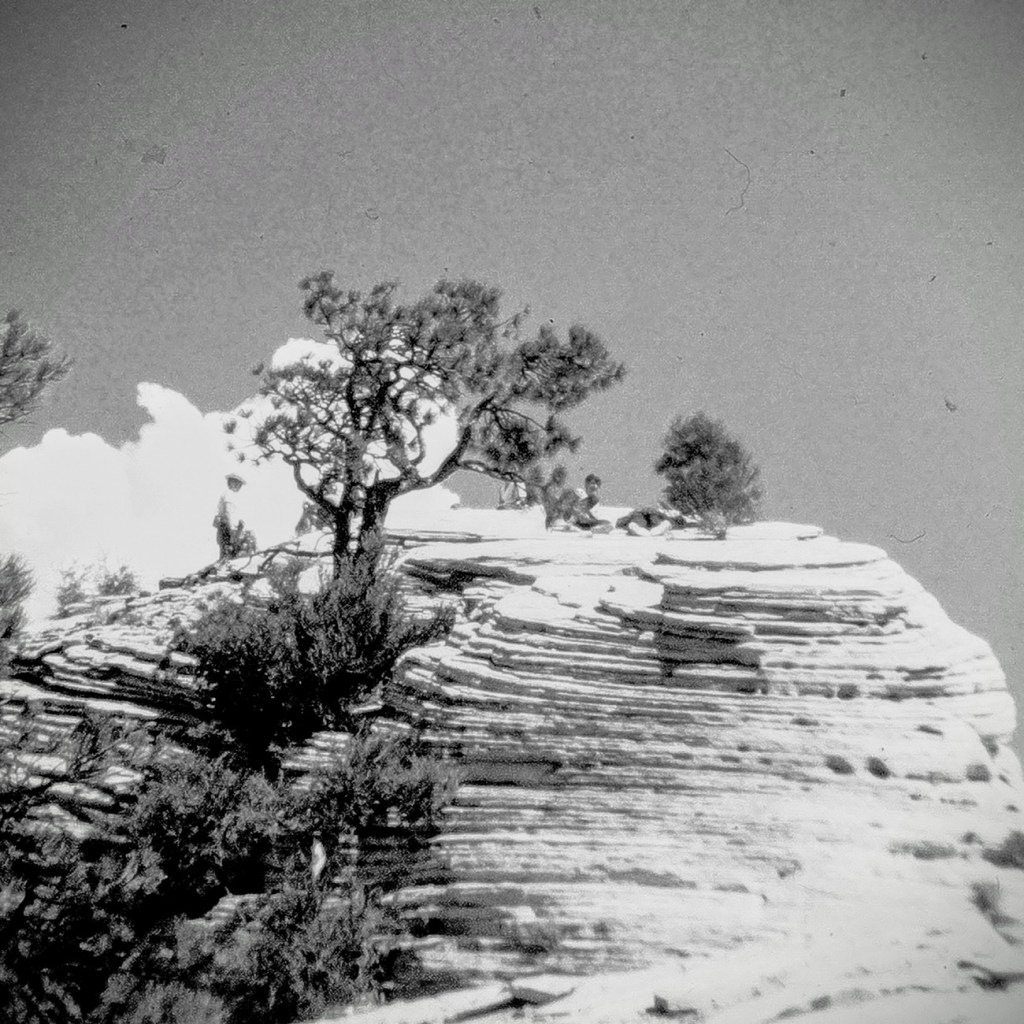
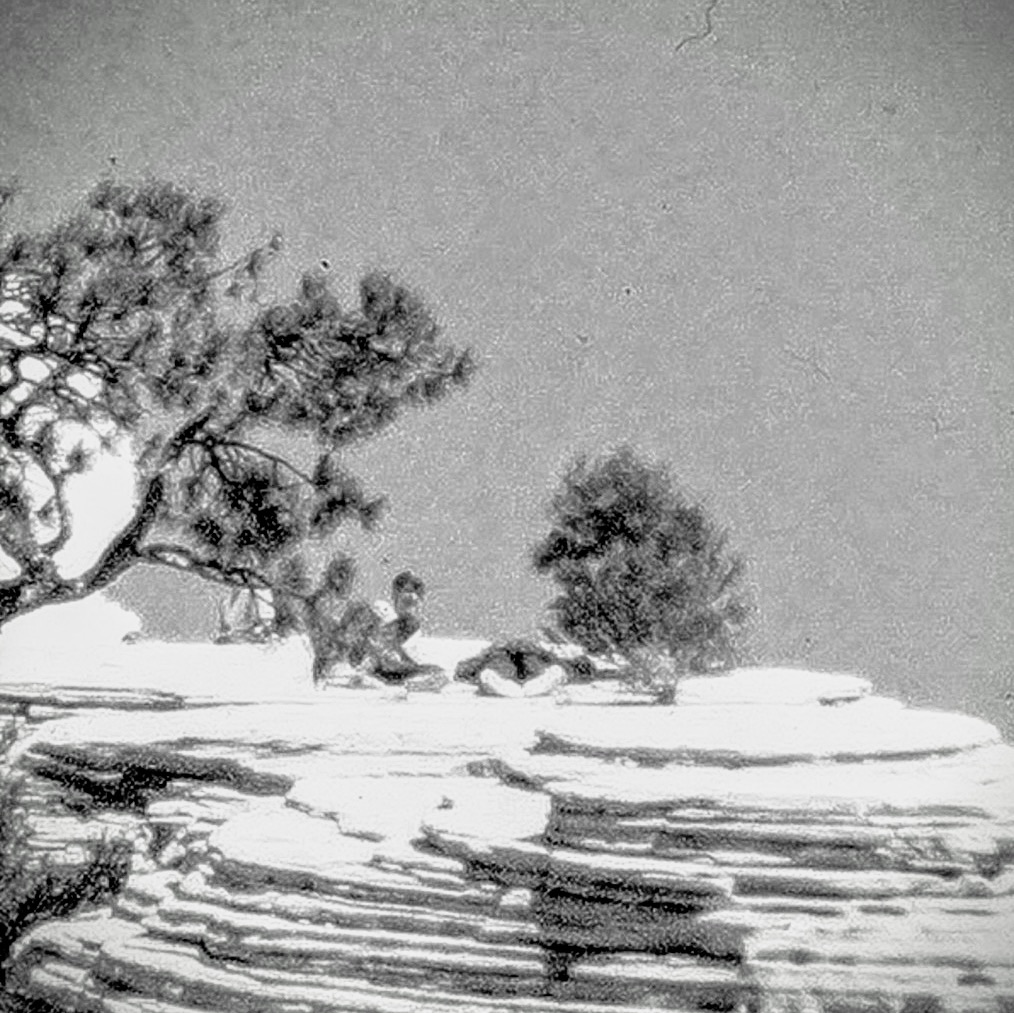
Wow, we made it the Summit. It took all our energy and determination, but we did it. Look at the views, they are so amazingly beautiful. It was worth the strenuous hike to see the spectacular view.
Location: Zion National Park; near Springdale, Utah, USA
God Bless. Thank you for Moving Forward hiking up to the Summit of Lost Peak with us. Thank you for sharing your time and thoughts with me. I appreciate y’all very much.
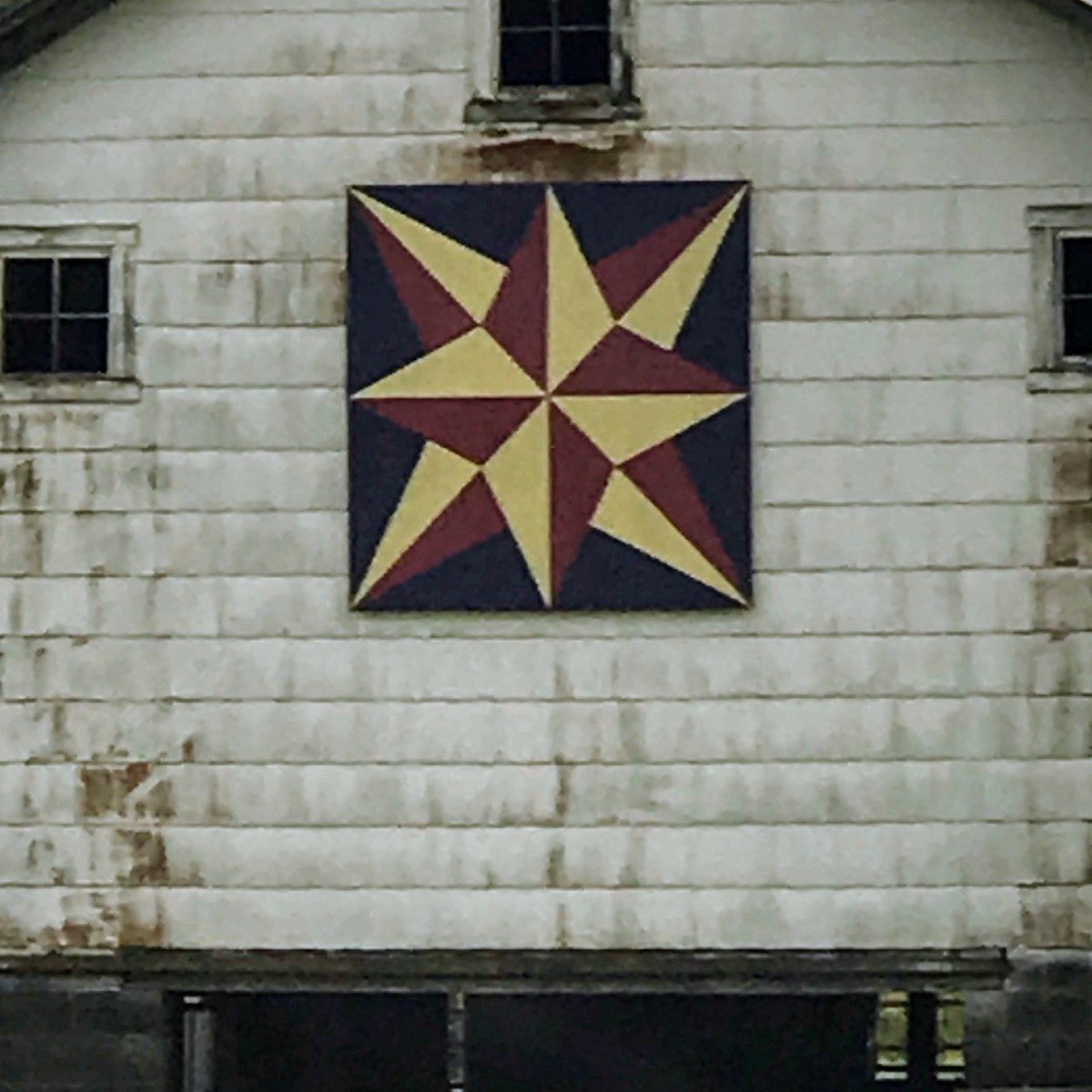
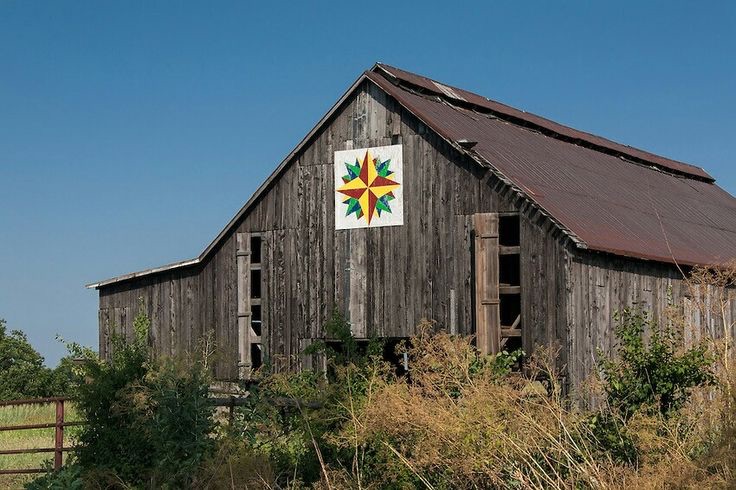
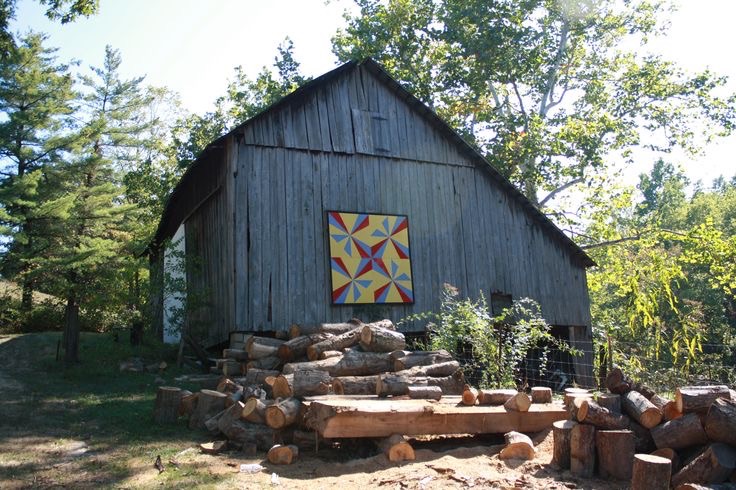
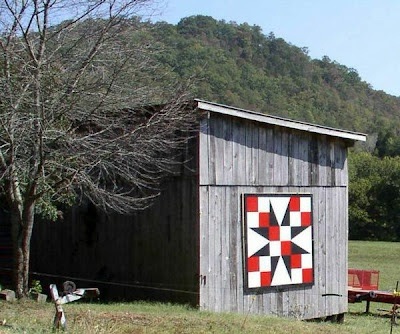
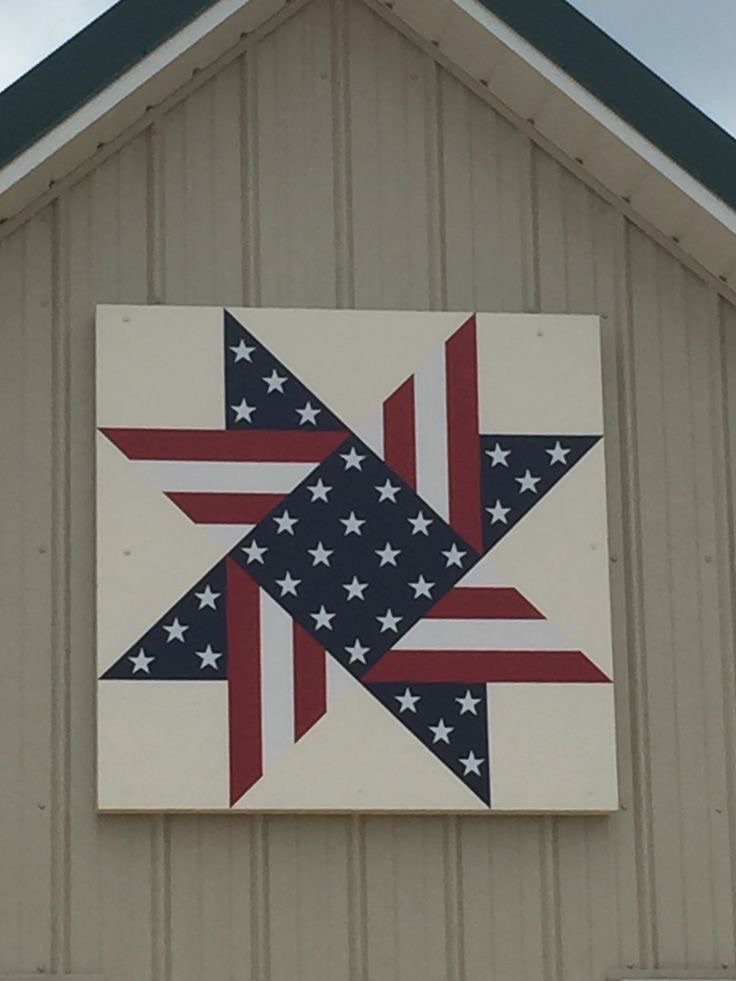
Did you know that Barn Quilt Trails are located in 43 states of the United States of America and Canada has 3? Barn Quilts are believed to have originated in Pennsylvania almost 300 years ago when Europeans immigrated to America.
Have you ever wondered what a Barn Quilt is or their significance? A Barn Quilt is a large piece of wood painted to look like a quilt block and hung on the exterior of a barn, house, garage or other building. During the Revolutionary War, “Barn Quilts” were used to show American forces that an area was safe, secure, and supplies were available. Barn Quilts are a popular form of Americana folk art. They help to preserve the country’s quilting tradition and the regional heritage of various communities.
Barn Quilt Trails
Barn Quilt
Blue Ridge Parkway
North Carolina
The first Barn Quilt Trail was started by Donna Sue Groves. She came up with the idea while working for the Ohio Arts Council in the 1990s. Donna Sue shared her story in “Following the Barn Quilt Trail.” Soon barn quilts spread to other states, becoming driving tours, drawing in tourists and bringing the Appalachian way of life to the forefront. The Barn Quilts in the slideshow are located in the Ohio Barn Quilt Trails and the Appalachian Quilt Trail.
My Favorite Quilt
Even though this Quilt is not a Barn Quilt, it is extremely special to me. It was made by maternal grandmother with remnants of fabric used to make uniforms for me when I worked as a nursing assistant after high school. She lovingly made it with love to fit my bed. It was sewn on an old fashioned black Singer Sewing Machine to make each quilt top. She used colorful yarn to hand quilt and tie-off the quilt.
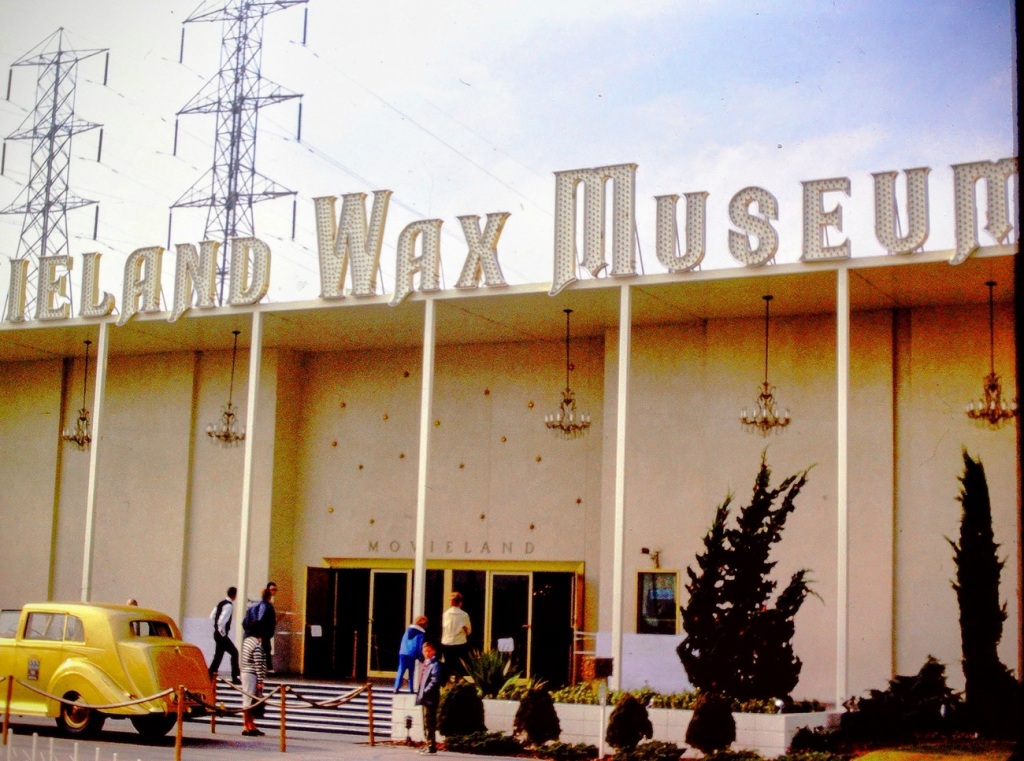
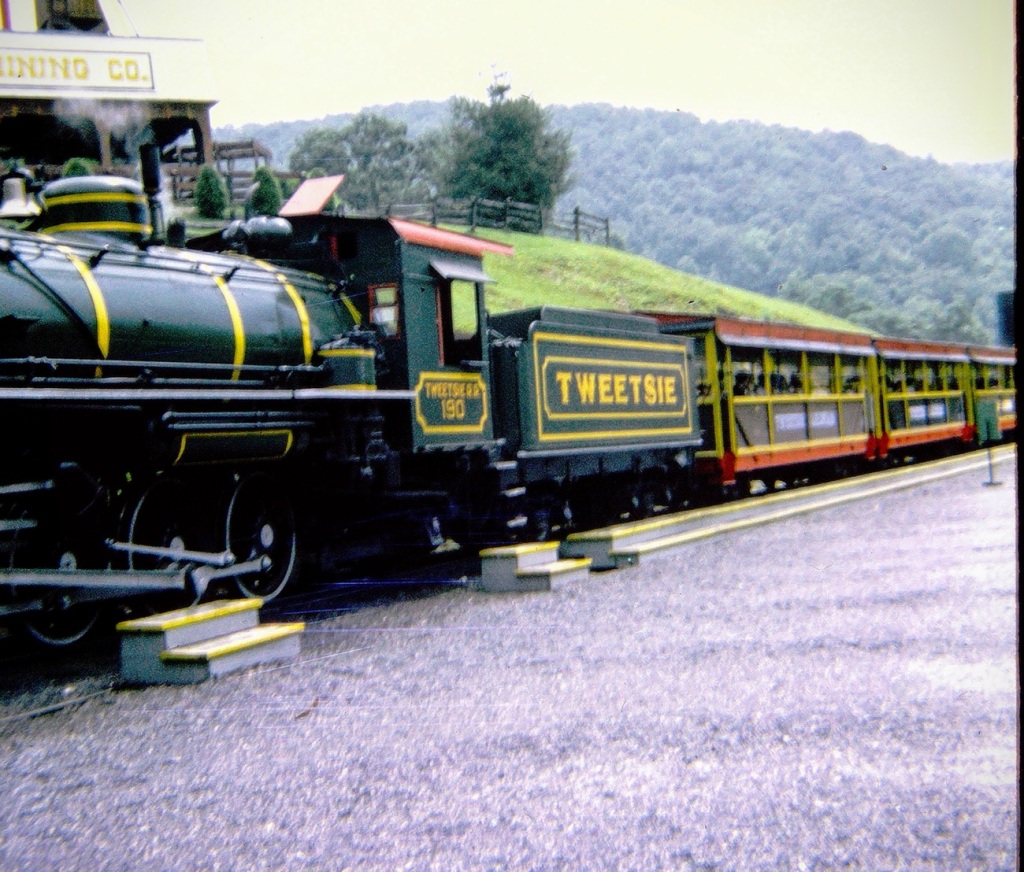
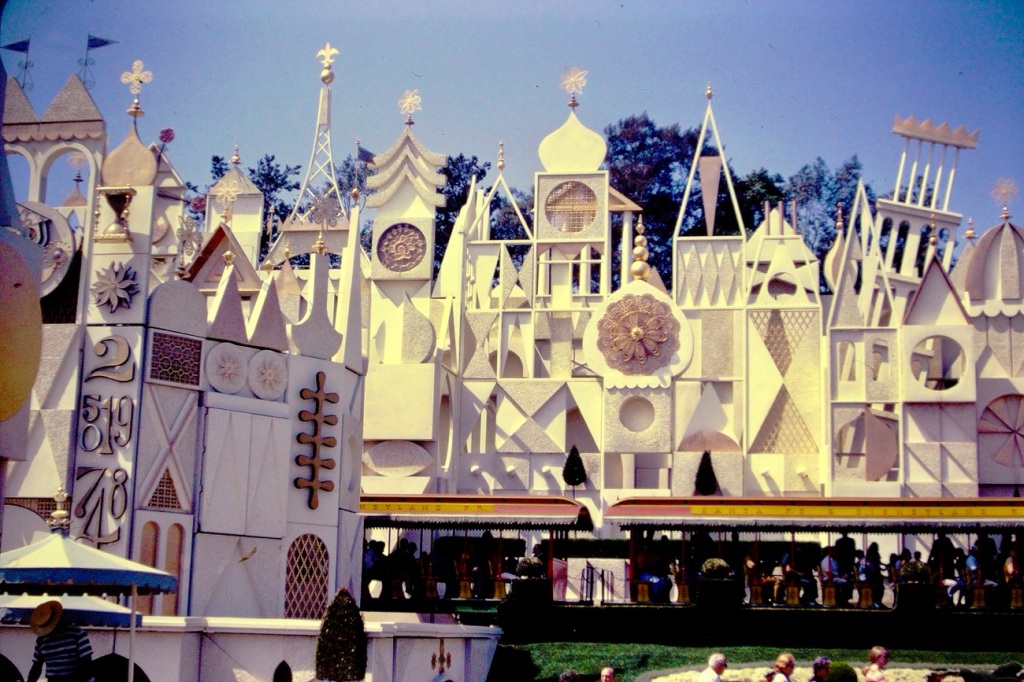
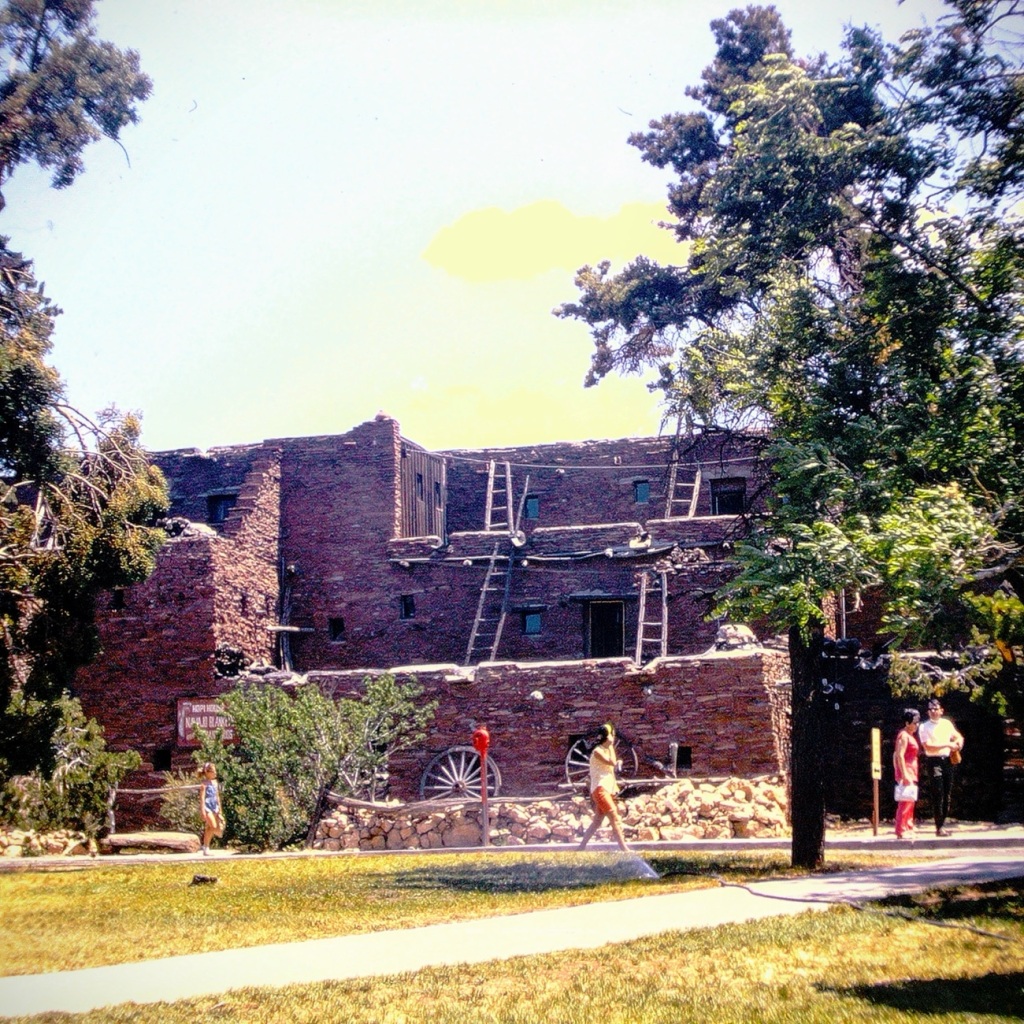
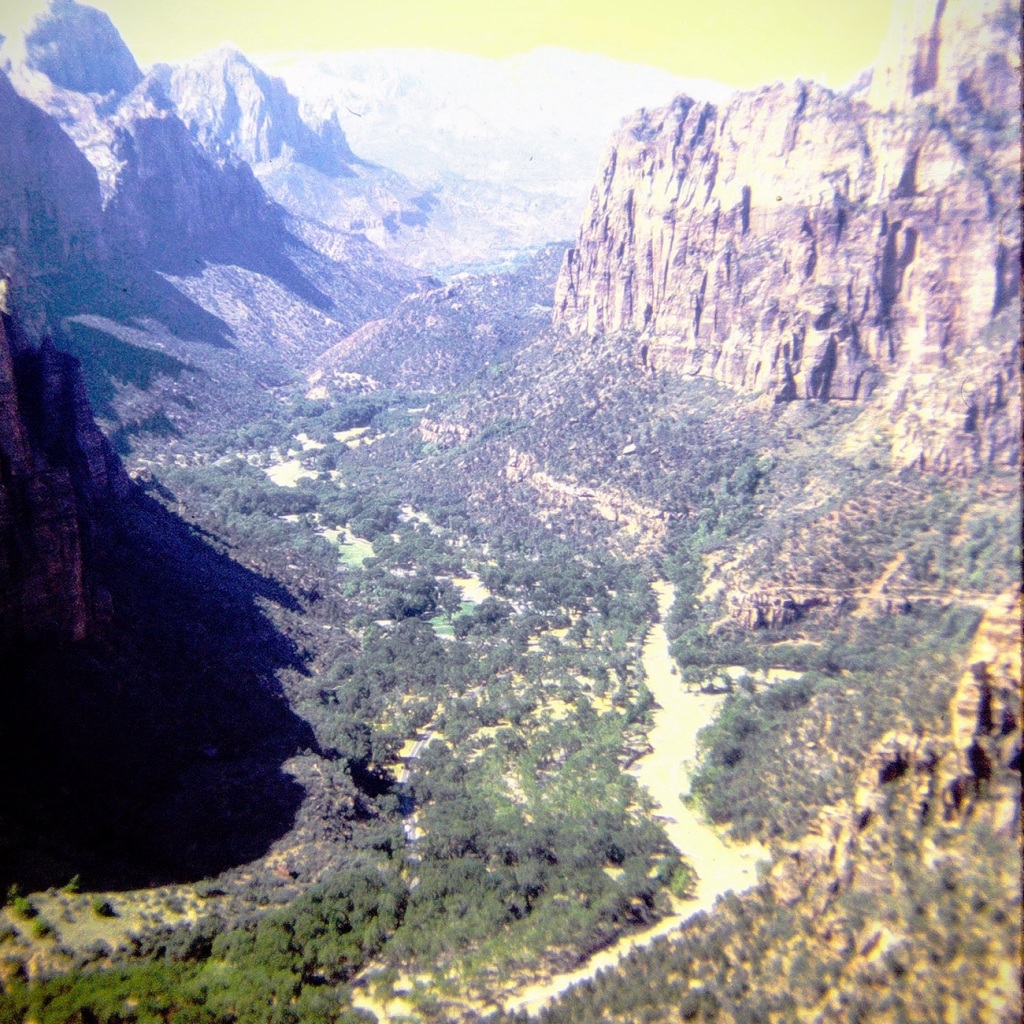
Movieland Doors Movieland Wax Museum Buena Park, California in May 1966Moving Forward on TWEETSIE RAILROAD Boone, North Carolina in July 1969It’s a Small World Disneyland Anaheim, California in June 1970Hopi House Pueblo Indian Dwelling Grand Canyon, Arizona in January 1971View from Angels Landing Angels Landing Trail Zion National Park, Utah in August 1971
Digital Conversion of my dad’s slides were done using Wolverine’s Digital Converter.
God Bless. Thank you for traveling back in time across America with us. We had fun moving forward with memories reconstructing my dad’s old slides to share and preserve. Thank you for sharing your time and thoughts with me. I appreciate y’all very much.
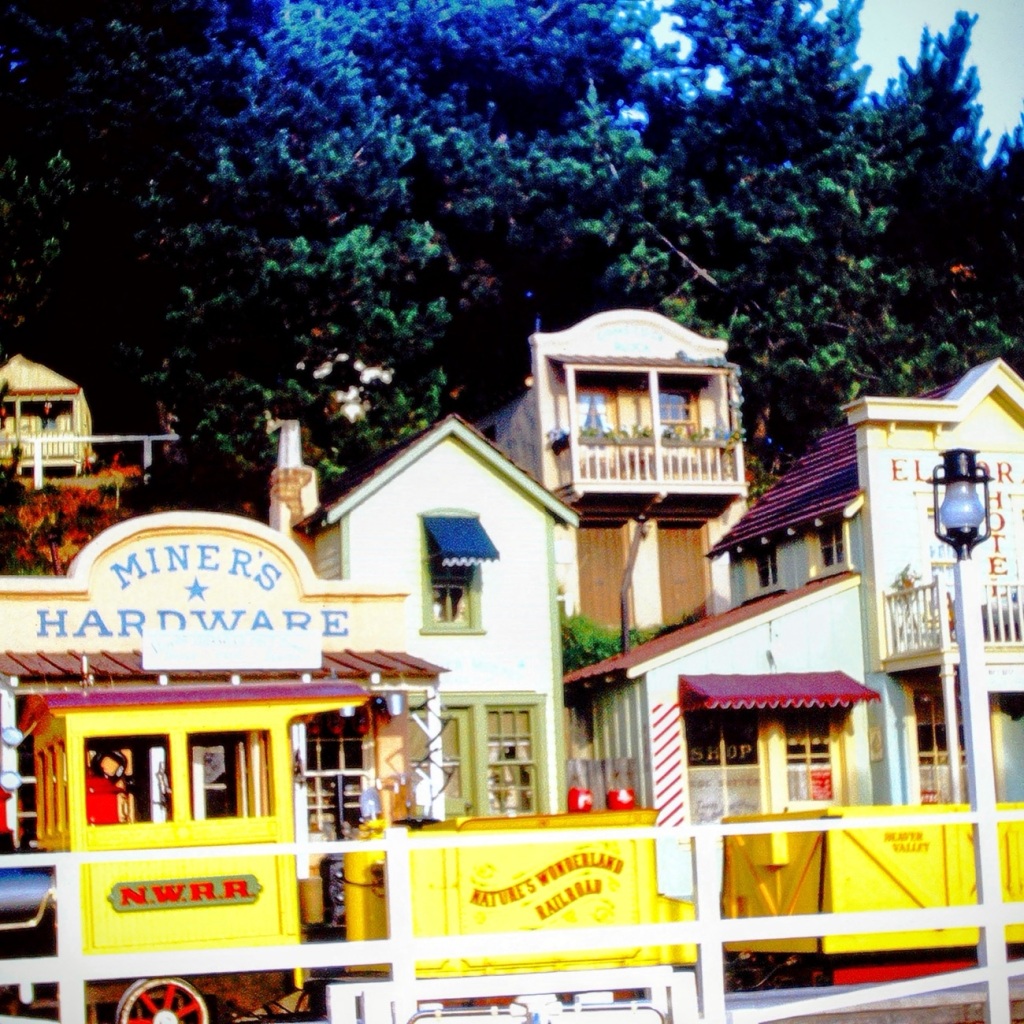
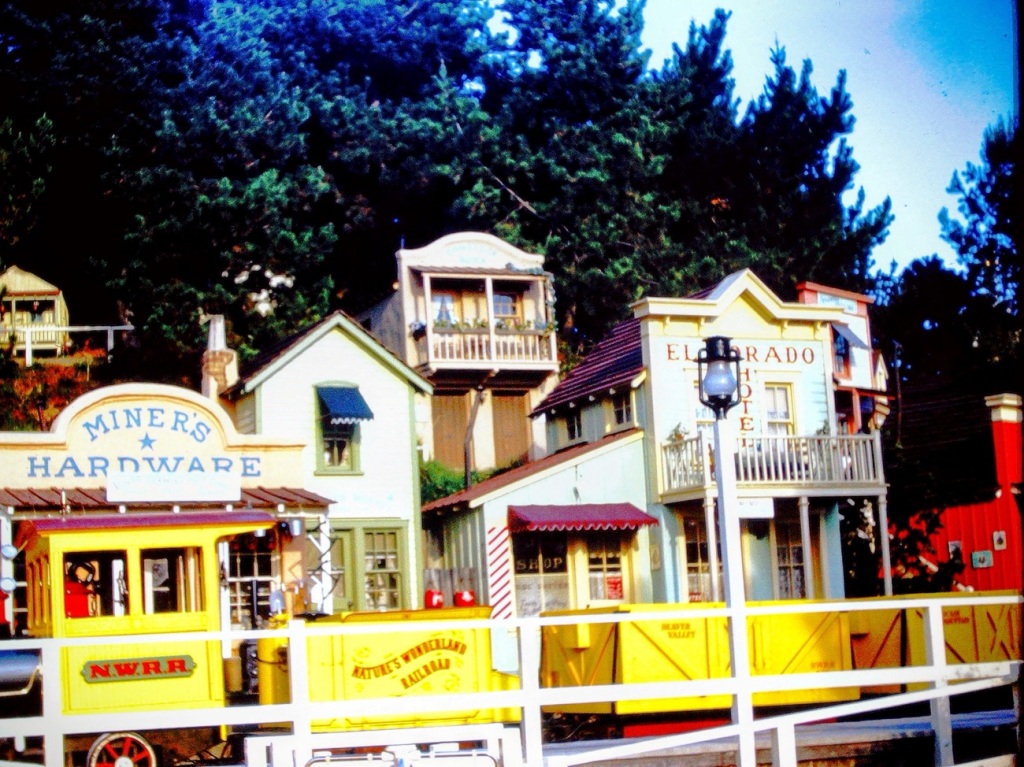
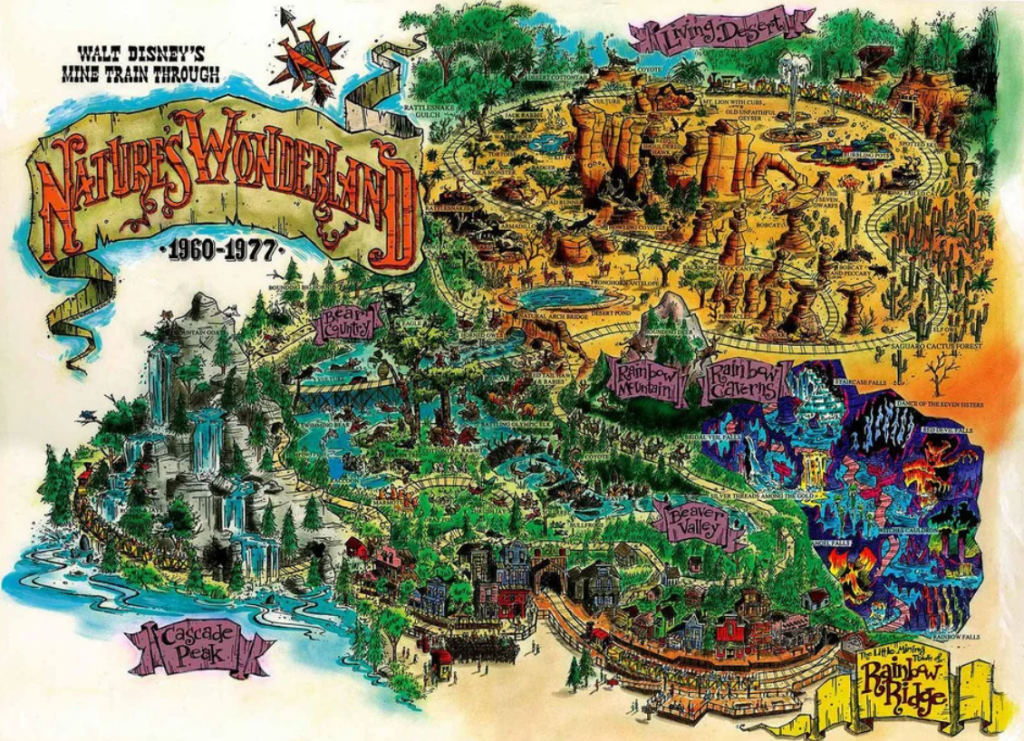
Going back to our Disneyland adventure let’s take. Look at another attraction we rode. We are taking a look at our ride on Disneyland’s Mine Train through Nature’s Wonderland.
The Disneyland Mine Train was an attraction through Nature’s Wonderland in Frontierland that ran from May 28, 1960 until January 2, 1977. It was previously called Rainbow Caverns Mine Train and later became Big Thunder Mountain Railroad.
Nature’s Wonderland Railroad
The Mine Train rode past the mining town of Rainbow Ridge where you could observe what a mining town would have looked like with a hardware store, the El Dorado Hotel. It allowed you to feel like you were in the old west. The train would take you through a tunnel and into Beaver Valley, where you could witness beavers at work chomping their wood, squirrels, raccoons, rabbits, foxes and other forest animals.
After Beaver Valley the train moved forward going across a bridge by Cascade Peak, where you could feel the mist coming from the waterfall on your skin. At this point you could see jumping fish, mountain goats, and swimming bears.
The narrator would announce where you were coming to and what you would see at each destination. From Beaver Valley the train moved forward into Bear Country where you could see 2 large elk with their antlers intertwined, fighting each other.
From there the Mine Train would continue moving forward taking you in a circular shape around the Living Desert, with the other half being a forest filled with desert cottontails, rattlesnakes, waterholes, tortoises, badgers, and armadillos. The displays made everything seem so realistic and lifelike.
The last portion of the ride took you through Rainbow Caverns. In the Caverns you could see giant stalagmites, stalactites, and colorful falls on every side.And if you looked real carefully, you’d see geyser grotto, and the witch’s cauldron.
Thanks for climbing aboard and joining us for our ride on Disneyland’s Mine Train through Nature’s Wonderland adventure.
Traveling back in time to December 1965, to a family day trip. Packed and loaded in our 1962 Ford Galaxie 500 with a cooler of drinks, snacks, and sandwiches; we began our approximately hour and fifty-one (1hr 51min) drive north moving forward through the city streets until turning onto CA-94 and eventually onto the recently constructed I-5.
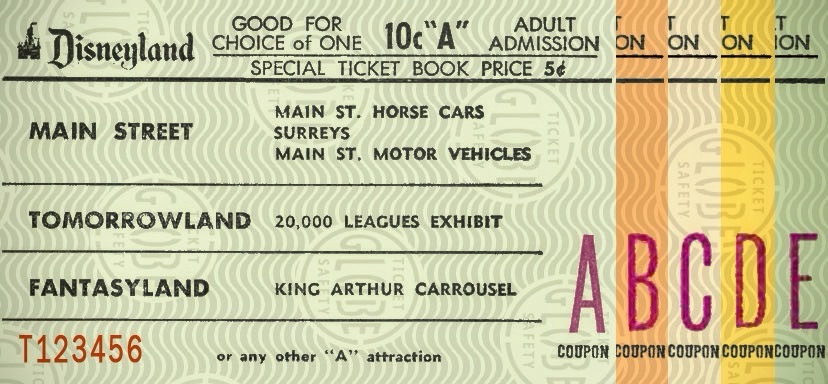
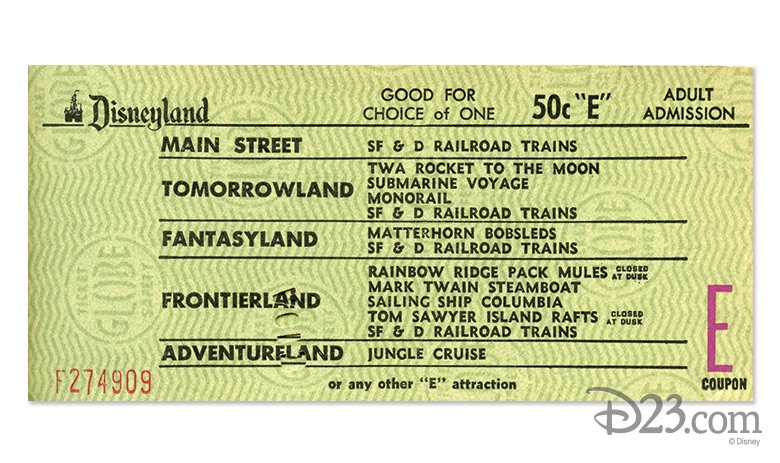
Upon arriving at the Disneyland entrance, my parents purchased our admission and ride tickets. General Admission prices for adults at that time was $2.60 per adult and included a ticket for the Monorail. Junior prices were $1.80 and Children’s admission prices were $1.10. Tickets for the rides cost extra. A book of 10 tickets ranged from $3.00 to $5.00.
1965 Disneyland Ride Tickets A-ESelection of E Ticket Rides
In 1965, the cost of admission was considered a lot of money. However, people considered visiting Disneyland was a worthwhile family adventure.
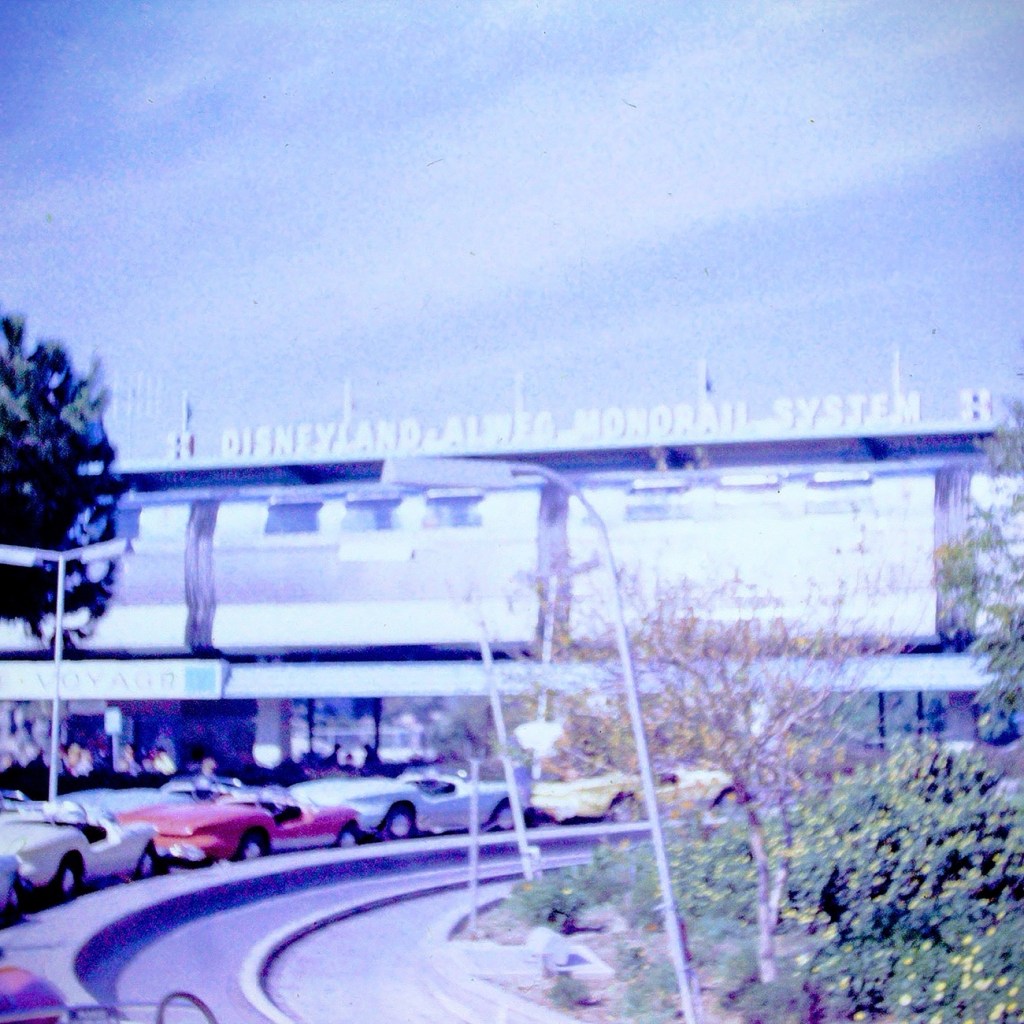
After our tickets were purchased and we entered the park, we selected what rides we wanted to ride. We went to each ride or attraction as a family unit, not venturing off individually. Our first ride of choice was the Monorail.
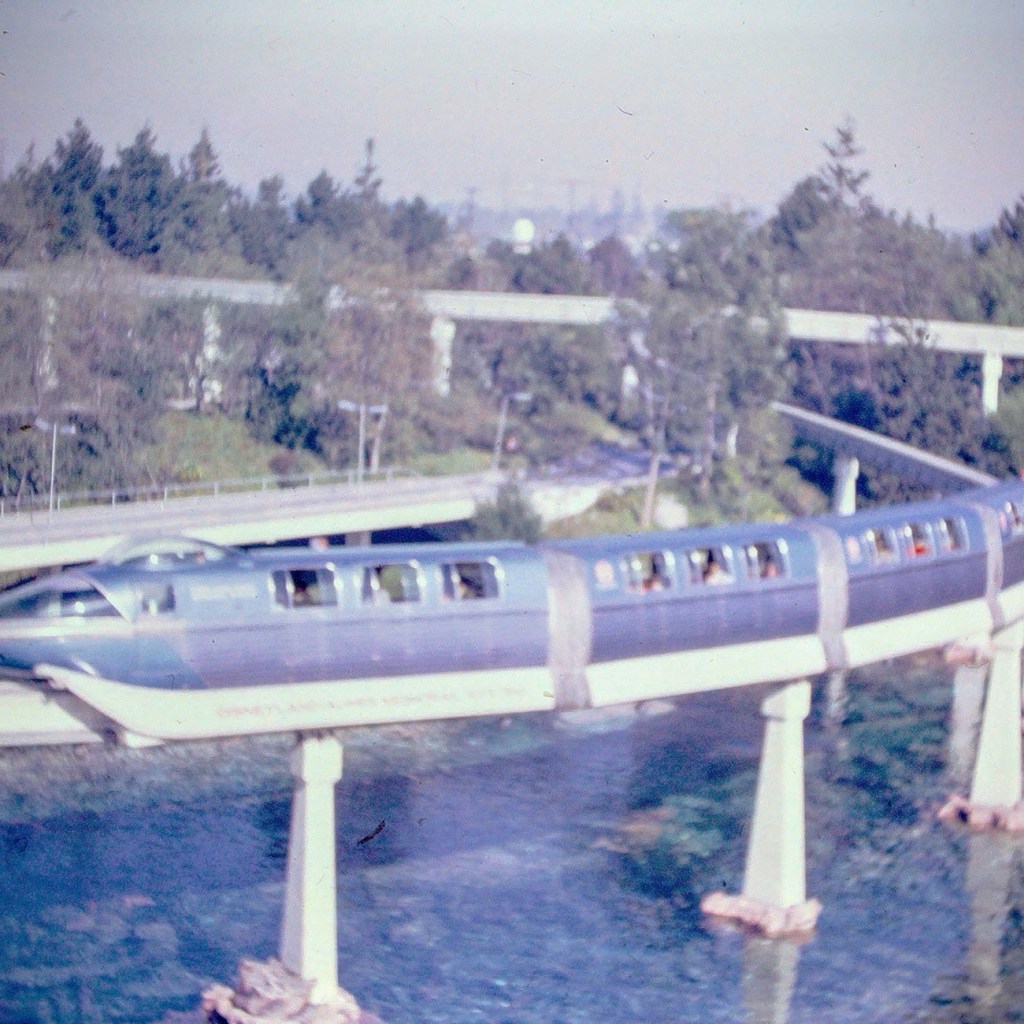
Disneyland Monorail
The Monorail was considered as a mid-century marvel and captured the hearts and imaginations of the theme park and Disney fans. The Monorail was a Highway in the Sky which allowed for a unique experience viewing the park from above.
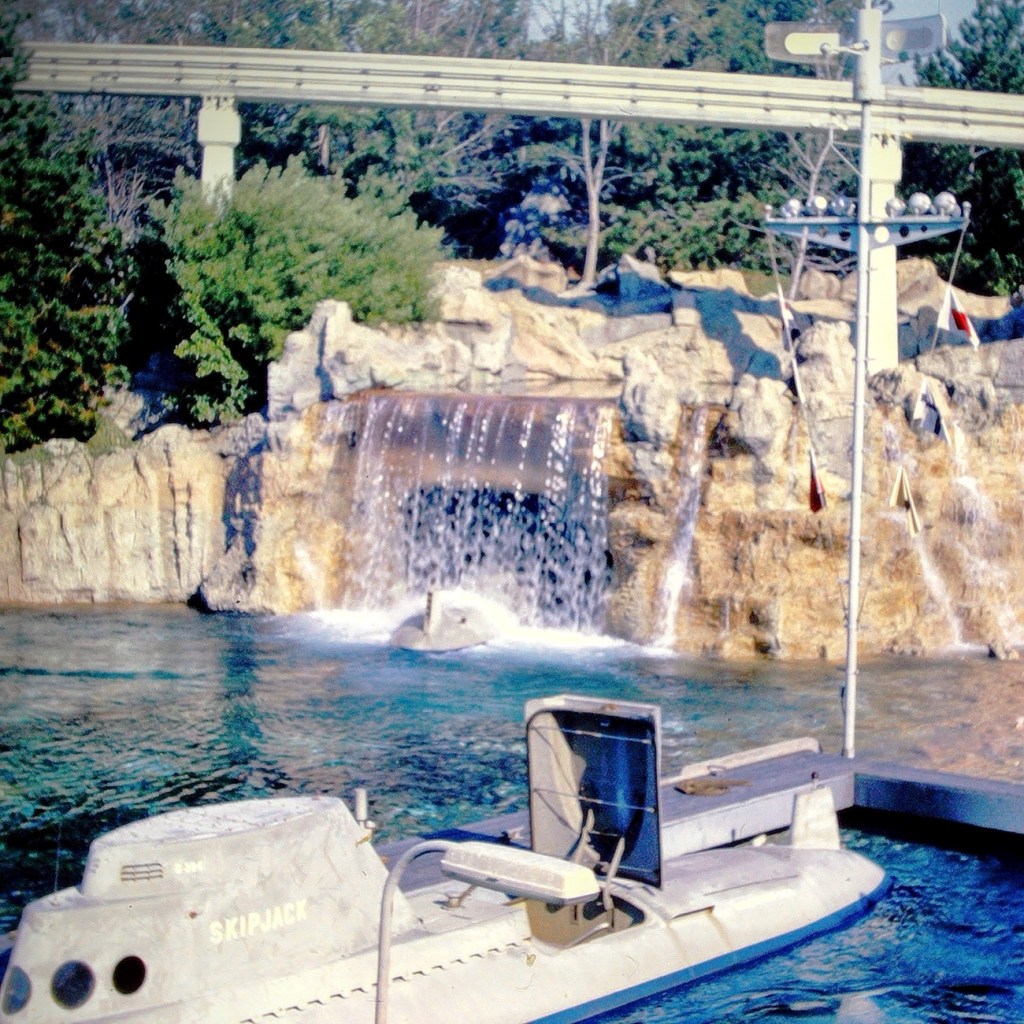
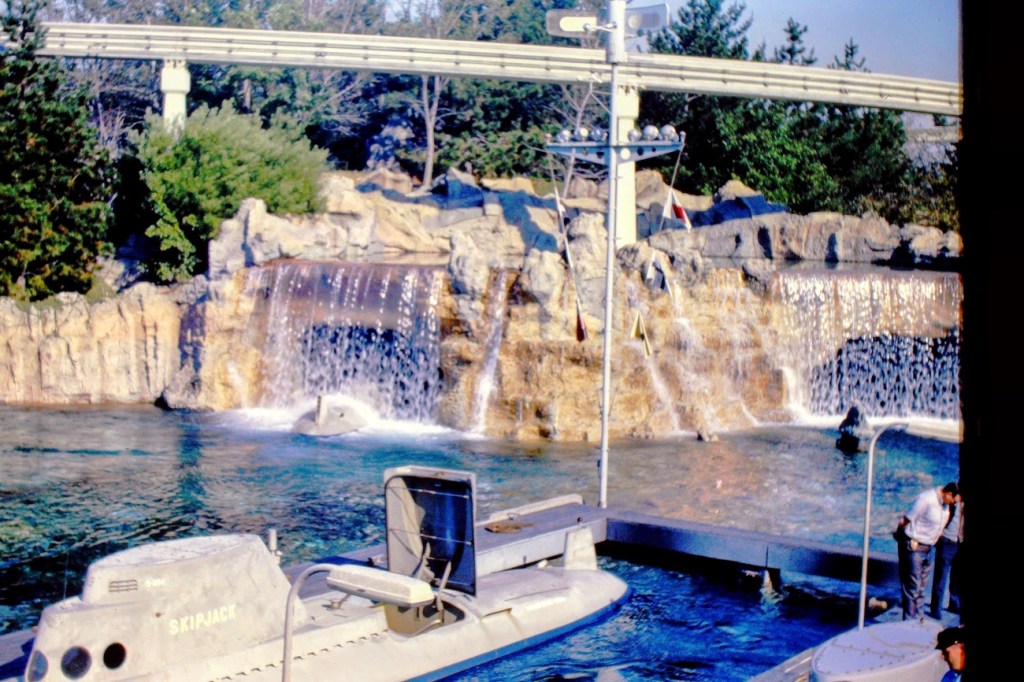
Our next selection was to ride the submarine adventure. The attraction features vehicles that were designed to look like submarines. It required the E ticket was in the Tomorrowland area of the park.
Early Disneyland Submarine
The submarines took us on an adventure under the sea simulating fish and other sea creatures allowing us to imagine we were really being submerged and viewing the undersea life of a tropical lagoon.
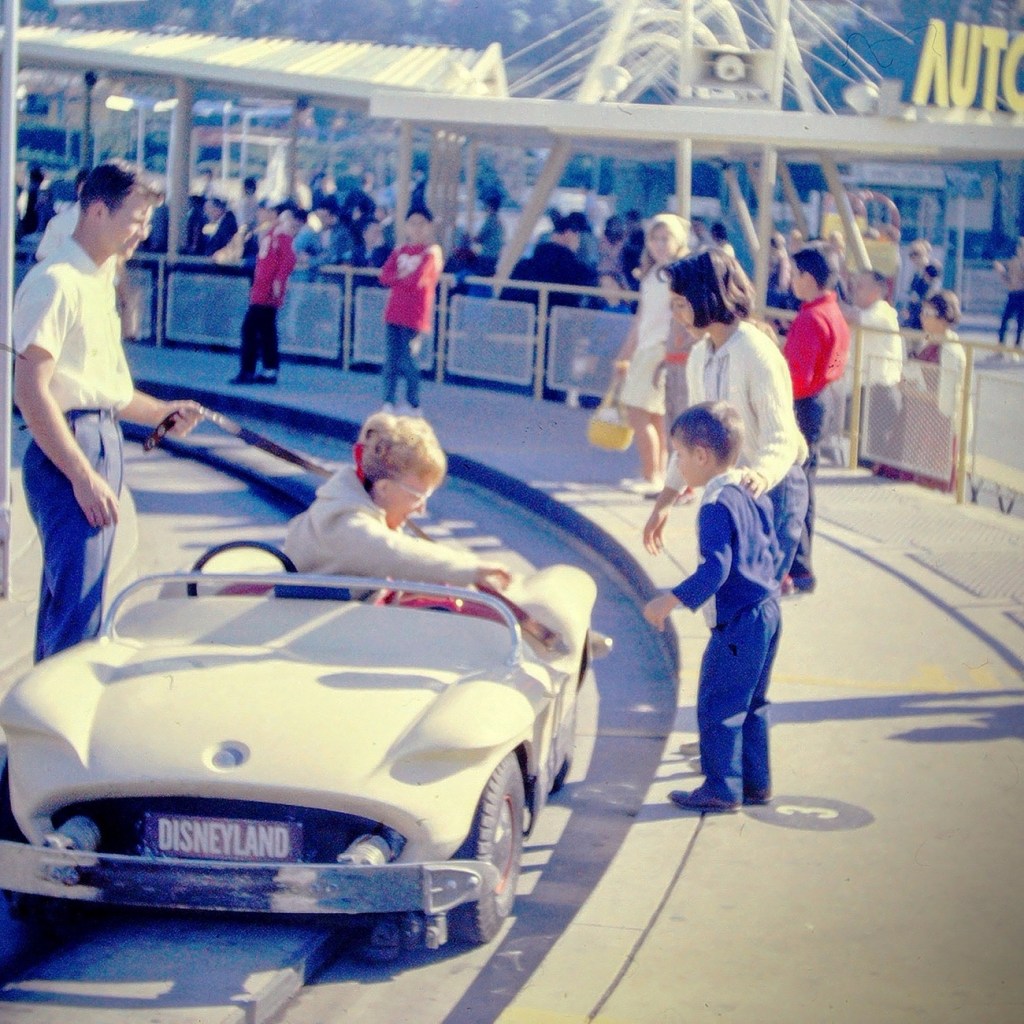
Next up was the Autopia adventure. This was where we could get in cars and race around an enclosed track. We could imagine we were actually racing the other drivers.
My mom getting out of the Race Car.
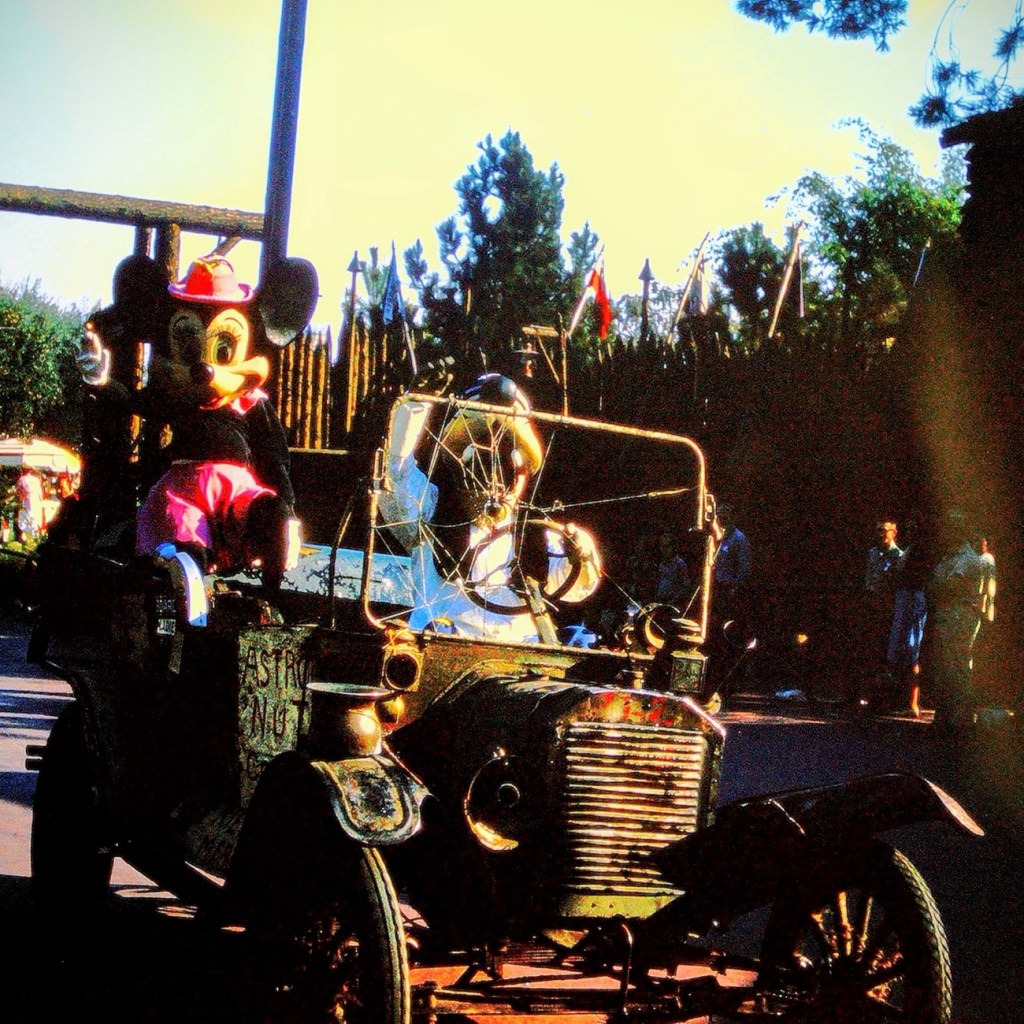
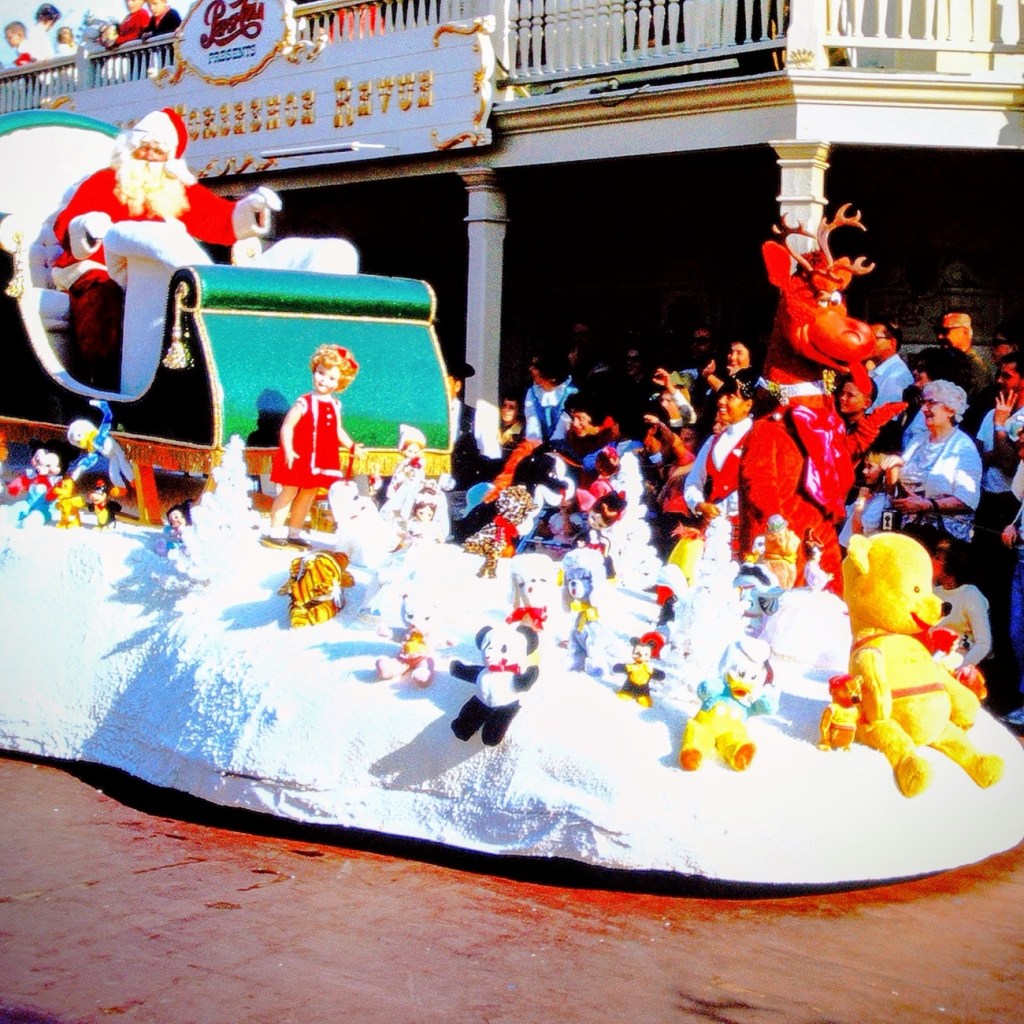
After a full day of adventures Moving Forward around the park, we selected a spot on the side of Disneyland’s Main Street to watch the Parade. The waiting was a time of excitement as we looked forward to the parade starting.
Mickey Mouse riding in a Vintage Car with Goofy1965 Disneyland Santa Claus Float
Well folks, that’s all for today. We had fun, but now it’s time to head home.
Growing up almost three thousand miles (actually 2,512 by today’s calculations) away from my dad’s family in South Carolina; we only traveled the long distance every three (3) to five (5) years. My parents always drove straight through switching off driving every several hours and/or miles as deemed necessary.
On every family vacation to visit my dad’s family, my parents would plan places for us to visit during our trip. One place would always represent a place of historical significance. The other place would always be some fun attraction. Sometimes it’d just be our immediate family visiting the chosen places and at other times my dad’s sister’s family would join us.
On our trip in July of 1967, my dad selected The Little White House in Warm Springs, Georgia for us to visit. The Little White House was the personal retreat for Franklin Delano Roosevelt, the 32nd president of the United States of America. It is located in the historic district of Warm Springs, Georgia.
When Roosevelt first started coming to Warm Springs (previously known as Bullochville) in 1924 it was to receive treatment for Polio. He loved the area tremendously, so he had a home built on Pine Mountain located close to Warm Springs. On April 12, 1945, President Franklin Delano Roosevelt died in this home shortly after he began his fourth term in office.
In 1948, Roosevelt’s Little White Housewas opened to the public as a museum. Part of the Museum displays include his 1938 Ford V-8 convertible coupe and his custom built 1940 Willys roadster. Many of his cars were equipped with special controls that allowed the partially paralyzed Roosevelt to operate the foot pedals with his hands.
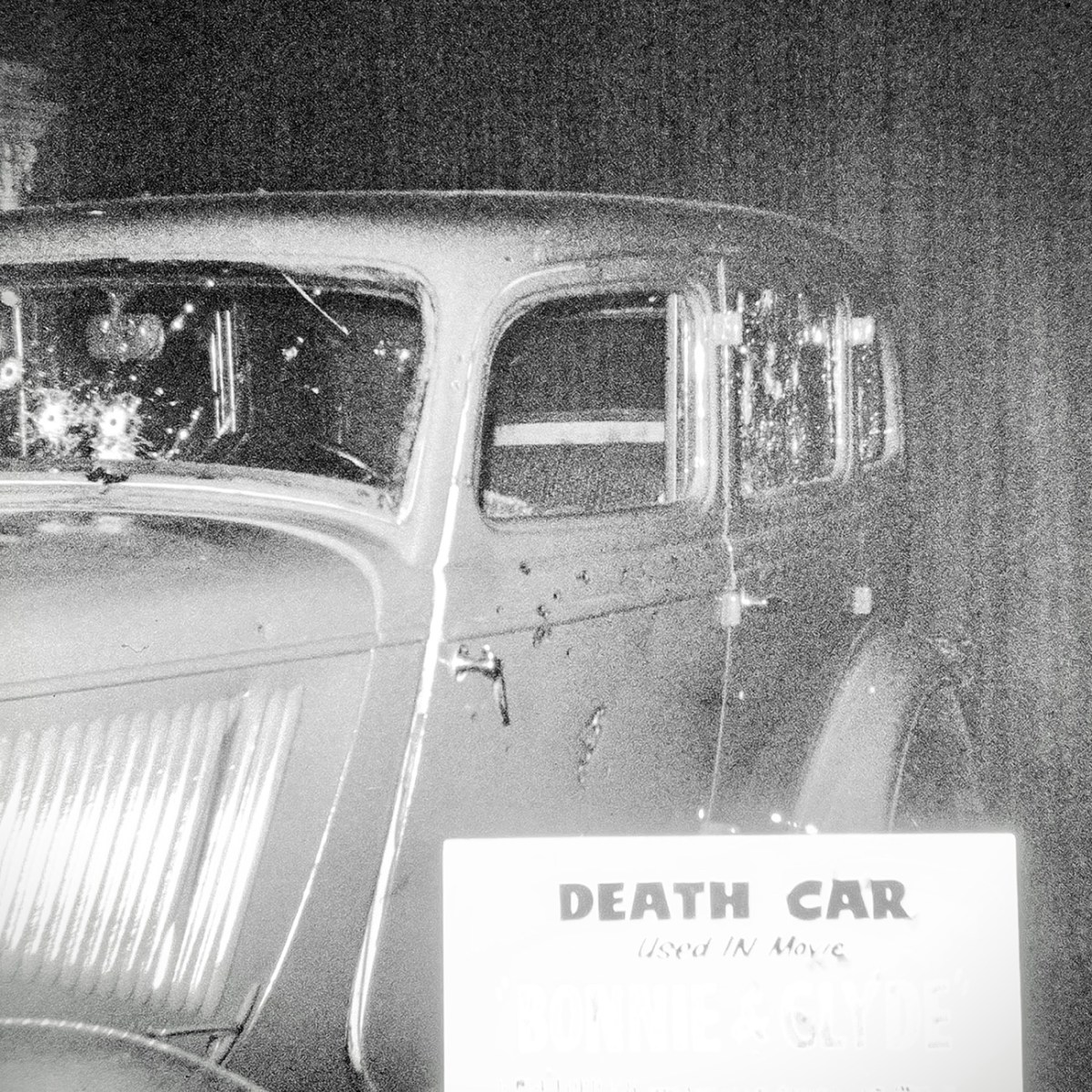
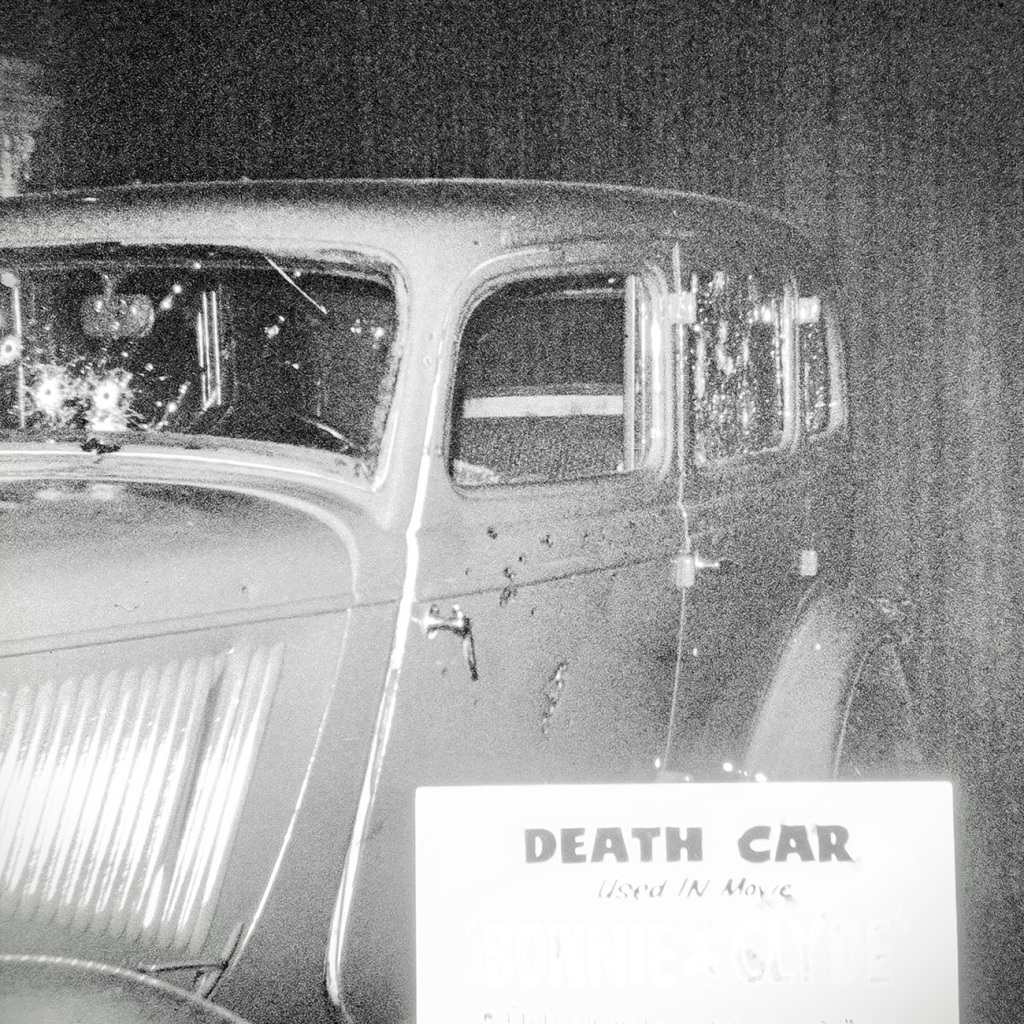
Death Car used in movie Similar to Car FDR was riding in when an Assassination Attempt Occurred
There was a movie made in 1933 that depicted the attempted assassination on Franklin D. Roosevelt. It references the assassination of Chicago Mayor Anton Joseph Cermak and hiswho was mistakenly killed during the attempt on FDR. The Death Car shown here and in the museum is the car that was used during that filming.
To learn more about the assassination attempt on Franklin D. Roosevelt click on Death Caror to learn more about FDR click on his name.
Pictures were Reconstructed from slide format to digital format via a Wolverine Digital Converter Renewing them for preservation and future generations.
Location: Roosevelt’s The Little White House; Warm Springs, Georgia, USA
God Bless. Thank you for visiting and reminiscing with me. Thank you for sharing your time and thoughts with me. I appreciate y’all very much.
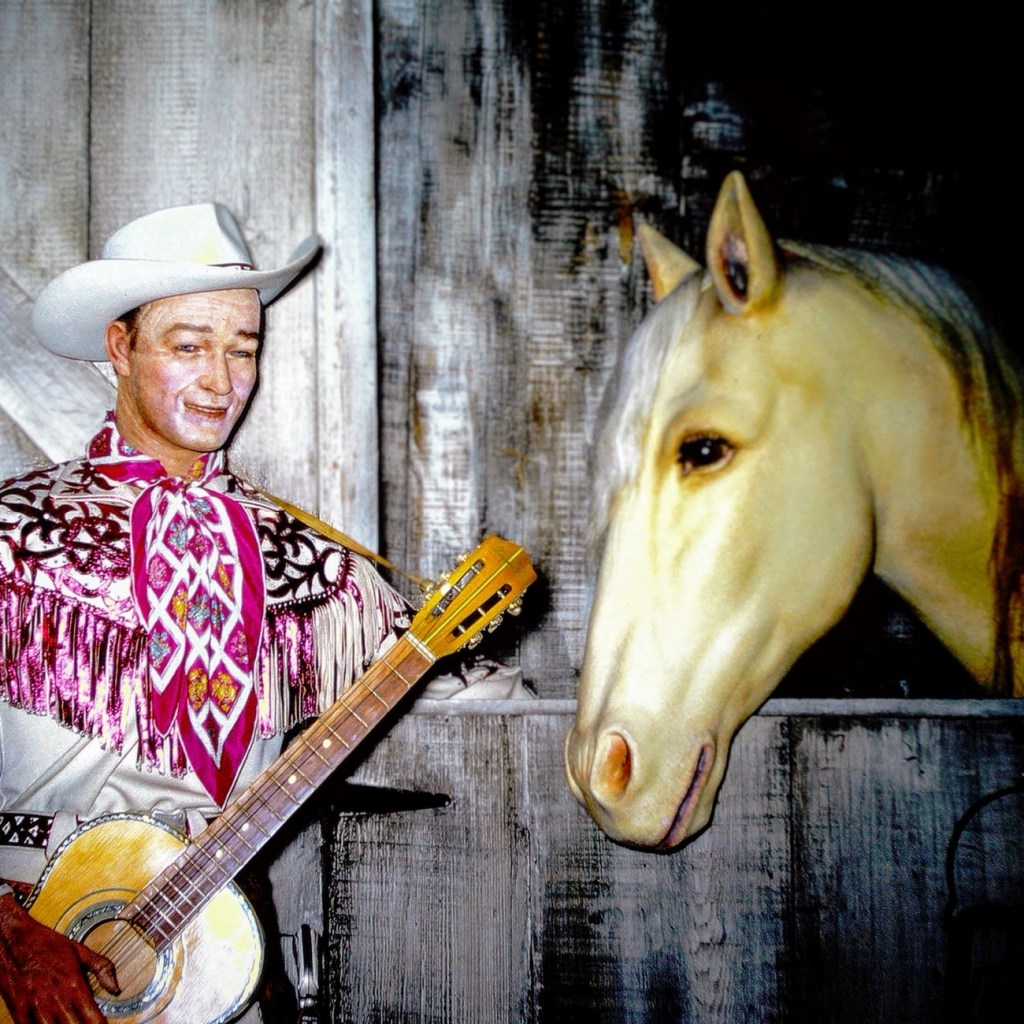
The photo was taken at the Movieland Wax Museum in Buena Park, California back in 1966 by my dad when we visited. These are wax figures of Roy Rogers and Trigger. The sign in front of the display (not pictured here) states CO. REPUBLIC 1945; “DON’T FENCE ME IN”; ROY ROGERS; DIR. ENGLISH; PROD. DONALD H. BROWN; SCENE N. 20; TAKE NO; EXT: STABLE.
The photos have been reconstructed by digitizing them via Wolverine digital converter to create a renewed version for save keeping for future generations.
Today we are going backwards in time Reconstructing my dad’s slides to reminisce family journeys from 1963. These are from one of our vacations traveling from San Diego, California to Great Falls, South Carolina and back home again.We progressed along the interstate Moving Forward Eastbound and Down loaded up and truckin’ heading to see my paternal grandparents for the first time in five years.
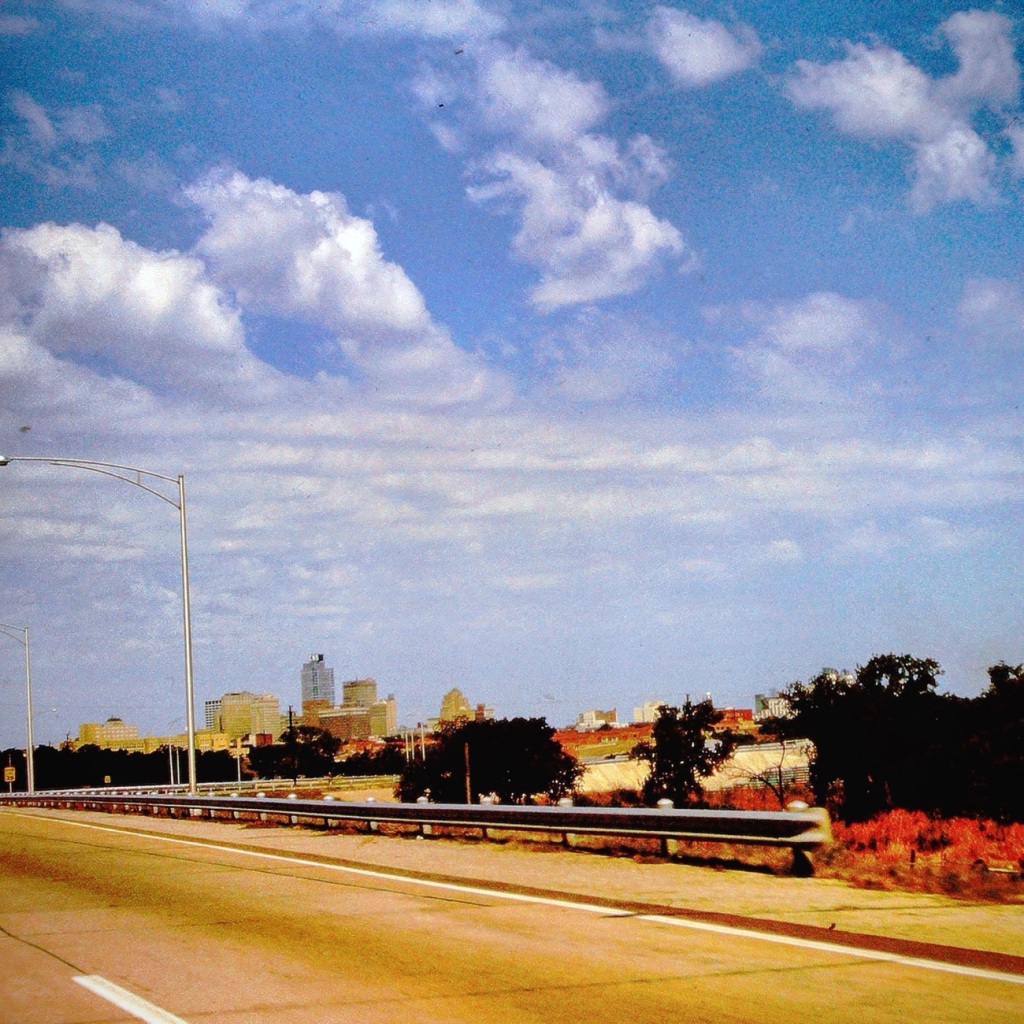
Coming or Going Somewhere in Texas
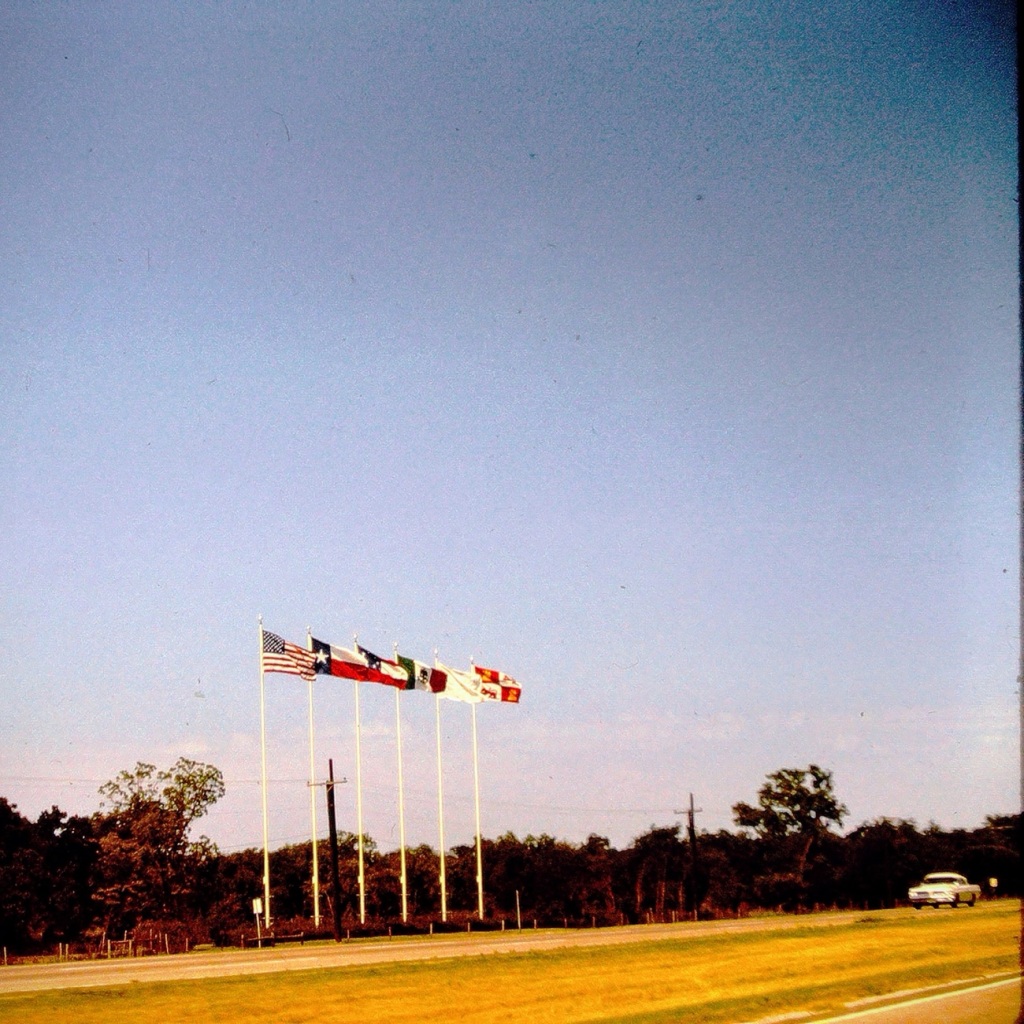
The Six Flags can be seen from Interstate 20 nearing the Arlington, Texas. They signify being close to the Six Flags over Texas amusement theme park.
Which way are we going? From the photo I’m not sure if we were headed east or going back west at this point in time as I can barely remember the trip.
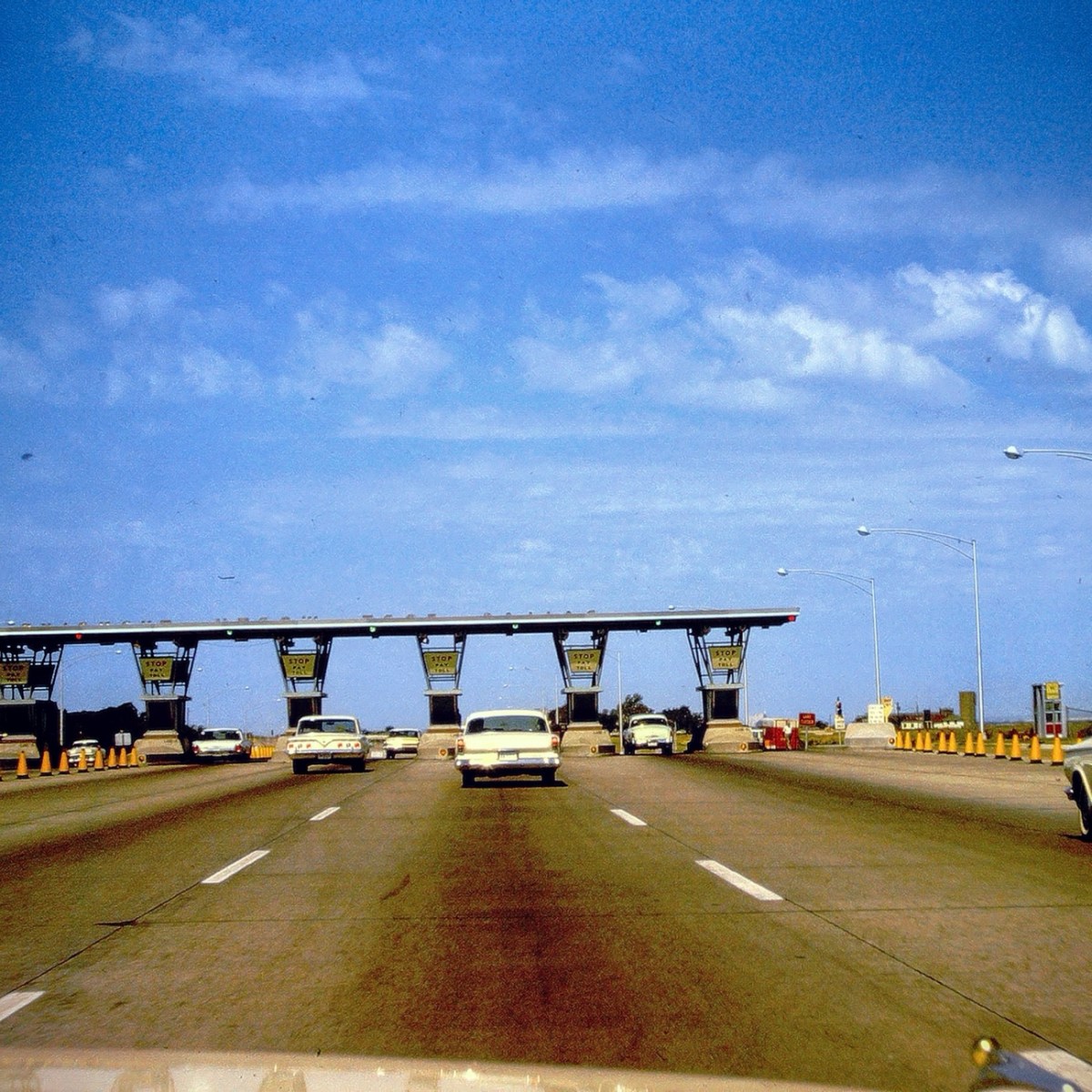
Stop 🛑 and Pay 💰 Toll Texas Toll Booths
Nowadays, there are over 50 toll roads in Texas. All drivers are required to pay the toll (fee) regardless of where you live. The first major toll road in Texas, which opened in 1957, was a 30-mile, six-lane stretch of highway between Dallas and Fort Worth. A drive from one end to the other cost 50 cents.
Passing through El Paso, Texas
After a long tiring vacation visiting family in the Carolinas, we are passing forward through El Paso heading home to San Diego. At this point of our trip we are excited to be almost home (over half way back across country.
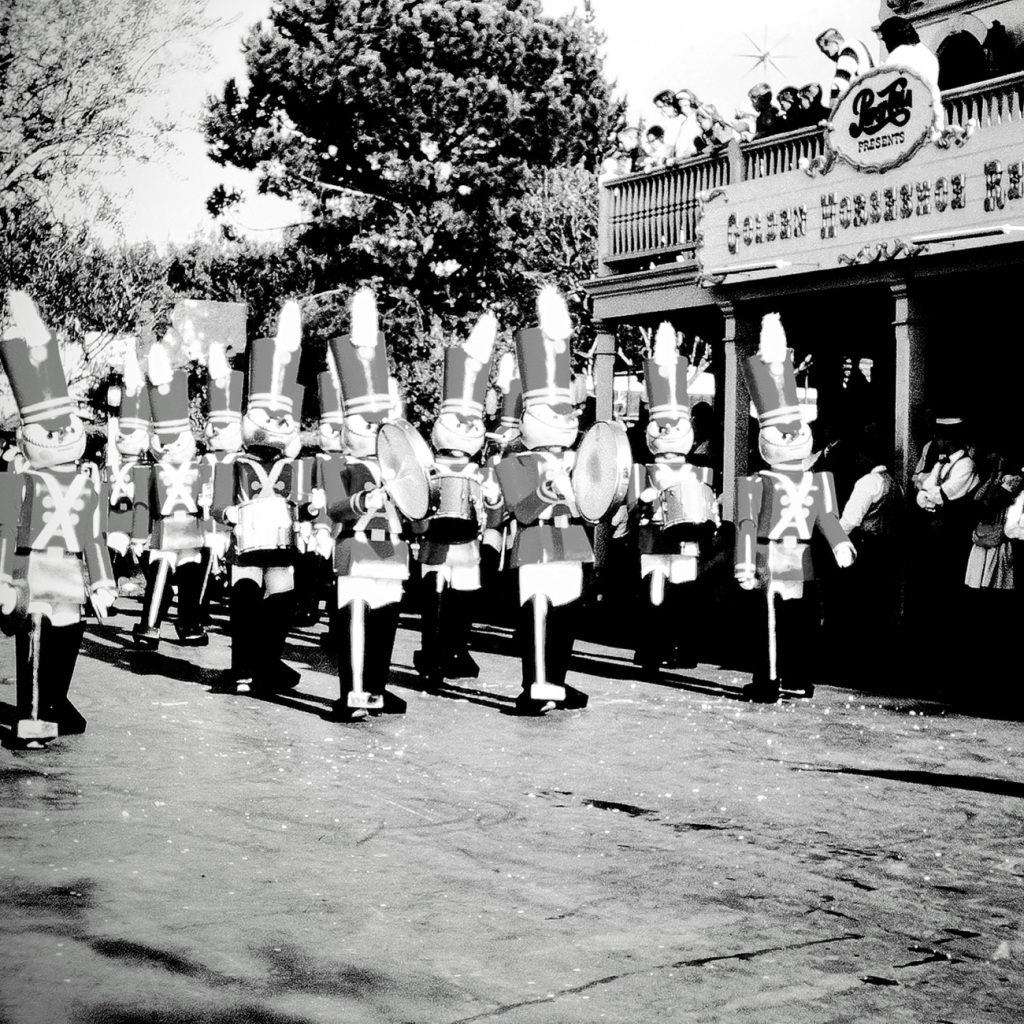
It’s been raining quite a bit here with thunderstorms today as well as off and on all week. Therefore, I decided to comb through my arch to see what I could come up with to (hopefully) satisfy the themes. I’m combining Sunday Stills, Becky’s Squares-Moving Forward, Throwback Thursday, and Leanne’s Monochrome Madness (couldn’t find the theme for this one.)
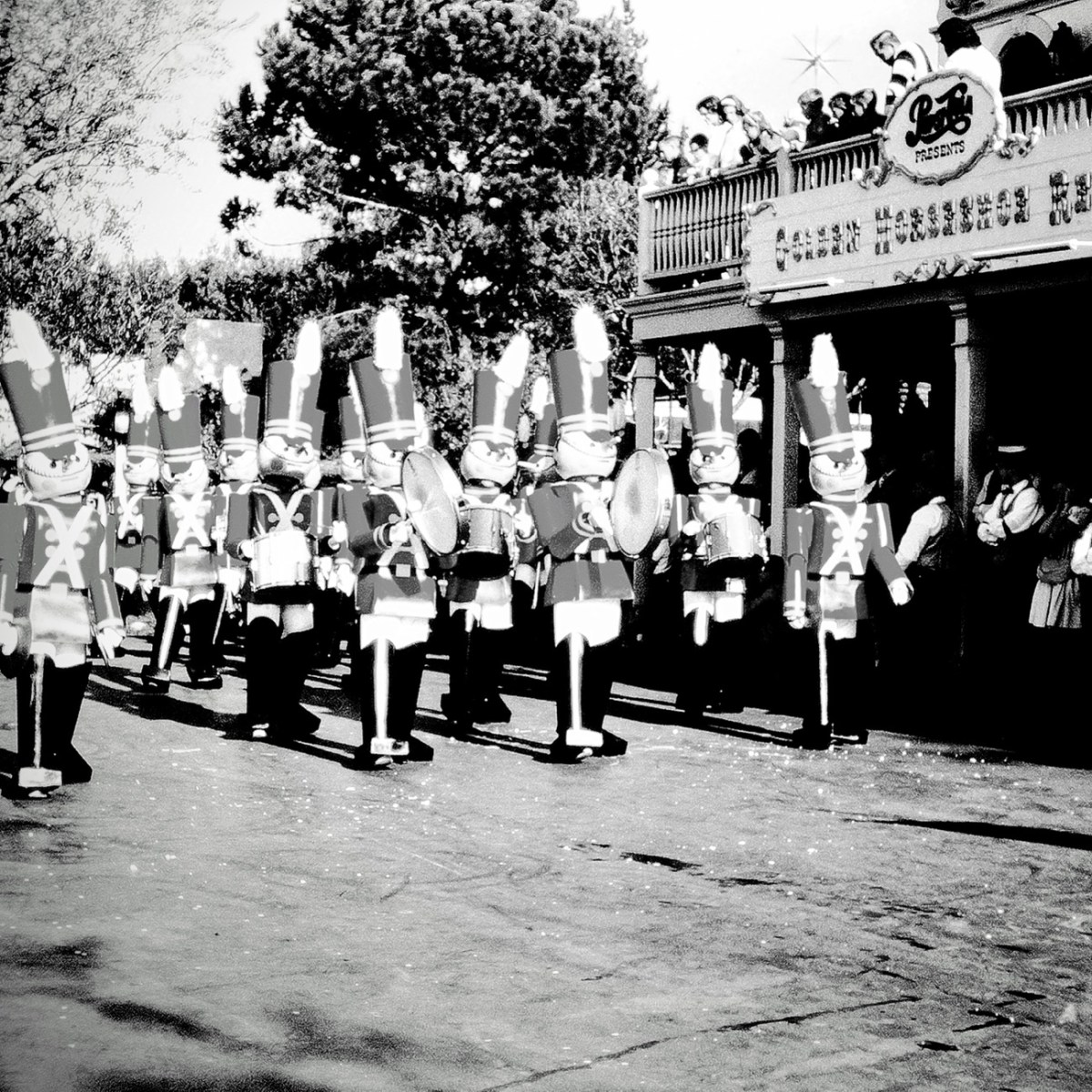
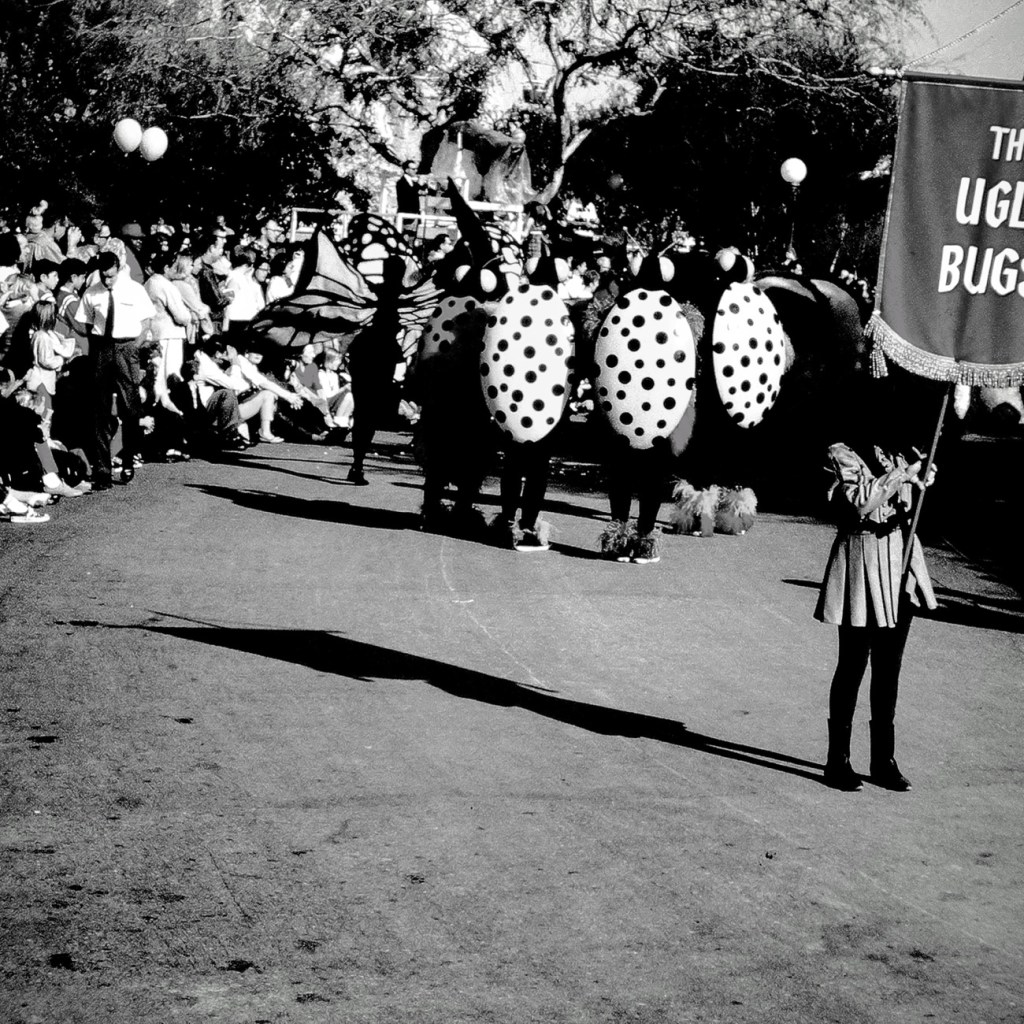
The last two photos were taken by my dad on his 35mm camera. I’m not sure what brand of camera he used in the mid-60’s. These last two photos were taken in Disneyland in May of 1966.
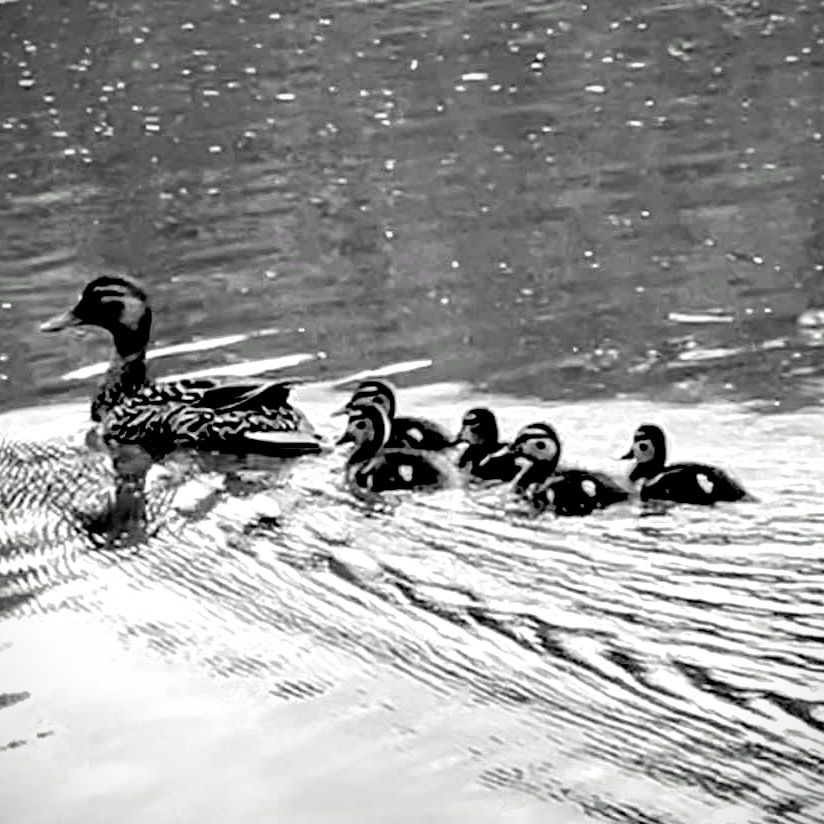
Duckling Paddling Forward Behind their HenFerry Boat with Cars Moving Forward Through the WaterThe Ugly Bugs Marching Forward with Spectators Watching Nutcracker Marching Band Marching Forward Along the Parade Route
Come on along for the ride, we’re just gonna meander around through the desert here in Anza-Borrego Desert State Park.
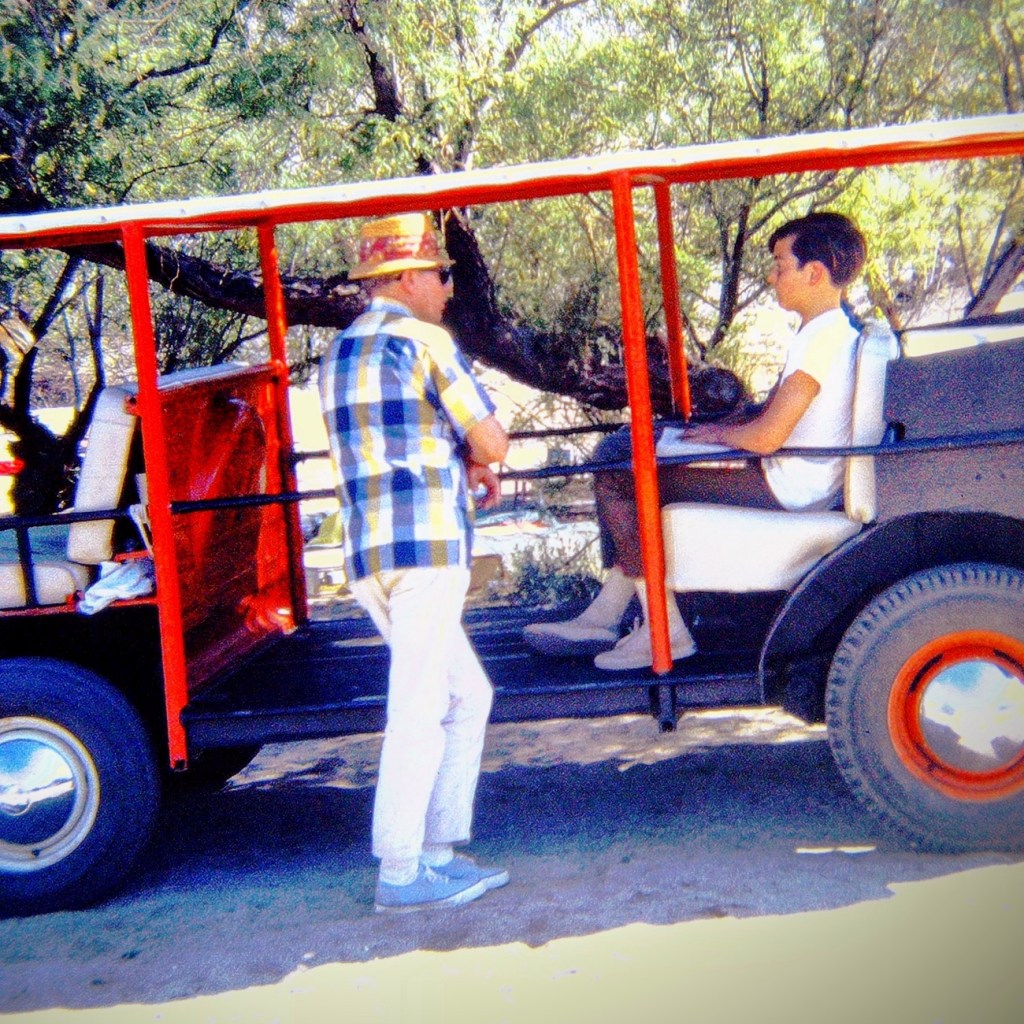
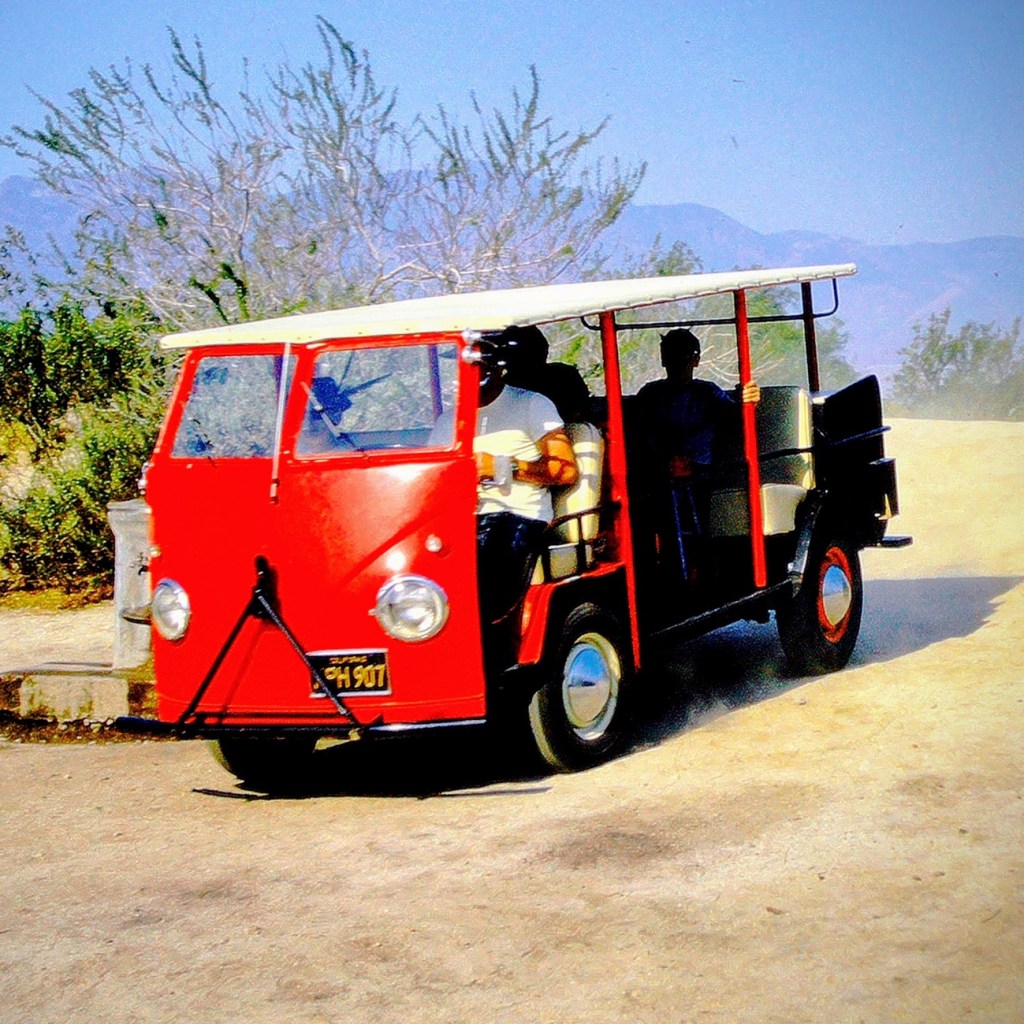
Growing up in San Diego, California my church youth group would practically make annual camping trips out to Anza-Borrego Desert State Park. Several church families would bring their dune buggies, dirt bikes and give rides to the enthusiastic youth.
Ever since that time period, I have loved to go camping and hiking. I love being out in nature and my grandson, Coleman is learning to love and enjoy it as well.
Pictured here are actually two separate church camping trips; one in May of 1968 and the other in June of 1969. Those were the good old days my friends.
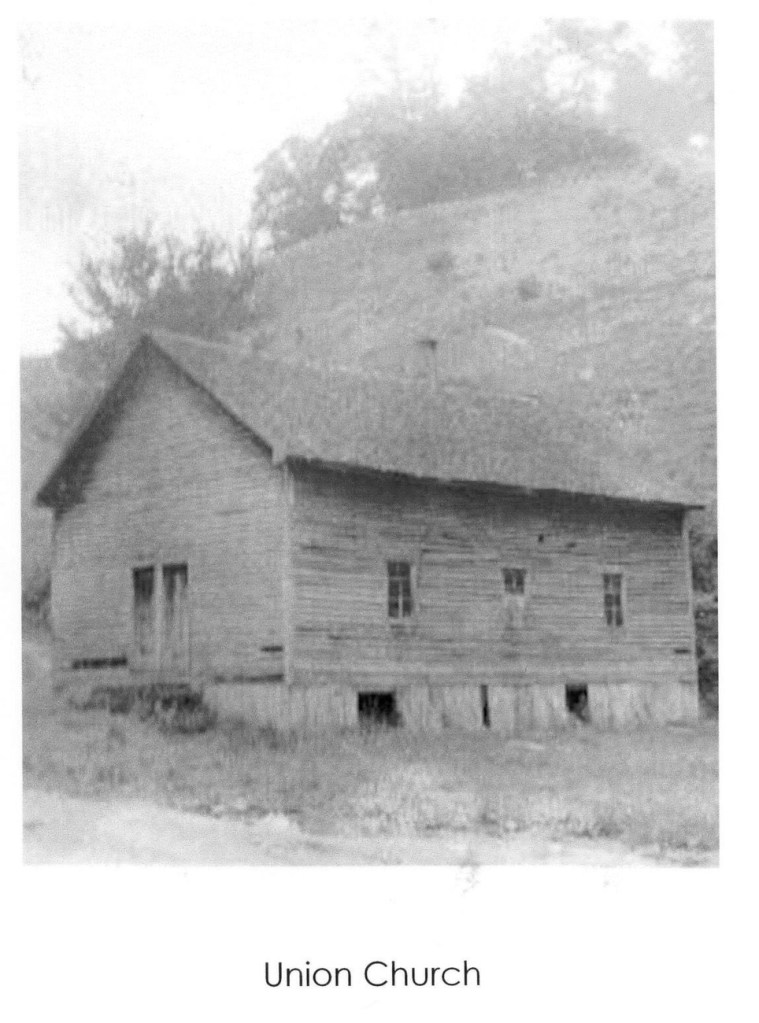
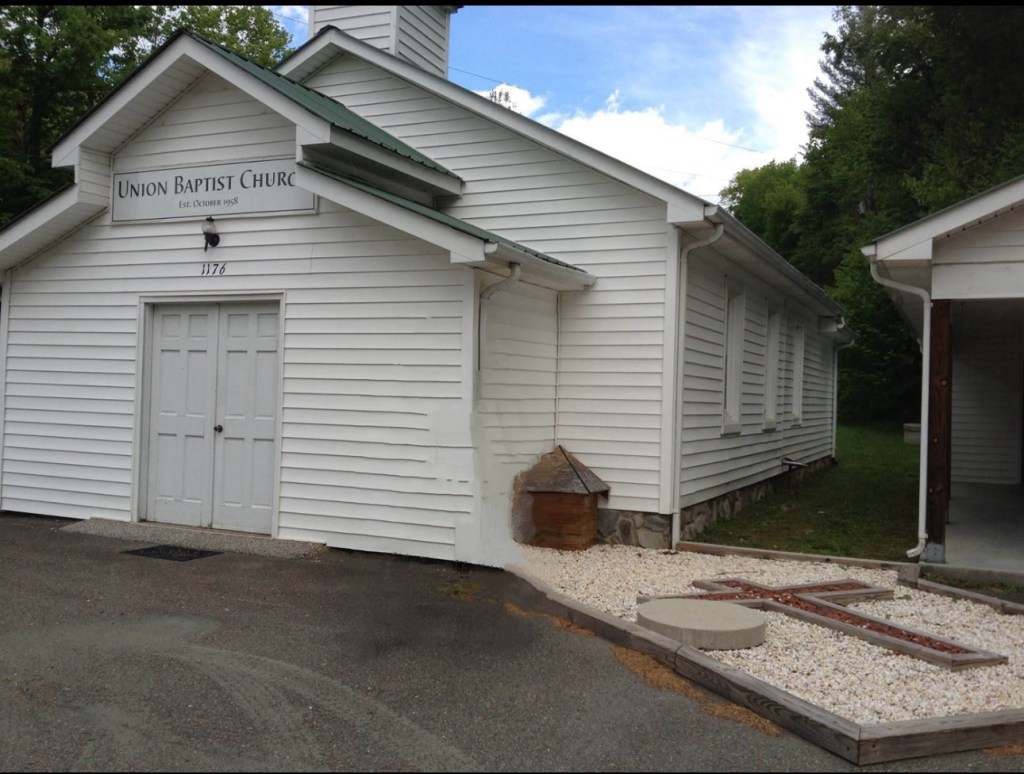
Union Church (Baptist) was originally constituted in August of 1866 in the Mountain Union Baptist Association. Some of the charter members were some of my paternal ancestors on my Waters ancestral line.
The Union Church has undergone several changes over the years and has existed for One Hundred Sixteen (116) years. More information about the early churches and the history of Ashe County may be found on the Ashe County Historical Society’s Facebook or Website.
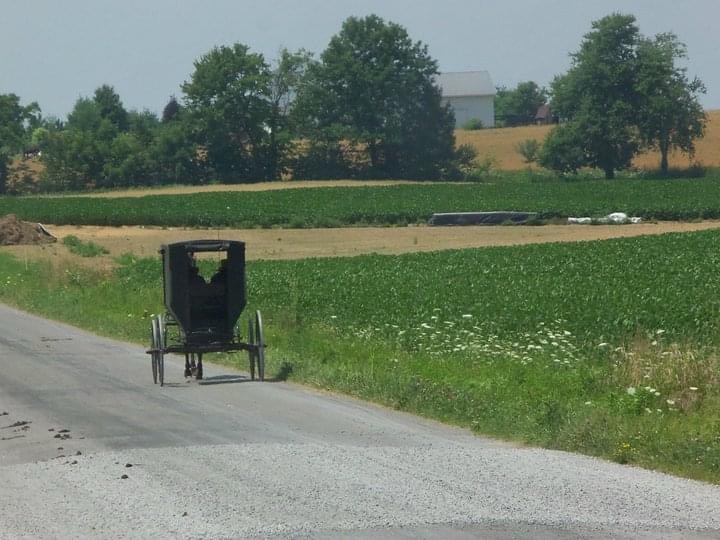
Let’s take a trip back in time ( only to 2011) not too far back. A time when traffic was less hectic and travel was at a much much slower pace.
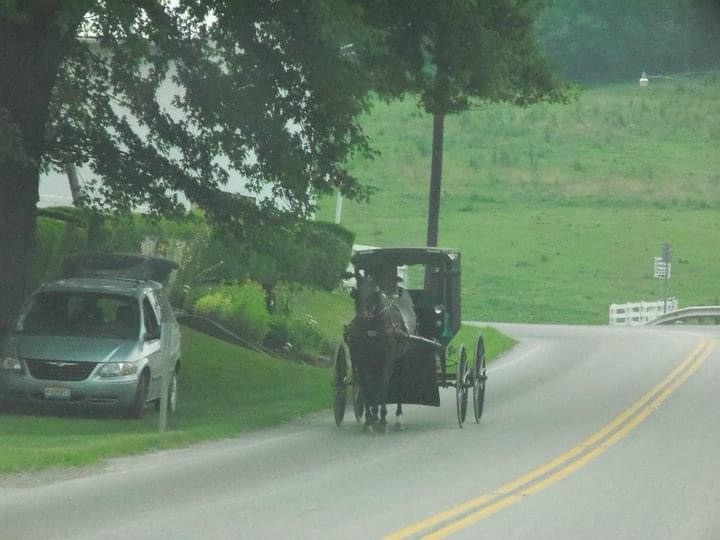
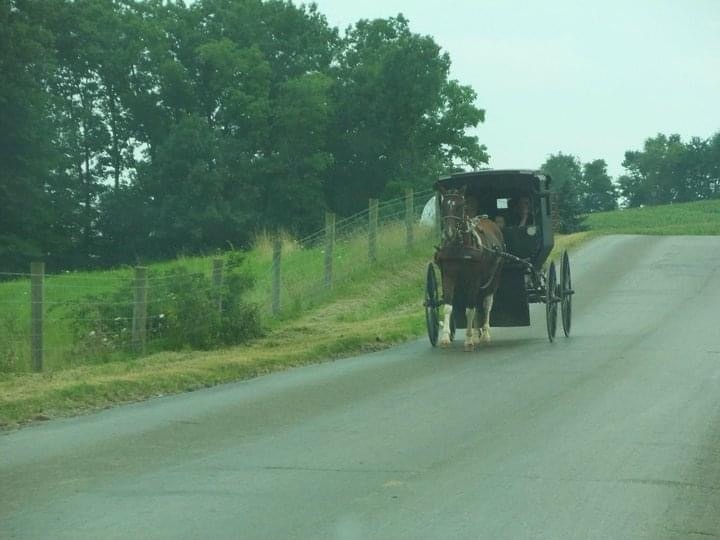
Amish Horse-drawn Buggy
Don’t worry about the slowness of the drive, we are not in a hurry anyway. We out joy riding and sightseeing the beautiful countryside. We’ll stop wherever we have a hankering to stop, maybe buy a souvenir or two. Hey, this place looks interesting. Let’s stop and have a look around.
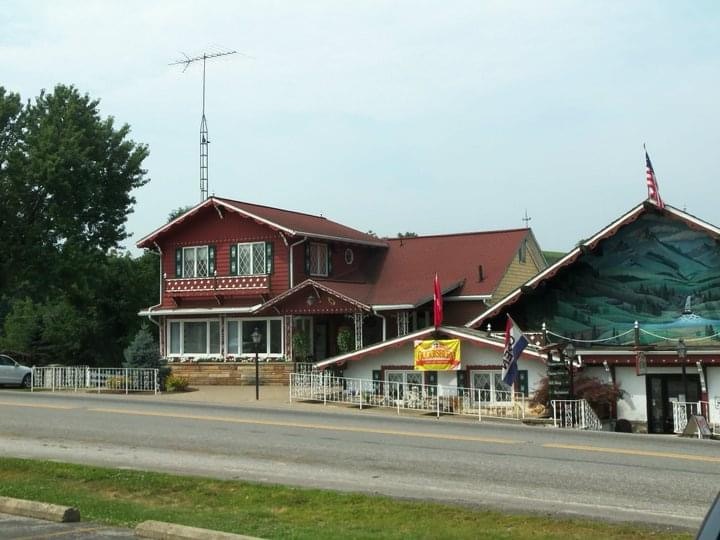
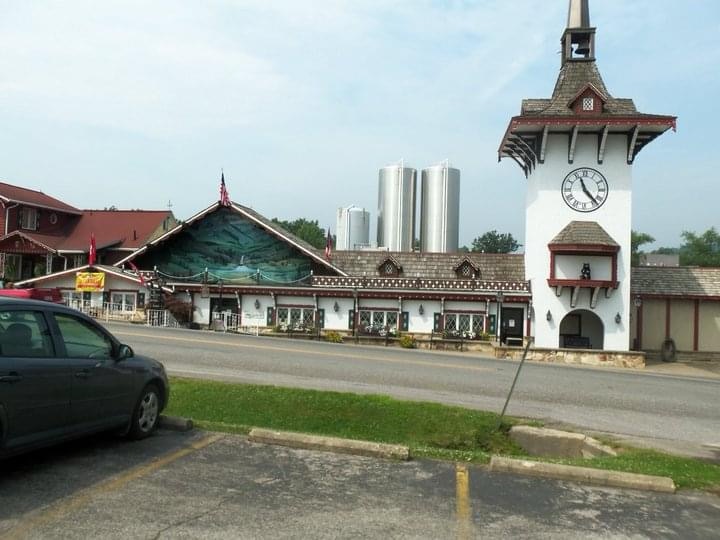
Guggisberg Cheese Factory Charm, Ohio
I’m glad we stopped there. The cuckoo clock tower was very interesting. I loved all the cheese we were able to sample. They even have lactose free cheese and cheeses made from goats milk. I also enjoyed watching them making the cheese. It is a fascinating and impressive process that they use to make the variety of cheeses.
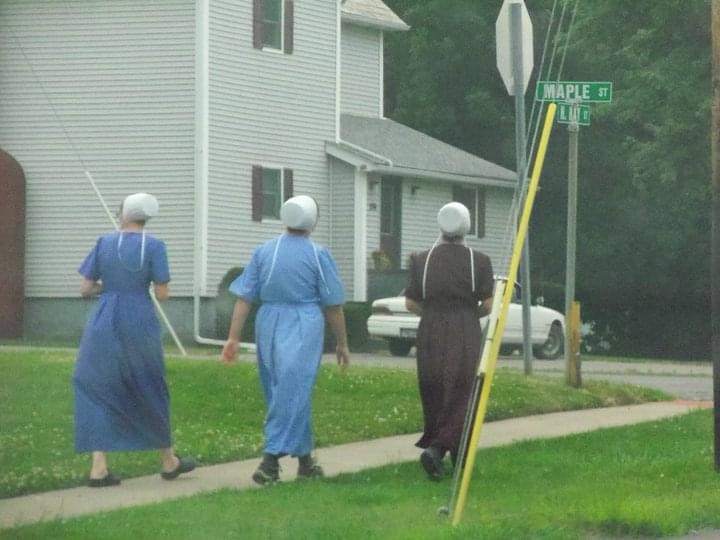
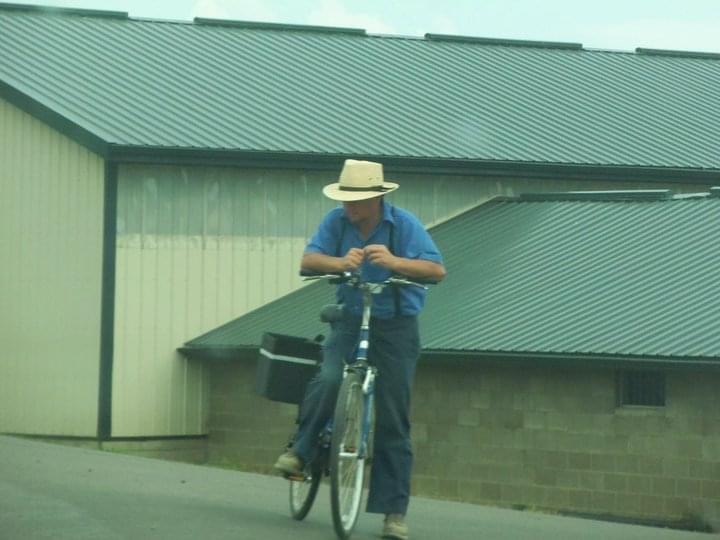
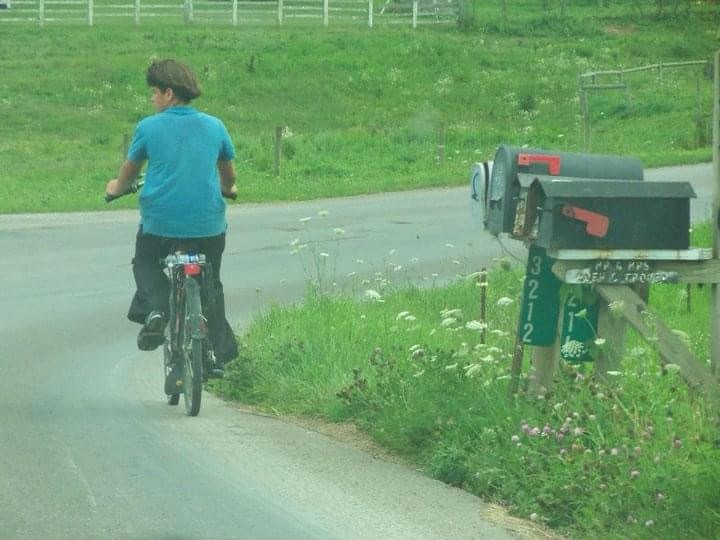
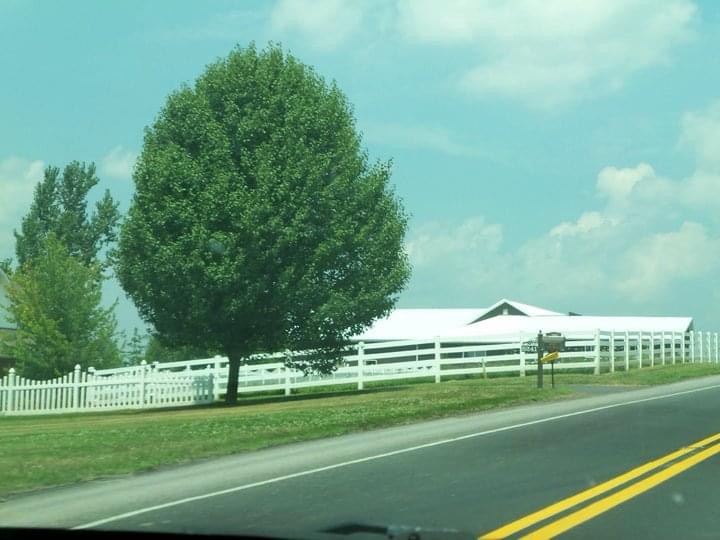
Back in the car, we cruise more of the countryside. Looking out our windows we observe Amish Buggies clip clopping down the road, Amish ladies strolling along a sidewalk, and young Amish boys/men cruising on their bicycles.
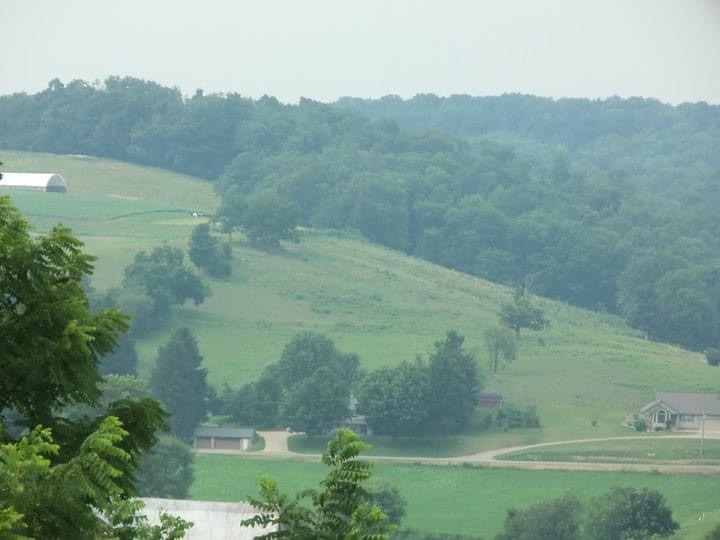
Amish Countryside in Holmes County, Ohio
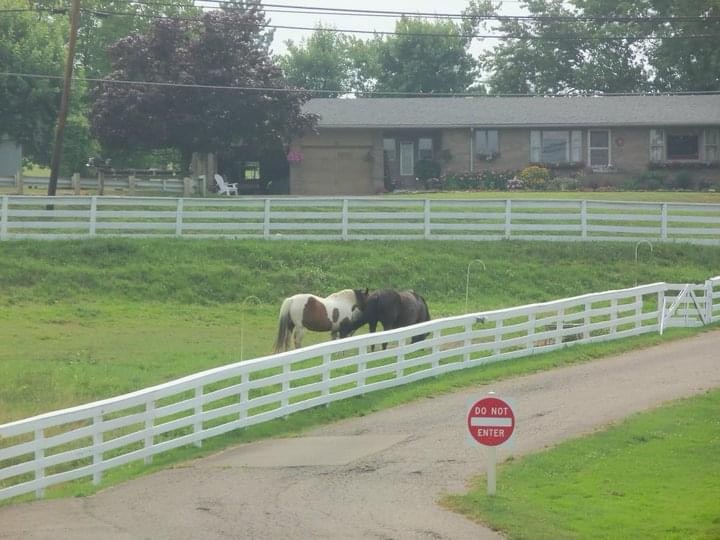
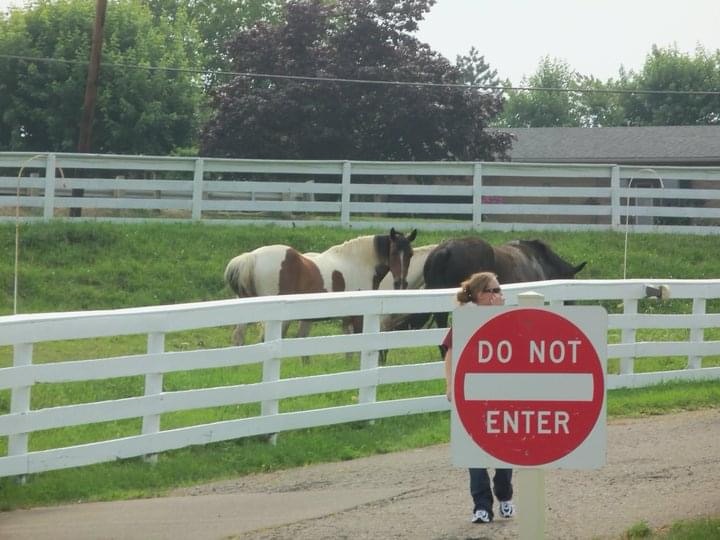
As we continue our leisurely afternoon drive we continue observing the beautiful surrounding landscape. We spot horses, alluring us to stop for a closer look.
Of course my daughter ventures past the DO NOT ENTER sign to get closer to the horses.
As we carry on with our adventurous afternoon scenic drive, we find it extremely relaxing to slow down, enjoy ourselves, and not give a care or worry about hurrying back home.
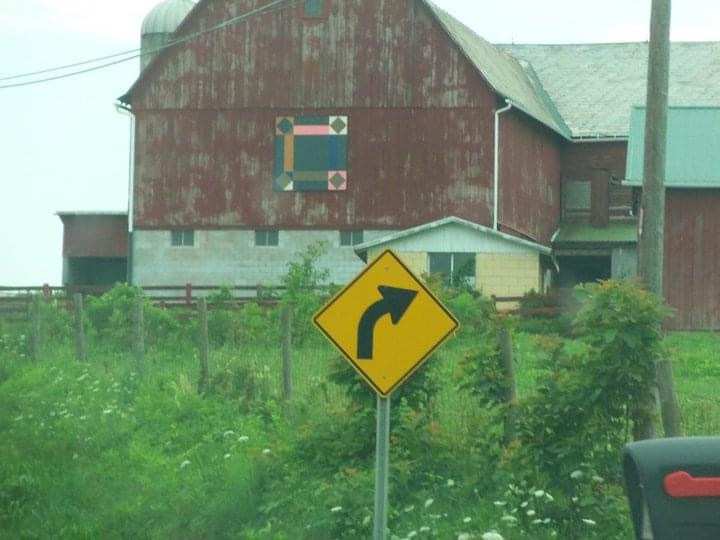
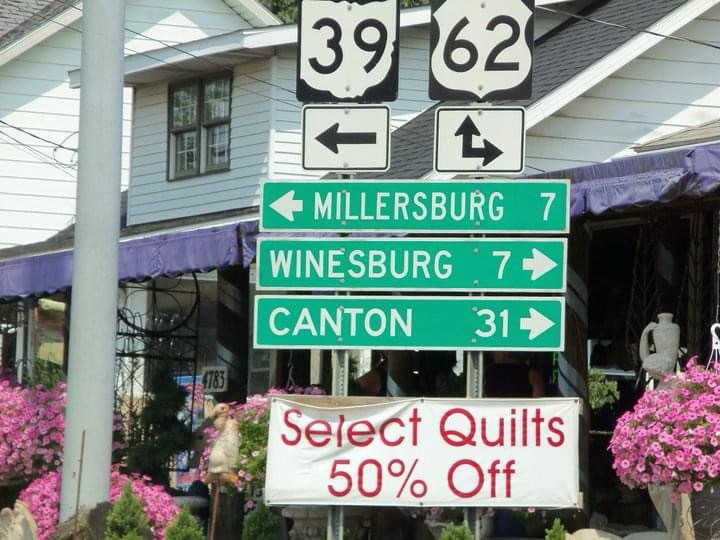
After passing a barn quilt and road signs giving directions on which way to go, we decide to make one more stop before calling it a day.
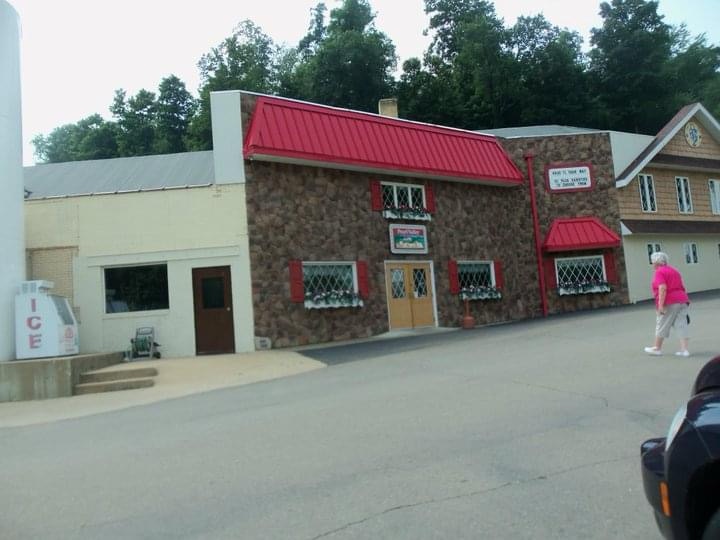
Barn QuiltRoad Signs Pearl Valley Cheese Fresno, Coshocton County, Ohio
Pearl Valley Cheese, Inc factory and retail stores) manufacturer 30 types of cheese. One is bound to discover a flavour or variety of cheese you’d love to take home with you. They also allow visitors to observe their cheese making process. The best times to watch are between 8AM – noon on Monday- Friday.
God Bless. Thank you for traveling along with us through Amish Country in Ohio. We really enjoyed ourselves and we hope you did as well. Thank you for sharing your time and thoughts with us. I appreciate y’all very much.
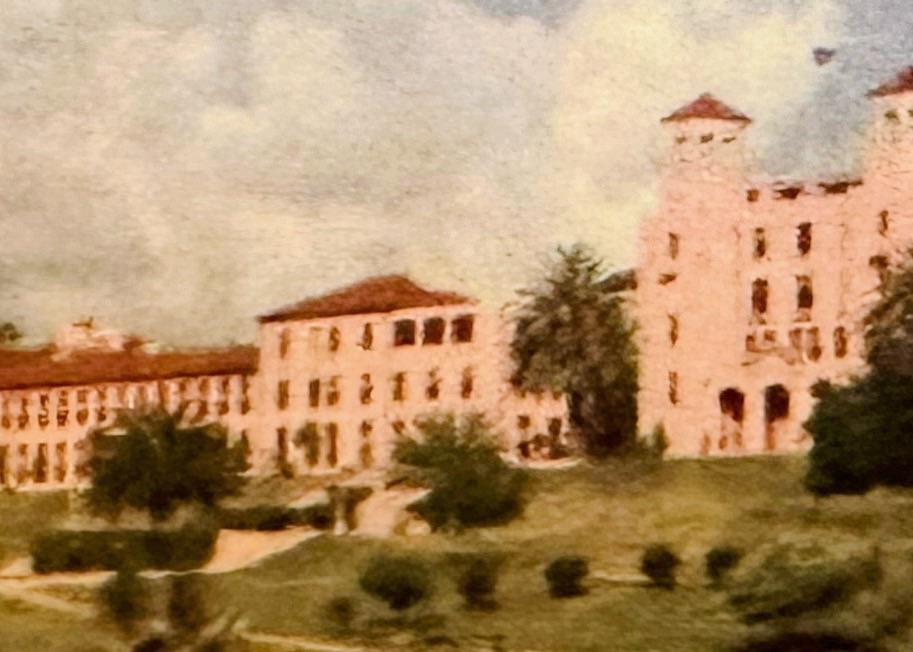
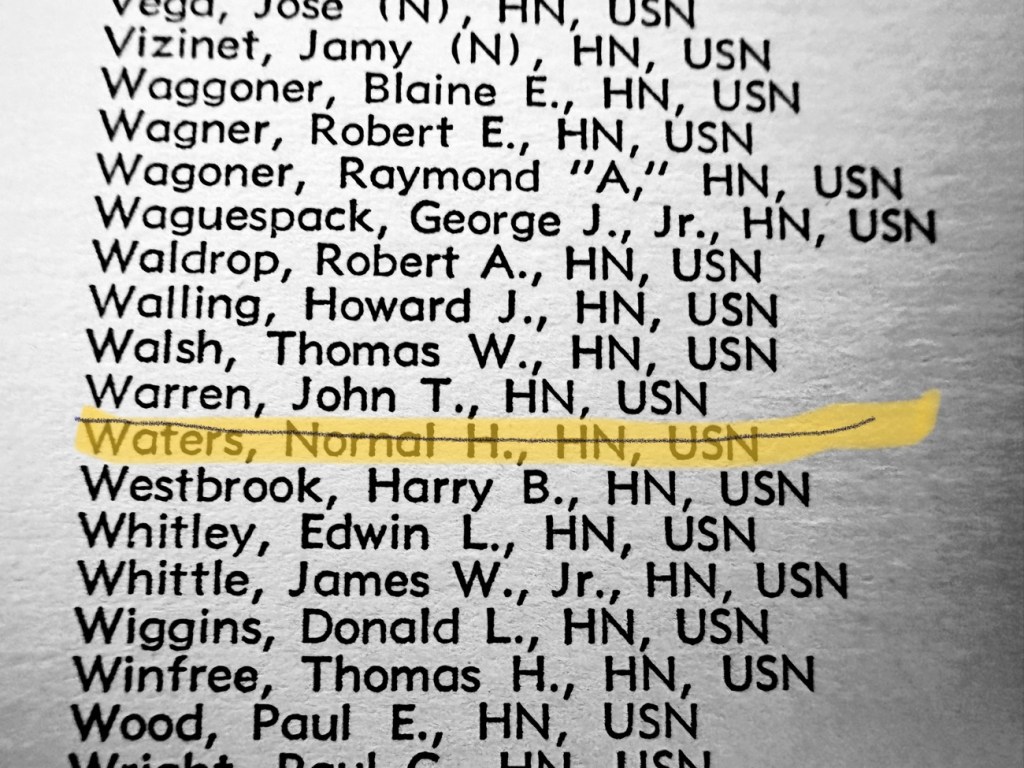
My father, Nornal Hule Waters (often spelled Norman in military paperwork.) joined the U. S. Navy on September 24, 1948. He enlisted in South Carolina and had his training in San Diego, California. He attended the U.S. Naval Hospital Corps School and is listed as graduating from the School on July 4, 1950. These photos were scanned from his graduation ceremony program. [My dad saved everything.]
Close-up of the U. S. Naval Hospital U. S. Naval Hospital and Hospital Corps School Taken from the Program U. S. Naval Hospital and Hospital Corps School San Diego, California
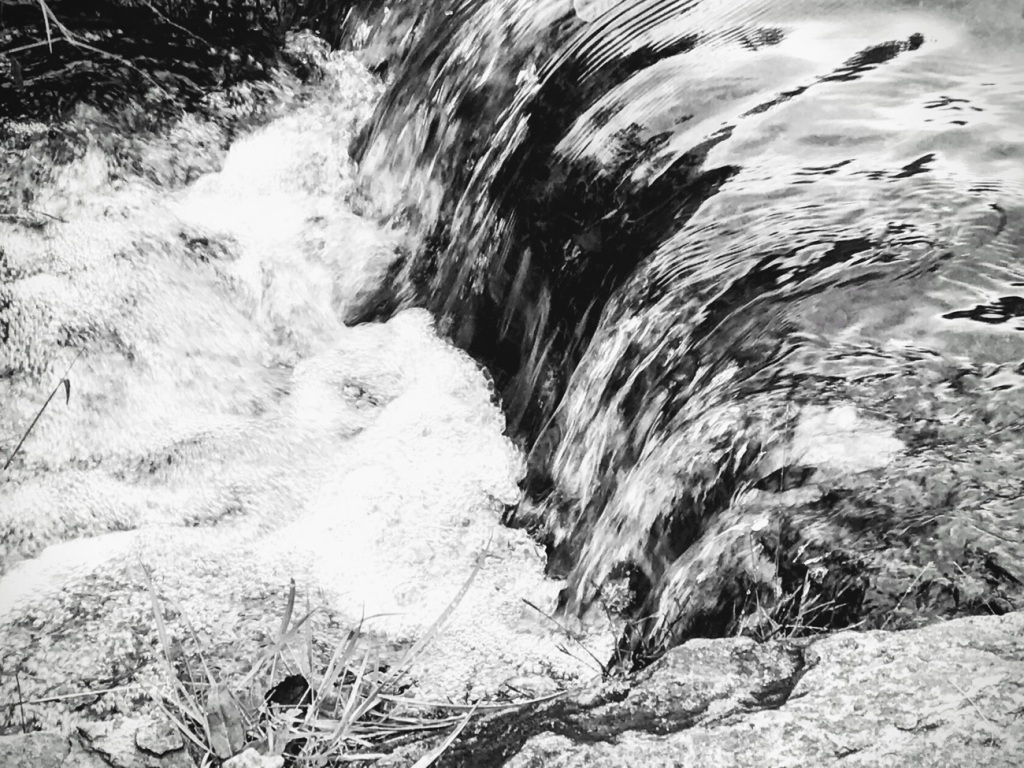
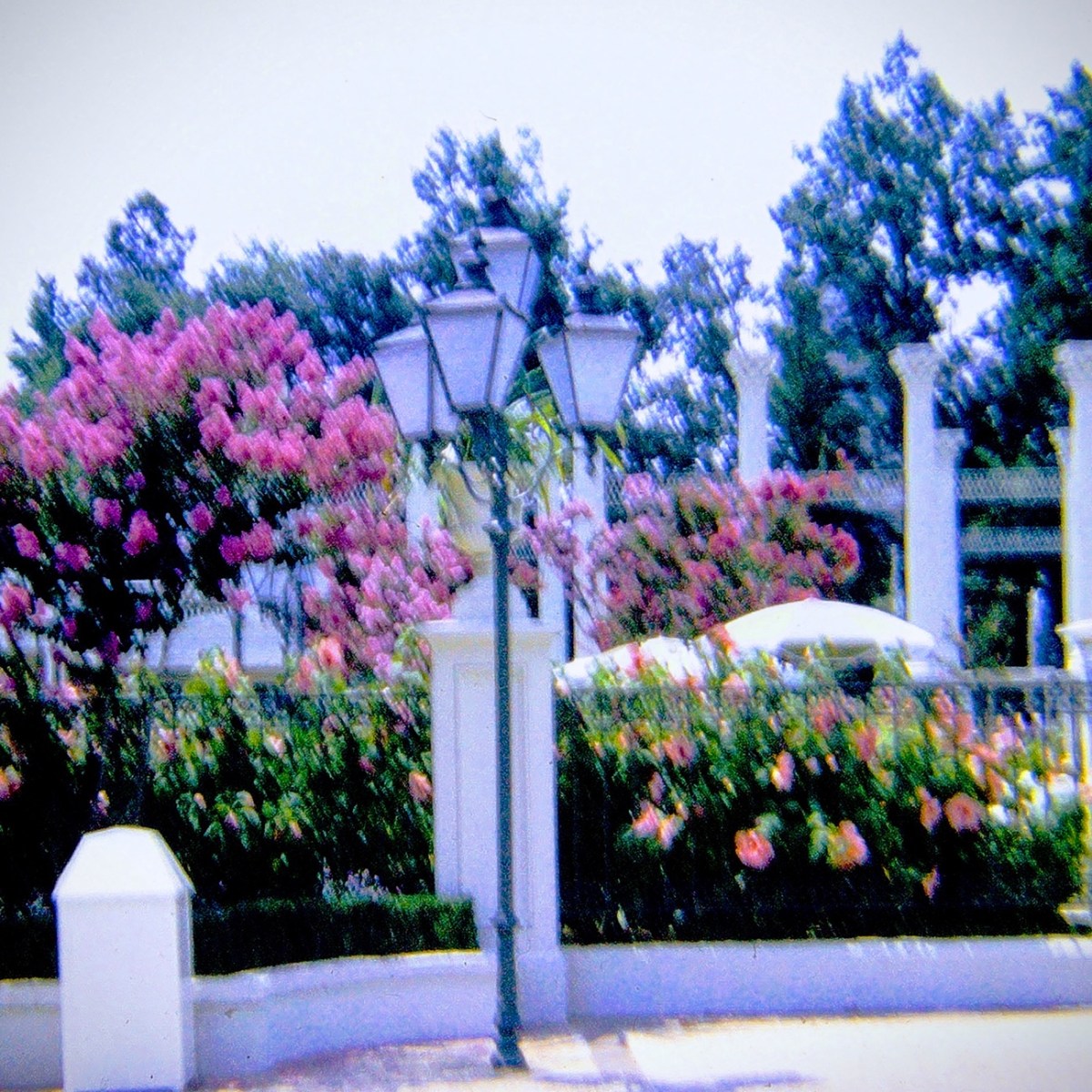
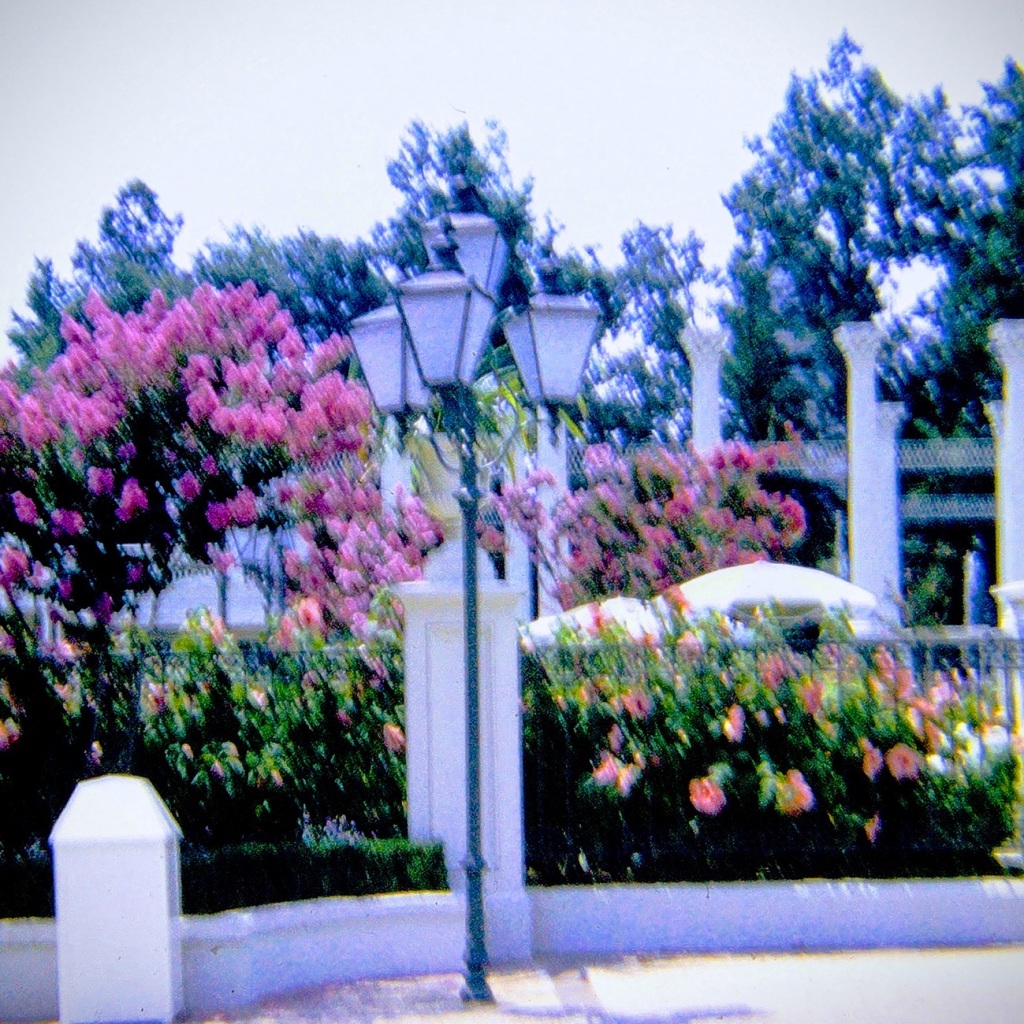
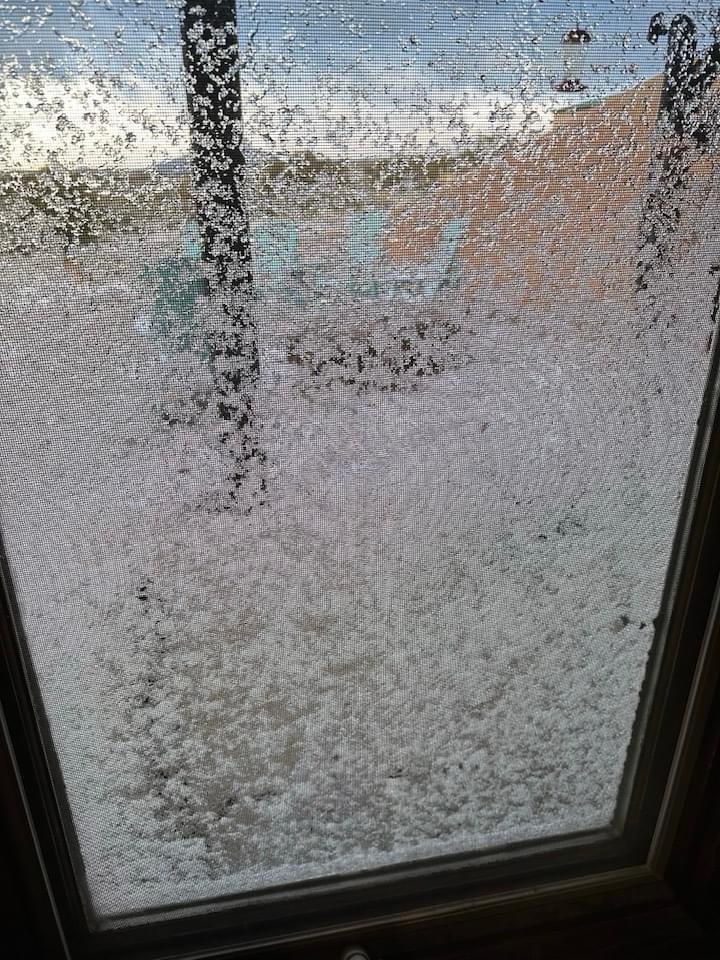
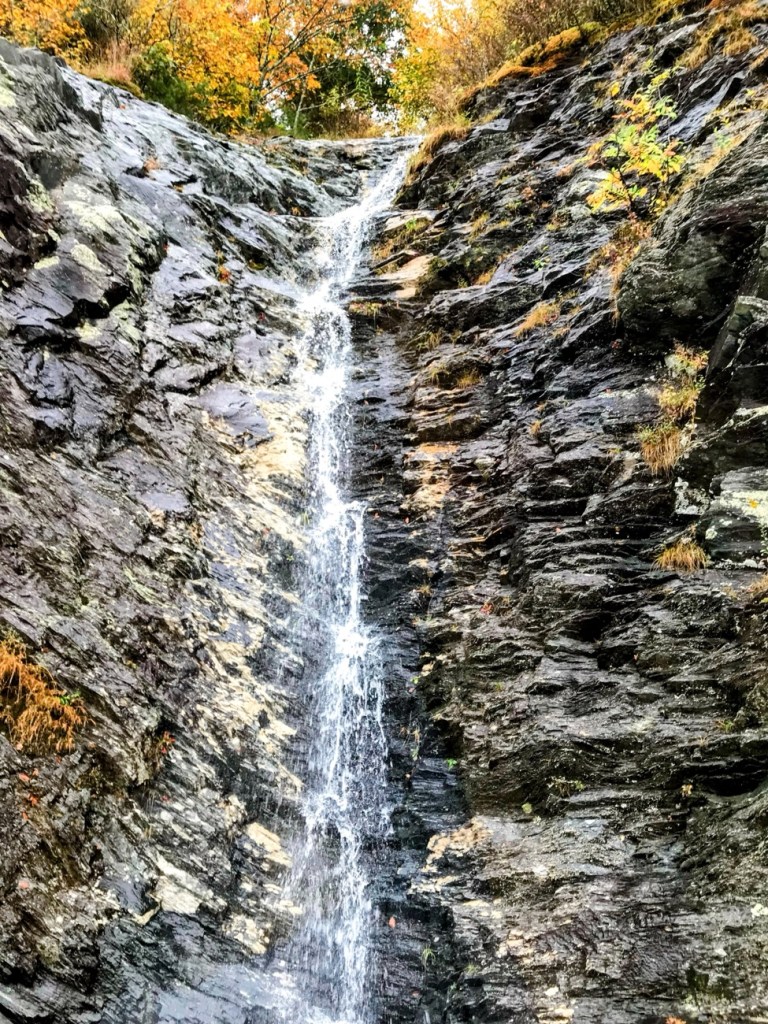
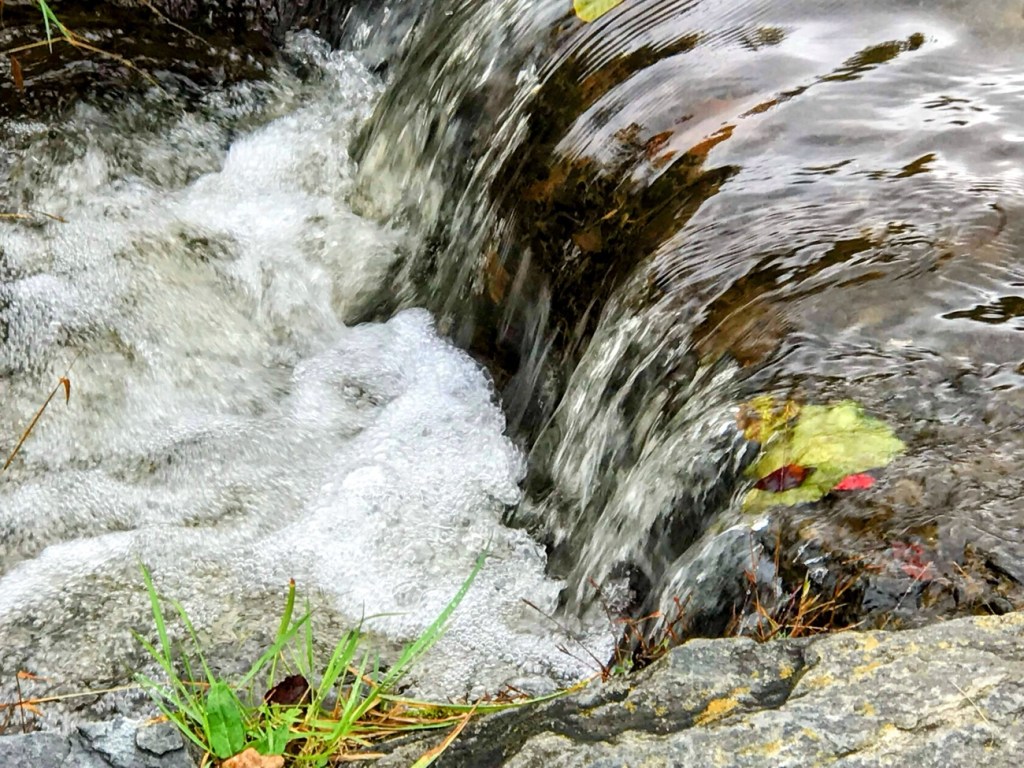
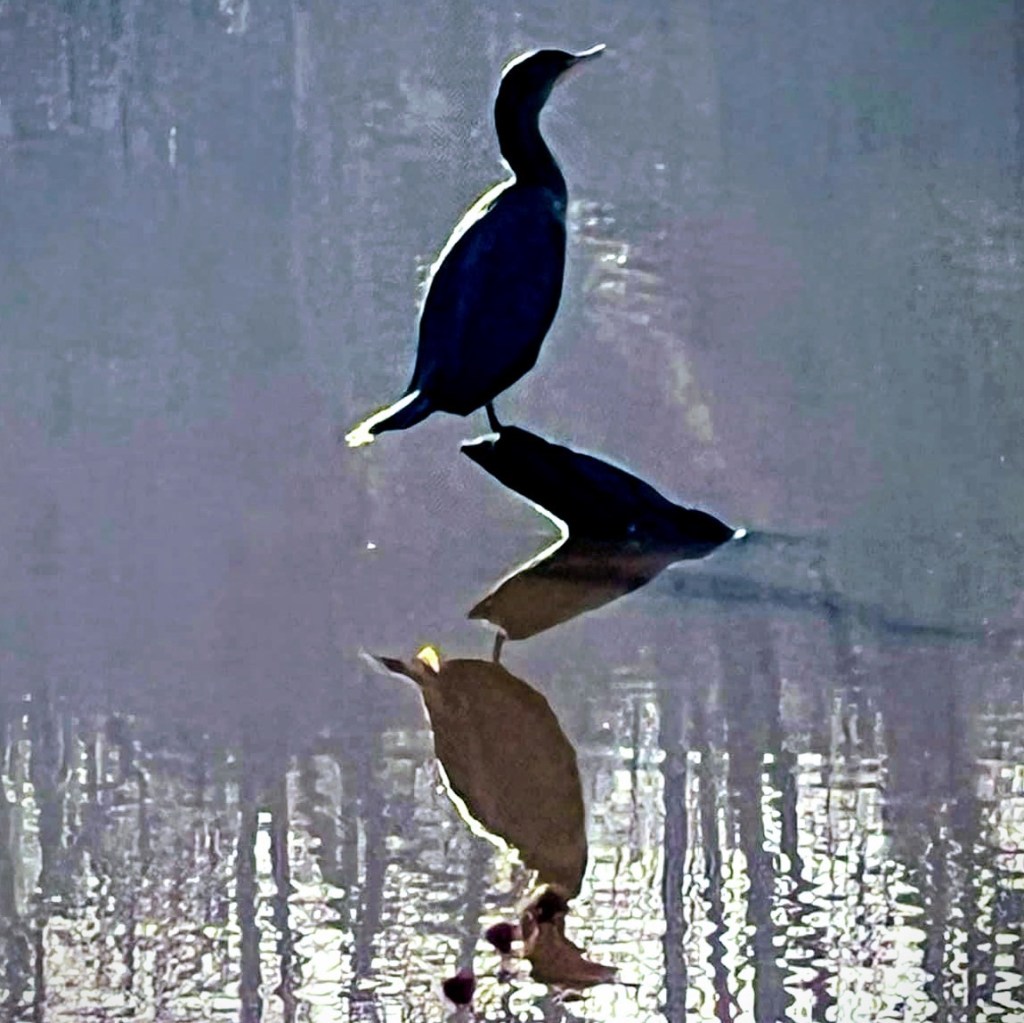
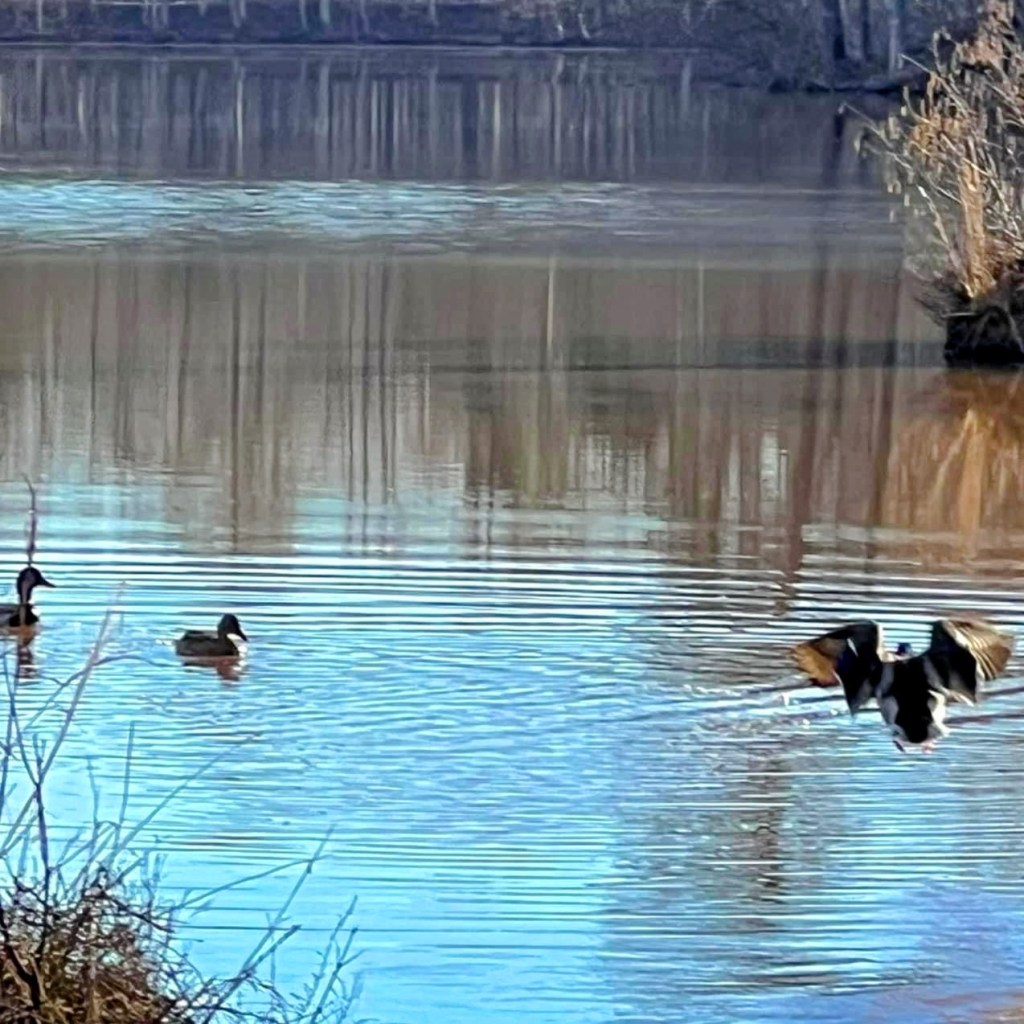
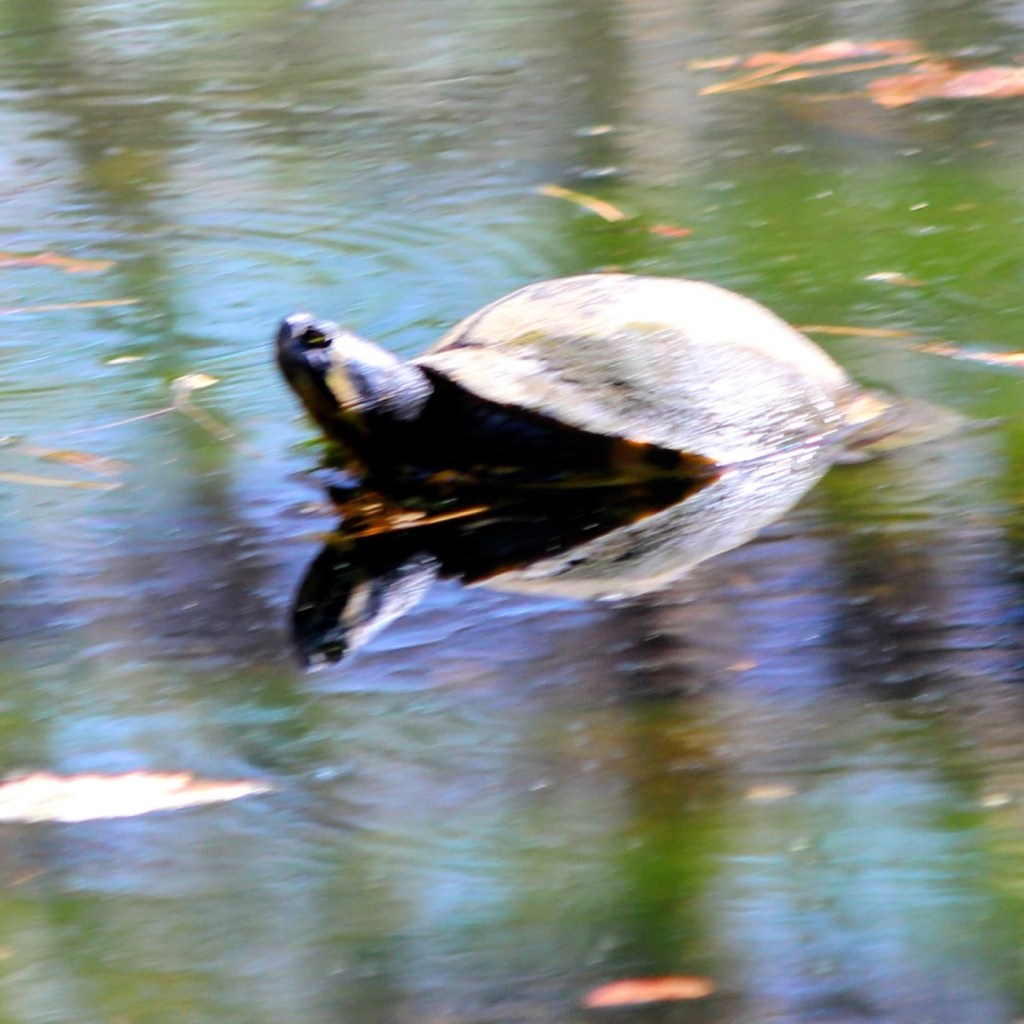
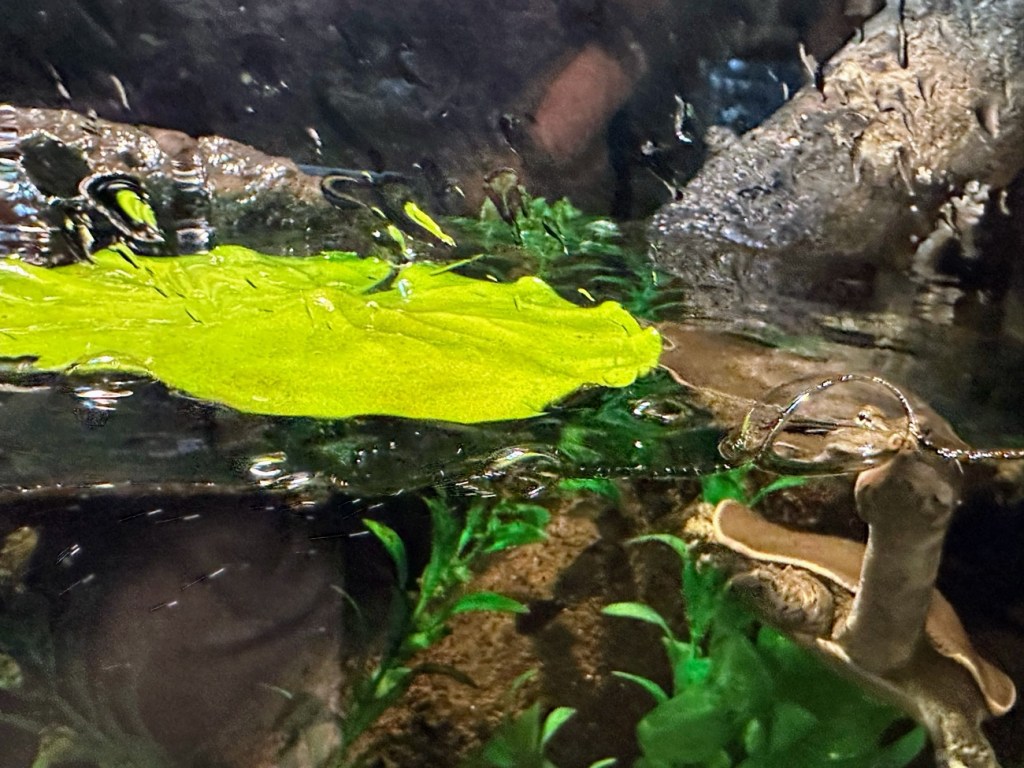
Sleet on Storm Door From Cousin Marsha HayesWaterfall Linville, North CarolinaLittle Glade MillPond Blue Ridge Parkway Glade Valley, North CarolinaWaterfallsBirds in WaterIn PondIn Aquarium Turtles Throwback Photo Disneyland Anaheim, California





















 Gfpacificbee’s Insights & photography