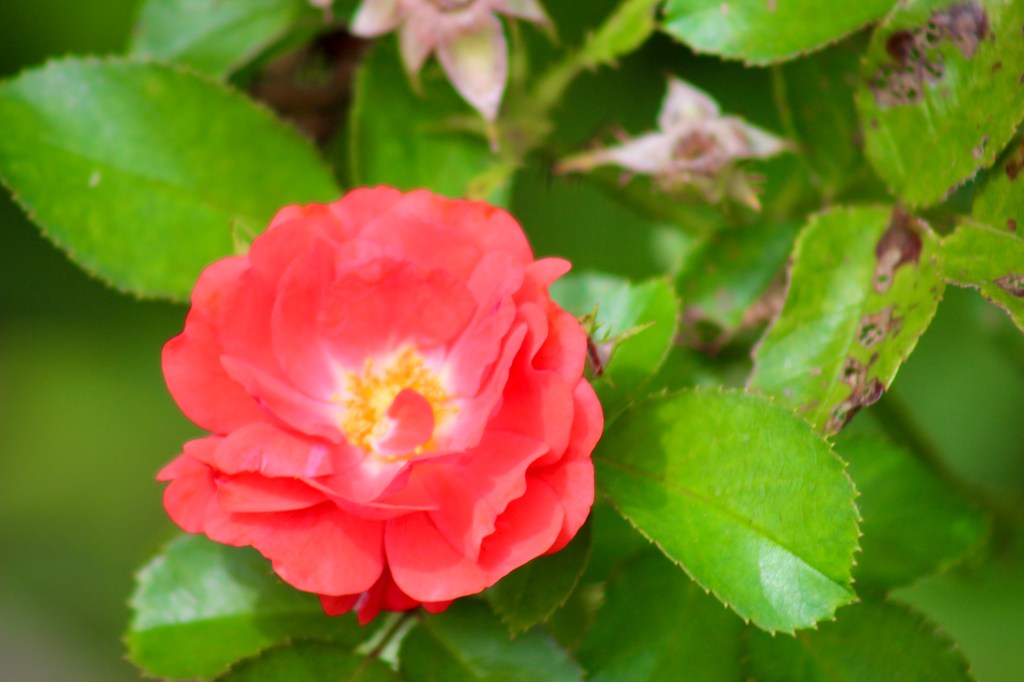
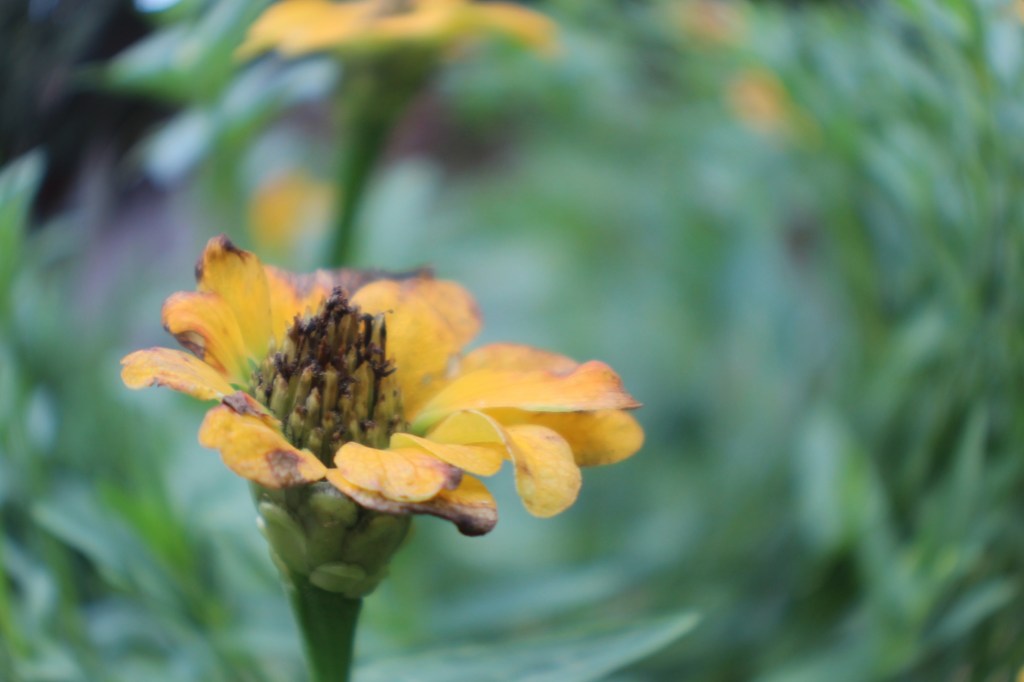
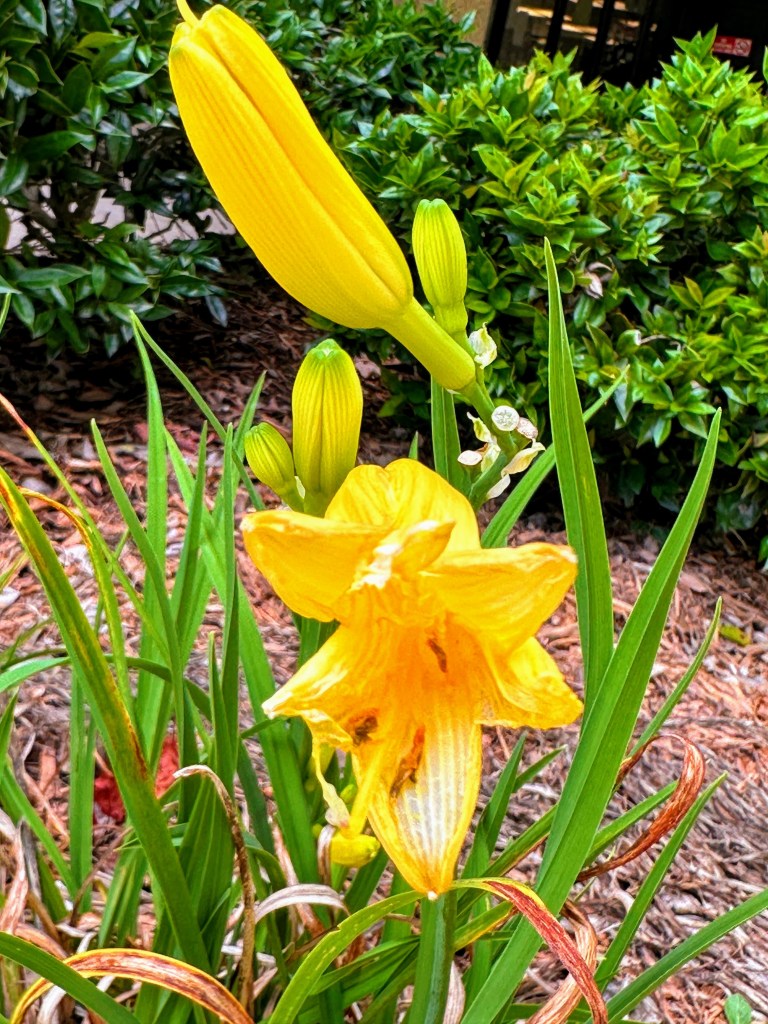
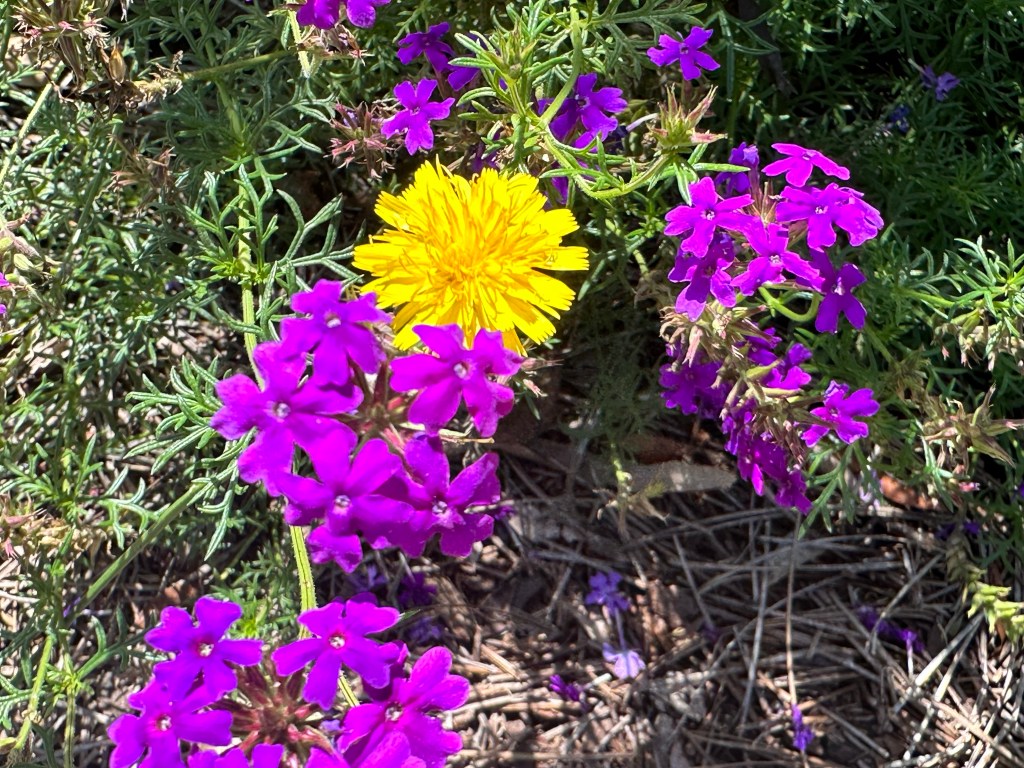
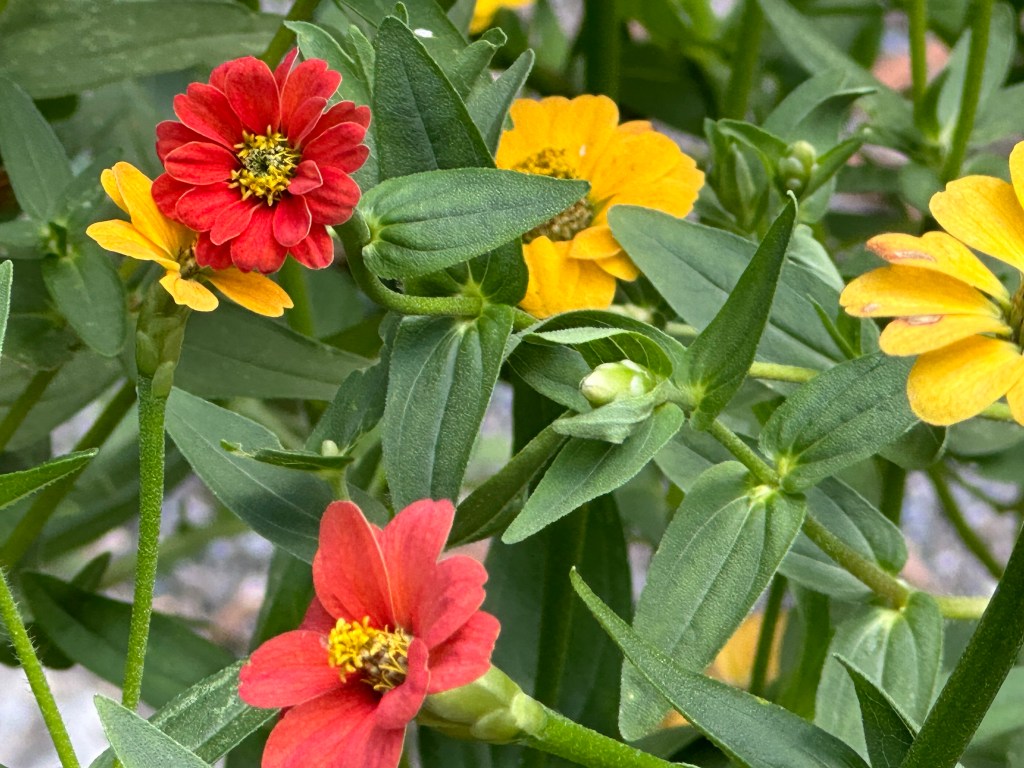
Deep Pink & Middle Yellow Flowers vs. Black & White Purple & lone Yellow Flowers vs. Black & White Red & Yellow Flowers vs. Black & White Pink & Yellow Quilt Square vs. Black & White [Side Note: Quilt made by my Maternal Grandmother]
Common Name(s): Carolina Wild-petunia Wild Petunia
The Carolina Wild Petunia are extremely common in North Carolina. They are found in lawns and woodlands. This Wild Petunia was seen at Anne Springs Close Greenway along the trails at the Adventure Road Entrance. Many times, even though these flowers are beautiful, they are overlooked and sometimes considered a lawn weed. The Carolina Wild Petunia’s flowers only last a day, but they also have a long flowering period which compensates for the shorter blooming time.
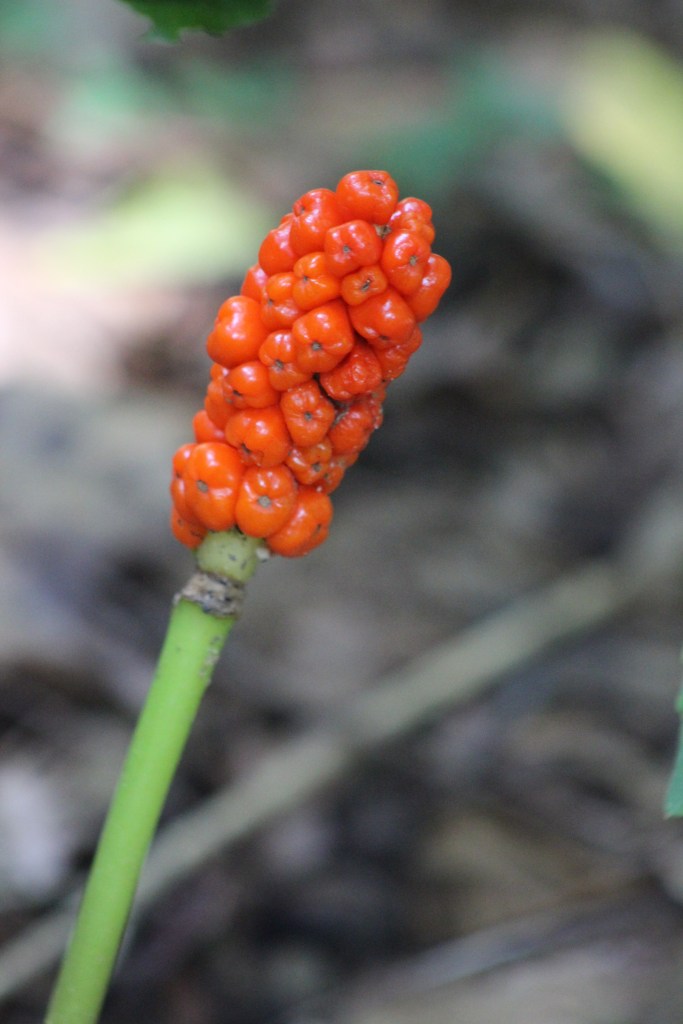
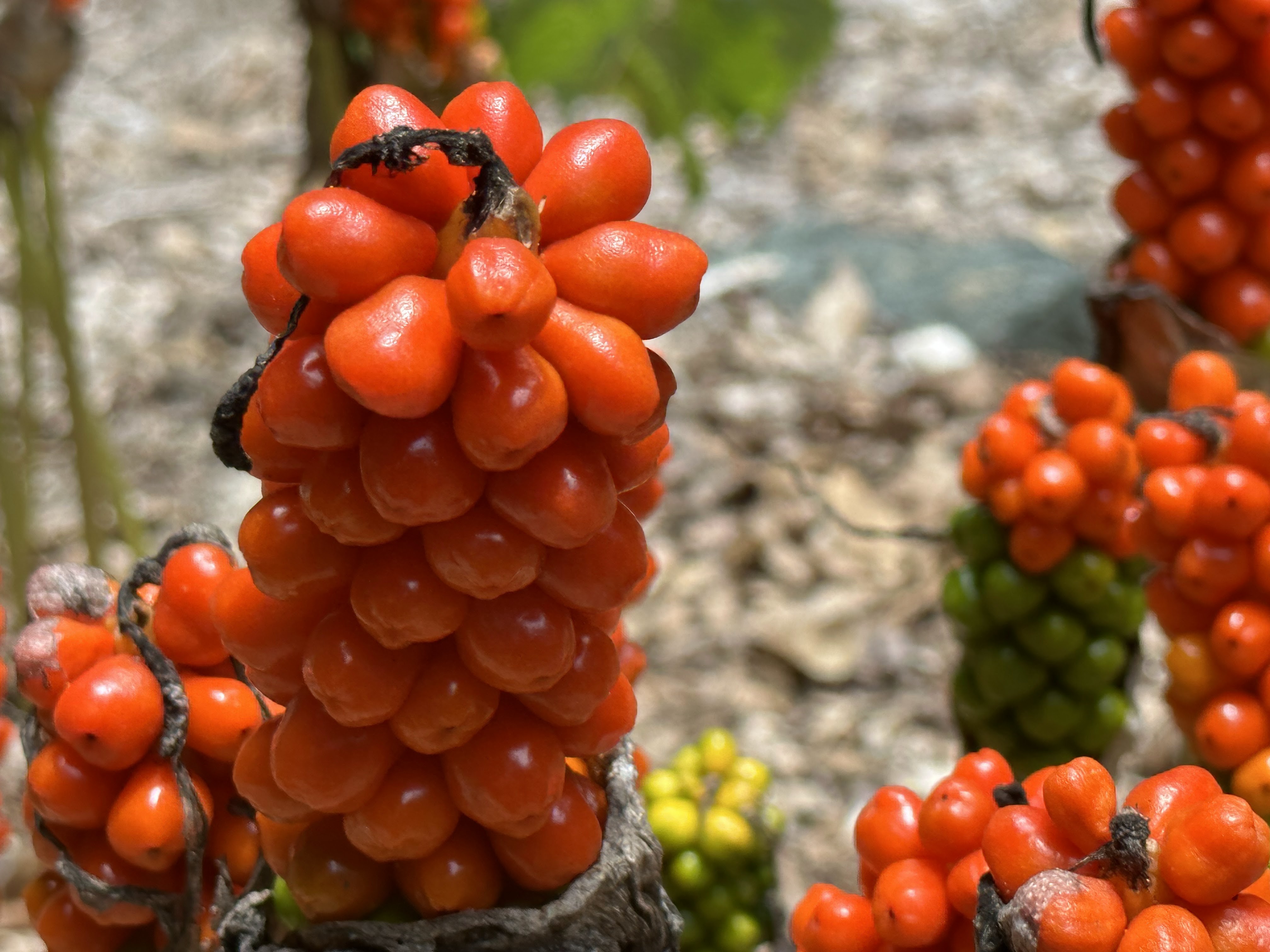
Common Name(s): Cuckoo’s Pint Italian Arum Italian Lily Italian Lords and Ladies Orange Candle Flower Previously known as: Arisarum italicumItalian Arum is a herbaceous perennial and member of the Araceae family. It was originally planted as an ornamental groundcover. It is now considered invasive in some parts of the United States because it is difficult to control and spreads rapidly. All parts of this plant are poisonous to humans and wildlife. The plant can cause skin irritation and illness. North Carolina Extension Gardener Plant Toolbox
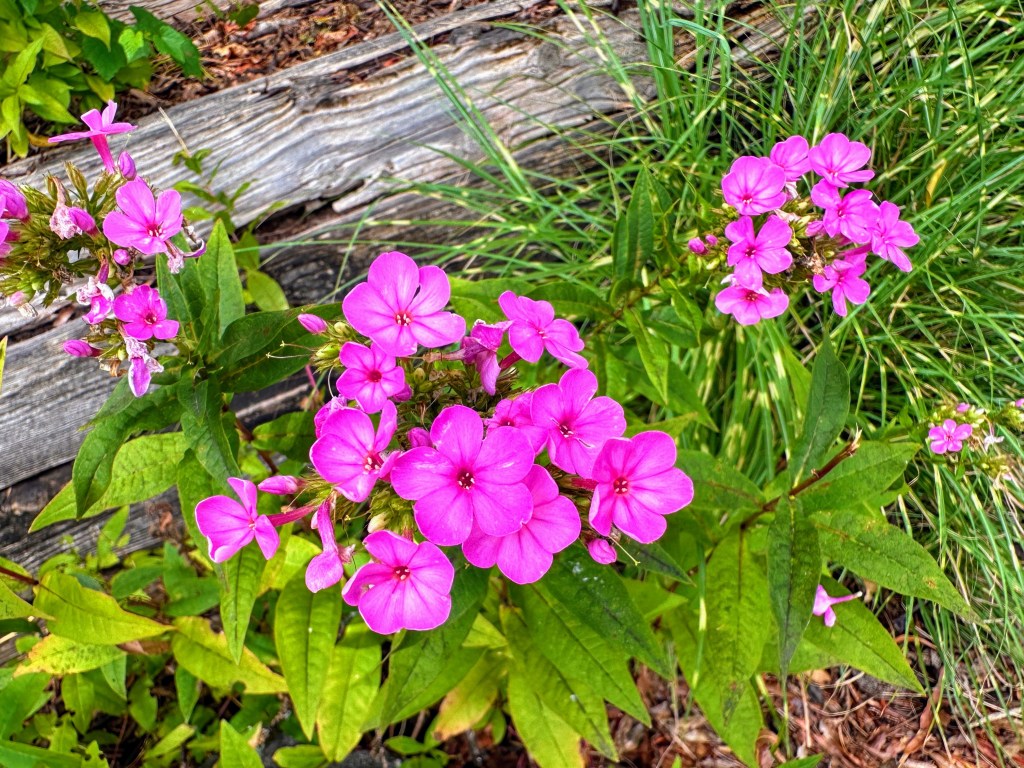
Carolina Phlox is a lovely long-flowering native with clusters of purple-pink flowers.Phlox carolina, the thickleaf phlox, is a species of flowering plant in the family Polemoniaceae.
The specific epithet carolina refers to its native habitat in the eastern United States. It grows in woodland edges and openings. Flowers attract bees, hummingbirds, and butterflies.
Catawba Woven Basket Disc Golf MarkerIpomoea pandurata Wild Potato Vine Shot on Canon EOS Rebel T3iCampsis radicans American Trumpet Vine Coleman on his New 2-Wheel Bicycle
Ipomoea pandurata (eep-oh-MEE-uh pand-yoor-RAY-tuh, shaped like a fiddle) is native to Florida and the eastern half of North America. It has a large root that can be eaten if cubed and boiled in at least two changes of water. Never eat it raw.
These are also known as Indian Potato, Man-of-the-Earth, Manroot, Morning Glory, Wild Potato Vine, Wild Sweet potato, Wild Sweet potato Vine.
Dale of The Cosmic Photo Challenge prompt is Freestyle this week.
Since this is freestyle week I decided to let you visit with me on one of the hikes Coleman and I took this past week. This hike was a little bit different in that we had my daughter, Coleman’s mom, along with us. On Tuesday we needed to be out of the home for awhile because a pest control company was going to come in and spray per the Complex management.
Therefore, we decided to go hiking in one of Coleman’s favorite places. The place we chose was Anne Springs Close Greenway about twenty minutes or so from our residence. Mind you now my daughter is not fond of hiking at all. When we arrived, we should them my membership card and proceeded to park. We thought Trisha, my daughter, was just gonna sit and relax near the canteen while Coleman and I hiked. It didn’t exactly go like we had thought. You see, Trisha brought her dog along with on our adventure ( he had to be out of the home as well).
Lake Haigler
Chewbacca, Trisha’s dog, decided he wanted to hike with us, therefore she had to tag along. We walked down to the lake and proceeded along the trail, Lake Haigler Loop, around the lake.
Haigler Loop
Coleman loves to run along the trail. I prefer a slower pace since I normally take many photos along the trail of the various sites we see. Often we observe different angles around the lake, seeing flowers, butterflies, sometimes turtles, bees, and even dragonflies.
Brazilian Vervain (Verbena brasiliensis)
At other times we see amazing reflections in the water.
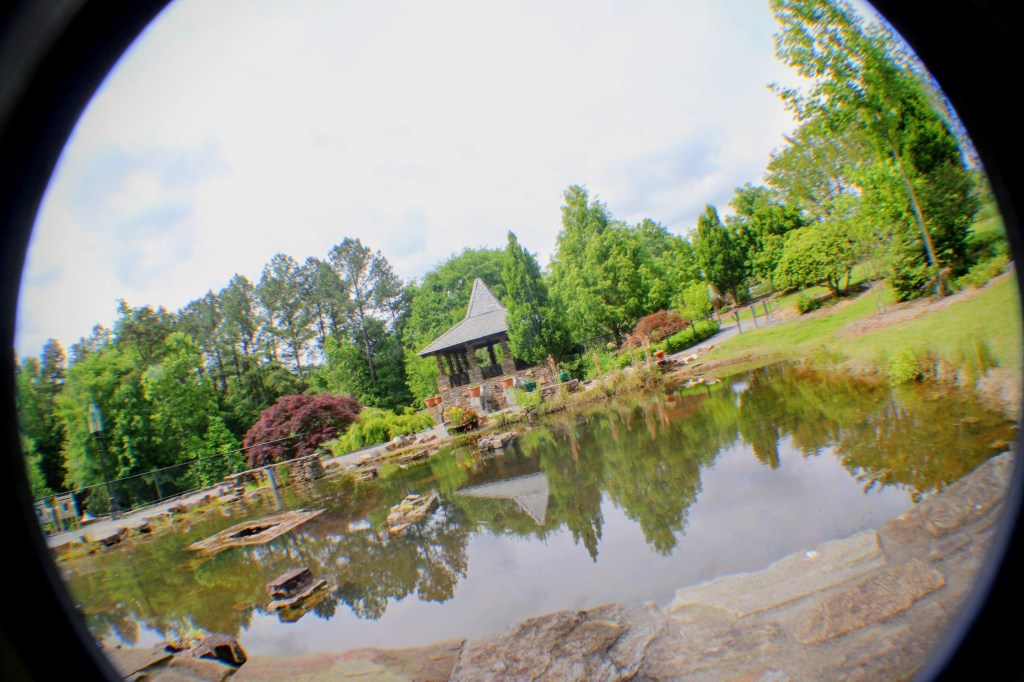
Reflections in Lake Haigler
I love seeing various creatures feasting on the nectar of wildflowers her at the Greenway.
Black Swallowtail, Eastern Bumblebee, and Delta Flower Scarab Beetle feasting on Buttonbush Cephalanthus occidentalis.
Further down the trail as we hike around the lake I notice what appears to be a shape of a triangle formed with the reflections in the lake.
Triangle formation from the water reflections. Surrounding Tree Reflections plus water shimmering
As we keep going I slow down observing butterflies flittering to and fro. Naturally I stop to snap a photograph. Meanwhile, my daughter’s trying to convince me to stop taking pictures. Guess what? She didn’t convince me, not one single solitary moment.
Eastern Tiger Swallowtail Pearl Crescent Butterfly
Next on our hike we come across a dragonfly and several turtles along the edge of the lake.
Widow Skimmer Dragonfly Turtles sunbathing on a log
By this time my daughter is tired and wants to get this hike over with. Naturally, Coleman and Chewbacca want to keep going. They’re enjoying the outdoors adventure. Hence, we keep chugging along.
Water Reflections Water Ripples
After awhile we decide to pull up a seat and relax a bit before finishing our hike. But first there’s more to observe as we near the picnic tables along the backside of the lake.
Trisha, Chewbacca, with Coleman leading the way. [He knows the trails better than most adults]. Ngaro Wīwi Priocnemis monachus delighting on Angelica genuflexa
Finally to a spot to snack relax near the water’s edge.
I hope you enjoyed trekking along with us on our hike around Lake Haigler. God Bless. Thank you for sharing your time and thoughts with us. I appreciate y’all.
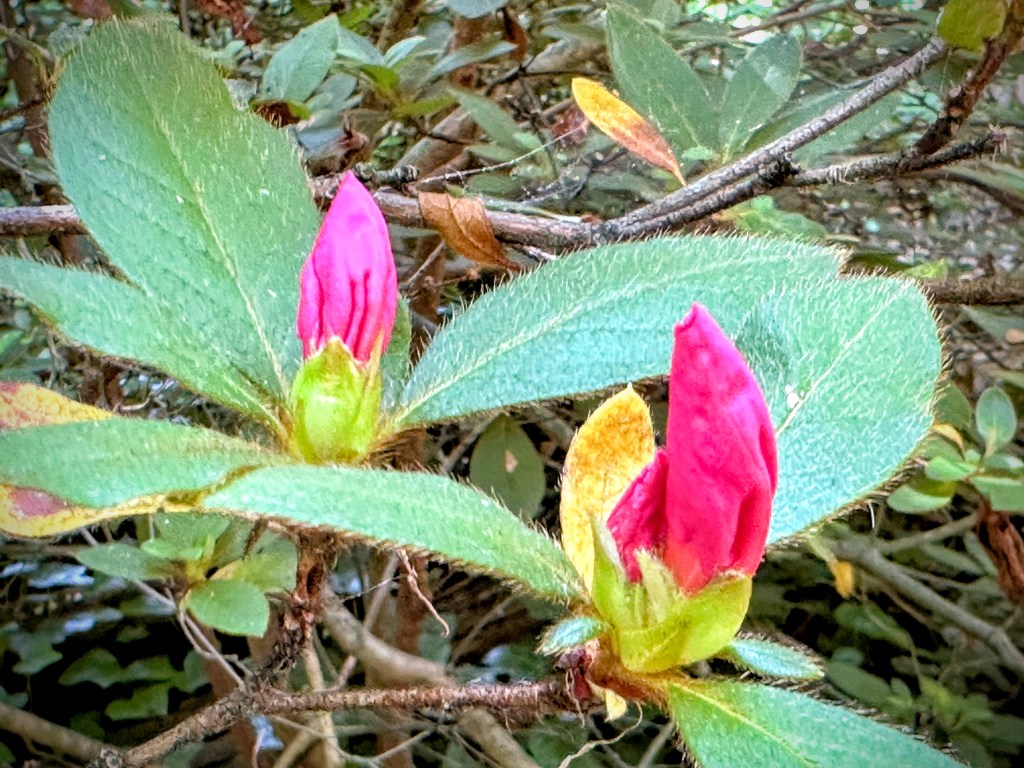
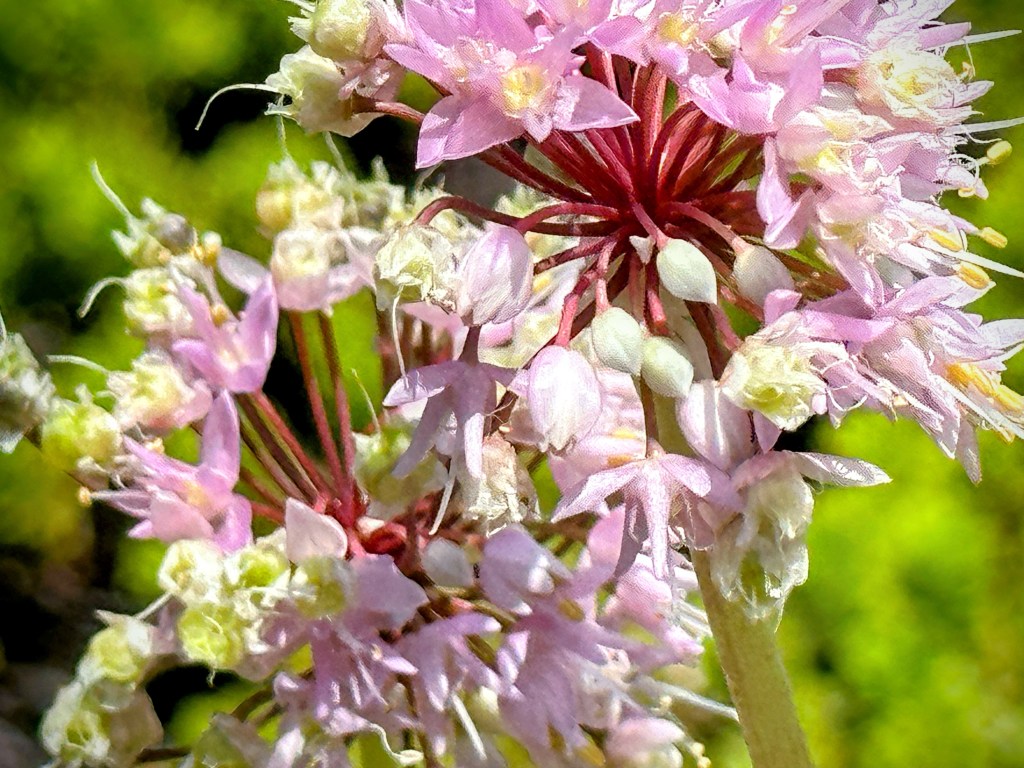
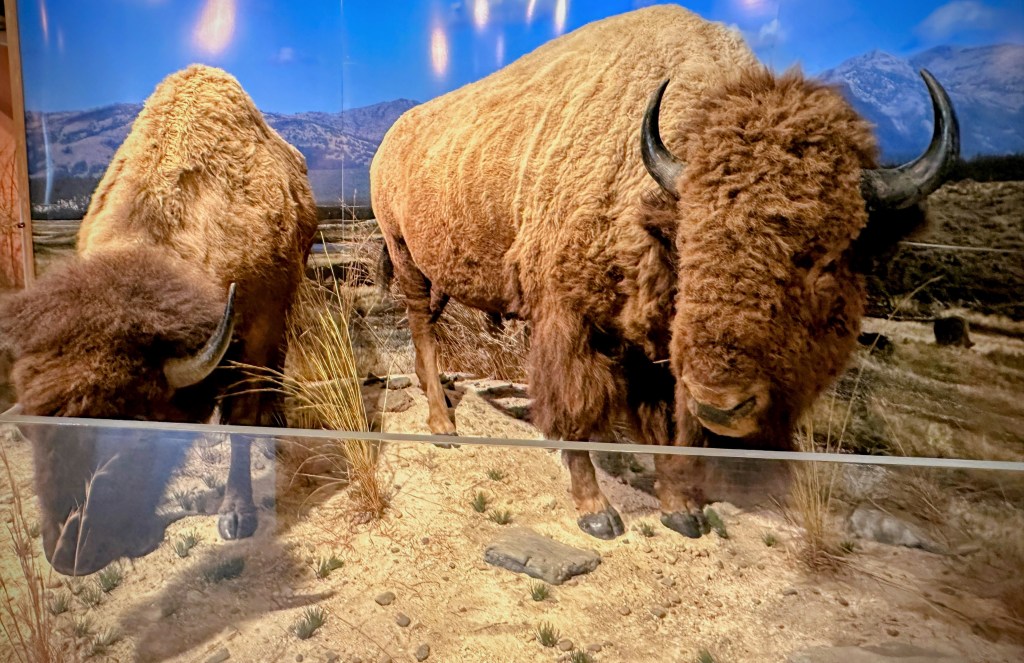
Two Buds of Rhododendron indicum is an Azalea Rhododendron species. Allium stellatum, AKA: the autumn onion, prairie onion, cliff onion, or glade onion, is a North American species of wild onion in the Amaryllidaceae family.American Bison times TwoTwo Hands up from Big Dipper
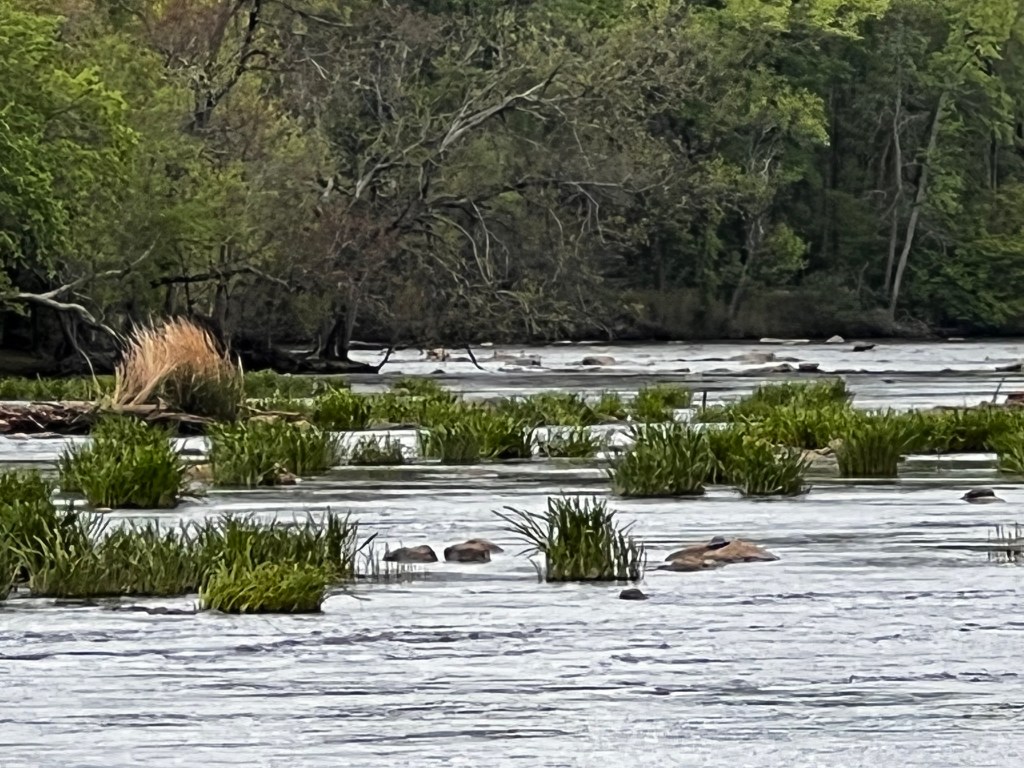
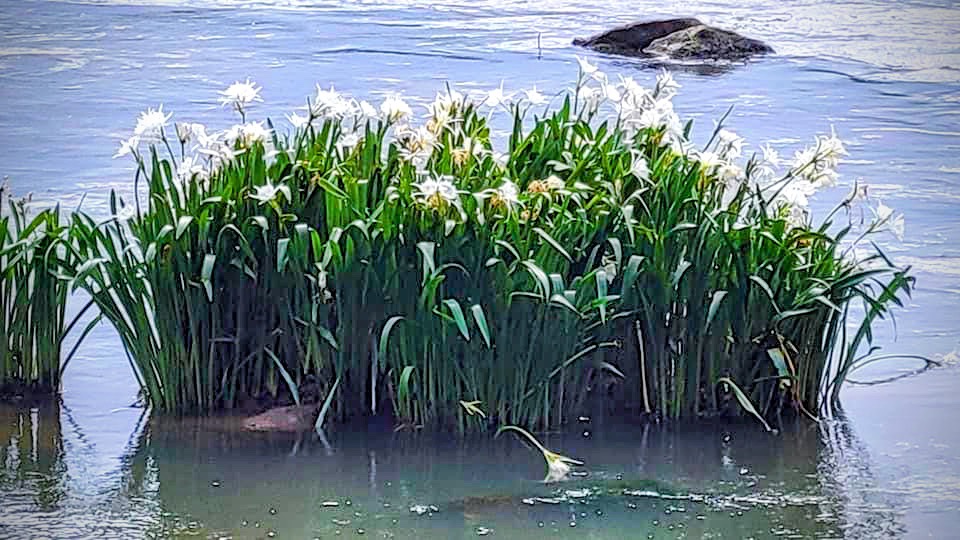
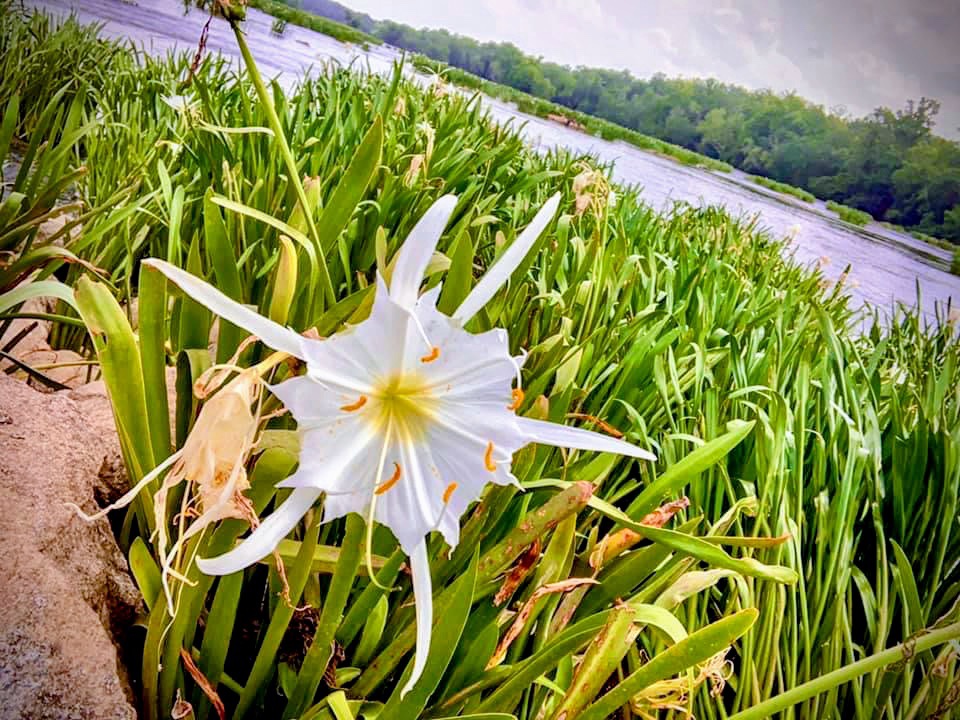
The best time of the year to photograph water lilies or spider lilies in the Carolinas is mid-May through early June. That is when they are at their peak and estimated in 100% full peak of magnificence. These Rocky Shoals Spider Lilies were shot at Landsford Canal State Park. The Landsford Canal State Park is the home of the world’s largest population of Rocky Shoals Lilies. They bloom annually on the shoals along the Catawba River. You can get a closer look at the Spider Lilies if you access the river via a canoe or kayak. There is a 1.5-mile roundtrip Canal Trail you can hike which will take you to an overlook where you can get a panoramic view of the botanical white wonder of the Rocky Shoals Spider Lilies. Landsford Canal State Park is located in Catawba, Chester County, South Carolina.
I do not have my own personal garden where I currently reside. There are various Gardens close by where I am able to visit occasionally with my grandson. The following are a few examples of what can be seen at the Daniel Stowe Botanical Gardens in Belmont, North Carolina.
Italian Arum Botanical name: Arum italicum Other name(s): Italian or Large Cuckoo Pint, Italian Lords-and-Ladies Family: Araceae Edible: no, all plant parts are toxic.In early summer, white spathes of flowers are followed by spikes of bright orange red berries. Noteworthy Characteristics: Note that the berries may cause severe discomfort or illness if ingested. Contact with sap may irritate skin.
Venus Fly TrapThe Venus flytrap (Dionaea muscipula) is a carnivorousplant native to subtropical wetlands on the East Coast of the United States in North Carolina and South Carolina.The English botanist John Ellis, who gave the plant its scientific name in 1768, wrote that the plant name tippitywichit was an indigenous word from either Cherokee or Catawba.
These particular Venus Fly Trap plants are on display in an aquarium in The Schiele Museum of Natural History and Planetarium in Gastonia, North Carolina.
After a week of solid rainfall Coleman and I were itching to get outside to roam around in nature. It was decided on Friday that we should be adventurous, after errands were completed. Our errands took us down to Lancaster which is an hour and a half away from our current home. Coleman was being extremely patient, he deserved a break on the way make home. Therefore, to relieve his itch to run around, we stopped at one of his favorite places.
What is that favorite place, you ask? It is the expansive Anne Springs Close Greenway. It was an extremely hot 🥵 and humid summer day. We walked around along the trails, across the swinging bridge, and up to the Wildflower Meadow to observe which flowers were thriving.
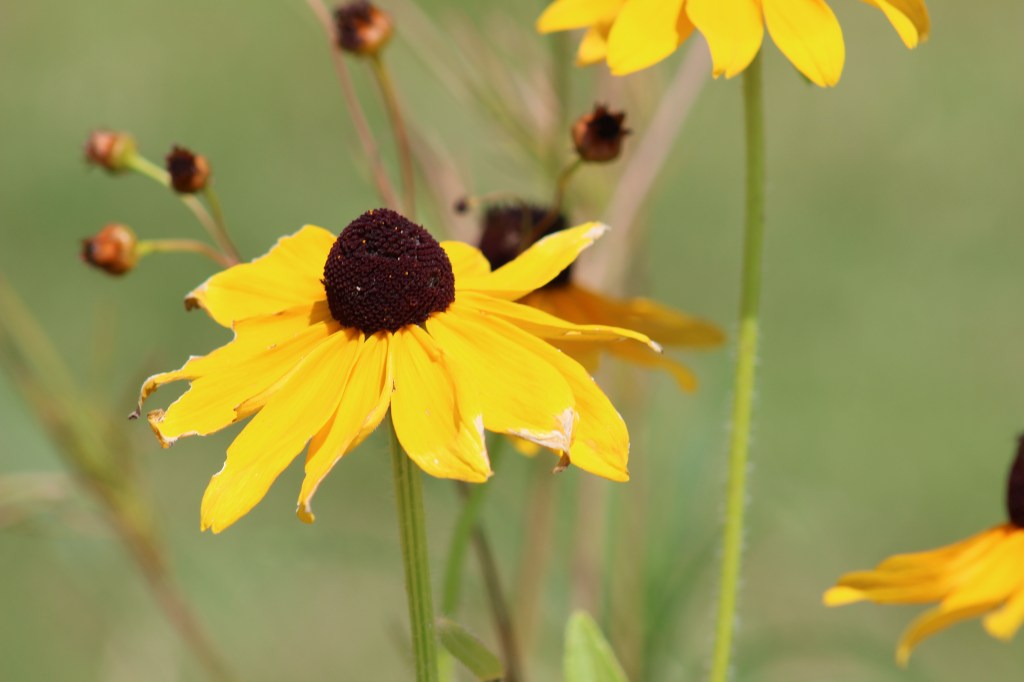
Rudbeckia hirta L. AKA: Black-eyed Susan, Common Black-eyed Susan, Brown-eyed Susan, Blackeyed Susan Asteraceae (Aster Family)
These coneflowers are common in the Mountains and the western Piedmont of the Carolinas. They are abundantly growing throughout the Greenway’s grounds.
We took a short break for a bite to eat at the Greenway’s Canteen. Enjoying the cool air was nice, but Coleman was itching for a different kind of relief from the hot 🥵 sunny summer weather. What kind of relief do you think he was desiring?
He was itching to get relief splashing in the water at the Greenway’s Spillway. The Spillway was low, however, it still produced enough water flowing across for many to cool 😎 off and enjoy a splashing 💦 wonderfully amazing good time. Coleman delighted in sloshing and splashing through the Spillway’s water 💦.
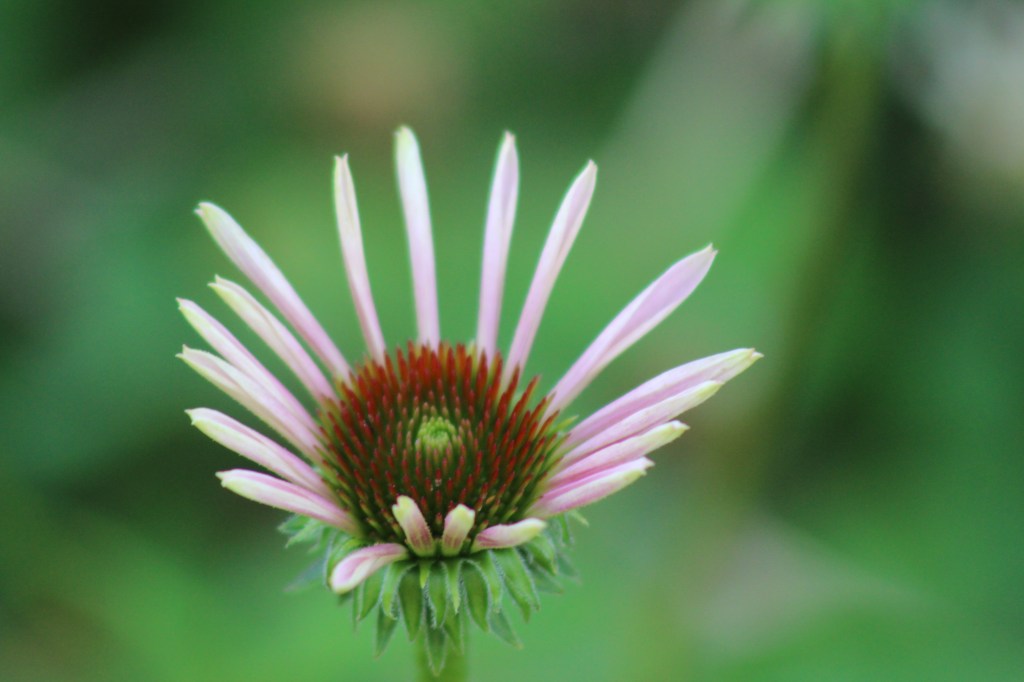
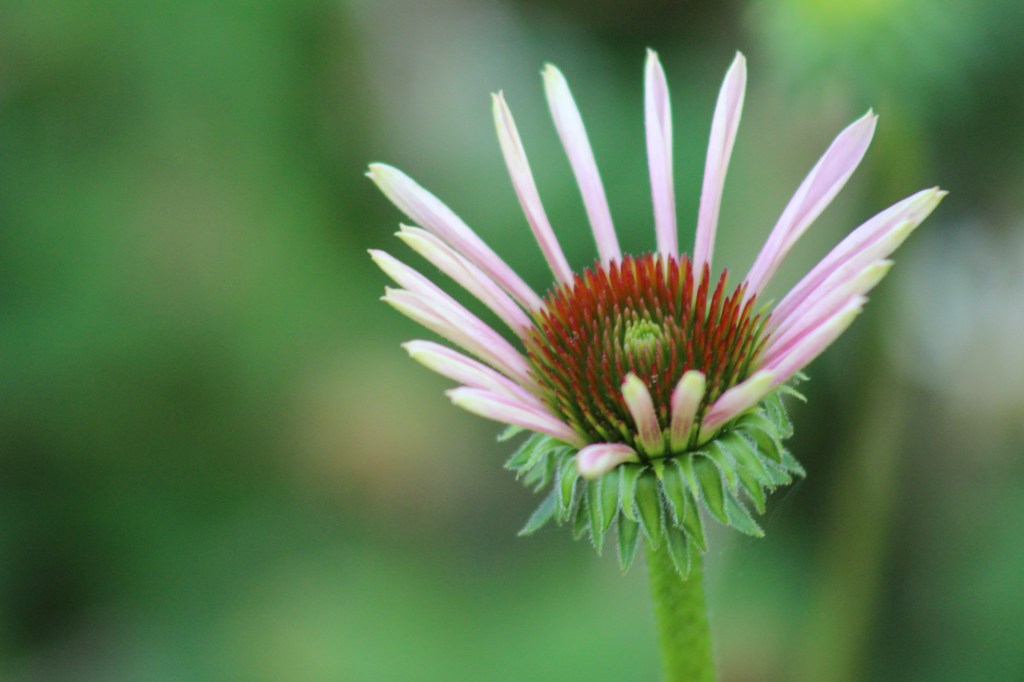
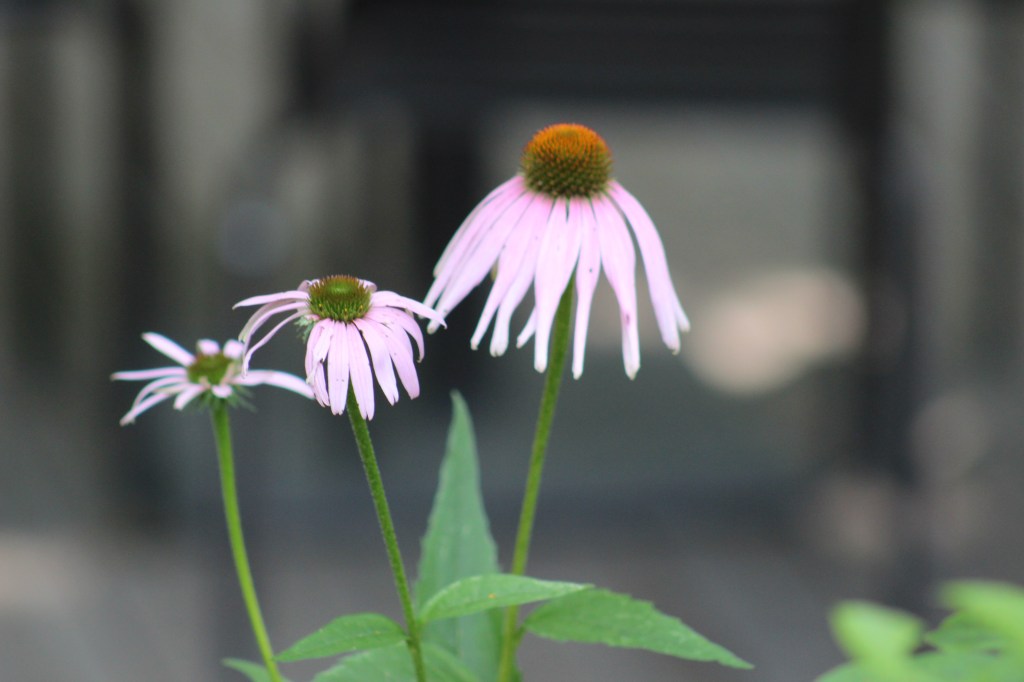
Pale Purple ConeflowerPreviously known as: Brauneria pallida Echinacea pallida f. albida Rudbeckia pallidaThe Pale Purple Coneflower is a herbaceous perennial of the genus Echinacea.
These coneflowers are native to North America, and there are nine known species of Echinacea. Echinos is Greek for “hedgehog” or “sea urchin” which is reflective of the plants spiny center cone. Pallida is Latin and translated means “pale.” This is in reference to their petal color which is a pale pink-purple.
Interesting Medicinal Information:
Echinacea was first used by Native Americans for treatment of insect stings and bites as well as snake bites. Currently, Echinacea is used to prevent colds, flu, and other respiratory tract infections. It has also been proven to boost the immune system and treat urinary tract infections. Echinacea preparations can also be topically applied for wounds or skin problems. The roots and whole plant possess a cortisone-like antibacterial property.
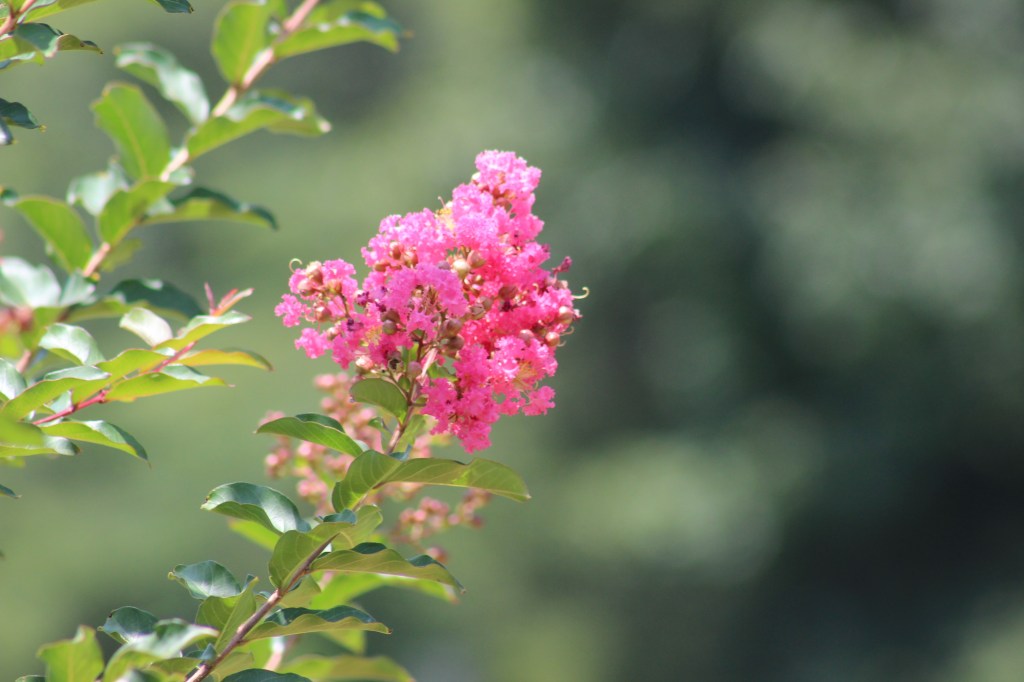
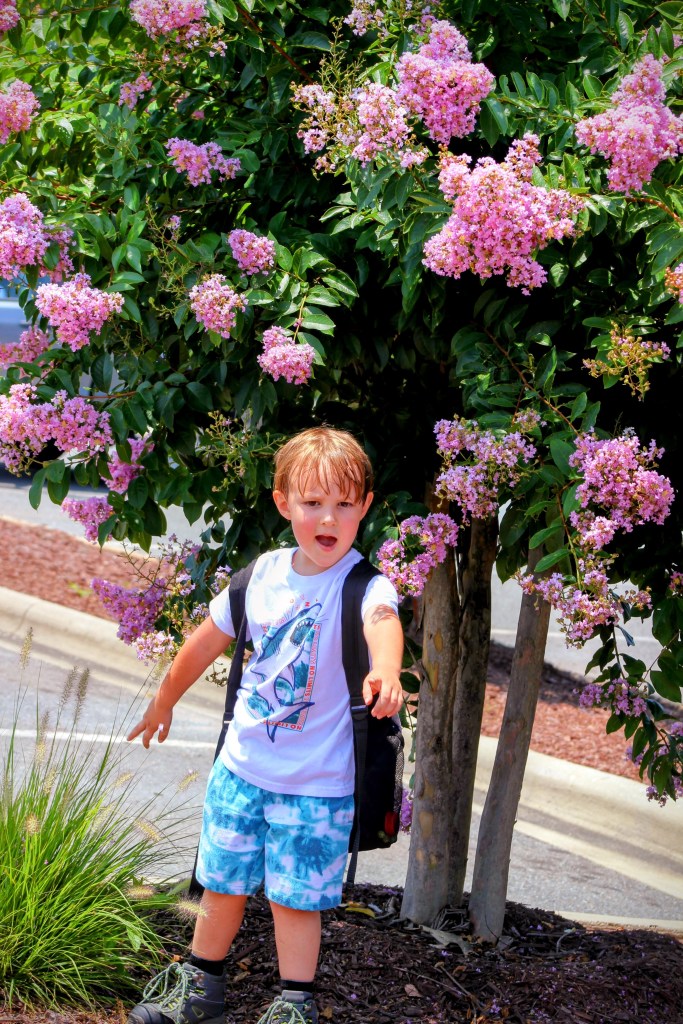
Lagerstroemia indicathe crape myrtle (also crepe myrtle, crêpe myrtle, or crepeflower)It is a species of flowering plant in the genus Lagerstroemia of the family Lythraceae. It is an often multi-stemmed, deciduous tree with a wide spreading, flat topped, rounded, or even spike shaped open habit. The tree is a popular nesting shrub for songbirds and wrens.
This type of plants are DECIDUOUS SHRUBS. Their typical butter yellow autumn leaves fall leaving the flowers exposed on this later flowering selection with slightly larger flowers than the species.
These particular witch-hazels were located near the Lake Trail at Crowders Mountain State Park in Kings Mountain, North Carolina.
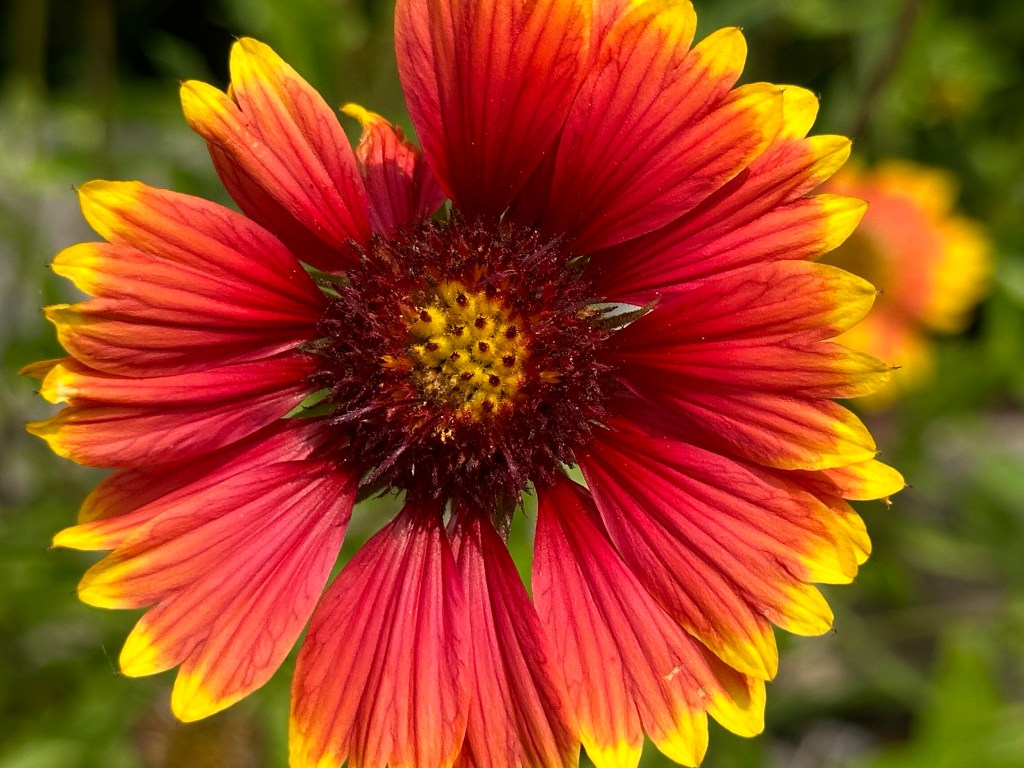
Gaillardia pulchella AKA: firewheel, Indian blanket, Indian blanketflower, or sundance It is a North American species of short-lived perennial or annual flowering plants in the sunflower family.The common name, Indian Blanket, may refer to the resemblance of the inflorescence to the brightly patterned blankets made by Native Americans, or to the ability of wild taxa to blanket the ground with colonies.
My grandson and I spotted these spectacular flowers near the entrance to the Nature Trail at The Schiele Museum of Natural History and Planetarium located in Gastonia, North Carolina when we went there to go hiking this past week.
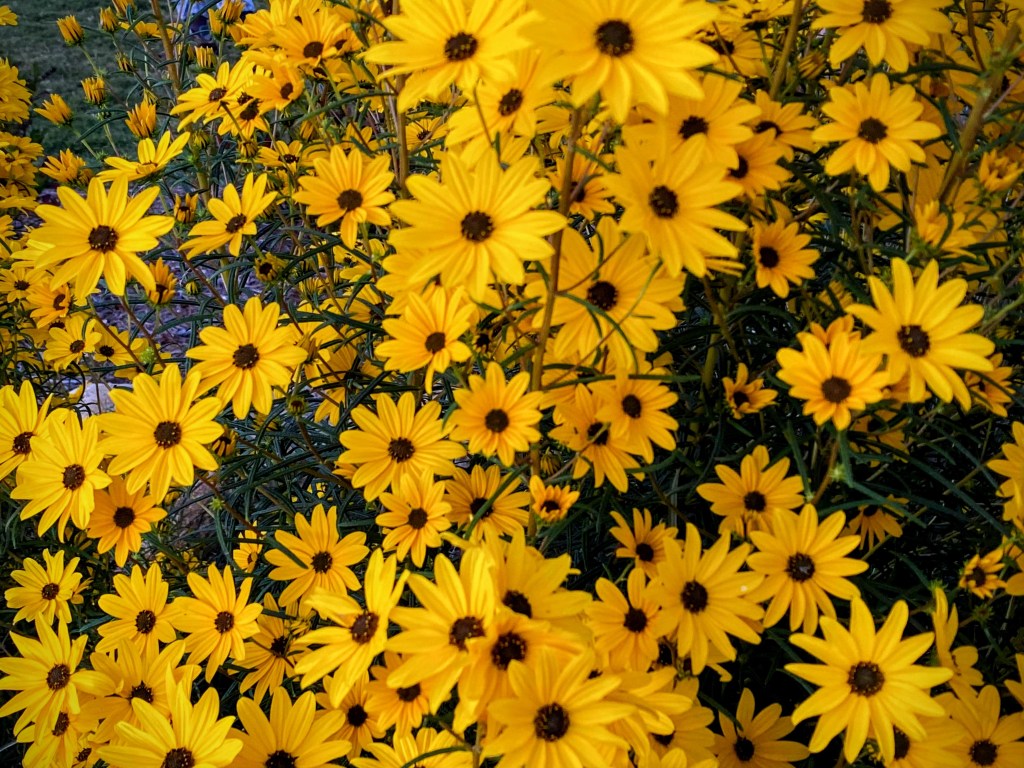
Helianthus schweinitziiCommon Name: Schweinitz’s sunflowerIt is a member of the sunflower family (Asteraceae).
The Helianthus schweinitzii is a perennial wildflower endemic to the Piedmont physiographic province of North Carolina and South Carolina. It is one of the rarest species of sunflower in the United States. It is common along utility and highway rights-of-way in North Carolina and South Carolina. These particular Schweinitz’s sunflower are located along the Lake Trail at Crowders Mountain State Park.
Trifolium pratense, red clover, is a herbaceous species of flowering plant in the bean family Fabaceae, native to Europe, Western Asia, and northwest Africa, but planted and naturalized in many other regions.
Interesting Facts:
Red clover is a good pollen and nectar source for bumblebees.
Red clover’s flowers and leaves are edible, and can be added as garnishes to any dish.They can be ground into a flour.
The flowers often are used to make jelly and tisanes, and are used in essiac recipes. Their essential oil may be extracted and its unique scent used in aromatherapy.
It is widely grown as a fodder crop, valued for its nitrogen fixation, which increases soil fertility. For these reasons, it is used as a green manure crop.
Slender Vervain is a perennial that spreads by rhizomes and is native to South America. Is an annual north of zone 7 but needs winter protection in that zone. It has naturalized from southeastern North Carolina to Florida and is very tolerant of heat and drought.
These Verbena rigida are in the garden in front of The Schiele Museum of Natural History and Planetarium in Gastonia, North Carolina.
Petunia axillaris, the large white petunia, AKA: wild white petunia or white moon petunia, is an annual herbaceous plant in the family Solanaceae, genus Petunia.
Rubus idaeus ‘Caroline’ (Everbearing Raspberry) is a fall-fruit big cultivar producing high yields of large, highly flavored, red raspberries which are perfect for eating or preserves.
Raspberry plants can fruit on different types of canes, and these are categorized into primocane and floricane. Both primocane (first year) fruiting and floricane (second year) fruiting raspberries have both primocanes and floricanes growing from the plant after the first year.
Primocane fruiting raspberries, commonly called Everbearing raspberries, produce flowers and fruit on first year canes. Primocane varieties will produce a moderate crop in June and a much larger crop from late August until frost.
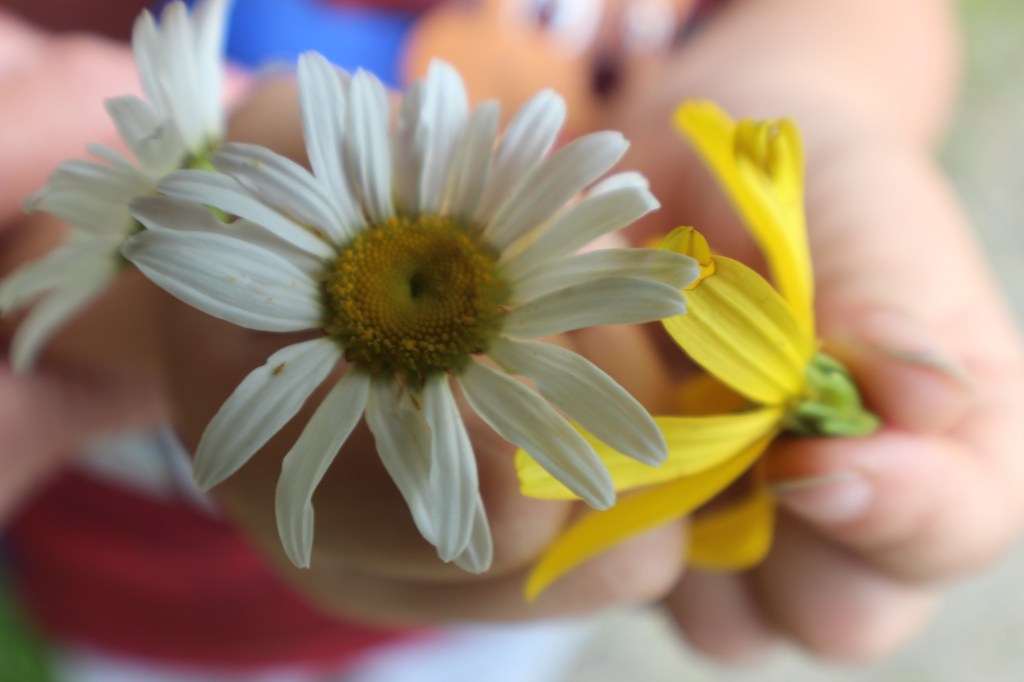
Erigeron annuus (formerly Aster annuus), AKA the annual fleabane, daisy fleabaneEastern Daisy fleabane is a species of herbaceous, annual or biennial floweringplant in the family Asteraceae.
Crocosmia aurea, common names falling stars, Valentine flower, or montbretia, is a perennial flowering plant belonging to the family Iridaceae. Crocosmia’s flowers are brilliantly colored and showy, making them a wonderful choice for flower arrangements. Sometimes called Montbretia, the tubular-shaped flowers are extremely attractive to hummingbirds. The brilliant red yellow or orange blooms appear in May or June with sword-shaped foliage.
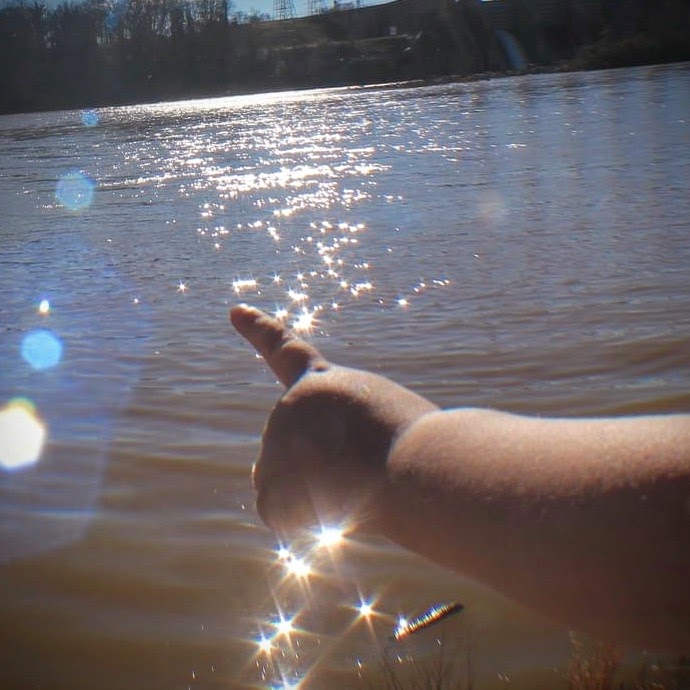
Ice on trees Tall Bearded Iris ‘Earl of Essex’ (Iris)Marantha Siberian IrisIris pseudacorus, AKA the yellow flag, yellow iris, or water flagColeman Pointing with his Left Index Finger
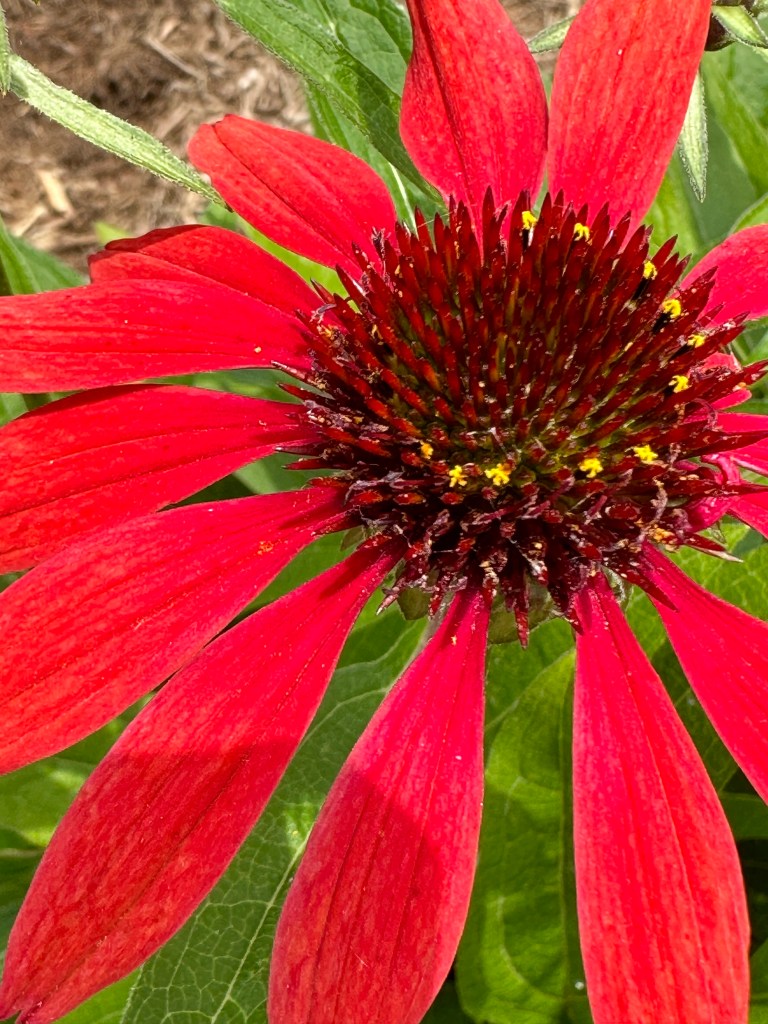
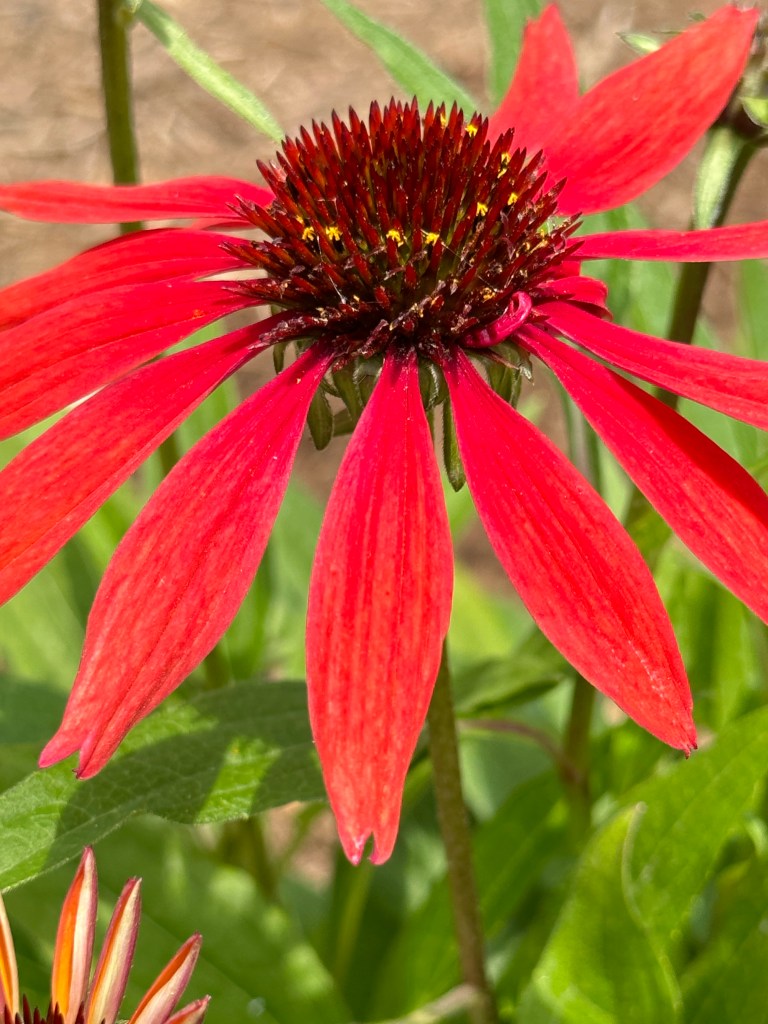
Echinacea Sombrero Salsa Red displays single rows of drooping, deep orange-red ray petals around a sombrero-shaped, orange-brown cone. The lightly fragrant flowers attract butterflies! They provide long lasting color in the garden.
Echinacea Sombrero Salsa Red Coneflower
These are reded daisy-like flowers with dark cones and are produced on strong, well branched stems. Echinacea is well known for its large, daisy-like flowers. It is a bold, sturdy perennial sporting flowers with a large cone-shaped center, hence its common name of Coneflower.
It is also known by African Arrowroot, Arrowroot, Canna, Edible Canna, and Wild Canna Lily among a few other names.
The rhizomes of cannas are rich in starch, and have many uses in agriculture. All of the plant material has commercial value, rhizomes for starch (consumption by humans and livestock), stems and foliage for animal fodder, young shoots as a vegetable, and young seeds as an addition to tortillas.
Other interesting usesincludethe hard black seeds of the Arrowroot having been used in the 19th century as bullets when ammunition was limited. The seeds are also used for making jewelry and musical instruments such as rattles.
Children aside, do you celebrate your birthday/anniversary or is it just a normal day for you?
For me, my birthday is just an ordinary normal day. It is not recognized by my children. Oh, I wish and long for acknowledgement, but henceforth it does not come and by nightfall I am disappointed.
Do/did you always give your child a birthday party when they were young?
I did not always give my children a birthday party. However, when I did it was usually just with family including cousins.
If your child was born on Christmas Day (or a few days either side of the 25th), did they have a ‘half birthday’ in June, two presents/celebrations, or something else?
None of my children were born near Christmas, but I do have a good friend and an “old” neighbor who was born the day after Christmas. If I remember right, and I might not, his parents tried to make his birthday special & not just combine his birthday with Christmas.
I do have a daughter that was born on “traditional” Memorial Day (traditional meaning before they made it always on a Monday). We tended to celebrate her birthday with the patriotic theme of red, white, and blue.
Would you prefer to give your child a party, or take them and a few friends on a special outing?
A party is nice, but also a lot of work and expense. When my children weren’t so young, I took them out to a restaurant of their choosing. I remember, in my teen years, my parents took me out for my birthday at the restaurant of my choice with cake and present(s) at home afterward.
A Red Rose Bud for my birthday (Not really my rose, but I can dream) Photo Credit: (c)Deb L. Waters
As a side note, today’s my birthday. I spent the day with my grandson, Coleman (But then again, I usually do). We took the city transit bus into downtown. His first time on a bus ride. First time for both of us in this area (we only moved here in February). We rode the bus downtown and then walked a short distance and hiked the Highland Rail Trail. (He loves to go hiking). The paved trail was just 1.8 miles in length one way. We stopped shy of the end of the trail and walked back to the bus station to wait for the bus to return home. (Coleman was ready to go.) After my daughter got home, she insisted on us going out to eat for my birthday. We hadn’t done that in over three years. We went to a new to us restaurant called Noodles & Company. World Kitchen. It serves many different times of noodle dishes. Italian, Asian, Vegan, and more. I had the Zucchini Pesto with Grilled Chicken. It was delicious. My grandson had the kids grilled chicken, but he was too antsy to sit still and eat. (He fell asleep shortly after we got back home). I did very much appreciate her thoughtfulness. My sons couldn’t bother with acknowledging my birthday. I am thankful for my online friends new and old who sent their birthday greetings. No body wants to be forgotten on their birthday even if they don’t care for celebrations.
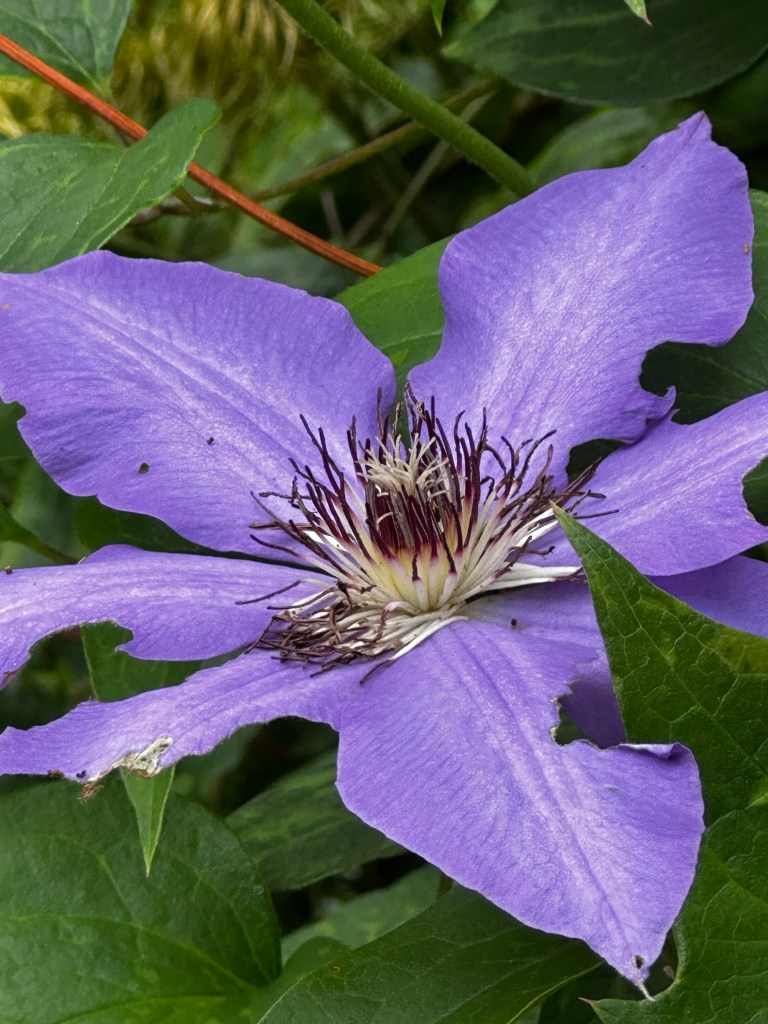
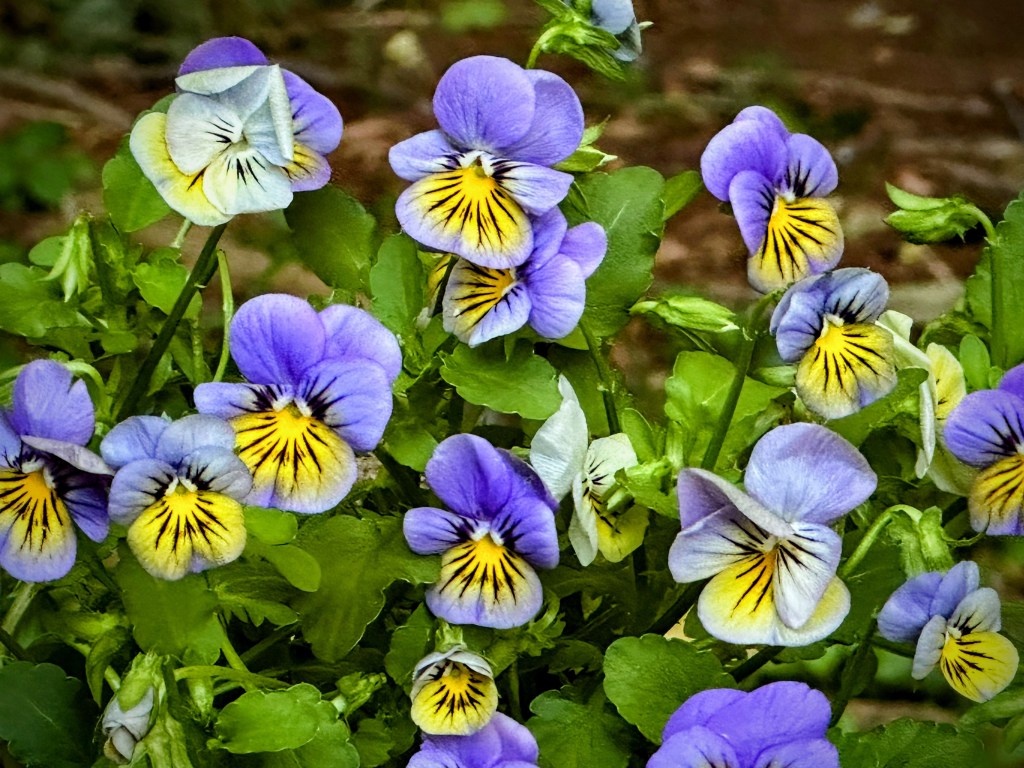
Clematis viticella, the Italian leather flower, purple clematis, or Virgin’s bower, is a species of flowering plant in the buttercup family Ranunculaceae, native to EuropeShades of Purple in a Garden PlanterSalvia officinalis, the common sage or just sage, is a perennial, with blue to purplish flowers. Sisyrinchium angustifolium, commonly known as narrow-leaf blue-eyed-grass Viola × williamsii, known as hybrid horned pansy, tufted pansy, or just horned pansy
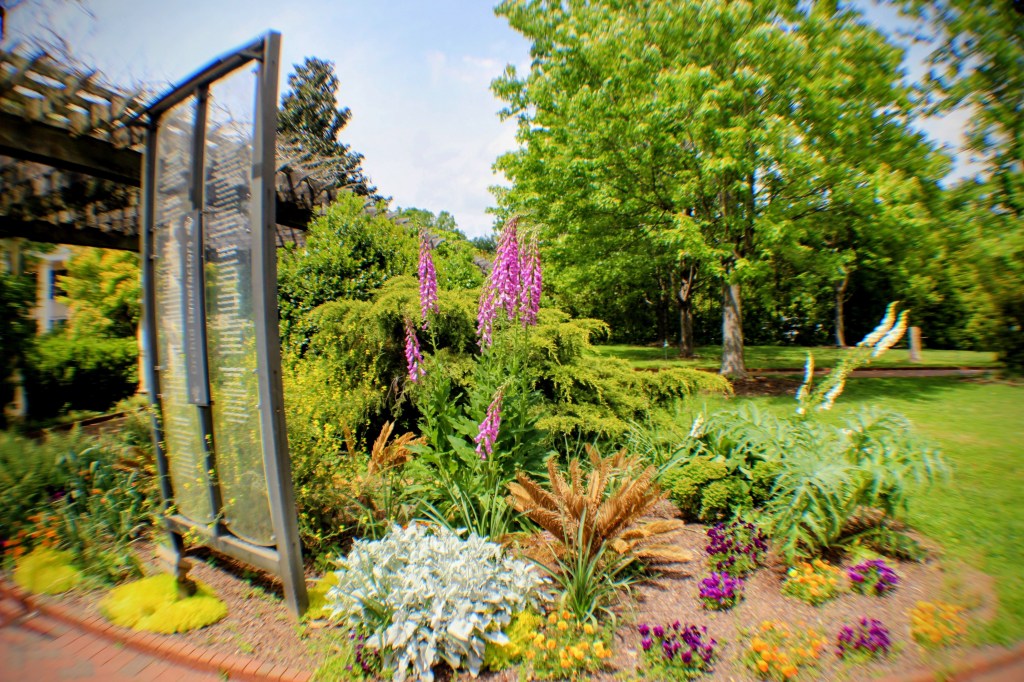
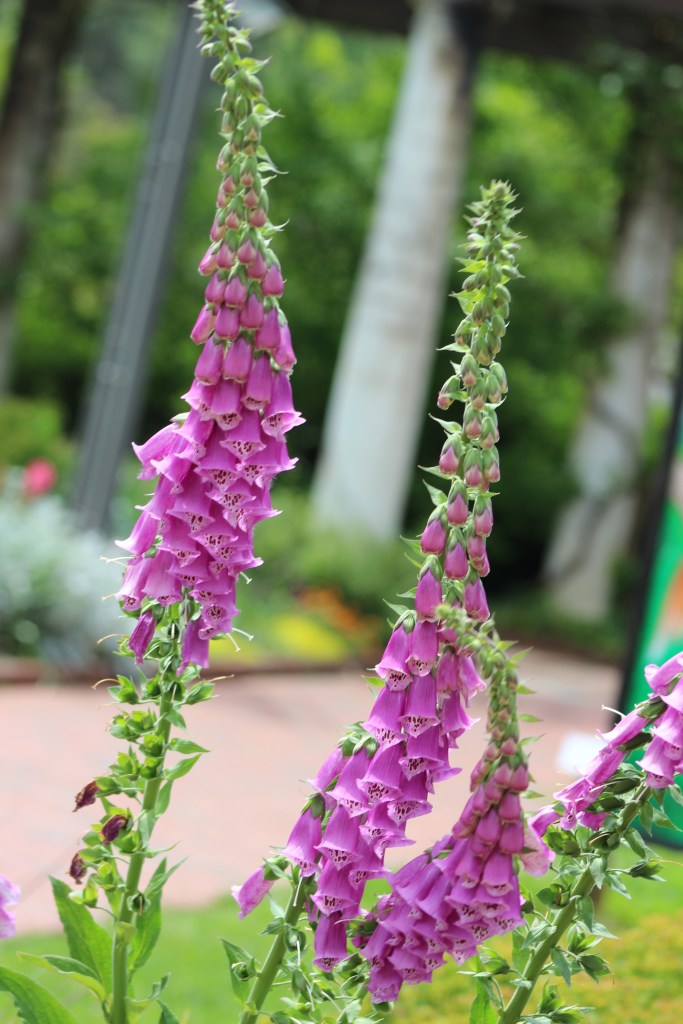
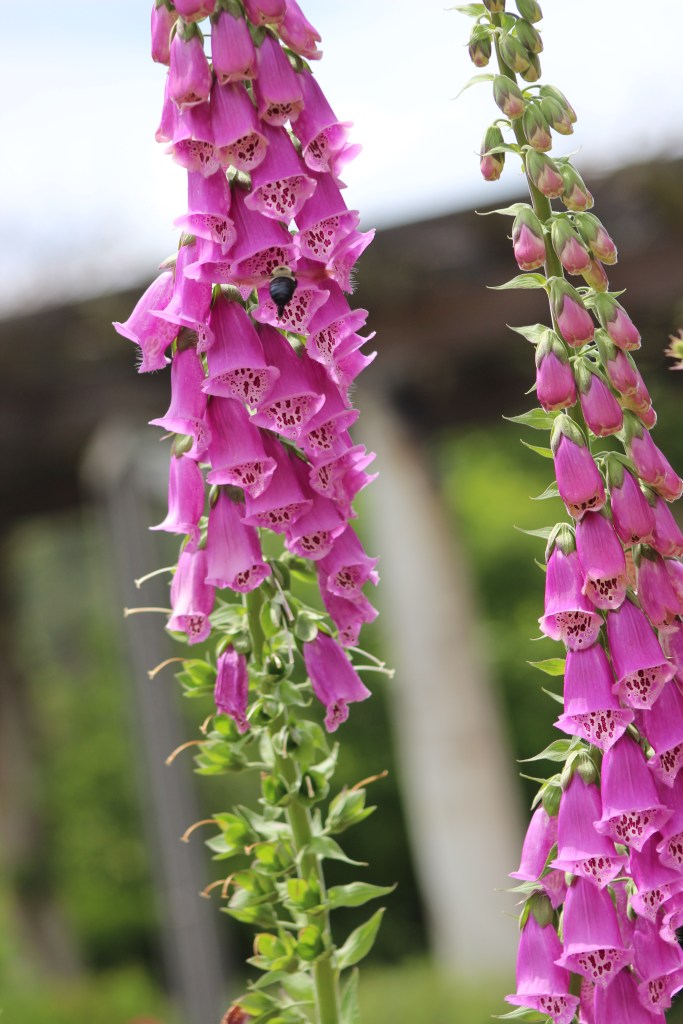
View from our picnic table Notice the Visitor Shot on Canon while Coleman snacked Eastern Carpenter Bee on Digitalis purpurea ‘Dalmatian Purple’ Foxglove Earliest blooming of all Foxglove.
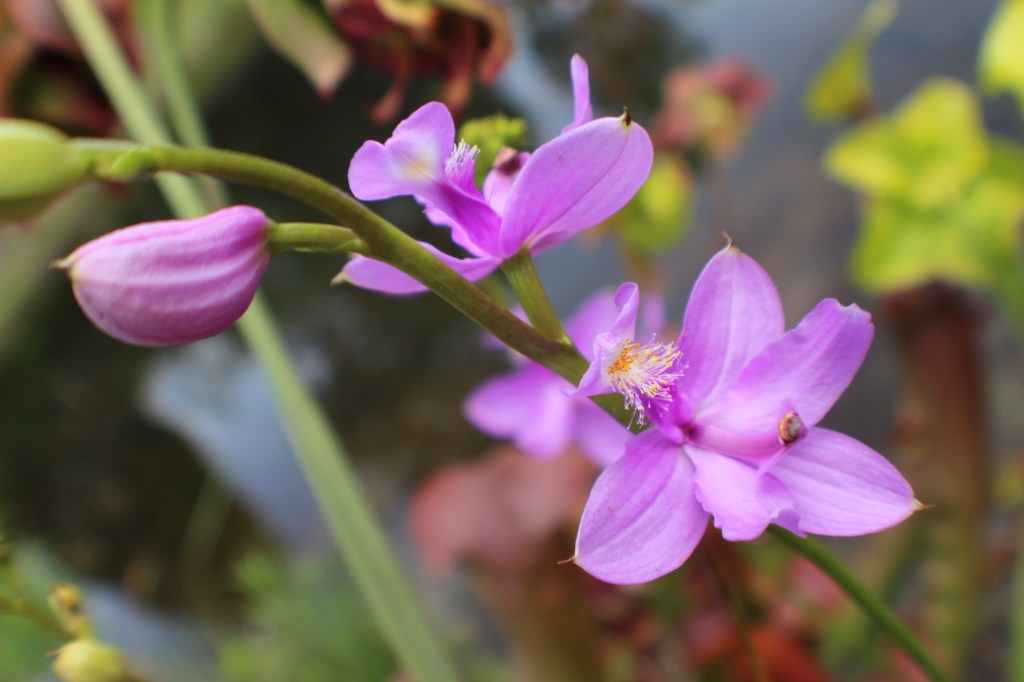
(Calopogon tuberosus var. simpsonii) This gorgeous wildflower is called grass pink and it is in the Orchid family (Orchidaceae). The genus name “Calopogon” is Greek and means “beautiful beard.” It refers to the hairlike structures on the upper petal. It has a bulb-like corm that resembles a tuber, hence the name “tuberosus.” The slender grass-like leaves give rise to the name “grass pink.” It is a stunning wildflower.
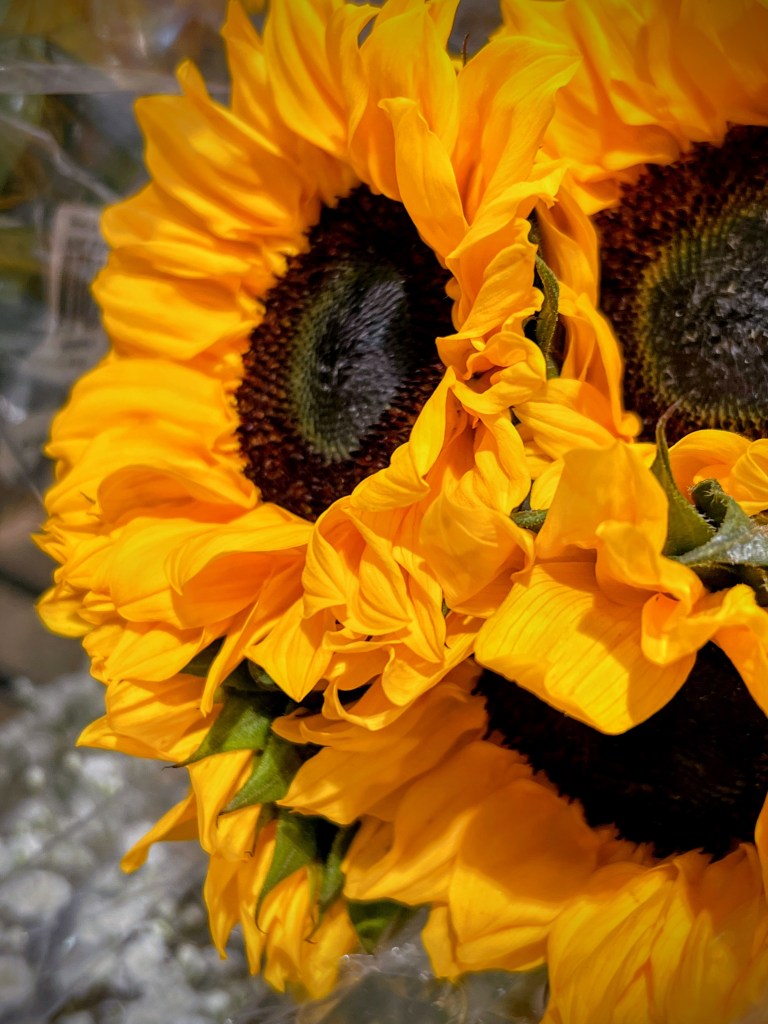
Common Sunflower Helianthus giganteus, the giant sunflower or tall sunflowerSwamp Sunflower Helianthus angustifoliusI’m Grateful for you crosscards.com
Lavender & Meadow SageMeadow Sage Salvia x sylvestrisLavender ‘May Night’ Sage
These Lavender & Sage plants and flowers are within the Memorial Garden which you can find along the Nature Trail at The Schiele Museum located in Gastonia, North Carolina.