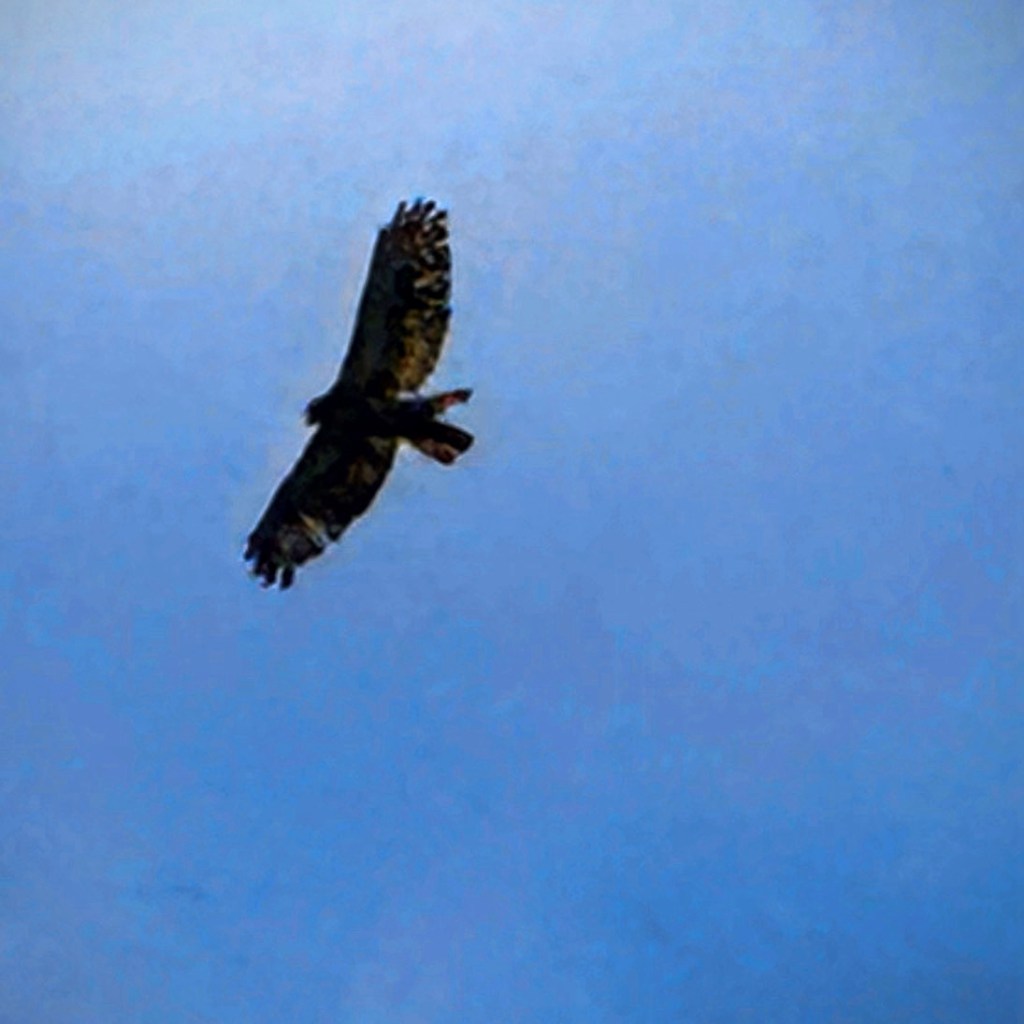
TheRed-tailed Hawk is the most often-seen large hawk in North Carolina. It perches on telephone poles along highways and soars over open fields in search of food. [This Red-Tailed Hawk chose to perch on our electrical wires outside our back patio. The area outside our patio is a wide open grassy landscape area which seems to attract a wide variety of birds.]
Red-tailed Hawks like a mix of open country and deciduous forests, but they adapt to urban areas ( such as our Gastonia neighbourhood.) Red-tailed Hawks frequently can be seen perching on telephone poles, tall trees or snags along roadsides. They sit high mainly to rest, but constantly keep watch for the slightest movement down below.
Red-tailed Hawks eat mostly mammals, so they’re less likely to visit a popular feeder than a Cooper’s or Sharp-shinned hawk is. It’s very rare for a Red-tailed Hawk to go after dogs or cats.
The Red-tailed Hawk has a thrilling, raspy scream that sounds exactly like a raptor should sound. An interesting fact is that whenever a hawk or eagle appears onscreen, no matter what species, the shrill cry on the soundtrack is almost always a Red-tailed Hawk.
The Eastern subspecies (borealis) tends to have a plain red tail with neat black band near the tip. When the Red-tailed Adult Hawks are hunting, they often hang in the air scanning for prey below. This behavior is known as kiting. They also perch motionless in trees along roadsides or slowly scan for prey from its perch.
The American Robin (Turdus migratorius) is one of the most familiar birds in South Carolina and Southern North Carolina. It is a migratory bird of the Turdidae thrush family. It is commonly spotted in forests, woodlands, suburban areas, gardens, and parks. They are known to build their nests on trees, and sometimes even on man-made structures such as porches and garages.
The American Robin is very energetic and spry. It flits about on the ground searching for food. They fly to and fro from the trees to electrical wires just outside our back patio. It is mostly active during the daytime and gathers in large flocks at night. We can hear their songs way before we can spot the in the sky, in the trees or on our electrical lines.
The American Robin’s diet generally consists mainly of such delicacies as earthworms, beetle grubs, caterpillars, and grasshoppers, and a large portion of wild and cultivated fruits and berries.
We continuously hear them singing throughout the afternoon as we sit out back and Coleman plays in his sand Turtle. They are often among the first songbirds to sing as dawn rises or hours before, and last as evening sets in. One fact I learned recently is that the American Robin sings when storms are approaching and again when the storms have passed.
Interesting Facts about the American Robin are that they are protected throughout the United States by the Migratory Bird Treaty Act. They are considered a symbol of Spring. A noted Quebec superstition is whoever sees the first Robin of Spring will have good luck. It is believed by some that the first robin of spring means it is a promise of new beginnings and renewal similar to how plants begin to grow and bloom in springtime.
“The earth is the Lord’s, and everything in it, the world, and all who live in it; and established it on the waters.” — Psalm 24:1-2 NIV ( New International Version)
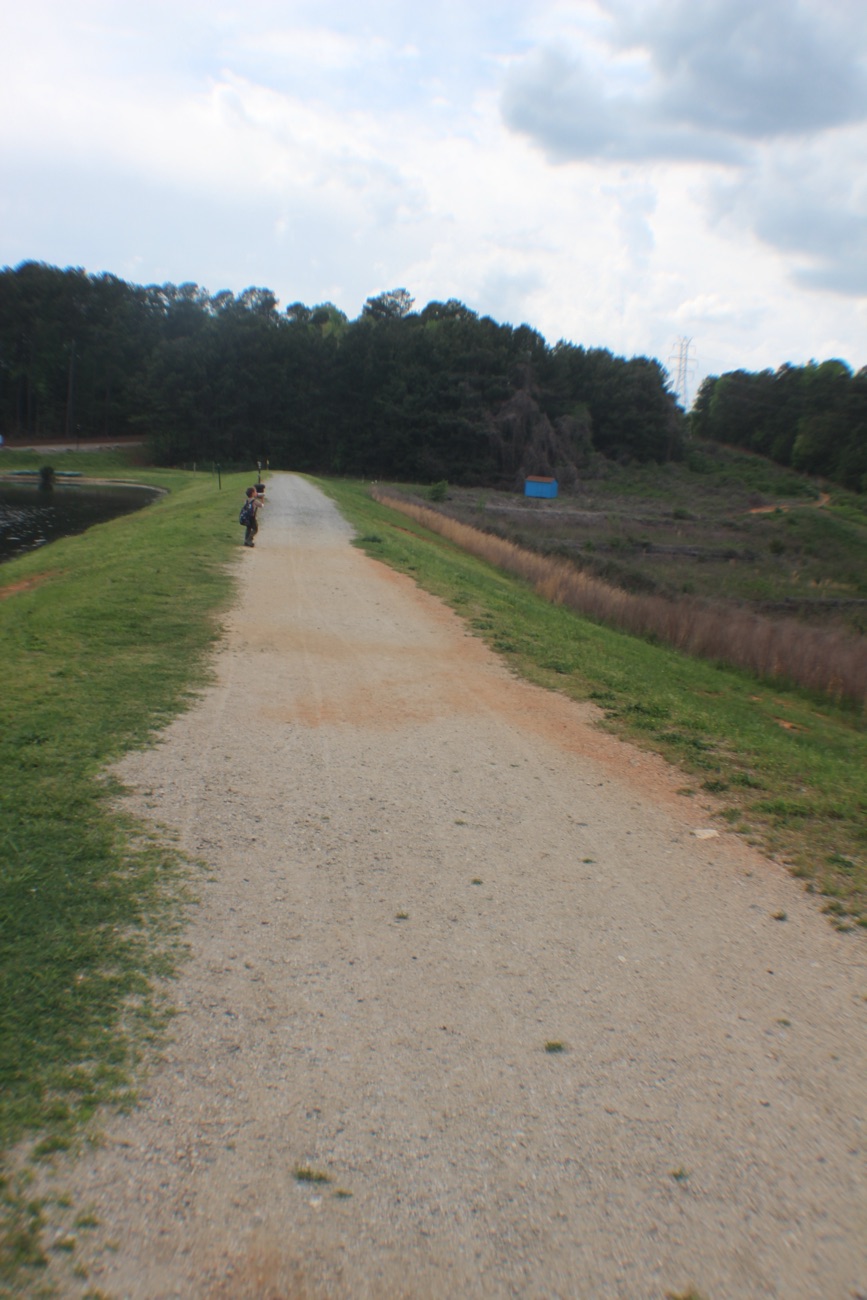
We managed to have a beautiful clear day yesterday (almost), so Coleman and I rode the bus to the Y for some fresh air and a bit of hiking.
All aboard, we’re on our way.
Before we begin our hike, it’s Coleman swing time. If we waited till later the school kids would have taken over and he couldn’t have been able to play.
Cameras: iPhone 14 Pro Max and Canon EOS Rebel T3i with Canon EF-S18-55mm lens with Altura UV & NP filter and also Altura Wide-Angle Fisheye attachments.
Location: Gaston County Warlick Family YMCA; Gastonia, North Carolina, USA
God Bless. Get Outdoors and Enjoy Our Beautiful Earth. Thank you for traversing the trail with us. Thank you for sharing your time and thoughts with us. I appreciate y’all very much.
Whoever said ROCKS needed to be shared for What Rocks Your World? Hey there everyone, I gotta to be one that’s different … willing to Rock the boat (per se.)
Yes, I could do a whole post about Rocks and places of Rocks, however, why should I ? Especially when What Rocks My World isn’t a What but a Who.
Clare @ Clare’s Cosmos invites us each month to share our desktops on the 15th of each month. Can you believe it the month of April is half over already? Here it is time once again to join Share Your Desktop. I like to share my wallpaper for my iPhone as well as for my Laptop. For my iPhone I use different wallpaper’s for the different focuses I use; personal, hiking, and reading.
There are times when we look up at the sky above, the clouds seem to appear into objects we are familiar with such as birds, or airplanes, or elephants, angels or other objects. Sometimes we see nothing in them other than them being : cirrus, cumulus, and stratus, or nimbus. What do you see when you look at clouds?
Before we head out on the road I suggest we stop and fill up the car with some good old fashioned gasoline ⛽️. I doubt you’ll find these prices nowadays though.
I Spy Something Red
I Spy Red on the Gas Station Sign
Now that we’ve filled up the car 🚘 and made sure we have everything we need, let’s get going on our adventure.
I Spy Red Street Lights
Where are we going you might ask? It doesn’t really matter as long as we have a bit of fun along the way.
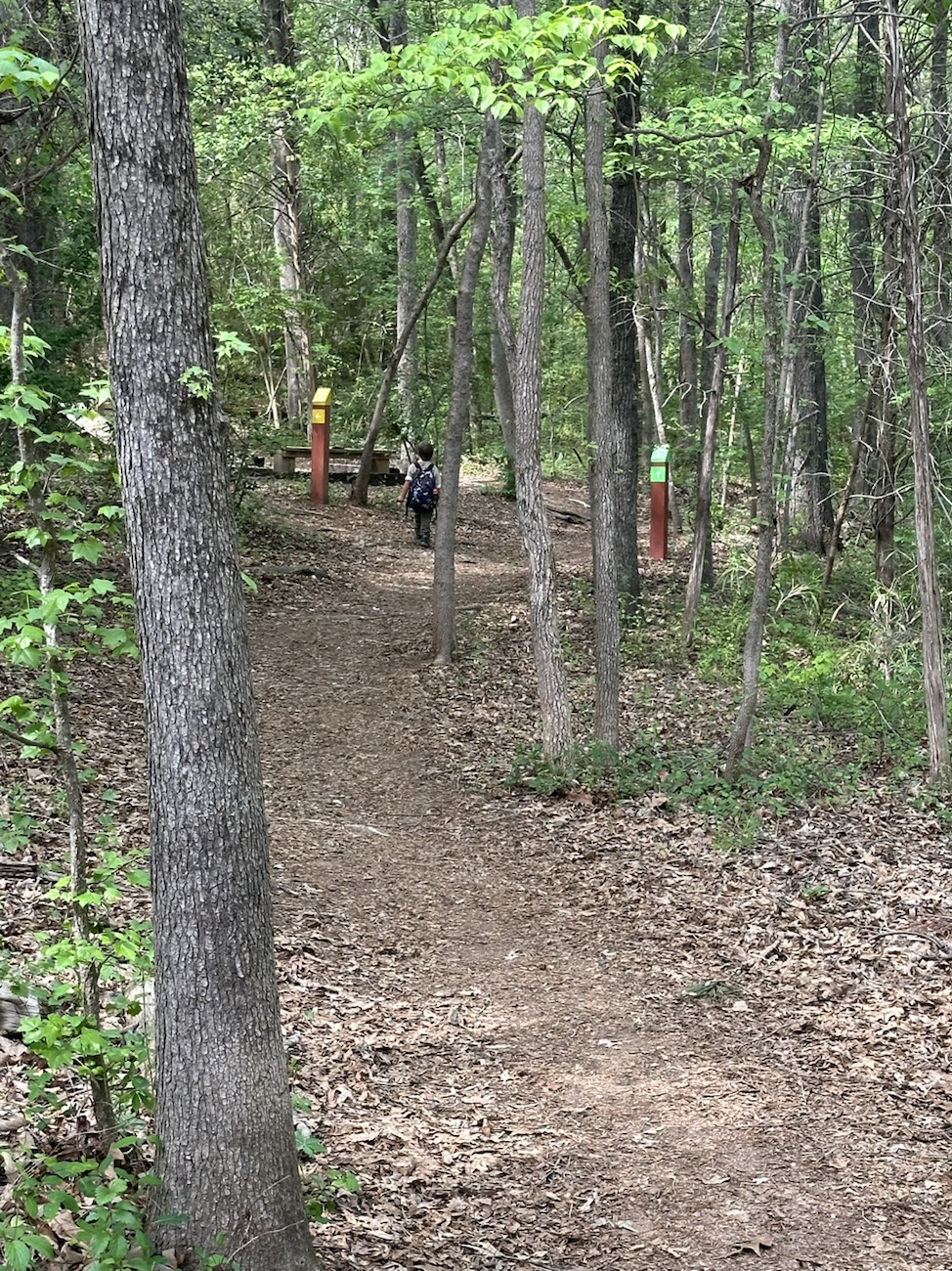
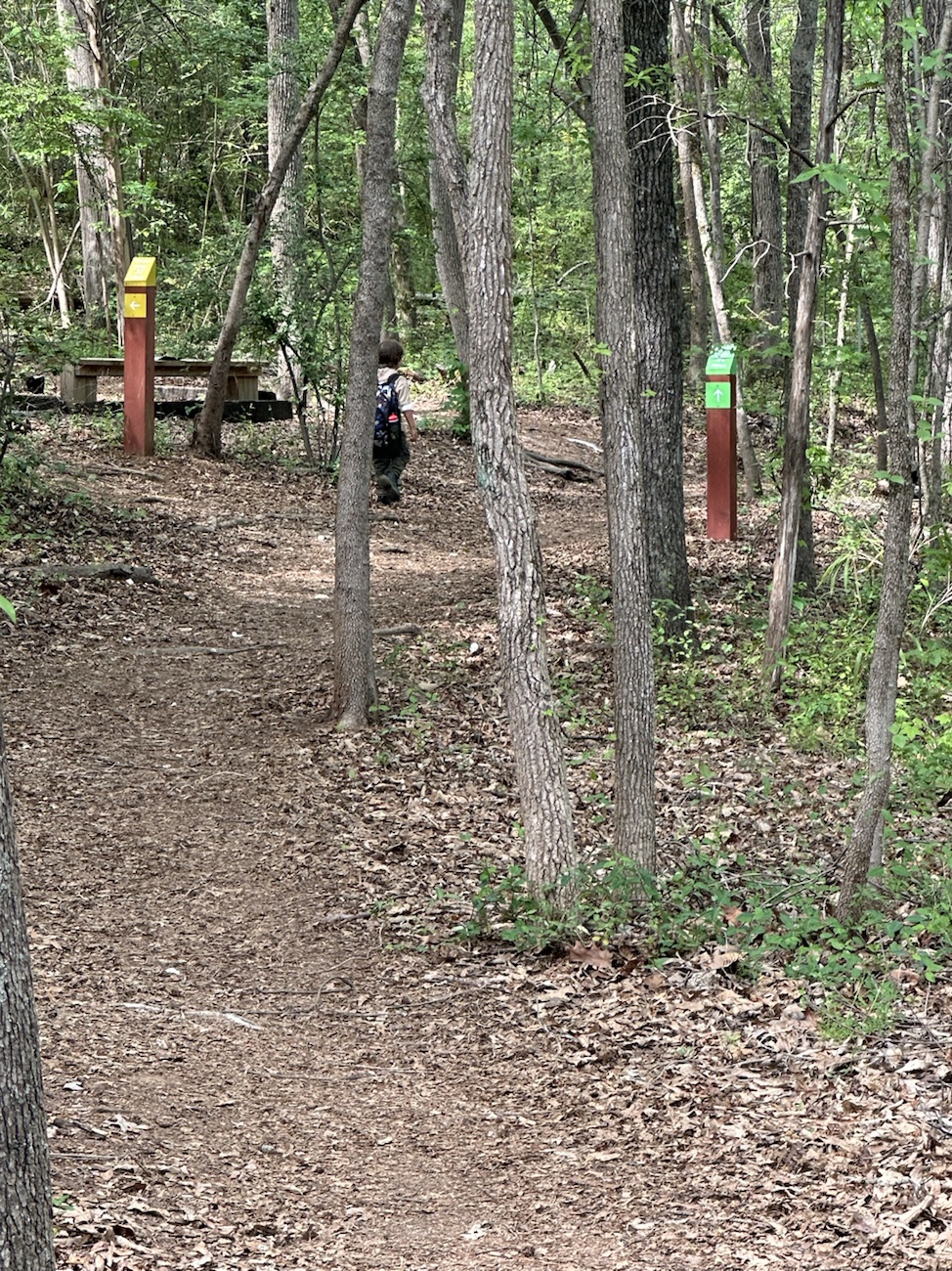
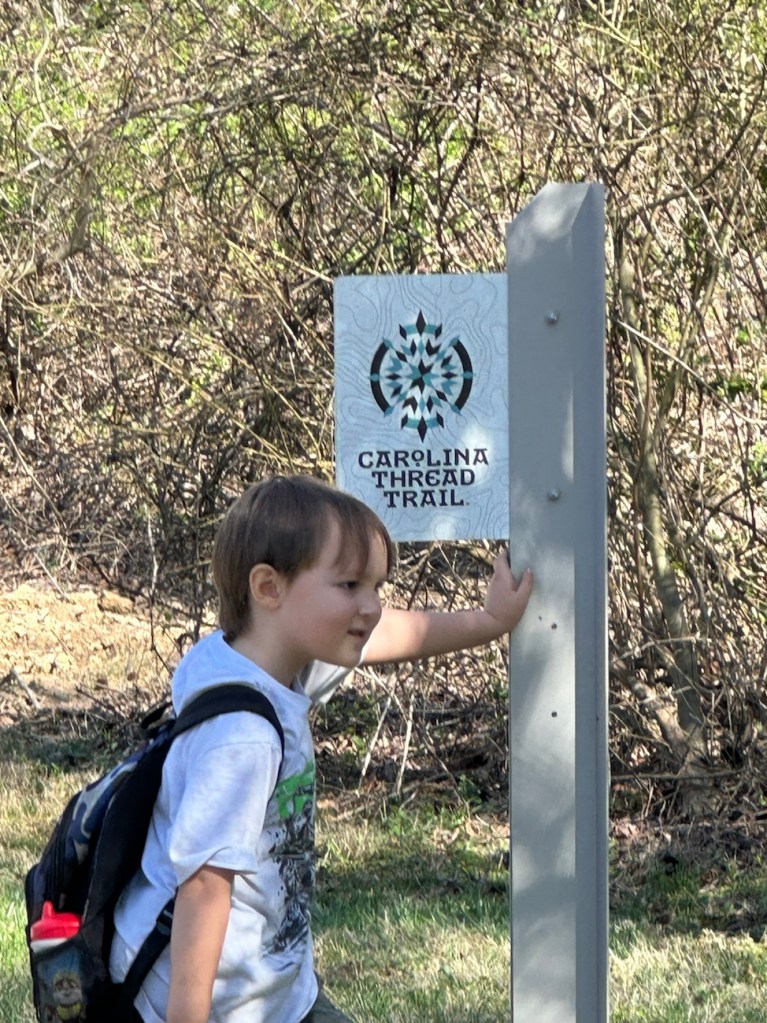
I Spy Red Trail Signs
How about we pull over for a while and go on a hike. These signs might direct us on our way.
I Spy Coleman Wearing a Red Shirt
Oh Look, Stairs. Shall we go down them? What might we see when we reach the bottom? Who knows, but let’s go on down and discover what we can find.
I Spy Coleman Looking Out Over the Water at a Dam
Wasn’t that fun? Did you enjoy our little game of I Spy? I know Coleman and I had a great time together on our adventures.
Cee’s Which Way Challenge is fun to join and exciting to see everyone’s take on the challenges. No two people have the exact same perspective and I look forward to seeing y’all’s perspectives. Click Hereto link to Cee’s blog.
God Bless. Thank you for traveling with us. I truly hope you enjoyed the adventure. Thank you for sharing your time and thoughts with me. I appreciate y’all very much.
Solar Eclipse as seen on Tiles Sesquicentennial State Park Columbia, South Carolina Riverbanks Zoo Columbia, South Carolina Andrew Jackson State Park Lake
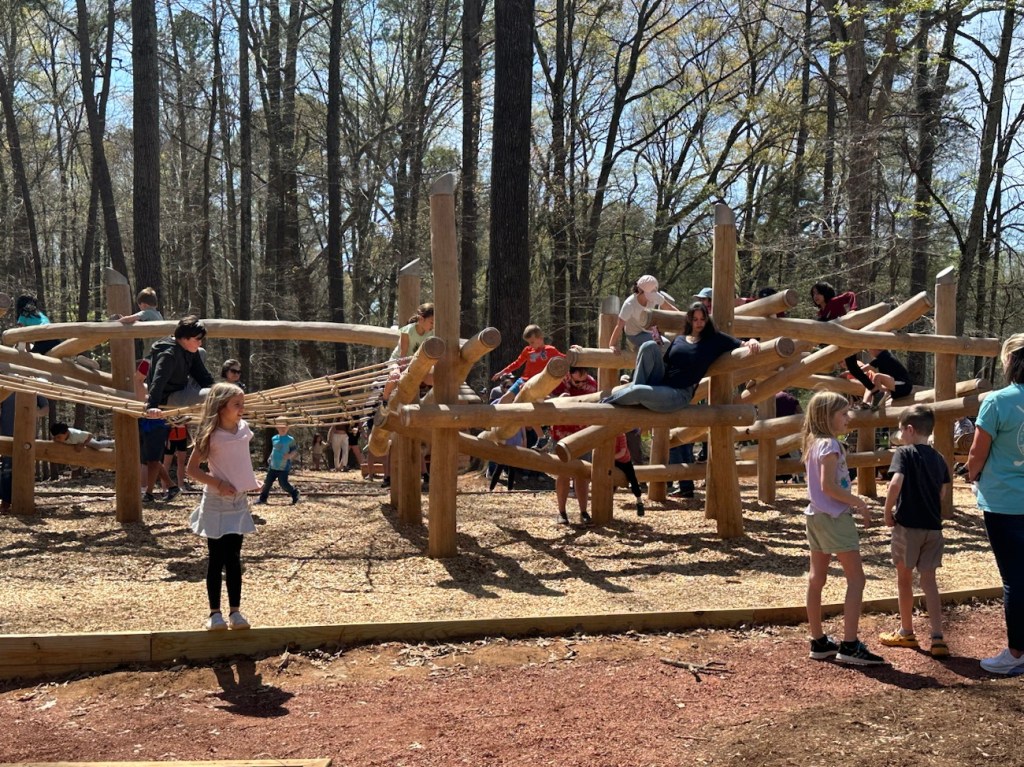
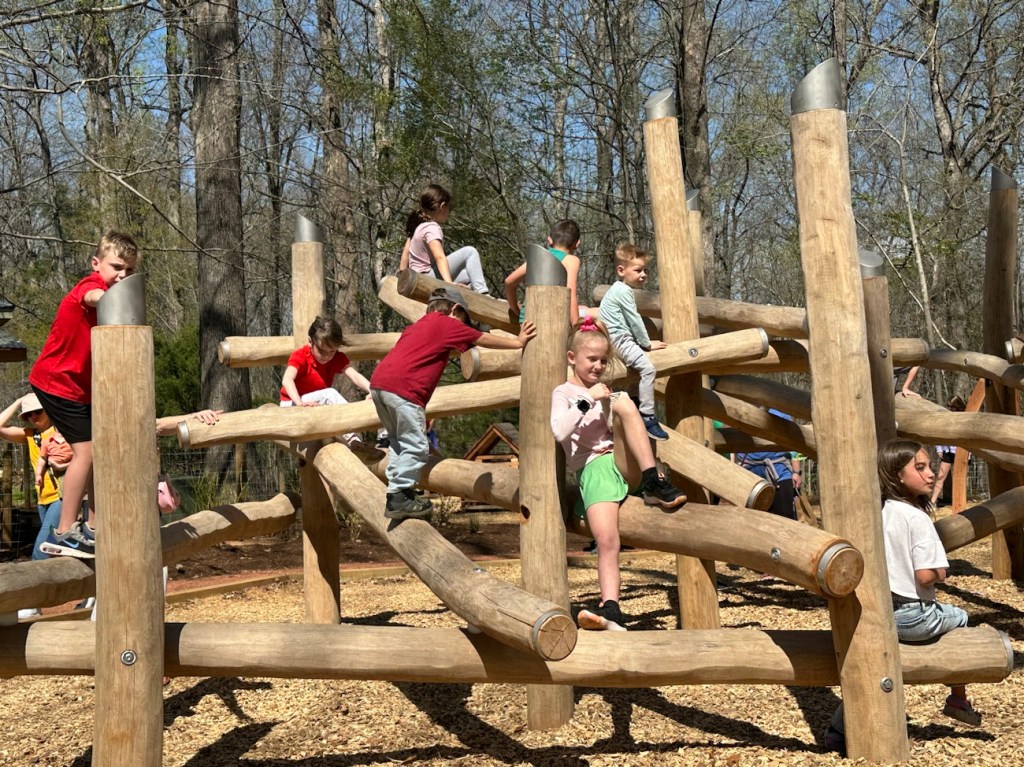
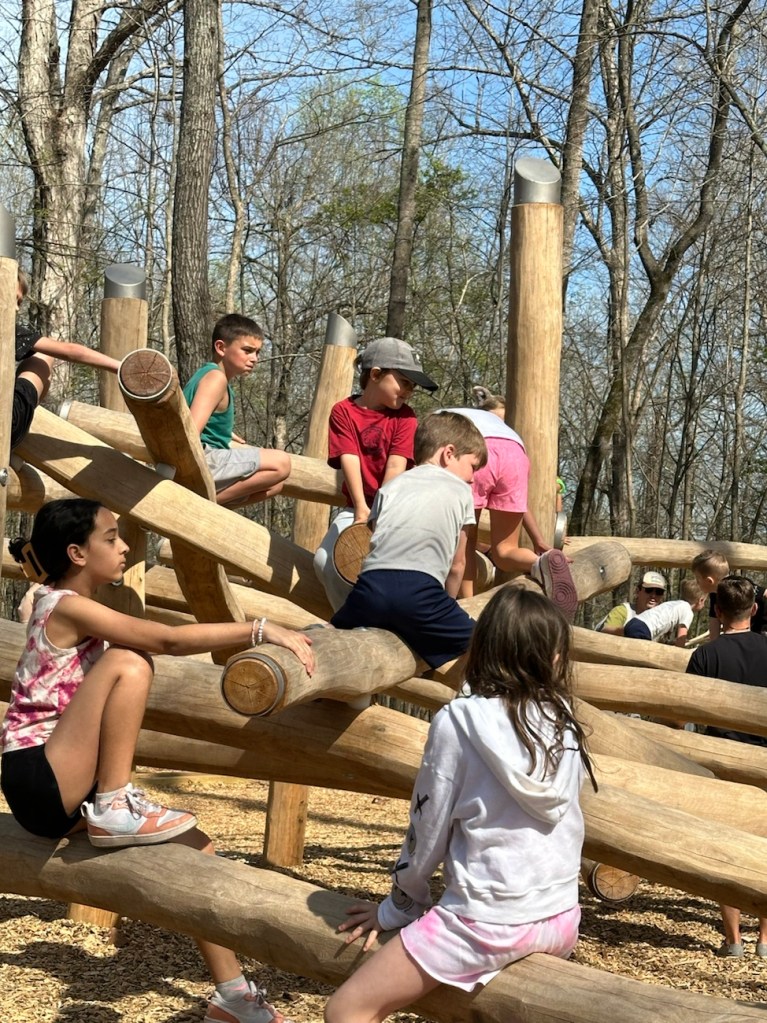
Opening Day for the Schroering Forest Playground was on March 30th. The Playground is a new addition for Anne Springs Close Greenway. Being its opening day list of families came to visit the Greenway the check out the new Playground. Children young and old alike investigated and explored the many different features and structures within the playground.
The number of people on the climbing structure varied throughout the day with the greatest impact of visitors being early in the morning and dwindling later on in the afternoon.
When Coleman and I first walked around the playground and the Climbing Structure it was intimidating with so many people in and on the various structures. Overwhelming especially for Coleman, so we chose to hike around the lake and come back later hoping for fewer children to be in the playground.
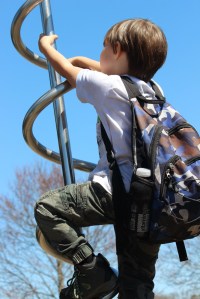
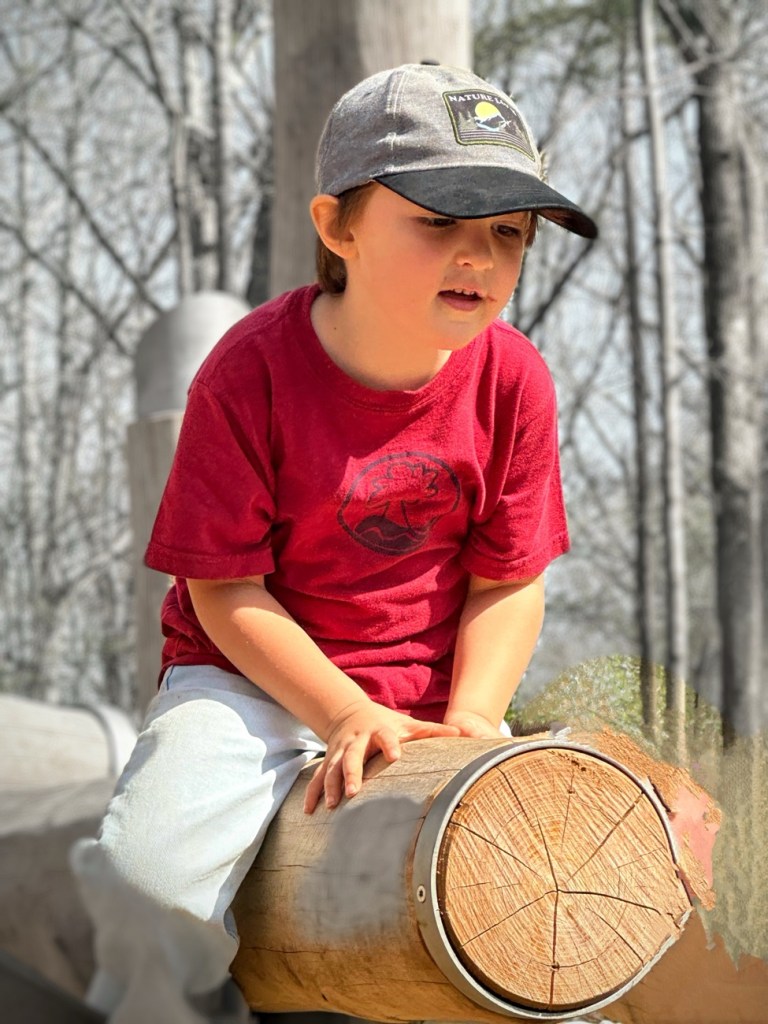
Coleman slowly getting the courage to try climbing on the Climbing Structure.
After climbing a short distance, Coleman sits down and looks around unsure of what to do next.
He eventually decides he was to get down, but was uncertain about how to go about climbing down. After watching for a little bit I realized he wanted help getting down. So we went hiking back up towards the car visiting the historic cabins, cows, and horses along the way.
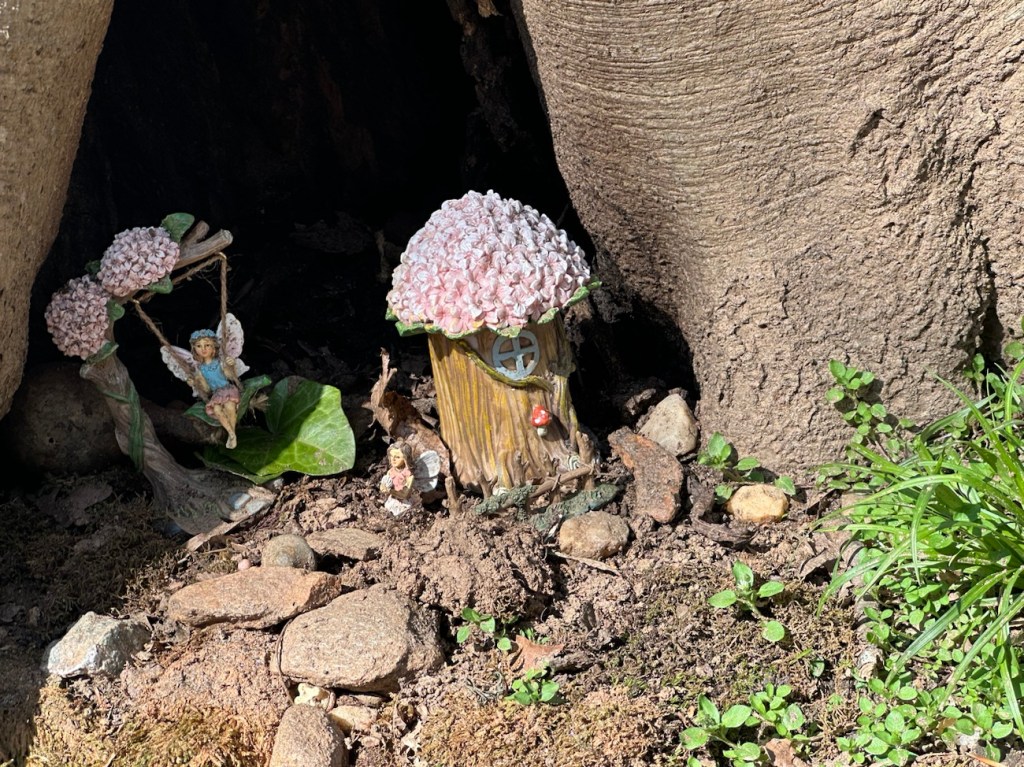
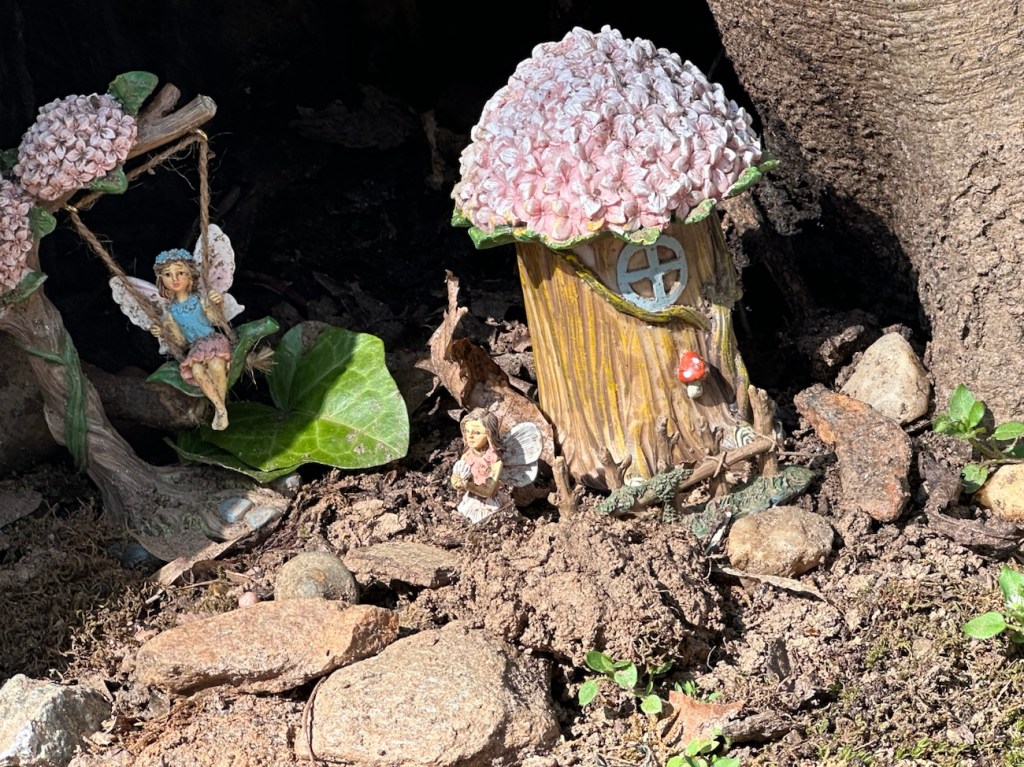
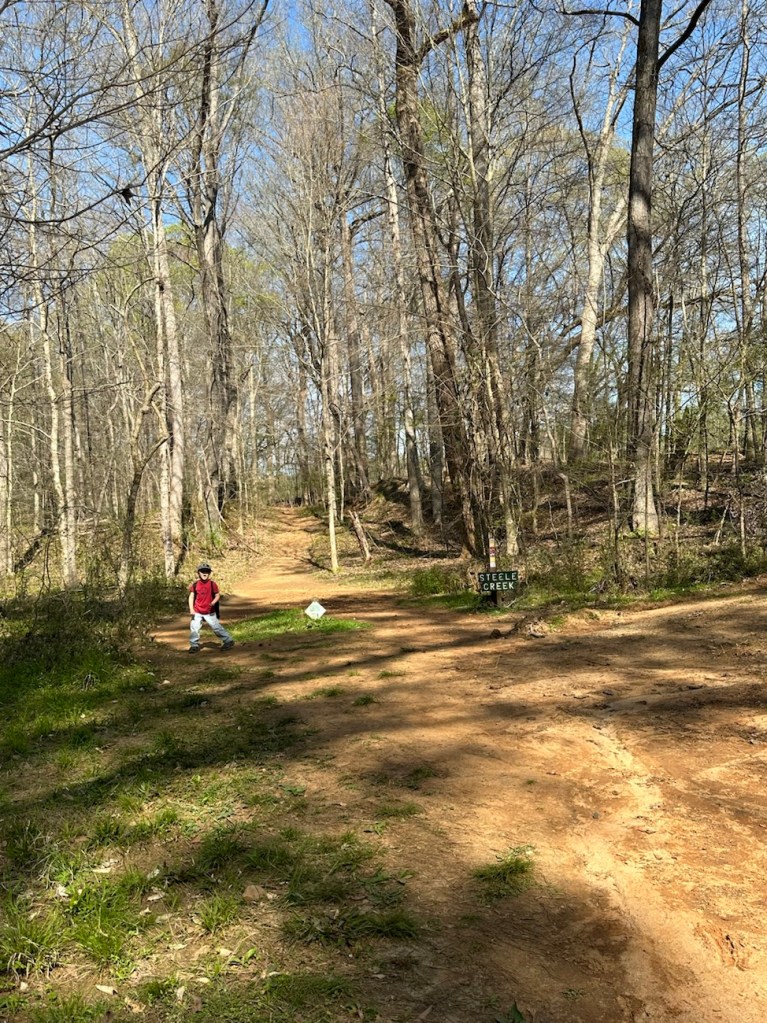
As Coleman and I were hiking along Steele Creek Trail back towards the car we spotted this little Fairy Garden tucked away in the base of a tree. I have seen pictures which other hikers have taken before, however this was the first time we had ever spotted the Fairy Garden. If you weren’t looking at the surrounding landscape you could possibly miss seeing it.
Spotted along Steele Creek TrailFairy Garden Time to Swing and Relax
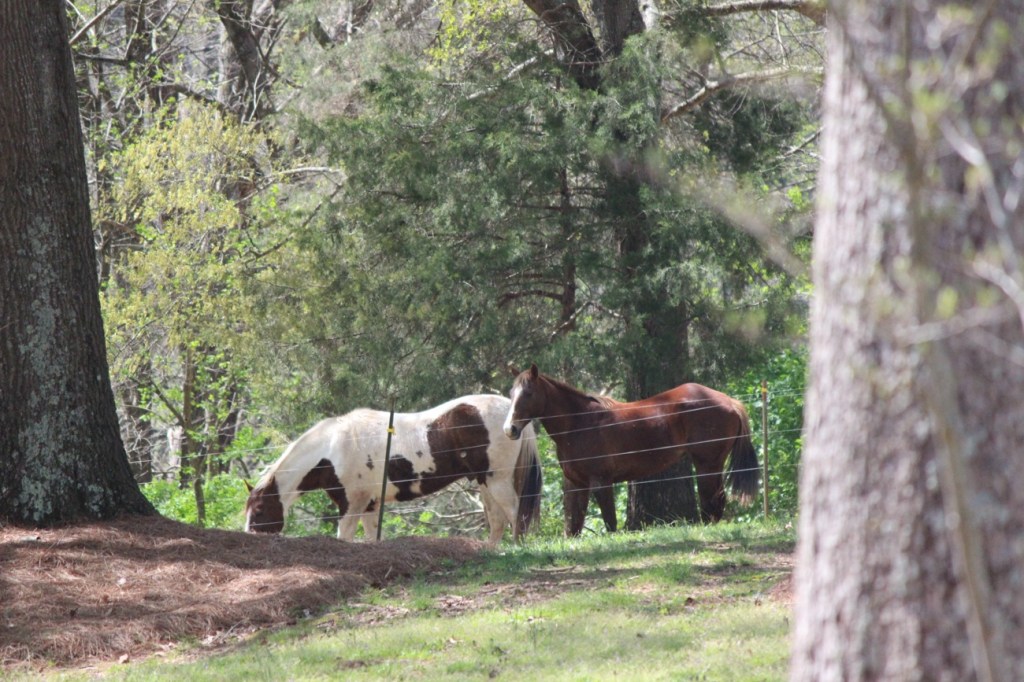
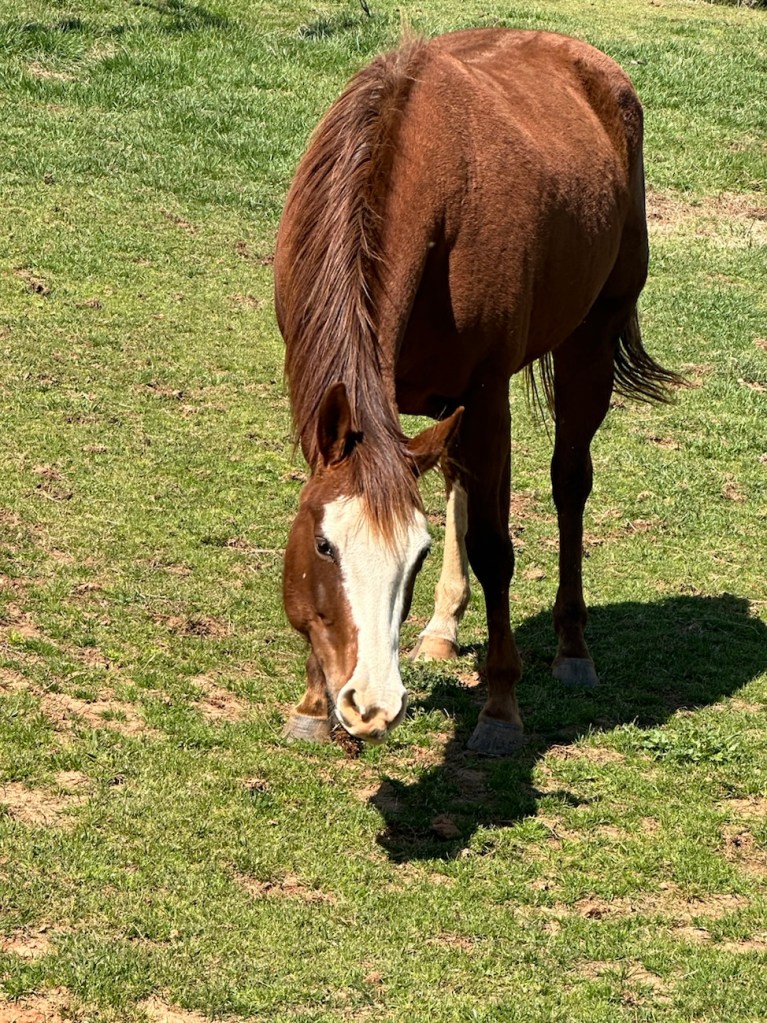
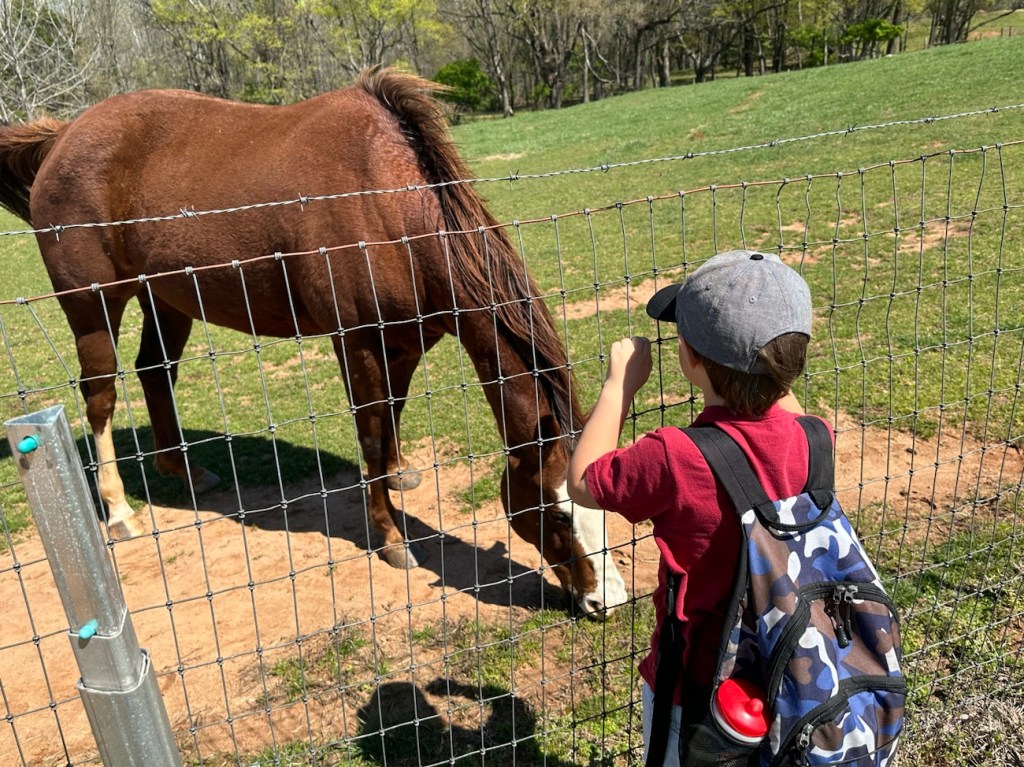
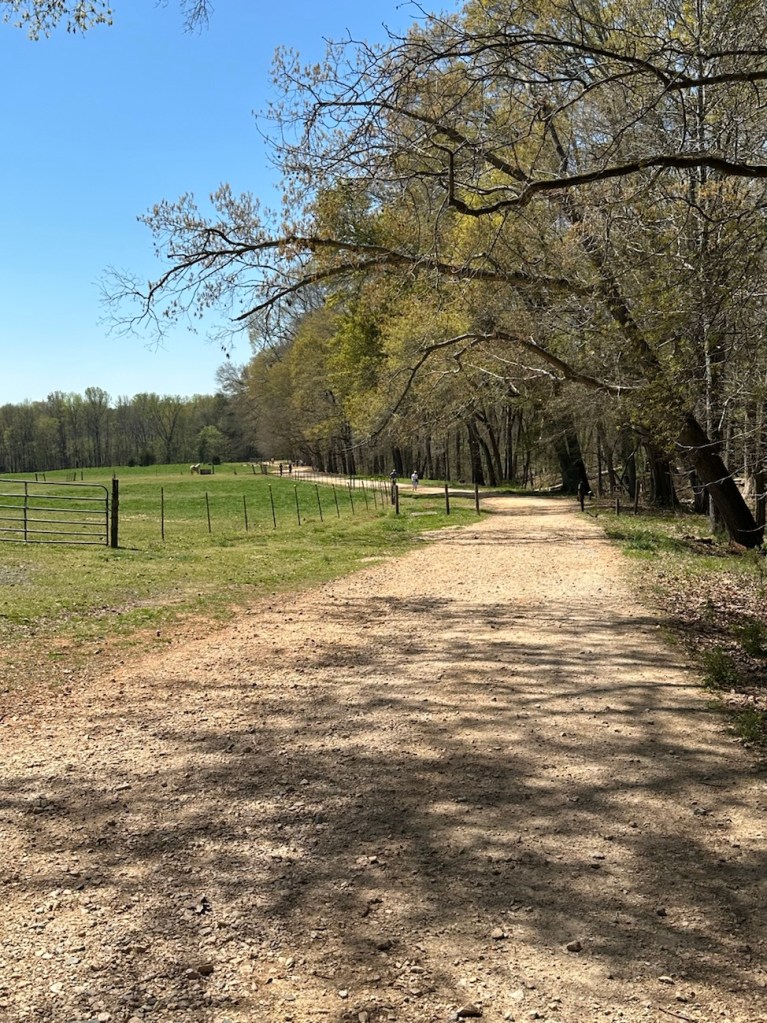
On this hiking adventure I parked at the Dairy Barn Entrance to the Anne Springs Close Greenway. After exiting the car we proceeded to hike along the fencing before hitting the trails. Following the fence line we were able to view the horses, some of which trotted over to our location. [More on horses later].
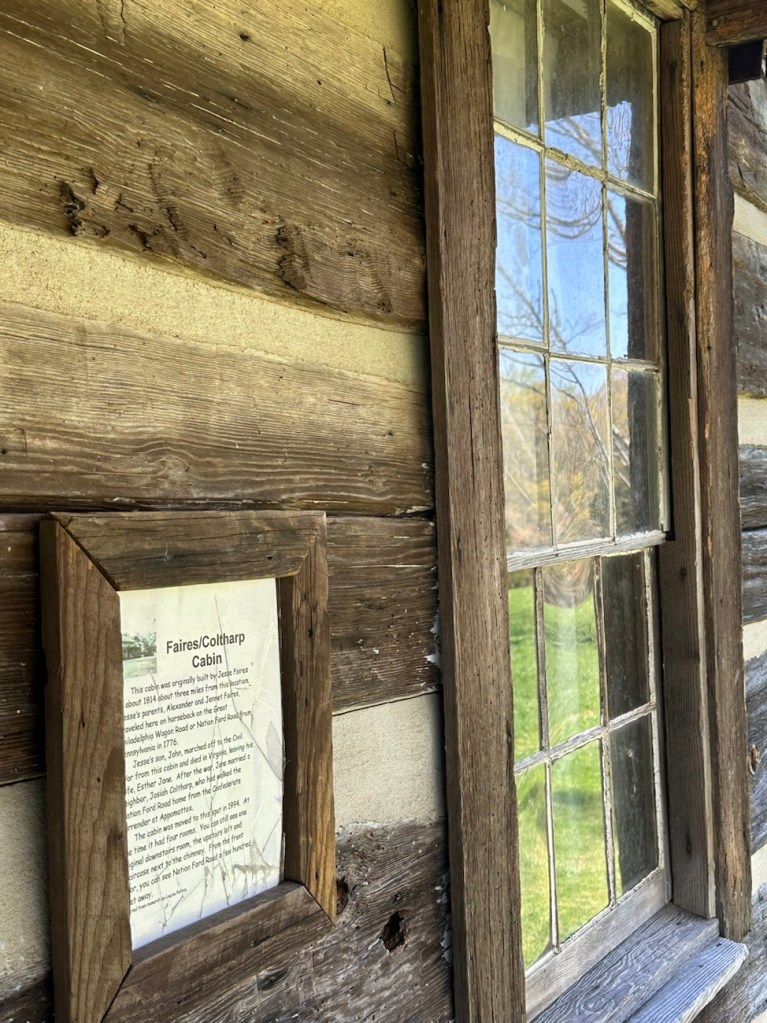
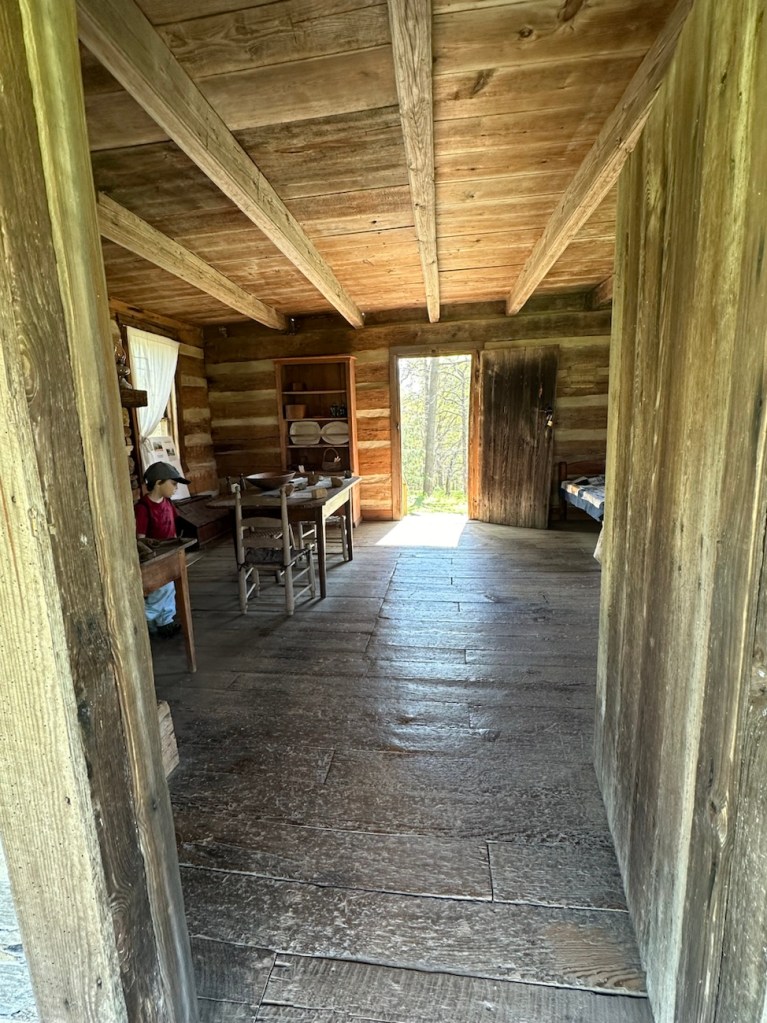
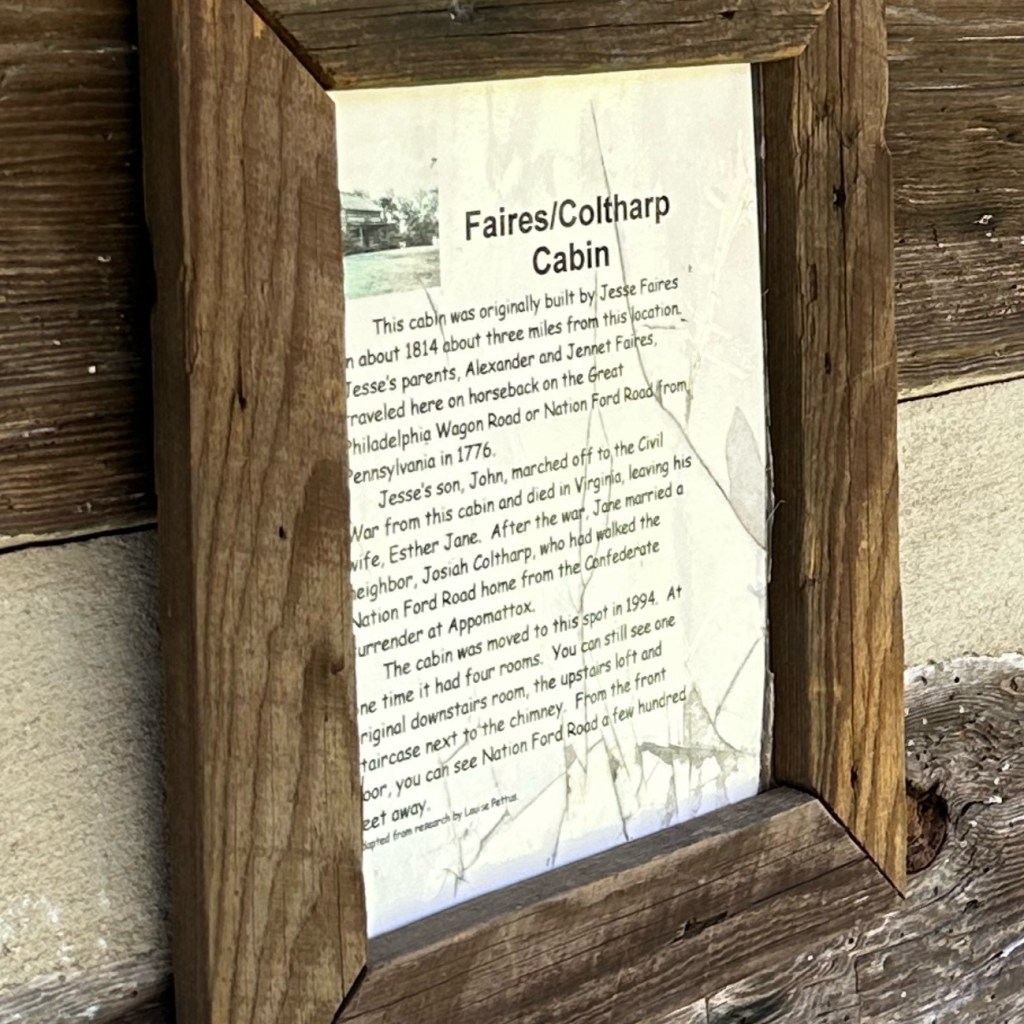
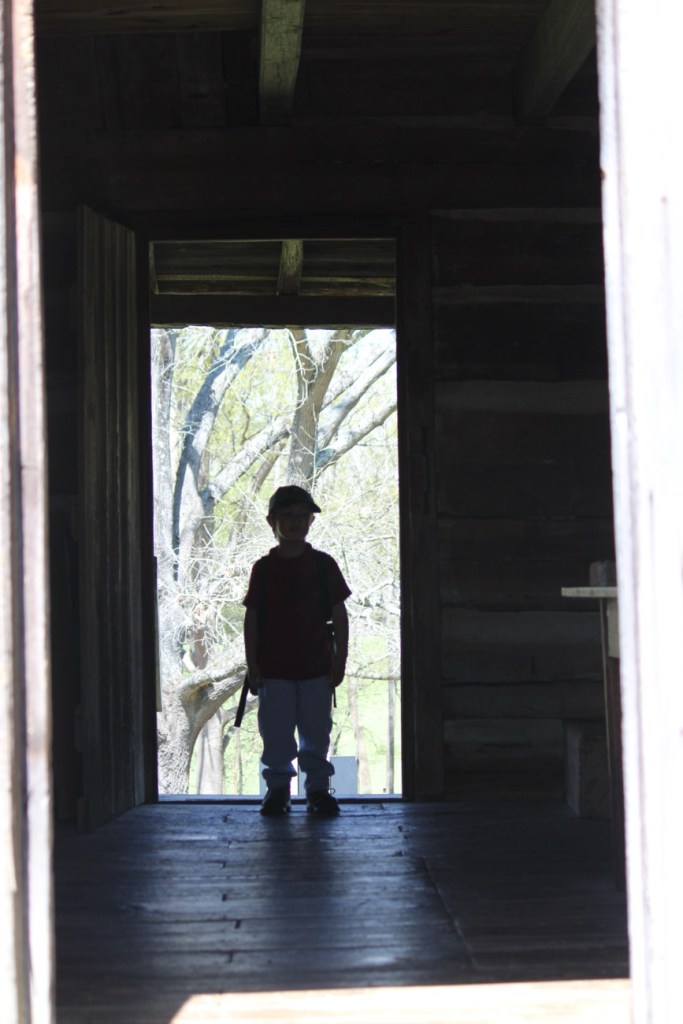
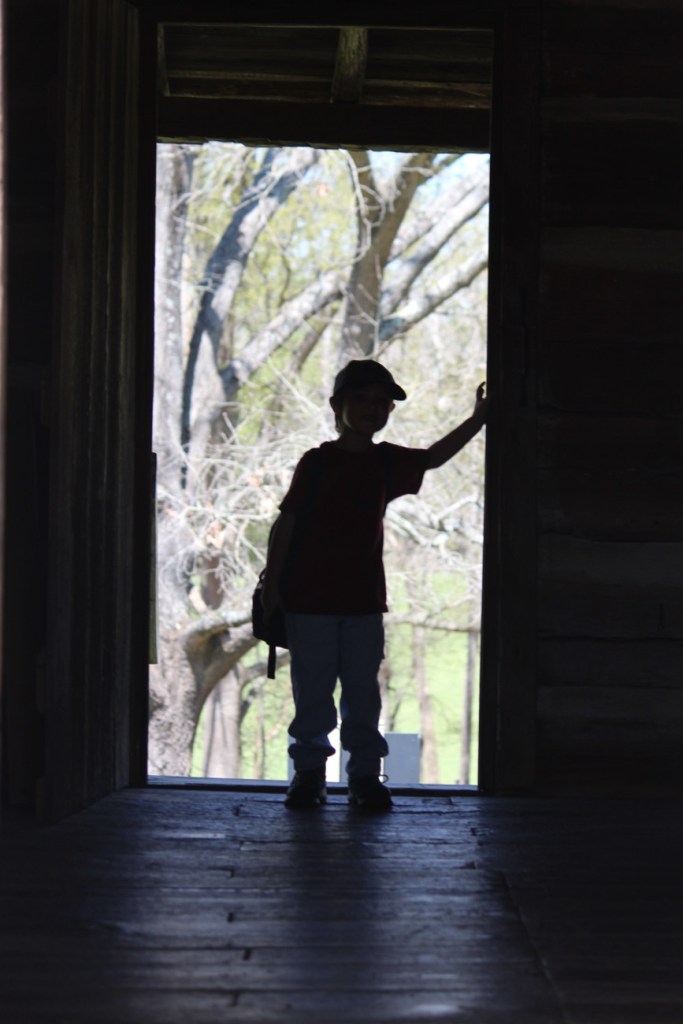
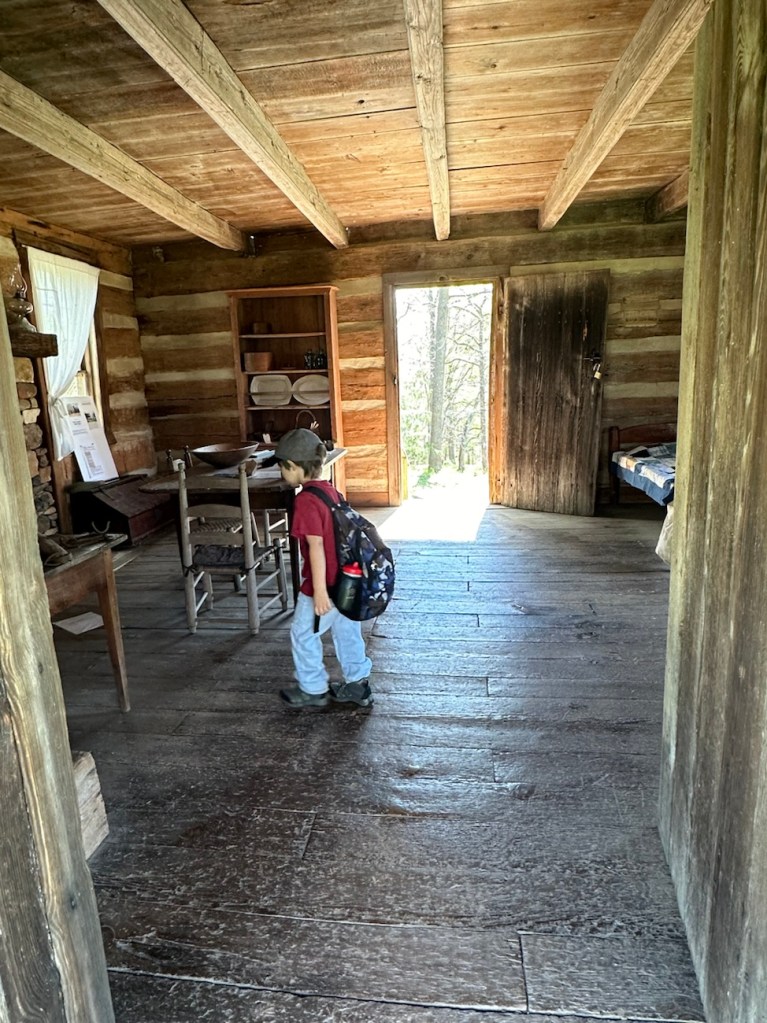
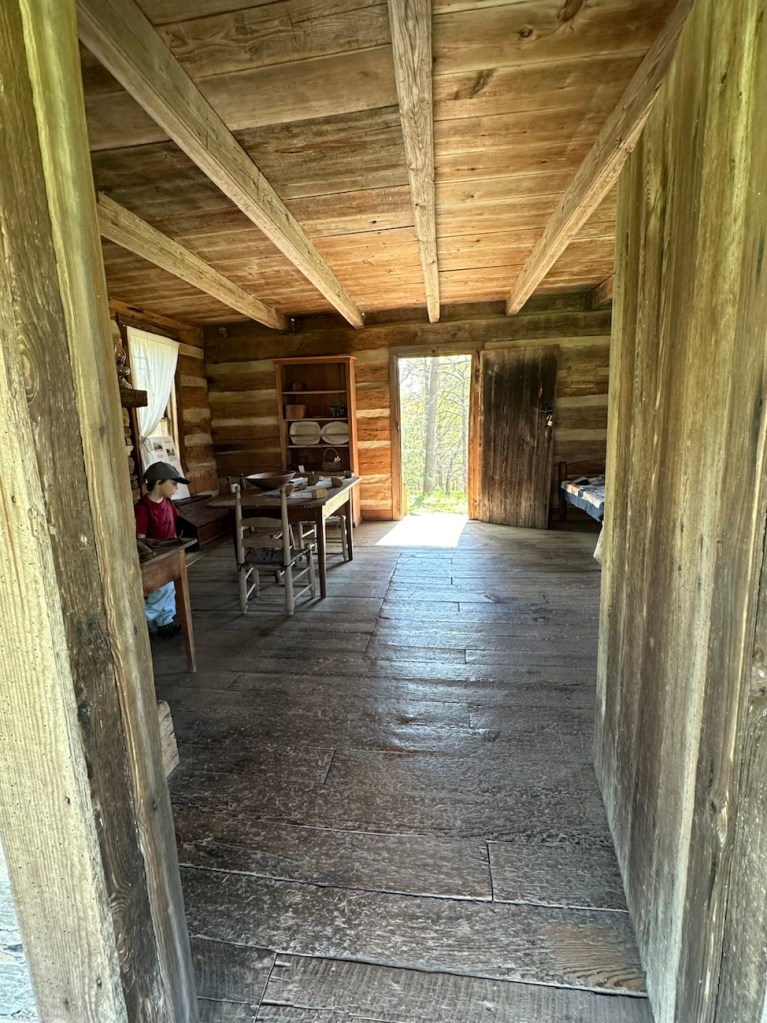
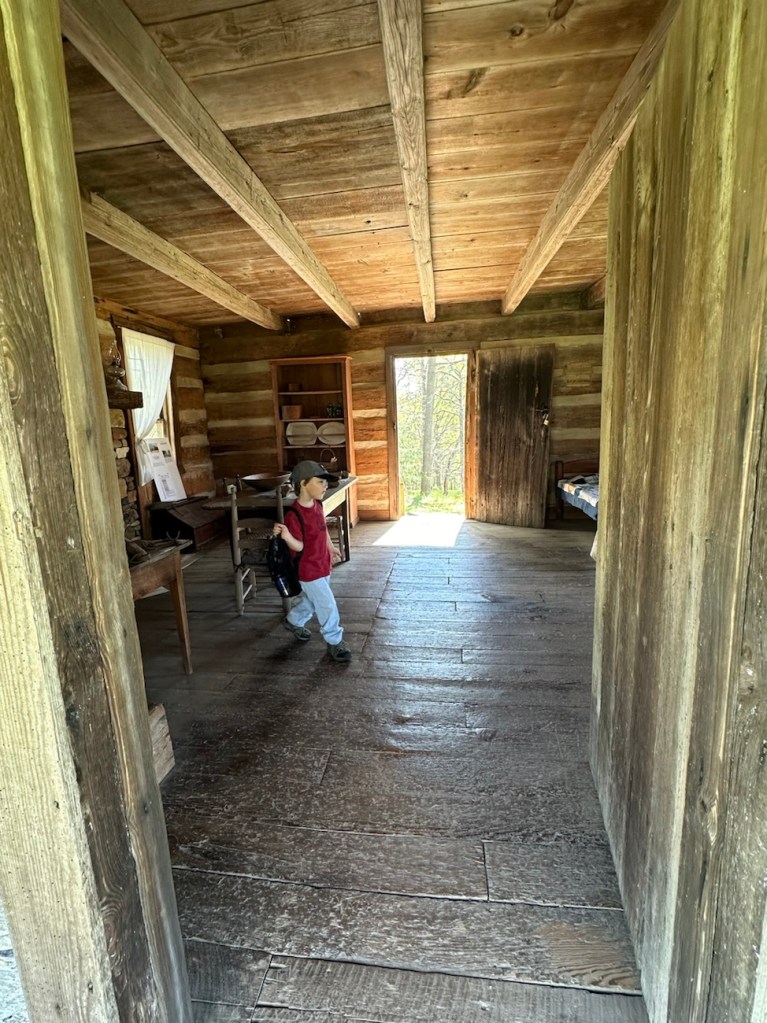
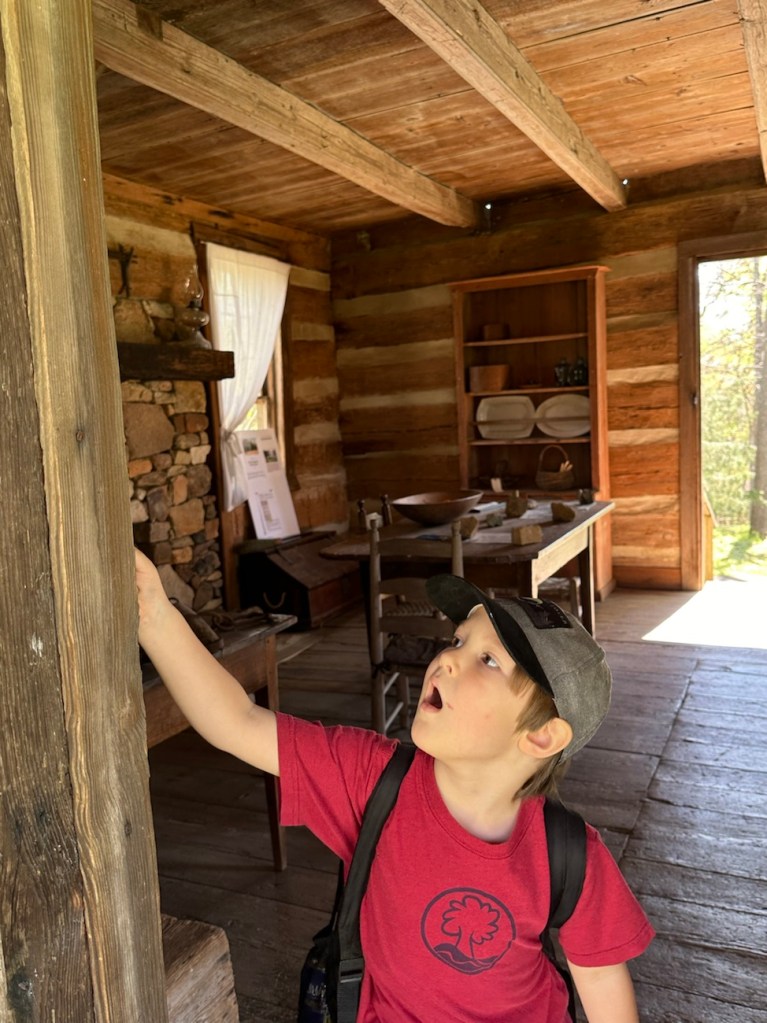
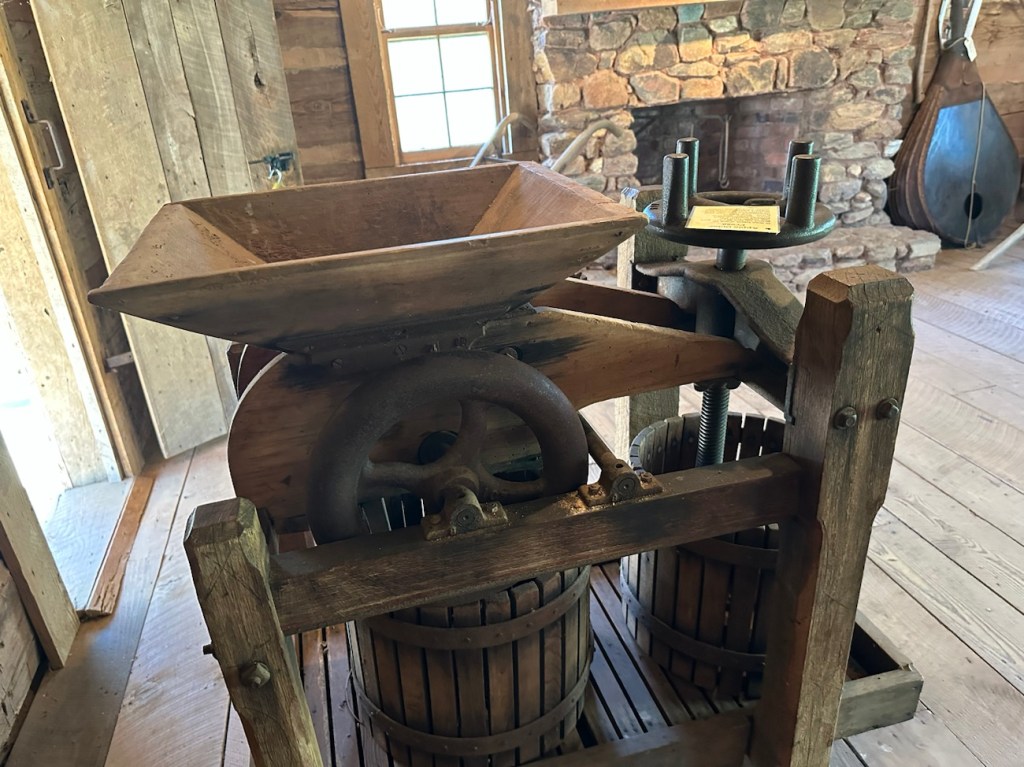
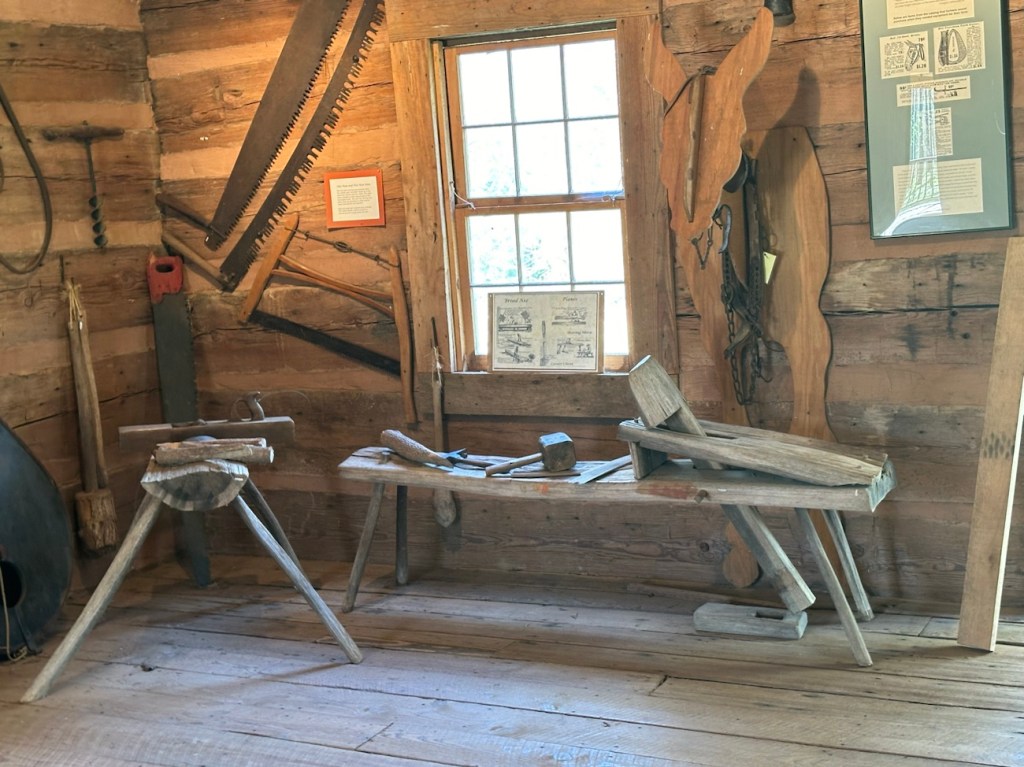
Our first stop along the Blue Star Trail was to take a look at the Faires/Coltharp Cabin. To our surprise and delight it was open to the public (first time we’d seen it open). So naturally, Coleman with me following went inside to see what was inside.
A Look inside the Faires/Coltharp Cabin
After leaving the cabin, we hiked further along the Blue Star Trail towards the Swinging Bridge and the Schroering Forest Playground located on the other side of the Spillway.
Blue Star Trail
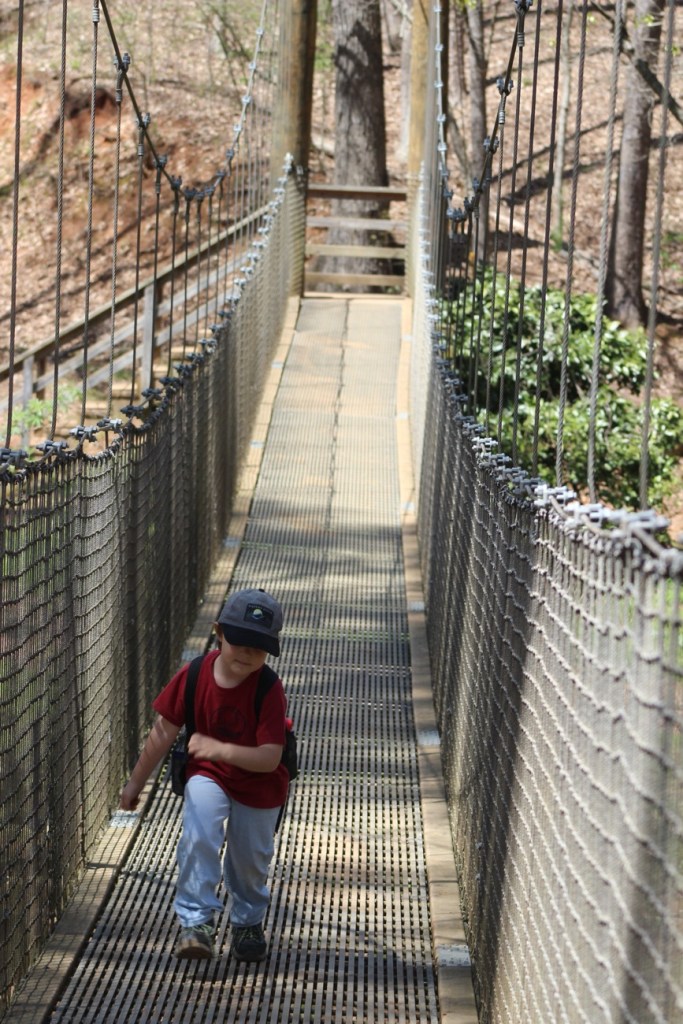
When the Spillway is up and streaming with a steady flow of water, the only way to cross it is to walk across the Greenway’s Swinging Bridge. Since our destination was on the far side of the Swinging Bridge we/I slowly walked across. Coleman used to walk across it when he was younger, but now if no one else is on it he’ll run across.
Coleman crossing the Swinging Bridge
We made it safely across the Swinging Bridge, walked around the Artisan Market, ordered lunch from the Greenway’s Canteen and rested a bit before heading to the Schroering Forest Playground. We had a clear view of the Playground from where we chose to sit. This was the first official day the Playground was open. They had been working on it all fall and winter. Being its opening day, the playground was crowded with children from all age groups.
Coleman hiking the Blue Star Trail
Upon completion of our lunch we noticed there were still a lot of children on the playground. I decided to have Coleman wait to play in it until it wasn’t nearly so crowded. Therefore, we continued on with our hiking and headed down to Lake Haigler.
Blue Star Trail Almost down to Lake Haigler
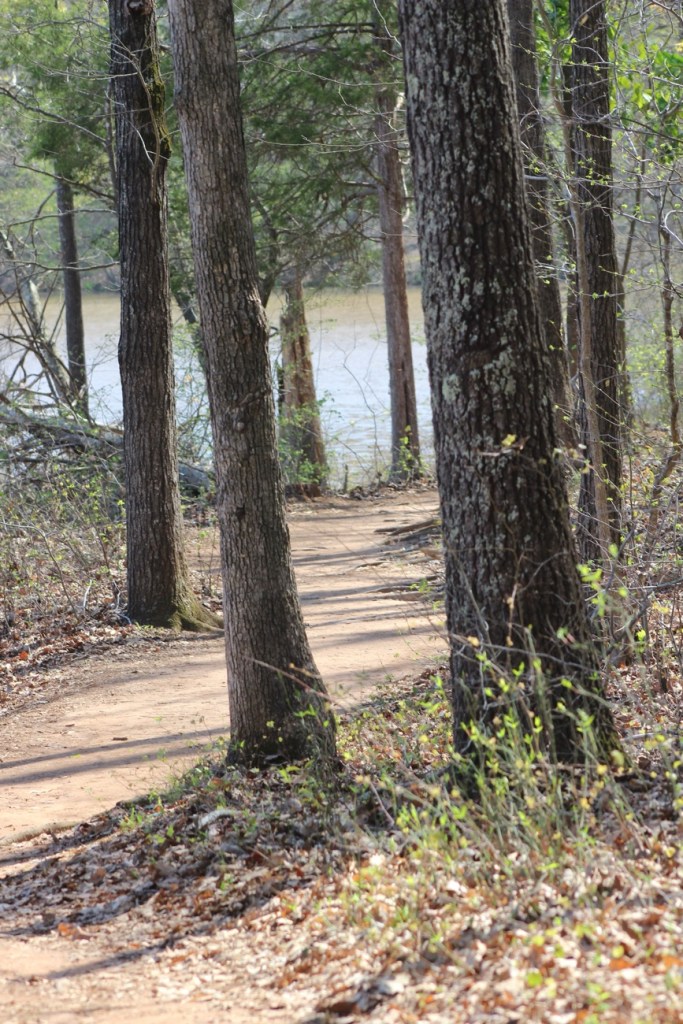
We hiked along the narrow side pathway towards the lake. The straight pathway is wider and more widely traveled by the majority of visitors to the Greenway.
We hiked a short loop with great views of Lake Haigler and then hiked back up to the Playground. Coleman climbed up on the Climbing structure and wasn’t sure about what to do after climbing up a short ways and just sat down for a few minutes. [The all natural wood climbing structure seemed to puzzle Coleman. He’ll probably climb more next time we visit.]
Steele Creek Trail
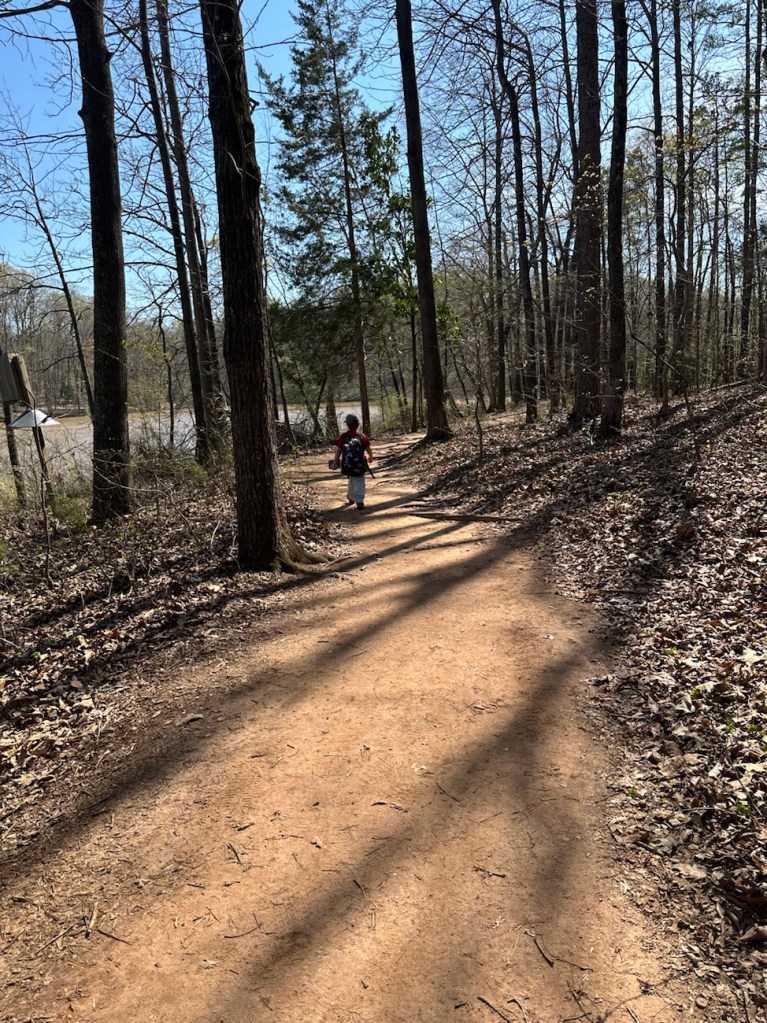
After a full afternoon of hiking and Coleman playing I decided it was time to head home. Hence, we proceeded to hike back up to the car. Instead of hiking the exact same trail we hiked down, we started out hiking on the Steele Creek Trail. The Steele Creek Trail is a narrow trail that leads up towards the Graham Historical Cabin.
From the cabin we traverse back onto the Blue Star Trail. After short distance from the cabin, Coleman starts searching for the cows. Sometimes they are up close to the fence line, but on this day we really had to look for them. Searching the pasture as we hiked up the trail, two of the cows came walking towards our direction from the far end of the pasture. That made a Coleman’s day. He was then ready to go home.
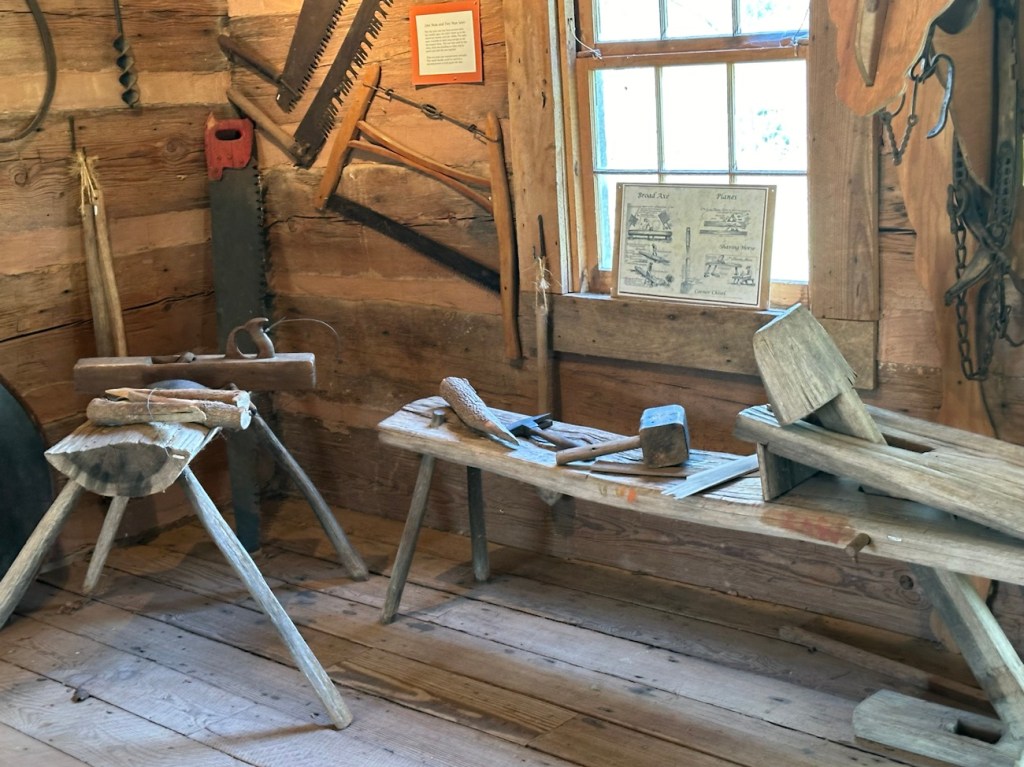
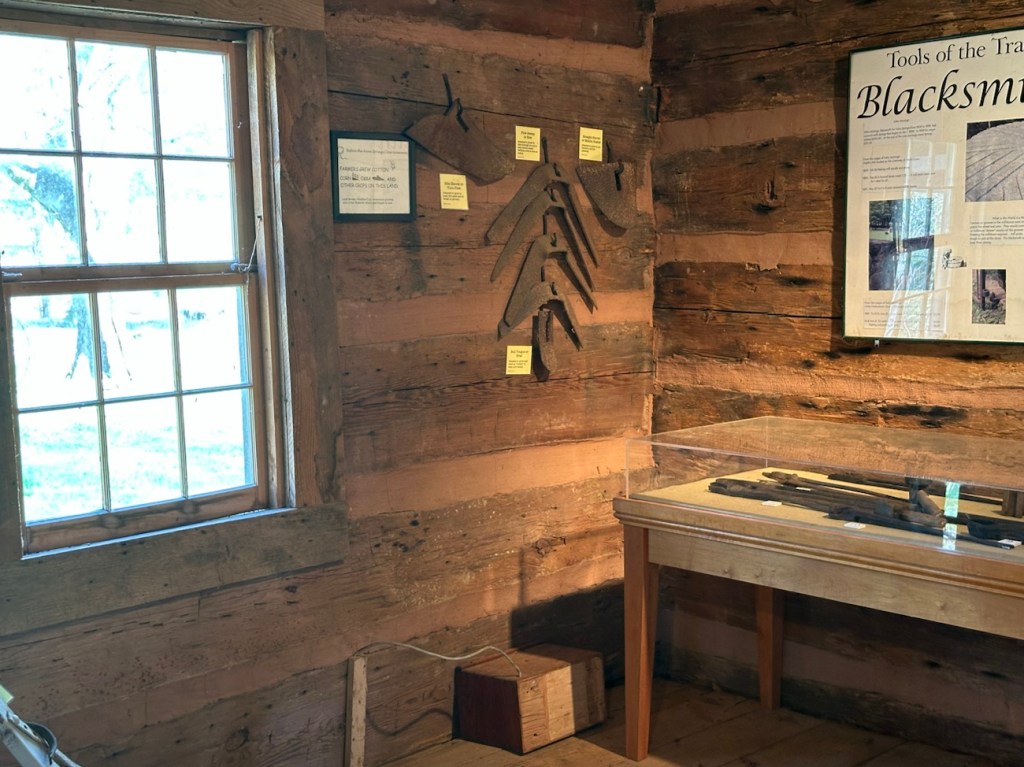
Take a walk with us inside Faires/Coltharp Historic Cabin. You can see Coleman has no qualms about going through the door to check everything out. He is extremely inquisitive and loves to investigate everything he sees and comes across.
On Saturday, March 30th, Coleman and I visited the Anne Springs Close Greenway. We parked at the Dairy Barn Entrance and hiked down the Blue Star Trail and hiked back up on Steele Creek Trail. From this entrance one can visit two historic cabins: 1) Faires/Coltharp Cabin and 2) The Graham Cabin. On this trip we had the unique experience of going inside the cabin to view what it would have been like back in the 1800’s. This was a new experience for us since the cabins had previously been closed to the public.
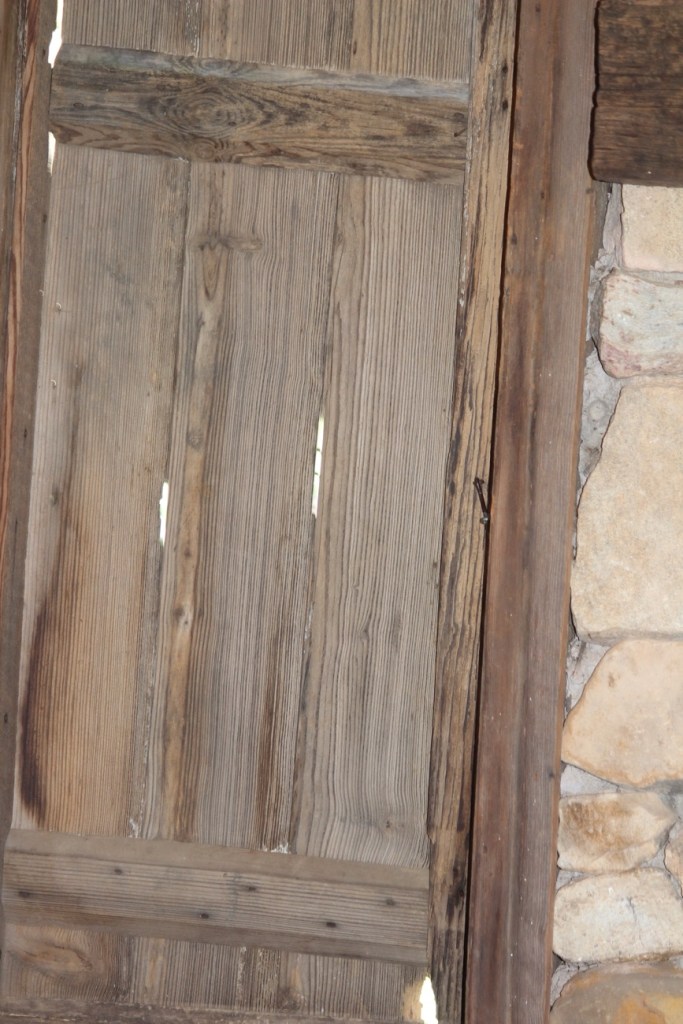
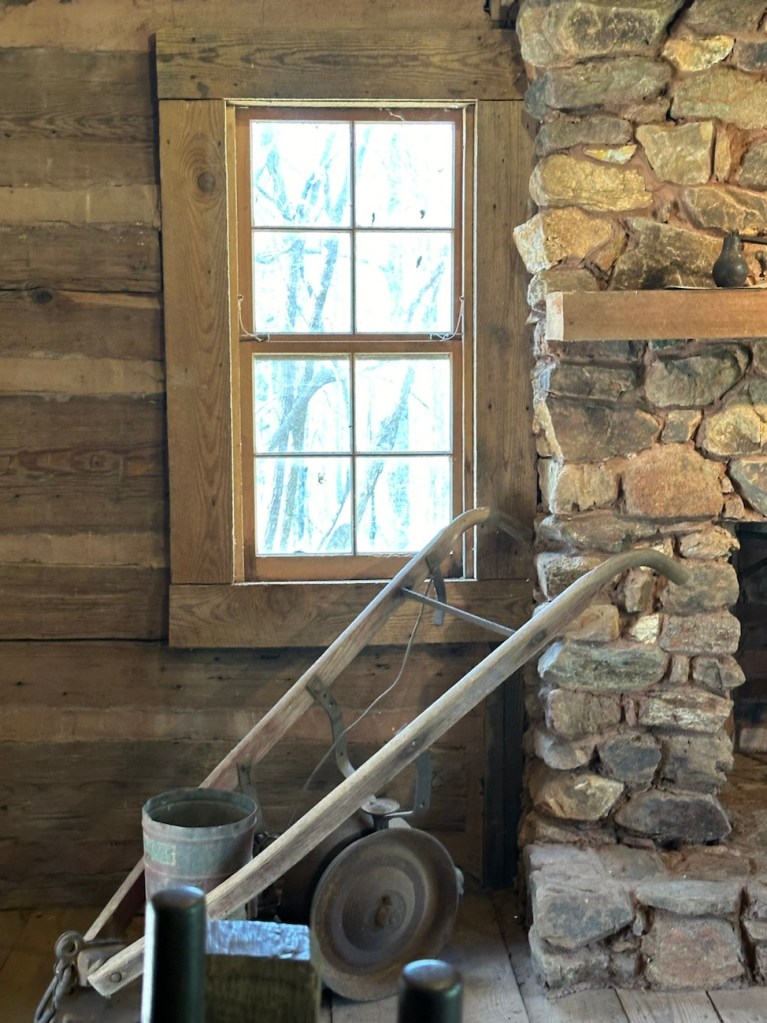
The Graham Cabin is more than 200 years old and was once the home of Archibald Graham, the grandfather of Reverend Billy Graham. Here is a look at the inside of the Graham Cabin and its windows.
Location: Dairy Barn Entrance; Lake Haigler; Anne Springs Close Greenway; Fort Mill, South Carolina, USA
God’s Blessings to y’all this Beautiful Easter Sunday. Thank you for visiting and sharing your time and thoughts with us. I appreciate y’all very much.
For this week I’ve dug into my archives for various selections of which way to travel.
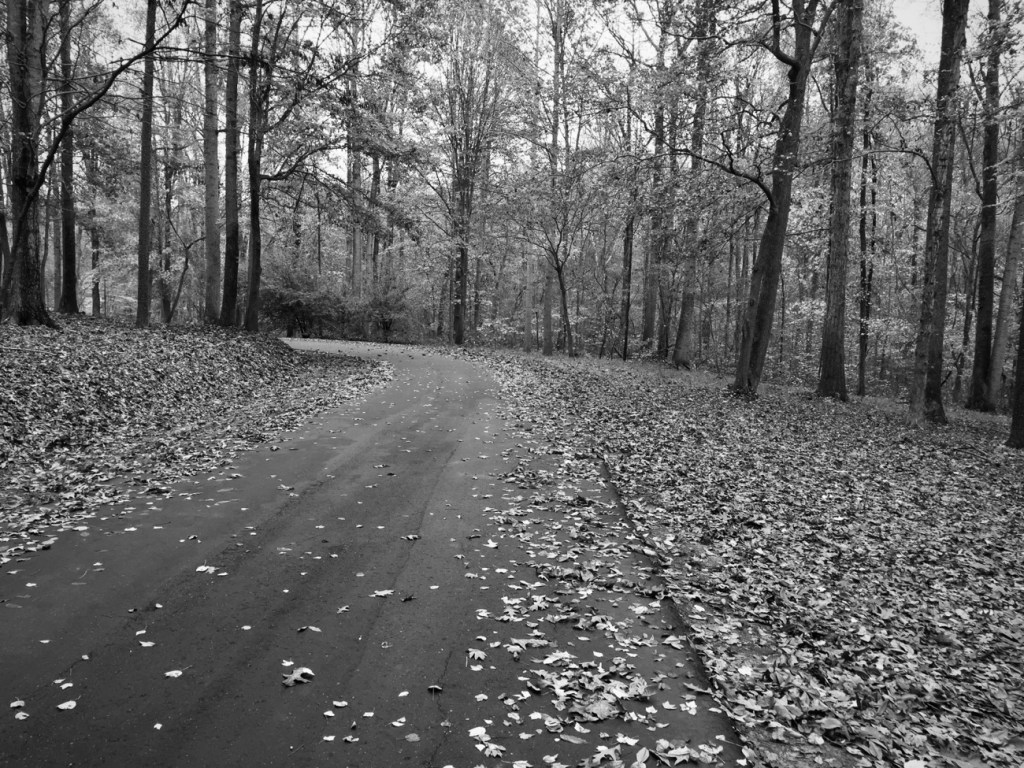
First, let’s make a stop in Raleigh, North Carolina where I attended Ancestry Day hosted by The Friends of the Archives in conjunction with the State Archives of North Carolina, the Government and Heritage Library, and the North Carolina Genealogical Society.
McKimmon Center and nearby trail Raleigh, North Carolina, USA November 2015
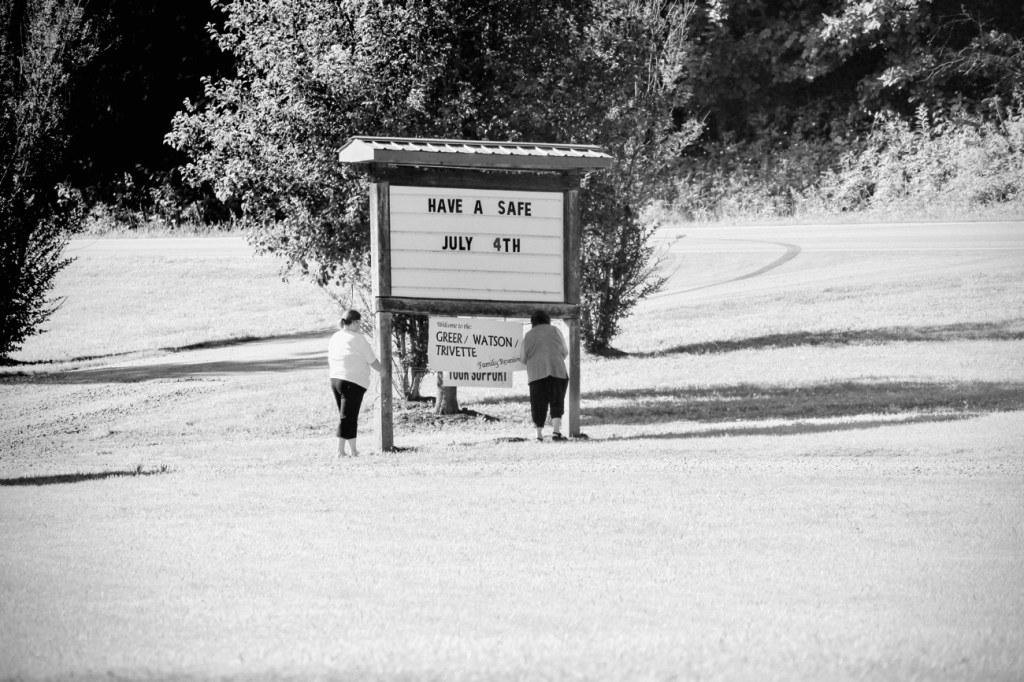
Next, we’ll head over to Lenoir, North Carolina for a Watson/Greer/Trivette family reunion at the Yadkin Valley Community Park.
Greer/Watson/Trivette Family Reunion Yadkin Valley Community Park Lenoir, North Carolina, USA June 2016
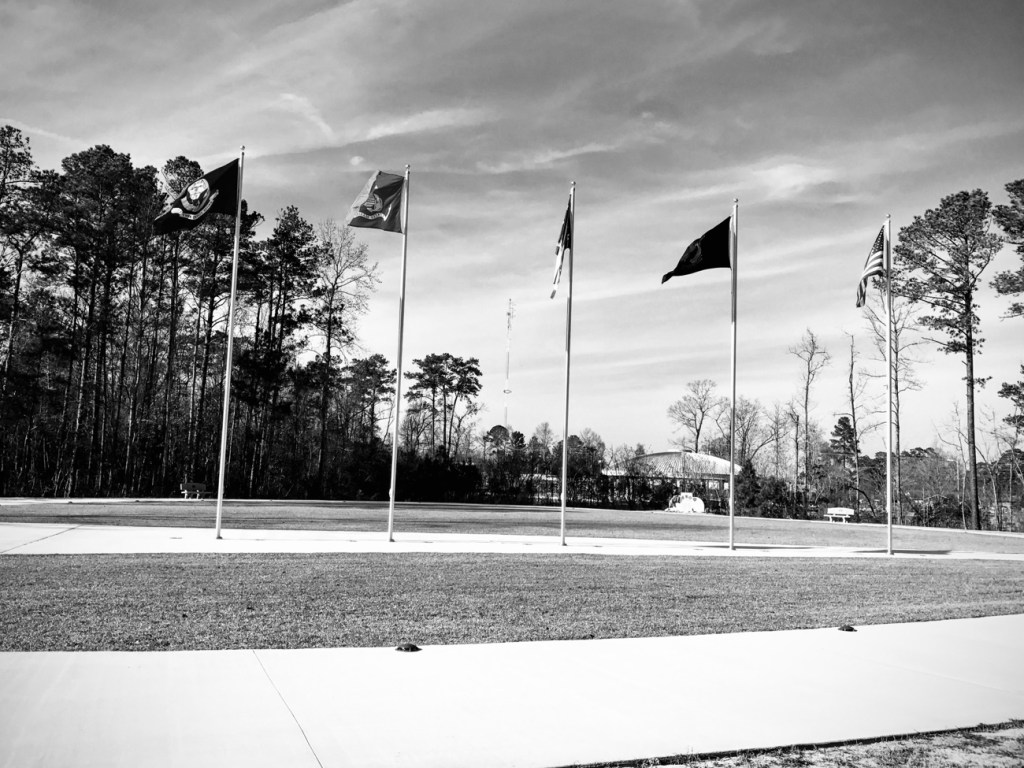
Then we’ll spend some time in Jacksonville, North Carolina where one of my sons ( my 2nd born, David) was stationed while serving in the United States Marines. While there for the weekend my eldest son, John and I visited the Lejeune Memorial Gardens.
Lejeune Memorial Gardens Jacksonville, North Carolina, USA February 2017
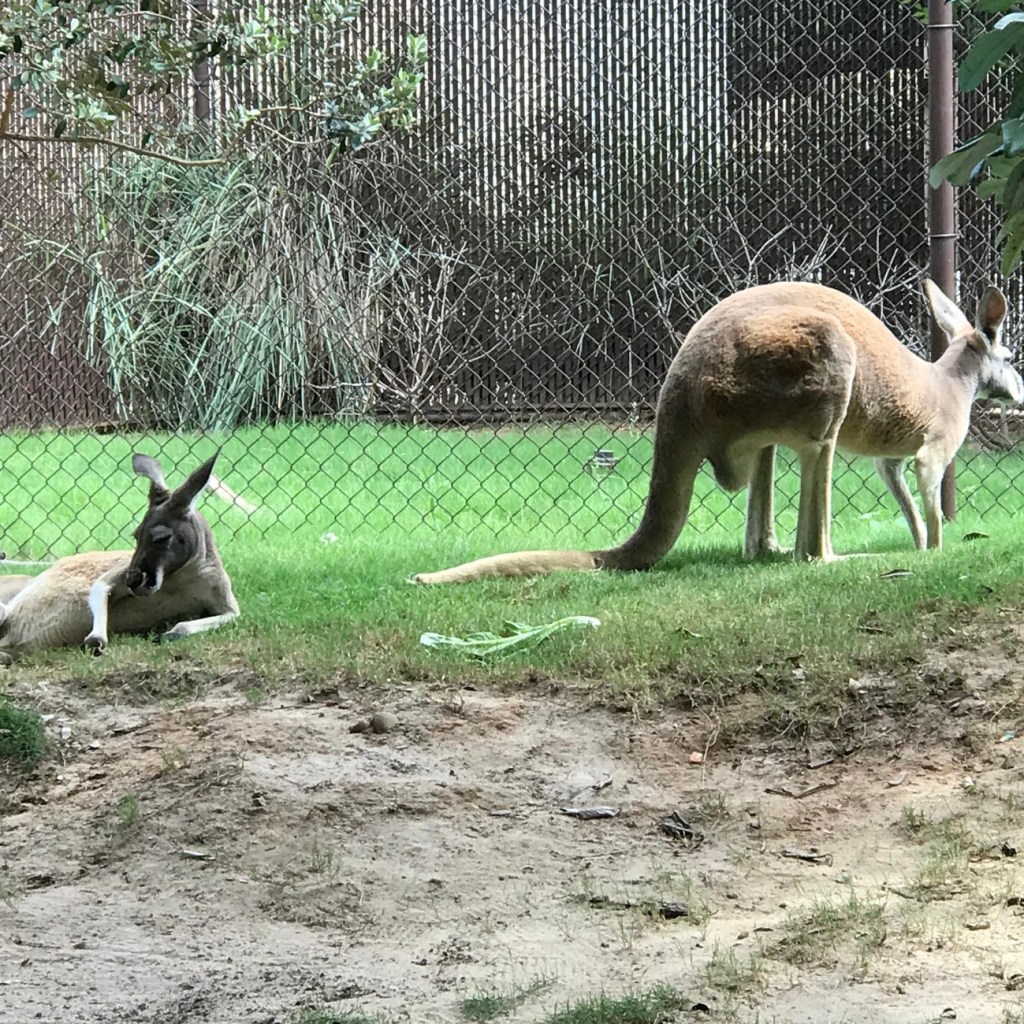
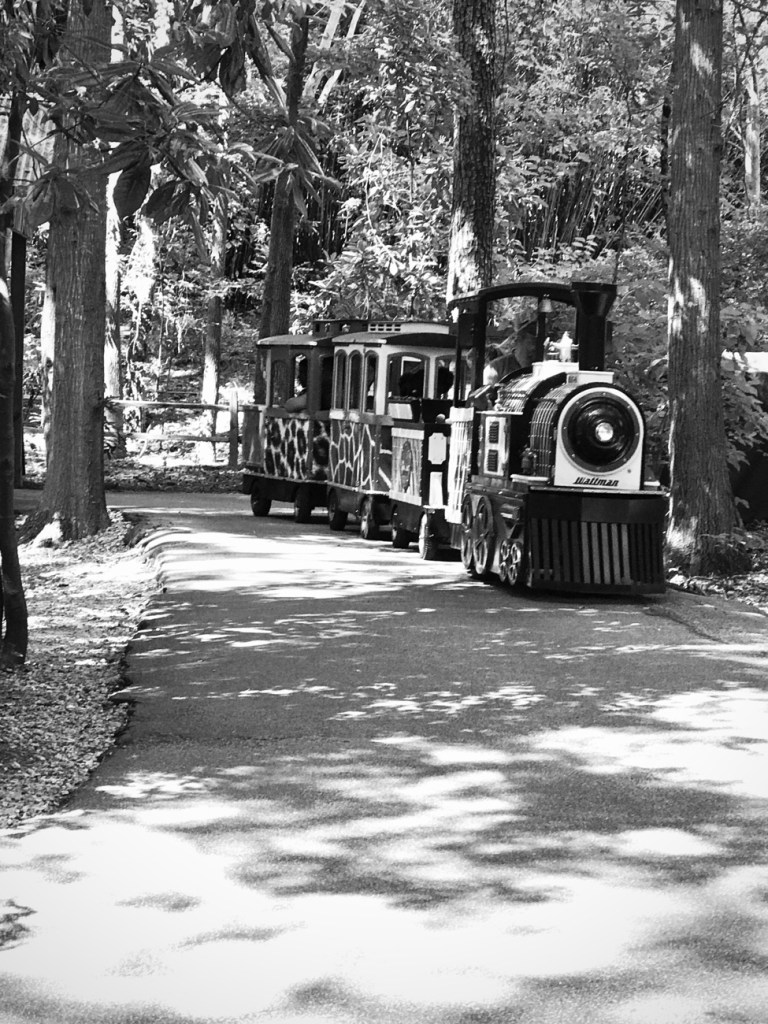
Finally, let’s take another drive. This time let’s drive to Columbia, South Carolina before returning home for some quiet time of rest and relaxation. In Columbia I am joined by my daughter, Trisha and her daughter, Alona. We decided to visit the Riverbanks Zoo to see the animals. We enjoyed the short train ride around a small portion of the Zoo.
Riverbanks Zoo & Garden Columbia, South Carolina, USA August 2017
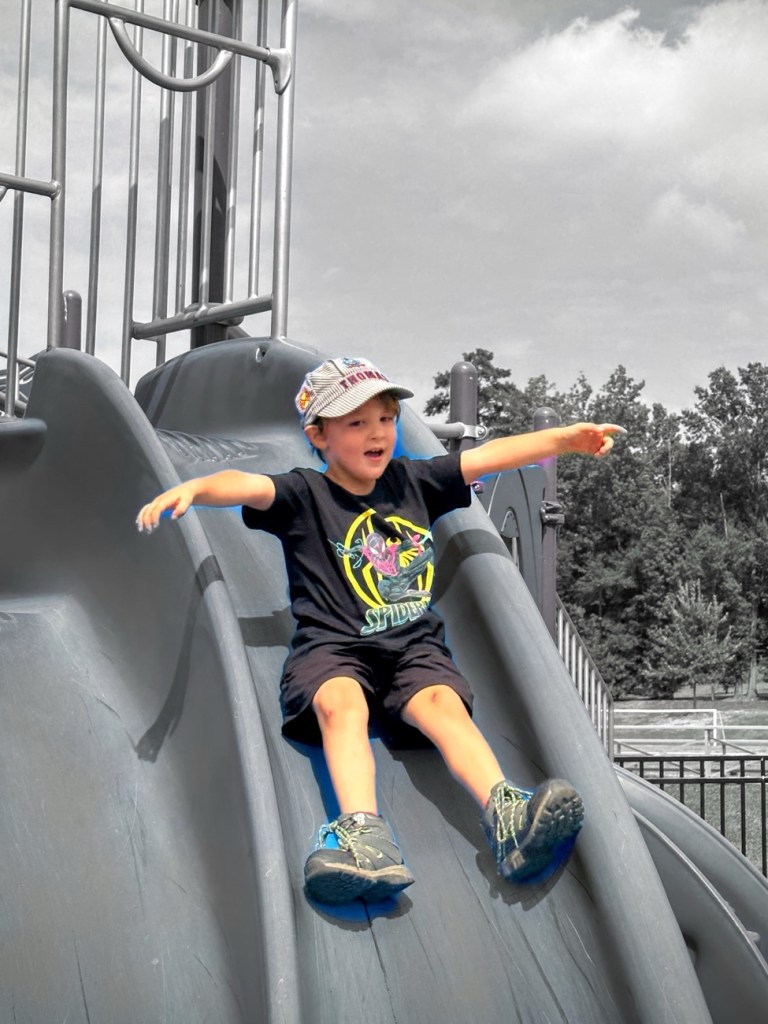
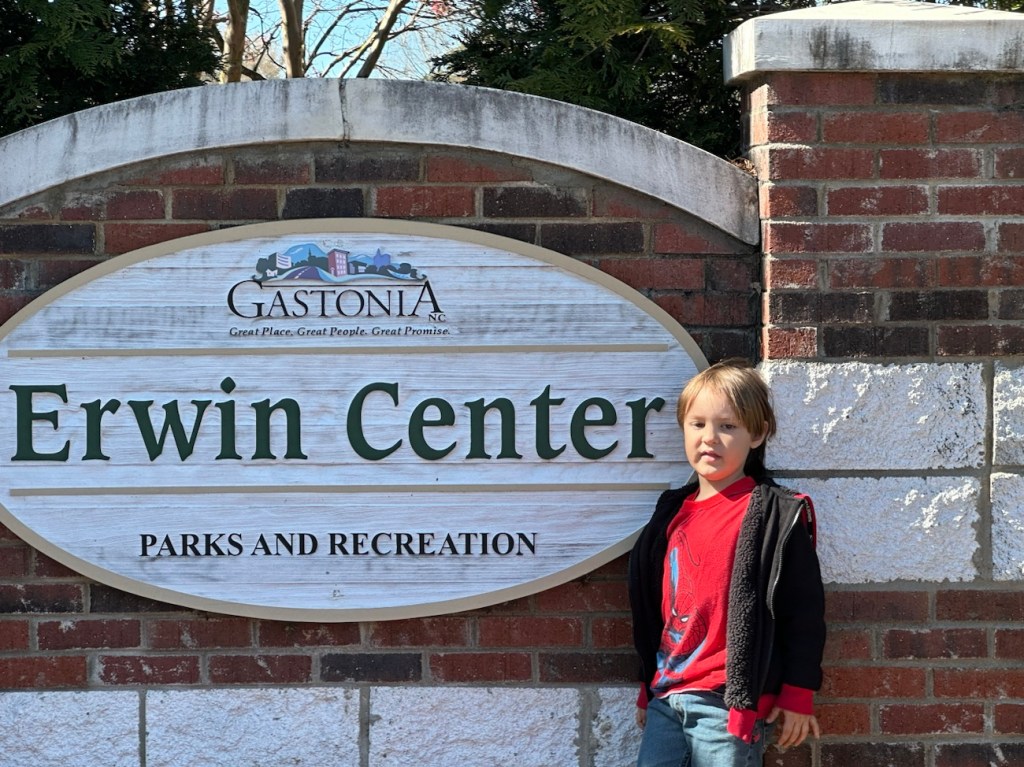
Cee asks everyone to post photos of Words that contain the Alphabet letters A or E. My selections for this week come from mine and Coleman’s recent visit to Gastonia’s Erwin Center Park and Recreation. As per usual Coleman (notice the Name A & E) is in several of my photos.
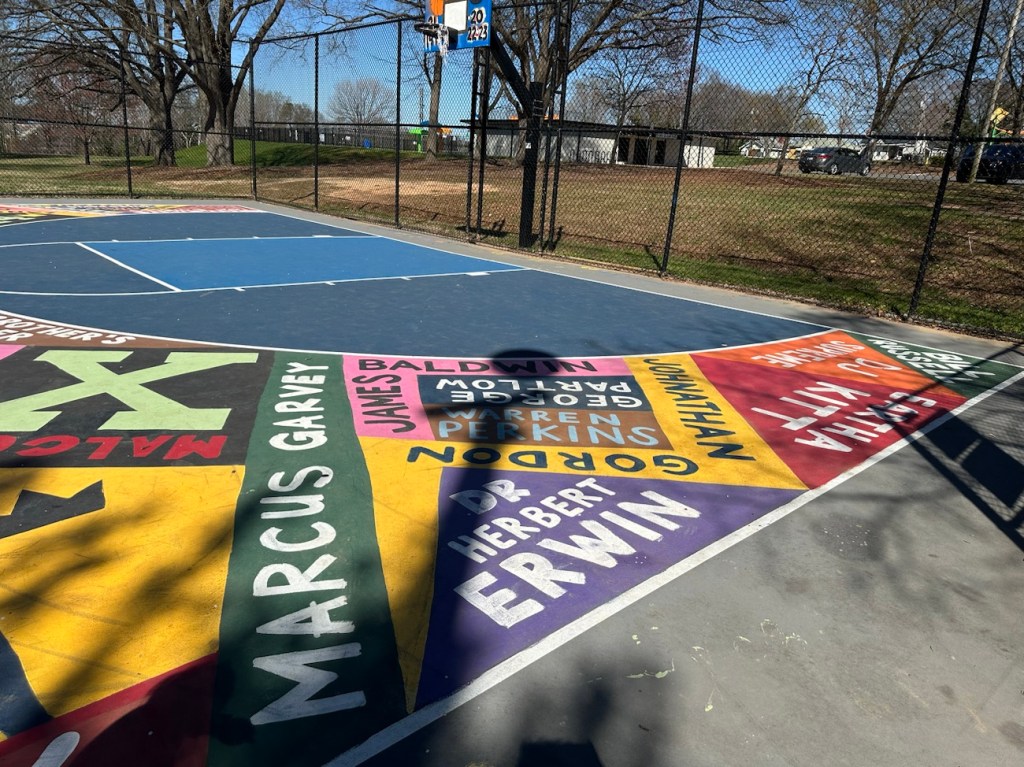
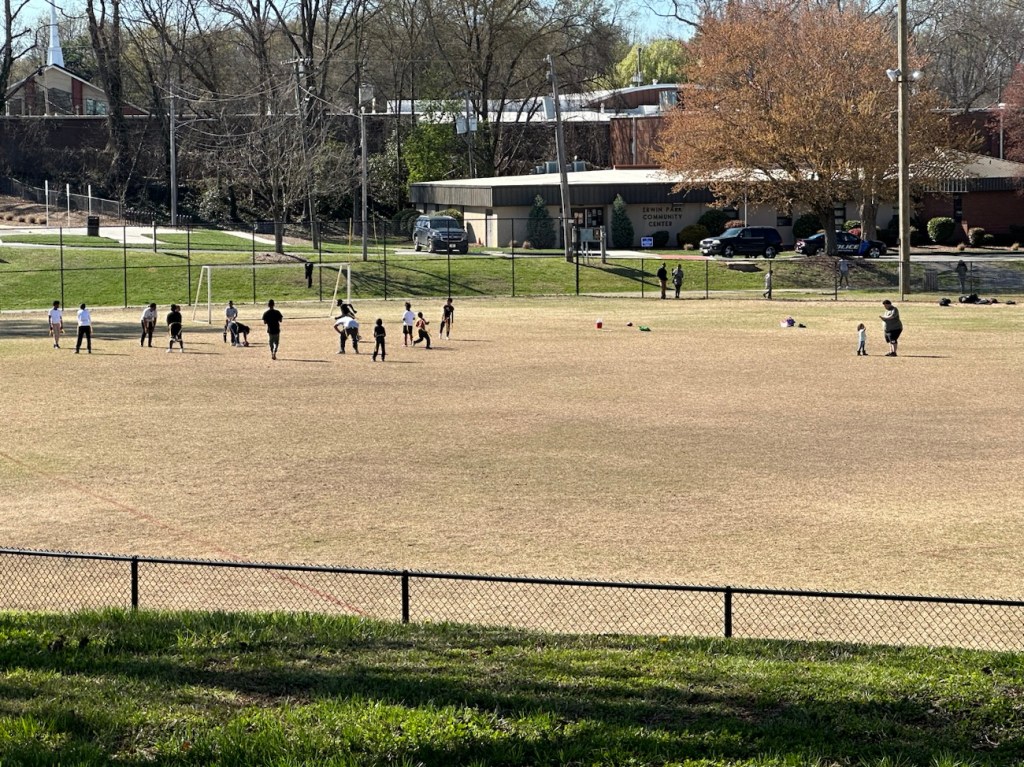
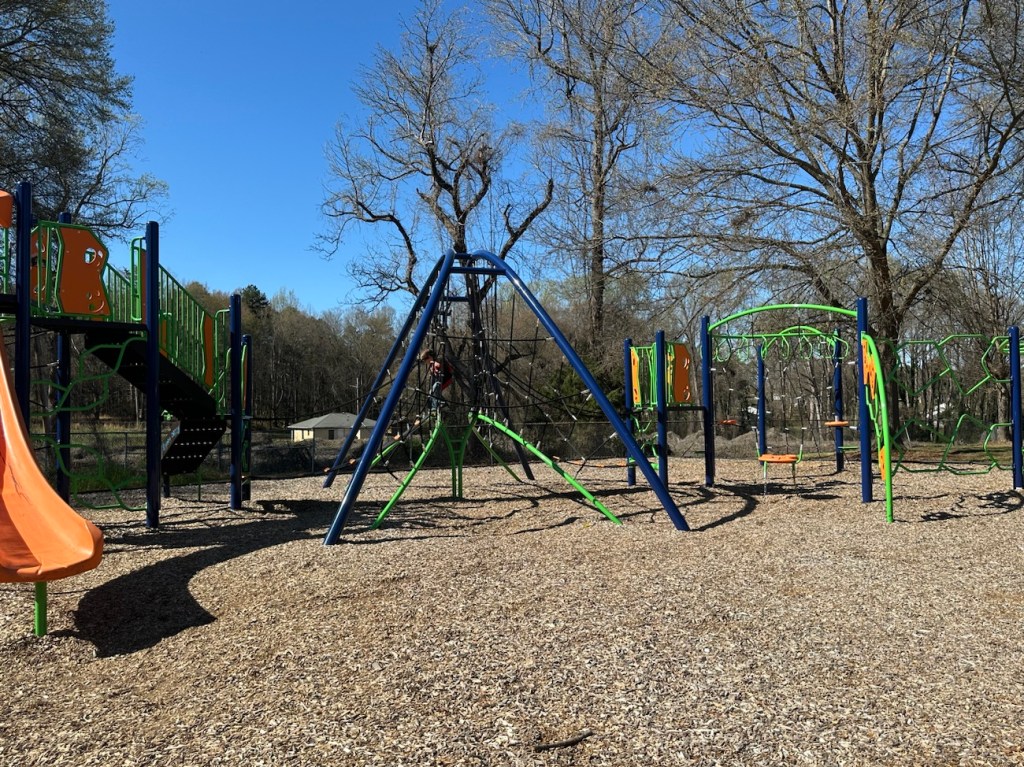
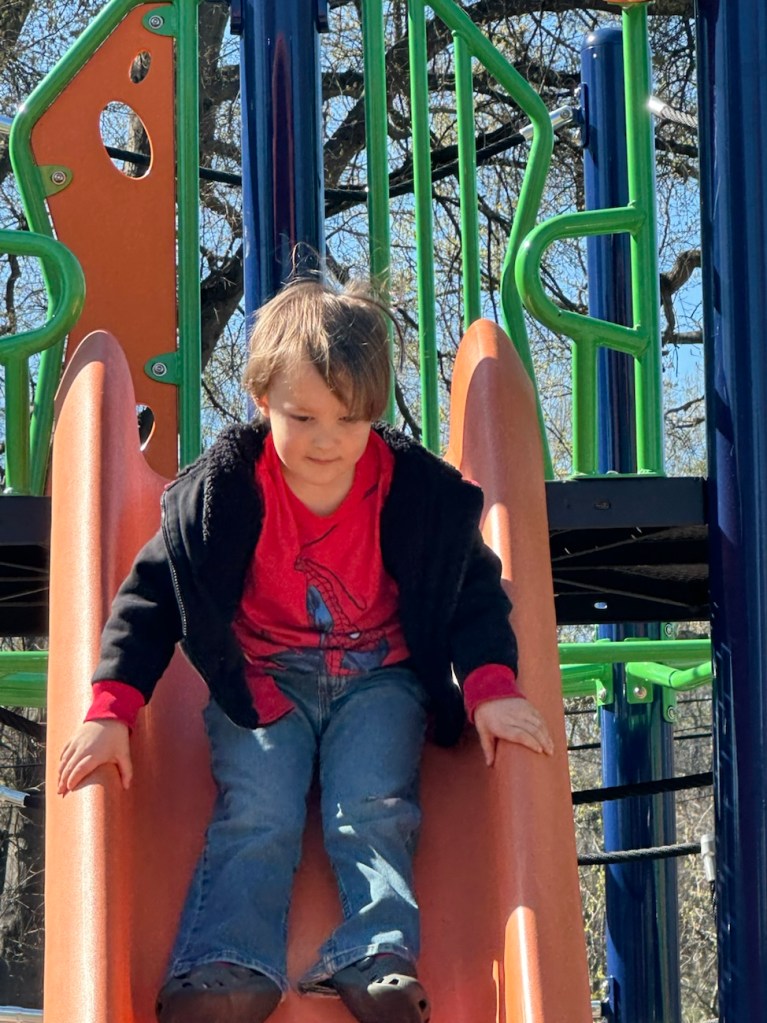
Gastonia Erwin Center Parks and Recreation Sign with Coleman Basketball Court Gastonia Erwin Center Park and Recreation Ball Field used for Soccer and Baseball Gastonia Erwin Center Park and Recreation Coleman in the Children’s PlaygroundColeman sliding on the Playground Equipment Slide
We are still having a lot of rain several days out of the week. Even so Coleman and I managed to get a little walking in. We walked for a mile and a half before deciding to get on the bus. We rode the bus to a park we had not previously visited.
We visited the Erwin Center Park and Recreation. We rode the Blue line to the station, then switched to the Yellow line. The Yellow line took us to right across the street from the park.
The Erwin Center opened in 1961 in the Highland neighbourhood of northern Gastonia. The Center was named in honour of Dr. Herbert Erwin. Dr. Erwin was Gaston County’s first African American physician. He was a well known advocate for youth sports and activities. The Community Center has a game room, meeting room, kitchen, lounge, and offices.
In 1967 a full-size gymnasium and an outdoor basketball court were added. Today’s outdoor facilities also include a swimming pool, a splash pad (open during the summer months), a grass volleyball court, horseshoe pits, playground, tot play area, a large picnic shelter and a walking track.
In the summer of 2020, a Black Lives Matter Mural was painted on the Erwin Center basketball court by Ezekiel Clay, Jr.
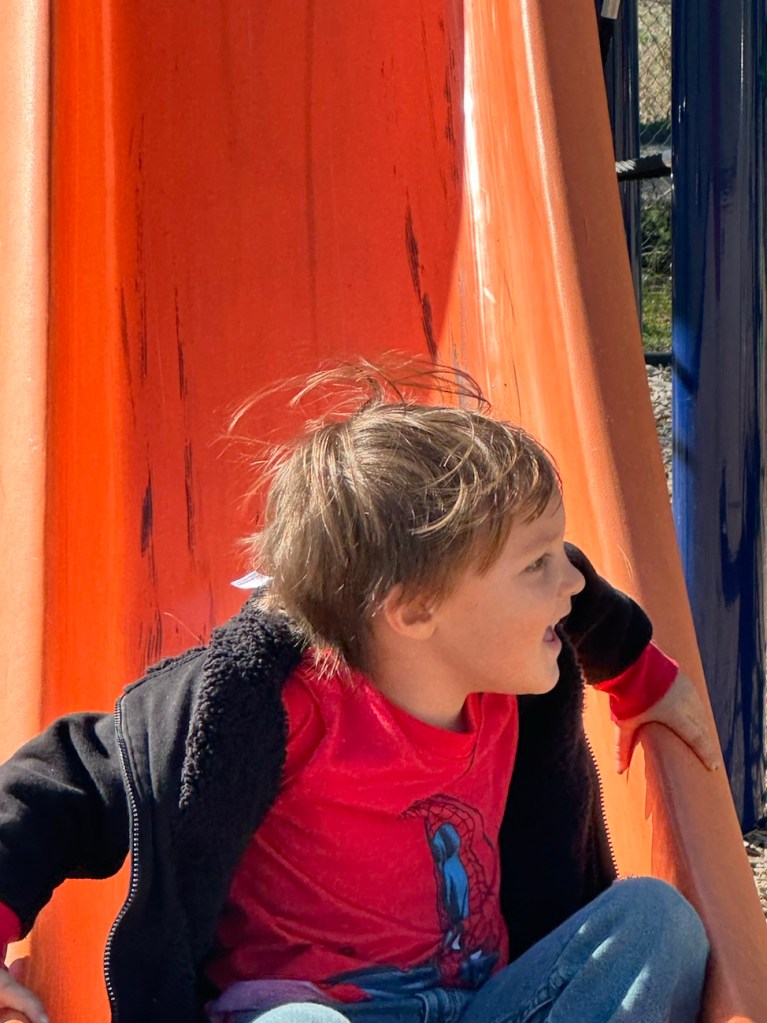
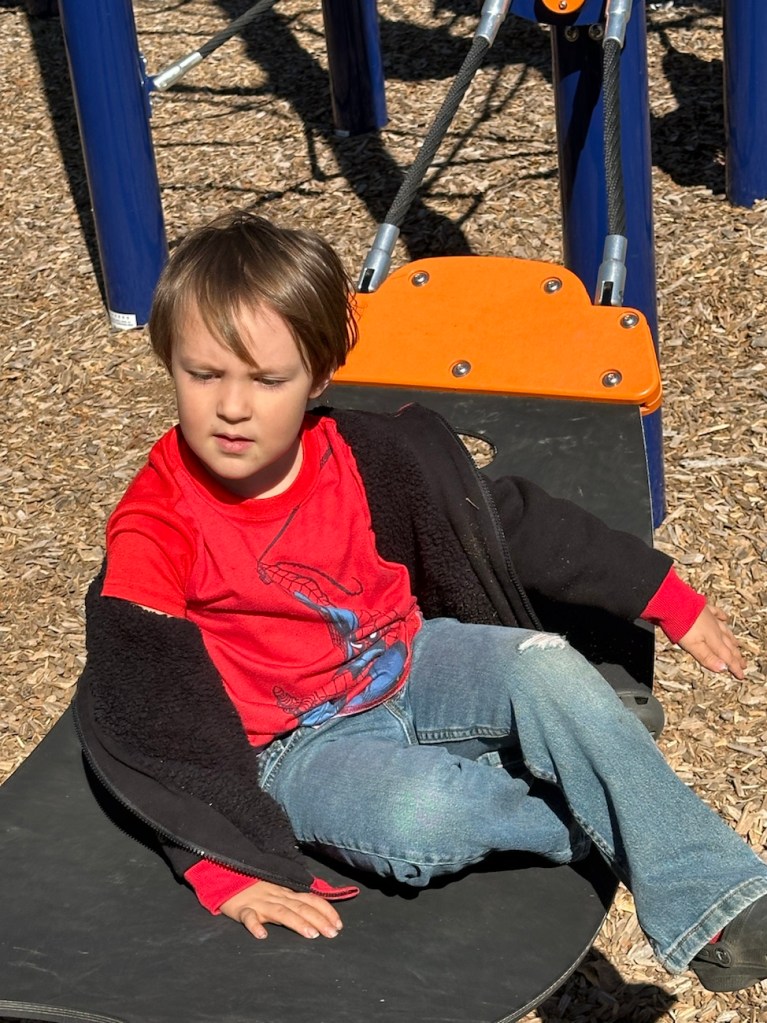
… On the Top of a Slide… On the Bottom of a Slide … on a Swing
The Erwin Center Park and Recreation outdoor park areas are open daily from Dawn to Dusk.
This park is a little further away from the park we normally visit, however it does have activities and playgrounds which are of interest to the very young as well as older children, teenagers, and adults.
If we were so inclined to travel a little further from home than usual, we would visit the park again. Coleman enjoyed the playground and wished it was already summer so he could have enjoyed the Splash Pad.
It is officially Spring, however, the winter cold weather is hanging around not wanting to go away. Thankfully we are not getting the deluge of snowfall some areas are experiencing.
Here our weather and sky can change dramatically within a matter of minutes. The following shows our Weekend Sky – Weather on Saturday.
The change in the sky was only thirty minutes from blue skies to dark cloudy skies.
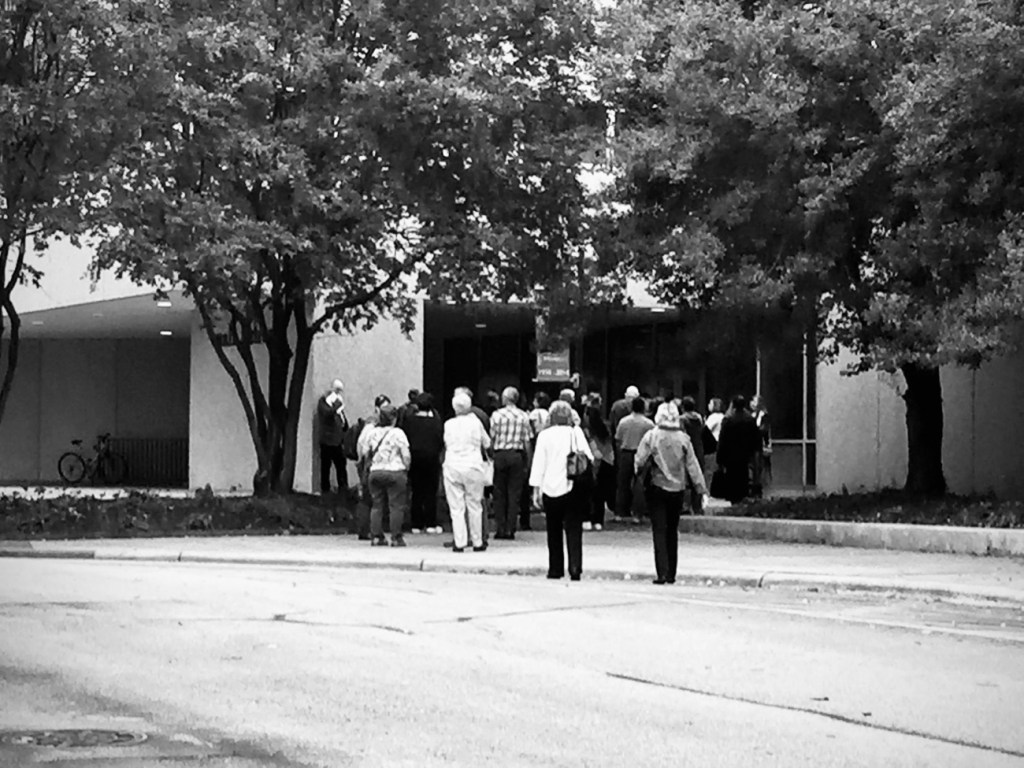
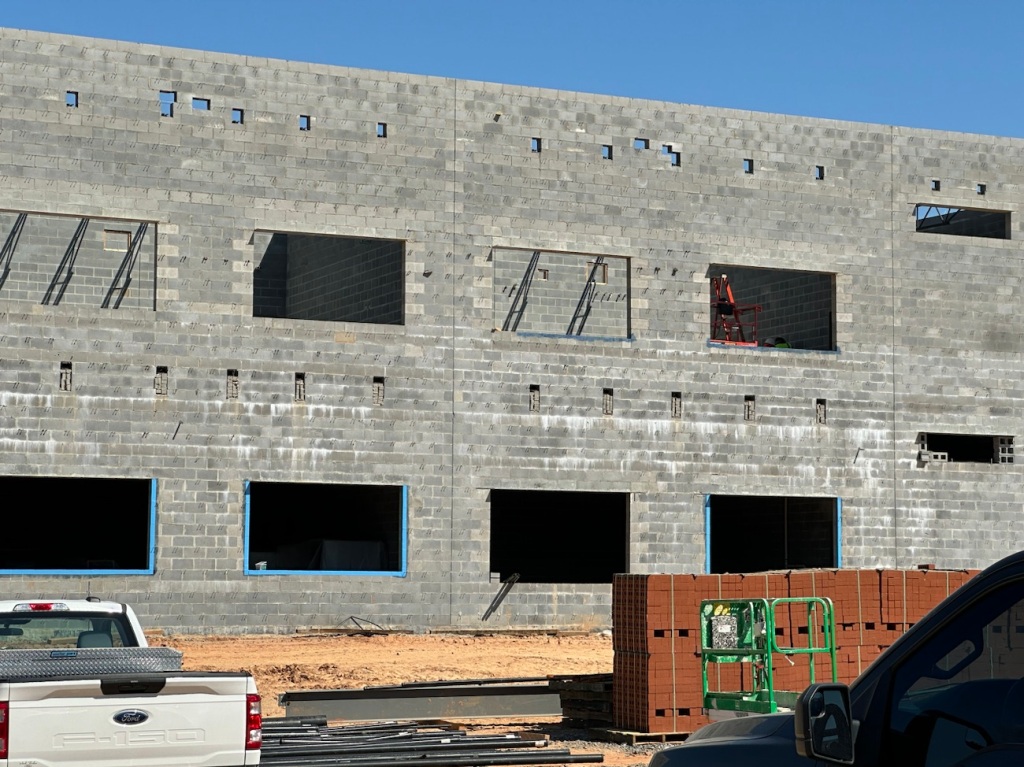
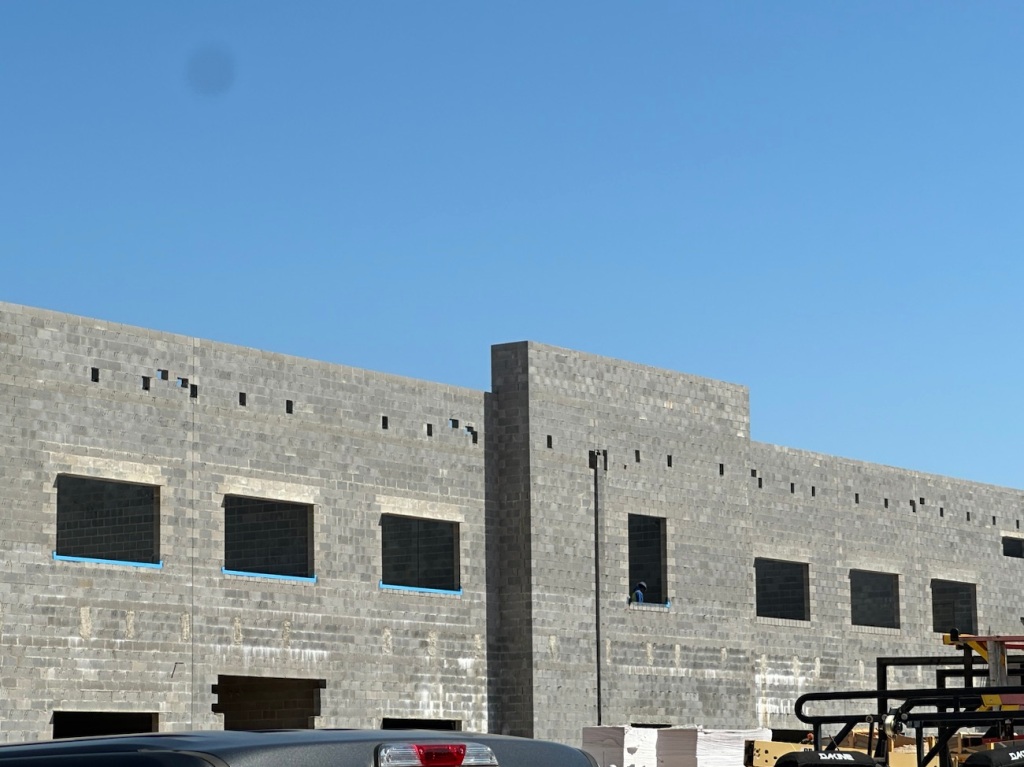
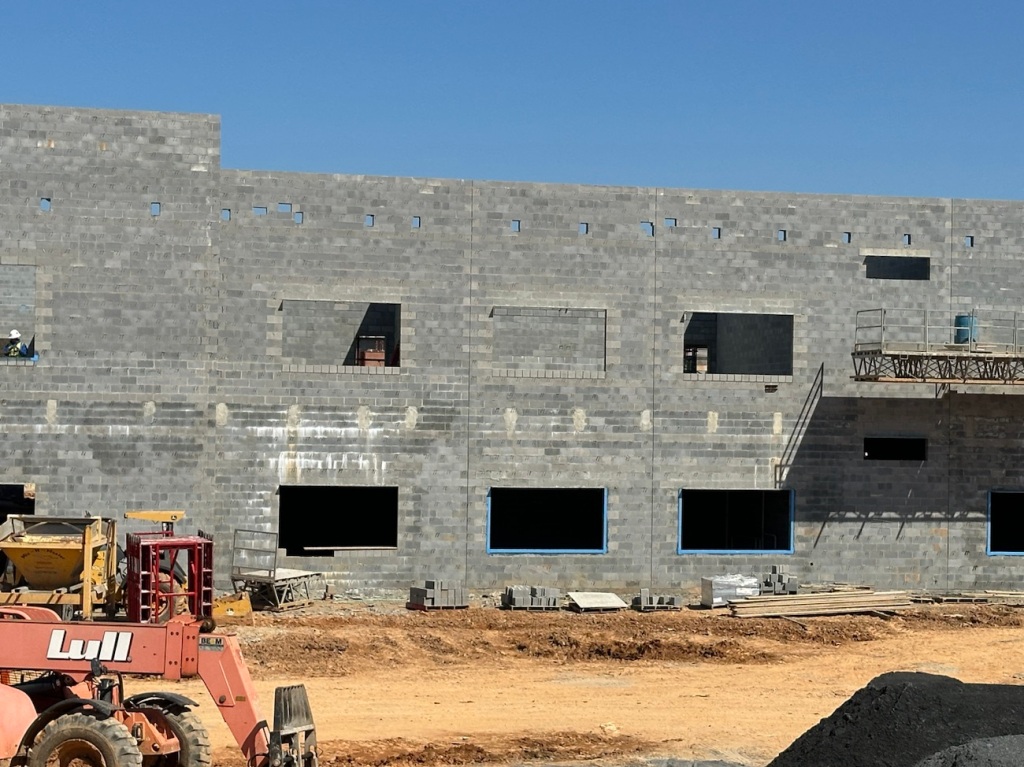
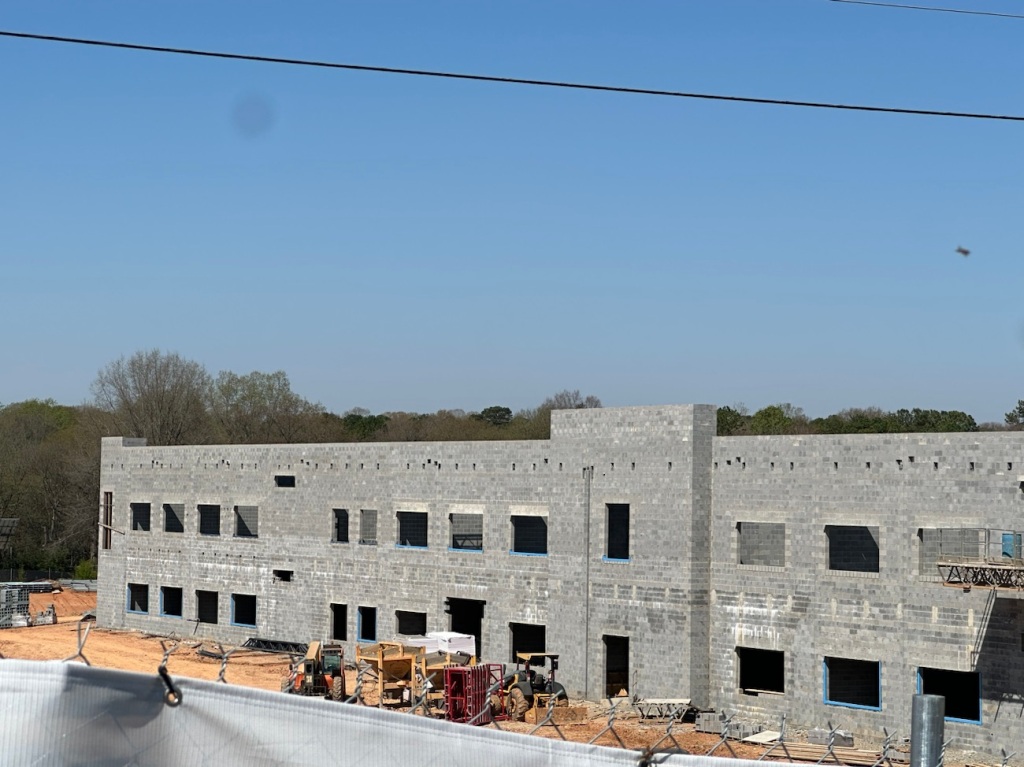
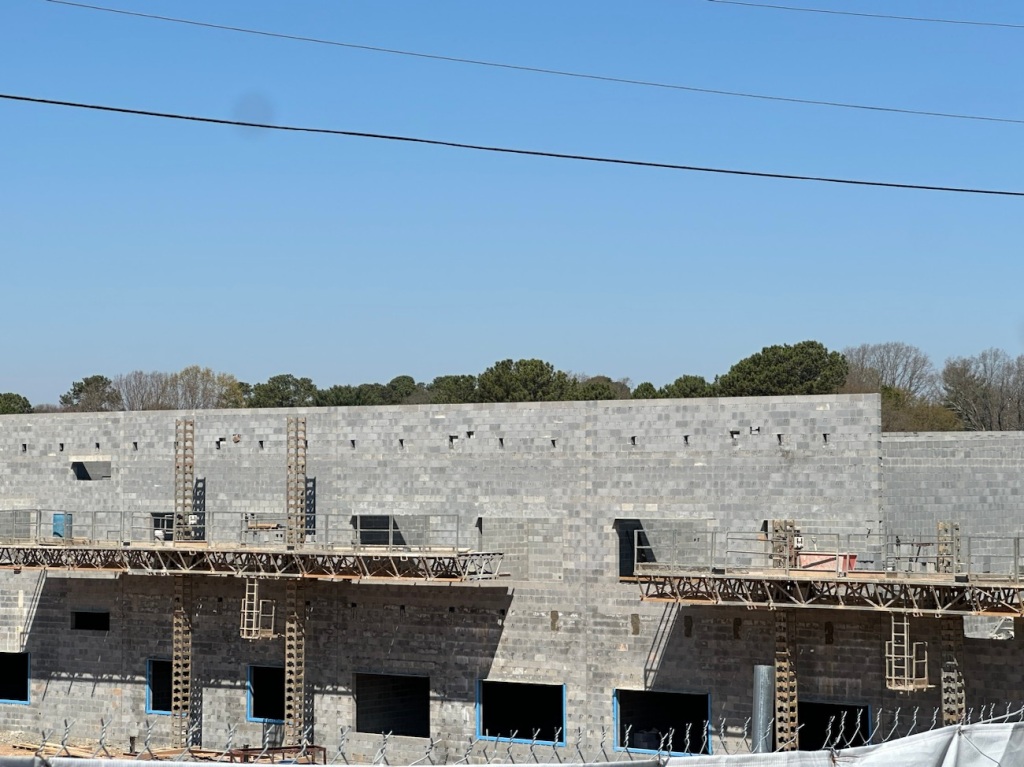
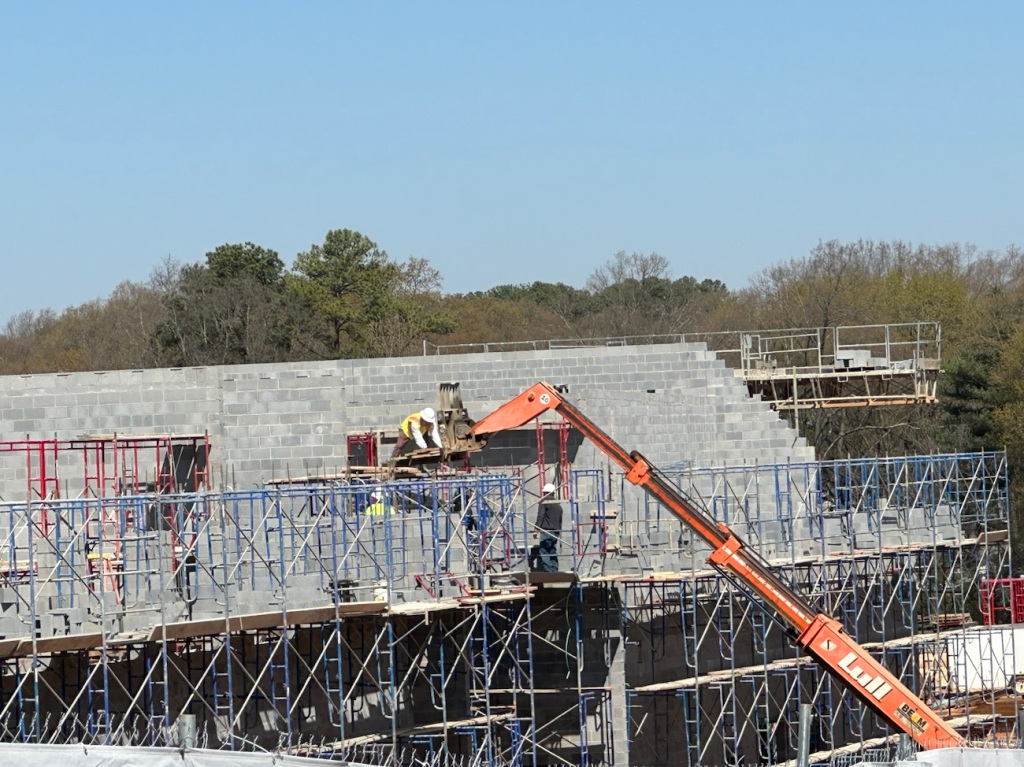
This week we observed the School Construction noticing the Windows from the street side near the old Grier Middle School location. The Windows and the New Grier Middle School construction is progressing nicely.
Groundbreaking for the new Grier Middle School took place on Tuesday, October 3, 2023. It is expected the completion of the construction of the new Grier Middle School will be in 2025. The New Grier Middle School should be ready for students then barring any complications or delays.

































 Gfpacificbee’s Insights & photography