God Bless. Admire the Flowers and the beauty found in nature. Have a fantastic week. Thank you for visiting and sharing your time and thoughts with us. I appreciate y’all very much.
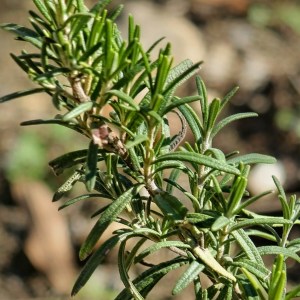
Rosemary is a fragrant herb from the mint family grown in The Farm at The Schiele Museum of Natural History in Gastonia, North Carolina.
Rosemary grown in the Garden in the Farm has several qualities that are beneficial for the Garden and the Livestock living in the Farm.
A Natural Pest Repellent to keep mosquitoes and cabbage moths away
Boosts health in crops like sage and cabbage
An aromatic, woody, low-maintenance drought-tolerant evergreen hedging
The aromatic stalks can be used in chicken coops to reduce insects
The leaves can be fed to livestock in small quantities to boost immune systems
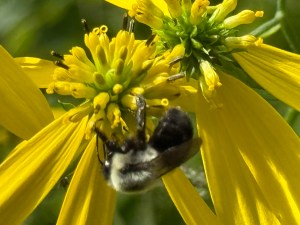
It invites beauty and life into the garden by being a magnet for pollinators. It attracts bees, honeybees, bumblebees, butterflies, and hummingbirds.
It can be added to feed for cows, goats, sheep, and pigs as a natural phytogenic feed additive.
How do you like to use rosemary? Do you plant it in your garden? There are many benefits of rosemary not only the health of farm animals, garden plants, and it has benefits for your health as well.
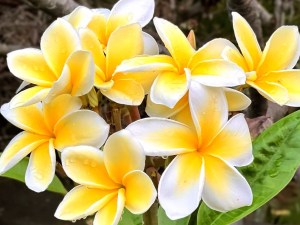
The Plumeria is the perfect example of the finest quality of flowers one can find in Hawaii. They are often used in making leis. They come in a variety of colours and shades including white, yellow, pink, and red. The flowers sweet fragrance and delicate beauty are characteristics that make it a favourite among the locals and tourists alike.
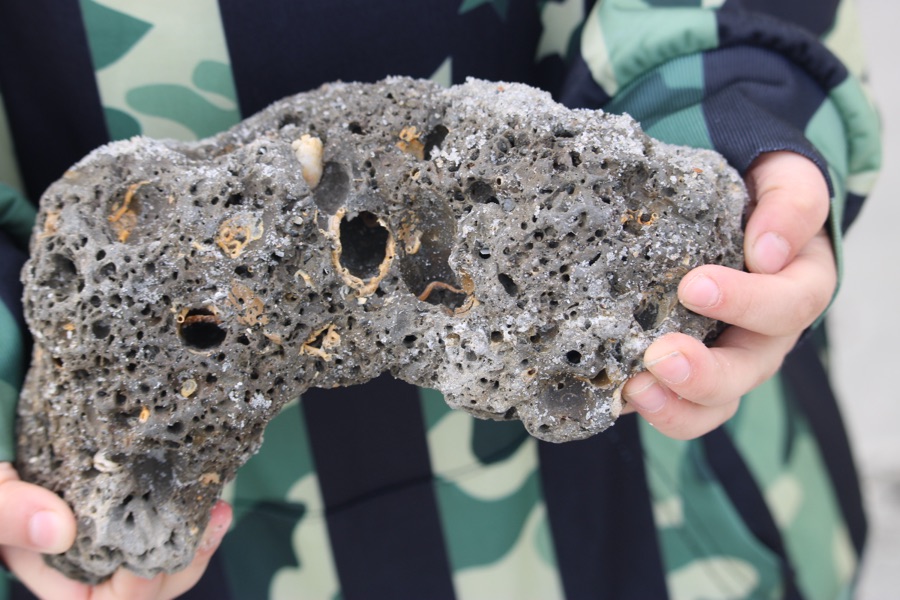
Coleman is holding a, Vesicular basalt, volcanic rock he found on the seashore in an area of the beach where he was finding seashells.
According to Google AI, Vesicular basalt is not naturally apart of Myrtle Beach’s local geological shoreline. It suggests that it could”be either Fossilized Peat or Coal (some found near the Grand Strand), “Beach Rot”or Fossilized Marls (Frequently seen near the 2nd Avenue Pier), or Piddock-Bored Rocks.
The Piddock-Bored Rocks appear vesicular since they are covered with small, circular holes. These holes are actually burrows made by piddock clams (rock-boring mollusks) in softer sedimentary rocks like limestone or siltstone.
Therefore, considering our location along Myrtle Beach’s seashore (we were walking along the Grand Strand near the 2nd Avenue Pier, it could instead be any one of these three. I’m inclined to lean towards the Piddock-Bored Rock, the area is covered with clam shells.
The Wild Potato Vine is a perennial, deciduous, tenacious flowering vine similar to Morning Glory and Sweet potato vine. It is native to North America and grows primarily in South East Canada to Central and Eastern United States of America. It is showy with large heart-shaped leaves, purple stems, and white flowers with pink to purple centers.
An interesting fact is that the Wild Potato Vine roots are used by Native Americans for poultices, infusions, read for treatment of a variety of medical problems. The roots can be eaten cooked, but raw, are a purgative. (A purgative has a strong laxative effect.)
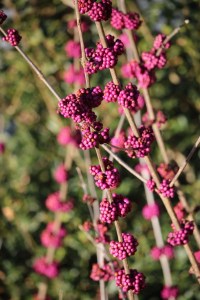
American Beautyberry is a woody deciduous, perennial shrub native to the southeastern United States including the Carolinas.
Clusters of small flowers bloom on the late spring and early summer. However, what you are seeing here are clusters of vibrant purple berries in the Carolinas that peak in late summer through autumn (August to November). The vibrant berries often persist into early winter providing significant food for birds and wildlife, making it a quintessential fall shrub for the region. The colors vary; most common is the vivid purple, though white and pink varieties exist.
American Beautyberry
The American Beautyberry offers many ecological services. How might you ask does it work? Its seeds and berries provide an important food source for a tremendous amount of songbirds of America. Some of those include American robin, brown thrasher, northern bobwhite, purple finch and eastern towhee. It is also a nectar source for butterflies and has fragrant foliage.
What I found interesting is that the American Beautyberry has been used by farmers successfully since at least the early 20th century to repel biting bugs from mules and horses by rubbing it on their coats and under harnesses. Why did I found this information so fascinating? The location of this particular American Beautyberry shrub is located near the horse stables at Anne Springs Close Greenway.
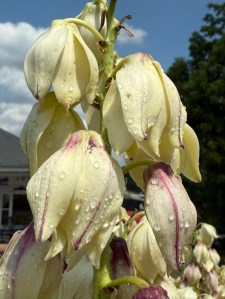
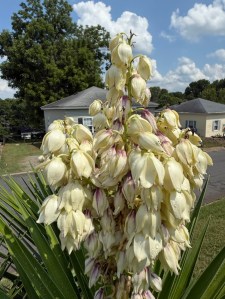
The Yucca gloriosa species is known by the common names moundlily yucca and soft-tipped yucca. The Yucca gloriosa is also known as Roman candle, candle yucca, palm lily, and Spanish needle.
Close-up of the Yucca Flowers
Yucca gloriosa is caulescent, usually with several stems arising from the base, the base thickening in adult specimens. The leaves are long narrow, straight and very stiff. [The tips of the leaves are extremely sharp to the touch.]
Yucca gloriosa with Raindrops
The inflorescence is a panicle up to 2.5 m (8 ft) long, of bell-shaped white flowers, sometimes tinged purple or red. The fruit is a leathery, elongate berry up to 8 cm (3 in) long. [We have not seen or noticed the berries on the Yucca plant as of yet.]
Moundlily Yucca and Soft-tipped Yucca
The habitat for Yucca gloriosa is normally on exposed sand dunes along the coast and barrier islands of the lower East Coast of the United States. [There are two (2) of the Yucca gloriosa grown as ornament plants on our front lawn.]
Yucca gloriosa has been known to cause skin irritation and even allergic reactions upon contact. The leaf points are even sharp enough to break the skin.
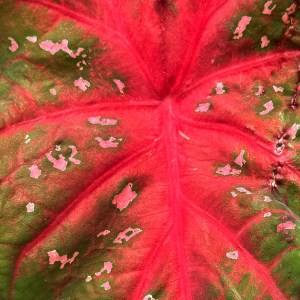
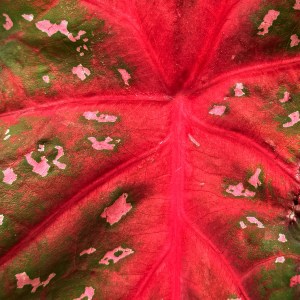
The Caladium bicolor(AkaHeart of Jesus) is typically grown as a houseplant for its large, heart or lance-shaped leaves with striking green, white, pink, and red blotching. [These Plants were planted in large landscape planters in and around Centennial Center in Downtown Cramerton.] It is alright to plant it outside in USDAHardiness Zone 10 as an ornamental.
The Caladium bicolor, called the Heart of Jesus, is named such as a nod to the Sacred Heart of Jesus, a symbol of divine love in Christian tradition. The plant’s heart-shaped leaves echo the symbol of the Sacred Heart, making it a living embodiment of this spiritual icon.
Caladium x hortulanum (fancy-leaved caladium)
Caution: Caladium bicolor contains calcium oxalate crystals, making all parts of the plant poisonous to humans, livestock, and pets. If its sap comes in contact with the skin it may cause skin irritation. Ingestion of this plant may cause burning and swelling of the lips, mouth, and tongue, as well as nausea, vomiting, and diarrhea. Be aware that if your pet consumes caladium your pet may exhibit vomiting. Other symptoms a pet may exhibit are drooling, pawing at mouth or face, and decreased appetite.
Caladium bicolor (Heart of Jesus) is pretty to look at, but it is extremely toxic if chewed or swallowed.


















 Gfpacificbee’s Insights & photography