Camera: Canon EOS Rebel T3i with Canon EF-S55-250mm lens
Location: The Rooftop Garden; The Schiele Museum of Natural History; Gastonia, North Carolina, USA
God Bless. Admire the Flowers and the beauty found in nature. Thank you for visiting and sharing your time and thoughts with us. I appreciate y’all very much.
Location: Cramerton Drugstore Landscape; Cramerton, North Carolina. USA
God Bless. Get Outdoors. Enjoy Nature. Have a wonderful week. Thank you for visiting and sharing your time and thoughts with us. I appreciate y’all very much.
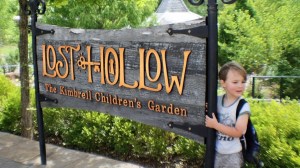
Lost Hollow is a section in Daniel Stowe Botanical Garden specifically designed for children. It is also known as The Kimbrell Children’s Garden.
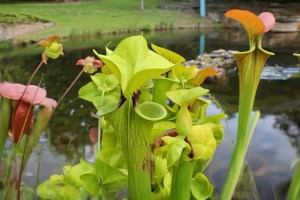
Trumpet pitcher Sarracenia
The garden incorporates nature-inspired play spaces that encourage exploration and interaction with the surrounding environment. The Lost Hollow features an amphitheater, sunken pond, Moonkeep, play spaces and more for the imagination. This garden has been expanded since we last visited. It now includes a 0.4 mile Adventure Trail and Prairie Castle Playground for children to explore and enjoy.
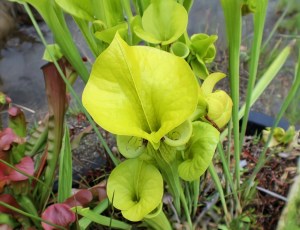
Sarracenia flava
Sarracenia (Trumpet pitchers) are carnivorous North American plants with hollow, trumpet-shaped leaves that trap and digest insects. They lure prey with nectar and bright colours by using slippery, downward-pointing hairs and digestive fluids to capture and absorb nutrients which helps to supplement their diet in low- nitrogen environments.
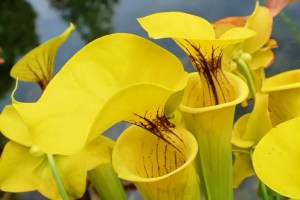
Yellow Trumpet
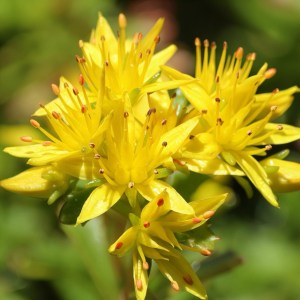
The Yellow Trumpets (Sarracenia flava) have tall yellow-green pitchers with red veins which can reach up to thirty (30) inches. Their colouring often changes from yellow-green to a bright yellow in the Springtime. These particular Yellow Trumpets grow near the pond in Lost Hollow.
Camera: Canon EOS Rebel T3i with Canon EF-S18-55mm lens
Location: Lost Hollow; Kimbrell Children’s Garden; Daniel Stowe Botanical Garden; Belmont, North Carolina, USA
God Bless. Admire the Flowers and the beauty found in nature. Thank you for visiting and sharing your time and thoughts with us. I appreciate y’all very much.
Camera: Canon EOS Rebel T3i with Canon EF75-300mm lens
Location: Glencairn Garden; Rock Hill, South Carolina, USA
God Bless. Admire the Flowers and the beauty found in nature. Thank you for visiting and sharing your time and thoughts with us. I appreciate y’all very much.
God Bless. Admire the Flowers and the beauty found in nature. Thank you for visiting and sharing your time and thoughts with us. I appreciate y’all very much.
Looking back to February 2024, I took several shot of flowers in the garden at The Schiele Museum of Natural History in Gastonia, North Carolina.
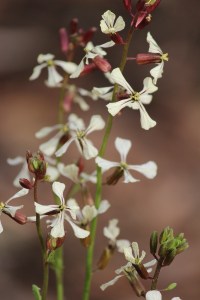
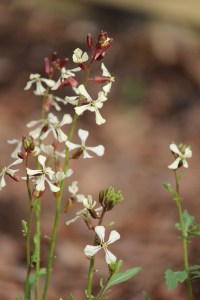
Aka Rocket
The Garden in the Farm at The Schiele Museum is filled with vegetables and flowers each year. New plants are planted from starters at the home of the Farm Caretaker and planted into the garden beds at the Farm. The vegetable plants and flowers are a beautiful sight to behold. The flowers are pollinated from the bees from the hives in the Farm located adjacent to the flower beds.
Aka Arugula
Before researching this plant, Eruca vesicaria, I had no idea that it had multiple common names including Rocket, and Arugula. I knew that Arugula is a green often used in salads, which when eaten has a slightly bitter taste. Arugula is a herb from the mustard family (not a lettuce even though I previously thought it was).
God Bless. Admire the Flowers and the beauty found in nature. Thank you for visiting and sharing your time and thoughts with us. I appreciate y’all very much.
Our area is currently under a Winter Storm Watch, probability is more likely for a severe ice storm rather than receiving much in the form of snow even though some is possible. Hence, I have chosen to share from my archives. Dreaming of Spring and the warmer weather it will bring and the blooming of Spring flowers.
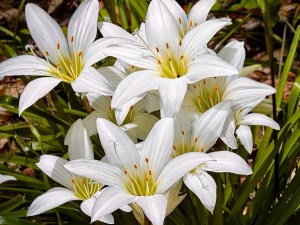
These are from a hike in April of 2022 at Landsford Canal State Park. I captured these on the way to a spectacular lookout point for Spider Lilies.
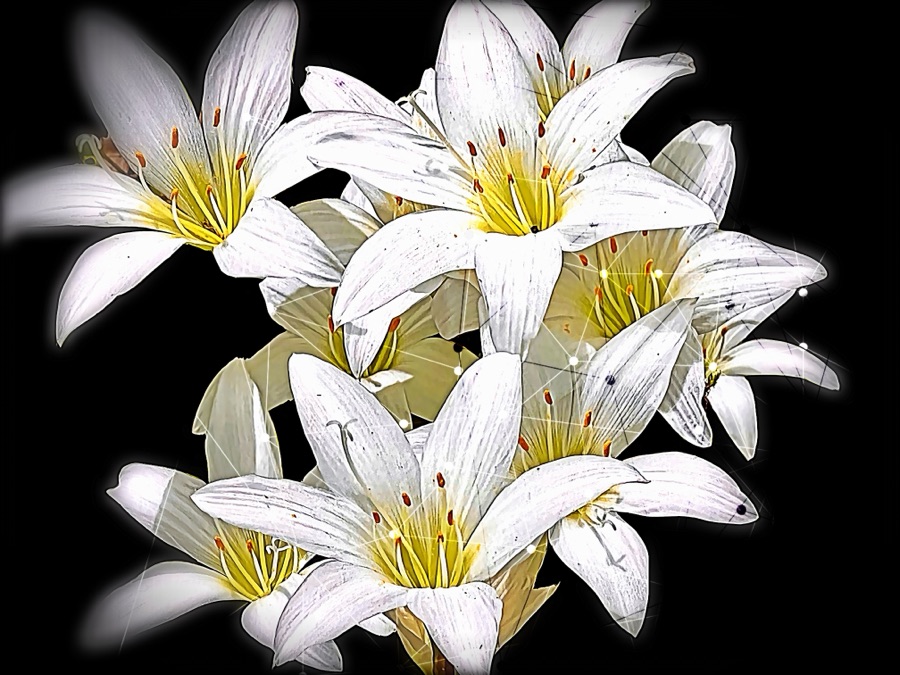
The scientific name for this species was originally placed, by Carl Linnaeus, in the genus Amaryllis using the epithet “Atamasca” in 1753. In the second edition of Species Plantarum, Linnaeuschanged the spelling to “Atamasco,” the Native American name for the species. The most recognized name for these flowers is Zephyranthes atamasca.
Zephyranthes atamasca
The Zephyranthes atamasca is native to the Southern United States of America. It tends to grow in swampy forests, and coastal prairies. Its blooming season begins in March or April. The blooms pictured grow along the shores of the Catawba River in Landsford Canal State Park. They can be seen while hiking along the Canal Trail.
God Bless. Admire the Flowers and the beauty found in nature. Thank you for visiting and sharing your time and thoughts with us. I appreciate y’all very much.






 Gfpacificbee’s Insights & photography