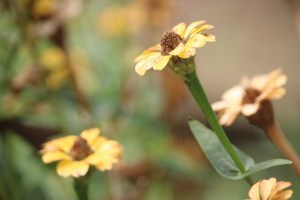
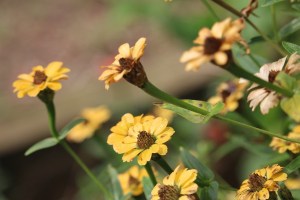
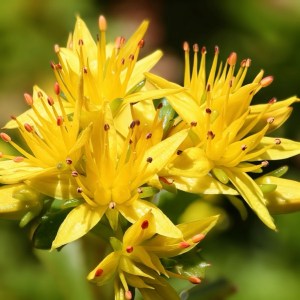
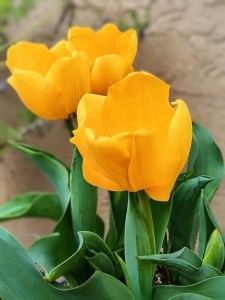
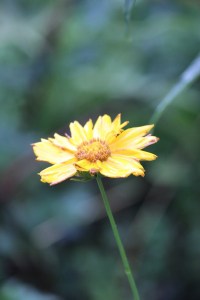
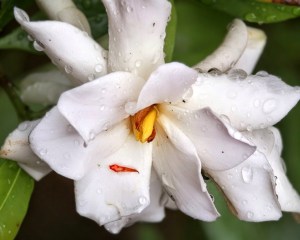
Camera: Canon EOS Rebel T3i with Canon EF-S55-250mm lens; Apple iPhone 13 Pro; Apple iPhone 14 Pro Max
God Bless. Stop and smell the flowers. Admire them and the beauty found in nature. Have a fantastic week. Thank you for visiting and sharing your time and thoughts with us. I appreciate y’all very much.
As the months pass by it seems like there’s another plant deciding to bloom sharing its exquisitely alluring beauty for all to see and admire.
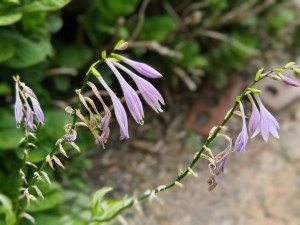
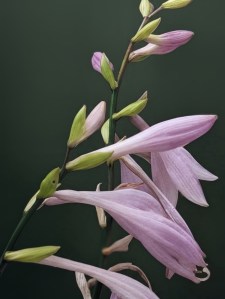
Hosta ‘Fragrant Bouquet’ (aka the Plantain Lily)
This variegated foliage plant, I had thought was just an ornamental landscaping element (to me) surprisingly blossomed recently. Coleman said to me, “Take a picture.” So I complied with his request and am sharing a couple with y’all.
Plantain Lilies
The Hosta ‘Fragrant Bouquet’ also referred to as Plantain Lily is a fast growing perennial with variegated foliage and is highly aromatic with its summer blooms. It forms a lush, open mound of heart-shaped, apple-green leaves highlighted by creamy-yellow margins.
It has large trumpet-shaped flowers that range in colour from near-white to pale lilac. The sweet fragrance is said to attract hummingbirds and butterflies, however, I have not seen evidence of that on this plant.
First stage of Blooming Plantain Lily
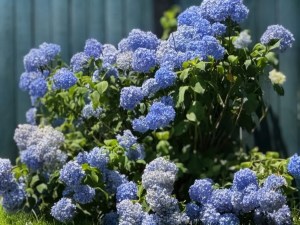
It is planted next to a hydrangea bush and almost covering it completely as if hidden from view until it began to increase in growth and its blossoms became evident in the summer breeze.
Location: Unity Community; Gastonia, North Carolina, USA
God Bless. Stop and smell the flowers. Admire them and the beauty found in nature. Have a fantastic week. Thank you for visiting and sharing your time and thoughts with us. I appreciate y’all very much.
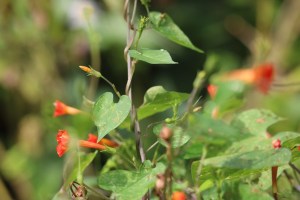
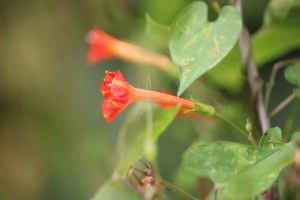
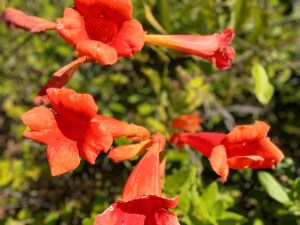
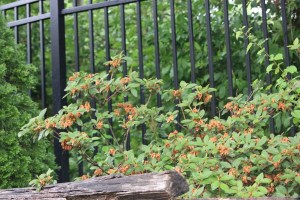
The Mexican Fire Bush (Hamelia patens) is grown as an annual in Gastonia, North Carolina. It is a vibrant, fast-growing tropical shrub known for its fiery orange-red tubular flowers. It is highly prized for attracting pollinators like hummingbirds and butterflies. It typically grows 2 to 4 feettall in a single season. Sinc North Carolina winters are too cold for it to remain evergreen, the plant will experience dieback, but it serves as an exceptional summer filler for local gardens.
The gardens at The Schiele Museum of Natural History are supported and maintained by the Master Gardener Group of Gaston County. This is not your traditional private garden club, but instead it is an organization that is a specialized volunteer network extension of theNC State Extension Master Gardener Program. The certified Extension Master Gardener Volunteers manage and improve the specialized flora spaces at The Schiele Museum which include The Farm and Along the entrance and nature trail. The Garden in the Farm at The Schiele Museum showcases Piedmont-native agricultural crops and plant varieties.
Camera: Canon EOS Rebel T7 (2000D) with Canon EF-S55-250mm lens and Altura UV Filter Attachment.
Location: Entrance Gardens; The Schiele Museum of Natural History; Gastonia, North Carolina, USA
God Bless. Take Care. Help those in need. Spread Love and Kindness all around you. Thank you for visiting and sharing your time and thoughts with us. I appreciate y’all very much.
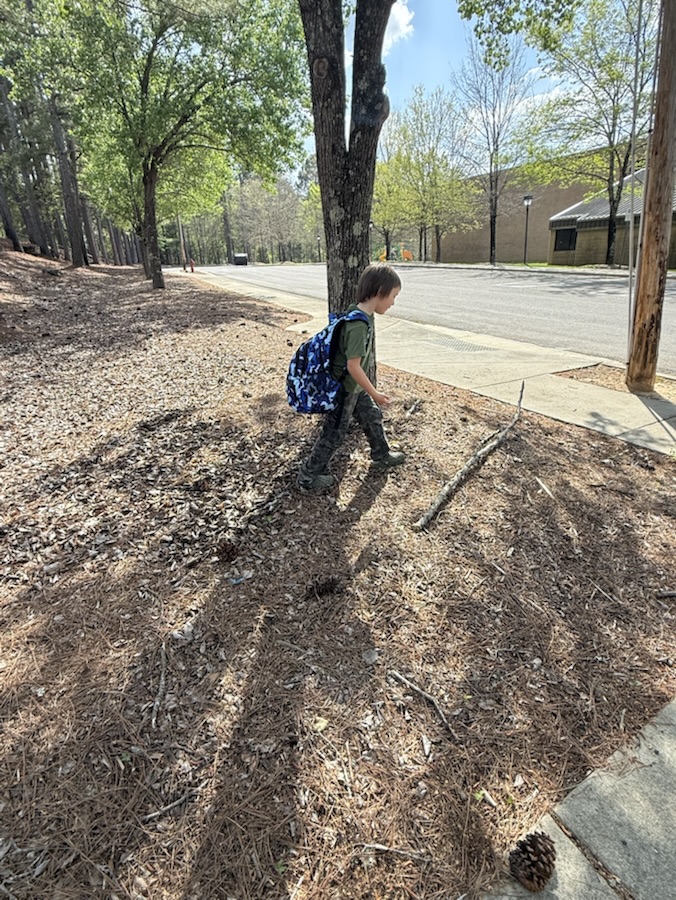
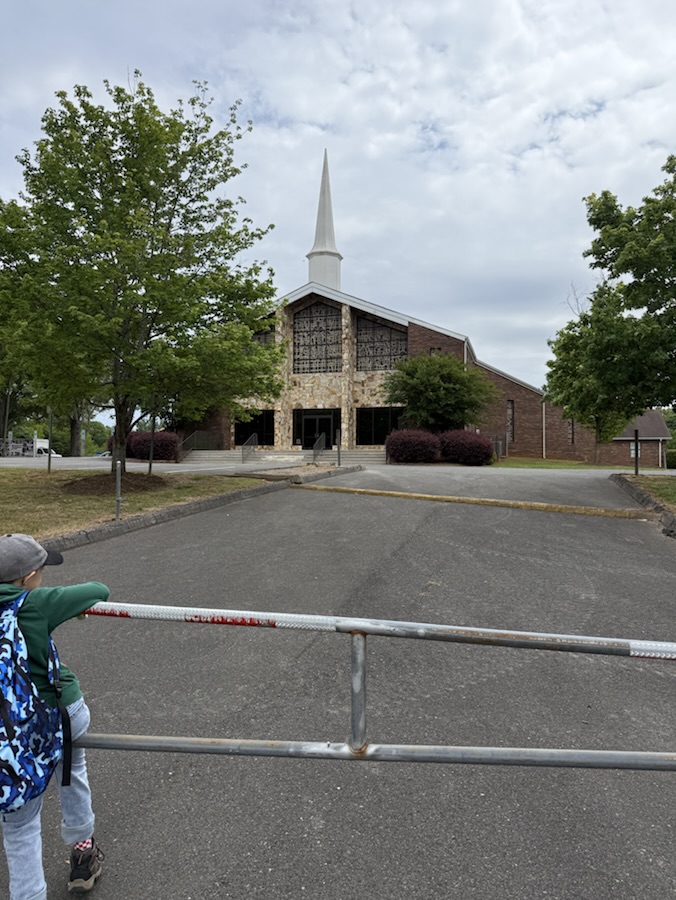
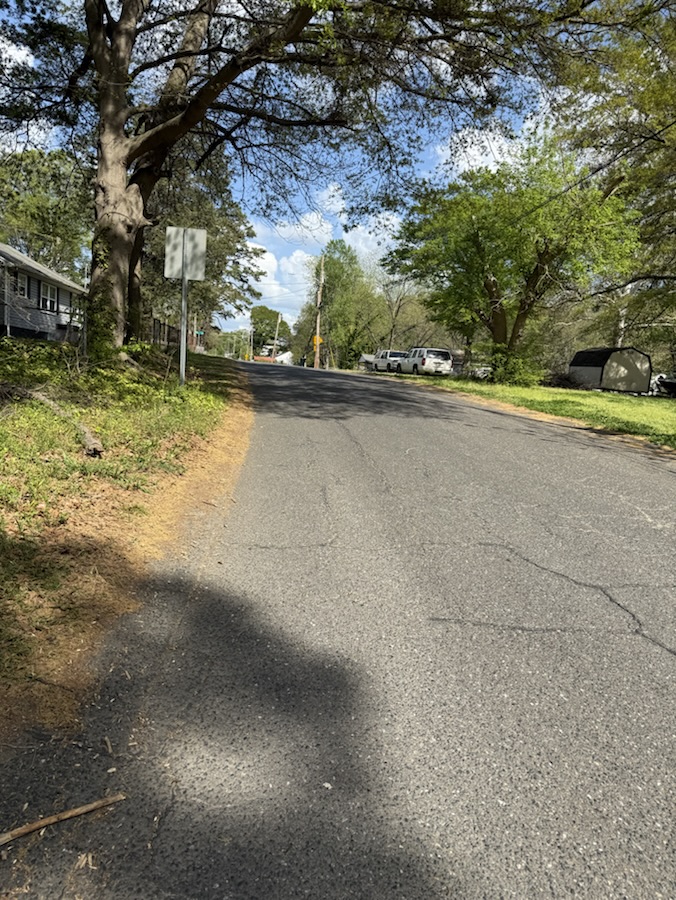
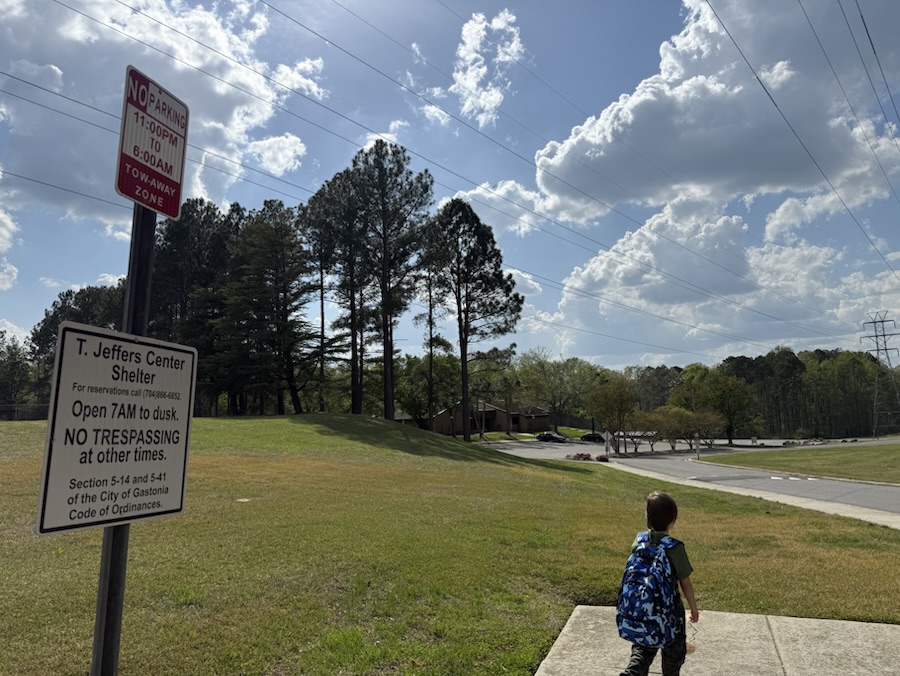
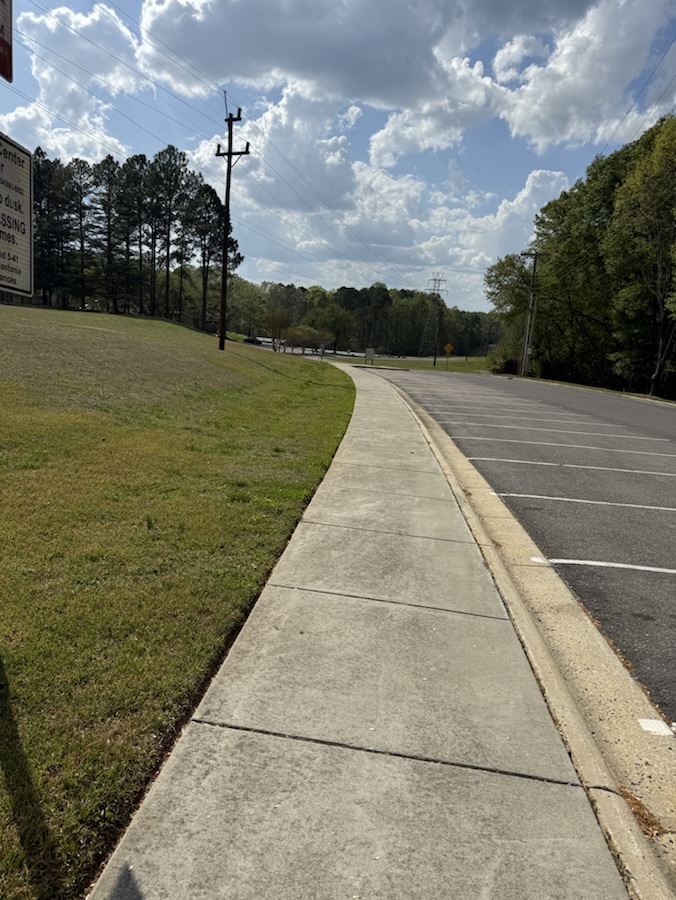
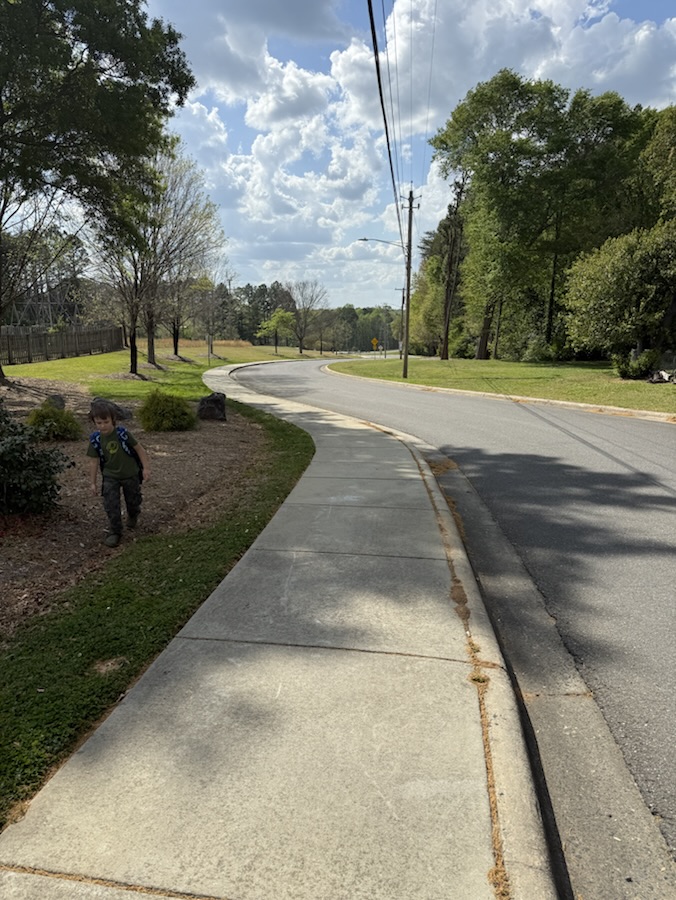
Welcome back to another Which Way Challenge (CWWC). I trust everyone has had a good week and able to spend some time to take a walk or hike in the vast outdoors. This week’s theme for the Which Way Challenge is CWWC: Any Which Way in Your Neighbourhood 06.19.2026]. The Which Way can be Any Which Way you choose in your own neighbourhood as long as the Which Way is clearly discernible. As always signs are always welcome.
For further information regarding the Which Way Challenge (CWWC) feel free to check out the home page here.
Here are my entries …
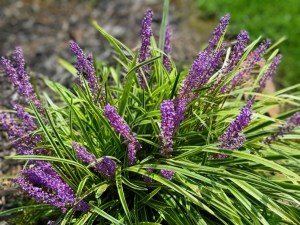
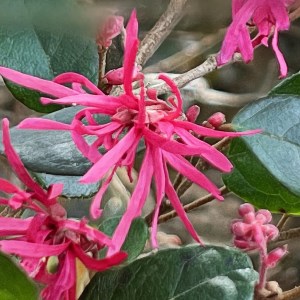
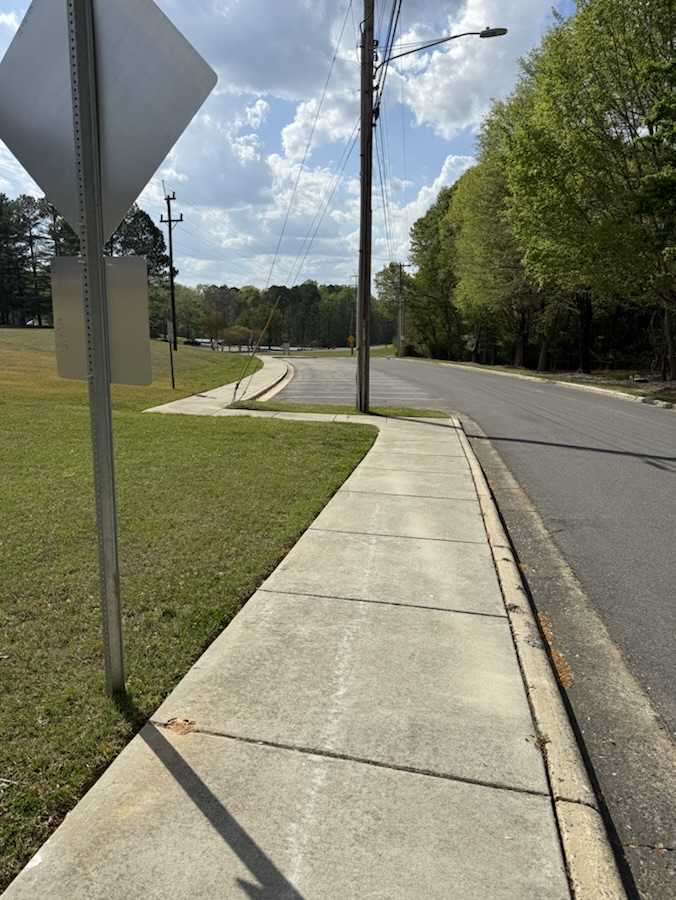
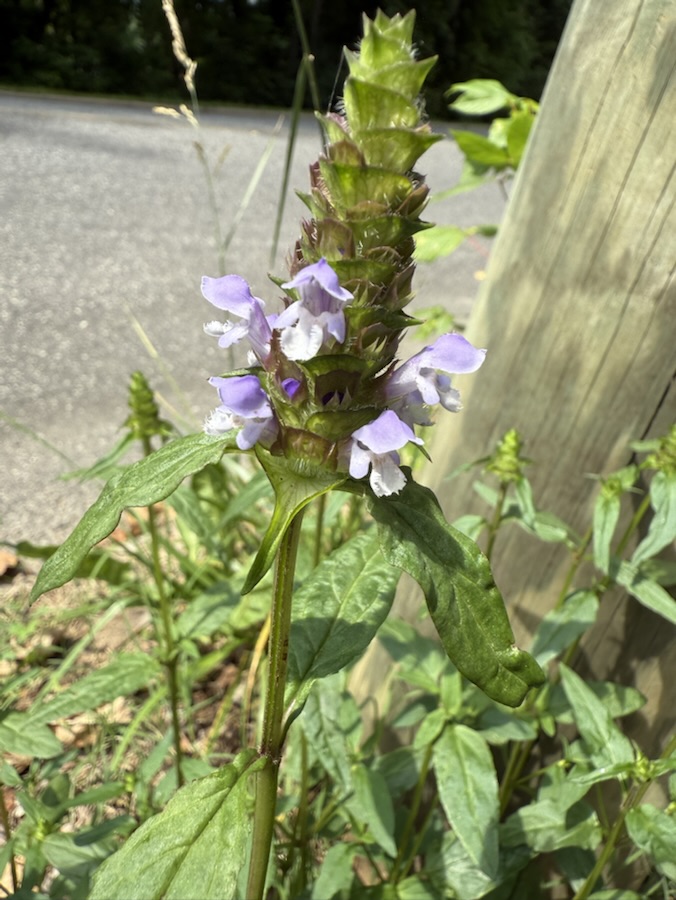
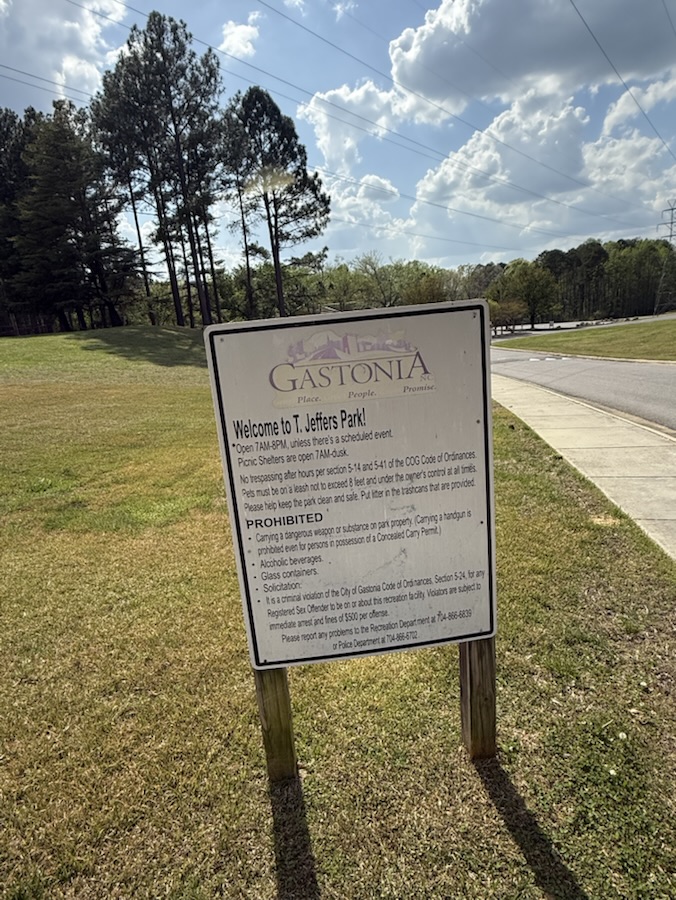
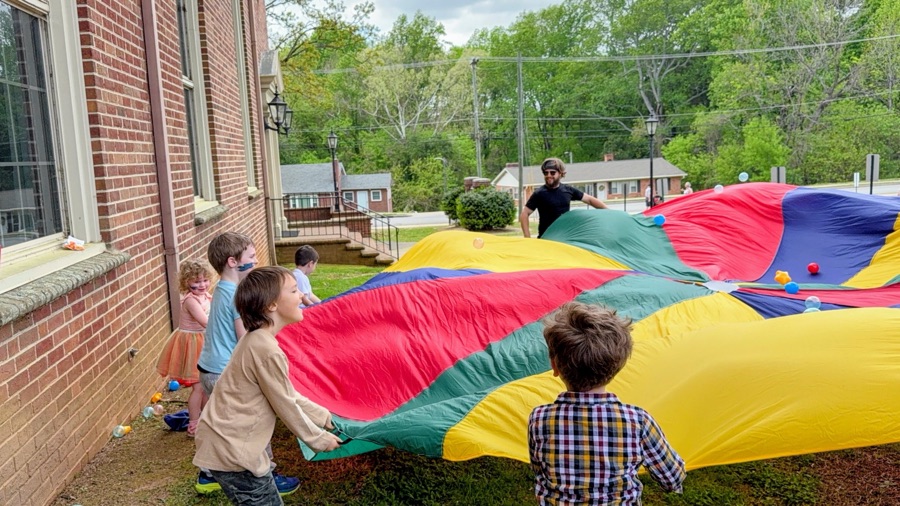
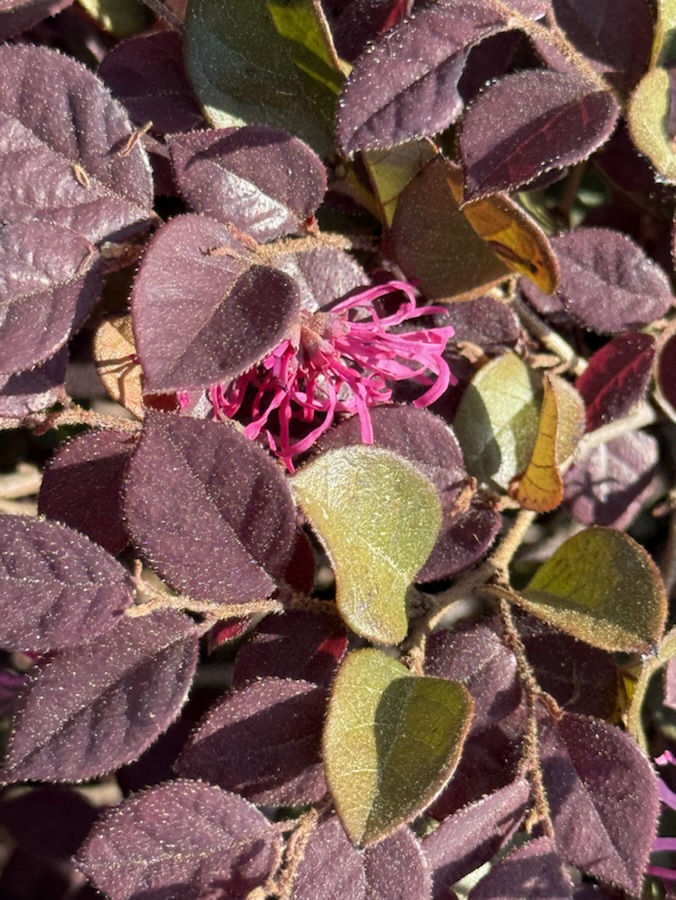
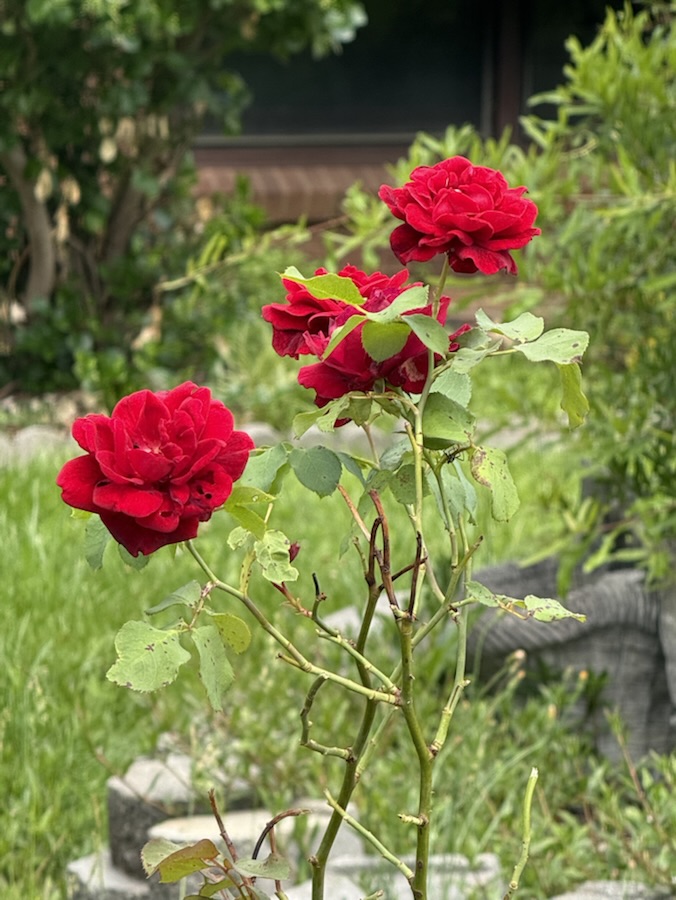
Mount Zion Restoration Church Rosa × damascena aka the Damask roseLoropetalum chinense, aka loropetalum, Chinese fringe flower and strap flowerT Jeffers CenterPrunella vulgaris, aka common self-heal, heal-allUnity Baptist Church Easter Activities CWWC Cee’s Which Way Challenge
Click on each image to enlarge.
Thank you to those who have participated and supported the Which Ways Challenge. I appreciate y’all sharing your Which Ways with us.
For an idea of other’s Which Ways from this past week’s challenge, be sure to click on the following links below.
Welcome back to another Which Way Challenge (CWWC). I trust everyone has had a good week and able to spend some time to take a walk or hike in the vast outdoors. This week’s theme for the Which Way Challenge is CWWC: Any Which Way with Yellow along a Trail, Path, or Road. The Which Way can be any Trail, Path or Road as long as the Which Way is clearly discernible. As always signs are always welcome.
For this week’s Which Way Challenge I am linking with Dan’s Fun Foto Challenge (CFFC) – The Crayola Box of 8 Yellow. Please feel free to connect with his post by clicking here.
For further information regarding the Which Way Challenge (CWWC) feel free to check out the home page here.
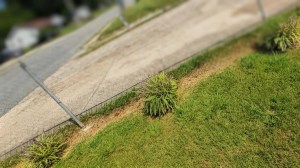
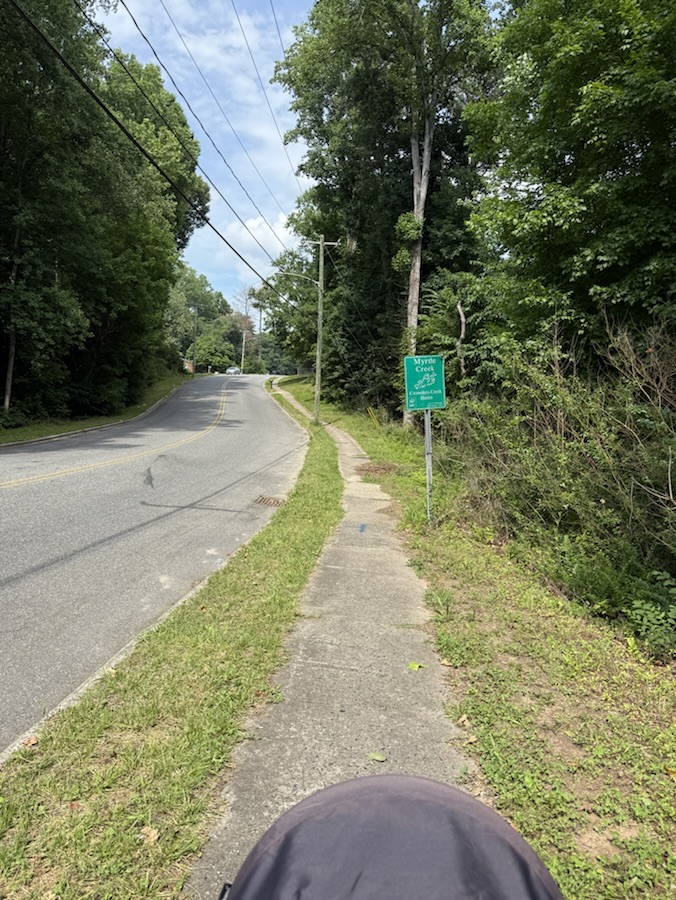
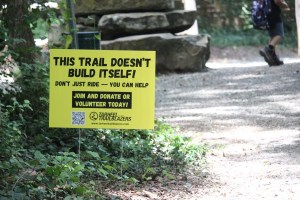
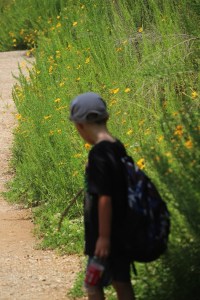
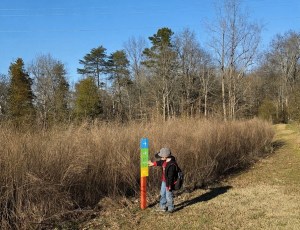
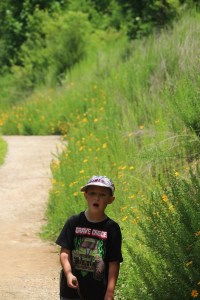
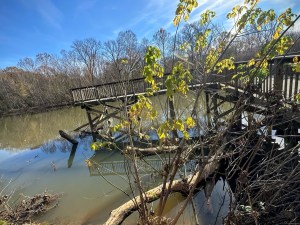
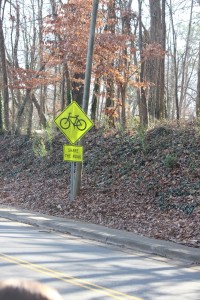
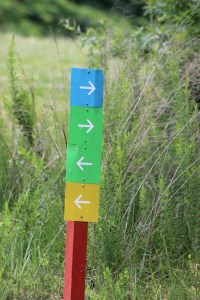
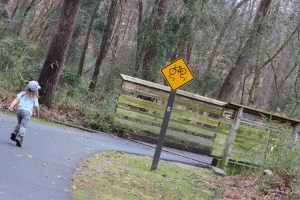
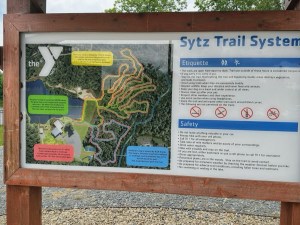
Sytz Trail System Warlick Family YMCAColeman on the Rock Wall at The Schiele Museum of Natural History’s Nature Trail Riverwalk Trail, aka Piedmont Medical Center Trail Coleman Piedmont Medical Center Trail Rock Hill, SCRoad signs on way to the Historic Baltimore Fishing Pier Cramerton, NCColeman & his mom on Haigler Loop Anne Springs Close Greenway Fort Mill, SCYellow Flowers along Rocky Branch Trail Cramerton, NCYellow Sign on Avon and Catawba Creeks Greenway Daniel Stowe Conservancy (formerly known as Daniel Stowe Botanical Garden)DSBG Eastern Bluebird Trail Daniel Stowe ConservancyBelmont, NCYMCA Trail Sign Gastonia, NCYellow Flowers along Rocky Branch Trail Cramerton, NCColeman by a YMCA Trail signYellow Bush Lineberger Park Gastonia, NCRocky Branch Trail Belmont, NCYellow Leaves by the Pier Riverside Park and Greenway Cramerton, NCWhich Way Challenge (CWWC) 2026: Any Which Way with Yellow along a Trail, Path, or Road
And as a Bonus I’m adding a few Yellow Flowers … For Cee’s Flower of the Day, Bren’s Floral Friday, & Terri’s The #Flower Hour.
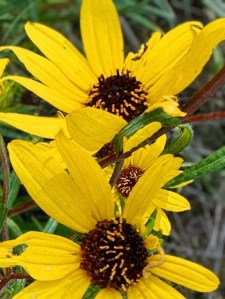
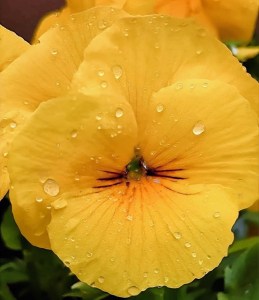
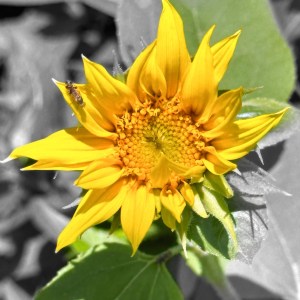
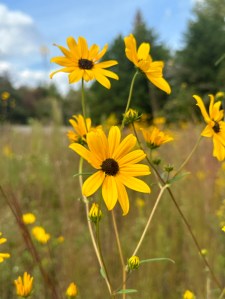
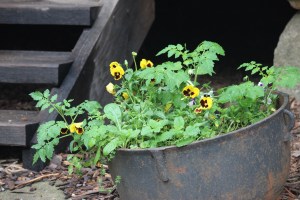
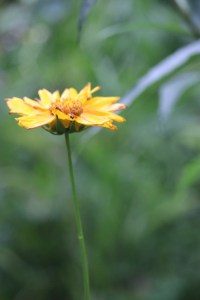
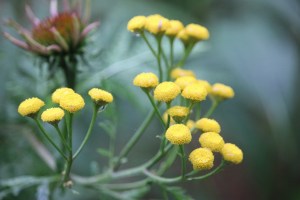
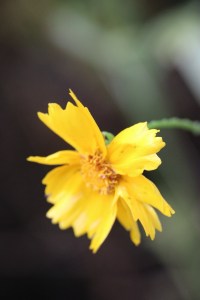
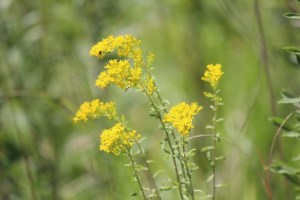
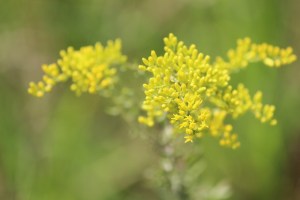
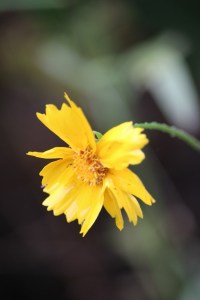
Yellow Pansies The Schiele Museum BrassicaSolidago nemoralis Heliopsis helianthoides, aka rough oxeye, smooth oxeye and false sunflower.Heliopsis helianthoides, aka rough oxeye, smooth oxeye and false sunflower.Coreopsis lanceolata L. Aka Lanceleaf Coreopsis,Lance-leaved Coreopsis, Lanceleaf Tickseed, Sand CoreopsisBarbarea vulgaris, aka Yellow Rocket Yellow RocketcressTansy (Tanacetum vulgare)Solidago nemoralis, aka gray goldenrod, prairie goldenrod, & dyersweed goldenrodCee’s Flower of the Day, Bren’s Floral Friday, & Terri’s The #Flower Hour
Click on each image to enlarge.
Thank you to those who have participated and supported the Which Ways Challenge. I appreciate y’all sharing your Which Ways with us.
For an idea of other’s Which Ways from this past week’s challenge, be sure to click on the following links below.
God Bless. Get Outdoors. Take a Walk/Hike. Enjoy Nature’s Beauty. Thank you for visiting and sharing your time and thoughts with us. I appreciate y’all very much.
*** Note Next Week’s theme: CWWC: Any Which Way in Your Neighbourhood
Camera: Canon EOS Rebel T7 (2000D) with Canon EF-S55-250mm lens and Altura UV Filter attachment.
Location: The Garden in The Farm; The Schiele Museum of Natural History; Gastonia, North Carolina, USA
God Bless. May your day be filled with love, peace, happiness and an abundance of laughter. Thank you for visiting and sharing your time and thoughts with us. I appreciate y’all very much.
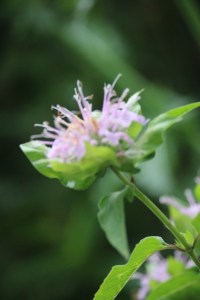
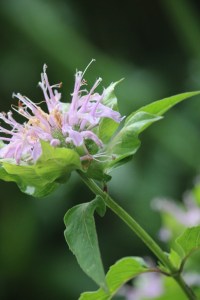
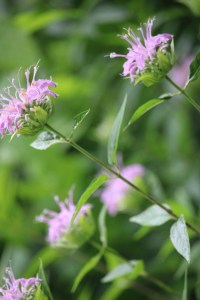
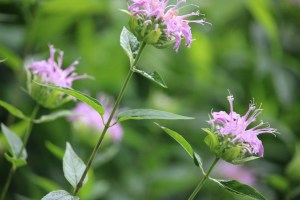
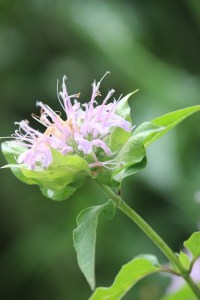
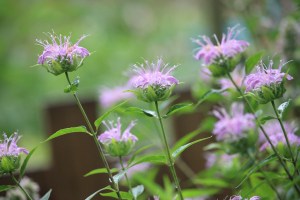
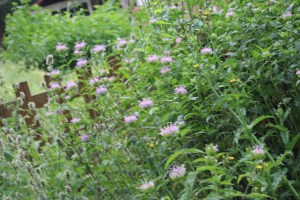
Monarda fistulosa (Wild Bergamot) is also referred to as wild bee balm, Appalachian Bergamot, Eastern Bergamot. It is a hardy, perennial wildflower native to North America and is in the mint genus family. It has distinctive lavender-pink blossoms, aromatic foliage which has an exceptional ability to attract pollinators and historically has been used for medicinal purposes.
It serves as a pollinator magnet drawing an enormous amount of bumblebees, native bees, predatory wasps, and butterflies. [The Garden where these are planted also has a section of four beehives with plenty of bees to help pollinate the flowers grown therein.]
For those interested in expanding their palates, you might want to try tasting its edible leaves and flowers. They add a spicy, citrusy, oregano-like kick to salads, jellies, and meat dishes. Also may note that historically the leaves have been used, by indigenous peoples, to brew teas to treat colds, flus, and digestive issues.
Wild bergamot (Monarda fistulosa) Terri’s The #Flower Hour
Camera: Canon EOS Rebel T7 (2000D) with Canon EF-S55-250 mm lens and Altura UV Filter attachment.
Location: The Garden; In The Farm; The Schiele Museum of Natural History; Gastonia, North Carolina, USA
God Bless. Admire the Flowers and the beauty found in nature. Have a fantastic week. Thank you for visiting and sharing your time and thoughts with us. I appreciate y’all very much.
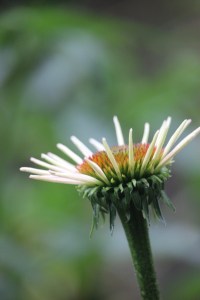
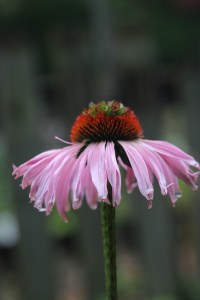
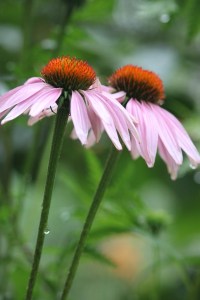
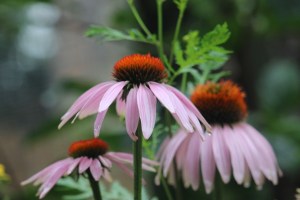
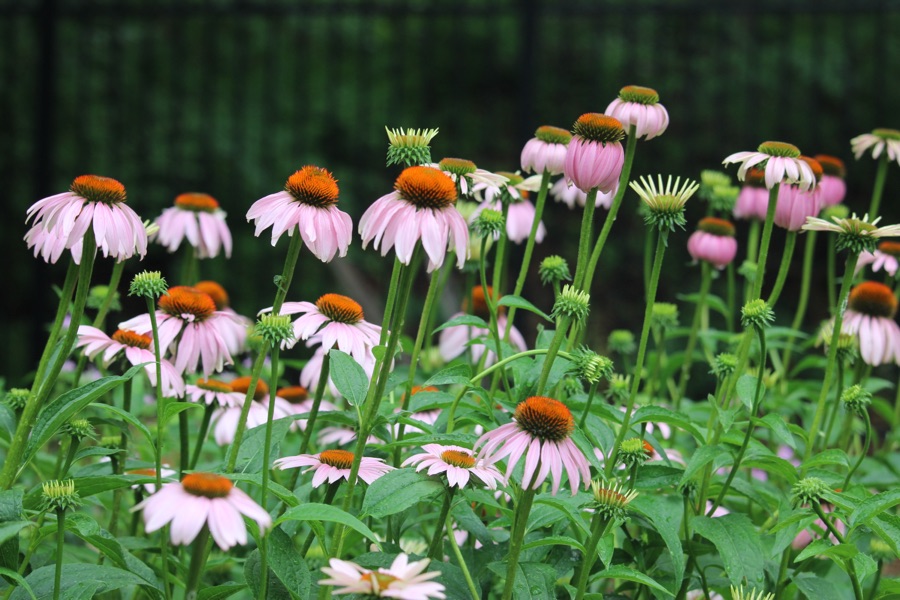
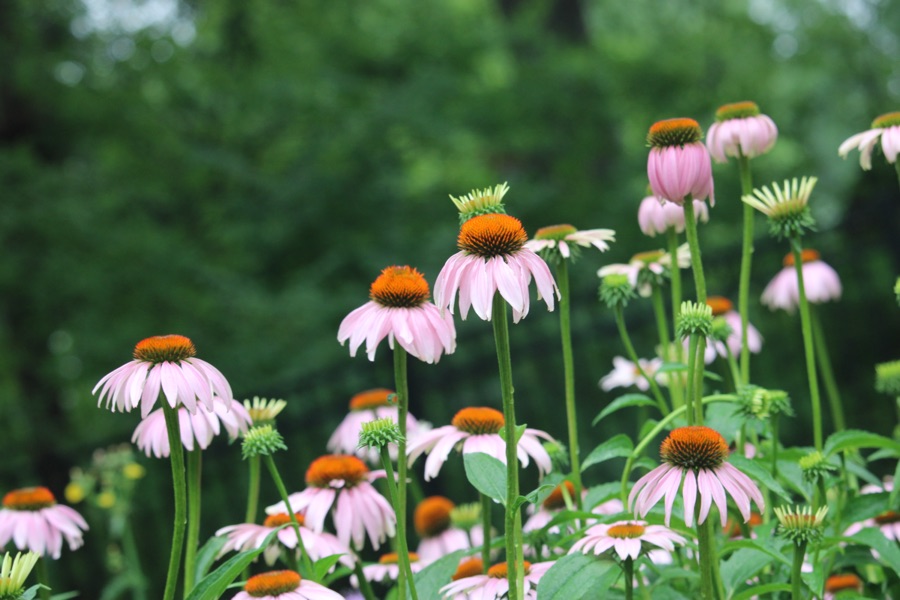
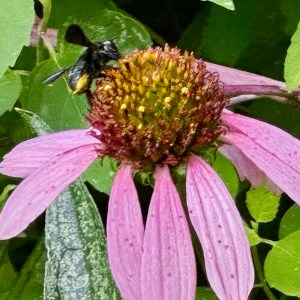
Unlike Terri or Brian, I have not seen any dogwood trees lately. I have, however, recently visited the Garden inside The Farm at The Schiele Museum of Natural History with a lovely variety of plants and flowers. I am focusing on the beautiful Echinacea purpurea, more commonly known as Purple Coneflower or Eastern Purple Coneflower.
One Purple Coneflower
Coneflowers are a popular native floral in a number of gardens (both private and commercial) in our part of the Eastern United States. They are a drought-tolerant perennial with daisy-like flowers. (It is a good thing these plants are drought tolerant since we are currently under water restrictions due to insufficient rainfall (even though it has rained here all week).
Two Purple Coneflowers
The coneflowers thrive in full sunlight and well-drained soil. All the plants and flowers in this garden are well cultivated and cared for. They have a long lasting blooming season from Summer throughout Autumn. Even though it is still Spring in our area, we have had summer-like weather and the coneflowers and other plants are thriving.
A Trio of Purple Coneflower
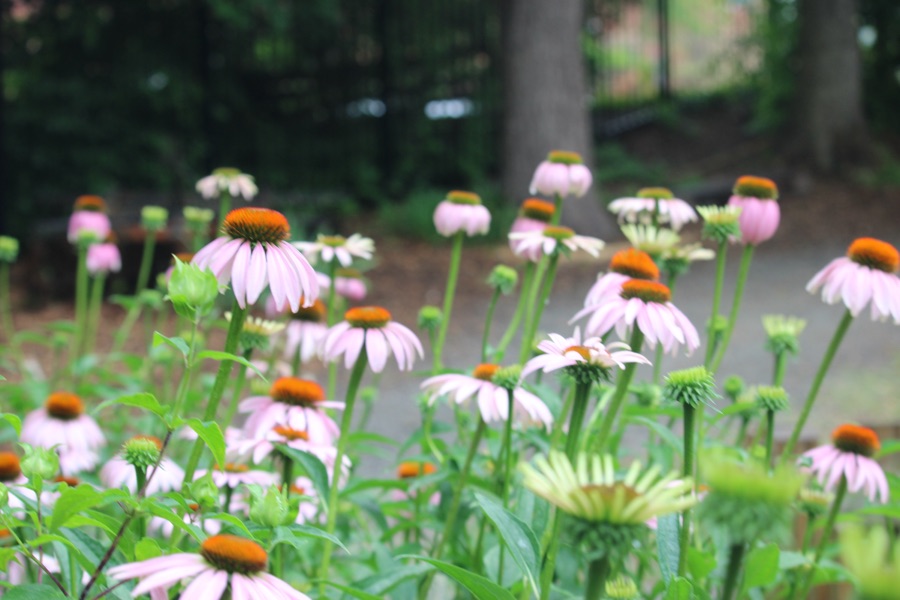
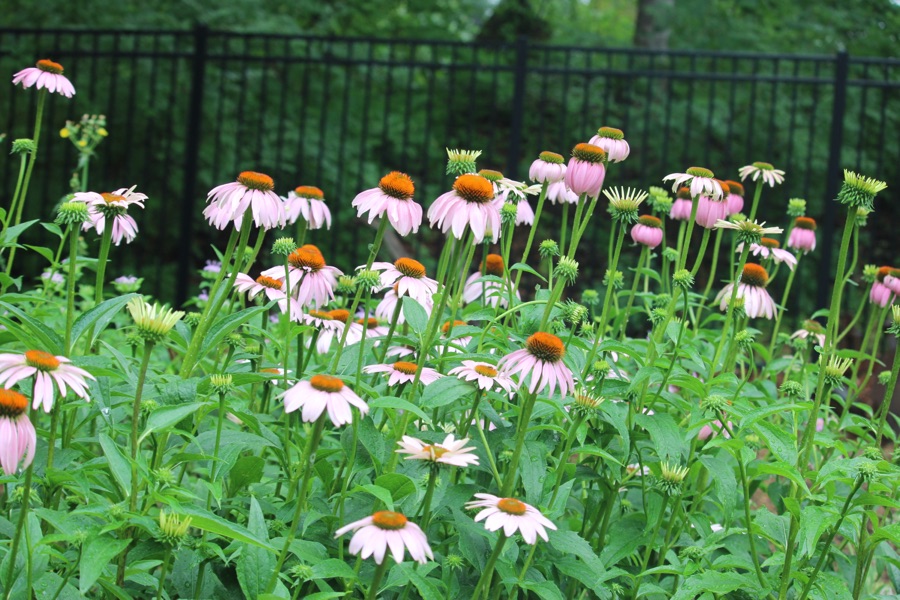
This year the garden’s Purple Coneflowers are in abundance and are a delightful attraction for pollinators (like butterflies & the bees in residence at the Farm) and provide seeds for birds. Coneflowers classic colour is purple, however, they also come in a variety of shades of pink, yellow, white, and orange.
A Gallery of Purple Coneflowers in a Garden
An interesting fact about the coneflowers is that every part of the plant is edible. Now I have not tried eating them as of yet, but the vibrant petals are said to have a mild, sweet , floral flavour. They make a colourful garnish for salads, desserts, or charcuterie boards. The young. tender leaves can be eaten raw in salads or cooked similarly to spinach. While the coneflowers are considered safe and nontoxic for humans and pets, you would want to avoid high doses due to the fact it is possible for them to cause upset stomachs. For further information about its culinary and medicinal uses check out Eat the Planet.
Camera: Canon EOS Rebel T7 (2000D) with Canon EF-S55-250 mm lens and Altura UV Filter attachment.
Location: The Garden; In The Farm; The Schiele Museum of Natural History; Gastonia, North Carolina, USA
God Bless. Admire the Flowers and the beauty found in nature. Have a fantastic week. Thank you for visiting and sharing your time and thoughts with us. I appreciate y’all very much.
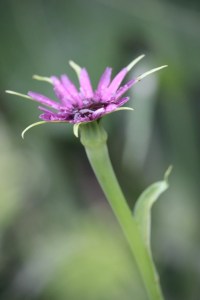
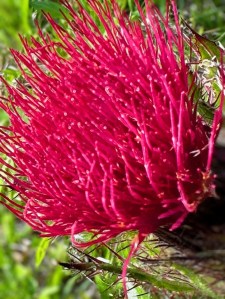
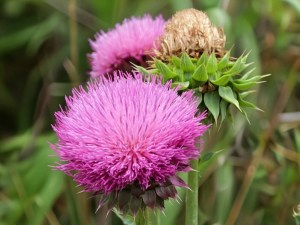
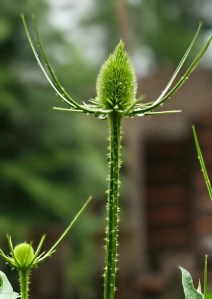
The Teasel pictured here are grown in a garden at The Farm at The Schiele Museum of Natural History. The Garden also has purple coneflowers, Oakleaf hydrangeas, Roses, Wild Bergamot, Lettuce, Cabbage, and many more varieties some of which will be featured in later posts.
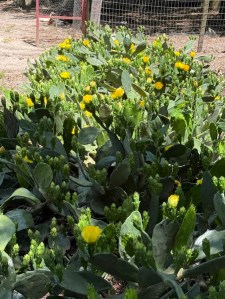
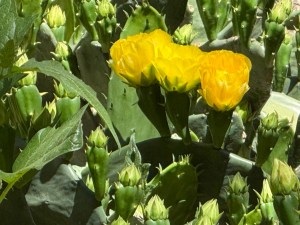
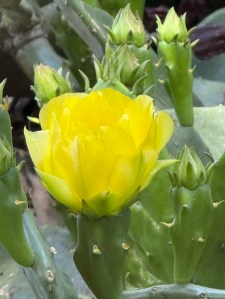
The Eastern Prickly Pear, (Opuntia humifusa), is a cactus of the genus Opuntia. It is present in parts of the Eastern United States, southeastern Canada, and northern Mexico.
A Trio of Eastern Prickly Pear Flowers
It is a low-growing, cold hardy cactus that stands as the only widespread native cactus in the eastern United States region. It is widely celebrated for its ability to survive freezing winter temperatures, its vibrant summer blooms, and its completely edible parts.
Eastern Prickly Pear Cactus Blooms
Normally, it is stated the blooms appear around June-July. We have been having some extremely hot weather lately (feels like summer instead of spring). Guess nobody told the Eastern Prickly Pear Cactus Blooms they weren’t supposed to bloom for another month.
After the cacti produce their flowers, it produces oblong, purplish-red edible fruits often referred to as “pear apples”. Wonder how tasty they’ll be.
God Bless. Admire the Flowers and the beauty found in nature. Have a fantastic week. Thank you for visiting and sharing your time and thoughts with us. I appreciate y’all very much.
Location: Unity Community; Gastonia, North Carolina, USA
God Bless. Have a funtastic weekend. Enjoy the Spring Florals. Thank you for visiting and sharing your time and thoughts with us. I appreciate y’all very much.
God Bless. Happy Mother’s Day to all the Mothers, and men don’t forget to honor the women in your life. Thank you for visiting and sharing your time and thoughts with us. I appreciate y’all very much.
Location: Unity Community; Gastonia, North Carolina, USA
God Bless. Have a funtastic weekend. Enjoy the Spring Florals. Thank you for visiting and sharing your time and thoughts with us. I appreciate y’all very much.
Camera: Canon EOS Rebel T3i with Canon EF-S55-250mm lens
Location: The Farm; The Schiele Museum of Natural History; Gastonia, North Carolina, USA
God Bless. Have a funtastic weekend. Enjoy the Spring Florals. Thank you for visiting and sharing your time and thoughts with us. I appreciate y’all very much.
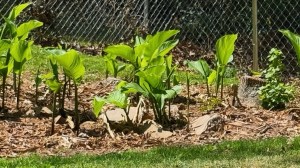
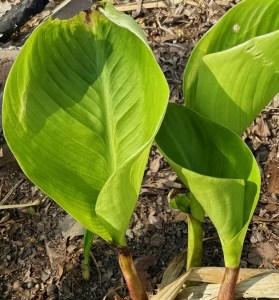
The Symplocarpus foetidus, aka Eastern skunk cabbage, is growing in a small garden of our rental home. When I first saw the plants in the small garden I wasn’t sure what type of plant they were.
Aka Eastern Skunk Cabbage
The Eastern Skunk Cabbage is a native North American wildflower. It is known for being among the first plants to emerge in late winter.
Close-up view
It is a low-growing plant that grows in wetlands (Why here, I’m not sure. We definitely don’t live in a wetland area. We did have snow and ice storms this winter though.) and moist hill slopes (the area it’s planted in is more or less flat) of eastern North America.
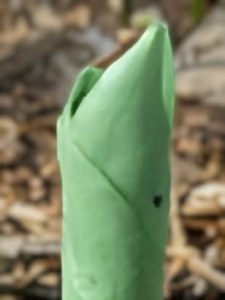
A single unopened plant
We moved here evidently after the plants had already bloomed. When in blooming season, the plant produces a foul-smelling, maroon-and-green mottled spathe (hood) that covers its flowers, attracting pollinators like flies and beetles with its heat and odour. Its foul-smelling odour is the main reason it is called “Skunk Cabbage.”
Once the Eastern Skunk Cabbage flowers, then large, cabbage-like leaves unfurl, and the plant is toxic if ingested raw, causing burning and swelling.
Location: Backyard Garden; Gastonia, North Carolina, USA
God Bless. Have a funtastic weekend. Enjoy the Spring Florals. Thank you for visiting and sharing your time and thoughts with us. I appreciate y’all very much.
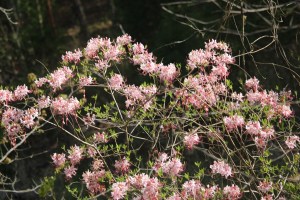
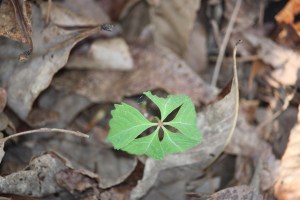
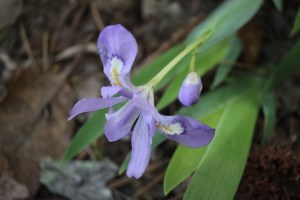
This is an excellent week for combining The Flower Hour, Spring Festival 2026 Week 4, while remembering Bren’s Floral Friday and Cee’s Flower of the Day challenges. As stated in my CWWC/CFFCpost Coleman and I hiked the Lake Crawford Trail at Kings Mountain State Park. The trail was displaying an impressive array showing colourful signs of Spring.
Here are a few pics of Spring signs we saw on our Hike …
Terri’s The Flower Hour Dawn’s Spring Festival 2026 Week 4 Bren’s Floral Friday Cee’s Flower of the Day (FOTD)

Camera: Canon EOS Rebel T7 (2000D) with Canon EF-S55-250mm lens and Altura UV Filter attachment.
Location: Lake Crawford Trail; Kings Mountain State Park; Blacksburg, South Carolina, USA
God Bless. Have a funtastic weekend. Enjoy the Spring Florals. Thank you for visiting and sharing your time and thoughts with us. I appreciate y’all very much.
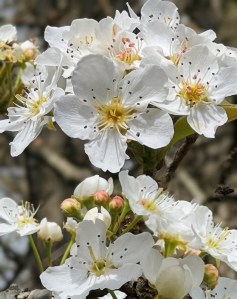
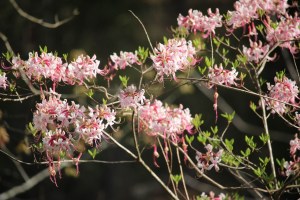
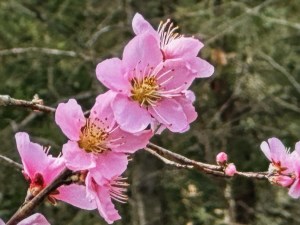
On our walk this afternoon Coleman and I saw several flowering trees on our way to the T Jeffers Center. One stood out on the corner across from T. Jeffers Park.
Location: Near T. Jeffers Center; Gastonia, North Carolina, USA
God Bless. Stop and admire Nature’s Beauty. Take a walk Enjoy the Outdoors. Thank you for visiting and sharing your time and thoughts with us. I appreciate y’all very much.
Welcome back to another Which Way Challenge (CWWC). This week I have chosen for thetheme – Any Which Way with Spring or Autumn Which Ways (Will Run for Two (2) Weeks [03.27-04.03.2026]) for this week’s theme. The Which Way can be any Dirt trail, road, pathway, sidewalk as long as the Which Way is clearly discernible. As always signs are always welcome.
For further information regarding the Which Way Challenge (CWWC) feel free to check out the home page here.
Here are my entries …
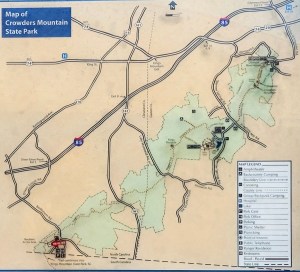
I’m starting off with a Springtime hike at Crowders Mountain State Park in Kings Mountain, North Carolina. We entered Crowders Mountain State Park from the Boulders Access Point. After parking and gathering our backpacks with our water and snacks we checkered out the trail map.
We decided to hike the Ridgeline Trail. The Ridgeline Trail connects three parks, namely Crowders Mountain State Park, Kings Mountain State Park, and Kings Mountain National Military Park. The total length of the trail if you hike to all three is 15.1 miles with an elevation gain of 2,411 feet. The Crowders Mountain State Park section of the Ridgeline Trail is 6.2 miles long.
Coleman and I only hiked the Crowders Mountain State Park section of the Ridgeline Trail and then hiked back to the Boulders Access Point parking area.
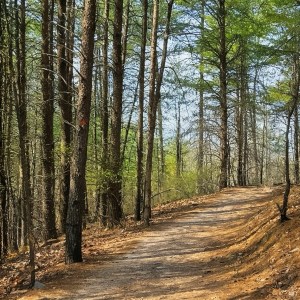
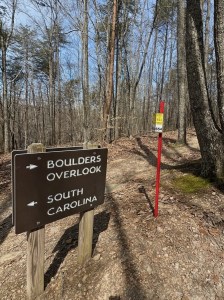
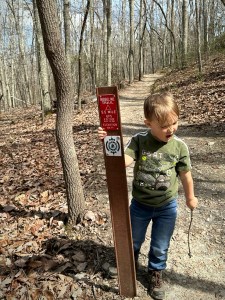
Ridgeline Trail Boulders Access Point Crowders Mountain State Park Kings Mountain, North Carolina
Now that we’ve seen one of our Springtime hikes, let’s take a look at a variety of Spring Florals seen while hiking on various hiking trails.
Spring Florals on Trails
Click on each image to enlarge.
Thank you to those who have participated and supported the Which Ways Challenge. I appreciate y’all sharing your Which Ways with us.
For an idea of other’s Which Ways from this past week’s challenge, be sure to click on the following links below.
God Bless. Enjoy a stroll in the vast outdoors. Have a funtastic weekend. Thank you for visiting and sharing your time and thoughts with us. I appreciate y’all very much.
Note: The theme for the next will be a continuation of CWWC: Any Which Way with Spring or Autumn Which Ways ( Will Run for Two (2)Weeks [03.27-04.03.2026]
Camera: Canon EOS Rebel T3i with Canon EF-S55-250mm lens
Location: The Rooftop Garden; The Schiele Museum of Natural History; Gastonia, North Carolina, USA
God Bless. Admire the Flowers and the beauty found in nature. Thank you for visiting and sharing your time and thoughts with us. I appreciate y’all very much.

Location: Cramerton Drugstore Landscape; Cramerton, North Carolina. USA
God Bless. Get Outdoors. Enjoy Nature. Have a wonderful week. Thank you for visiting and sharing your time and thoughts with us. I appreciate y’all very much.

Lost Hollow is a section in Daniel Stowe Botanical Garden specifically designed for children. It is also known as The Kimbrell Children’s Garden.
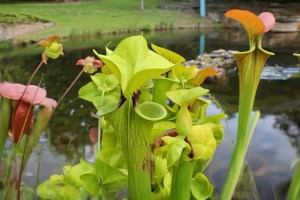
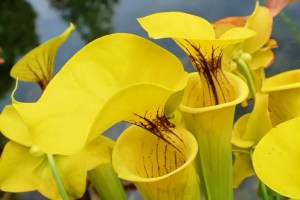
Trumpet pitcher Sarracenia
The garden incorporates nature-inspired play spaces that encourage exploration and interaction with the surrounding environment. The Lost Hollow features an amphitheater, sunken pond, Moonkeep, play spaces and more for the imagination. This garden has been expanded since we last visited. It now includes a 0.4 mile Adventure Trail and Prairie Castle Playground for children to explore and enjoy.
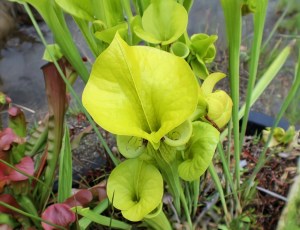
Sarracenia flava
Sarracenia (Trumpet pitchers) are carnivorous North American plants with hollow, trumpet-shaped leaves that trap and digest insects. They lure prey with nectar and bright colours by using slippery, downward-pointing hairs and digestive fluids to capture and absorb nutrients which helps to supplement their diet in low- nitrogen environments.
Yellow Trumpet
The Yellow Trumpets (Sarracenia flava) have tall yellow-green pitchers with red veins which can reach up to thirty (30) inches. Their colouring often changes from yellow-green to a bright yellow in the Springtime. These particular Yellow Trumpets grow near the pond in Lost Hollow.
Camera: Canon EOS Rebel T3i with Canon EF-S18-55mm lens
Location: Lost Hollow; Kimbrell Children’s Garden; Daniel Stowe Botanical Garden; Belmont, North Carolina, USA
God Bless. Admire the Flowers and the beauty found in nature. Thank you for visiting and sharing your time and thoughts with us. I appreciate y’all very much.
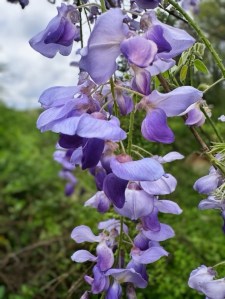
Camera: Canon EOS Rebel T3i with Canon EF75-300mm lens
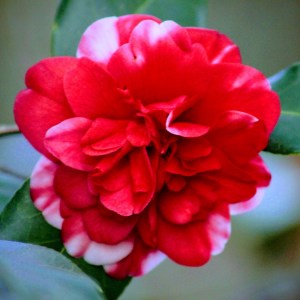
Location: Glencairn Garden; Rock Hill, South Carolina, USA
God Bless. Admire the Flowers and the beauty found in nature. Thank you for visiting and sharing your time and thoughts with us. I appreciate y’all very much.
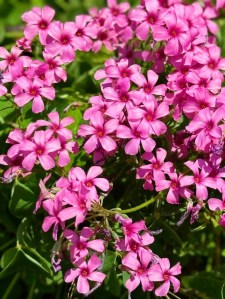
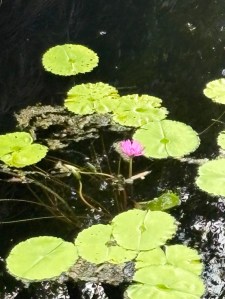
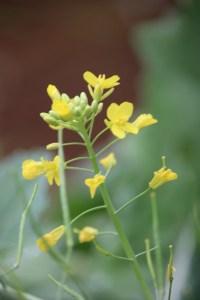
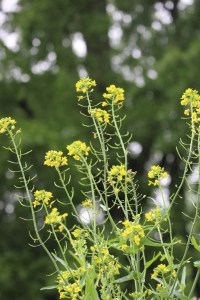
Looking back to February 2024, I took several shot of flowers in the garden at The Schiele Museum of Natural History in Gastonia, North Carolina.
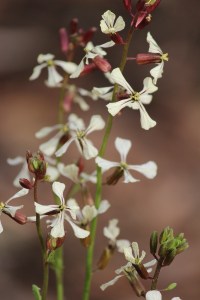
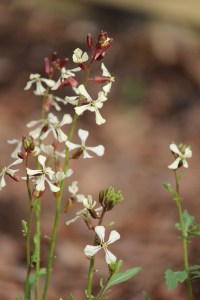
Aka Rocket
The Garden in the Farm at The Schiele Museum is filled with vegetables and flowers each year. New plants are planted from starters at the home of the Farm Caretaker and planted into the garden beds at the Farm. The vegetable plants and flowers are a beautiful sight to behold. The flowers are pollinated from the bees from the hives in the Farm located adjacent to the flower beds.
Aka Arugula
Before researching this plant, Eruca vesicaria, I had no idea that it had multiple common names including Rocket, and Arugula. I knew that Arugula is a green often used in salads, which when eaten has a slightly bitter taste. Arugula is a herb from the mustard family (not a lettuce even though I previously thought it was).
God Bless. Admire the Flowers and the beauty found in nature. Thank you for visiting and sharing your time and thoughts with us. I appreciate y’all very much.
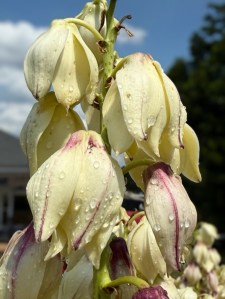
Our area is currently under a Winter Storm Watch, probability is more likely for a severe ice storm rather than receiving much in the form of snow even though some is possible. Hence, I have chosen to share from my archives. Dreaming of Spring and the warmer weather it will bring and the blooming of Spring flowers.
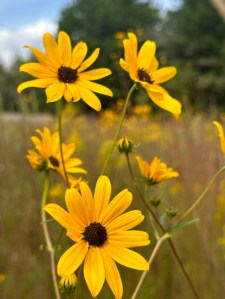
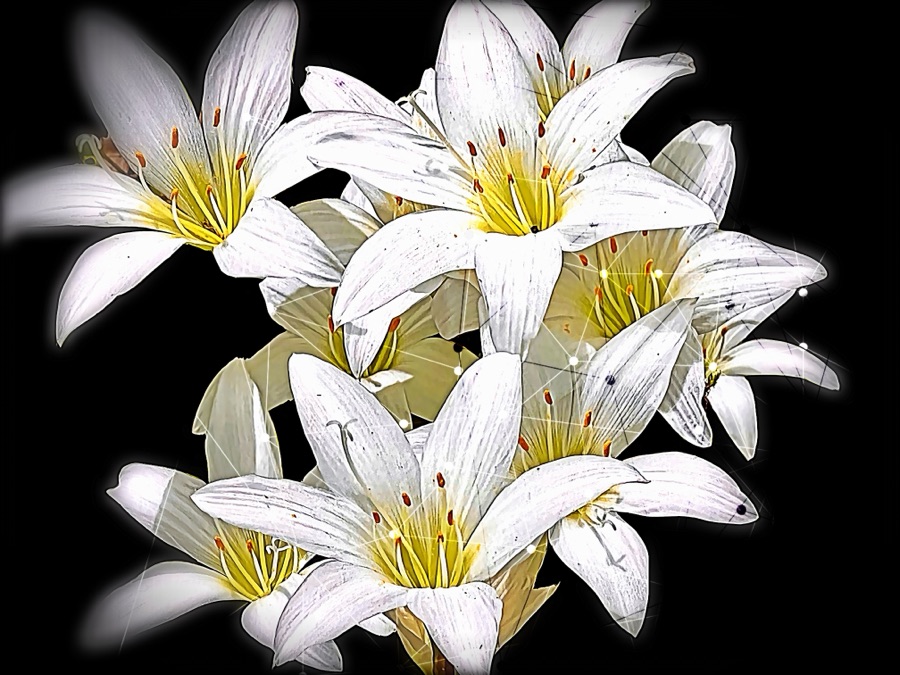
These are from a hike in April of 2022 at Landsford Canal State Park. I captured these on the way to a spectacular lookout point for Spider Lilies.
The scientific name for this species was originally placed, by Carl Linnaeus, in the genus Amaryllis using the epithet “Atamasca” in 1753. In the second edition of Species Plantarum, Linnaeuschanged the spelling to “Atamasco,” the Native American name for the species. The most recognized name for these flowers is Zephyranthes atamasca.
Zephyranthes atamasca
The Zephyranthes atamasca is native to the Southern United States of America. It tends to grow in swampy forests, and coastal prairies. Its blooming season begins in March or April. The blooms pictured grow along the shores of the Catawba River in Landsford Canal State Park. They can be seen while hiking along the Canal Trail.
God Bless. Admire the Flowers and the beauty found in nature. Thank you for visiting and sharing your time and thoughts with us. I appreciate y’all very much.