God Bless. Have a pleasant and peaceful weekend. May it be filled with love, happiness, and laughter. Thank you for visiting and sharing your time and thoughts with us. I appreciate y’all very much.
XingfuMama hosts the weekly challenge Whatsoever Is Lovely. The challenge is simple. Just reflect back over your week and see what is lovely, whether a thing or a moment, share in a post what is precious and lovely to you.
This week I am continuing with Whatsoever is Lovely to me; Beautiful Flowers & Butterflies #5. These images were taken on Coleman’s & my recent visit to the Daniel Stowe Botanical Garden in Belmont, North Carolina. The first area we visited was the Butterfly Bungalow. We had not previously visited the Butterfly Bungalowsince the times we’ve visited Daniel Stowe Conservancy before were in the Springtime.
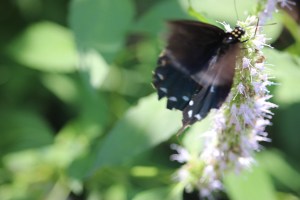
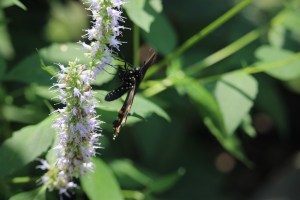
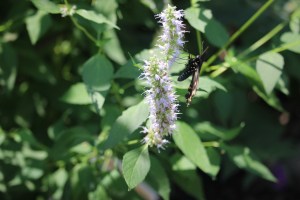
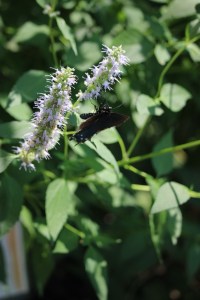
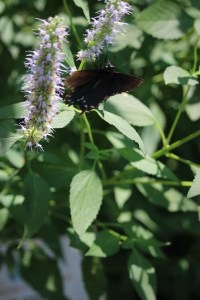
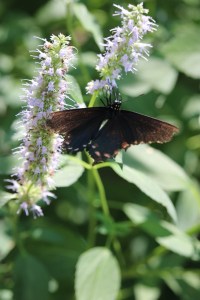
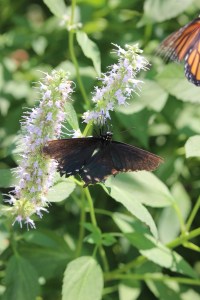
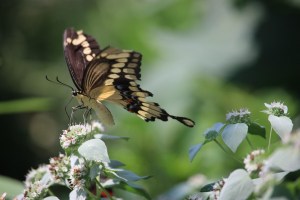
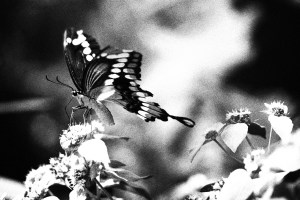
For this post I am focusing on the Spicebush Swallowtail (Papilio troilus), one of the many varieties of butterflies maintained within the Butterfly Bungalow at the Daniel Stowe Botanical Garden.
Spicebush Swallowtail (Papilio troilus)
The Spicebush Swallowtail (Papilio troilus) is a one of the most fascinating butterflies in eastern North America due to its specialized lifecycle, unique hosting plants, and their use of mimicry to survive.
Spicebush Swallowtail on Anise Hyssop (Agastache foeniculum)
The Papilio troilus, aka the Spicebush Swallowtail, or Green-clouded butterfly, is a common black Swallowtail butterfly only found in the Eastern United States and Southern Ontario, however, it can sometimes be seen in the American plains states, Cuba, Manitoba, and Colorado. .
Spicebush Swallowtail (Papilio troilus)
It is normally found in deciduous woods, or woody swamps. There they can be seen flying low and fast through shaded areas.
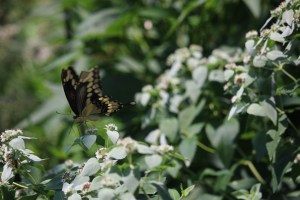
Spicebush Swallowtail
The Papilio troilus has two (2) subspecies, Papilio troilus troilus and Papilio troilus ilioneus. The Papilio troilus troilus is the one seen in this area and pictured in these images. Papilio troilus ilioneus is confined to the Southeastern coastal United States, mainly throughout Florida, along the coast of Georgia, and in places in Texas.
Spicebush Swallowtail (Papilio troilus)
The primary host plants for the Spicebush Swallowtail are most commonly the Spicebush ((Lindera benzoin) or WhiteSassafras (Sassafras albidum). Despite their preference to primarily feed Lauraceae plants, they do feed on Anise Hyssop (Agastache foeniculum), especially here in the Butterfly Bungalow. Anise Hyssop is widely known as one of the ultimate “pollinator magnets” that is typically added to gardens.
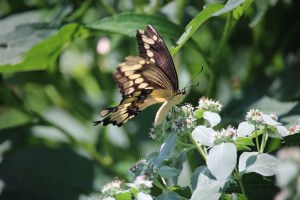
Spicebush Swallowtail on Anise Hyssop (Agastache foeniculum)
The Spicebush Swallowtail love the Anise Hyssop for its perfect landing pads. The dense, structural spikes are composed of hundreds of tiny, nectar-rich tubular flowers. The Spicebush Swallowtail can easily grasp the stalks with their legs while their long proboscis probes from bloom to bloom. They also love the Anise Hyssop for its continuous energy. Anise Hyssop has an exceptionally long blooming window,The plant typically produces fresh flowers from June through September.
This blooming season of the Anise Hyssop provides a vital, reliable energy source for late-summer generations of butterflies preparing to reproduce or move through woodland edges.
Spicebush Swallowtail (Papilio troilus) on Anise Hyssop (Agastache foeniculum)
Camera: Canon EOS Rebel T7 (2000D) with Canon EF-S55-250mm lens.
Location: Butterfly Bungalow; Daniel Stowe Botanical Garden; Bely, North Carolina, USA
God Bless. Have a lovely weekend filled with love, joy, and laughter. Thank you for visiting and sharing your time and thoughts with us. I appreciate y’all very much.
XingfuMama hosts the weekly challenge Whatsoever Is Lovely. The challenge is simple. Just reflect back over your week and see what is lovely, whether a thing or a moment, share in a post what is precious and lovely to you.
This week I am continuing with Whatsoever is Lovely to me; Beautiful Flowers & Butterflies #3. These images were taken on Coleman’s & my recent visit to the Daniel Stowe Botanical Garden in Belmont, North Carolina. The first area we visited was the Butterfly Bungalow. We had not previously visited the Butterfly Bungalowsince the times we’ve visited Daniel Stowe Conservancy before were in the Springtime.
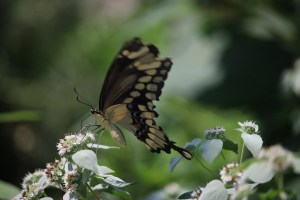
For this post I am focusing on the Giant Swallowtail (Polygonia comma). The Giant Swallowtail is the largest butterfly located in North America. It is known for its black wings with striking yellow stripes and its large wingspan. The Giant Swallowtails can have a massive wingspan of up to six (6) inches long.
Interestingly, their abdomen and outer wings are a light yellow shade with red and blue markings along the bottom of their wings while they have black and yellow stripes directly above their heads.
These Giant Swallowtails (Polygonia comma) are also referred to as Eastern Comma. They can typically be seen in shaded areas or near bodies of water. The Eastern Comma feed on sap, rotting fruit, dung, salt and minerals. They are a confident , aggressive, and social butterfly.
These Giant Swallowtails are feasting on Pycnanthemum incanum, aka Hoary Mountain Mint. The Mountain Mint is a hardy, aromatic perennial in the mint family which is native to eastern North America. It is known for its silvery-white foliage with clusters of small white to lavender flowers that bloom during the summertime. It is an excellent magnifier pollinators like bees, butterflies, and wasps. (I prefer watching the butterflies to bees or wasps.)
These pictured here are maintained in the controlled environment of the Butterfly Bungalow inside the Gardens of Daniel Stowe Botanical Garden in Belmont, North Carolina.
Camera: Canon EOS Rebel T7 (2000D) with Canon EF-S55-250mm lens.
Location: Butterfly Bungalow; Daniel Stowe Botanical Garden; Bely, North Carolina, USA
God Bless. Have a lovely weekend filled with love, joy, and laughter. Thank you for visiting and sharing your time and thoughts with us. I appreciate y’all very much.
XingfuMama hosts the weekly challenge Whatsoever Is Lovely. The challenge is simple. Just reflect back over your week and see what is lovely, whether a thing or a moment, share in a post what is precious and lovely to you.
Summertime in the Carolinas is extremely hot and humid, too hot to want to walk around outside. However, it is the best time of year to view and watch the amazing fluttering of beautiful Butterflies. What better way to observe them than in an enclosed Butterfly Bungalow.
That’sexactly what Coleman and I did on Wednesday. It was wonderful and oh so lovely to watch the Butterflies flittering around. They move so fast it was difficult to keep up with them to photograph them.
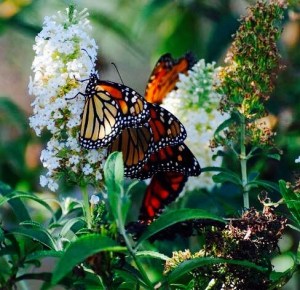
Here’s a few Butterflies flitting to and fro enjoying the nectar of their favourite flowers.
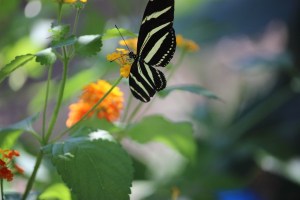
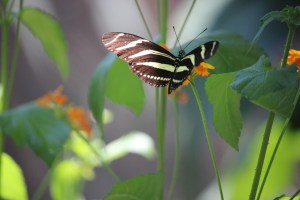
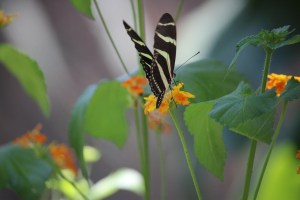
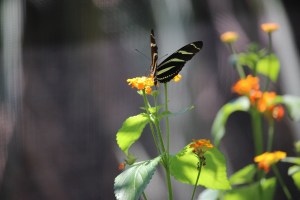
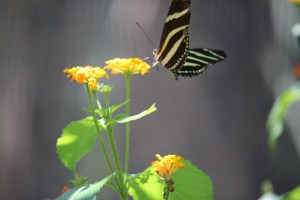
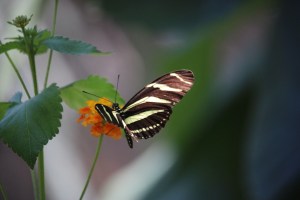
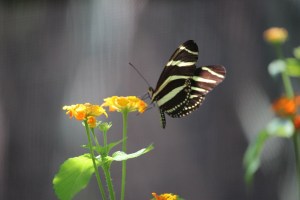
This week’s featured Butterfly is the Heliconius charithonia, also known as Zebra Longwing or Zebra heliconian. It is distinctively known for its long, black wings with pale yellow stripes. Their wing pattern serves as a warning to potential predators that their toxicity.
One thing which is unique to the Zebra Longwing is that the adult butterflies feed on both nectar and pollen. The pollen enables them synthesize cyanogenic glycosides which makes their bodies toxic to predators.
The Zebra Longwing Butterflies may be spotted in South America, Central America, the West Indies, and the Southeastern United States. Adults will migrate into the Carolinas during the warmer summer months. These pictured here are maintained in the controlled environment of the Butterfly Bungalow inside the Gardens of Daniel Stowe Botanical Garden in Belmont, North Carolina.
Camera: Canon EOS Rebel T7 (2000D) with Canon EF-S55-250mm lens.
Location: Butterfly Bungalow; Daniel Stowe Botanical Garden; Bely, North Carolina, USA
God Bless. Have a lovely weekend filled with love, joy, and laughter. Thank you for visiting and sharing your time and thoughts with us. I appreciate y’all very much.
Red-spotted Purple – Limenitis arthemis. Limenitis is a genus of brush-footed butterflies, commonly called the admirals.Asterocampa Celtis the hackberry emperor, is a North American butterfly that belongs to the brushfooted butterfly family, Nymphalidae. It gets its name from the hackberry tree.Papilio Glaucus the eastern tiger swallowtail, is a species of butterfly native to eastern North America.