Woolly Mammoth statue & Coleman Gaston County Dino Trail The Schiele Museum of Natural History
I thought about telling you all about Woolly Mammoths, but then I remembered something else about this particular Woolly Mammoth Statue. What did I remember? This Woolly Mammoth statue is one (1) of twenty-one Prehistoric Dinosaur statues along the Gaston County Dino Trail. This Prehistoric journey across Gaston County is a way for the county to celebrate The Schiele Museum’s new Elizabeth Williams RobinsonHall of Dinosaurs.
Pick up a map for the Dino Trail at The Schiele Museum or any one of the participating businesses and attractions. At each location you may collect Dinosaur Trading Cards and discover prehistoric surprises.
Gaston County Dino Trail
The Dino Trail runs from September 1st through December 31st. To find out more information about the Dino Trail and/or The Hall of Dinosaurs click here.
The Garden at the Schiele Museum of Natural History is ever changing with the seasons and years. The Gardens are maintained by museum staff, Community Volunteers and Interns, and the volunteer efforts of the Master Gardener Group of Gaston County.
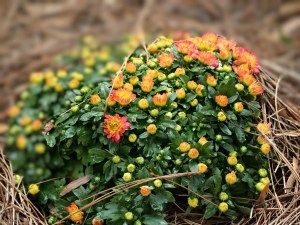
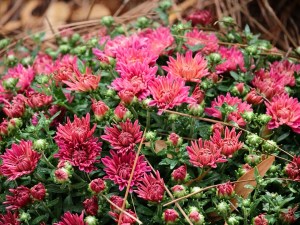
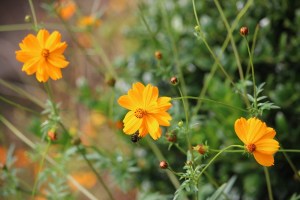
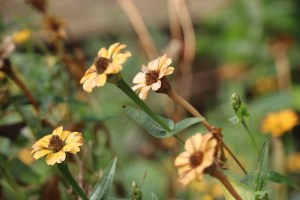
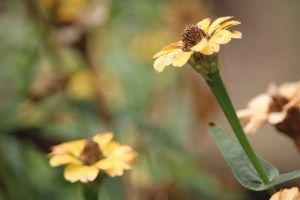
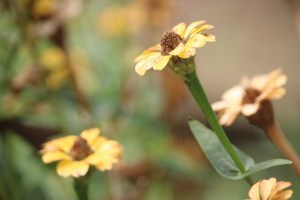
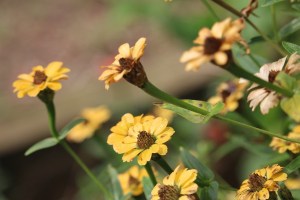
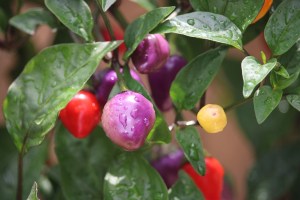
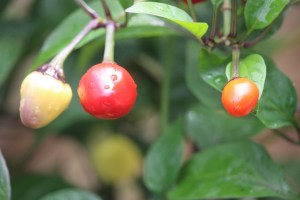
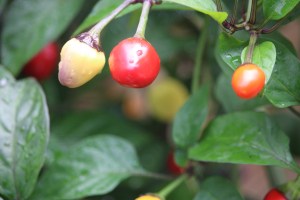
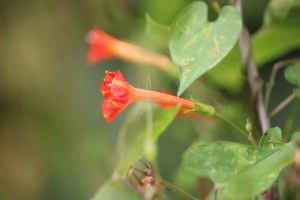
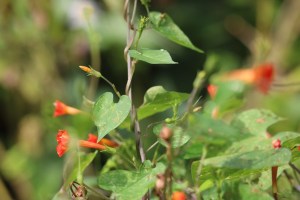
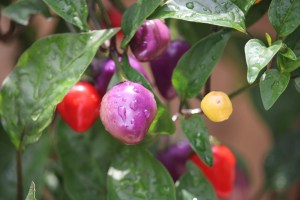
This season we have plenty of Cosmos sulphureus, aka Sulfur cosmos; Zinnia peruviana, aka the Peruvian zinnia; Ornamental peppers, and Ipomoea coccinea aka Red Morning Glory. They are beautiful flowers to enjoy and admire, but not as many florals as in previous years.
Walking towards The Farm from the parking lot we first spot these lovely Cosmos sulphureus …
Cosmos sulphureus, aka sulfur cosmos
A Beautiful Cosmos Trio
Walking around inside The Farm’s enclosed area, after visiting the goats, we spot these lovely Zinnia peruviana flowers …
As we walk through the Garden area in The Farm we notice several Ornamental Pepper plants and then a few Red Morning Glories. The peppers are so pretty and colourful that you can’t help, but be drawn to their natural beauty. While the Red Morning Glories are so small you might miss them if you weren’t truly searching for the wonderful flowers within the garden.
Camera: Canon EOS Rebel T7 (2000D) with Canon EF-S55-250mm lens and Altura UV Filter attachment.
Location: The Gardens; The Farm; Tge Schiele Museum of Natural History; Gastonia, North Carolina, USA
God Bless. Admire the Flowers and the beauty found in nature. Thank you for visiting and sharing your time and thoughts with us. I appreciate y’all very much.
Brian from Bushboys Worldhosts a monthly challenge called Last On the Card. His rules are simple to follow if you’re interested in participating.
Here are The rules: 1. Post the last photo on your SD card or last photo on your phone for the 30th or whenever your last photo was taken. 2. No editing – who cares if it is out of focus, not framed as you would like or the subject matter didn’t cooperate. 3. You don’t have to have any explanations, just the photo will do 4. Create a Pingback to this post or link in the comments 5. Use the tags The Last Photo and #LastOnTheCard
Here are my contributions …
From my Apple iPhone 16 Pro Max:
Sophia Ruthann attempting to stand without holding on in her new shoes.
XingfuMama hosts the weekly challenge Whatsoever Is Lovely. The challenge is simple. Just reflect back over your week and see what is lovely, whether a thing or a moment, share in a post what is precious and lovely to you.
This week I am continuing with Whatsoever is Lovely to me; Beautiful Flowers & Butterflies #5. These images were taken on Coleman’s & my recent visit to the Daniel Stowe Botanical Garden in Belmont, North Carolina. The first area we visited was the Butterfly Bungalow. We had not previously visited the Butterfly Bungalowsince the times we’ve visited Daniel Stowe Conservancy before were in the Springtime.
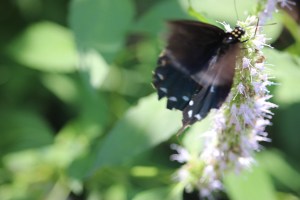
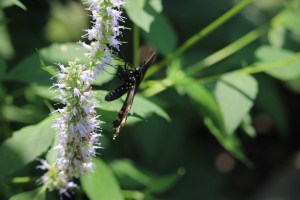
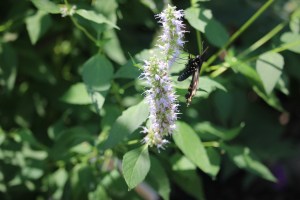
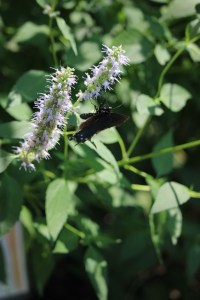
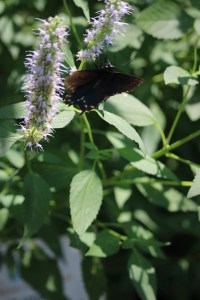
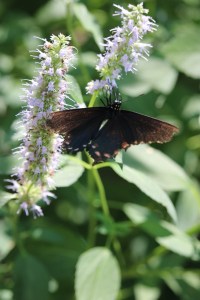
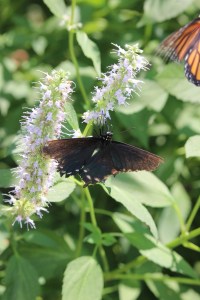
For this post I am focusing on the Spicebush Swallowtail (Papilio troilus), one of the many varieties of butterflies maintained within the Butterfly Bungalow at the Daniel Stowe Botanical Garden.
Spicebush Swallowtail (Papilio troilus)
The Spicebush Swallowtail (Papilio troilus) is a one of the most fascinating butterflies in eastern North America due to its specialized lifecycle, unique hosting plants, and their use of mimicry to survive.
Spicebush Swallowtail on Anise Hyssop (Agastache foeniculum)
The Papilio troilus, aka the Spicebush Swallowtail, or Green-clouded butterfly, is a common black Swallowtail butterfly only found in the Eastern United States and Southern Ontario, however, it can sometimes be seen in the American plains states, Cuba, Manitoba, and Colorado. .
Spicebush Swallowtail (Papilio troilus)
It is normally found in deciduous woods, or woody swamps. There they can be seen flying low and fast through shaded areas.
Spicebush Swallowtail
The Papilio troilus has two (2) subspecies, Papilio troilus troilus and Papilio troilus ilioneus. The Papilio troilus troilus is the one seen in this area and pictured in these images. Papilio troilus ilioneus is confined to the Southeastern coastal United States, mainly throughout Florida, along the coast of Georgia, and in places in Texas.
Spicebush Swallowtail (Papilio troilus)
The primary host plants for the Spicebush Swallowtail are most commonly the Spicebush ((Lindera benzoin) or WhiteSassafras (Sassafras albidum). Despite their preference to primarily feed Lauraceae plants, they do feed on Anise Hyssop (Agastache foeniculum), especially here in the Butterfly Bungalow. Anise Hyssop is widely known as one of the ultimate “pollinator magnets” that is typically added to gardens.
Spicebush Swallowtail on Anise Hyssop (Agastache foeniculum)
The Spicebush Swallowtail love the Anise Hyssop for its perfect landing pads. The dense, structural spikes are composed of hundreds of tiny, nectar-rich tubular flowers. The Spicebush Swallowtail can easily grasp the stalks with their legs while their long proboscis probes from bloom to bloom. They also love the Anise Hyssop for its continuous energy. Anise Hyssop has an exceptionally long blooming window,The plant typically produces fresh flowers from June through September.
This blooming season of the Anise Hyssop provides a vital, reliable energy source for late-summer generations of butterflies preparing to reproduce or move through woodland edges.
Spicebush Swallowtail (Papilio troilus) on Anise Hyssop (Agastache foeniculum)
Camera: Canon EOS Rebel T7 (2000D) with Canon EF-S55-250mm lens.
Location: Butterfly Bungalow; Daniel Stowe Botanical Garden; Bely, North Carolina, USA
God Bless. Have a lovely weekend filled with love, joy, and laughter. Thank you for visiting and sharing your time and thoughts with us. I appreciate y’all very much.
Location: Unity Community; Gastonia, North Carolina
God Bless. Have a lovely weekend filled with love, joy, and laughter. Thank you for visiting and sharing your time and thoughts with us. I appreciate y’all very much.
XingfuMama hosts the weekly challenge Whatsoever Is Lovely. The challenge is simple. Just reflect back over your week and see what is lovely, whether a thing or a moment, share in a post what is precious and lovely to you.
This week I am continuing with Whatsoever is Lovely to me; Beautiful Flowers & Butterflies #4. These images were taken on Coleman’s & my recent visit to the Daniel Stowe Botanical Garden in Belmont, North Carolina. The first area we visited was the Butterfly Bungalow. We had not previously visited the Butterfly Bungalowsince the times we’ve visited Daniel Stowe Conservancy before were in the Springtime.
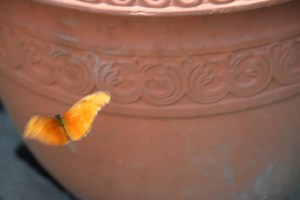
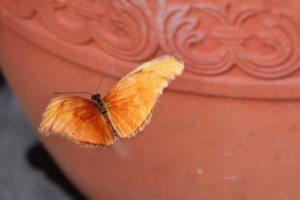
For this post I am focusing on the Dryas iulia, Aka Julia Longwing butterfly,Julia heliconian, the flame, or flambeau.
Dryas iulia
Dryas iulia is often misspelled incorrectly as julia. It is theonly representative in the genus Dryas. It is a species of brush-footed butterfly, native from Brazil to southern Texas and Florida. In the summertime it can sometimes be found as far north as eastern Nebraska. They are considered rare immigrants or temporary strays in both North and South Carolina. That doesn’t mean they won’t be spotted though. During the warm summer months, individual adults occasionally migrate or drift northwards from their permanent breeding grounds in southern Florida and southern Texas.
Julia Longwing butterfly
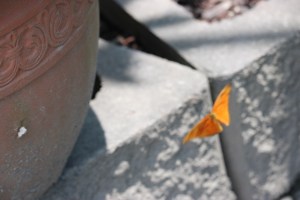
The Julia Longwing butterfly was are known for their striking bright orange wings. They can have black markings, and their have notably long and narrow forewings which gives them that “Longwing” moniker.
Julia heliconian
The Julia heliconian butterflies are extremely fast and erratic fliers; they were quite a challenge to capture with my camera. Their fast movements prevented me from being able to catch all of them clearly, however, I still did managed to catch a few good shots with my Canon.
Julia Butterfly
Besides being very fast fliers, they frequent clearings, paths, and margins of forests and woodlands. They feed on the nectar of flowers, like lantanas (Lantana) and shepherd’s-needle. They drink the tears of caiman, the eye of which the butterfly irritates to produce tears.
the flame
The Dryas iulia butterfly species is real popular in butterfly houses similar to the Butterfly Bungalow at the Daniel Stowe Conservancy. Their popularity is due to its longevity and its activity throughout the day. They were intensely fascinating to watch them zipping to and fro, hither and yonder faster than your (at least mine) eyes could follow them.
flambeau
These pictured here are maintained in the controlled environment of the Butterfly Bungalow inside the Gardens of Daniel Stowe Botanical Garden in Belmont, North Carolina. The Dryas iulia are a featured seasonal resident of the Butterfly Bungalow at Daniel Stowe Conservancy. Since these butterflies thrive in tropical environments, the Garden imports them chrysalides as part of their summer pollinator exhibition. The warm, humid greenhouse enclosure provides an ideal environment for them to fly alongside other native and tropical species like the Zebra Longwing and Malachite.
Camera: Canon EOS Rebel T7 (2000D) with Canon EF-S55-250mm lens.
Location: Butterfly Bungalow; Daniel Stowe Botanical Garden; Bely, North Carolina, USA
God Bless. Have a lovely weekend filled with love, joy, and laughter. Thank you for visiting and sharing your time and thoughts with us. I appreciate y’all very much.
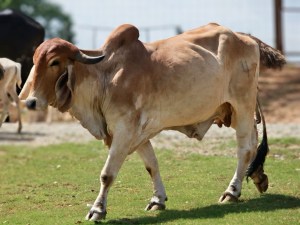
Brahman cattle originally came from India and are a hybrid of four different Indian cattle breeds. They are well-suited for the hot climates like we’ve been experiencing this summer.
We saw this one and others like it at The Lazy 5 Ranch in Mooresville, North Carolina. Their loose skin, short, sleek hair, and ability to sweat efficiently are the reasons they adapt so well to our hot and humid summer climates. Their distinctive hump on their shoulders is the key feature which helps store fat. They are known to be gentle temperament creatures.
As we rode the Safari Wagon at the Lazy 5 Ranch many of the animals which reside on the property roam freely and tend to follow the Wagons as they bring visitors along the dirt road. It seems like all the animals know that the Safari Wagons have feed buckets aboard for the guests to feed them.
Hey there, I’m here.
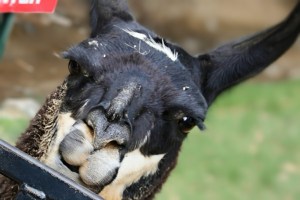
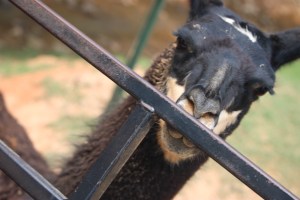
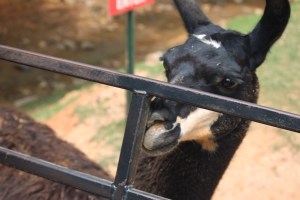
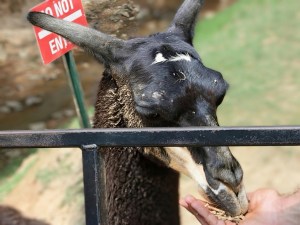
This Black Llama sure made its presence known to us (my family). The Black Llama was trying every possible means to get my daughter’s attention to be able to be handed feed from her feed bucket.
This is me trying to get your attention …
The Llama was first domesticated by the Indians of Peru around 4,000 years ago. The Llama is known for its surefooted travels in high mountain areas. It’s docile by nature, but can also be stubborn. When upset, a Llama may spit a foul smelling liquid.
Maybe if I turn this way you’ll notice me …
Let me assure you that at The Lazy 5 Ranch if they want feed, they are more than likely to receive it. Llamas are used as pack animals and can carry loads up to 130 pounds for up to 10-20 miles a day over rugged slopes in high altitudes, but they are not ridden. When weary or overloaded Llamas just lie down and refuse to move. The Llama is often referred to as the “South American Camel.” Its long, coarse wool is used in the weaving of textiles.
Finally, that’s exactly what I wanted.
Llamas are herbivores with a three-chambered stomach for digesting fibrous plants. They primarily graze on grasses and plants. Llamas are also very social animals, preferring to live in herds, and are known for being quite gentle and intelligent. You might hear their soft humming, which they use to communicate a range of emotions – from contentment to concern – they also have unique warning calls, like a high-pitched alarm, if they sense danger.
We had a really fantastic time the other week when the family visited the Lazy 5 Ranch. With over 700 exotic animals there were plenty to capture. I in no way captured them all with my camera (not that I didn’t try), but there were too many to adequately capture while riding on the guided Wagon Safari ride.
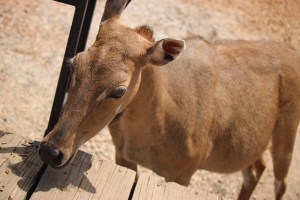
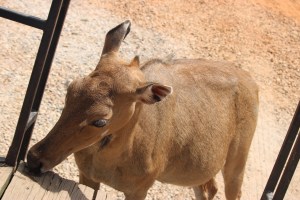
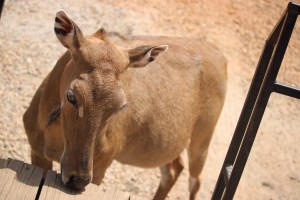
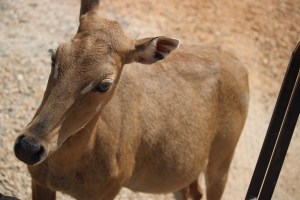
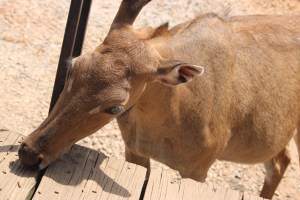
With this week’s Weekly Prompts Colour Challenge colour theme being Brown, I decided I would combine it with the Monday Portrait challenge and show y’all one of the many Brown exotic animals which reside at the Lazy 5 Ranch. Which exotic animal is featured here today? … The exotic animals featured in this post are Nilgai.
The Nilgai (Boselaphus tragocamelus), also called Blueback, is the largest antelope in its native land of India. The name Nilgai comes from the Hindustani word nil, which means blue referring to the slate blue (blue-gray coloration of the adult male Nilgai and the Persian word gaw, which means cow. The females and juveniles are orange to a tawny Brown in their coloration. These shown here are female Nilgai.
It is a large horse-like antelope with sloping back which is found in grasslands and scrublands. Nilgai are herbivores that primarily eat grass, but also browse on leaves and fruits.
They are known for their shy nature and keen senses. Hindus regard the Nilgai as a close relative of the sacred cow. In an era of endangered species, an animal that is protected by religious is considered lucky.
Nilgai cows and calves tend to live in small herds while males live alone except during rut (their mating season). All males have short smooth horns and occasionally females grow horns. Females commonly give birth to two (2) offspring. When being chased a Nilgai can run up to twenty-nine (29) miles per hour (mph).
Camera: Canon EOS Rebel T7 (2000D) with Canon EF-S55-250mm lens and Altura IV Filter attachment.
Location: Lazy 5 Ranch; Mooresville , North Carolina, USA
God Bless. Stay Cool. Stay Hydrated. Have a funtastic week. Thank you for visiting and sharing your time and thoughts with us. I appreciate y’all very much.
Dale, the host of theCosmic Photo Challenge, has challenged us to post a few close-up shots for this week’s challenge. Coleman and I had just recently visited the Butterfly Bungalow watching the butterflies fluttering to and fro from flower to flower feasting on nectar and/or pollen till their hearts content. Therefore, I thought it might be worth it to share a few close-ups with you.
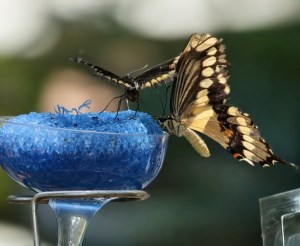
Eastern Giant Swallowtails
First, in the image above we are viewing two Eastern Giant Swallowtails enjoying the tasty delight in the butterfly feeder.
Next, let’s take a closer look at the Butterfly feeder. Not only are the Swallowtails having a delicious feast of the sugar water solution mixed with fruit to provide them with energy, but severe black ants are joining in to sample it as well.
And finally for a close-up view of the Eastern Giant Swallowtails themselves. Observe the delicate line, pattern, and color details in the design of the Swallowtails wings. Notice their distinctive appearance with their prominent antennae that are dark, slender, and distinctively club-tipped. Its legs are also slender, dark, and segmented allowing it to grip the edge of the feeder.
Camera: Canon EOS Rebel T7 (2000D) with Canon EF-S55-250mm and Altura UV Filter attachment.
Location: Butterfly Bungalow; Daniel Stowe Botanical Garden; Belmont, North Carolina, USA
God Bless. Get Outdoors. Be observant of all creatures large and small that call our Earth home. Thank you for visiting and sharing your time and thoughts with us. I appreciate y’all very much.