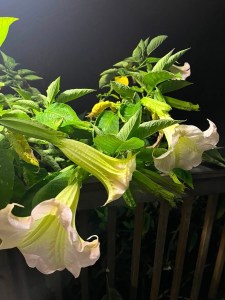
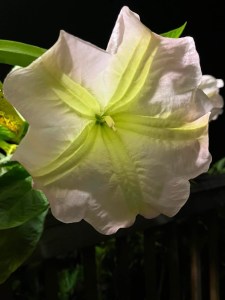
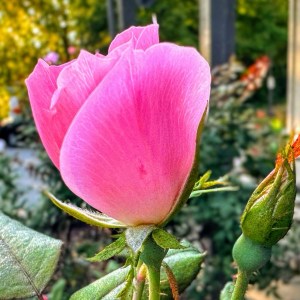
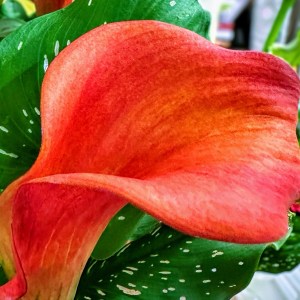
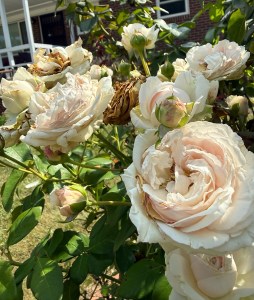
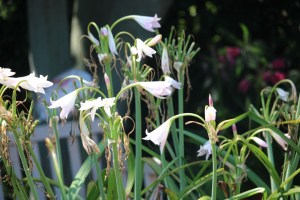
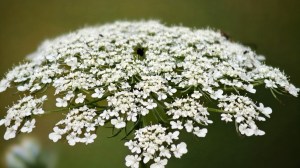
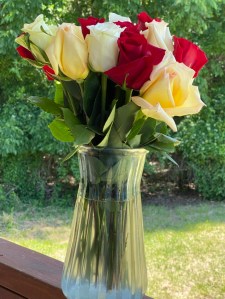
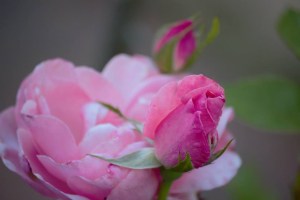
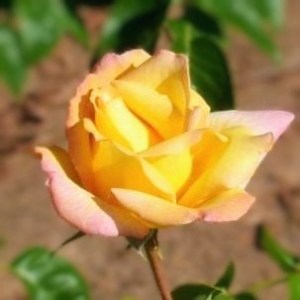
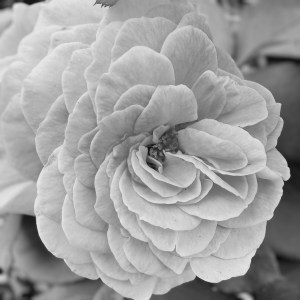
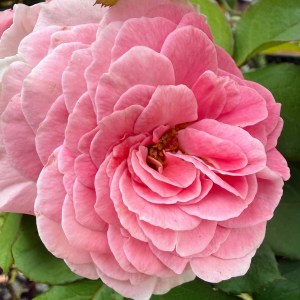
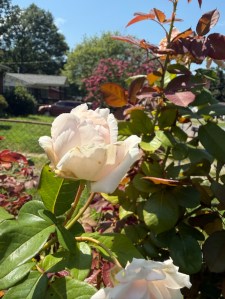
Angel Trumpet (Brugmansia ‘Isabella’) is a perennial shrub cultivar of angel’s trumpet known for its single, nodding, blush pink funnel-shaped flowers and strong fragrance.
Angel Trumpet
They are fast-growing woody perennial shrubs or small trees in the Solanaceae family. Their foliage are large, simple green leaves; their stems form a “Y” shape as the plant matures and prepares to flower.
Angel Trumpet
Alert: All parts of the Angel Trumpet, Brugmansia ‘Isabella’, are extremely inedible and dangerously toxic. It contains high concentrations of tropane alkaloids. Ingesting even small quantities can cause delirium, hallucinations , rapid heart rate, fever, blurred vision, difficulty breathing, and potentially fatal poisoning. It is also highly dangerous to dogs, cats, horses, and livestock, so therefore keep dropped blossoms cleared from yards and patios where pets roam.
God Bless. Admire the Flowers and the beauty found in nature. Thank you for visiting and sharing your time and thoughts with us. I appreciate y’all very much.
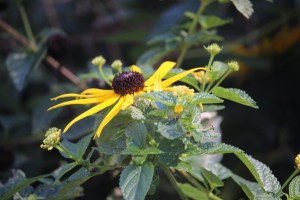
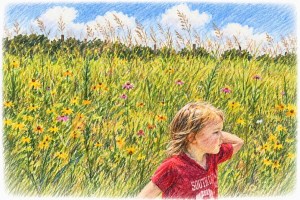
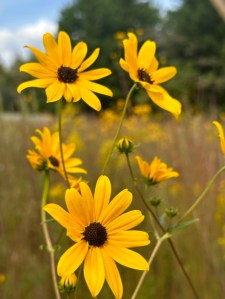
“My name is Susan, Black-Eyed Susan I am called, / I am hardy, one real tough fighting flower… / so, I went deep beneath the dark earth, waiting . . . / then, one day I peaked out- and decided to grow.”
On Wednesday, in the United States of America we celebrated Veterans Day while other countries celebrated Remembrance Day. In the U. S. it is a federally established holiday, therefore schools were closed.
In lieu of having Coleman practice school work (aka reading and arithmetic) I chose to give him a day off of work. Instead, Coleman, Sophia and I went to Lineberger Park and on to Avon and Catawba Creeks Greenway for a bit of hiking.
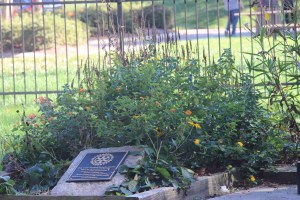
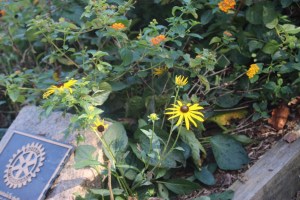
Why am I mentioning hiking in a park and greenway? Near the beginning of Avon and Catawba Creeks Greenway is a small flower garden maintained by the Rotary Club of Gastonia.
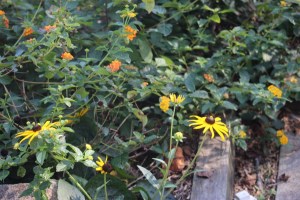
Rotary Club’s Flower Garden
The plaque in front of the garden states:
Rotary International This water fountain is dedicated to The City of Gastonia by the Rotary Club of Gastonia and is a tribute to Rotary International’s global movement to provide clean water and sanitation.
Rotary Club Garden at Avon & Catawba Creeks Greenway
“Bright and cheerful Black-eyed Susan / It seems you grow all over; / In gardens and beside the road / Happy flower, quite the rover.”
~ Sam Kauffman (Poet/Writer)
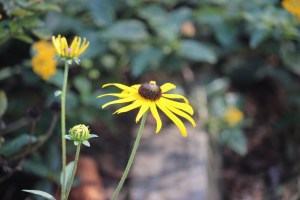
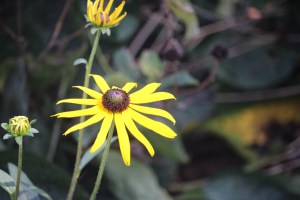
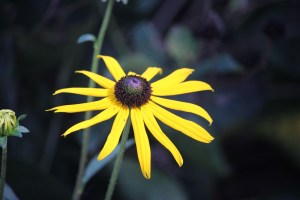
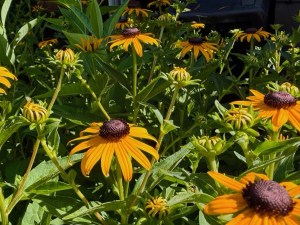
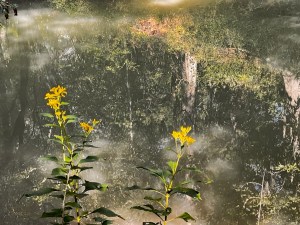
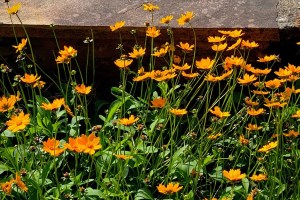
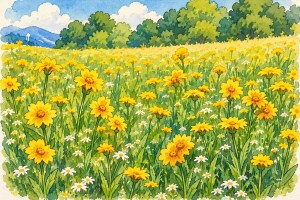
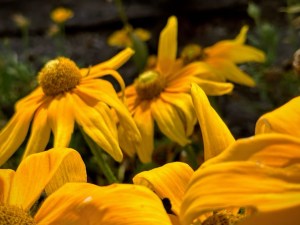
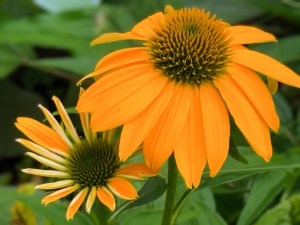
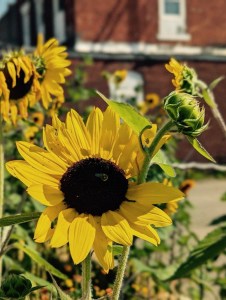
The Flowers that drew my attention are not Sunflowers, but rather Rudbeckia hirta, better known as Black-eyed Susan. They’re bright yellow petals surround a distinctive black or dark brown central cone.
Vibrant Black-eyed Susans and colorful Lantana blooming flowers
Black-eyed Susans are found all across America growing in fields, meadows, and along roadsides. Did you know that they are considered pioneer plants? They’re pioneer plants due to the fact that they are one of the first species to grow and thrive in bare, damaged, or disturbed soil where few other plants can survive.
Black-eyed Susans are also a favourite in gardens since they’re quite hardy and relatively easy to care for. Their typical growth and blooming season runs from summer through early autumn. They bring a splash of colour to landscapes.
The name Rudbeckia was given by Carl Linnaeus to honor his patron and fellow botanist at Uppsala University and also the late father of his patron, Olaf Rudbeck the younger and Olaf Rudbeck the elder. The elder Olaf Rudbeck is a distinguished Naturalist, Philologist, and Doctor of Medicine. He discovered the lymphatic system, and founded Sweden’s first botanic garden, which is now called the Linnaean Garden at Uppsala.
Black-eyed Susan (aka Rudbeckia Horta) has an impressive long history in traditional North American herbalism for treating colds, infections, inflammation, and minor wounds. Historically speaking, several Native American tribes including the Cherokee, Iroquois, Menominee, and Potawatomi have prepared infusions, poultices, and washes using primarily the plant’s roots.
Interesting fun facts:
A single bloom is actually a composite flower head. The bright yellow petals are sterile ray florets that draw bees to it. The dark cone in the middle is packed with with dozens of tiny, fertile disc flowers that bloom in rings from the outside in.
They are not actually Black-eyed. Regardless of the name, the central cone is never truly black. If you look closely, it is a rich deep chocolate brown or dark purplish-brown.
Prior to Carl Linnaeus shortened its name to Rudbeckia, it was called Obeliscotheca integrifolia radio aureo umbone atro rubente.
They are a symbol of encouragement, resilience, and justice. They are an excellent gift to give a friend going through hard times.
They are Natural Dye Makers. Early settlers and indigenous tribes would boil the blooms and roots to create rich yellow, gold, and olive-green dyes for fabrics and baskets.
The state of Maryland adopted the Black-eyed Susan as its state flower in 1918 because its black and gold colours match the state flag and the Calvert family crest.
Camera: Canon EOS Rebel T7 (2000D) with Canon EF-S55-250mm lens and Altura UV Filter attachment.
God Bless. Admire the Flowers and the beauty found in nature. Thank you for visiting and sharing your time and thoughts with us. I appreciate y’all very much.
“When the winds of change blow, remember… sometimes what appears dead is simply preparing for a new season.”
— Jane Lee Logan
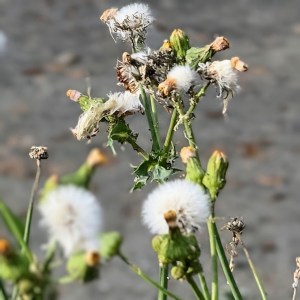
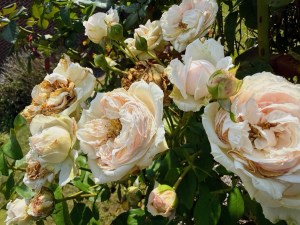
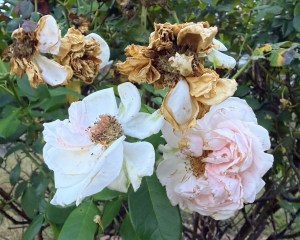
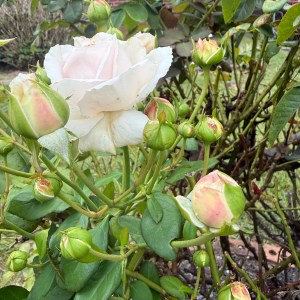
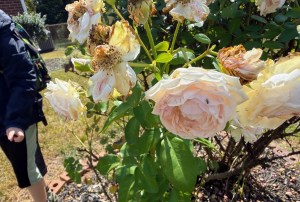
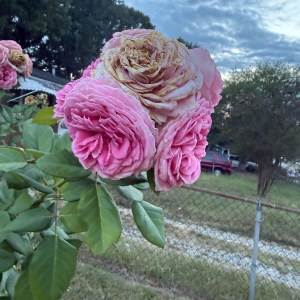
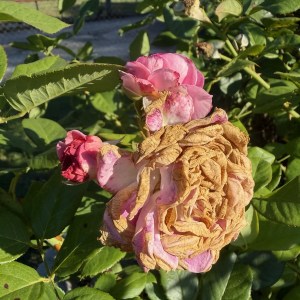
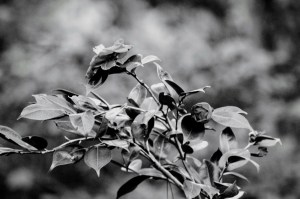
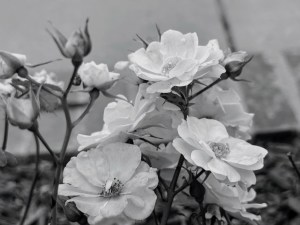
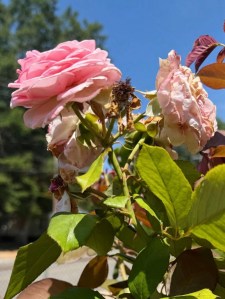
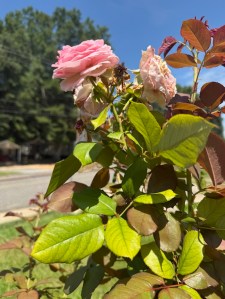
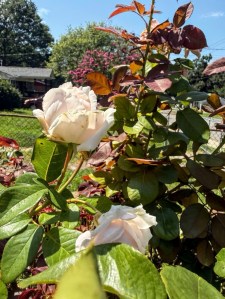
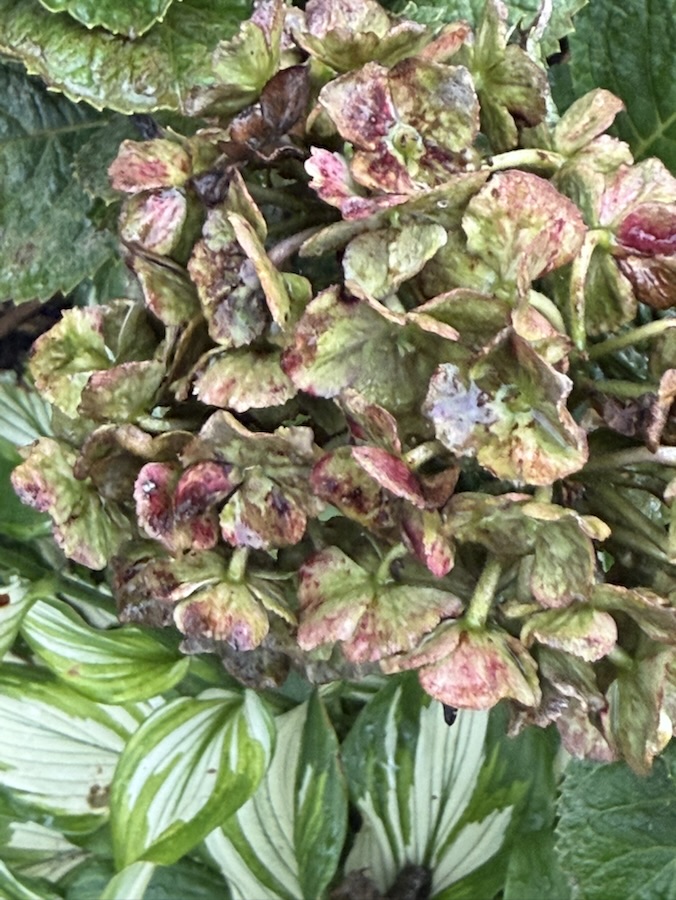
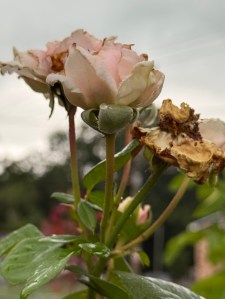
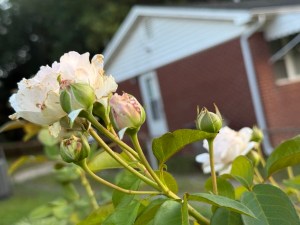
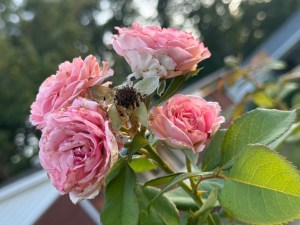
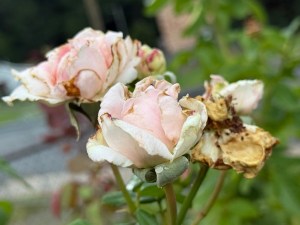
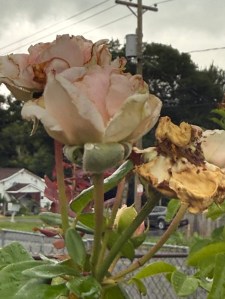
Flowers may appear to be dying, dried out, but looks maybe deceiving at times.
Roses in transitional changes
Some are browning, looking dried out while others are new bulbs displaying new life is still abounding.
“Nothing and no one is perfect. It just takes a good eye to find those hidden imperfections.”
Daphne Delacroix
Seasonal Changes Terri’s The #Flower Hour Cee’s Flower of the Day Bren’s Floral Friday
“In nature, nothing is perfect and everything is perfect. Trees can be contorted, bent in weird ways, and they’re still beautiful.”
— Alice Walker
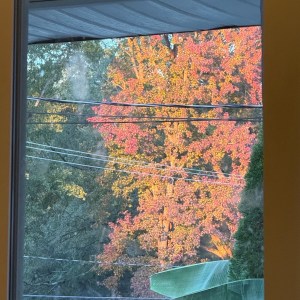
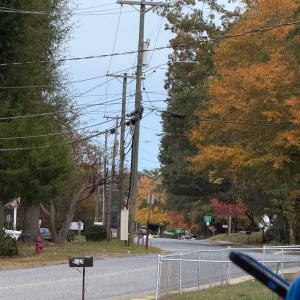
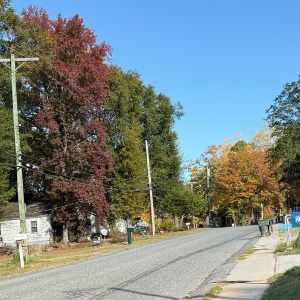
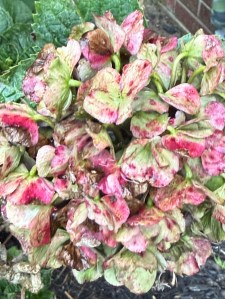
Nature doesn’t always adhere to the Seasonal Changes when we think they should occur. You’d think that when the Seasons changed to Autumn the Leaves of trees would naturally begin in the same timeframe. Nature’s funny that way, it’s on its own timetable, not a calendar, equinox, or solstice timetable. Plants and trees don’t depend on the Farmer’s Almanac to determine when they will change.
In our area some of the trees are just now starting to show signs of Autumnal season changes in their colouring. Still others show no signs of seasonal colour changes.
Festival of Leaves
“For everything there is a season, and a time for every matter under heaven: 2 a time to be born, and a time to die; a time to plant, and a time to pluck up what is planted;
God Bless. Admire the Flowers and the beauty found in nature. Thank you for visiting and sharing your time and thoughts with us. I appreciate y’all very much.
God Bless. Admire the Flowers and the beauty found in nature. Thank you for visiting and sharing your time and thoughts with us. I appreciate y’all very much.
God Bless. Admire the Flowers and the beauty found in nature. Thank you for visiting and sharing your time and thoughts with us. I appreciate y’all very much.
Location: Centennial Center; Cramerton, North Carolina, USA
God Bless. Admire the Flowers and the beauty found in nature. Thank you for visiting and sharing your time and thoughts with us. I appreciate y’all very much.
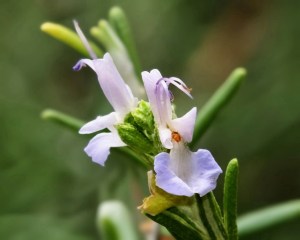
Salvia rosmarinus, Aka Rosemary, Rosmarinus officinalis
Rosemary, is one of several herbs grown in the Heritage Garden in The Farm at The Schiele Museum of Natural History in Gastonia, North Carolina. Its needle-like leaves are incredibly aromatic and have been a staple in Mediterranean cuisine for centuries. It is often used to flavour meats, vegetables, and bread. Cooking is not the only reason Rosemary is cherished, it is revered for its traditional medicinal properties. It is also occasionally associated with memory and remembrance.
The Garden at the Schiele Museum of Natural History is ever changing with the seasons and years. The Gardens are maintained by museum staff, Community Volunteers and Interns, and the volunteer efforts of the Master Gardener Group of Gaston County.
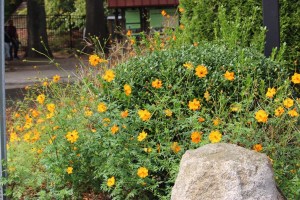
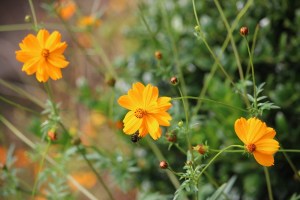
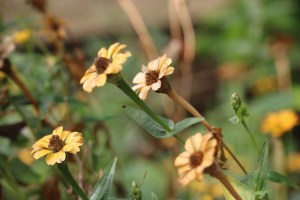
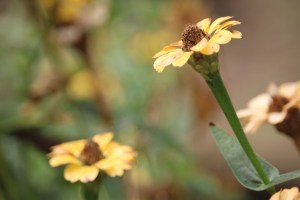
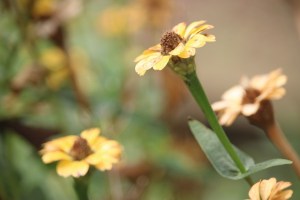
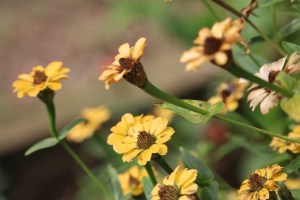
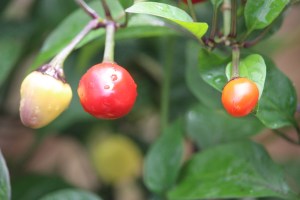
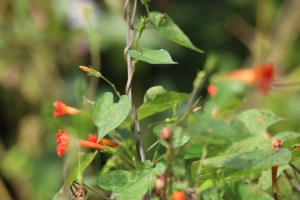
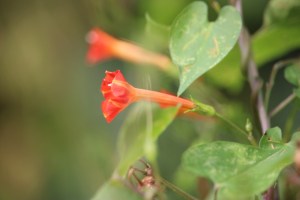
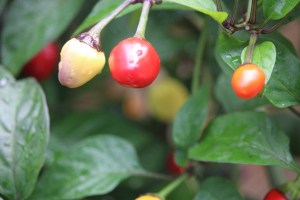
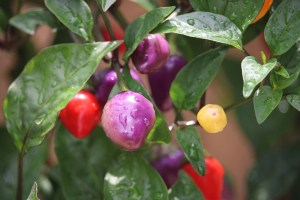
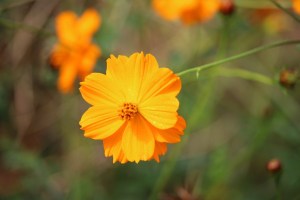
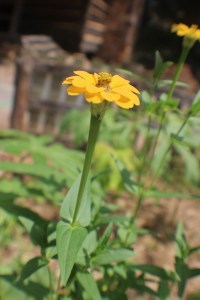
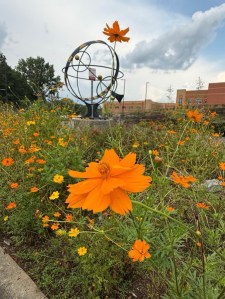
This season we have plenty of Cosmos sulphureus, aka Sulfur cosmos; Zinnia peruviana, aka the Peruvian zinnia; Ornamental peppers, and Ipomoea coccinea aka Red Morning Glory. They are beautiful flowers to enjoy and admire, but not as many florals as in previous years.
Walking towards The Farm from the parking lot we first spot these lovely Cosmos sulphureus …
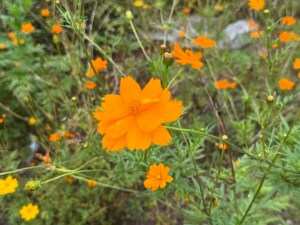
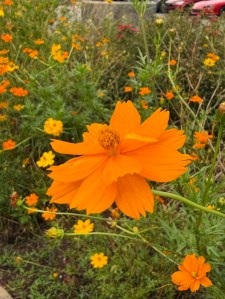
Cosmos sulphureus, aka sulfur cosmos
A Beautiful Cosmos Trio
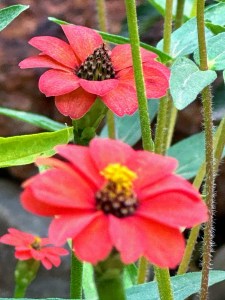
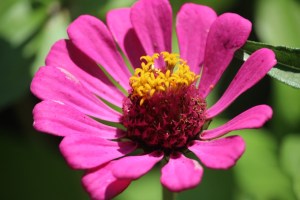
Walking around inside The Farm’s enclosed area, after visiting the goats, we spot these lovely Zinnia peruviana flowers …
As we walk through the Garden area in The Farm we notice several Ornamental Pepper plants and then a few Red Morning Glories. The peppers are so pretty and colourful that you can’t help, but be drawn to their natural beauty. While the Red Morning Glories are so small you might miss them if you weren’t truly searching for the wonderful flowers within the garden.
Camera: Canon EOS Rebel T7 (2000D) with Canon EF-S55-250mm lens and Altura UV Filter attachment.
Location: The Gardens; The Farm; Tge Schiele Museum of Natural History; Gastonia, North Carolina, USA
God Bless. Admire the Flowers and the beauty found in nature. Thank you for visiting and sharing your time and thoughts with us. I appreciate y’all very much.
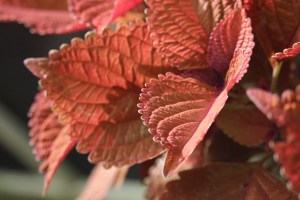
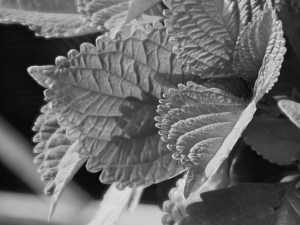
The Coleus plants pictured here are located near the Turkey enclosure in The Farm at The Schiele Museum of Natural History in Gastonia, North Carolina. It is a tropical perennial grown for its brightly coloured, velvety leaves which come in various shades of red, pink, yellow, green, and deep burgundy.
Coleus scutellarioides
Coleus scutellarioides
The Coleus plant is linked with the mint family (Lamiaceae). They are primarily cultivated for their incredibly diverse and colorful foliage instead of their flowers. Besides the colours listed above you may occasionally find them in black. Their intricate design patterns and margins on their leaves make them quite attractive and intriguing to observe.
Camera: Canon EOS Rebel T7 (2000D) with Canon EF-S55-250mm lens and Altura IV Filter attachment; Apple iPhone 16 Pro Max
God Bless. Stay Cool. Stay Hydrated. Have a funtastic week. Thank you for visiting and sharing your time and thoughts with us. I appreciate y’all very much.
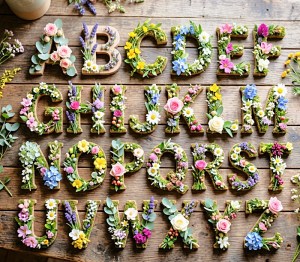
This week Terri, our host for The Flower Houris focusing on Floral ABC’s concentrating on WXYZ. This is the last week for the Floral ABC’s as we’ve come to the conclusion of the alphabet. Let’s have some fun. Here are my WXYZ Florals for this week’s challenge. It wasn’t too hard to locate flowers beginning with W or Y and Z but X was impossible to locate, henceforth, I didn’t find any Xflowers amongst my photo files.
Here’s looking at the W’s …
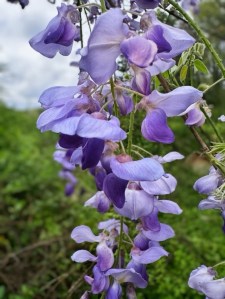
Wisteria sinensis
Wisteria sinensis, aka Chinese Wisteria Gastonia, North Carolina
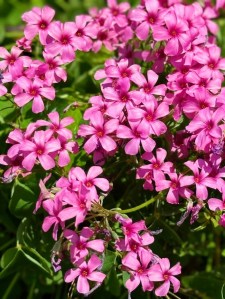
Windowbox Woodsorrel
Aka Oxalis articulata, pink-sorrel, pink wood sorrel, windowbox wood-sorrel, sourgrass Gardner Park, Gastonia, North Carolina
God Bless. Admire the Flowers and the beauty found in nature. Thank you for visiting and sharing your time and thoughts with us. I appreciate y’all very much.
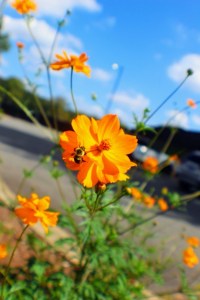
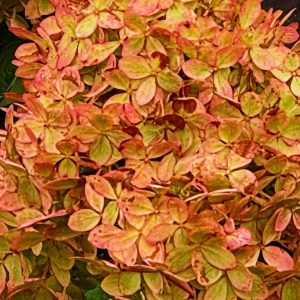
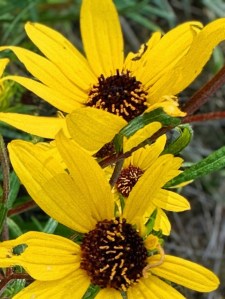
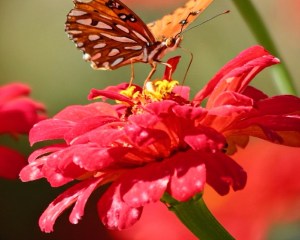
Following along with Terri’s Autumn Floral theme, I took a Look Back into my archives for Autumnal Florals (not just Autumn colours, but taken in Autumn) taken in early Autumn. My selections were all taken at various times and locations during the month of October. I know it’s not October yet, however, it soon will be in only a few more days.
Taken October 3, 2023 …
Common Eastern Bumblebee on an Orange Sulphur Cosmos
… at The Garden in The Farm at The Schiele Museum of Natural History in Gastonia, North Carolina.
Taken October 6, 2025 …
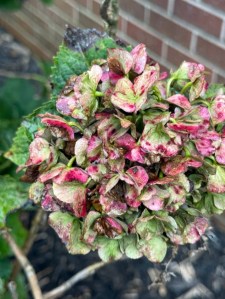
Panicle Hydrangea
… by the Bridge at Goat Island Park and Greenway in Cramerton, North Carolina.
Taken October 22, 2024 …
A Green Aphid on a Yellow Tickseed Sunflower
… near Lake Haigler along the Haigler Loop Trail at the Anne Springs Close Greenway’s Lake Haigler Entrance in Fort Mill, South Carolina.
Taken October 27, 2023 …
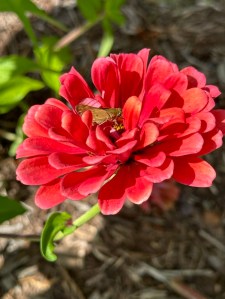
Gulf Fritillary Butterfly on Common Red Zinnias
… by the Gibson House at the Stables Entrance of the Anne Springs Close Greenway in Fort Mill, South Carolina.
God Bless. Admire the Flowers and the beauty found in nature. Thank you for visiting and sharing your time and thoughts with us. I appreciate y’all very much.
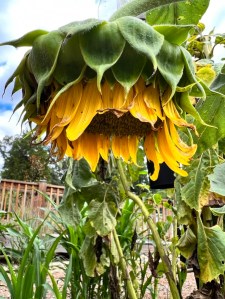
These sunflowers are not the type of flower you’d normally picture if someone said Sunflower, however, they are still beautiful in their own unique way.
Tithonia rotundifolia
The Mexican Sunflower is a plant in the Asteraceae family whose native origins range from Mexico to Central America.
Red Sunflower
They’re beloved by gardeners for their bright, fiery orange or red-orange petals and yellow centers, which resemble small sunflowers.
Mexican sunflower
They thrive in full sun and warm weather, which is typical for Gastonia’s weather. They are attractive to pollinators such as butterflies, bees, and hummingbirds which absolutely adore them, making them a fantastic addition to any garden looking to support local wildlife.
Tithonia rotundifolia, the Red sunflower or Mexican sunflower
The Tithonia rotundifolia, aka Mexican sunflower is not actually a true sunflower from the Helianthus family. However, their daisy-like blooms give off a similar sunny vibe. They are quite resilient and easy to grow. These flowers are surrounding my neighbours mailbox giving colour and beauty to the neighbourhood.
Location: Unity Community; Gastonia, North Carolina, USA
God Bless. Stop and smell the flowers. Admire them and the beauty found in nature. Have a fantastic week. Thank you for visiting and sharing your time and thoughts with us. I appreciate y’all very much.
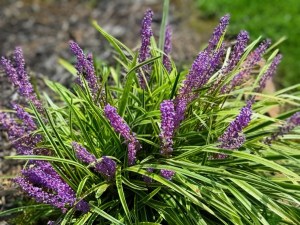
Liriope muscari is a species of flowering plant from the region of Easr Asia. It is also known as Big Blue Lilyturf, Lilyturf, Border Grass, and Monkey Grass.
A Trio of Liriope muscari
Lilyturf is highly valued for its beautiful striped leaves and its purple flower spikes. It is an evergreen perennial, meaning its foliage stays green year round. Gardeners tend to favourite as a border plant, ground cover (as it usually used here), or as a means to help prevent erosion. It spreads nicely and creates a dense mat.
Liriope muscari, Big Blue Lilyturf
Liriope muscari usually blooms in late summer to early Autumn/Fall. Coleman first notice the purple spike flowers a little over a week ago and insisted I take pictures with my phone. As the days progressed more and more of the lilac-purple flower spikes began popping up bringing colour to the garden.
God Bless. Stop and smell the flowers. Admire them and the beauty found in nature. Have a fantastic week. Thank you for visiting and sharing your time and thoughts with us. I appreciate y’all very much.
God Bless. Admire the Flowers and the beauty found in nature. Thank you for visiting and sharing your time and thoughts with us. I appreciate y’all very much.
Following Terri’s and Brian’s lead on Sunflowers, I went in search of Sunflowers amongst my archives. I found some common sunflowers and some uncommon ones as well.
Here are my entries …
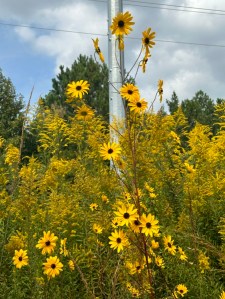
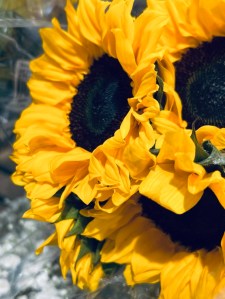
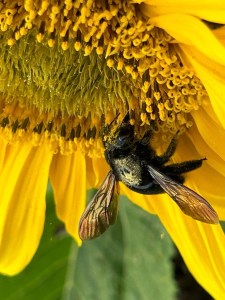
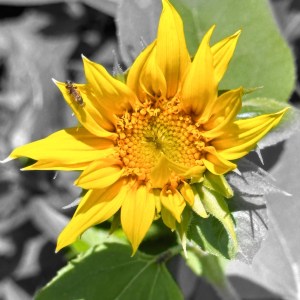
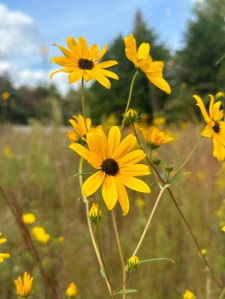
Common Sunflower Wild Sunflowers Common Sunflower Helianthus angustifolius, aka Narrowleaf Sunflower Carpenter Bee enjoying the Sunflower’s pollen Common Sunflower Swamp SunflowersCommon Sunflower Terri’s The Flower Hour Cee’s Flower of the Day
God Bless. Admire the Flowers and the beauty found in nature. Thank you for visiting and sharing your time and thoughts with us. I appreciate y’all very much.
Location: Unity Community; Gastonia, North Carolina, USA
God Bless. Stop and smell the flowers. Admire them and the beauty found in nature. Have a fantastic week. Thank you for visiting and sharing your time and thoughts with us. I appreciate y’all very much.
It has been extremely hot and humid in our area causing havoc on gardens and flowers to wither and fade away. Currently, There are not many left in bloom. However, I did manage to find a few.
These are from The Garden in The Farm at The Schiele Museum of Natural History…
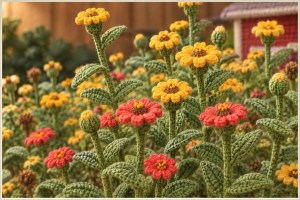
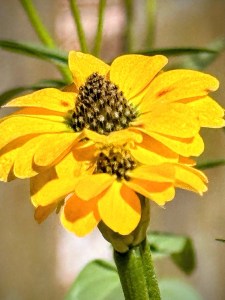
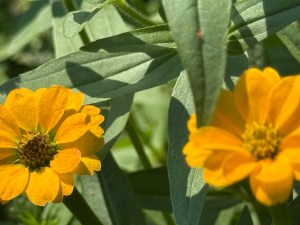
A Pair of Yellow Zinnias …
Zinnias
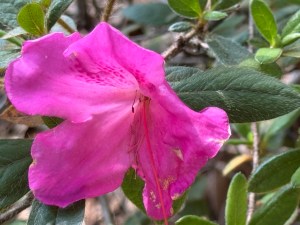
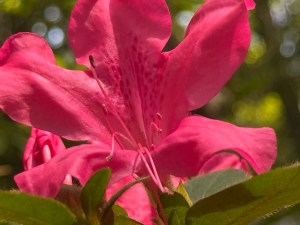
A Look at a Couple of Rhododendron indicum, aka Azalea indica L. …
Pink Azalea
Rhododendron indicum, aka Southern Indian azalea, has showy, vibrant funnel-shaped red, scarlet, or pink flowers that bloom in mid to late spring and occasionally again in the fall. ]These are both from the same Rhododendron (Azalea) Shrub.]
Rhododendron indicum, aka Satsuki azalea or Southern Indian azalea.
Now before we leave let’s take a look at an array of Sulfur cosmos (Cosmos sulphureus) …
Sulfur cosmos (Cosmos sulphureus) The #Flower Hour Cee’s Flower of the Day Bren’s Floral Friday
That’s all I have for y’all today. Till next time, have a fabulously fun and productive weekend filled with love, laughter, and happiness.
Location: The Garden; The Farm; The Schiele Museum of Natural History; Gastonia, North Carolina, USA
God Bless. Stop and smell the flowers. Admire them and the beauty found in nature. Have a fantastic week. Thank you for visiting and sharing your time and thoughts with us. I appreciate y’all very much.
Isaiah 40:8: “The grass withers, the flower fades, but the word of our God will stand forever.” KJV
Terri’s The #Flower Hour Cee’s Flower of the Day
“For all flesh is as grass, and all the glory of man as the flower of grass. The grass withereth, and the flower thereof falleth away:” I Peter 1:24 KJV
God Bless. Admire the Flowers and the beauty found in nature. Thank you for visiting and sharing your time and thoughts with us. I appreciate y’all very much.